❌

Reading view

Monkeys also avoid germs after viral outbreaks 

When a new disease emerges, things can get a little weird. We start to clean groceries with antibacterial wipes, the sound of a sneeze can trigger our fight-or-flight response, and we generally become more cautious. Humans may not be the only primate species that change their behavior in the face of disease. 

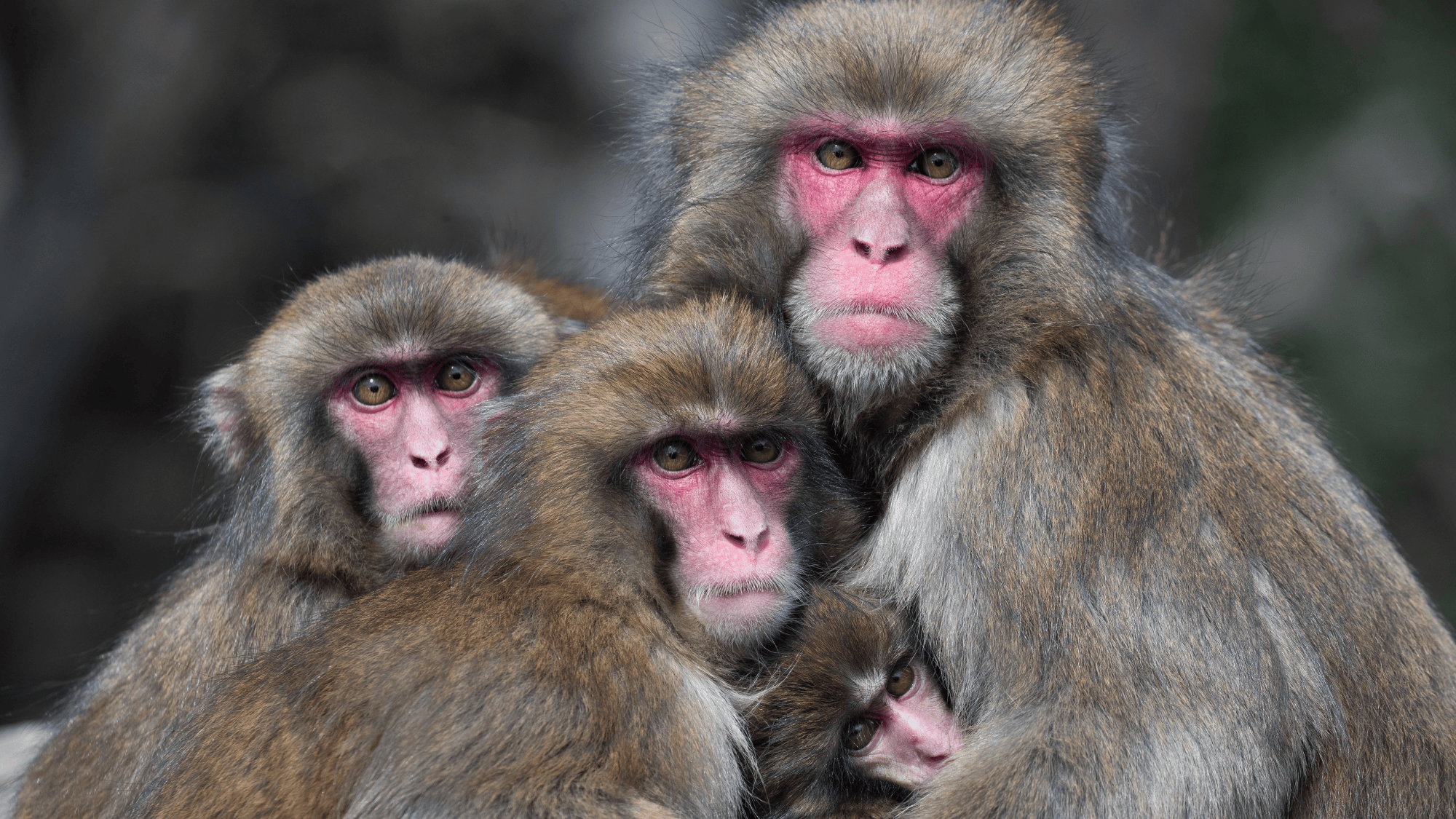
According to a study published today in the journal Royal Society Open Science, Japanese macaques (Macaca fuscata) that lived through a deadly outbreak in 2020 became noticeably more cautious about food that appeared contaminated, even though this disease was not spread by food or feces. This indicates that purposefully shifting behavior to avoid a pathogen can be shaped by our appearance and that disgust may have deep evolutionary roots. It also sheds light on the behavioral immune system—a collection of behaviors that help animals avoid an infection before the biological immune systems respond.

“We can show now, in non-human primates, that this is the same for them,” Federico Rossano, a study co-author and cognitive psychologist at the University of California San Diego, said in a statement. “Even with no knowledge of how disease is transmitted, being exposed to others getting sick and dying changes the likelihood of engaging in behaviors that potentially could lead to some form of sickness.”

2020 was a big year for outbreaks

In 2020, the staff at a primate sanctuary in southern Texas confirmed the presence of simian retrovirus Type II. This disease can cause AIDS-like immunodeficiency and is primarily transmitted through bites and scratches. It caused severe illness and death in some of the monkeys. The sanctuary staff separated the groups and implemented testing and quarantine measures in response to the outbreak. Since the groups live in separate enclosures, scientists then had the chance to compare animals with similar backgrounds that had experienced very different social and disease environments. 

In total, three groups of monkeys experienced the outbreak while one had not. The team tested 

55 macaques to see how they responded to a choice between food that was put on a clean wooden surface and food placed on a surface covered with real macaque feces. The food with the feces was sealed under a layer of clear epoxy, so that the monkeys could see the food and poop without risking infection.

In the group that had been exposed to the outbreak, some of the individuals had been infected while others had lived alongside sick monkeys without getting sick. This allowed the researchers to question if experiencing an outbreak without getting infected could change the macaque’s behavior. To test that further, the clean surface was replaced with a brightly colored kitchen sponge in some of the scenarios to see if the animals were just avoiding unfamiliar objects. 

Previous studies found that macaques aren’t necessarily deterred by contamination—as long as the payoff is tempting. When presented with a favorite treat (such as a peanut) wild Japanese macaques would still eat food from a surface covered in feces, but will avoid it for food like grains of wheat.

Continued caution

The team found that macaques from groups that went through the outbreak were far less likely to eat the food from the contaminated surface. They ate from the fake contaminated surface in only 47 percent of trials. The monkeys that did not experience the outbreak ate from the potentially contaminated surface in 79 percent of trials.

The monkeys from outbreak-exposed groups also behaved similarly whether or not they themselves had been infected. According to the team, this suggests the behavioral change was associated with their experiencing living through the outbreak, instead of actually getting sick

“Groups have histories, and those histories show up in behavior,” added study co-author and UC San Diego cognitive psychologist Stephan Kaufhold. “Living through the disease outbreak appears to have made those monkey groups more cautious around food that looks contaminated.”

The virus was spread through blood or saliva from bites and scratches, and not through contaminated food. Interestingly, the macaques who saw their fellow primates get sick, were more reluctant to eat food placed on a surface that visually suggested contamination in some of the tests.

Disgust’s evolution

In addition to shedding light on how illness affects primate behavior, it also offers insight into the evolution of disgust. The team did not measure disgust directly, but found that monkey’s avoidance of potential sources of infection can change with their experience, similar to what humans do.

Human disgust is believed to play an important role in protecting us from pathogens. We recoil from the smell and sight of poop, spoiled food, and other potential sources of infection. Our sensitivity to those cues can also change depending on context.

Since primates are capable of social learning, the team believes that heightened pathogen avoidance could be learned from other members in the group and persist over time. Future studies could see if newly introduced animals adopt the behavior of a group that has already experienced an outbreak.

The post Monkeys also avoid germs after viral outbreaks  appeared first on Popular Science.
  •  

Bat Beauty Contest returns October 24

With Alaska’s fat bears done packing on their winter weight and spooky season in full swing, it’s time to turn our collective animal-loving attention to a smaller mammal—bats. The Bureau of Land Management’s (BOEM) annual Bat Beauty Contest returns on October 24 and promises “plenty of batty puns.”

Beginning Saturday, October 24, BOEM will post photos of the competitors to their Facebook and Instagram accounts and ask you to vote for the best-looking one. All of the competing bats are part of wild populations that live on land managed by the public agency and are photographed by wildlife technicians. The winner will be announced (appropriately) on Saturday, October 31.

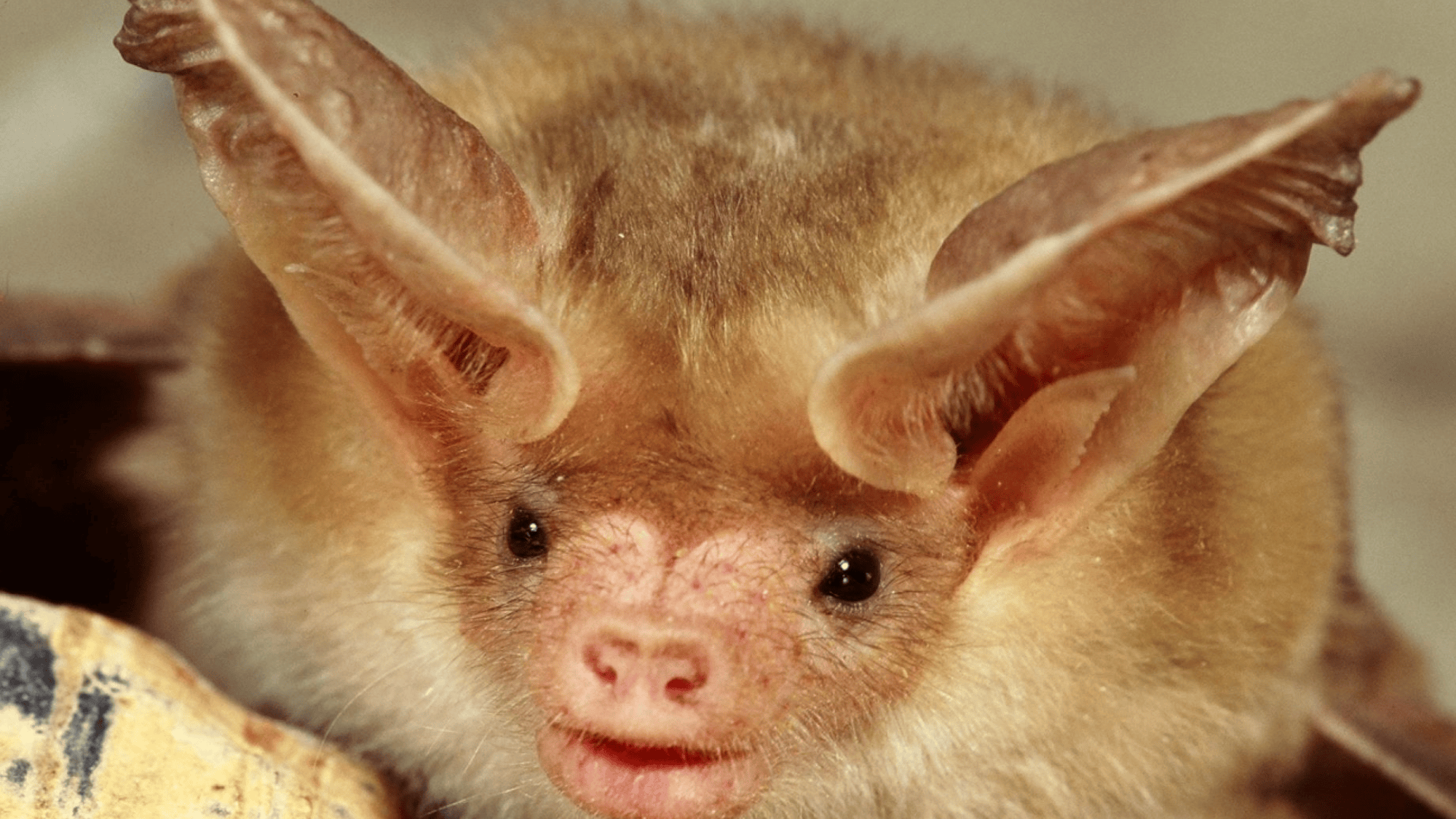
The bats in this competition are known for their squishy faces and clever names. In 2024, a hoary bat (Lasiurus cinereus) from Oregon named Hoary Potter took the crown. Other contestants included a long-eared myotis (Myotis evotis) named Honey Bunches of MyOtis, a myotis bat (Myotis myotis) named Robert Battinson, and western small-footed bats (Myotis ciliolabrum) named Batt Damon and Batlor Swift. The contest was not held in 2025 due to the 43-day-long federal government shutdown. 

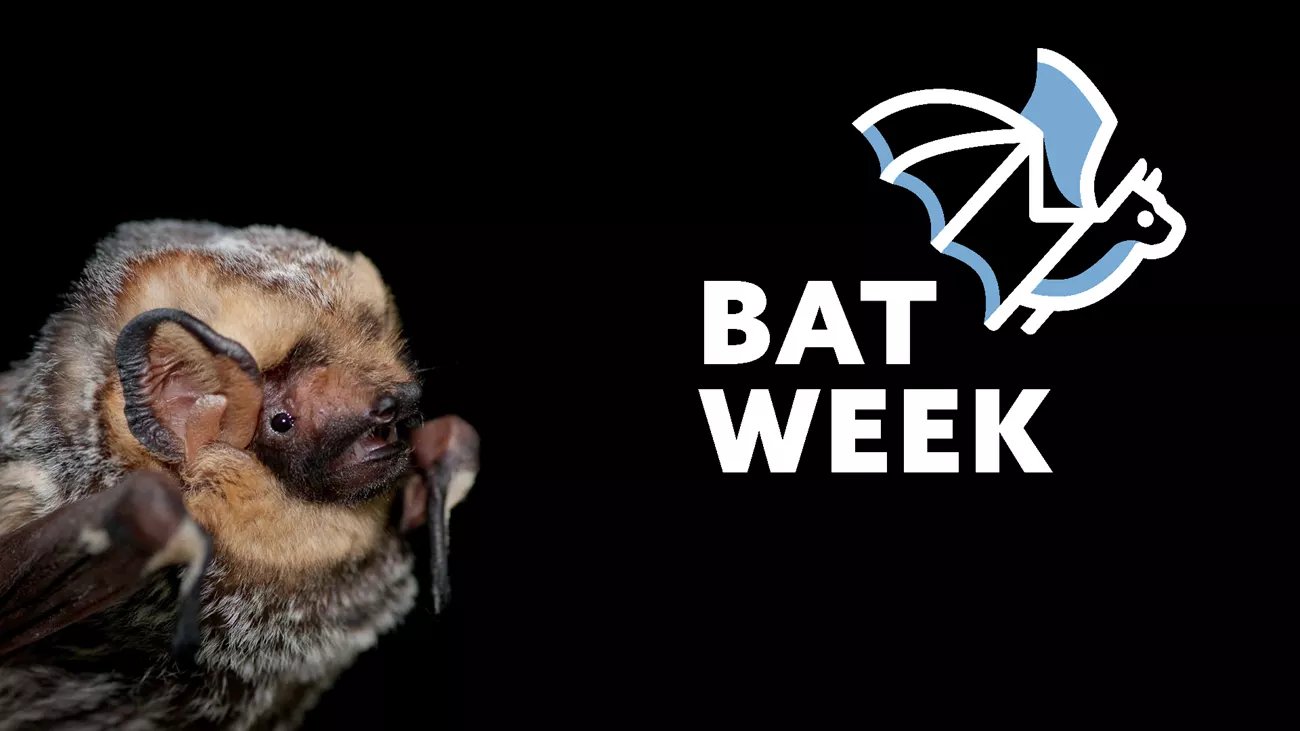
a bat next to a logo that says bat week
A hoary bat at Isle Royale National Park in Michigan. Image: NPS Photo/Bat Conservation International.

The contest is not all bat puns and a way to keep the spirit of Fat Bear Week alive. It falls during Bat Week (October 24-31). Bat Week raises awareness about the Earth’s only flying mammal. More than just a Halloween symbol, bats play a critical ecological role as plant pollinators and through eating insects that can threaten crops and forests around the world. According to Bat Week, one bat can eat up to its body weight in insects every night. Only three species of bats eat animal blood, with two specializing in bird blood. Female lesser long-nosed bats even make tequila possible. Every spring, they migrate from south-central Mexico up to the southwestern United States, following “nectar corridors” of columnar cacti and agave plants. They pollinate agave plants, which are then used to make tequila and mezcal. When they feed on cactus fruits and nectar, they may also help disperse cacti seeds. Other bats eat pollen, nectar, or fruit.

Bats are increasingly threatened due to habitat loss, light pollution, and diseases like white-nose syndrome. This fungal disease infects the skin of the muzzle, ears, and wings of hibernating bats. In about 20 years, it has killed millions of bats across North America and affects about half of the species on the continent. Bats also are often misunderstood as carriers of diseases such as rabies. 

The planet is home to over 1,400 species of bats, and they make up almost 20 percent of all mammal species. Bats also can be found almost everywhere on Earth, even in desert and polar regions. To look up which bat species live near you, you can use Bat Week’s state bat database.

Stay tuned for more Bat Week updates!

The post Bat Beauty Contest returns October 24 appeared first on Popular Science.

  •  

UARX Space troubleshoots anomalies on maiden OTV Flight

SAN FRANCISCO –Spanish startup UARX Space is remedying anomalies identified during the maiden flight of OSSIE-D, an orbital transfer vehicle (OTV) launched Oct. 1 aboard SpaceX’s Transporter-18 mission. At least […]

The post UARX Space troubleshoots anomalies on maiden OTV Flight appeared first on SpaceNews.

  •  

All-organic mixed-matrix membranes with single-crystal covalent organic frameworks for carbon capture

Nature Energy, Published online: 07 October 2026; doi:10.1038/s41560-026-02149-9

Carbon capture with conventional mixed-matrix membranes is limited by the inability to achieve high packing densities of porous fillers while preserving their intrinsic transport properties. Here the authors develop high-performance membranes based on single-crystal covalent organic framework fillers using a weak-interaction inlaying strategy that enables high filler loadings.
  •  

From gigawatts to critical mineral demands for EU solar and wind

Nature Energy, Published online: 05 October 2026; doi:10.1038/s41560-026-02147-x

Clean energy systems rely on large amounts of minerals. Here the researchers show that meeting EU solar and wind targets will create high demand for copper, zinc, silicon and rare earth elements, especially when offshore wind remains central.
  •  

Global Gas Tug of War Is Brewing for Winter

Europe’s gas market is heading into winter with little room for error. Lower storage levels and disruption in the Middle East have left the region more exposed to weather and competition for LNG. BNEF’s base case sees European storage falling to 21% by the end of March, but a prolonged Strait of Hormuz disruption or a particularly cold winter could push it toward 10%.
  •  

A Ni(OH)<sub>2</sub> symmetric battery cell for hydroxide exchange membrane-based direct air capture of CO<sub>2</sub>

Nature Energy, Published online: 22 September 2026; doi:10.1038/s41560-026-02129-z

Electrochemical carbon capture promises low-energy direct air capture (DAC), but demonstrations are often confined to small devices and short lifetimes. Here the authors report a 25-cm2 symmetric nickel hydroxide DAC cell operated for 5,000 h at a low energy cost and demonstrate scale-up to a 9 × 300 cm2 stack.
  •  

Spatially informed policies can accelerate green hydrogen demand

Nature Energy, Published online: 17 September 2026; doi:10.1038/s41560-026-02139-x

Realized green hydrogen demand lags behind policy targets but could be accelerated by accounting for spatial spillovers, which refer to demand-side interdependencies where adoption by one user encourages further adoption by nearby users. Revising EU green hydrogen policies, including Hydrogen Valleys and European Hydrogen Bank auctions, to better account for these location-specific demand-side patterns could improve their effectiveness.
  •  

Spatially informed demand-side policies for green hydrogen diffusion in Europe

Nature Energy, Published online: 17 September 2026; doi:10.1038/s41560-026-02126-2

EU green hydrogen policies could be more effective if they accounted for spatial spillovers. These spillovers are a primary driver of diffusion, and spatially informed demand-side policies could improve cost-effectiveness by up to 41%.
  •  

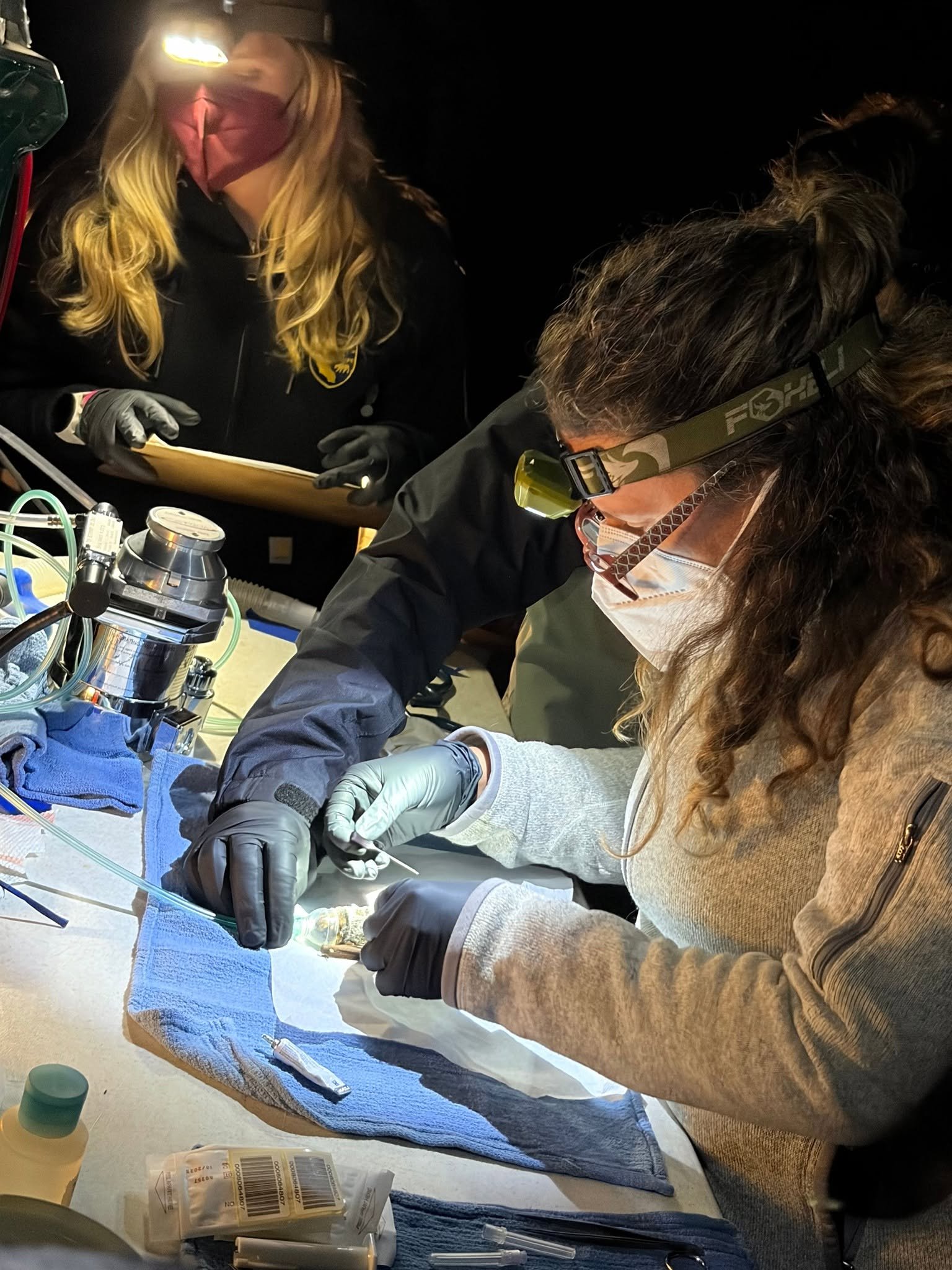
Expert ‘bat wranglers’ put GPS trackers on California’s bats

October is officially Bat Appreciation Month. In the spirit of the season and conservation, a team of biologists in California recently spent time finding bats at Muir Woods National Monument and Samuel P. Taylor State Park. And while Halloween is fast approaching, the activity had nothing to do with spooky festivities and everything to do with tracking hoary (Lasiurus cinereus) and western red bats (Lasiurus blossevillii). 

The goal of their survey was to put GPS trackers on bats from the two migratory species. Hoary bats have grey-white fur and are the most widespread bat species in North, Central, and South America. Western red bats, also known as southern red bats, sport a reddish fur and are found in parts of South America. In redwood forests, bats like nesting within holes inside large trees. 

“When they migrate, those little guys can cover a LOT of ground!” the Golden Gate National Recreation Area writes, referencing both species. “By learning about these migratory patterns, we can better understand entire ecosystems like Muir Woods.”

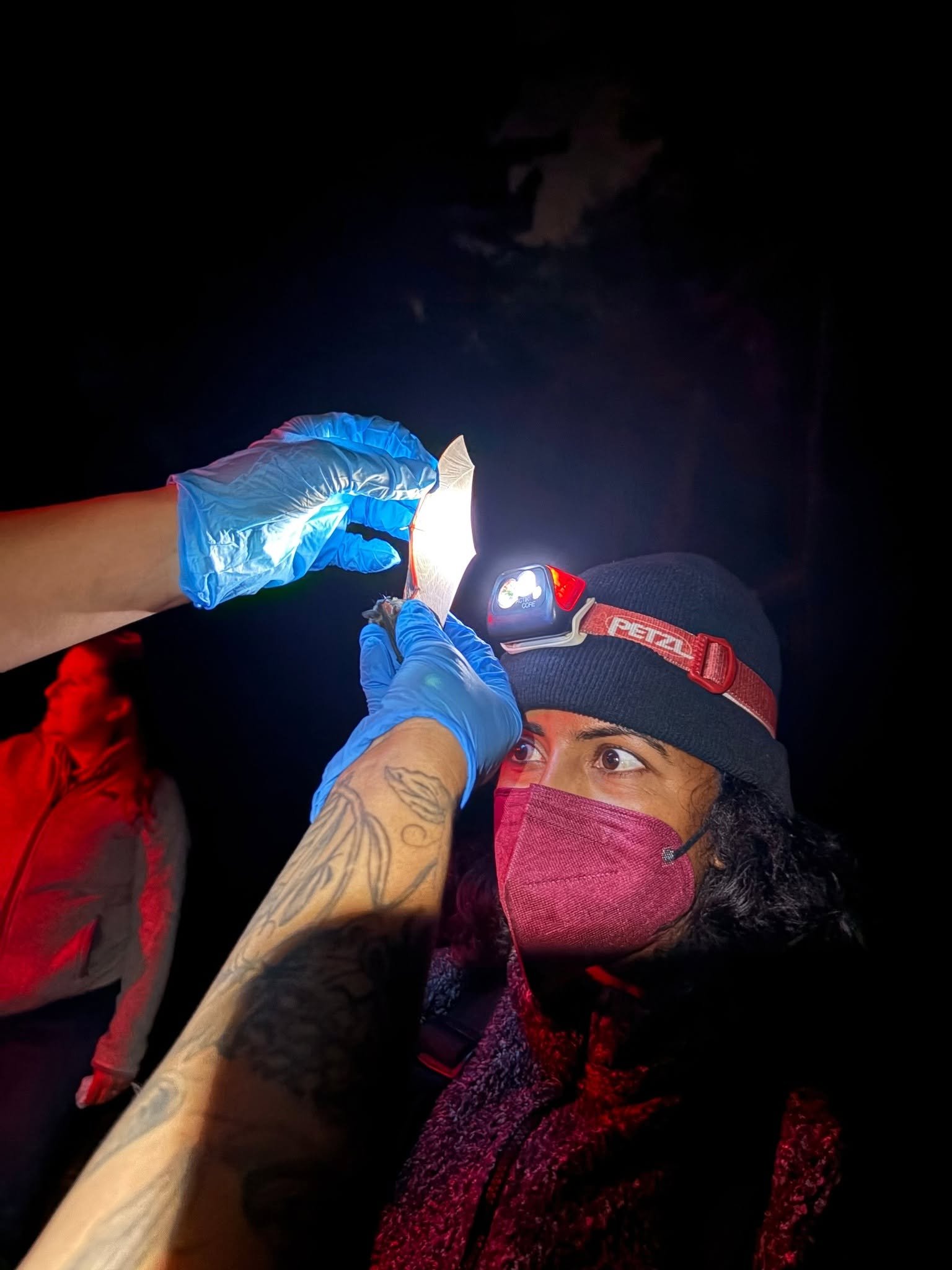
a scientist wearing a headlamp puts a tracker on a bat
The bats were released back into the wild after getting their trackers. Image: NPS / Emily Pellegrini.

Bats are important members of such ecosystems. They are pollinators, they spread seeds, and they help manage insect populations. To catch these helpful agents, scientists set up a sheer, delicate net called a “mist net” over a creek at dusk. All bats are nocturnal, and when they went searching for their next meal—bugs—they flew into the net. 

It was a bit of a trick for the winged mammals, but a treat for the human team. “Expert bat wranglers” carefully took them out of the nets, noted their weight and size, presumably attached the GPS tracker, and then returned them to the wild. 

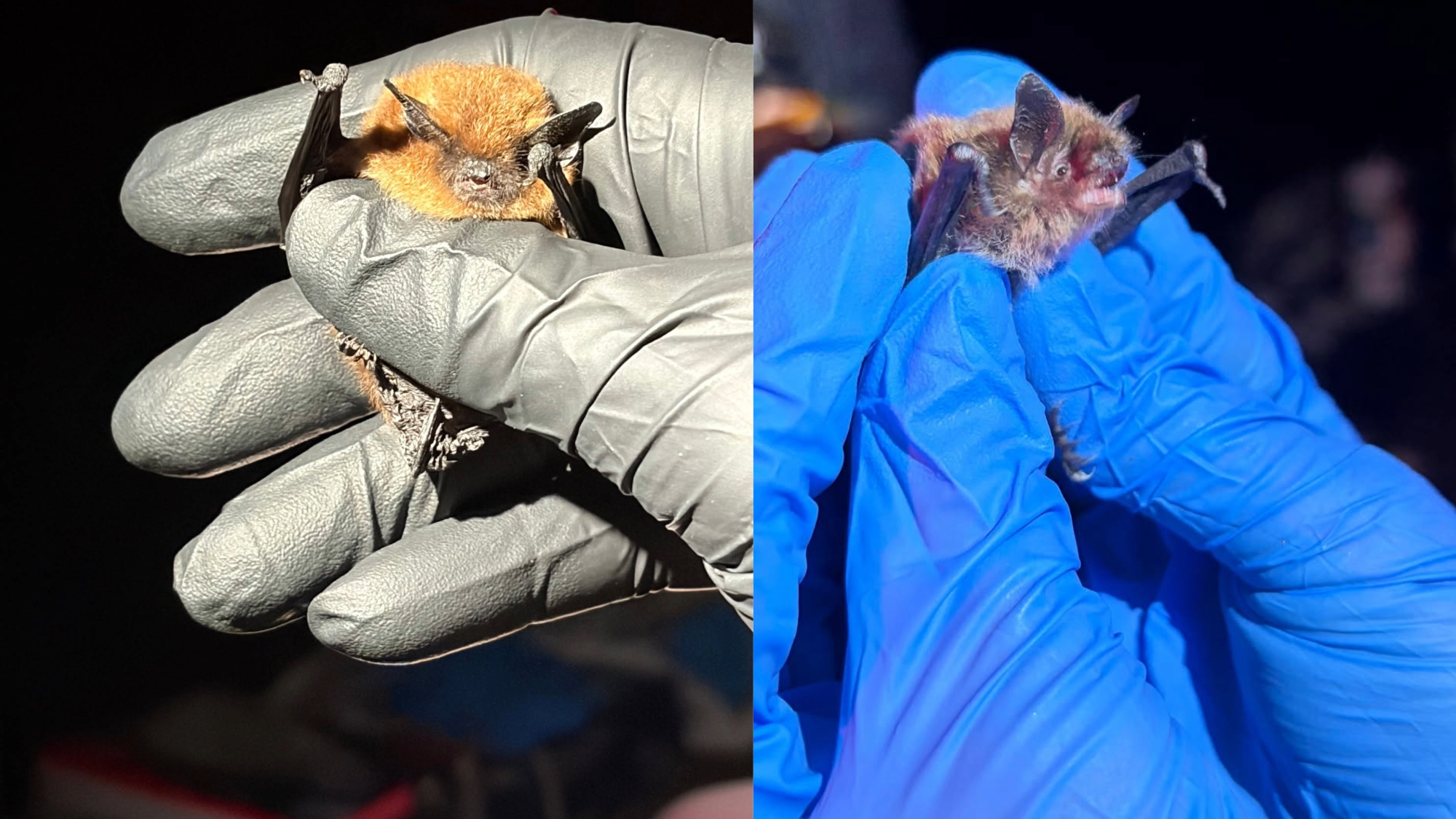
The Golden Gate National Recreation Area’s shared pictures of tiny, disgruntled looking bats carefully pinched between gloved fingers. In one image, an expert holds a bat wing up to the light of a colleague’s headlamp. In fact, illuminated wing membrane patterns literally shed light on the bat’s age and developmental stage.

a scientist wearing a headlamp looks at the membrane between a bat's wings with
A bat’s membrane can tell biologists how old the animal is and what developmental stage it is in. Image: NPS / Emily Pellegrini.


While this survey focused on two bat species, researchers at the Muir Woods National Monument have previously spotted 10 different species.

The post Expert ‘bat wranglers’ put GPS trackers on California’s bats appeared first on Popular Science.

  •  

The remarkable bond between a man and a deer

Excerpted from PENELOPE by Paul Bochner. Copyright © 2026 by Paul Bochner. Published in the United States by Crown, an imprint of the Crown Publishing Group, a division of Penguin Random House LLC. 


On the evening of March 18, as it was growing dark, I went to the window, not knowing what was drawing me. Next to the house stood a shadow, ghost-like, shrunken, at one with the dusk, almost translucent, and I recognized The Girl with the Broken Foot.

I walked out into the falling wet snow, slowly approaching her, and she allowed me to come close. Nine months old, she was the size of a fawn half that age. Starkly emaciated, her body seemed to be collapsing inward, her head held low. Literal hunger and a deeper starvation were palpable. She bore the haunted look of terminal solitude seen in souls driven to the margins of society, among the liv-ing, yet apart. She seemed so frail that I couldn’t imagine she would live more than another day or two.

Going inside and returning with a bowl of apples, I cut them into pieces and placed a few on the ground between us. She was raven-ously hungry and I gave her a few more apples, and still more, until she had eaten a total of eight. After she had finished eating, she stayed with me. We stood about a foot apart. She showed no fear of me, a fact which I would later come to recognize as meaningful. The moment had the compelling quality which has been present at the onset of many enduring connections in my life, of being un-bound by linear time.

“I am watching over you,” I said softly. “If you come here, I will take care of you. You are not alone.”

It was fully dark when we parted, having been together for an hour. I expected that she would recede into the woods, yet the next morning she was sleeping against the house, directly beneath the window closest to where I sit all day to work. Save for the wall separating us, she could not have gotten any closer to me.

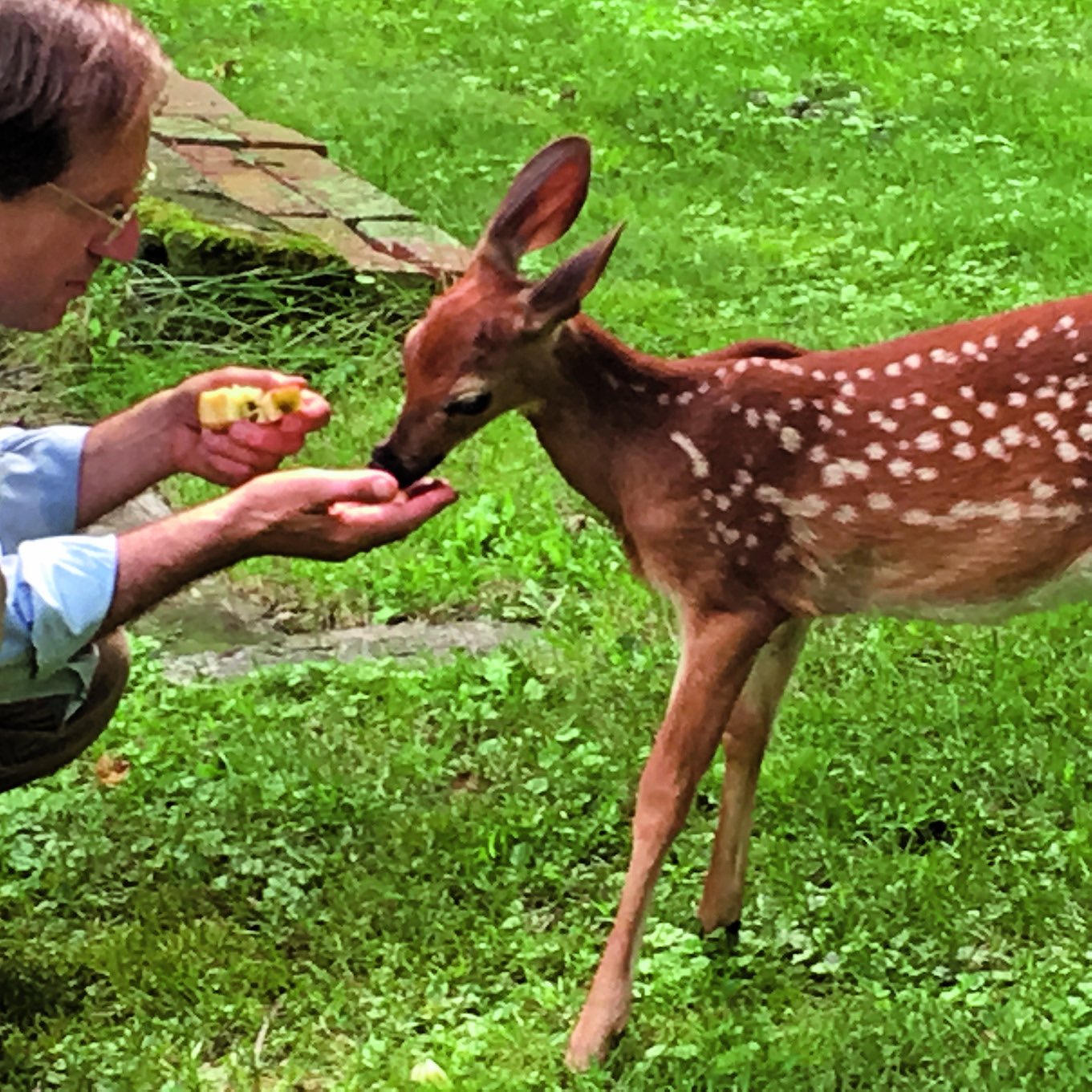
a man feeding a baby deer
Paul feeding Penelope. Image: Paul Bochner.

When I went around to the front of the house, she struggled to her feet and approached. In the morning light, I was better able to assess the state of her health. Months of solitary survival had taken a severe toll. Her body seemed hollowed, her ribs and pelvis sharply visible beneath her skin, and it felt a miracle that she was alive. On her right flank was a hemispherical mass the size of a cantaloupe, which I took to be a tumor, yet it had an open, running wound at its center, which she periodically craned her neck to lick. Her eyes were running and had congealed masses at their inner corners.

I bent to get a look at her injured foot. From not being walked on, the backward-facing cloven hoof had grown to an abnormal length and was curling upward. The wrist, which unnaturally bore her weight, had a flattened forward surface, an oval about two inches across, worn raw, without hair or skin, only pale pink–grey flesh, which, at its center, appeared to have been further abraded to the bone. Her right front foot, forced to compensate, was splayed and rockered, her right scapula protruded, and her front quarters were substantially lower than her hips.

I again placed apple pieces on the ground between us. I spoke very gently to her, saying, “You are the best one of all the deer. You are the most beautiful. You are good.” I continued to talk to her while she ate her apples, and when she had taken all she could, she returned to her resting spot under the window. I went inside to work, keeping periodic watch, pleased that she seemed to have claimed a place. But in a few minutes, from around the corner of the house came the twins, followed by their mother who immediately and ag-gressively charged at her. The Girl with the Broken Foot lurched upright and hobbled down the embankment, across the road and into the woods.

She was once again alone, but a step had been taken. Since the previous evening, things had changed. Even before her second feed-ing she had recognized me on sight. She had approached and had again allowed me near.

Although I had seen her fewer than half a dozen times in the preceding months, from the night of our first connection, she began to come to the house every day. She slowly gained strength and I would watch for her and thrill to the sight of her slow approach. It was our private time. We stood together, and I placed her food on the ground between us. After she ate, she would stare into my eyes for long periods, seemingly entranced. I told her stories. I sang softly to her. I told her she was my beauty.

So began our journey, and one of the greatest loves I have ever known.

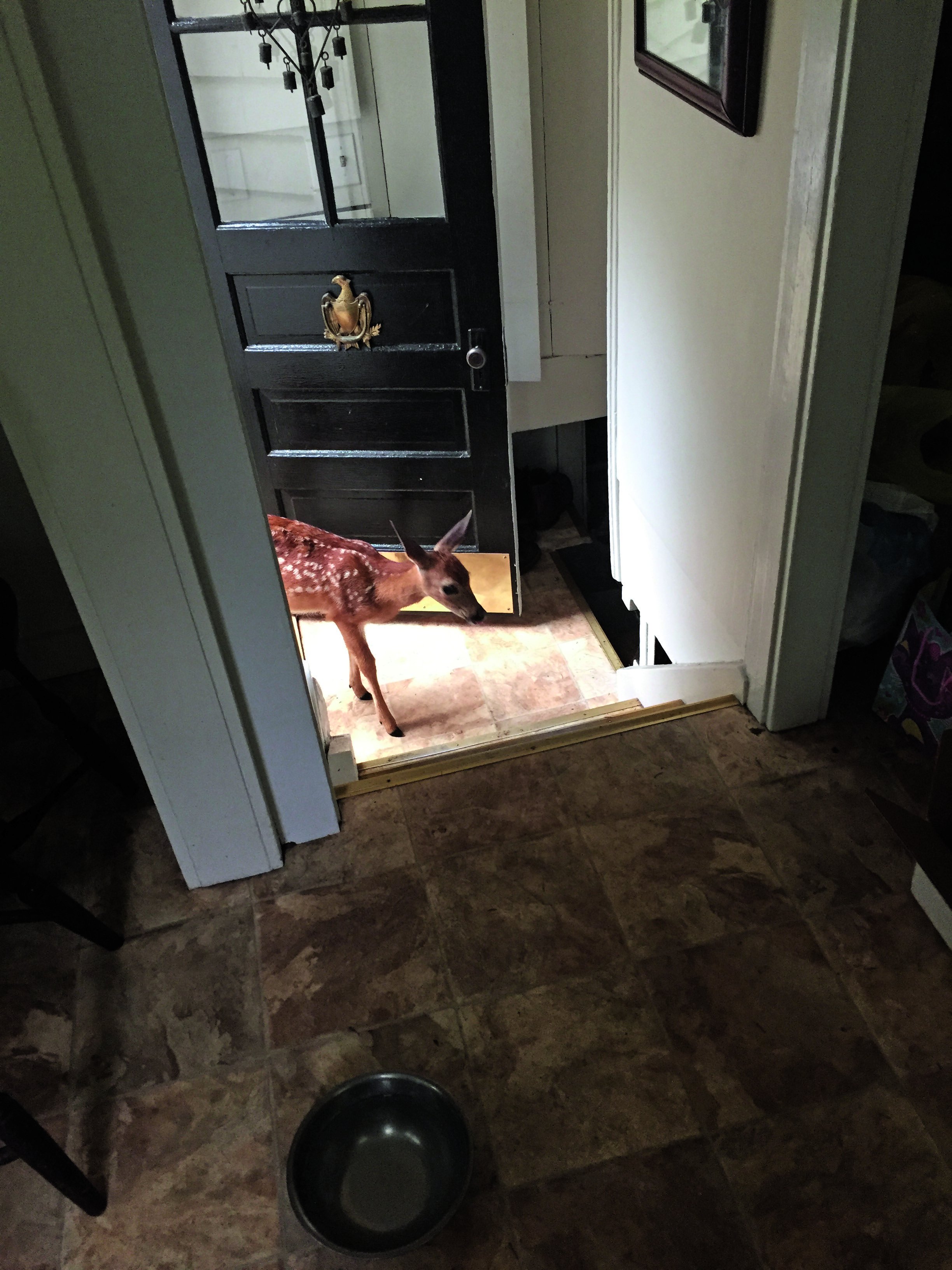
a baby deetrwalking into a home
Penelope walking into the house. Image: Paul Bochner.

About the Author

Paul Bochner began his professional life early, as a working musician through his mid-teens in Los Angeles, then moving to Montreal at the invitation of the National Film Board of Canada. He has won several international awards for his films and is the recipient of a Guggenheim Fellowship in painting. He has written for The New Yorker and The Atlantic.

The post The remarkable bond between a man and a deer appeared first on Popular Science.
  •  
❌