❌

Reading view

Your Office Isn’t Spy Proof

Welcome, Weekenders!

A song has been stuck on loop in my mind for days now. Yeah, this one. 

C’mon, haven’t you heard the big, brassy James Bond theme playing too? We have an honest-to-goodness spy scandal on our hands! That would be the affair over at OpenAI, where the FBI has arrested a former engineer, Abdulrahman Alfozan, for allegedly placing a toilet paper–wrapped recording device in a conference room. Why’d he do it? The Justice Department wasn’t explicit in its press release announcing Alfozan’s arrest, though the statement does make sure to prominently describe him as a “national of the Kingdom of Saudi Arabia,” implying, obviously, that he was hoping to spy on OpenAI for the Saudis.

I expect a not unsizable part of Silicon Valley experienced some schadenfreude when reading about the turn of events at OpenAI. I’d advise against indulging in that feeling, because when I struck up conversations with a few corporate security consultants and surveillance experts over the last few days, they all echoed the same sentiment: Plenty of companies risk ending up in the same situation—especially as they move quickly in today’s era of frenzied, heightened competition. A discomforting thought, eh?

“Organizations can sometimes be moving so fast that they often don’t understand that there’s an issue associated with somebody until that person’s on board and up to no good,” said Bill Priestap, a former head of FBI counterintelligence who now runs his own security consultancy, Trenchcoat Advisors. “Meaning they’re recruiting, and they’re under such pressure to get the right people and get them on board that in many regards, they end up with a minimal understanding of the people they’re bringing on board.” Well, good thing there hasn’t been an enormous, frantic hiring binge lately. Ha ha ha. 

If you’re starting to feel a little paranoid, I strongly, strongly advise against talking to someone like David Abbott, a San Francisco private detective, to find out how easy it is to bug an office. Such conversations will only further unnerve you—you might end up holding your next board meeting in your home basement, Tony Soprano style—because according to Abbott, it’s pretty darn easy to install a recording device. 

A suitable one can be bought for less than $100. Some of the popular ones resemble phone chargers, which get tucked into a power socket, hidden in plain sight. He’s also seen surveillance devices in fake coffee cups—you know, like the ones that might lie casually around an office—and quite a few in fake smoke alarms. 

More bad news: Should you find such a device, it’s like spotting an ant in your kitchen. One ant suggests the presence of more ants. “If I’m doing a bug sweep, just because I find one does not mean there isn’t a second,” said Abbott. “If you find one, there’s going to be two. If you find two, there’s going to be three. You just keep looking.”

What happened at OpenAI underscores Abbott’s warning. There, Alfozan, the alleged spy, did plant two bugs. Well, he tried to do so. Alfozan, not the sort who seems like he would’ve ever earned double 0 status, had placed another bug in a bag that he then mislaid: He reported it missing and had to go pick it up from the company’s lost and found.

OK, if I’ve spooked the heck out of you, I guess I can offer some solace by pointing you in the direction of Eric and Greg Levesque, whose Salt Lake City–based startup, Strider Technologies, has raised $110 million in the last few years to sell AI-powered software to businesses that monitors email and other internal communications, flagging suspicious behavior and possible espionage attempts. (Yes, the company’s name is a reference to Strider from “The Lord of the Rings,” the nom de cloak of Aragorn, the character Viggo Mortensen plays.) 

“What we’ve found is that companies are not always dealing with trained intelligence operatives. Like, they’re dealing with scientists or legitimate engineers who have been approached or coerced in some form or fashion and are now working on behalf of someone else,” said Greg Levesque. “They can leave a lot of digital exhaust.”—Abram Brown (abe@theinformation.com)


The Information’s Must-Read Stories
Cursor Staff Investigated Whether Confidential Data Reached SpaceX for AI Training
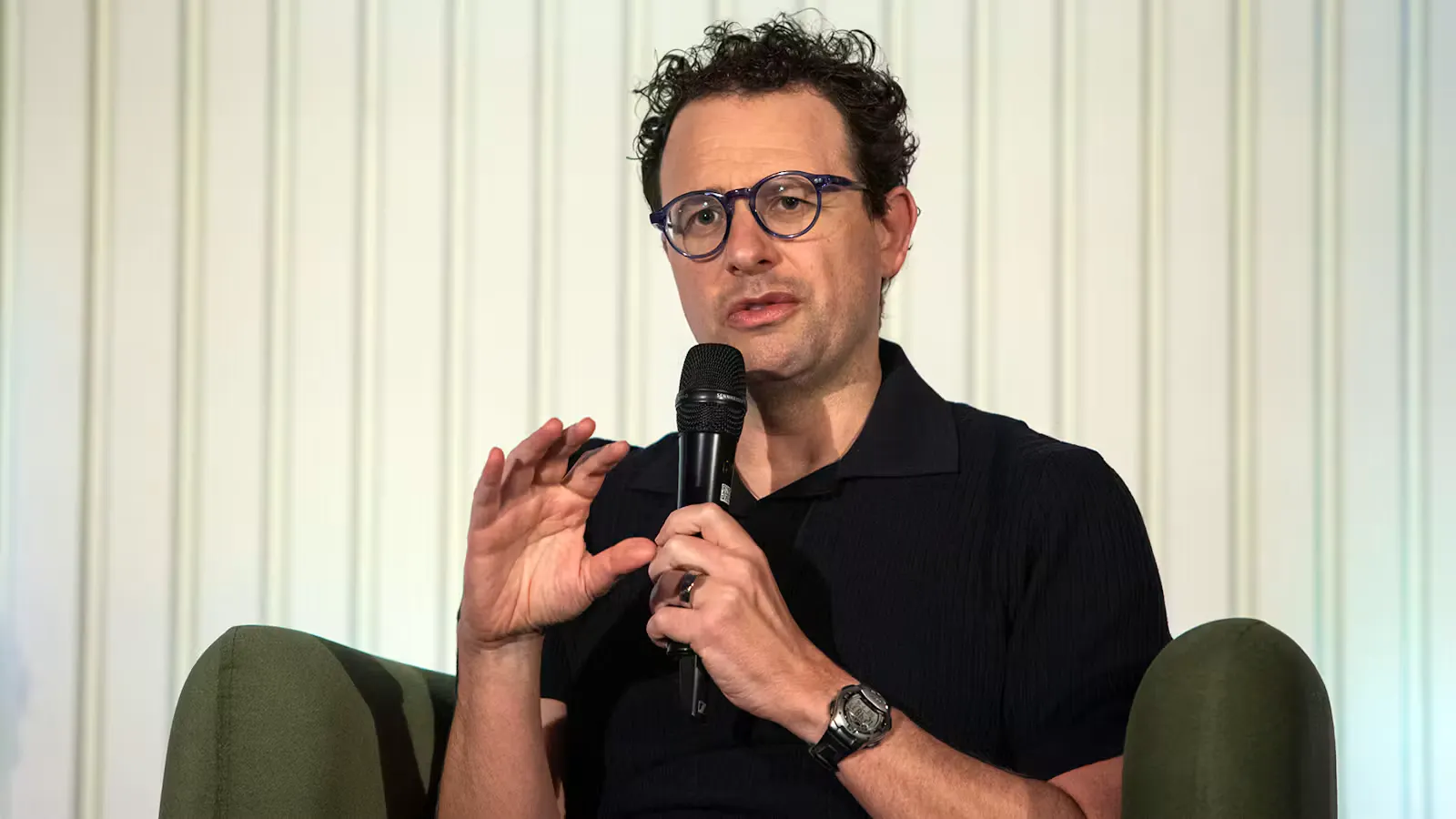
Anthropic’s Rapid but Slowing Growth Could Weigh on IPO Valuation

Andreessen Horowitz, General Catalyst Race to Secure the Chips Their Startups Need
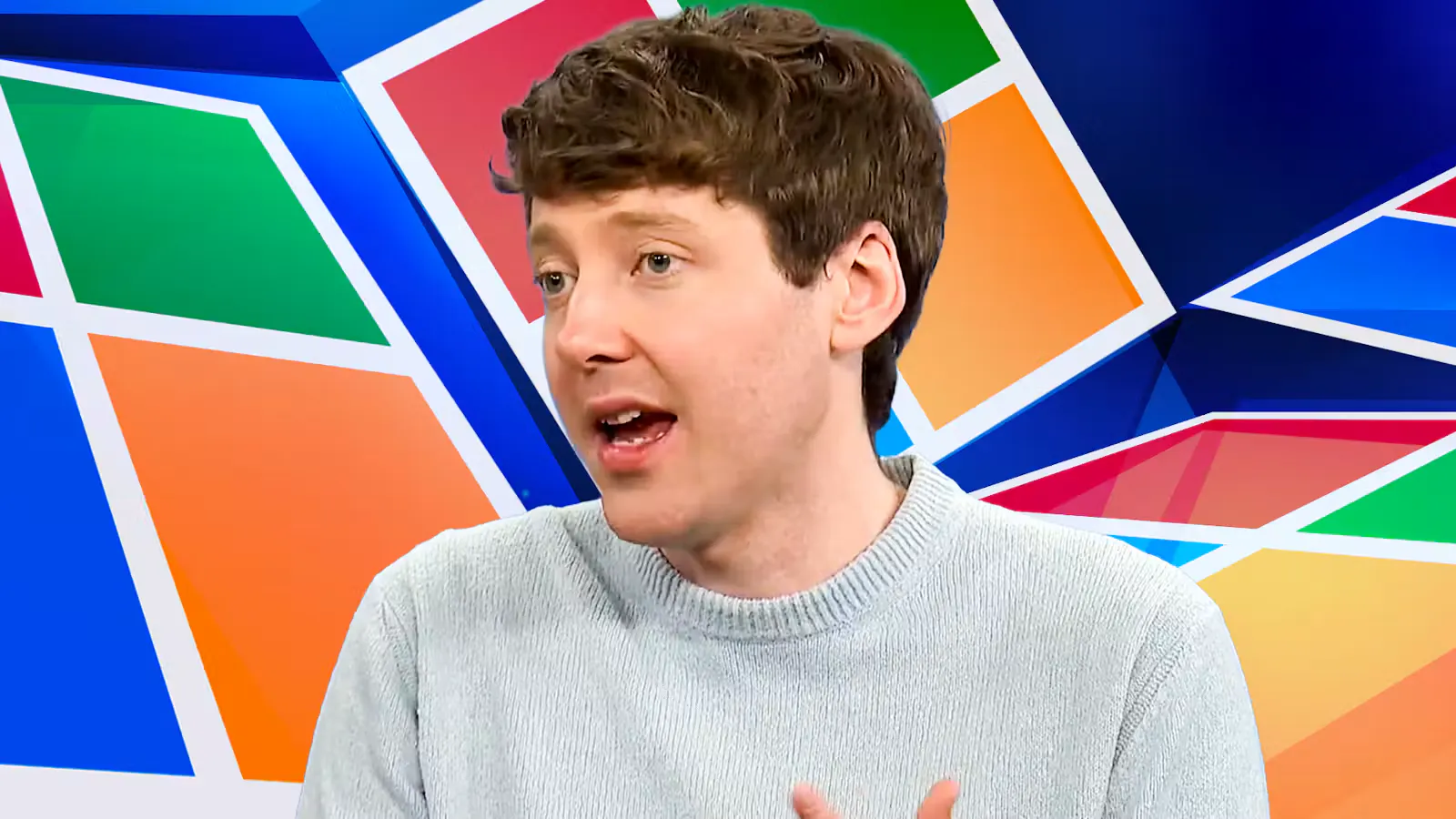
How Microsoft’s New Office Chief Fixed Copilot and Won Over Nadella


Listening: “Reaching Out”

As the pandemic shut down the world in 2020, Sayre Quevedo, then a producer for The New York Times’ “The Daily” podcast, quit his job and headed out to Los Angeles, hoping for a chance at self-reinvention. To cope with those tumultuous times, he decided to pursue a documentary project, recording every phone call. Had nothing else of import happened in his life, Quevedo might’ve wound up with an intriguing time capsule. But something quite unusual did occur: Just months after moving to LA, he and his twin brother, Connor, happened to finally locate their biological father, whom they’d never before met. He worked as a barber—blocks from where Sayre lived. “Reaching Out,” a new podcast co-produced by NPR station KCRW that won a top prize in the Tribeca Festival’s expanded podcast categories, is a starkly intimate account of their journey to meet him and their reconciliation with each other, their lives and what life might’ve been like if their father hadn’t been a total stranger who happened to be just down the street.—Abram Brown

Reading: “Sitcom” by Chuck Lorre and “Emperor of Nothing” by Blake J. Harris

Chuck Lorre, the indefatigable TV showrunner, writer and producer, has kept the masses laughing for years—and years—and years, with a list of hits that includes “Two and a Half Men,” “The Big Bang Theory” and “Dharma and Greg.” Those are sitcoms, a term Lorre acknowledges once made him practically break out in hives, since it was often used to cheapen what he sees as grueling, high-touch art. With spicy good humor, he reclaims the word in his new memoir about his time in Hollywood, “Sitcom.” 

“The truth is, making a live studio audience laugh for twenty-odd minutes every week, for twenty-two weeks, is incredibly hard and unbelievably stressful,” Lorre writes. “If you’re one of those people who insist on labeling all sitcoms as being cheap, juvenile and unsophisticated, well…all I can say is, blow me.”

I’d say “Sitcom” functions as a good primer on managing talent, too, and Lorre attests to having learned the importance of keeping out of the way. “Creativity needs air to breathe,” he writes. To do the opposite risks turning a leader into “one of those plastic bags you get at the dry cleaners that can kill small children.” Lorre also takes the opportunity to set down what he sees as good comedy’s basic tenets and decry the medium’s basest impulse: to write only about stupid people doing stupid things: “A better, perhaps deeper means to achieving laughter involves pain and suffering.”

Such a sentiment is most certainly shared by Larry David of “Seinfeld” and “Curb Your Enthusiasm,” the subject of “Emperor of Nothing,” a biography that won his reluctant cooperation. (When author Blake J. Harris finally wore David down, Harris received a two-line email from him: “Oh Jesus. If we must.”) As with “Sitcom,” “Emperor of Nothing” charts a remarkable rise across Hollywood from an inauspicious start: Lorre was a wannabe musician before his TV run, while David was a little-known stand-up comic with an unremarkable series of TV writing jobs before co-creating “Seinfeld.”

Like Lorre, David describes the process of penning comedy as an arduous affair. And by David’s own telling, the process of sitting down to write a new “Seinfeld” season would bring on full panic. “That always seemed like a daunting prospect,” he recalled. “Especially because all the good ideas were used up the year before.” Fortunately, David had his friendship with the show’s eponymous star, Jerry Seinfeld, one of many people within David’s orbit who gave interviews for “Emperor of Nothing.” “I would always say, ‘All we have to do is write today,’” Seinfeld said. Or as David recalled: “Jerry always talked me off the ledge.”—A.B.

Watching: “War”

No one does a charming, self-involved cad better than Dominic West, the British character actor who first washed ashore in America as “The Wire”’s Detective McNulty and then again in Showtime’s “The Affair” and in the final two seasons of “The Crown” as Prince Charles. In “War,” HBO’s new high-tension legal drama, he’s tech billionaire Morgan Henderson, a fellow championing a safer, more responsible social media—while embroiled in an increasingly messy divorce from his Hollywood star wife, Carla (Sienna Miller). Much of that mess is Morgan’s own doing: He looks wonderful in his Savile Row trousers—he just has trouble keeping them on. As Morgan and Carla gird for an extended battle, they assemble a posse of cutthroat attorneys, who find their impulsive clients constantly upending their carefully laid strategies. That flock of legal eagles includes a handsome rogue, Johnny (Archie Renaux), a lad from working-class south London who sees a chance to ascend by, uh, redefining zealous representation. Backstabbing and double crosses abound.—A.B.
  •  

Dario Amodei's Tabloid Era

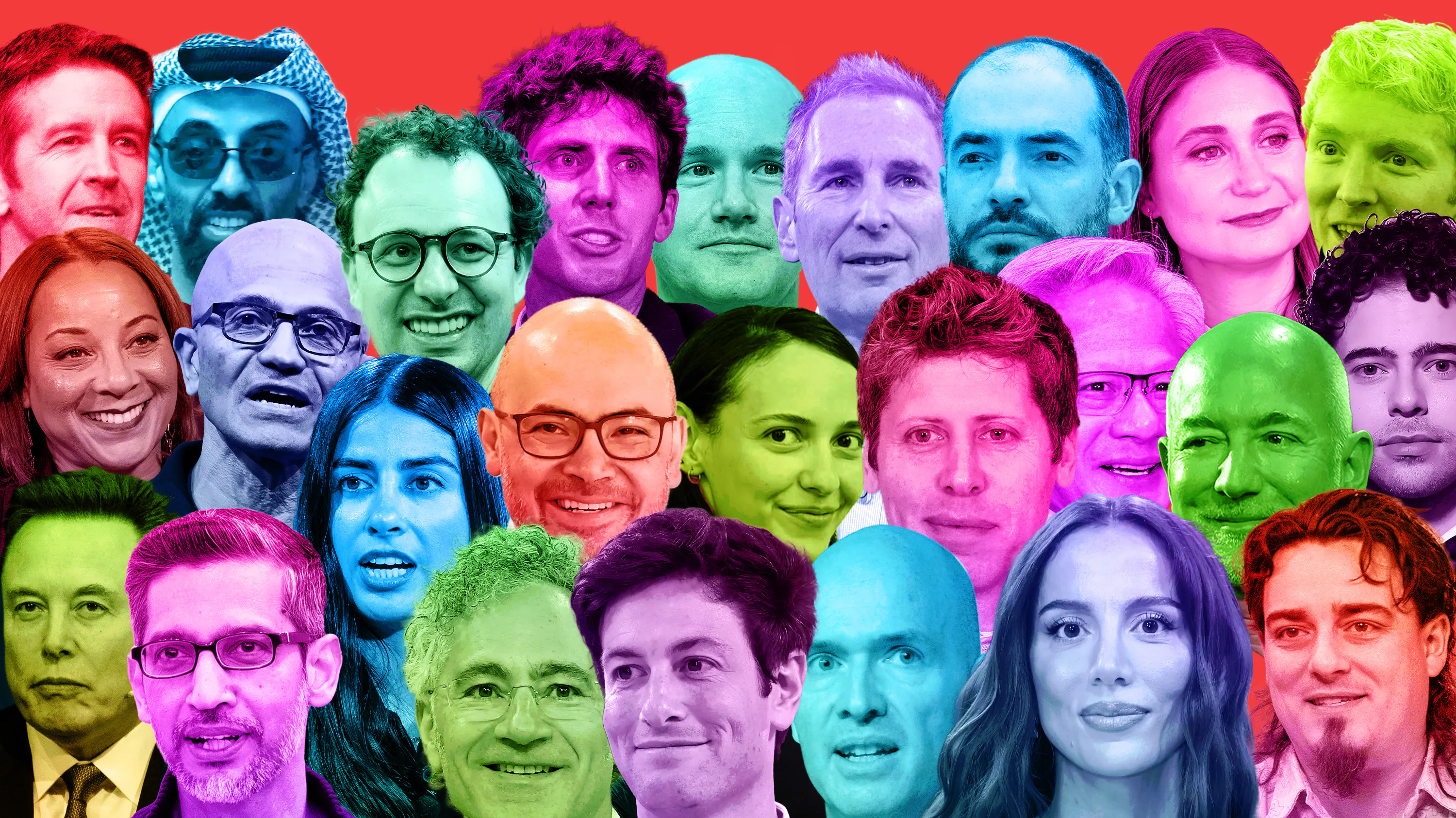
• Exclusive new list! Introducing Tech’s 50 Most Influential People

• Plus, Recommendations—our weekly pop culture picks: “Embedded: Where Is Austin Tice?,” “Valley of Death” and  “Hope”


Honestly, I almost feel a little sorry for Dario Amodei. That essay-writing, sweater-loving nerd is getting the treatment normally meted out to grim-eyed murderers and sex-romping celebrities. 

Put another way: The New York Post has discovered him in earnest. Well, him and effective altruism. By my count, the outlet has published more than a dozen stories mentioning Amodei or effective altruism in the past week. One had a headline describing Anthropic’s staff as “cult-like,” the same label it had applied a while back to effective altruists in general. (C’mon, fellas! Invest in a thesaurus.)

A second Post headline gave prominent attention to President Donald Trump’s recent criticism of Amodei’s suggestion for an AI industry slowdown: a “SICK conspiracy,” Trump called it, the capital letters all his. A third headline described METR, the AI research outfit Amodei says he’ll use to independently assess his company’s safeguards, as a group of “super-woke globalists.” And a fourth headline on an editorial board piece thundered out: “Beware the ‘effective altruists.’” 

Eeesh. I wonder what would excite the mouth breathers at the Post more: another Amodei doom dump—or JonBenét Ramsey’s parents finally saying they did it? 

Sure, Amodei has steadily attracted more and more—and more—media attention over the past five months, and so has effective altruism, which obviously got a lot of attention in the Sam Bankman-Fried days, too. But there’s something about watching Amodei and the EA set get turned into daily tabloid fodder right now that strikes me as an important marker of where the broader world’s conversation about AI stands. It’s loud, wacky as heck—and candidly, I worry it’s a precursor to something darker. 

I sat here trying to wrap my mind around it, and I started to get a headache like the one that sits at the bottom of a bourbon bottle. The Post is channeling a populist antipathy for Amodei and effective altruists that’s rooted in a dislike for their AI apocalypse talk. Yet at the same time there’s populist concern that AI may very well invite Armageddon: A recent survey by Politico found that 63% of U.S. adults believe AI could eventually destroy the world. So in sum, there’s widespread concern about destructive AI—and scorn for the people who want everyone to focus on it. As I said, it’s wacky.

Put aside AI catastrophe for a second. The bigger reason people dislike Amodei and the effective altruists is because they perceive them as the influential, liberal elite. It’s this potent derision that really animates the Post, and I find it unsettling. It’s the same type of addled, conspiracy-minded resentment that makes people still believe in Pizzagate and rigged voting machines.

What I find especially facile is the assumption that effective altruists and those who share their beliefs actually do wield gigantic influence over AI. I’d argue that they actually don’t. Articles by the Post and other outlets portray effective altruists as a wide cabal, but they only ever really mention the same three people over and over: Amodei; his sister, Daniela; and Facebook billionaire Dustin Moskovitz. 

Look, three people simply do not make an all-powerful cabal! I keep thinking about that disconnect between assumption and reality—probably because I’ve devoted enormous thought lately to considering who really does have clout in AI as we put together our debut list of Tech’s 50 Most Influential People. Yes, the Amodei siblings are on the list, and they’re the No. 1 and No. 2 figures at a gigantic company. But that’s…it. Not a single other person on our list belongs to the effective altruism crowd. 

I don’t write this as a passionate Amodei fanboy, nor as someone who finds effective altruism especially appealing: It’s an ideology that can be channeled into single-minded glumness when someone swallows the whole pill bottle and commits fully to it. A conversation with an effective altruist about the future is about as much fun as discussing foie gras with a vegan. It’s just that the concerns about Amodei and the effective altruists are beginning to strongly remind me of previous worries about lizard people taking over Congress.

Perhaps I’m making too much of those Post stories I mentioned. Still, with nearly 100 million readers a month, the Post is big enough to inspire other outlets to follow its lead, covering Amodei and AI with a sensationalism rooted in gassed-up anxiety and quarter-truths. Amodei’s the guy getting tarred and feathered today. It’d be a mistake to assume he’ll be the last.—Abram Brown (abe@theinformation.com)


Weekend’s Latest Stories

The 50 Most Influential People in Tech

The technology industry runs on influence. Its presence shows up in big, attention-grabbing moments—but much of it is dispersed in cloudy mystery, producing subtle ripple effects missed by casual observers. The CEOs of the largest companies certainly have clout. But so do a host of behind-the-scenes investors, renegade founders and rising-star executives. 

These are the people we at The Information think are most likely to influence the industry over the next decade. For more on how we created this list, here’s an extended explanation of our methodology.


Listening: “Embedded: Where Is Austin Tice?”

In 2012, Austin Tice, a former U.S. Marine who’d decided to try his hand at freelance foreign correspondence, went MIA in Syria. And he’s still missing 14 years later. His mother clings to hope that he’s alive. Every president since Barack Obama has vowed to bring him back. But if he has somehow survived, why hasn’t he surfaced since the Assad regime fell in 2024? Josh Baker and Sara Obeidat, a pair of veteran Middle East reporters, set out to try to answer that question in “Embedded: Where Is Austin Tice?,” an NPR-BBC joint production. 

They’re well sourced and determined, and by episode 2, they’re in an infamous prison retrieving never-before-seen files that the Syrian government kept on Tice. This involves a little bit of Bond-esque derring-do from Baker, who risks a five-story fall from a window ledge to get from one barricaded room to another. Additionally, I appreciated that they could display obvious empathy for Tice’s loved ones and stop short of lionizing him. He was clearly ill prepared to be in Syria. It was his very first attempt at freelance reporting. His military experience had emboldened him to go and made him a popular talking head for TV networks looking for on-the-ground analysis, but it also made many Syrians think he was in actuality an American spy posing as a journo.—Abram Brown

Reading: “Valley of Death” by Sharon Weinberger

A year or so before Donald Trump’s reelection, Sharon Weinberger, then national security editor for The Wall Street Journal, visited the offices of an unnamed but prominent venture capital firm. Yes, the tech world invasion of Washington that has happened in the second Trump administration was still far in the future, but even then, Weinberger had begun noticing how Silicon Valley and Washington were intersecting more than they had in the past—particularly when she looked at the venture capital going to defense tech startups.

At the VC firm, Weinberger asked the investor why the private sector would invest in technology like hypersonic weapons given the astronomical costs and uncertain business models. “I honestly don’t care about the product,” replied the investor. “It has nothing to do with the tech.” Instead, he argued, the success of the products—and his own returns—depended more on government relationships and lobbying, which was increasingly a strength for Silicon Valley firms. 

By Weinberger’s own account, she found herself thinking often of that investor’s sentiment as she wrote “Valley of Death,” an account of how Silicon Valley strayed from its Cold War national security roots before returning to the corridors of the Pentagon in recent years. 

Weinberger offers an engaging history, with details of untold episodes in the intertwined relationships between Silicon Valley and Washington, like Steve Jobs’ brush with the CIA. As she goes along, she illustrates how the tech titans of defense contracting such as Elon Musk, Palantir’s Alex Karp and Anduril’s Palmer Luckey have strong-armed their way into the staid field. And she details how they’ve been adept at talking up their companies, though their products haven’t always lived up to the hype—especially in Ukraine. 

Weinberger sees shortcomings in their “techno-optimism,” as she puts it. She thinks it could lead to ruinous scenarios not only for the firms’ financial backers but also for the U.S. armed forces at a time of heightened conflicts and supply chain constraints. Weinberger is a measured and well-traveled chronicler of the Silicon Valley arms race, raising the same concerns I’ve heard some investors share out loud. 

By the time she ends with President Dwight Eisenhower’s timeless warning of the dangers of the military-industrial complex, or “subordinating national security to private interests,” it’s clear why the current moment of defense tech feels deeply familiar.—Leo Schwartz

Watching: “Hope”

Up near the 38th parallel, the fictional South Korean hamlet of Hope Harbor—the setting of director Na Hong-jin’s latest movie, “Hope”—exists in a state of permanent paranoia, with North Korea not very far away. Signs implore residents to “REPORT SPIES” and “PROTECT THE NATION AGAINST INFILTRATION.” And everyone seems to have a stash of automatic weapons hidden away at home, much to the irritation of the town’s chief constable, Bum-seok (Hwang Jung-min). But it doesn’t seem likely that communist commandos are responsible for the body of a mutilated steer just outside of town. A bear, maybe—or a tiger? No, something much, much bigger. 

Na, clearly a devotee of the Spielbergian school of patient dread, waits almost an hour before getting that giant alien beastie on screen. Kudos to him. As is often the case, the buildup makes the payoff sweeter. Once the creature finally does smash its way fully into frame, “Hope” shifts into overdrive, with a number of genuinely exciting set pieces and chase sequences: I emphasize the plural there because, unfortunately for Bum-seok and his more able deputy, Sung-ae (Hoyeon), the town is threatened by an entire pack of these lanky-limbed E.T.s. They’re darn difficult to take down, and they play possum pretty well. And since “Hope” takes place sometime in the pre-cellphone past, backup is not a text message away. 

The set decoration of ruined Hope Harbor looks fantastic. And the mayhem is captured well through the camerawork of Hong Kyung-pyo, who also did “Parasite” as well as “Snowpiercer.” His efforts mitigate the letdown of the CGI effects: It’s a puzzler that the movie can rank as the most expensive Korean film ever and not have managed better. Honestly, though, the lackluster CGI was far from bad enough to dim my enjoyment. I trust the aliens will get jazzed up when Na returns for his already greenlit sequel.—A.B.

  •  

Why Apple Should Buy Granola

• The Big Read: Silicon Valley looks to a new biotech frontier—Montana 

• Garry Tan’s political dreams require this 32-year-old’s ‘grunt’ force 

• Plus, Recommendations—our weekly pop culture picks: “Dead Rabbit,” “The Amateur” and “The Drama”


Here’s a thought that would’ve seemed startling not long ago: There’s a very good chance that someone secretly recorded you this week with the help of AI. If it didn’t happen this week, it will almost certainly happen sometime in the very near future—then continue to happen with greater and greater frequency. 

And if you weren’t the one unknowingly recorded, you might have been the one pushing the record button, and you probably didn’t think twice about it. Because here’s another thought that once would have seemed extraordinary: Despite what would seem like obvious privacy invasion concerns, no one seems all too bothered by the trend—and the AI note-taking apps fueling it.

Of those apps, one of the most popular is Granola, which records a meeting, autogenerates notes from it and suggests follow-up tasks. It can be used for in-person meetings, and it also syncs seamlessly with software like Zoom and Google Meet. And really, I think it’s a pretty clear comment on the app’s caliber that anyone would rather use Granola than rely on the note-taking features Zoom and Google Meet offer. (People like it for a variety of factors, including the fact that it records digital meetings unobtrusively: No one in a Google Meet would know you’re using it—it doesn’t join the meeting as a participant or put up a recording banner.) 

Granola is especially well liked especially in Silicon Valley, where the VC crowd has proselytized it. In a testament to Granola’s quality, the company accomplished a real feat a couple of days ago: It released a version of its app for the Apple Watch, and all of a sudden, people were  talking online about the Apple Watch as an honest-to-goodness must-have gadget. 

“We’ve had a lot of emails saying, ‘I’m gonna go out and buy a Watch because of this’ or ‘Time to pull my Watch out of the drawer,’” said Granola co-founder Sam Stephenson. 

When was the last time Apple managed to release an attention-grabbing AI feature—or make the Apple Watch seem cool? Certainly not anytime in recent memory. So here’s what I think should happen: Apple should buy Granola. 

Like the best Apple products, Granola is beloved by its fans—many bands would love to have such dedicated groupies—for its sleek, well-designed simplicity. And the startup has just proven it can breathe new life into an Apple product that has seemed dull for years. Apple needs people who can pull off such a task, having chosen to heavily rely on updates to a few core products in recent years. (Granted, maybe incoming CEO John Ternus will shift that mindset a bit; meanwhile, Apple is reportedly working on smart glasses, as well as a wearable AI pin.) 

Perhaps most importantly, Granola can be probably acquired for the type of price Apple likes to pay: The company does not do mega-acquisitions. Granola, founded in 2023, most recently got a $1.5 billion valuation in a March fundraising, which included Index Ventures, Kleiner Perkins and other investors. 

Granola’s attention-catching Apple Watch debut was something of a happy accident, Stephenson said. The app was originally a side project of Tom Humphrey, a Granola software engineer, that gained momentum within the company after he bolstered enthusiasm for it with a surprising revelation: The data Granola accessed about its iOS users showed that 40% of them also owned an Apple Watch. 

Among Granola staff, the Apple Watch app has quickly become much more popular than the iPhone one. “You just think to turn it on much more often than you do with the iPhone,” Stephenson said. “The worst thing about the iPhone app is that it’s in your pocket: out of sight, out of mind. You forget to use it.”

Granola has toyed with the thought of making its own hardware but has shied away from doing so. Whatever the startup released would face stiff competition from the growing number of already available devices dedicated to AI note-taking. Plaud, a five-year-old startup, makes one of the most popular ones. 

I first wrote about Granola and AI note-taking last year when it seemed like the dawn of a new always-on, always-recording world. It’s now something like sunshiny midmorning: Over the past year, Granola’s user growth has been a “smooth curve: upward and to the right,” said Stephenson. (He declined to give specifics.) Meanwhile, the startup has gone from two floors of a Shoreditch, London, office to occupying the entire building, roughly quintupling its staff to nearly 100.

Given Granola’s rising popularity, I asked Stephenson if he had met any unexpected users. “Well, Gwyneth Paltrow comes to mind,” he said.—Abram Brown (abe@theinformation.com)


Weekend’s Latest Stories

The Big Read

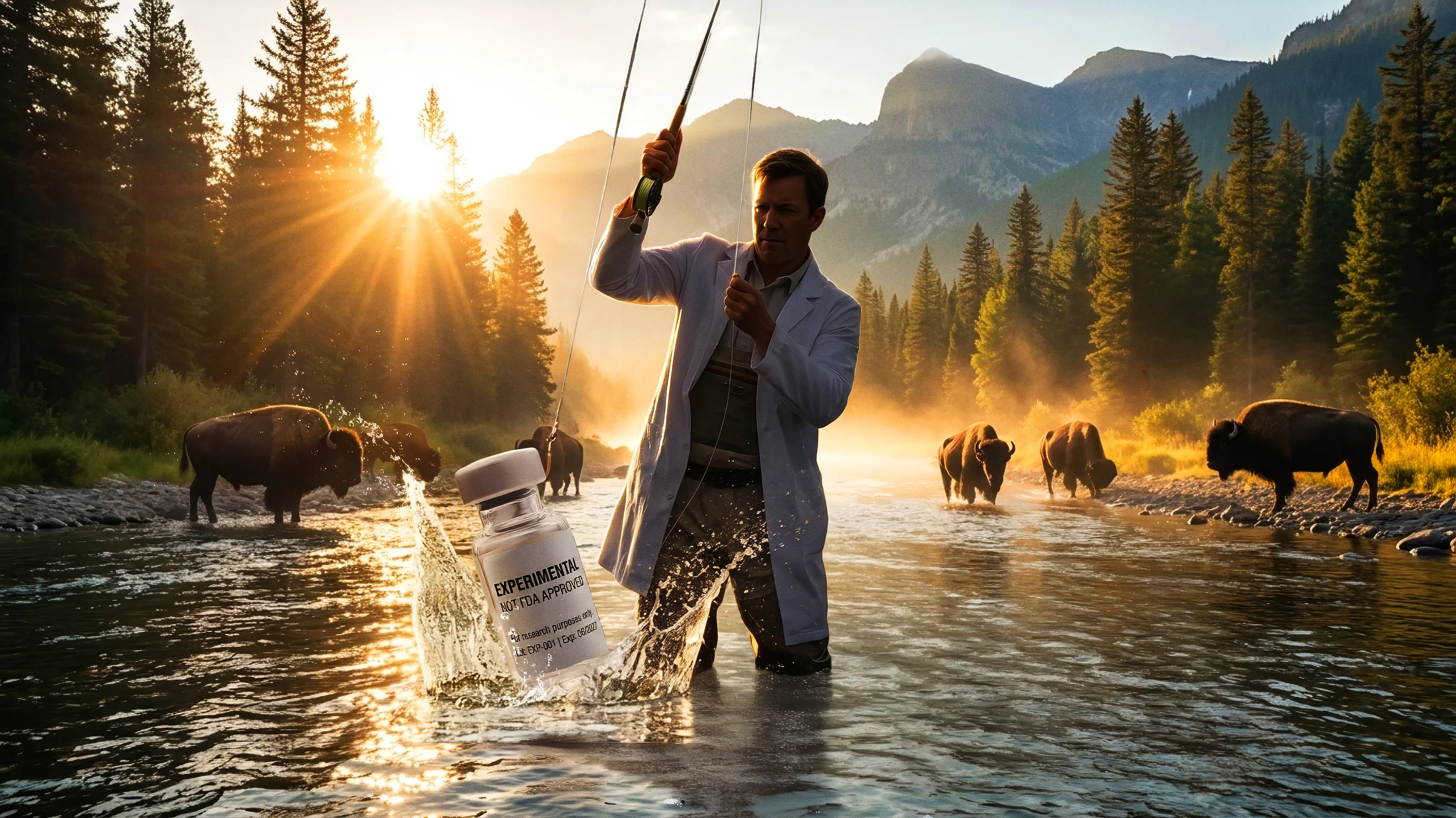
Silicon Valley Looks to a New Biotech Frontier: Montana

The state is now allowing anyone—not just the very sick—to access unapproved, experimental drugs. It’s a boon for biotech startups and an overt embrace of the tech world ethos for cutting back on rules that might limit innovation.

Garry Tan’s Political Dreams Require This 32-Year-Old’s ‘Grunt’ Force

Forrest Liu is tasked with an agenda that focuses on local Bay Area candidates, economic growth—and the death of the billionaire’s tax.


Listening: “Dead Rabbit” 

As a genre of fiction, folk horror has given us memorable entertainment such as “Midsommar” and “The Wicker Man.” “Dead Rabbit,” a podcast from BBC Radio 4, is the rare nonfiction version: Hosts Dan Ashby and Lucy Taylor, a husband-and-wife pair of investigative journalists, set off into the countryside to figure out why piles of mangled animals keep getting threateningly piled up around Awbridge, England, a well-heeled, 757-person community. It’s a place full of well-tended flower baskets and a chipper vicar, who tries to turn the first grisly mise-en-scène he encounters on his parish doorstep—a severed deer’s head—into a joke about venison sausages. Not everyone in the clergyman’s flock is as determinedly upbeat, and the carcasses have thoroughly disturbed much of the village, sparking WhatsApp groups replete with theories (devil worship, perhaps?) and recriminations. The series begins as a spotlight on what happens within the unnerved small town and then widens its focus to larger issues of conservation, animal cruelty and liberal-versus-conservative politics. Squished roadkill has never seemed more sinister.—Abram Brown

Reading: “The Amateur” by Chris Bohjalian 

After three decades and 24 novels, Chris Bohjalian has established himself as an ultrareliable source of highbrow potboilers. More often than not, he likes to get them going with a real bang. Or, as he described it in a 2018 conversation with The New York Times, he likes an opening moment of “cataclysmic disequilibrium.”

Just such a catastrophe unfolds in the first few pages of “The Amateur,” his latest and probably finest novel. On Aug. 3, 1978, Mira Wilston, a privileged teenage golf prodigy from a tony Westchester, N.Y., suburb, sends a well-struck drive straight through a practice net—and it zings right into the head of a nearby caddie: Kenny, a high school classmate. It kills him instantly. So who deserves the blame? Mira, who narrates the tale? The country club? The net’s manufacturer? Had Bohjalian been thinking less ambitiously, he would’ve kept his exploration of culpability and responsibility confined to the immediate damage from Mira’s errant shot (in a tale embellished by nice period-piece details, like the high school’s smoking lounge and the Miami Sound Machine records). But he wasn’t and he didn’t. In the accident’s aftermath, the disequilibrium intensifies—as Kenny’s demise inadvertently leads to the public revelation of a long-running sexual relationship between Mira, 18, and one of the country club dads. Yes, it should sound a little like “Lolita,” and therein lies the greater conceit of “The Amateur,” which appropriates and restyles Vladimir Nabokov’s classic, widening to an examination of power, control and fate. The connection between the two novels is an explicit one: Mira, who recounts all the events with a meta, tragicomic awareness, remarks on it several times.—A.B.

Watching: “The Drama”

An admission I make with no degree of hyperbole: I watched several parts of “The Drama,” an A24 film starring Robert Pattinson and Zendaya as a pair of engaged lovebirds, with my mouth fully agape. And when the tension between them ratcheted up further, I watched through gaps between my fingers: I’d thrown a hand over my eyes. What can I say? Scenes of matrimonial Armageddon make me squirm, and “The Drama” (newly streaming on HBO Max) goes full-on scorched earth. 

To explain the plot in much detail would ruin the film, so to summarize it quickly: Shortly before their big day, a secret-telling drinking game goes horribly awry when Emma (Zendaya) reveals a dark moment from her past that shocks Charlie (Pattinson). I don’t blame him—it shocked me, too, and what’s more surprising is that the film does the reveal quite quickly. (Drew Barrymore survived only marginally longer in “Scream.”) Mostly, “The Drama” devotes itself to chronicling the subsequent fallout—with director Kristoffer Borgli twisting the usual rhythms of a screwball rom-com into devious knots.

As an unmarried 37-year-old who has needed to soldier through more than a dozen friend weddings in the last decade, I also appreciated how “The Drama” very neatly satirizes how millennials have turned the exchanging of vows into an industrial nuptial complex.—A.B.

  •  
❌