
❌

Normal view

New type of superionic water ice observed for the first time

16 October 2026 at 09:00

A new phase of solid superionic ice has been created for the first time in the laboratory. By heating a tiny sample of ultrapure water while compressing it to extreme pressures, physicists at the French Alternative Energies and Atomic Energy Commission (CEA) succeeded in forming an ice phase that features a hexagonal close-packed (hcp) structure and liquid-like hydrogen diffusing through a solid lattice of oxygen atoms. This demonstration could help us better understand the structure of ice giant planets such as Uranus and Neptune, which may harbour this form of ice deep within their interiors.

Unlike water’s familiar liquid, vapour and ice phases, superionic ice can only exist when water is subjected to tens or even hundreds of GPa of pressure at temperatures above 1000-2000 K. Under these conditions, theory predicts that hydrogen ions (protons) diffuse so readily through empty sites in water’s oxygen lattice that the material’s ionic conductivity may exceed 100 Siemens per centimetre, making it almost as conductive as metals. The melting temperature of this form of ice is also extremely high, reaching several thousand kelvin as new ice structures develop that feature a close-packed oxygen lattice.

Diamond anvil cells and X-ray diffraction spectra

To create super-high pressures in the laboratory, researchers typically use diamond anvil cells, which are tiny cavities in which samples are tightly compressed between the tips of two opposing diamond surfaces. In the new work, a CEA team led by physicists Alexis Forestier and Gunnar Weck added two high-thermal-conductivity cup-shaped discs made of boron-doped diamond to the diamond anvil surfaces. This set-up enabled them to apply pressure while heating their 12 micron-sized sample uniformly with lasers, thereby avoiding the large temperature gradients that complicate measurements in conventional diamond anvil cells.

Forestier, Weck and colleagues heated their sample of ultrapure water from 300 to 2630 K while applying pressures between 80 and 229 GPa. Thanks to the Extremely Brilliant Source’s sub-micron beam – part of the ID27 beamline at the European Synchrotron Research Facility in Grenoble – they were able to obtain high-quality X-ray diffraction spectra despite the small size of their sample. According to the CEA researchers, these spectra clearly showed a new hexagonal close-packed (hcp) phase of superionic ice emerging alongside a previously observed face-centred cubic (fcc) phase across a pressure range of 130-200 GPa and temperatures above 1800 K.

A link to Uranus and Neptune

The discovery brings the total number of superionic phases of water to three, with the other being the body-centred cubic phase first observed in 2016. But that’s not all. Forestier, Weck and colleagues say that their results, which they report in Physical Review Letters, could also help explain the magnetic fields of Uranus and Neptune.

Unlike the Earth’s magnetic field, these fields are skewed and off-centre with respect to the planets’ axis of rotation. These properties have led scientists to hypothesize that instead of being generated by the motion of molten iron in the planet’s core (as on Earth), the magnetic fields of Uranus and Neptune could arise from conductive superionic warm dense ice (composed of water, ammonia and methane) in the planets’ outer third.

“The experimental observation of this new hcp superionic phase now provides a rationale for incorporating its mechanical properties and ionic conductivity into these models of planetary interiors,” Forestier says. “Indeed, this phase can coexist with the fcc superionic phase and become more stable at higher pressures (above 150–200 GPa), and so probably exist deeper within the inner shell of these ice giants.”

The researchers’ next step will be to precisely define regions of the phase diagram where pressure and temperature are stable; map out the transition lines between the different phases (molecular and superionic); and understand how the new hcp phase behaves as it melts. This will help confirm whether these phases are stable and present within Uranus and Neptune, Forestier tells Physics World.

“We also want to obtain more direct experimental signatures of superionic behaviour, beyond the thermal expansion we observed,” Weck adds. “Brillouin spectroscopy measurements, for example, could reveal anomalies in the speed of sound, strengthening the evidence for proton diffusion.”

The post New type of superionic water ice observed for the first time appeared first on Physics World.
Low-level clouds could make wind farms more efficient

14 October 2026 at 15:20

Low-level sea clouds can make offshore wind farms more efficient, say researchers at the University of Twente in the Netherlands. This increase in efficiency is due to atmospheric mixing effects that shrink the wake of slower air behind nearby turbines, and the team say it could help wind farm designers make the most of ambient conditions.

Scientists have known for decades that multiple wind farms can be significantly less efficient than a single, isolated one. This is because air slows down as it moves through turbine blades, creating a wake that impairs the performance of wind farms downstream. This slow-air wake may extend for tens of kilometres, and in extreme cases it can even stretch beyond 100 km. “How quickly the wake recovers depends on how effectively atmospheric mixing pulls air from the stronger wind above and on the sides,” explains Davide Selvatici, a physicist who co-led the research with his colleague Richard Stevens.

In their latest study, which appears in PRX Energy, Selvatici and Stevens show that the presence of low-level stratocumulus clouds can enhance this mixing via a process called radiative cooling. This occurs when air at the top of a cloud radiates heat into space and becomes cooler, much like the ground does on a clear night. Because cooler air is denser than the surrounding air, it sinks, generating an enhanced downward motion that intensifies atmospheric turbulence. This ongoing mixing helps sustain the cloud by drawing moisture up from the surface below.

Fully three-dimensional simulations

To piece together this picture, Selvatici and Stevens needed to accurately model the turbulence in cloud tops and the way that air flows through a wind farm. They used large-eddy simulations to study how low-lying clouds impact the length of a wind farm’s wake. They also performed high-resolution simulations of stratocumulus-topped boundary layers across a range of atmospheric conditions: clear skies, cloudy skies without radiative cooling; and cloudy skies with radiative cooling.

These simulations are fully three-dimensional, and Selvatici explains that creating them meant solving equations within the model to determine how wind moves in all three directions, while also incorporating changes in temperature, water vapour and liquid water suspended within the cloud. For this, they relied on the Navier-Stokes equations (the standard equations used to describe the movement of fluids such as air) with some modifications. “We use an extended set of equations to include the effects of heat and moisture and to represent the energy and momentum extracted by the wind turbines under local wind conditions,” Selvatici explains.

“Effects can be significant”

The pair’s results indicate that the effects of cloud-top cooling can be significant. When these effects are present, the mean wind speed within a wake returns to approximately 90% of the incoming wind speed about 17 km beyond the end of the wind farm. In simulations without cloud-top cooling, however, the mean wind speed remained below 90% even 32 km beyond the end of the farm.

“Clouds are inherently coupled to the atmosphere, making it difficult to isolate their effects, but by comparing simulations with and without cloud-top cooling, we identified cloud-top cooling as an important process for wind farm wake recovery,” Selvatici explains.

Since wind farm power production increases with the cube of wind speed, even a modest reduction in wind speed can have a considerable effect, he adds. The problem is that most existing wind-farm models either simplify cloud-related processes or exclude them altogether. “Our results demonstrate that these should be taken into account,” says Stevens, “particularly in regions with frequent low-level clouds as over the North Sea, where many wind farms are found and where the annual cloud coverage is higher than 30%.”

Stevens adds that a better understanding of these effects could improve wind farm design and inform how far individual wind farms should be placed from each other. However, Selvatici notes that they’re not yet able to offer definite practical advice. “We cannot conclude whether wind farms should indeed be placed closer together in cloudy regions because our simulations represented idealized conditions,” he says.

The post Low-level clouds could make wind farms more efficient appeared first on Physics World.

Titanium-polymer metamaterial floats in water

7 October 2026 at 09:00

Open-cell metallic structures are widely employed in the aerospace industry and in biomedical applications that require materials to be extremely light as well as strong. In marine infrastructure, however, their usefulness is limited because water quickly fills their interconnected open pores, preventing them from floating even though their bulk density is much lower than that of water.

Engineers in Australia and France have now developed a way around this problem. By combining so-called architected metals with a lightweight polymer foam, they created lightweight, strong, open-cell titanium structures that can float in water, overcoming the density limitation of previous materials while retaining structural performance.

“The innovation opens a new design space for marine structures, vehicles and rescue equipment where we need strength, low weight and buoyancy all at the same time,” says Ma Qian, a materials engineer at the RMIT University in Melbourne who co-led the research.

Beyond Archimedes

According to Archimedes’ principle, an object will float if its effective average density is lower than that of the fluid surrounding it. With open-cell materials, however, it’s more complicated. Because these interconnected frameworks of struts, thin plates or curved surfaces contain interconnected open voids that can fill with water as well as closed voids that cannot, they may fail to float even when their bulk densities (ρbulk) are well below that of water.

In the new work, which is detailed in Advanced Materials, Qian and colleagues at RMIT’s Centre for Additive Manufacturing and the Conservatoire National des Arts et Métiers in France developed an alternative measure of density that incorporates only the water-excluding parts of a structure. If the value of this “skeletal density” ρskeletal is lower than that of the surrounding liquid, then the structure will float even when water flows through all its interconnected open pores.

The team used this new measure to design a structure based on a recently-developed type of metallic open-lattice metamaterial called a hollow-strut lattice (HSL). Unlike conventional solid-strut designs, HSLs contain millimetre- or sub-millimetre-sized channels within their struts. These channels make them stronger than conventional solid-strut lattice materials of the same density, but that isn’t their only attraction. The presence of such channels also means that materials can be injected into them without compromising the HSL’s open-cell architecture – something that is impossible in traditional structures. Thanks to this feature, Qian explains, appropriately designed hybrid HSLs can float in water while remaining permeable.

Foam and titanium

The researchers made their open-cell hybrid lattice metamaterial by injecting expandable polyurethane (PU) foam, which has a density of 0.08–0.11 g/cm3, into a HSL structure made from a titanium alloy, Ti-6Al-4V.  At the macro level, Qian explains that the foam completely fills the hollow titanium struts, and microscopic analyses reveal continuous, defect-free interfacial bonding between the foam and the inner walls of the struts, while the foam’s own heterogeneous, closed-cell microstructure incorporates pores ranging from ∼10 µm to 200 µm in size. “The closed-cell PU foam limits water ingress into the internal strut channels while the external open-cell architecture remains permeable, so safeguarding marine buoyancy without notable density gain,” Qian says.

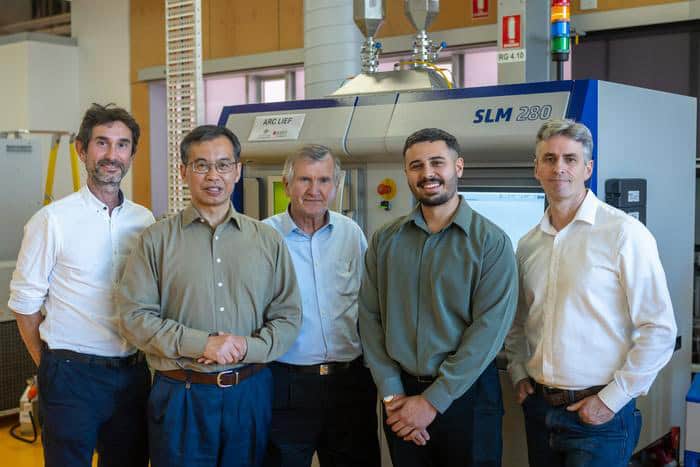
A team of researchers in front of equipment
The project team: Andrey Molotnikov, Ma Qian, Milan Brandt, Jordan Noronha and Martin Leary at RMIT’s Centre for Additive Manufacturing. (Courtesy: Sara Tan, RMIT)

The RMIT team submerged both unfilled and foam-filled titanium alloy HSLs in freshwater for more than two months. As expected, all the unfilled HSLs sank when immersed, regardless of strut diameter. The researchers then immersed the materials in natural seawater (which has a measured density of 1.03 g/cm3, slightly higher than the 0.997 g/cm3 they measured for freshwater) over a period of two weeks. They found that the hybrid structures stayed afloat over the experimental period and lost only about 0.15 % of their mass, suggesting they are resistant to corrosion. They also found that the foam-filled HSLs have a higher specific strength than commonly employed marine materials such as high‑density polyethylene and 316L stainless steel.

While the most immediate uses for these new materials will be in seafaring vehicles, lightweight floating structures and rescue equipment, Qian thinks they could have wider applications. “The open-cell architecture allows different materials to be integrated within the same structure,” he tells Physics World. “For example, a biodegradable magnesium scaffold could potentially be combined with a hydrogel containing growth factors for controlled therapeutic delivery during bone regeneration. And in aerospace applications, a hollow-strut titanium lattice might be integrated with a carbon-fibre-reinforced polymer to create lightweight, stiff hybrid structures.”

The researchers now plan to further develop their technology and are seeking collaborations with potential commercial partners. “We want to assess its viability for larger marine applications, including autonomous underwater vehicles and floating platforms and investigate long-term performance under realistic marine conditions,” Qian says. “We also plan to introduce our concepts into our advanced manufacturing and design courses at RMIT to help engineering students and researchers develop new ideas in this emerging field.”

The post Titanium-polymer metamaterial floats in water appeared first on Physics World.

Exciton wavefunctions come into view

1 October 2026 at 09:00

Physicists have experimentally reconstructed the quantum probability distribution of an exciton for the first time using super-fast spectroscopy. By simultaneously capturing the spatial and momentum spreads of these short-lived quasiparticles, the work adds to our understanding of how excitons evolve in complex materials. According to members of the research team, this improved understanding could lead to advances in organic photovoltaic devices.

When light shines on materials such as insulators and semiconductors, the energy from these incident photons can sometimes promote electrons in the material to higher energy bands, leaving behind positively charged holes. The electron and hole can then bind together, forming a neutral excited quasiparticle known as an exciton.

Excitons play a key role in light harvesting in optoelectronics devices, but their quantum mechanical structure has proved notoriously difficult to study. Among other reasons, this is because the excited electrons decay back to their original states within just picoseconds (10-12 s), and standard spectroscopic techniques are not fast enough to simultaneously probe the spatial dimensions of the quasiparticles’ orbits and their momentum profiles within that time limit.

Photoemission orbital tomography

In the new work, physicists led by Peter Puschnig of the University of Graz, Austria, together with colleagues at Marburg University and Forschungszentrum Jülich in Germany, got around this problem thanks to a technique called time-resolved photoemission orbital tomography (trPOT). This technique combines pump-probe photoemission spectroscopy with momentum microscopy and offers resolution at the femtosecond (fs, 10-15 s) scale, making it well-suited to capturing the exciton wavefunction.

Puschnig and colleagues began by applying an ultrashort normal-incidence laser pulse with an energy of 2.35 eV to an organic semiconductor called alpha-sexithiophene, which is employed in optoelectronic applications such as solar cells. This pulse generated the excitons. The next step was to eject the electrons from these excitons using a second, linearly polarized laser pulse with a relatively high energy of 21.7 eV. This process is known as photoemission.

“If we then measure the energy and direction of the ejected electrons, theoretical models allow us to infer their quantum-mechanical state,” Puschnig explains. “And by varying the time between the first and second laser pulses, we are able to obtain snapshots of the exciton at different times after its creation.”

The team found that the exciton in the sexithiophene films initially extends over a distance of approximately 1.5 nm, or roughly three molecules. Within 400 fs of its creation, though, its size contracts by about 25%. “What makes this particularly exciting is that we are not just measuring an energy or lifetime but are also gaining access to the quantum-mechanical wave function of the exciton itself, including its spatial structure and phase,” Puschnig says.

Coordinating demanding experiments and theory

Puschnig says the idea for the experiment grew out of the team’s earlier work on photoemission orbital tomography (POT), including a 2021 proof-of-principle study showing that it could be extended into the ultrafast regime. “The main challenge was coordinating demanding experiments and theory: producing well-defined molecular films; transporting them under ultra-high vacuum from Jülich to Marburg in a vacuum suitcase; performing ultrafast photoemission measurements; and carrying out computationally intensive ab-initio calculations in Graz to interpret the data,” he adds.

The work, which is detailed in Physical Review X, provides a new way to study excitons directly in real space and follow their quantum-mechanical evolution in time. According to the researchers, it could help us understand how excited states evolve into charge-separated states in the donor/acceptor systems that occur in organic photovoltaics, where the electron and hole can begin to separate after photoexcitation.

The researchers say their next goal is to move from the relatively simple exciton they studied to more complex systems. “We want to observe how charge-separation processes are controlled by the molecular and electronic structure of a material,” Puschnig tells Physics World. “Doing this will be particularly interesting because charge separation is the crucial step between absorbing a photon and generating a usable electrical current in an organic solar cell.”

The post Exciton wavefunctions come into view appeared first on Physics World.

Single-photon measurements confirm Richard Feynman’s vision of quantum mechanics

25 September 2026 at 09:20

Physicists have confirmed the two foundational postulates of Richard Feynman’s path-integral approach to quantum mechanics in a real-world experiment for the first time. This comes nearly 80 years after Feynman first published his path-integral formulation, which describes the time evolution of quantum systems.

Fundamental thought experiments, such as Schrödinger’s cat, the Einstein–Podolsky–Rosen paradox and the quantum double-slit experiment have always been important for developing the theories of quantum mechanics. As technology improves, some thought experiments have been realized in the lab, confirming many aspects of quantum theory. However, thought and real experiments thus far have not addressed the fundamental question: how do quantum systems evolve between initial and final states? This question, explains Shi-Liang Zhu of South China Normal University in Guangzhou, lies at the heart of Feynman’s path integral postulates for his famous propagator equation.

The postulates, first proposed in 1948, have never been directly tested – despite their foundational role in modern physics. Indeed, the path-integral formulation has been critical for the development of fields ranging from quantum field theory to cosmology and has provided a unified framework that connects quantum mechanics with classical physics through the principle of least action. The path integral’s predictions also underpin modern quantum science, from condensed matter physics to quantum statistical physics.

As quantum theory was developed, several “pictures” emerged of how a quantum system evolves with time – including the Schrödinger and Heisenberg pictures. The Schrödinger equation, the Heisenberg equation and the Feynman propagator equation are formally equivalent formulations of quantum mechanics, explains Zhu. “However, while the first two are typically treated as fundamental postulates, the Feynman propagator equation is derived from two underlying postulates. This derivational asymmetry makes experimental tests of Feynman’s postulates particularly compelling.”

Not a simple sum

The first postulate is that a quantum particle does not travel along a single trajectory when moving from point A to point B; and instead every probable path contributes to its trajectory. The second postulate is that all possible paths have the same probability (or equal-magnitude amplitudes) and differ only by a path-dependent phase factor. This is very different from simply summing all the probabilities as in classical physics.

At time ti, explains Zhu, a particle is localized at xi with its wave function denoted as ψ(xi, ti). The probability of the particle reaching xf at time tf is therefore determined through all possible paths connecting points A at (xi, ti) and B at (xf,tf). The j-th path contributes a probability amplitude ϕj.

Feynman postulated that the probability P of the particle reaching xf at time tf equals the absolute square of the sum of probability amplitudes ϕj for all paths. As mentioned, all these contribute equally in magnitude, with each contribution’s phase being given by the classical action (in units of the Planck constant, ħ).

“We have now directly measured the probability amplitudes ϕj of more than 1.4 million possible paths taken by single photons in an optical system,” says Zhu. “We did this by dividing the region between the starting point A and the end point B into a  grid of points. We connected adjacent points by line segments and then measured the propagator for each segment. In total, there are 175 possible paths.”

The results from this experiment, which is detailed in Science Advances, validate the first postulate  with a mean absolute percentage error of 4.45% and a fidelity of 94.9%. They also confirm the second postulate with 94.7% fidelity.

Reconstructing millions of path amplitudes

The paper’s first author Yong-Li Wen notes: “because there were so many possible paths that the photons could take, the primary challenge in our experiments was to achieve sufficient accuracy to reconstruct millions of path amplitudes, since even marginal errors in individual propagator measurements accumulate multiplicatively, destroying phase coherence and rendering the reconstructed path distribution nearly random.

“We overcame this problem through four key technical advancements: amplifying the signals; designing a customized high-precision imaging system; implementing real-time normalization via a reference beam to correct for photon fluctuation errors; and making sure the set-up was mechanically stable on the nanoscale.”

These innovations improved single-photon propagator fidelity from 87.6% to 98.5%, something that allowed the team to resolve the global structure of path amplitudes with unprecedented precision.

The work establishes a powerful experimental framework for investigating path integrals in quantum systems, Zhu tells Physics World. “By confirming that quantum probabilities arise from path interference and that phases are governed by classical action, we provide experimental evidence supporting the view that quantum paths reflect physical reality rather than being mere mathematical artefacts.”

The high-precision propagator methodology could also be used to study quantum-to-classical transitions and decoherence mechanisms, where understanding the role of interfering paths is essential, he adds. And it could be extended to probe fundamental phenomena such, as entangled histories and indefinite causal order across multiple space–time points.

Beyond fundamental physics, the technique may make quantum simulations of complex condensed matter and quantum field theory phenomena, including instantons and magnetic monopoles, easier. “Perhaps most excitingly, by enabling precise propagator measurements in diverse environments, this framework could eventually be extended to interacting systems and curved space–times, allowing for valuable experiments with artificial quantum systems,” says Zhu.

The post Single-photon measurements confirm Richard Feynman’s vision of quantum mechanics appeared first on Physics World.

Einstein’s equivalence principle put to two new tests

21 September 2026 at 14:00

A new quantum test of the weak equivalence principle performed on the China Space Station using cold atom interferometry is the most precise to date, yielding an uncertainty of 2.8 x 10⁻⁸ and a test result of around –2.7 x 10⁻⁷. Meanwhile, a separate team in Israel, Germany and the UK has measured an object’s quantum phase in freefall in the laboratory and confirmed that Einstein’s equivalence principle holds here too.

The weak equivalence principle (WEP), or the “universality of freefall”, is an important pillar of Albert Einstein’s general theory of relativity, in which mass and gravity are intimately linked to the curvature of space–time. The WEP states that, in the absence of other forces, all objects fall with the same acceleration under the influence of gravity regardless of their mass or composition. In other words, gravitational mass (the m in F = GMm/r2, where F is the gravitational attraction between two masses placed a distance r apart and G is the gravitational constant) and inertial mass (the m in F = ma, where a is the acceleration produced by the force F) are the same.

Precisely measuring this principle is crucial since any detected violation could point to new physics. It is also important for continuing to corroborate the theory of general relativity, which may be incomplete because it appears to be fundamentally incompatible with another well-tested theory: quantum mechanics. Today, tests of the WEP using macroscopic bodies have reached extraordinary precision – at the 10−13 level on Earth and 10−15 in space. These latest studies investigate the principle in the quantum realm.

Cold atomic interferometry

Conventional interferometry works by splitting a coherent beam of light and then recombining the different components at a detector. If the two components are in phase when they recombine, the interference is constructive and the two components reinforce each other. However, if the two components are out of phase, they cancel each other out, leading to a characteristic pattern of bright and dark fringes. Atomic interferometry is similar but relies on beams of atoms rather than beams of light.

Cold atom interferometry (CAI), which is atomic interferometry at ultracold temperatures of just above absolute zero, has found applications in inertial sensing and fundamental physics research. It also turns out to be a powerful technique for testing the WEP.

There is a problem with using CAI on Earth, however, because our planet’s gravity limits the interference time of the atom beams to just a few seconds. Experiments in microgravity allow this time to be extended to minutes, but because the resolution of a WEP test scales inversely with the square of the interference time, even longer interference times are needed to achieve the required precision (10−17 or more). This necessitates a permanent microgravity environment, something that is only possible in space.

Clouds of billions of 85Rb and 87Rb atoms

In the new work, detailed in Science Advances, a team of physicists led by Mingsheng Zhan from the Chinese Academy of Sciences, Hefei National Laboratory and Wuhan Institute of Quantum Technology sent their experiments to be performed onboard the China Space Station, using the cold atom interferometer installed on its High Microgravity Level Research Rack. This instrument contains clouds of billions of 85Rb and 87Rb atoms that interfere when probed with counterpropagating Raman lasers reflected by a piezo tilt mirror.

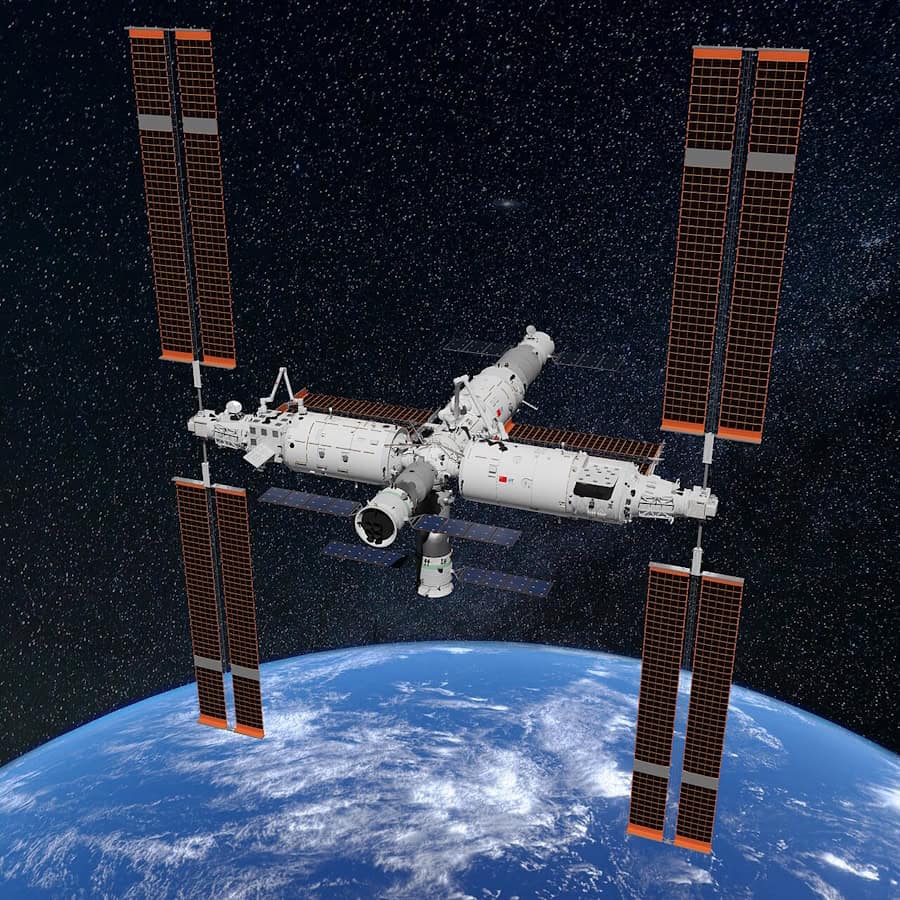
The China Space Station
Permanent microgravity environment Rendering of the China Space Station. (Courtesy: CC BY-SA 4.0/Shujianyang)

By exciting and detecting the fluorescence of the isotopes sequentially at slightly different times, the researchers obtained two sets of symmetric interference images, one from the 85Rb atoms and one from the 87Rb atoms. Measuring the differential phase of these images – after suppressing the residual acceleration of the space station and effects from vibrations – allowed them to calculate the difference in the acceleration between the two isotopes in the vertical, freefalling direction.

After running their experiment for 280 days, during which time the researchers acquired more than 9700 pairs of interference fringes, they obtained a test result of around –2.7 x 10⁻⁷, after correcting for errors.

“We believe that our technique will have a significant impact,” says Zhan. “First, it demonstrates that an integrated interferometer meeting the requirements of in-orbit operation is possible, giving the community confidence to continue with even more technically demanding space-based interferometry experiments that aim for ever increasing precision. The technology developed in this project will also itself help advance atom-interferometry-based instruments, such asinertial navigation systems.”

Measuring an object’s quantum phase in freefall

Meanwhile, physicists at the Ben-Gurion University of the Negev, the University of Ulm and the University of Oxford have also used CAI, this time to measure an object’s quantum phase in freefall. They confirm that the effect is the same as predicted by Einstein’s equivalence principle (EP), which states that for an observer in freefall, gravity should locally disappear.

In their work, also detailed in Science Advances, the researchers used a completely novel version of the CAI technique that they call the Quantum Galileo Interferometer (QGI) – in honour of Galileo Galilei’s discoveries regarding the laws of freefall. The experiment, which was carried out at Ben-Gurion University, again makes use of clouds of 87Rb atoms cooled to just above absolute zero.

The researchers began by applying microwave pulses to put the ultracold atoms – which were placed 113 µm below the surface of an atom chip containing current-carrying wires that produce magnetic field gradients – into a quantum superposition. This meant that each atom effectively travels along two different paths at once. One part of the atomic wave responded to the magnetic fields such that an applied upward force exactly counteracted the downward pull of gravity and the wave was held stationary in the apparatus – that is, static relative to Earth. This part of the wave is referred to as the reference atomic wave (or wavepacket). The second part of the wave was sent upwards in a ballistic trajectory.

A magnetic cannon and parachute

Realising this ballistic trajectory, affected only by gravity, required a “magnetic cannon” and a “magnetic parachute”, explains Ron Folman, who is one of the leaders of this study. “After the short-duration magnetic cannon, we switched this part of the wave into a state that is almost unaffected by the magnetic field so that it could fall freely under gravity. And at the end of the fall, we used another precisely controlled magnetic pulse to stop the relative motion between the two waves and reunite the two parts so that they interfered with each other.”

That interference allowed the researchers to measure the tiny difference in quantum phase accumulated while one was falling and the other was held still — two frames that may be referred to as the Einsteinian and the Newtonian frames, respectively. This means that when both parts of the wave have the same velocity, the transformation between the wavefunction in a Newtonian (laboratory) frame of reference and the wavefunction of the same object in an Einsteinian frame that freefalls with the same acceleration, involves a transformation phase known as a gauge phase.

According to their experiments, the gauge phase measured by the researchers is the same as the one predicted when Einstein’s EP is applied to such a quantum wave, so confirming the principle for these quantum objects and at these low masses and energies.

“Some members of our team,” notes Folman, “including Nobel laureate Sir Roger Penrose, expect this co-existence between general relativity and quantum mechanics to break for objects with higher masses. Indeed, the Ben-Gurion University group is now repeating the same experiment with nanodiamond particles to test this hypothesis,” he tells Physics World.

The observation, says study co-leader Vlatko Vedral at Oxford University’s department of physics, constitutes a fundamental test of the interface between quantum theory and gravity. “The connection between these two pillars of modern physics remains one of the most important open questions in physics, and it is thus of paramount importance to understand the phenomenon of freefall and the EP in the quantum domain.”

The post Einstein’s equivalence principle put to two new tests appeared first on Physics World.

Microbes may survive at the Moon’s south pole

18 September 2026 at 12:50

The Moon’s polar regions may be less hostile to microbes than previously thought. This is the new finding from researchers at NASA and the University of Maryland in the US who say that future crewed missions to the lunar south pole will have to be carefully thought out to limit the unintended transfer of Earth life forms.

High ultraviolet radiation and temperatures make the Moon’s surface a harsh place and not somewhere bacteria and other micro-organisms can easily survive. This is particularly true for the equatorial regions, where all previous crewed missions have been sent. Things might be quite different at the lunar poles, however, since sunlight strikes these high-latitude regions at a low angle because of the Moon’s minimal tilt to the Sun of 1.5°. The result is long permanent shadows where it is cooler. The moonscape is also as rugged here as elsewhere with mountains and hills, which also cast shadows, and deep craters protected from the Sun’s heat and ultraviolet flux. These conditions allow for water ice too.

Because of these unique properties, future crewed missions, such as NASA’s Artemis IV, are scheduled to go to the Moon’s south pole, which has also been identified as a possible future location for a human outpost. The polar regions have already been observed by spacecraft such as ESA’s SMART-1, India’s Chandrayaan, Japan’s Kaguya and NASA’s Lunar Reconnaissance Orbiter. These provided a wealth of information that will be used to prepare future missions.

The problem is that no matter how stringent the sterilization procedures are prior to take-off, the astronauts on these missions will take microbes from Earth with them. Indeed, humans carry millions of microbes on their skin and even more in their bodies.

Landing sites for Artemis IV

To investigate whether microbes could survive in the polar regions, the researchers, led by Prabal Saxena, who works at NASA’s Goddard Space Flight Center, and Stefano Bertone at the University of Maryland, modelled how bacteria and fungi commonly found on human skin would behave in the environment of three candidate landing sites for the upcoming Artemis IV mission. The researchers began by making highly resolved spatial maps of the topography in these regions that included ruggedness, slopes and shadowing effects. They also modelled the UV exposure and temperature in these regions to identify specific locations where micro-organisms could survive for at least 24 h.

They obtained seasonal temperature data on length scales of 240 m from measurements by Lunar Reconnaissance Orbiter’s (LRO) Diviner. As for estimated regional UV (≤320 nm) fluxes, these were gleaned from averaged illumination maps with a pixel scale of 60 m based on topography derived from LRO Lunar Orbiter Laser Altimeter (LOLA) measurements.

“Since the temperatures at the lunar poles are rarely high enough to kill bacteria and low temperatures can preserve microbes on Earth, UV radiation is generally likely to be more dangerous in these regions, says Saxena. “We therefore analysed UV fluxes at finer spatial scales using a technique called ray tracing, and for some regions, included optical effects such as reflection and refraction as sunlight hits the Moon’s surface, leveraging updated LOLA-based topography maps on a scale of 5 m/pixel.”

Understanding how sunlight behaves at the poles is crucial, he adds. “Since the Moon has a very small axial tilt, the Sun appears to hover just above the horizon here, so even small hills and rocks can prevent light from reaching lower-lying ground, creating small, shadowed areas protected from UV rays.”

Up to seven days survival

The simulations revealed that the bacteria and fungi studied could survive in certain niches for up to or potentially beyond seven days. One particular fungus, the Aspergillus, is particularly resistant to UV radiation and could potentially survive in 15 to 30% of the areas assessed, even those that receive some sunlight during the lunar winter. The reconstructions also showed that all five microbes in this study, Bacillus, Deinococcus, Staphylococcus, Aspergillus and Fusarium could possibly survive in certain areas of the De Gerlache Rim’s permanently shaded regions, including when scattered UV light is incorporated into the simulations.

Survival does not mean growth (which requires active metabolism and potential reproduction), however, stresses Saxena. Indeed, surviving microbes are in a dormant, so-called cryptobiotic state and would only grow if the conditions were amenable to life – which is not the case for the Moon as we currently understand it.

“Cells may also be dead,” he tells Physics World, “but even dead cells may persist in the environment as another potential source of contamination.”

The work could apply beyond the Moon, he says. Indeed, a number of different airless bodies such as Mercury, Ceres, some asteroids and comets and exoplanets that may have similar properties could also have potential survivable niches for microbial life. Understanding how these niches may exist, how life may be transferred to them and how human exploration may leave its mark will all serve as a key testbed for future potential human exploration of Mars, which likely has far more habitable environments.

“We need to understand what was there before us, because when we search for signs of life beyond our planet on these bodies, we will want to make sure it’s not stuff we brought,” says Saxena.

The research is described in Science Advances.

The post Microbes may survive at the Moon’s south pole appeared first on Physics World.

❌