❌

Normal view

Get your teeth into the cutting edge of materials science
16 September 2026 at 14:00
Illustration of three teeth with various textures
Dental work Fitting false teeth, bridges and crowns requires an empirical understanding of how ceramics, metals and other materials interact. (Courtesy: Shutterstock/Ihnatovich Maryia)

My dentist, Dr Albora, told me I needed a new tooth. He made me bite down on a U-shaped tray filled with polyether, an elastomeric material that’s been used in dentistry for decades. I tried not to gag while the gooey stuff set. Albora then waggled it off and sent the imprint to a company on Long Island that makes false teeth. But as my tooth’s colouring was unusual, Dr Albora said I had to go there myself.

A week later I drove to Marotta Dental Studio, where Igor Binshteyn sat me in a chair, lifted my lip and inspected a tooth to the side of my upper jaw. He was helping to fabricate its replacement and needed to get the exact colour.

As Binshteyn finished, I remarked teasingly on the company’s car park, which was chock full. Do you need that many people to make false teeth? What could possibly be involved to make things smaller than the nail on my little finger?

Binshteyn laughed. “Follow me”.
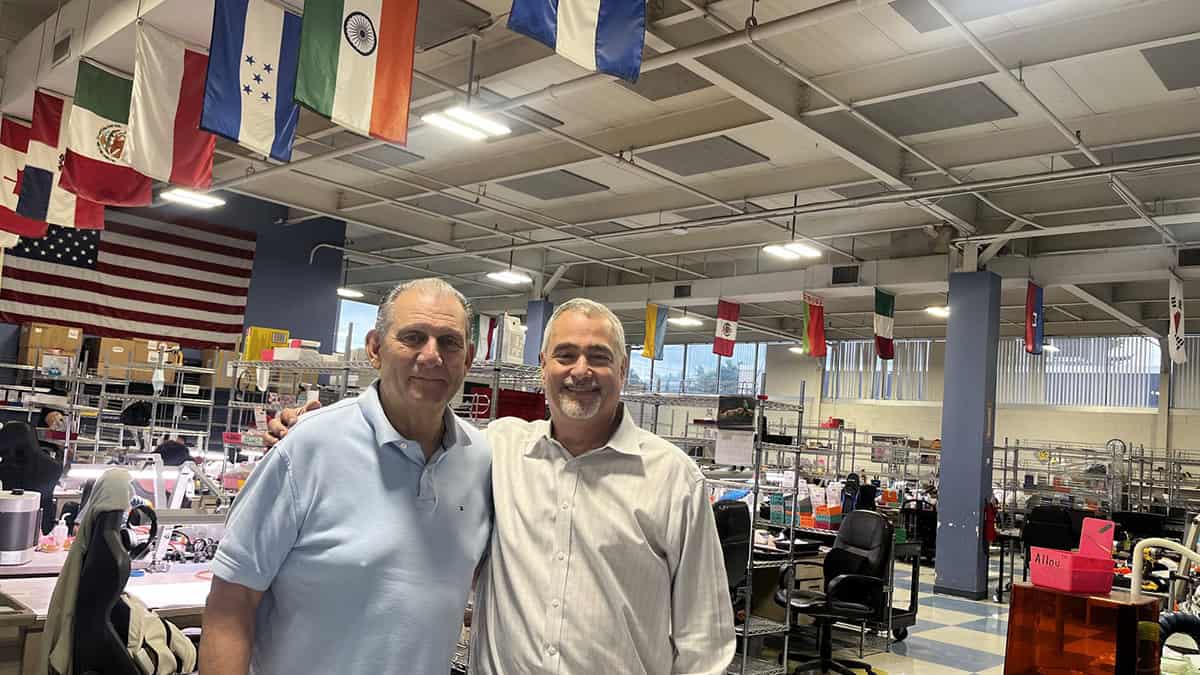
Dental workshop with Lenny Marotta and Steven Pigliacelli
Warm welcome Lenny Marotta (left), who founded Marotta Studio in 1981 and his brother-in-law and Marotta’s vice-president, Steven Pigliacelli in the lab. The flags are for the nationalities and national backgrounds of the 50 or so technicians working there. (Courtesy: Robert P Crease)

He opened a door to a huge undivided warehouse-like space about 1200 square metres in size. Some 50 people were working at lines of tables where the steady hum of conversation was punctuated by the noise of ovens, lathes and grinding machines; imagine the sounds of a metalworking shop in a busy train station.

“Do you want a tour?” Binshteyn said.

Of course I did.

Open wide

My tour guide was Marotta’s vice-president, Steven Pigliacelli, who teaches prosthodontics at New York University. A prosthodontist is a dental specialist who has completed dental school and, in the US, has had at least three additional years of advanced training to focus on restoring and replacing missing or damaged teeth. As I learned, prosthodontists must practice materials science.

The lab has two paths for making teeth, Pigliacelli explained, each with different materials and methods. The first is known as “porcelain-fused-to-metal”, or PFM. It begins with technicians applying gypsum – hydrated calcium sulphate – to create stone replicas of the jaw and teeth from the impressions given to them by dentists such as Albora.

Gypsum has different coefficients of expansion for different dental purposes, and textbook formulas give the amounts of liquid for each kind. But Marotta employees found that tiny amounts of water must be added or subtracted to the gypsum to compensate for things like humidity and temperature before the gypsum is used. “It took us months,” Pigliacelli explained, “to realize that how it’s shipped, how it’s stored, what season it is – all these affect the material.”

I watched as a technician sectioned a stone jaw replica to cut out a tooth, turn it into a master model called a die, and test it in an articulator that mimics jaw movements. I saw another wax that die, use a lost wax technique to create a solid gypsum frame, and cast a silver-palladium alloy. That creates the metal inner core for the tooth, called a coping, which is shaped and finished before porcelain is applied. Porcelain is baked onto the coping in another area of the lab.

“The metal and porcelain need closely matched coefficients of thermal expansion or the porcelain can separate from the metal,” Pagliacelli told me. “Every once in a while a company tells us ‘We’ve got this really cool new alloy!’, but we need to match the coefficients of expansion in the ceramic material. We’re working with sensitive materials for sensitive applications, and we have to experiment with and adapt them. This stuff about materials you don’t learn in school but work out in the lab.”

Smile for the camera

The second path to making a tooth involves scanning the teeth rather than waxing a die. The electronic files are worked on in the computer, printed out, reworked and rescanned, and milled by a CAD machine using materials such as zirconia – nicknamed “ceramic steel” – and EMAX, a lithium disilicate glass-ceramic. Zirconia is extremely hard and used for teeth that endure heavy grinding forces, while EMAX is more aesthetically pleasing and often used for front teeth.

“So we have two parallel paths, PFM and digital scans”, Pigliacelli said. “It’s usually a personal choice of the dentist”. But external pressures are driving a move away from PFM, he said. Five years ago the price of palladium – a key component of the PFM alloy – soared as it was increasingly used in devices to reduce auto and other emissions. “That’s cut down on the PSM market.”
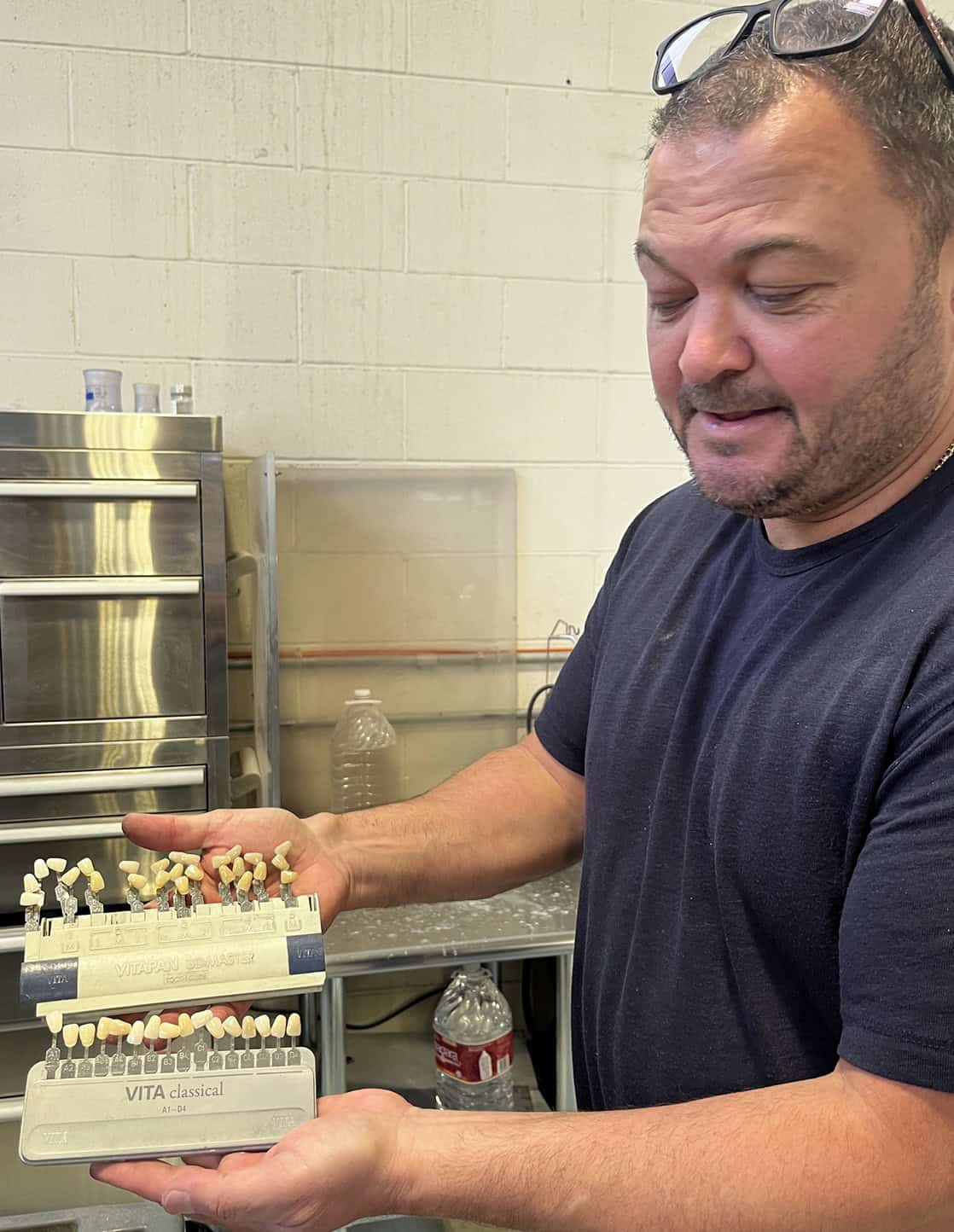
Igor showing teeth staining
Say cheese Igor Binshteyn shows off his tooth colour guide. (Courtesy: Robert P Crease)

In another corner of the lab I ran into Binshteyn again, who was using different porcelains and ceramic stains to create colours. “Teeth are not a solid colour,” he said, “but vary in shade from reddish near the gum line to lighter colours toward the biting edge. They also vary in translucency.” (Check this out yourself.) Furthermore, the colour of a tooth must match not its neighbours but the corresponding tooth on the other side of the mouth. To make a natural-looking tooth, Igor picks out a base colour and then layers in shades of porcelain.

As my lab tour went on, Pigliacelli showed me different materials for different applications. One challenge is making teeth for a person with bulimia, whose acidic oral environment can corrode dental materials. Other challenges arise with people who have had failed implants, or temporomandibular joint – or TMJ – a disorder involving jaw joints and muscles.

On the way out I met Lenny Marotta, Pigliacelli’s brother-in-law, who had founded Marotta Studio in 1981. Marotta is fascinated by the history of dental materials, which include bone, ivory, wood, gold and silver. He showed me his collection of early prosthodontic instruments, including milling machines, furnaces, hammers and air compressors.

Later, Marotta also pointed out a strange-looking oven. “That’s for processing vulcanite, a hardened rubber material widely used for dentures before modern plastics.” But he’s been unable to find a museum interested in old prosthodontic stuff. “Nobody knows we exist,” he complained.

The critical point

I’d assumed that materials science was required to make prosthetic teeth biocompatible, corrosion resistant, and able to withstand mechanical motions such as crushing, biting and grinding. I also knew that teeth have to be made economically enough to be widely available, aesthetic enough to be desirable, and versatile enough to withstand a variety of oral environments.

But I had no idea how much materials science was required to bring all these properties together.

Back in his office, Dr Albora installed the tooth and handed me a mirror. I had to pull up my lip to see it way on the side of my mouth. “I’d have to smile before somebody notices it,” I complained. “Well,” he said, “that’s for just in case you do.”

The post Get your teeth into the cutting edge of materials science appeared first on Physics World.

In 2025, researchers ground retired wind turbine blades into powder, stirred it into a gel and set it into an insulation composite. The composite combined low density with much greater compressibility than many of the insulating aerogels and composites it was compared with, squashing to a fifth of its thickness without breaking apart.

16 September 2026 at 11:00
Wind turbines under a clear blue sky symbolize clean energy and sustainability.

A wind turbine blade is basically glass fibre set in hardened resin. The fibres give it strength, the resin holds them in place, and the two are bonded so tightly that a blade can survive wind, rain and stress.

That same toughness is the problem once the blade comes down. Thermoset epoxy does not melt back into a workable liquid, and its stable chemical bonds are difficult to break. So retired blades are typically cut into sections and sent to landfill.

That is the waste a group of researchers decided to work with. In a 2026 study published in ACS Applied Engineering Materials, a team at Xi’an Shiyou University, with collaborators at the Beijing Institute of Technology and Monash University, ground old blade material into powder and turned it into a lightweight, sponge-like insulation.

Here is what came out of the lab, and how it stacks up against the size of the problem.

It squashes to a fifth of its thickness and springs back

The most surprising thing about the material is how far you can crush it without wrecking it. The team reports it took a squeeze of over 80 percent and recovered, meaning you can press it down to roughly a fifth of its height and it bounces back. That matters because conventional silica aerogels are famously fragile. They insulate well but can be brittle. A material that can take a squeeze and spring back is far easier to handle and install.

The trick is in the structure. Instead of a solid block, the composite is a network full of tiny connected pores, with the blade powder stiffening a soft, springy scaffold. 

It combined low density with unusually high compressibility

Weight is where the main result sits. The material reached a density of 0.184 grams per cubic centimetre while sustaining more than 80 percent compressive strain. The authors say the composite showed “a superior combination of low bulk density (0.184 g cm–3) and high compressive strain (>80%), outperforming a wide range of reported silica-based or organic aerogels and composites.”

A caution is warranted: that line is the researchers describing their own work, not an outside verdict. “Outperforming” is their framing, and the comparison is against numbers from other published papers rather than a head-to-head test by a neutral lab. The figures themselves are measurable; whether the material performs as well in practice is the kind of thing other labs and larger-scale testing would need to settle.

It holds heat in about as well as ordinary insulation

Being light and squishy would not count for much if heat poured straight through it. It doesn’t. The composite measured a thermal conductivity of 0.068 watts per metre-kelvin, and lower is better here because it means less heat gets across. For comparison, ordinary glass wool building insulation sits around 0.04. So the blade composite is not a record-setting insulator, but it is in a sensible range for the job while remaining highly compressible.

It self-extinguishes instead of feeding a flame

Insulation lives inside walls and roofs, so how it behaves near fire matters. The team reports enhanced flame self-extinguishing capability, meaning it tended to stop burning once the flame source was removed rather than carrying the fire along. Again, this is one lab result on lab samples, though, and real fire-safety ratings require standardised testing. Read it as promising, not certified.

It turns a landfill problem into the raw material

The reason any of this is interesting is the sheer number of blades headed for the ground. Worldwide, the mass of blades expected to be discarded by 2050 may reach about 43 million tonnes. Right now, around 12,000 blades are retired across Europe and the US each year, and they are typically cut up and sent to landfill. A process that takes that same material and makes something useful flips the equation.

As the authors put it, reusing the blade waste “not only helps to reduce environmental burdens and resource waste but also opens up avenues for generating high-performing, useful materials.”

Where this actually sits

This is one study and one set of lab measurements. The chemistry is clever and the numbers look good, but the gap between a lab composite and a pallet of insulation shipped to a building site is wide. The paper doesn’t answer the questions that fill that gap: cost, batch-to-batch consistency, how the material holds up over years inside a wall, and whether grinding and processing old blades at scale actually makes economic sense.

That last question is the real hinge. Something has to make the recycled route cheaper or required before a lab result becomes a real supply chain.

None of that takes away from what the team built. This is a good answer to a narrow question, which is whether hard-to-recycle blade waste can be turned into a useful, light, tough insulating material at all. The evidence here says yes. The bigger question, whether it can be done by the tonne cheaply enough to matter, is still open.

The post In 2025, researchers ground retired wind turbine blades into powder, stirred it into a gel and set it into an insulation composite. The composite combined low density with much greater compressibility than many of the insulating aerogels and composites it was compared with, squashing to a fifth of its thickness without breaking apart. appeared first on Space Daily.

Above-average correlative materials characterization

16 September 2026 at 04:21
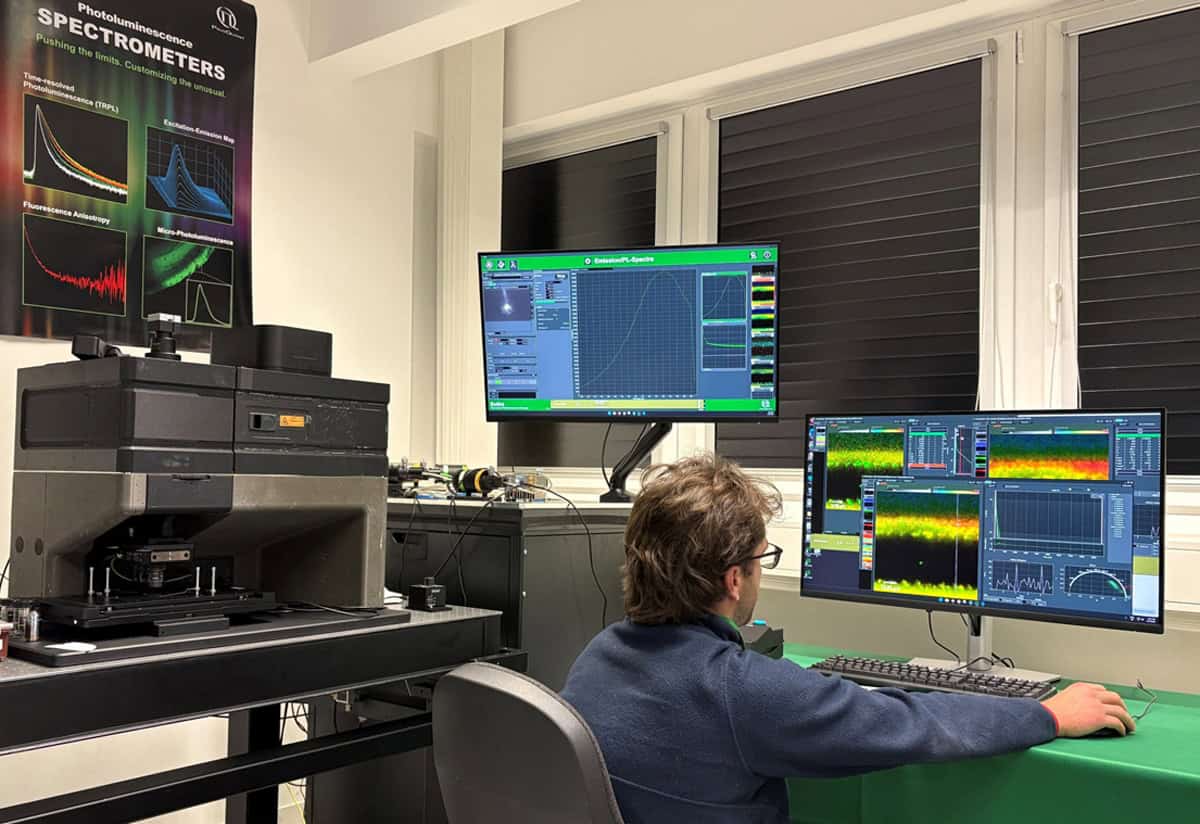
Maxim Simmonds measuring perovskite solar mini module samples with Solira. (Courtesy: PicoQuant)

When evaluating new materials for optoelectronic applications – perhaps promising solar panel materials like halide perovskites or semiconductor compounds for microLED displays – optical characterization is almost always the materials scientists’ first port of call. And up to now steady-state photoluminescence (PL) has been the de facto workhorse for this task.

This non-destructive and highly sensitive technique involves optically exciting a sample and recording the integrated intensity and wavelength of re-emitted photons. Through this, researchers gain a quick understanding into a material’s electronic structure, optical transitions and emission characteristics.

However, these spectra alone can be misleading. Materials with substantially different microscopic properties can generate similar steady-state PL results, masking the fundamental physical dynamics that govern the material’s performance in the real world. To gain deeper understanding of a given material, a more comprehensive and correlated approach is needed.

Blinding average

The core issue lies in the fact that steady-state PL provides a time-integrated view of the emission and depending on the measurement geometry, may also average over spatial variations. Steady-state PL records a static equilibrium in which charge carrier generation balances recombination. This means that, on its own, it does not directly reveal how these excited charge-carriers evolve and ultimately dictate how a device manipulates energy and light.

For example, although two semiconductor thin films may show identical steady-state emission, they can perform very differently in a real device. One film might have long carrier lifetimes consistent with low non-radiative losses – useful in solar cells, for example – while the other could suffer from high defect densities that are masked by strong light absorption or intense excitation light.

Conversely, weak emission does not necessarily mean poor material quality. Again using a layered solar cell as an example, dim luminescence often signals fast, beneficial charge extraction across an interface rather than harmful defect recombination (where structural imperfections convert charge-carrier energy into wasted heat). Because steady-state measurements only show an overall average, they cannot separate these competing mechanisms.

Resolving in time, space and spectrum

Time-resolved PL (TRPL) is a key technique in illuminating these hidden dynamics. Unlike steady-state PL, which continuously bathes a sample with light, TRPL uses a short laser pulse and measures how the photoluminescence intensity evolves afterwards. This can reveal carrier dynamics over timescales ranging from picoseconds to microseconds.

TRPL is particularly important in materials where local variations strongly influence device behaviour. For instance, it can expose the difference between regions that exhibit long-lived emission consistent with efficient radiative recombination, and those that exhibit fast decay caused by, for example, defect recombination.

Of course, steady-state PL averages over time and space, and therefore TRPL only solves part of the problem. Spatially resolved TRPL addresses the missing spatial dimension. Combining a high-precision, motorized XY stage with TRPL’s precise timing, spatially resolved TRPL forms a 2D map that directly correlates localized structural features – such as grain boundaries and defects – with variations in carrier kinetics across the surface.

Complementary to these techniques is time-resolved emission spectroscopy (TRES), which combines spectral selection with time-resolved detection to measure how emission dynamics vary across the spectrum. By recording wavelength-dependent decay behaviour, TRES reveals how different spectral contributions evolve following excitation.

In short, where TRPL reveals kinetics over time and spatially resolved TRPL locates variations in space, TRES adds a spectral dimension, showing how the emission spectrum evolves after excitation. This allows researchers to track changes in the distribution of photon energies over time to understand carrier evolution and gain insight into the mechanisms underlying material behaviour.

A correlative approach

Though powerful in isolation, reconciling insights across these different instruments is slow and prone to errors. There can be microscopic differences between samples or even within positions in a single sample that dramatically alter emission spectra. Moreover, moving a sample between separate instruments is fraught with difficulty, potentially damaging the sample or causing delays that lead to sample degradation.

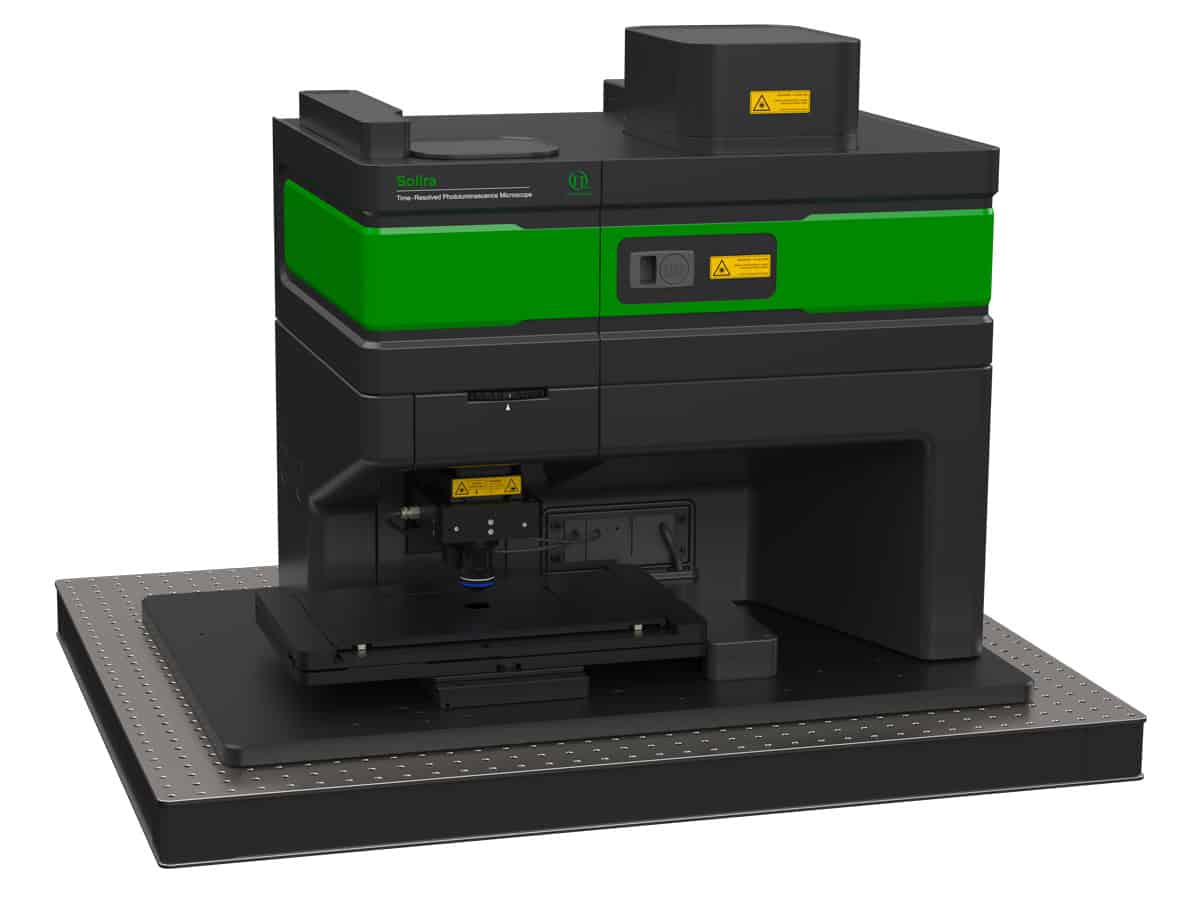
PicoQuant’s Solira, an all-in-one time-resolved photoluminescence microscope for flexible optical characterization of materials and optoelectronic devices. (Courtesy: PicoQuant)

More comprehensive and reliable physical insight comes when temporal, spatial and spectral factors are recorded correlatively on the exact same sample region. This need for correlation is the motivation behind PicoQuant’s Solira, an integrated workflow platform for steady-state PL, TRPL, spatially resolved TRPL and TRES (the latter when combined with the complementary FlexLambda Kit), as well as additional imaging techniques, such as hyperspectral imaging, required for different scientific questions.

Bringing these techniques together within one configurable microscope system means a materials scientist can gain a more informed interpretation of material behaviour. For instance, they can identify the relevant emission bands at selected points of interest with steady-state PL. They can then wield TRPL to measure the associated decay kinetics, before perhaps applying TRES to resolve how those kinetics vary across the emission spectrum.

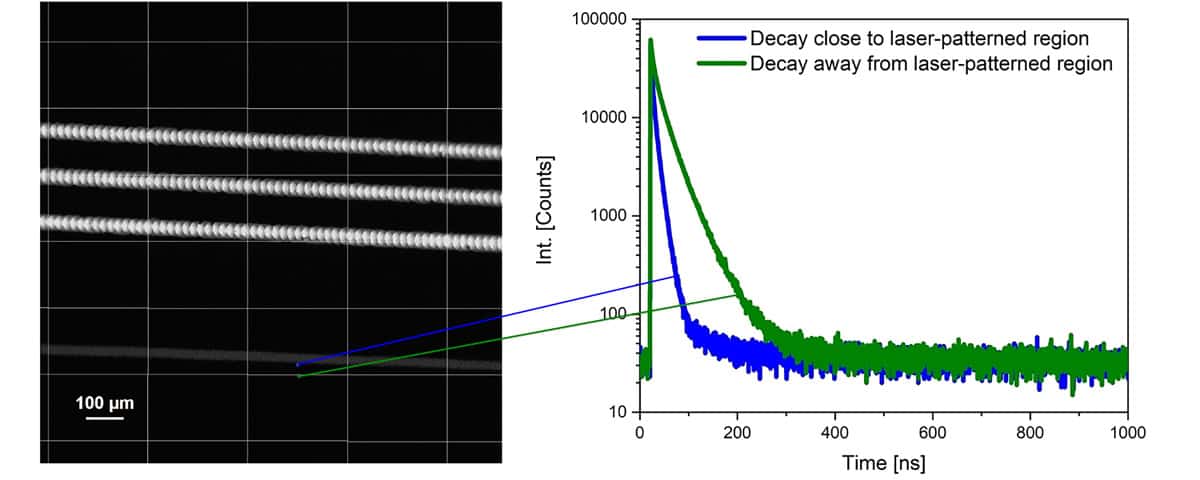
TRPL decay curves recorded at positions close to and away from a laser-patterned region of a perovskite solar mini module sample. The decay measured adjacent to the structured line exhibits faster PL decay dynamics compared to the unmodified region farther from the laser-patterned area. (Courtesy: PicoQuant)

Bright demonstration

The power of this correlated approach was demonstrated recently by Professor Eva Unger’s group at Helmholtz-Zentrum Berlin, Germany, with measurements carried out by Maxim Simmonds. Investigating perovskite solar mini-modules, the team worked with PicoQuant and used Solira to locate precise laser-patterned lines – microscopic scribes used to interconnect individual cells in a solar module – before verifying emission from the active layer. Localized TRPL measurements then revealed significantly faster decay dynamics next to these laser cuts compared to the pristine bulk material, indicating altered carrier recombination or diffusion near structured features.

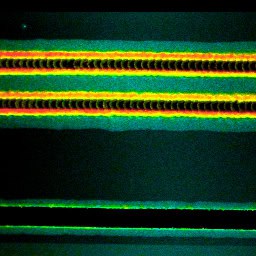
Spatially resolved TRPL image recorded from a sample of a perovskite solar mini module, showing photoluminescence lifetime differences between laser-patterned lines and bulk material. The structured regions remain photoluminescent, indicating that the laser process modifies local photophysical properties rather than completely removing the emissive material. (Courtesy: PicoQuant)

However, point measurements alone were not enough to discern whether the laser had fully removed the perovskite or merely modified it. Switching to spatially resolved TRPL imaging on Solira revealed that measurable photoluminescence persisted along the laser-patterned lines. This showed that laser structuring had altered local photophysical properties rather than eliminating the active layer – a conclusion only made possible by consistently mapping charge-carrier dynamics across temporal, spatial and spectral dimensions together on one setup.

As semiconductor materials and optoelectronic devices become more complex, optical characterization tools must keep pace. By unifying these tools within an integrated workflow platform such as Solira, materials scientists now have the means to paint a more complete picture of material characteristics and thereby unlock the next generation of innovative functional materials.


The post Above-average correlative materials characterization appeared first on Physics World.

Researchers Turned “Empty Space” Into a Tool for Superconductivity

16 September 2026 at 00:31
Schematic of Vacuum Fluctuation Enhanced SuperconductivityResearchers used a specially designed cavity to strengthen quantum vacuum fluctuations and enhance superconductivity in a thin material. Empty space is not truly empty. Even a vacuum contains restless quantum fluctuations, and researchers have now shown for the first time that these normally subtle effects can be engineered to strengthen superconductivity. The work, led by [...]

A Material Just a Few Atoms Thick Reveals Strange New Magnetism

15 September 2026 at 01:23
Ultrathin Material Quantum MagnetismA material once thought to be nonmagnetic may reveal a hidden magnetic side when made just a few atomic layers thick. A newly proposed class of magnetism known as altermagnetism could open new possibilities for making computer memory smaller and more efficient. Now, researchers have found evidence that ruthenium dioxide, a quantum material long debated [...]

Harnessing sunlight to fight bacteria

14 September 2026 at 12:00

Billions of people still suffer from hunger and food insecurity worldwide. Meanwhile, microbial contamination causes a third of global food waste annually, resulting in major economic losses and illnesses. Although antibiotics and pesticides help control contamination, their excessive use can promote bacterial resistance or leave toxic residues. 

One alternative uses materials that generate highly reactive forms of oxygen when exposed to light, called photocatalysts, to prolong food freshness. These molecules kill bacteria by damaging their cell components in a process called photodynamic inactivation or PDI. However, current PDI systems rely on energy-intensive lasers and long exposure times because the bacteria’s protective cell membranes block reactive oxygen molecules. As a result, the systems don’t kill bacteria effectively and risk overheating food, affecting its freshness and nutritional value.

Scientists at Zhejiang University in China thought that it would be possible to achieve a PDI system using accessible, free sunlight with the right photocatalyst. Moreover, they also wanted to integrate this photocatalyst into food packaging to combat microbes during storage. 

To make the photocatalyst, the researchers mixed water with a glue-like plant fiber that provides structural support, called pectin, and a chemical from plant seeds that supplies phosphorus, called phytic acid. Then they heated the mixture in a sealed reactor at 220ºC (428ºF) for 5 hours to form tiny structures composed of a carbon core surrounded by a phosphorus-rich shell called phosphorus-modified carbonized polymer dots or PCDs.

To incorporate the PCDs into film packaging, the researchers dissolved equal amounts of a plant fiber from konjac, called glucomannan, and another plant-derived molecule, called carboxymethylcellulose, in warm water to form a network of entangled molecular chains. Then, they added 1.5 milligrams of PCD per milliliter to this mixture, which linked the chains together like molecular fasteners. Finally, they added a moisture-binding chemical called glycerin to prevent brittleness. The researchers cast this mixture onto separate Petri dishes and dried them, forming thin, plastic-like PCD films.

To test the films, the researchers placed Escherichia coli bacteria between 2 sterilized film sheets and exposed the samples to either darkness or simulated sunlight for 20 minutes. They then transferred the microbes onto agar plates and incubated them for 15 hours, allowing surviving bacteria to form visible colonies. They compared the number of bacterial colonies with those of untreated samples to calculate the percentage of bacteria the films eliminated in each environment. 

Tests under darkness showed that the films eliminated about 60% of the bacteria. The researchers attributed this result to the positive electrical charge of PCDs, which attracts the bacteria’s negatively charged cell surfaces. The electrical attraction stresses their cell membranes, interfering with essential life processes. This result suggested that the films use a separate charge-based antibacterial mechanism apart from PDI, which requires light to work.

Under simulated sunlight, the films eliminated nearly 100% of the bacteria. The researchers identified 2 principal mechanisms causing this. First, the PCDs acted as tiny heaters that generated localized heat, which stretched holes in the bacterial membranes, allowing contents to leak out of their cells through a process called photoporation. Second, the PCDs generated reactive oxygen molecules that could then penetrate the bacteria. Once inside the cells, these molecules irreversibly damage the bacteria’s internal components and genetic material through PDI. 

The researchers also investigated whether PCD films could serve as food packaging by using them to wrap fresh strawberries. Compared with conventional nonbiodegradable polyethylene packaging where visible rotting occurred, the PCD films kept the strawberries fresh for more than 4 days by suppressing bacterial growth and regulating moisture levels. When the team tested whether the films were toxic, they found that the films are safe for humans and compatible for food applications. They also buried the films in soil for 24 days and found that they degraded by 78%, demonstrating biodegradability suitable for packaging fresh foods.

The team concluded that PCD films could be a biodegradable food packaging that combines plant-based materials with multiple antibacterial strategies. The films retained antibacterial activity in darkness and became more effective under sunlight through the combined effects of photoporation and PDI. These findings demonstrated that by combining multiple mechanisms into a single material, researchers can create multifunctional food packaging that remains effective across different storage conditions.

The post Harnessing sunlight to fight bacteria appeared first on Sciworthy.

❌