❌

Normal view

Windows 11 can now reinstall itself from the cloud — Cloud Rebuild revives dead systems without secondary boot media, wipes broken installation and downloads a fresh copy of the OS

Microsoft has finally solved one of the biggest pain points of Windows with the rollout of Cloud Rebuild. The new recovery feature can reinstall Windows 11 even when an existing Windows installation is corrupt or refuses to boot. Available as a beta through the newly released Windows 11 Insider Beta Preview Build 26220.9343, the feature is essentially a hassle-free alternative to creating a Windows installation USB drive when a PC needs to be recovered.

According to Microsoft, Cloud Rebuild is designed to restore a Windows 11 PC to a “clean, known-good state” by downloading a fresh image of Windows along with the required drivers directly through Windows Update. Unlike the existing Reset this PC functionality, it does not depend on the health of your existing Windows installation, nor does it require users to have a USB drive or custom recovery image available.

The Cloud rebuild feature available in Windows Recovery

(Image credit: Microsoft)

Available via the Windows Recovery Environment (WinRE), users can access it by selecting Troubleshoot > Recovery and uninstall > Cloud rebuild from WinRE. Speaking of which, Microsoft has also improved networking support in WinRE. The recovery environment can now reuse eligible Wi-Fi profiles saved within an existing Windows installation, allowing a PC to connect during recovery without requiring administrators to separately configure Wi-Fi credentials in WinRE. Once the PC is connected, Cloud Rebuild checks Windows Update for the target Windows build and downloads the required files. Users can then confirm the Windows edition, language, and build before starting the reinstall.

The only catch here is that Cloud Rebuild completely wipes the system drive, meaning that the process removes all data stored in your main installation or C: drive, including locally stored files, accounts, applications, and settings, before reinstalling Windows. Thus, it is recommended to back up all your important files either locally or using a cloud-based service before starting the process. Once the installation is complete, the PC boots into the Windows out-of-box experience, similar to a fresh installation of Windows. For admin-managed PCs using Windows Autopilot and Microsoft Intune, the system can automatically reconnect to the organization's management infrastructure and restore assigned applications, policies, and backed-up settings.

Cloud Rebuild could particularly be useful when Windows becomes too corrupted to boot normally. Instead of finding another PC, creating installation media, and manually reinstalling Windows, users can potentially perform the entire recovery process directly from WinRE. The feature is still in preview; however, we can expect a wider release later this year.

Qualcomm’s next Snapdragon mobile chip comes into focus with on-device AI

10 September 2026 at 14:01

Qualcomm is taking an unusual approach to the launch of its next-generation premium Snapdragon mobile platform this year. Instead of holding everything for its annual Snapdragon Summit in Maui happening later this month, the company has been methodically disclosing the architecture that will power the next wave of flagship Android phones over the past couple of weeks.

First, the company disclosed its new Oryon CPU architecture, followed by a major overhaul of its Adreno GPU. Today, Qualcomm is detailing the next-generation Hexagon NPU that will serve as the platform’s primary AI engine.

Taken together, the disclosures give us a pretty good picture of where Qualcomm is going before we even know the chip’s official name.

There is obviously a strong performance story here, anchored by a 5GHz CPU, but the more interesting theme running through the architecture is memory locality and specialized AI acceleration. Qualcomm is trying to keep more data close to the compute resources that need it, while distributing AI workloads across the CPU, GPU and NPU.

These architectural changes are important as the company continues to drive on-device AI beyond relatively simple generative features toward more persistent, agentic workloads.

Oryon hits 5GHz, bolstered by FlexCache

Qualcomm disclosed in August that its next Oryon CPU will be the first mobile CPU to reach 5GHz. The eight-core design includes two 5GHz Prime cores and six Performance cores, with Qualcomm attributing the frequency gains to its fully custom Oryon microarchitecture, an in-house Arm-based CPU design that gives the company full control over the cores, cache and memory hierarchy, branch prediction and CPU subsystem.

The 5GHz headline is certainly going to get attention. However, Qualcomm’s new FlexCache architecture may ultimately have a larger impact on sustained performance. FlexCache allows Oryon’s Prime and Performance cores to tap into the same shared cache pool, with capacity dynamically allocated based on the workload. So rather than a demanding core being limited to a fixed slice of cache, it can draw on more of the available pool when needed. This keeps larger working data sets close to the CPU cores and reduces high-latency trips out to system memory.

This approach should benefit everything from gaming and multitasking to content creation, but it also aligns well with agentic AI workloads, where tasks may move through several stages of processing and across different CPU cores. The basic goal is straightforward: keep the CPU fed and avoid expensive trips to external memory.

Qualcomm’s next-gen Adreno GPU adds dedicated AI engines

Qualcomm’s next disclosure focused on graphics, where the company is making one of the more significant changes to its Adreno GPU engine in recent years. The new GPU adds dedicated Adreno Matrix Cores for running AI models directly inside the graphics pipeline. They’re paired with 18MB of Adreno High-Performance Memory, or HPM, which provides low-latency local storage for tile-based rendering, frame buffers and GPU compute.

Qualcomm claims HPM provides a 12% power improvement compared to its previous-gen Snapdragon 8 Elite Gen 5.

The more visible feature for users, however, may be Adreno Neural Fusion, which combines AI super resolution, neural processing and frame generation in a unified graphics pipeline. There are obvious parallels here to what NVIDIA, AMD and others are doing with neural rendering on the PC, though Qualcomm’s next-gen Snapdragon SoC has to operate within a much tighter mobile power envelope.

Qualcomm claims enabling Neural Fusion reduces power consumption by up to 40% in its internal testing using the company’s Dragon Alley graphics demo. That’s an impressive number, though as always, we’ll want to see how the technology behaves across actual shipping games and devices before drawing any definitive conclusions.

Qualcomm has also helped integrate Neural Fusion technology into Unity and Unreal Engine, which may ultimately be just as important as the underlying hardware. Developer adoption determines whether features like this become meaningful platform advantages or just another tick box on a spec sheet.

Qualcomm’s Hexagon NPU is being reworked for agentic AI

Qualcomm Snapdragon at work: The agentic loop, drawn on the die.

Qualcomm

The most recent disclosure centers on Qualcomm’s Hexagon NPU, where the broader architecture starts to come together. The company’s next-generation Hexagon introduces a new Element Accelerator designed for transformer workloads, alongside its existing vector and scalar processing resources. Qualcomm says the new block is optimized for fast action loops, key-value (KV) cache acceleration and context lengths of up to 32K.

Hexagon is also getting 50% more shared memory, and again, that memory complement is important. Model state, context and KV-cache data can generate substantial memory traffic, particularly with larger language models. Keeping more of that data close to the NPU can reduce latency and power consumption. Qualcomm says the architecture is designed for long-context reasoning, multimodal models, concurrent agents and low-latency action loops.

For INT4 quantized models, the company claims up to a 50% improvement in pre-fill performance versus its previous-generation Snapdragon 8 Elite Gen 5. Qualcomm is also targeting Mixture-of-Experts, or MoE, models as large as 30 billion parameters. In its example, the company points to a 30B model that activates only about 3 billion parameters during a given token-generation step. That selective approach is a natural fit for the tight power and memory constraints of a handset.

Qualcomm isn’t suggesting that a smartphone will simply run a 30B dense model entirely from DRAM, however. By activating only the experts needed for a particular task, MoE architectures can dramatically reduce active compute and memory bandwidth requirements, potentially making much larger classes of AI models practical on mobile hardware.

Qualcomm’s next-gen Snapdragon mobile impact

There is a larger competitive story here as well. For years, flagship smartphone competition largely came down to CPU, GPU, modem performance and power efficiency. AI is now another major area of differentiation, and Qualcomm is clearly designing its next-gen Snapdragon mobile platform around this need.

Apple has the advantage of controlling its silicon, operating system and software stack end-to-end. MediaTek continues to push aggressively into premium Android devices as well. Qualcomm’s response is to make its custom Oryon CPU, Adreno GPU and Hexagon NPU work more like a fully integrated compute platform, tuned for modern AI and agentic workloads.

This is a solid advantage for Android handset OEMs because many don’t have the resources to engineer this level of silicon integration themselves. Qualcomm can effectively provide its Android OEM partners, including Samsung, Xiaomi, Honor and others, with a common hardware foundation for on-device AI, advanced graphics and agentic computing. It also gives Qualcomm another way to defend its premium Snapdragon position.

The company’s custom Oryon architecture now spans smartphones and Windows PCs, and soon servers, while AI acceleration is distributed across its CPU, GPU and NPU. For business users, that could mean more AI processing happens locally, reducing cloud and network dependence, improving response times and keeping more potentially sensitive data on-device. And for IT organizations, Qualcomm now has an opportunity to provide a more consistent AI compute foundation across Windows PCs with Snapdragon X and premium Android handsets.

There is still plenty we don’t know, however. Qualcomm hasn’t disclosed the complete SoC specifications, final performance or power characteristics, or which devices will ship with it initially. Many of these AI experiences will also depend heavily on Android, app developers and the models themselves.

The new 5GHz mobile CPU may generate the biggest headline at Snapdragon Summit, but the more important developments may be what sit around it: more local memory, specialized AI acceleration and tighter integration between the CPU, GPU and NPU.

If Qualcomm can translate this architecture into better sustained performance, enhanced power efficiency and useful on-device AI experiences, it could strengthen its position in premium Android phones while putting more competitive pressure on Apple. For business users, the payoff could be more capable local AI without sacrificing the performance and battery life expected of a flagship device.

That is the part I’ll be watching most closely when the complete silicon picture is unveiled at Snapdragon Summit later this month. And I may even get some hands-on time with it in some benchmarks, as we have in years past, so we shall see.

d-Matrix drinks the Nvidia Kool-Aid with NVLink Fusion and MGX rack designs

10 September 2026 at 14:00
AI infrastructure startup d-Matrix on Thursday joined the growing list of chipmakers licensing Nvidia’s NVLink Fusion interconnect tech and rack-scale reference designs to make its high-performance inference platform more accessible to customers. Under the deal, d-Matrix will integrate support for NVLink Fusion, a high-speed chip-to-chip interconnect that Nvidia began licensing last year, into future chip designs, including its upcoming Raptor accelerators. As we’ve previously reported, by embracing the tech, d-Matrix sidesteps many of the challenges associated with scaling its chip architecture across large compute clusters. By using NVLink over alternative interconnects and designing its compute blades around the GPU giant’s MGX reference designs, its customers can deploy its chips using the same racks and NVSwitch fabrics as Nvidia. By the end of next year, d-Matrix expects to offer systems with up to 144 Raptor accelerators connected by a single all-to-all NVLink fabric. While there’s a lot we don’t know about Raptor just yet, at the Hot Chips conference last month the company revealed each Raptor “card” would feature 32 GB of ultra-fast 3D-stacked DRAM on board capable of delivering 100 TB/s of memory bandwidth — roughly 4.5 times the memory bandwidth of Nvidia’s Rubin GPU. By the looks of things, the XPUs that will power d-Matrix's NVL144 racks are about half the size of the Raptor cards shown off at Hot Chips and include around 16 GB of 3D-DRAM and about 50 TB/s of memory bandwidth — still quite respectable by any measure. With 144 of these per rack, d-Matrix is looking at about 2.3 TB of memory capacity — enough for models exceeding four trillion parameters in size at 4-bit precision — and about 7.2 petabytes a second of peak aggregate memory bandwidth. This is achieved by bonding compute logic atop a stack of DRAM. The result is an in-memory compute platform that offers modest capacity while maintaining memory bandwidth closer to that of SRAM than is achievable using HBM. Memory bandwidth, as you may recall, is the biggest bottleneck for AI inference. The faster your memory, the faster the system can spew out tokens. This is exactly why Nvidia dropped $20 billion last year to license Groq’s IP and hire away its engineering talent. The chip’s SRAM-heavy dataflow architecture was capable of hitting 150 TB/s per chip, but the tradeoff is that SRAM isn’t very space-efficient and the chipmaker could only pack 500 MB of it onto a single die. d-Matrix's Raptor promises to deliver a decent fraction of that bandwidth with 64x higher capacity, which means the company can get away with using far fewer chips per model. Where a trillion-parameter model might need more than 2,000 Groq 3 LPUs at 8-bit precision, a single d-Matrix system would only need about 64 (32 at 4-bit precision). Just like Groq’s LPUs, d-Matrix chips can be deployed standalone, or as part of a heterogeneous compute config using GPUs for the compute-intensive prompt processing (prefill) phase of the inference pipeline and its Raptor accelerators for the memory bandwidth bound token generation (decode) phase. And for enterprises interested in the ultra-low latency inference capabilities of Groq, d-Matrix’s chips may offer a cheaper point of entry since fewer XPUs would be required. Nvidia’s walled garden We looked at Nvidia’s emerging IP licensing strategy in more detail last week, but in a nutshell, Nvidia stands to gain a lot more than licensing revenues from NVLink Fusion adopters. In addition to licensing Nvidia’s interconnect tech, d-Matrix plans to pair its accelerators with the GPU giant’s Vera CPUs, NVSwitch appliances, BlueField and ConnectX NICs, and SpectrumX Ethernet products. In other words, Nvidia stands to make a lot of money even if it’s not selling GPUs. It seems a fair number of chip designers are willing to make that kind of deal to avoid having to design their scale up networks or rack systems. Last week, MediaTek joined Marvell, Qualcomm, Arm, Fujitsu, and Amazon Web Services in adopting Nvidia’s NVLink Fusion interconnects. Nvidia is so invested in getting folks into its walled garden that it's spending billions on incentives to get them in the door. As part of the MediaTek deal last week, Nvidia invested $3.5 billion in the SoC designer, while it spent $2 billion to get Marvell in the door. No word on whether the latest deal included any such terms. ®

Dominant tree pollen shapes nutrient levels in European forest throughfall

10 September 2026 at 12:52

Every spring, Europe’s forests are showered with far more than rain. Wind-pollinated trees release staggering quantities of pollen into the atmosphere, and much of it eventually settles on leaves, branches and the forest floor. New research now shows that this pollen is not merely biological debris — it is a measurable, taxon-specific driver of nutrient fluxes in the water that drips through forest canopies, a flow scientists call throughfall. The findings, published in Environmental Monitoring and Assessment, provide the first continental-scale evidence directly linking pollen deposition to forest water chemistry, and they suggest that decades of forest monitoring may have been quietly misattributing a slice of nutrient input to other sources.

The study was carried out by a large international team led by Elena Gottardini of the Fondazione Edmund Mach in Italy, working within the ICP Forests programme, a pan-European network that monitors air pollution effects on forests. The researchers analysed throughfall samples collected in 2018 from 60 intensive monitoring plots — known as Level II plots — across eight countries: Belgium, Finland, France, Germany, Italy, Norway, Switzerland and the United Kingdom. The plots ranged in altitude from 14 to 1,900 metres above sea level and were dominated by six tree genera: Abies, Fagus, Larix, Picea, Pinus and Quercus. In total, 196 throughfall samples were collected between February and July, covering the early vegetative season when most European trees flower.

The innovation of the study lies in its methodology. Rather than inferring pollen inputs from nearby aerobiological samplers, the team examined the very same water samples that were being chemically analysed. A known quantity of water from each sample was filtered through a 5-micrometre cellulose nitrate mesh, and a calibrated number of 10-micrometre polystyrene-divinylbenzene microspheres — roughly 155,000 per sample — were added as a counting standard. The filters were then dissolved in acetone, centrifuged, and the resulting pellet embedded in fuchsin jelly on microscope slides. Trained analysts identified and counted pollen grains under 400-times magnification, stopping when about 1 percent of the added microspheres had been counted. From these counts, the team calculated pollen deposition rates in grains per square metre per day, correcting for filtered volume, throughfall quantity and sampling duration.

The results were striking. Fifty-three pollen taxa were identified across the samples, with woody species accounting for 98 percent of all grains. Four genera — Pinus, Picea, Fagus and Quercus — together made up 91.4 percent of the total. Pine pollen alone represented more than half of everything collected, a dominance the researchers attribute to the buoyant air sacs on pine grains, which allow them to travel enormous distances from both local and distant sources. In beech, spruce and pine stands, the pollen of the dominant genus itself prevailed, making up 49.7, 59.1 and 84.3 percent of the local pollen spectrum respectively. In oak stands, oak pollen ranked second at 26.9 percent, behind pine. Data from fir and larch stands were excluded because sampling there did not align with those genera’s flowering periods.

By combining the measured pollen curves with published flowering phenology, the team defined main pollen seasons for each genus. Beech and oak flowering spanned April and May, with beech peaking in the last week of April and oak showing a double peak at weeks 19 and 23, likely reflecting multiple oak species flowering at slightly different times across the wide latitudinal and altitudinal spread of plots. Spruce pollen peaked around weeks 19 to 20, while pine peaked at week 19 with a secondary pulse at week 22. Overall, 57 percent of the throughfall samples fell within their stand’s flowering period for at least half of their collection window, providing a robust temporal overlap between pollen deposition and water chemistry measurements.

The chemical analysis, conducted at the Research Institute for Nature and Forest laboratory in Belgium, quantified major ions including potassium, calcium, magnesium, sodium, chloride, phosphate, sulphate, nitrate, nitrite and ammonium using ion chromatography, alongside total dissolved nitrogen and non-purgeable organic carbon measured on a TOC/TN analyser. Linear mixed-effects models then tested whether pollen deposition rates could predict the flux of these compounds, with plot identity included as a random effect and autocorrelation between repeated samples explicitly modelled.

The answer was a clear yes. Every statistically significant association between pollen and throughfall chemistry was positive, meaning more pollen corresponded to more nutrients reaching the forest floor. Potassium emerged as the star player: its flux was significantly explained by pollen from all four main genera, with pollen accounting for an average of 33 percent of the variance. This makes biochemical sense, because potassium is one of the predominant ions in pollen grains, and pollen washed from flowers and crowns by rain or deposited dry is a direct source of the ion during the flowering season — an idea first proposed decades ago but never confirmed at this scale. The strongest single relationships involved oak pollen, which explained 77.8 percent of the variance in ammonium fluxes and 55 percent in total dissolved nitrogen.

Broadleaved and coniferous pollen left different chemical fingerprints. Beech and oak pollen together significantly explained fluxes of non-purgeable organic carbon, dissolved organic nitrogen, total dissolved nitrogen, ammonium and magnesium, while the combined pollen of pine and spruce was linked with every measured compound except phosphate. Intriguingly, broadleaved pollen showed a weak negative association with nitrate fluxes. The authors urge caution in interpreting this pattern, since several non-exclusive mechanisms could be at play. Laboratory experiments have shown that pollen and its associated microbiota can transform extracellular nitrate into nitrite and nitrous oxide, an effect pronounced in beech and oak but weak or absent in pine and spruce. Canopy uptake of nitrogen and coincidentally lower atmospheric deposition during broadleaf flowering are also possible explanations that this single-year study cannot disentangle.

The dissolved organic carbon carried in throughfall also differed by forest type. Specific ultraviolet absorbance at 254 nanometres, a proxy for aromatic and recalcitrant carbon, was highest in spruce stands, whose needles release lignin derivatives and tannins. The humification index was significantly higher in oak throughfall, reflecting more decomposed, humic organic matter. Most revealing was the fluorescence index, which distinguishes microbial from plant-derived organic matter: beech and oak samples had significantly higher values, with medians near 1.9, than pine and spruce samples, which sat near 1.7. Values above 1.9 typically indicate microbially processed carbon, and the elevated readings under broadleaves suggest microbes play a larger role in transforming pollen-derived carbon in those forests — hinting that pollen inputs feed not just trees but entire soil microbial food webs.

For the authors, the implications reach well beyond academic curiosity. Routine throughfall monitoring has historically ignored pollen as a variable, meaning that chemical enrichment previously attributed solely to canopy leaching or atmospheric deposition may in fact be partly pollenic. As climate change pushes flowering earlier and increases airborne pollen amounts across arboreal taxa, these hidden inputs could grow. Masting behaviour in beech and oak — the episodic, synchronized production of enormous seed and pollen crops — introduces strong year-to-year variability that any nutrient budget must now reckon with.

The researchers acknowledge the limitations of a one-year, correlative dataset and call for multi-year studies incorporating canopy architecture, stand age, phenology and insect infestations, as well as stable isotope tracing or controlled exclusion experiments to nail down mechanisms. Still, the message is clear: pollen is not just about reproduction, or even allergies. It is a seasonal fertiliser delivered from the sky, and forests have been banking on it all along. Incorporating pollen surveys into long-term forest observation networks, the team argues, will be essential for accurate nutrient budgets in a changing climate.

Subject of Research: The influence of deposited tree pollen on the nutrient composition of throughfall in European forests

Article Title: Deposited pollen from dominant tree genera drives nutrient composition of throughfall in European forests

Article References: Gottardini, E., Cristofolini, F., Cristofori, A., Vanguelova, E., Thimonier, A., Clarke, N., Wachtveitl, L., Ukonmaanaho, L., Lindroos, A.-J., Nicolas, M., Limić, I., Boeckx, P., Bodé, S., Bauters, M., & Verstraeten, A. (2026). Deposited pollen from dominant tree genera drives nutrient composition of throughfall in European forests. Environmental Monitoring and Assessment, 198(10), Article 1053. https://doi.org/10.1007/s10661-026-15883-0

Image Credits: AI Generated

DOI: 10.1007/s10661-026-15883-0

Keywords: Tree pollen deposition, Throughfall chemistry, Atmospheric deposition, Forest nutrient cycle, Potassium fluxes, Dissolved organic carbon, ICP Forests, Flowering phenology, Nitrogen cycling, European forests

Reducing earthquakes caused by fracking

10 September 2026 at 12:00

Drilling for electricity or geothermal energy is a common human-caused source of earthquakes. Drillers or engineers inject water into the earth to fracture underground rock through a process known as fracking. This allows scientists to produce clean energy almost anywhere on Earth by heating up water in the cracks using facilities called enhanced geothermal systems or EGS plants. However, fracking causes earthquakes, which are a major concern for people’s safety globally. Therefore, scientists are looking for new fracking methods that cause fewer earthquakes.

Fracking for EGS plants can trigger earthquakes by changing the pressure underground and adding stress to the surrounding rock. However, these earthquakes happen at pre-existing, naturally occurring cracks called faults, which are different from the newly formed, man-made cracks. Faults are naturally under pressure from the overlying rock and the surrounding earth since they reach deep underground. As pressure builds up over time, it eventually causes the rocks to shift along these faults and release energy in the form of earthquakes. 

During fracking, engineers use 4 different shut-in strategies to finish off water pumping. The standard industry strategy is called instant shut-in, where the injection pump is turned off immediately, but the water stays underground, causing the pressure to lower naturally. In a similar strategy, known as the tapered shut-in, engineers gradually reduce the water injection rate to zero instead of immediately turning it off. For the high-rate and low-rate extraction strategies, they pump the water back out after injection is complete, at different pump rates.

Recently, scientists aimed to mitigate the risk of earthquakes by testing these 4 shut-in strategies to determine which is most effective. They compared the shut-in strategies using crystalline basement rock with low porosity and permeability, meaning water couldn’t easily flow through it. Engineers use this same type of rock for EGS plants so they can control where the water flows. The scientists pumped water into the rock, then measured the pressure and stress levels where rocks began to move along faults, determining the point at which earthquakes would occur. 

The scientists applied high-rate and low-rate extraction methods to the rock and found that pressure and fault movements decreased. However, when they applied instant and tapered shut-in methods to the same rock, they increased the pressure and caused continuous fault slipping. They measured stress in the rock during these methods and found that high-rate extraction stabilized the fastest, while low-rate extraction stabilized more slowly. In contrast, instant shut-in continuously increased the pressure and slip, and tapered shut-in caused the highest stress of all.

The scientists also used a computer model to simulate what happened at an EGS site in South Korea, where earthquakes occurred after injections using the instant shut-in method. They set up the model using a rock with the same characteristics, injection wells, and faults as that site. Then, they simulated periods of injection based on the previous real-world events and modeled the effects of pressure and stress to determine if the earthquakes could have been prevented. 

The team used the model to compare how a site like this would respond to the instant shut-in method versus the other shut-in methods. They found that the tapered shut-in method increased pressure and stress in the rock, while the high-rate and low-rate methods both decreased pressure and stress. The high-rate method decreased pressure and stress more than the low-rate method. 

The scientists concluded that high-rate extraction is the most effective method for reducing the risks of post-injection earthquakes during EGS fracking in crystalline basement rock. Additionally, the scientists determined that the earthquakes in South Korea could have been prevented if engineers had used either the high-rate or low-rate extraction methods. They recommend using high-rate extraction to reduce earthquakes during EGS fracking, which would allow EGS plants to generate clean energy more safely.

The post Reducing earthquakes caused by fracking appeared first on Sciworthy.

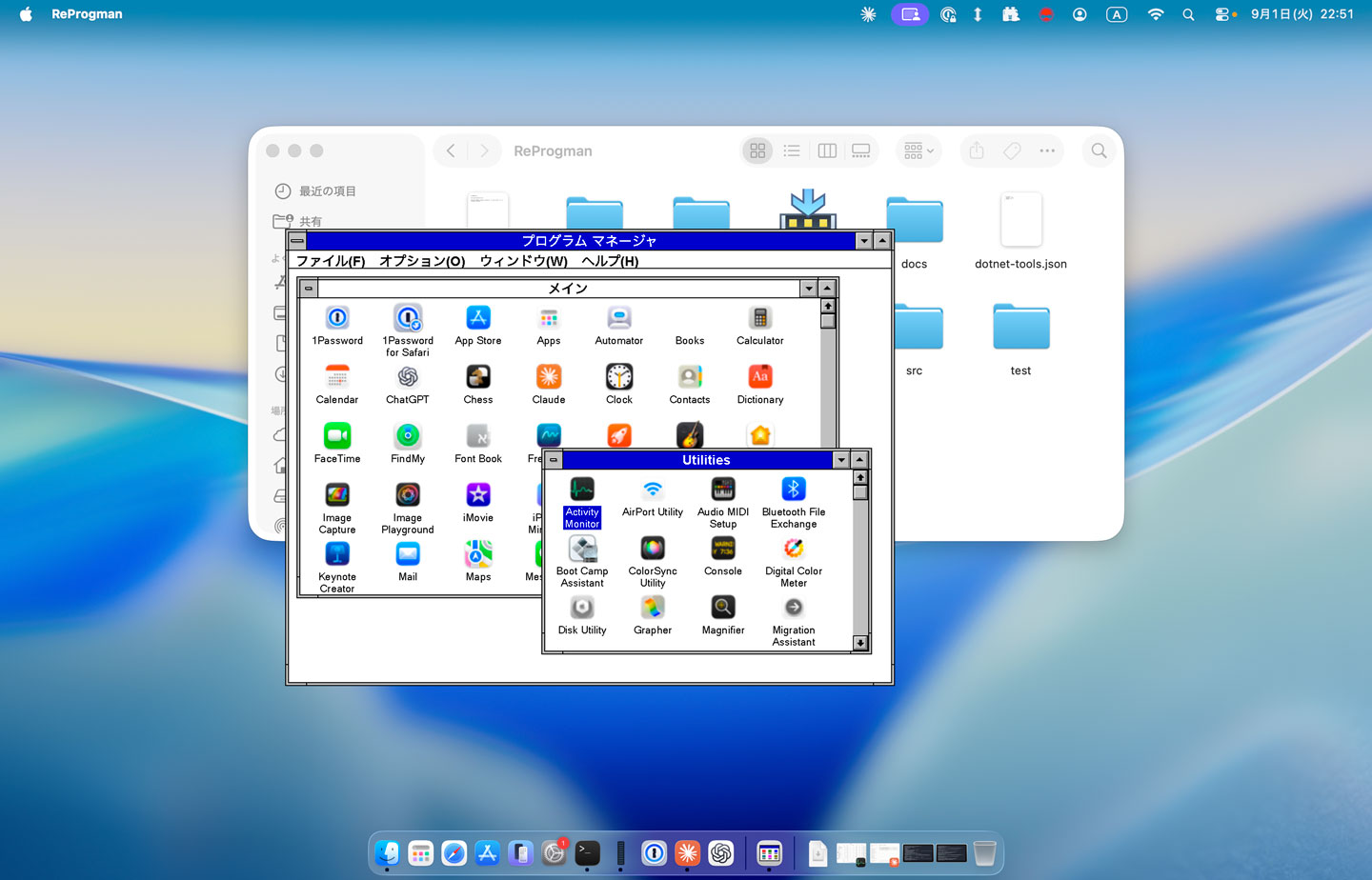
Developer uses Claude to vibe code a Windows 3.1 shell in an hour — reanimated 12MB retro launcher runs on both Windows 11 and Apple Silicon

10 September 2026 at 12:00

If you are yearning for a quick-shot retro Windows experience on your modern Windows 11 or macOS system, then there’s a new vibe-coded clone of the Windows 3.1 Program Manager that may interest you. Developer Mayuki has released a neat little nostalgia project dubbed ReProgman – named after the ancient Windows 3.1 ‘progman.exe ’, which was the primary shell of the era – until Windows 95 swept it away three decades ago.

ReProgman macOS screenshot

ReProgman macOS screenshot (Image credit: Developer Mayuki on GitHub)

ReProgman looks pretty authentic to my eyes, and it brought back memories of why I wasn’t sad to see it shrivel away from Windows machines. In a social media post about the release of ReProgman, Mayuki seems to agree with my sentiments. “I asked Claude to create a clone of the Windows 3.1 Program Manager,” wrote the developer (machine translation). “I think you'll enjoy reminiscing with it for about 30 seconds.”

Claude Code worked pretty swiftly to churn out this clone of the Windows 3.1 shell. The first version that was precipitated in about an hour was “pretty decent” but needed some effort to iron out the wrinkles. Then Mayuki complains again that actually using ReProgman induced boredom after about half a minute of usage.

The end-user-ready releases of ReProgman weigh in at between 12 and 16MB, so they are quite a trivial download and don’t need installing. Thus, it isn’t very taxing to give them a try for a spot of nostalgia-tinted navigation around your present system’s programs and files. Mayuki says that building and running this application needs the .NET SDK 10.0+. The code has been released on GitHub under the MIT license.

In conclusion, Miyuki’s ReProgman provides an easy trip down personal computing's memory lane, specifically to the Windows 3.X era of the early to mid-1990s. However, some will prefer to get their retro computing kicks by running the actual MS-DOS/Windows 3.1 combo on real hardware. As we discovered recently, that doesn’t limit users to dusting off an old i486 or similar. Back in April, an enthusiast demoed Windows 3.1X on ultra-modern bare metal with a system using a Ryzen 9 9900X and RTX 5060 Ti.

Samsung to help fortify OpenAI's semiconductor supply chain

9 September 2026 at 21:18
OpenAI will design its next-generation AI accelerators with the help of South Korean foundry giant Samsung Electronics. This move could help the ChatGPT maker with memory, process tech, or other key things it needs to succeed. The announcement, made by OpenAI Korea general manager Harrison Kim in a press conference Wednesday, comes just weeks after the company showed its first-generation “Jalapeño” accelerators besting Nvidia’s Blackwell GPUs across a slew of inference workloads. "One of the areas where we have made the most progress and gained the most recognition with Samsung Electronics is our joint production and research on the next-generation chips we are developing," he said, according to Reuters. But now that the hype has died down and Wall Street has convinced themselves that the rise of AI ASICs isn’t the threat to Nvidia’s dominance they feared, OpenAI still has to contend with the realities of being a fabless chip designer. The vast majority of leading edge silicon made today comes from a single company: TSMC. That means securing meaningful capacity requires competing with AMD, Nvidia, and practically every other chip biz and hyperscaler designing their own chips. But TSMC isn’t the only leading edge wafer fab out there. They’re just the biggest. Smaller, less popular options include Samsung Electronics and Intel Foundry. The supply of high-bandwidth memory (HBM), which OpenAI’s (and Broadcom if we’re being honest here) designs make extensive use of, is similarly constrained with just three major manufacturers capable of producing it in volume: SK Hynix, Micron, and you guessed it, Samsung Electronics. This puts OpenAI in a tough spot of having to compete with larger, higher volume chip designers for both logic and memory silicon. As such, OpenAI’s tie-up with Samsung could go two ways. The most obvious, but also the least interesting, is that Samsung will supply all or at least some of the HBM used in the model dev’s next-gen chips, which we’ll call Habanero for lack of an official code name. Detailed at Hot Chips last month, OpenAI’s Jalapeño AI inference chip uses HBM4, the same tech used by AMD and Nvidia’s latest GPUs. That tells us that there's a pretty good chance Habanero will likely use the faster HBM4E. And given the ongoing memory shortage, if OpenAI wants to secure ample supply, it’s going to need to forge these relationships early. Besides supply chain, timing is important because there’s a good chance OpenAI’s next chip will take advantage of custom base dies to move things like memory controllers or even some logic from the compute silicon to the HBM stack itself. If you recall Nvidia’s disclosures around NVHBM a few weeks back, it’s the same idea. However, these custom base dies require some coordination with the HBM supplier, so fostering a close relationship with Samsung now would benefit OpenAI, even if the compute chiplets themselves end up being manufactured by TSMC. While the most obvious reason for OpenAI’s tie-up with Samsung is memory-related, that’s not to say they couldn’t fab their next chip on Samsung’s 2 nm process tech just to have an alternative supplier to TSMC. Samsung is the second largest leading edge foundry operator in the world and used to produce a lot of silicon for the likes of Nvidia, Apple and others. Nvidia’s Ampere generation used Samsung’s 8 nm process tech for the majority of its PCIe-based cards, while its HBM-equipped accelerators were exclusively fabbed by TSMC. But a number of factors, including the rise of multi-die architectures requiring advanced packaging and broader adoption of HBM-based accelerators, made TSMC the more attractive option. Reported challenges with Samsung’s yields across its 3 nm process tech probably didn’t help either. But as of 2026, Samsung is looking a lot more compelling, with chip designers including Rebellions, Tenstorrent, and Groq building sophisticated AI accelerators at its fabs. Rebellions’ Rebel100 accelerator is a particularly useful proof point as it utilizes a multi-die architecture and HBM3E, both of which require sophisticated advanced techniques to stitch everything together. The chip shows that Samsung is more than capable of producing OpenAI’s next chip. What’s more, doing so could open the door to larger allocations than they would get from TSMC alone. We reached out to OpenAI for comment on its silicon strategy, but had not heard back as of publication. ®

Popular navigation apps unlikely to ditch Mercator maps despite UN resolution

9 September 2026 at 18:11

Nearly every country represented in the United Nations General Assembly recently voted in favor of promoting world maps that more accurately show the size of various continents. But the UN resolution is unlikely to change how millions of people regularly see versions of 16th-century Mercator maps depicting skewed continent sizes in navigation apps.

On September 4, the African-led resolution attracted 164 votes in favor, with six countries abstaining from voting. Only the United States voted to oppose the resolution after describing it as a “radical ideological project,” according to UN News.

The non-binding UN resolution does not impose map changes on anyone. Instead, it “encourages governments, schools, international organizations, and technology companies to use the Equal Earth projection and other so-called equal-area maps when relative size matters,” UN News reported. The resolution also encourages teaching about the trade-offs that arise from depicting a spherical planet on a flat map.

Read full article

Comments

© UN Photo/Loey Felipe

❌