Login
The Perseid Meteor Shower Is Peaking. Here’s How to Watch.
11 August 2026 at 10:00
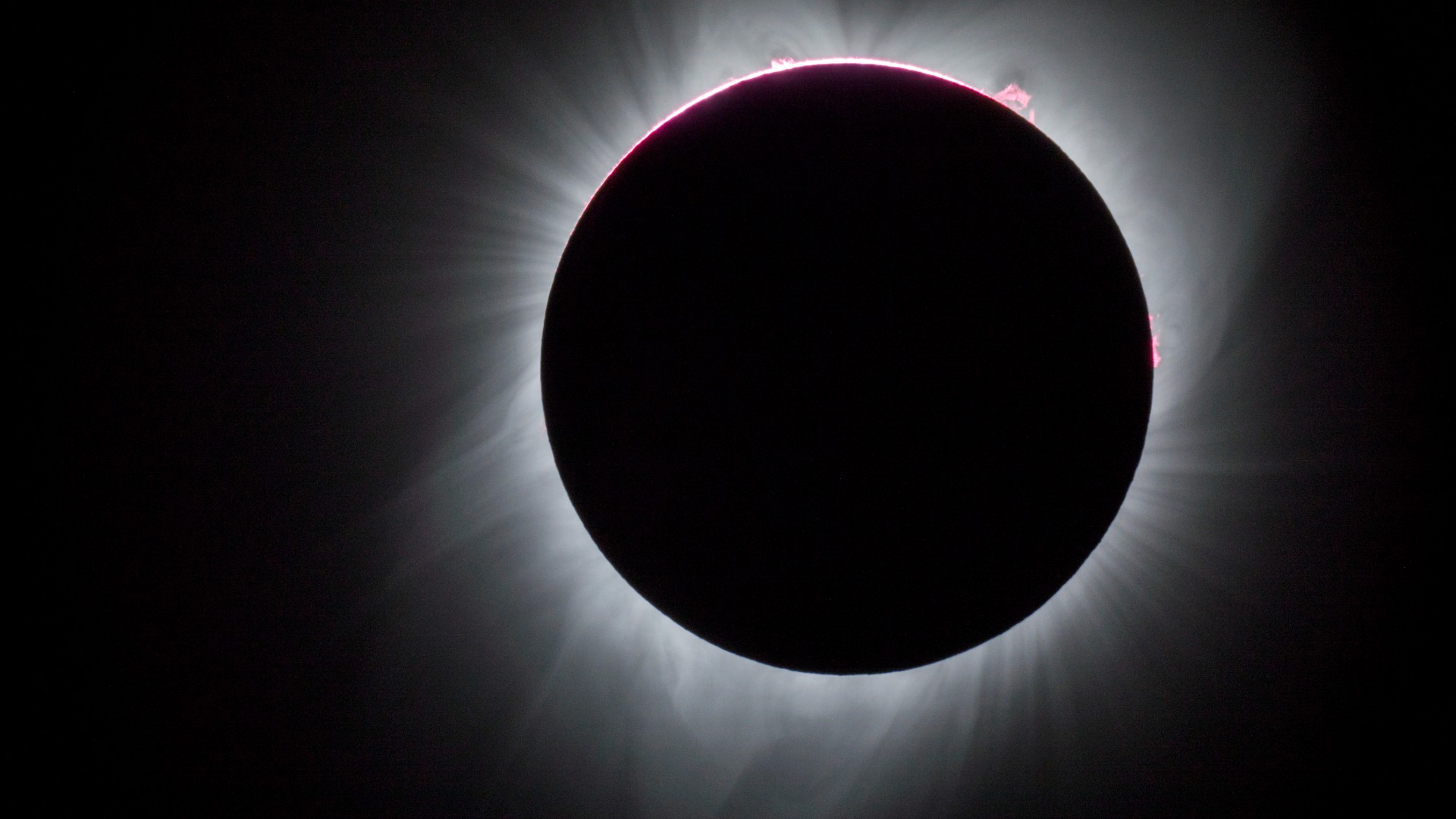
The Perseids will be most active on Wednesday into Thursday morning, on the moonless night after a total solar eclipse.

The Aug. 12 total solar eclipse is just one day away! Here's how you can watch the entire show live online from the comfort of your home
Millions of people across Spain, Iceland and Greenland will see the moon completely hide the sun during the climactic phase of totality on Aug. 12. Countless more skywatchers across Europe will witness a deep partial solar eclipse, as the moon's curved silhouette covers a swathe of the sun's surface, while failing to cover it entirely.
Thankfully, we live in modern times. So there's no need for you to miss out on the solar spectacle if you find yourself outside of the path of totality, or if clouds conspire to ruin your view. Here's where to watch every phase of the 2026 total solar eclipse live online.
NASA will be hosting its own livestream of the event starting at 1:15 p.m. EDT on Aug. 12, featuring live views of totality from cameras spread throughout the path of the eclipse. The visuals will be accompanied by information on the science of the incredible event and details on how the agency is working to learn more about our sun.
The NASA coverage will be hosted here on Space.com, but can also be streamed through YouTube, Twitch, NASA+, Facebook, Instagram and Amazon Prime.
Time and Date's YouTube livestream kicks off at 12 p.m. EDT (1700 GMT) on Aug. 12, bringing live views of the eclipse from Leon in northwestern Spain and the island of Mallorca, along with live commentary from journalist Anne Buckle and astrophysicist Graham Jones.
An official European Space Agency (ESA) livestream will begin at 1:30 p.m. EDT (1730 GMT) on Aug. 12. The stream will feature expert commentary on the science of the eclipse along with live views from telescopes at the Observatorio Astrofisco de Javalambre, which is located close to the Spanish city of Teruel directly in the path of totality.
London's historic Royal Observatory Greenwich will host two simultaneous YouTube streams featuring live views of the partial solar eclipse starting at 1:15 p.m EDT (1815 GMT) on Aug. 12. The first livestream will be presented by Royal Observatory astronomer Greg Brown, who will discuss the science of the sun while providing expert commentary on the eclipse, while the second will offer a silent livestream, featuring visuals of the eclipse with no accompanying audio.
The Virtual Telescope Project livestream begins at 1:20 p.m. EDT (1720 GMT) on Aug. 12, bringing real-time views from the organization's robotic telescopes in Manciano, Italy, where a partial eclipse will be visible and from the path of totality in Spain. The Virtual Telescope Project will host a separate livestream a few hours later featuring views of the Perseid meteor shower peak, which occurs overnight on Aug. 12-13.
Be sure to check out our live blog for all of the latest news on the Aug. 12 total solar eclipse. We'll also have reports from Skywatching Writer Anthony Wood as he watches the eclipse unfold low in the horizon in central Spain, and also from Skywatching Editor Daisy Dobrijevic as she witnesses the spectacle during a voyage with HX Expeditions to Greenland!
Editor's Note: If you would like to share your eclipse photos with Space.com's readers, then please send your photo(s), comments, and your name and location to spacephotos@space.com.

If you're planning to watch the total solar eclipse on Aug. 12, knowing exactly when to look up is crucial.
While totality will be visible from parts of Greenland, Iceland and Spain, millions more people across Europe will experience a dramatic partial solar eclipse. Whether you're chasing the moon's shadow in Reykjavik or watching the moon take a 'bite' out of the sun from London, Paris, or Berlin, timing is everything.
You can keep up with the latest total solar eclipse news and coverage with our total solar eclipse live blog.
Location | Totality begins (local time) | Duration |
|---|---|---|
Scoresby Sund, Greenland | 4:35 p.m. | 1m 46s |
Reykjavik, Iceland | 5:48 p.m. | 1m 1s |
Snæfellsjökull, Iceland | 5:45 p.m. | 2m 10s |
Gijón, Spain | 8:26 p.m. | 1m 46s |
A Coruña, Spain | 8:27 p.m. | 1m 15s |
Burgos, Spain | 8:28 p.m. | 1m 44s |
Mallorca, Spain | 8:31 p.m. | 1m 36s |
Location | Local time (maximum coverage) | % of sun's disk covered |
|---|---|---|
New York City | 1:54 p.m. | 9% |
St. John's, Newfoundland, Canada | 3:35 p.m. | 53% |
Nuuk, Greenland | 4:35 p.m. | 79% |
Oslo, Norway | 7:57 p.m. | 83% |
Berlin, Germany | 8:08 p.m. | 84% |
London, U.K. | 7:13 p.m. | 91% |
Paris, France | 8:17 p.m. | 92% |
Tangier, Morocco | 7:40 p.m. | 92% |
Dublin, Ireland | 7:10p.m. | 94% |
Lisbon, Portugal | 7:36 p.m. | 94% |
Nice, France | 8:24 p.m. | 95% |
Madrid, Spain | 8:32 p.m. | 99.96% |
Barcelona, Spain | 8:29 p.m. | 99.82% |
Looking for your own eclipse time? The interactive map and resources from Time and Date let you search by city and view detailed timing information for every stage of the eclipse.
A total solar eclipse occurs when the moon moves directly between Earth and the sun, completely blocking the sun's disk from view.
During totality, the sky darkens significantly, temperatures drop and bright stars and planets can even become visible. Observers can also catch a glimpse of the sun's outer atmosphere, known as the corona, glowing around the silhouetted moon.
Totality — when the sun is completely obscured — is only visible within the narrow path of the moon's shadow. Outside that path, observers may see a partial solar eclipse, whereby only a portion of the sun is covered.
REMEMBER to NEVER look directly at the sun. To view this solar eclipse safely, you must use solar filters. Only during the brief period of totality when the moon completely covers the sun, is it safe to look at the sun without protection. Observers will need to wear solar eclipse glasses, and cameras, telescopes and binoculars must have solar filters placed in front of their lenses at all other times.
Our how to observe the sun safely guide tells you everything you need to know about safe solar observations.
After the total solar eclipse on Aug. 12, 2026, the next solar eclipse will be an annular solar eclipse on Feb. 6, 2027 visible across parts of Africa and South America. The next total solar eclipse will be a spectacular event on Aug. 2, 2027. Visible across North Africa, it will be the longest totality on land since 1991.