❌

Normal view

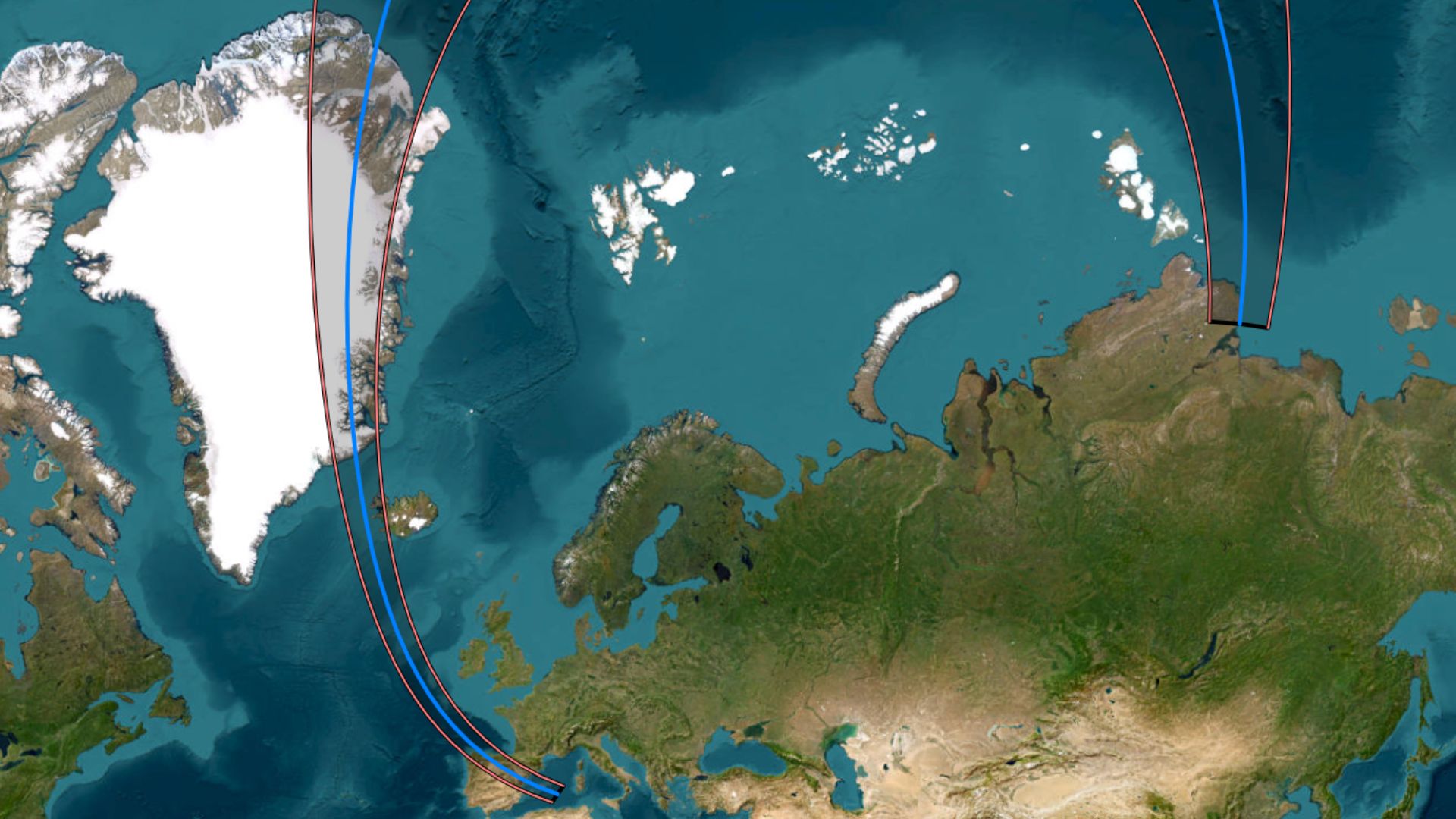
Where will the total solar eclipse 2026 be visible from?

The total solar eclipse on Aug. 12, 2026 will sweep across parts of the Northern Hemisphere, offering millions of people a chance to witness one of nature's most spectacular sights.

The path of totality β€” in which the moon completely covers the sun β€” begins over the Arctic Ocean, before crossing eastern Greenland, western Iceland and northern Spain. It then passes over the Balearic Islands before ending over the Mediterranean Sea.

Only skywatchers inside this relatively narrow path, just 182 miles (293 kilometers) wide, will experience totality, where day briefly turns to twilight. Here, you'll be able to safely see the sun's outer atmosphere, known as the corona, with the naked eye during the fleeting moment when the moon completely obscures the sun.

A much larger region surrounding the path of totality will instead see an impressive partial solar eclipse. Much of Europe, including the U.K., Ireland, France, Germany, Italy and Scandinavia, will witness the moon take a "bite" out of the sun.

Northern Spain is expected to be one of the most popular destinations for eclipse chasers thanks to its relatively accessible location and the low evening sun on the big day, which could create dramatic views as totality unfolds close to sunset. Greenland and Iceland offer very different experiences, with totality taking place higher in the sky against the nations' spectacular Arctic landscapes.

We'll have reporters on the ground to keep you updated each step of the way. Be sure to follow along on our total solar eclipse live blog to stay up to date with all the latest news and action as Skywatching Editor Daisy Dobrijevic embarks on an eclipse expedition to Greenland with HX Expeditions and Skywatching Writer Anthony Wood heads to Spain to experience the eclipse with NASA's DEB initiative and citizen scientists.

A map showing the path of totality for the total solar eclipse in 2026.

The global path of the total solar eclipse on Aug. 12, 2026. (Image credit: Created and annotated by Jamie Carter using MapHub.net. Sources: Esri, Maxar, GeoEye, Earthstar Geographics, CNES/Airbus DS, USDA, USGS, AeroGRID, IGN and the GIS user community. Eclipse path by Xavier Jubier)

How to watch

Wherever you plan to watch from, remember that it is never safe to look directly at the sun without proper eye protection. Certified solar eclipse glasses or a solar filter fitted to telescopes, binoculars and cameras must be used throughout the partial phases. Only during the brief period of totality, when the moon completely blocks the sun, can you safely remove your eclipse glasses and look directly at the eclipse.

We will also be livestreaming the eclipse here on Space.com; details will be released closer to the time.

Want to know exactly where the eclipse will be visible and how long totality will last at different locations? Check out our complete guide to where to see the Aug. 12, 2026 total solar eclipse, including detailed maps, timings and viewing advice.

Total solar eclipse Aug. 12, 2026 live updates β€” 3 days to totality

On Aug. 12, 2026, Europe will experience its first total solar eclipse since 1999, as the moon's shadow sweeps across Greenland, Iceland, northern Spain and the Balearic Islands.

Along the narrow path of totality, day will briefly turn to twilight as the moon completely covers the sun, revealing its elusive outer atmosphere β€” the corona. Meanwhile, millions more skywatchers across much of Europe, as well as parts of northeastern United States and eastern Canada, will witness a partial solar eclipse as the moon appears to take a bite out of the sun.

Live reporting from the path of totality

We'll be following the eclipse from two locations along the path of totality.

Our skywatching editor Daisy Dobrijevic is currently aboard HX Expeditions' MS Spitsbergen exploring Greenland's dramatic coast. She'll be aiming to witness totality from Scoresby Sund, the world's largest and longest fjord system. Dobrijevic is hoping for more eclipse luck than last time, when unfortunately, totality was a total bust, but not for the reason you may think.

Meanwhile, our skywatching writer Anthony Wood is joining the DEB initiative in Valoria la Buena, Spain, where the eclipsed sun will hang low above the western horizon shortly before sunset. It will be Wood's first-ever total solar eclipse.

Complete guide | Solar viewing tips | What is a solar eclipse?

One week until the total solar eclipse 2026: The countdown has begun... are you ready?

The moon's silhouette is visible in front of a fully eclipsed sun in a black sky, with the sun's white atmosphere creating a halo around the lunar disk.

The countdown has begun! The total solar eclipse 2026 will occur on Aug. 12. (Image credit: Photo by Erin Clark/The Boston Globe via Getty Images)

In just one week, millions of people across Greenland, Iceland and Spain will witness one of nature's greatest spectacles as the moon completely covers the sun.

Our team will be following the eclipse from two incredible locations, aboard an expedition ship in East Greenland with HX Expeditions and from northern Spain with the DEB initiative, bringing you live updates throughout the lead-up to the eclipse and on the day itself

Read more: 1 week to go until a dramatic total solar eclipse darkens the skies over Spain, Iceland and Greenland

Last call for eclipse glasses!

Get your solar eclipse glasses early; they always sell out before an eclipse.

Eclipse glasses must be worn whenever the sun's disk is visible. (Image credit: LeoPatrizi / Getty Images)

If you're planning on viewing the Aug. 12 total solar eclipse then you'll need to get hold of a pair of quality eclipse glasses. Be sure to get a pair from a reputable dealer that conforms to the all important ISO 123-12 - 2 certification and never use an old pair if they appear scratched or damaged in any way!

Read More: Heading to Europe or the U.K. for the Aug. 12 solar eclipse? Best eclipse glasses to buy before you leave β€” or after you arrive.

Where will the eclipse be visible?

composite graphic image showing a location marker with a total solar eclipse image inside it, situated on top of a background showing earth viewed from space.

Find out where you can experience totality on Aug. 12, 2026. (Image credit: Created in Canva Pro)

Not everyone will experience totality on Aug. 12.

Some places will see the moon completely cover the sun, while others will experience a partial solar eclipse and for some… no eclipse at all. Womp womp.

Wondering what you'll see from your location? Find out where the eclipse will be visible

Also worth downloading before the big day: The best apps for following the eclipse

Do clouds ruin a total solar eclipse?

A solar eclipse is seen through the clouds on April 8, 2024 in Niagara Falls, Ontario, Canada.

Clouds won't necessarily sour your eclipse expedition. (Image credit: Vaughn Ridley/Getty Images)

One of the biggest worries before any eclipse is weather.

While a perfectly blue sky is ideal, you don't necessarily need one to enjoy the experience. Even under thin clouds, many of the most dramatic effects of totality can still be visible.

Read more: Here's why cloud cover doesn't always mean an eclipse is ruined.

Have you sorted your eclipse glasses yet?

A pair of eclipse glasses are held up close to the sun, which shines in a blue sky.

Sunglasses are vital to safely view the partial stages of a solar eclipse. (Image credit: Photo by Gabriel BOUYS / AFP via Getty Images)

If you'll be looking at any part of the partial eclipse, you'll need proper eye protection. Never look directly at the sun without certified eye protection.

Don't have eclipse glasses? You can still safely enjoy the eclipse using simple projection methods with everyday household objects.

Check out our how to view the sun safely and what to look for guide for more solar viewing inspiration.

What actually happens during a total solar eclipse?

A composite image of 5 sun/moon conjunctions showing the stages of a total solar eclipse arrayed in a diagonal line in a dark sky, with the point of maximum eclipse in the middle.

A composite image revealing the beauty of each stage surrounding totality. (Image credit: Photo by: Alan Dyer/VW Pics/UIG via Getty Images)

Totality lasts only a few minutes, but a lot is happening before, during and after.

From first contact and the dramatic diamond ring effect to the appearance of the sun's corona, each stage offers something unique.

Read more: What to expect at each stage of the total solar eclipse 2026.

The citizen scientists keeping an eye on the Aug. 12 total solar eclipse

A composite image showing totality as the lunar disk hides the face of the sun. Images are stacked diagonally either side showing the moon and sun just before and after totality.

Two teams of Dynamic Eclipse Broadcast volunteers with observe totality on Aug. 12. (Image credit: Photo by: Alan Dyer/VW Pics/UIG via Getty Images)

Countless eyes will be watching the moon's silhouette swallow the light of our parent star during the climactic phase of totality on Aug. 12.

Among them will be volunteers from the Dynamic Eclipse Broadcast Initiative β€” a passion-driven volunteer network of solar observers led by professional astronomers from the Southern Illinois University Carbondale and part funded by NASA.

Discover more on their efforts to capture valuable data on the sun's atmosphere while bringing the public closer to the Aug. 12 total solar eclipse below.

Read more: When a total solar eclipse darkens the sky on Aug. 12, these citizen scientists will be watching.

❌