❌

Normal view

Gears of War: E-Day: Release date, platforms & everything else we know about Marcus Fenix's return

2 August 2026 at 17:00

Microsoft and Xbox are currently facing all sorts of troubles (many of their own doing) in the shape of sweeping layoffs, studio cuts, and calls to boycott their products, to name a few. Extremely talented developers (who deserve much better) still put out exciting video games regardless, and with the remake of Halo: Combat Evolved out now, we look to Gears of War: E-Day, the series' first mainline entry since 2019.

While there are plenty of upcoming space games worth keeping tabs on, Gears of War's return feels special for a number of reasons. Although Gears 5 was not a flop – quite the opposite – there was a growing sentiment among the fanbase that Gears of War needed to reevaluate its future by revisiting its past. After a solid remaster of the original game last year, this next chapter is taking us back to where it all started: Emergence Day.

With gameplay systems, mechanics, controls, and visuals fully rebuilt on Unreal Engine 5, The Coalition aims to deliver the ultimate Gears of War experience with E-Day, and at least the atmosphere and tone seem pitch-perfect. But with nostalgia taking so many beloved franchises a few steps back in recent times, we must wonder if there's more to E-Day than reliving the series' glory days? Here's everything you should know about Gears of War: E-Day ahead of its launch.

When is Gears of War: E-Day coming out?

Screenshot from Gears of War: E-Day

(Image credit: Xbox Game Studios)

Gears of War: E-Day launches on October 6, 2026.

After a gameplay-less reveal in summer 2024, The Coalition went silent to continue work on the prequel. It was finally during the Xbox Games Showcase 2026 that we received confirmation Gears of War: E-Day would arrive before the year's end.

Is Gears of War: E-Day coming to PlayStation 5?

Contents of Gears of War: E-Day Collector's Edition.

(Image credit: Xbox Game Studios)

No, Gears of War: E-Day won't be releasing on PS5 despite last year's remaster of the first game marking the series' debut on Sony consoles.

Though rumors and leaked materials pointed to Gears of War: E-Day launching on Sony's console alongside Xbox, the full reveal in summer 2026 underlined it was an Xbox Series X/S console exclusive. It will, however, also launch on Windows via the Xbox app and Steam. As usual, Game Pass Ultimate subscribers will also get access to it day one.

Three editions will be available at launch, and you can pre-order them already:

  • Standard ($69.99 / Β£59.99 / €69.99) – Base game.
  • Premium ($99.99 / Β£89.99 / €99.99) – Base game with up to five days of early access, Bravo Squad Signature Weapon Pack, Emergence Customization Pack, Four Seasonal Customization Packs (released post-launch), and 1,000 iron (the game's premium in-game currency). A separate upgrade for Standard will also be sold.
  • Collector's ($299.99 / variable regional pricing) – Everything in the Premium Edition plus physical items, including a collector's display box, a 15" statue, replica COG tags, an exclusive steelbook case, an art piece, and an art print & thank-you note from the studio.

All editions also benefit from pre-order bonuses that include open beta early access (on August 6), the Exfil weapon set, and Exfil Dom legendary character skin.

Gears of War: E-Day trailers

Xbox and The Coalition are sharing all sorts of short videos in the lead-up to launch, but if you want to only watch the trailers and gameplay demos, we have them right here:

Is Gears of War: E-Day the first game in the timeline?

Screenshot from Gears of War: E-Day.

(Image credit: Xbox Game Studios)

Gears of War: E-Day is the first chapter in the Gears timeline. It tells the story of how the humans on the Earth-like planet of Sera came in contact with the bloodthirsty and relentless Locust Horde on what would later be called Emergence Day.

If you're planning to play the Gears of War games in order, this would be the perfect place to start moving forward. Though the original game and Judgment (a spinoff that was released for Xbox 360) gave us information on what happened during E-Day, we never really had a Rogue One-like prequel similar to Halo: Reach. Now, both veterans and newcomers will be able to experience the struggle humanity faced as a new conflict erupted.

Alongside a supporting cast of new and familiar faces, the story follows original trilogy protagonists Marcus Fenix and Dominic 'Dom' Santiago as they battle through the chaos of E-Day and push back against the subterranean invaders. For additional context, the war against the Locust kicks off only a few weeks after the 79-year conflict between human factions known as the Pendulum Wars, which explains why the COG wasn't in the best of conditions when the monsters attacked.

Will Gears of War: E-Day have co-op and competitive multiplayer?

Screenshot from Gears of War: E-Day.

(Image credit: Xbox Game Studios)

Gears of War: E-Day is a third-person, cover-based shooter in the style of the previous games and, as such, both co-op and competitive multiplayer are back alongside the single-player experience.

The main story campaign can be played in single-player, or with up to four players online or two players locally via split screen. It must be noted the PC version of the game won't feature local co-op. These player counts also apply to the series' famous Horde Siege PvE survival mode, which pits players against waves of enemies as they select different classes and loadouts.

Versus PvP multiplayer for online competition also returns with all-new maps and both Social and Ranked matches. While the post-launch support hasn't been fully detailed, it feels likely more maps will be added in the future at no extra cost.

Is there a Gears of War: E-Day demo?

Screenshot from Gears of War: E-Day.

(Image credit: Xbox Game Studios)

There's no Gears of War: E-Day demo announced at the time of writing. However, players can look forward to a multiplayer open beta happening in the coming weeks. More specifically, those who pre-order or have active Game Pass Ultimate subs can access the test early, from August 6 to 10. The second – and fully open – weekend will happen at a later date, probably the following week.

From Hardspace to Clearspace: How space salvage games compare to real debris removal

2 August 2026 at 13:00

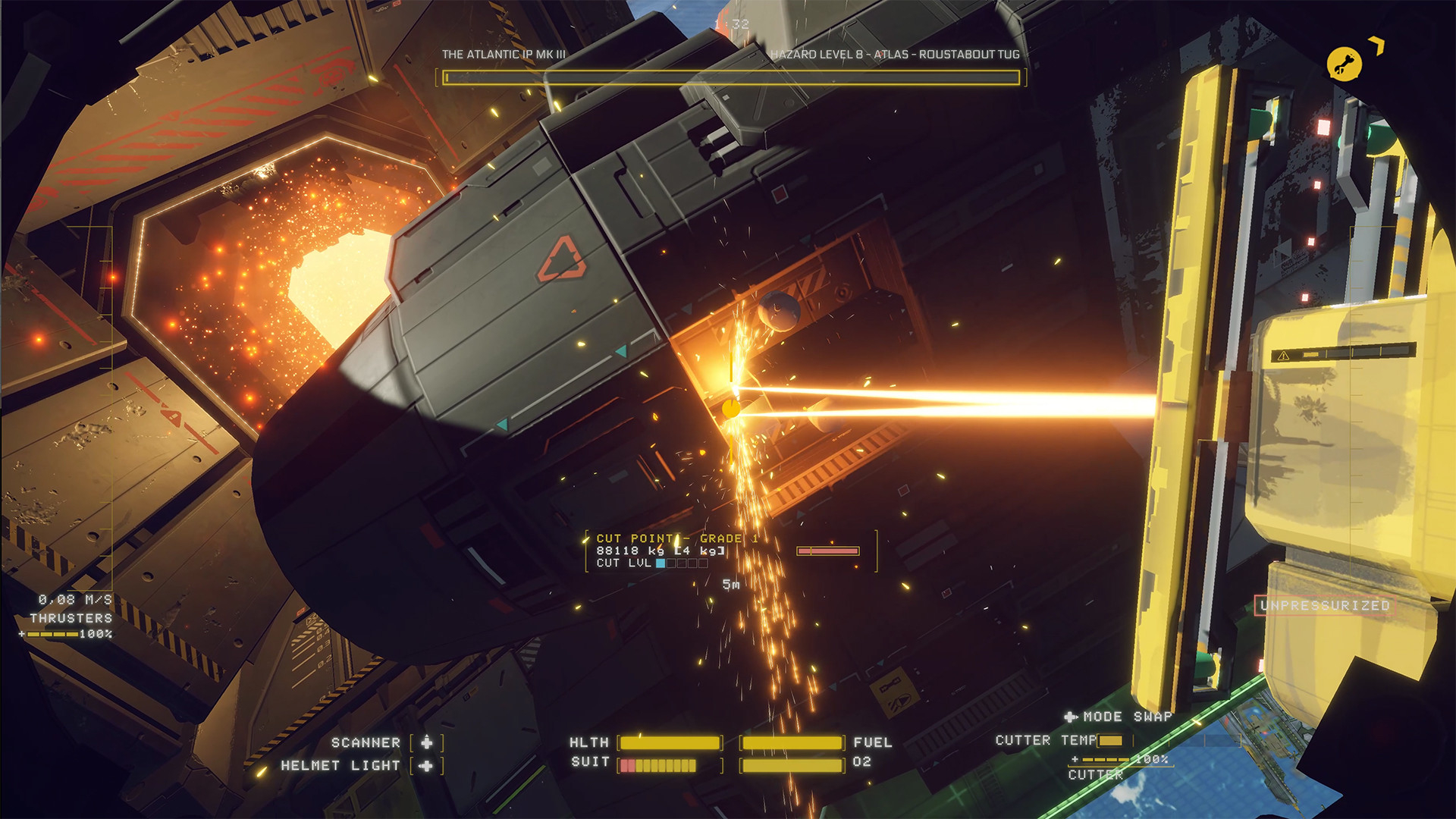
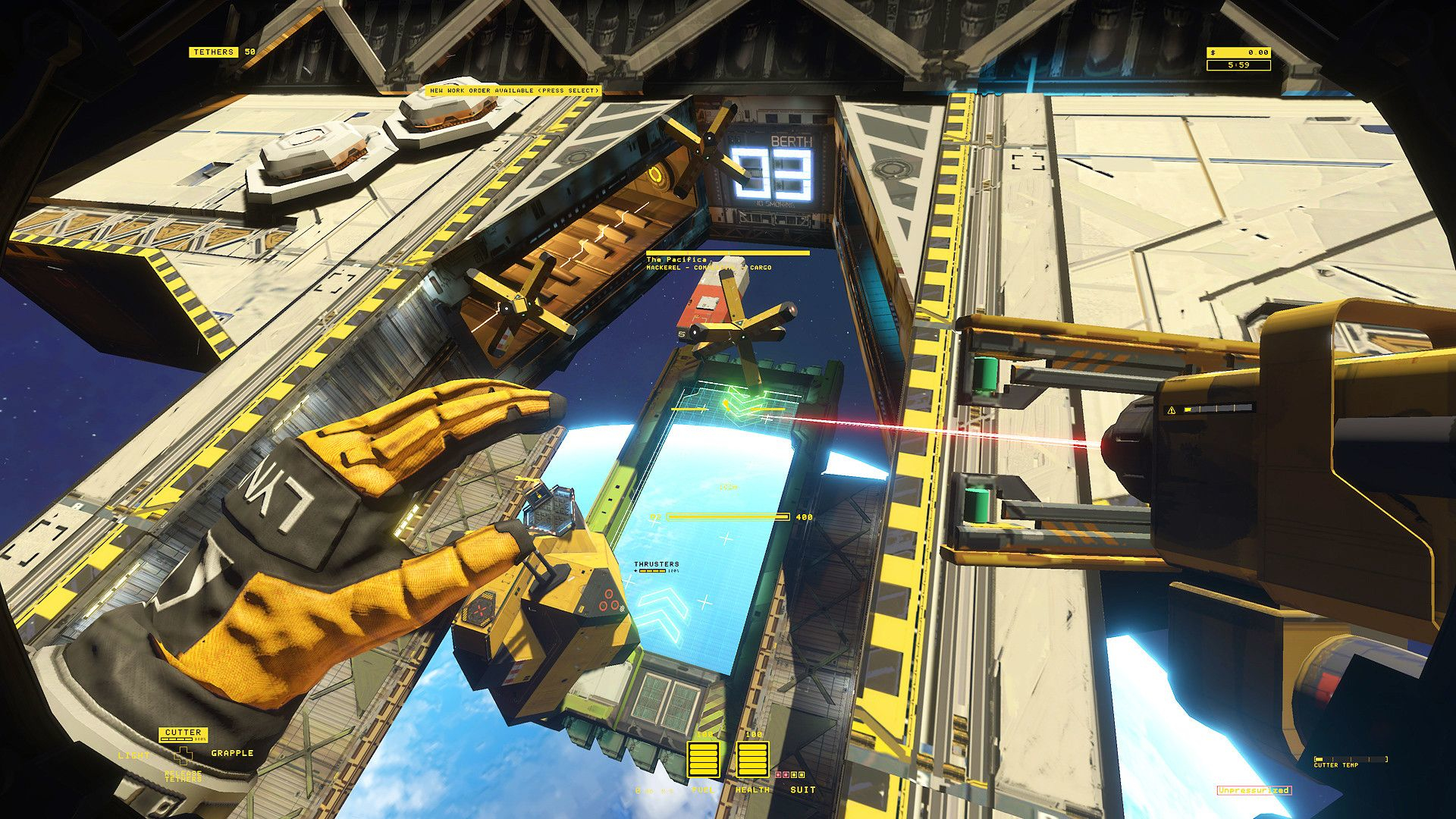
While Hardspace: Shipbreaker does an excellent job of capturing the dystopian perils of unchecked hypercapitalism, the real fun in this space game comes from carving up massive capital ships with space lasers and explosives.

Floating in zero gravity, players slice derelict spacecraft into salvageable chunks, while also contending with unruly physics, pressure, and profit margins. It's a compelling fantasy: orbital blue-collar labor, where yesterday's spacecraft become tomorrow's raw materials.

As satisfying as the simulation is, the real-world challenge of space debris removal is both more constrained and more urgent.

Screenshot from the 2020 space video game

(Image credit: Blackbird Interactive)

Christian Steimle is the Project Manager of the European Space Agency's (ESA) ClearSpace-1 mission, the first ever aimed at removing a piece of debris (in this case, a satellite called PROBA-1) from low-Earth orbit.

We spoke to him to get a sense of how actual space junk removal will happen in the future, and how it stacks up to the representations we see in sci-fi games like Shipbreaker.

The fantasy of orbital demolition

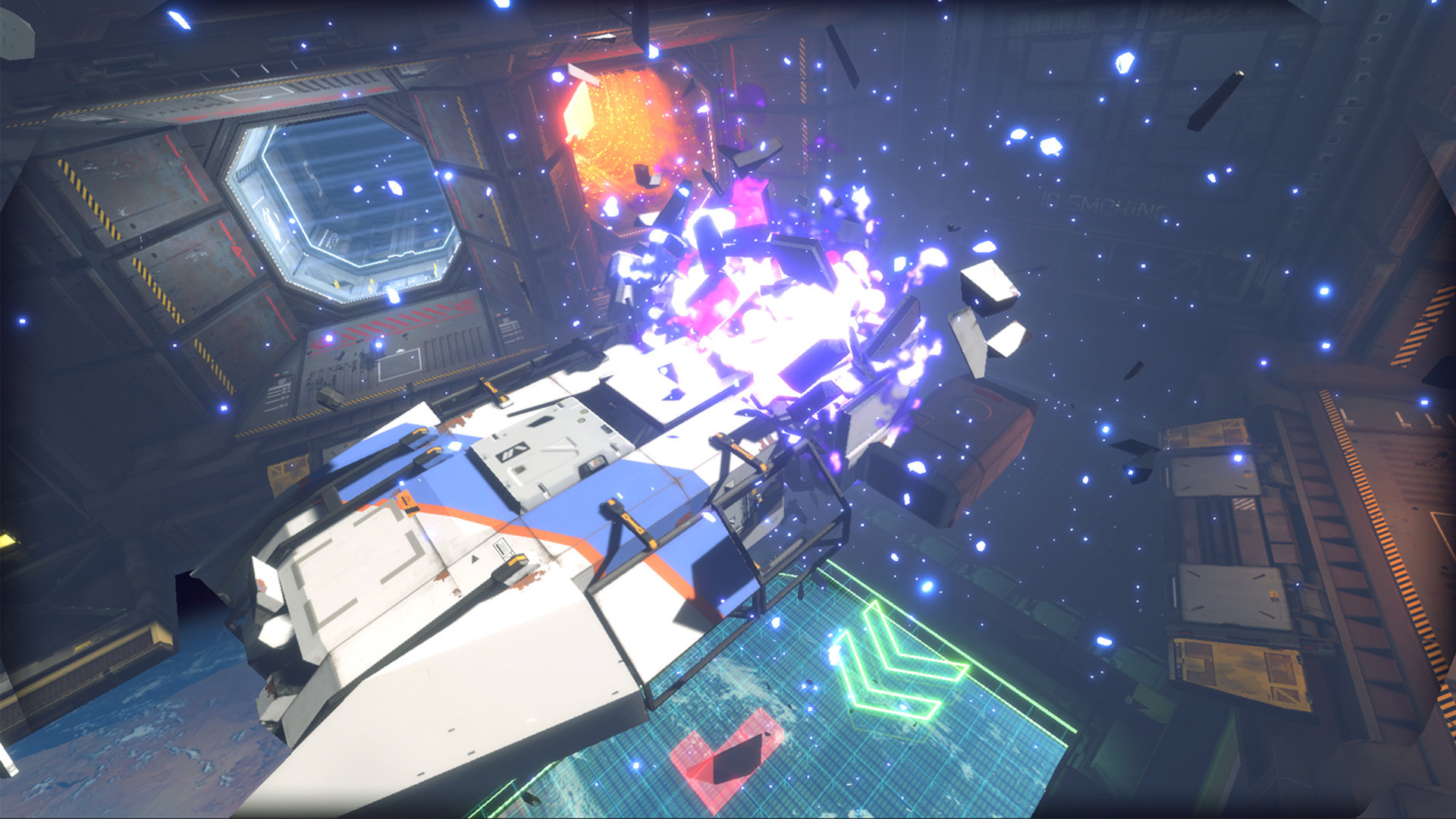
Screenshot from the 2020 space video game

(Image credit: Blackbird Interactive)

Games like Hardspace: Shipbreaker, Ξ”V: Rings of Saturn, and other space cleanup simulators tend to emphasize three core ideas: that debris can be dismantled piece by piece, that tools can safely cut or break apart structures in orbit, and that salvage is economically driven and scalable.

While they may be necessary assumptions to make for engaging gameplay, they diverge pretty significantly from current realities.

The main issue is fragmentation. Breaking apart a defunct satellite, even under the most carefully controlled and monitored conditions, risks generating thousands of high-velocity fragments. Some of those generated would be too small to feasibly track, yet large enough to destroy operational spacecraft, satellites, or stations. This is the nightmare scenario behind the Kessler syndrome, a cascading chain of collisions that could render entire orbital pathways unusable.

Screenshot from the 2020 space video game

(Image credit: Blackbird Interactive)

As Christian Steimle, Project Manager for the European Space Agency's ClearSpace-1 mission, explains, "The common agreement between all of these missions is that objects to be removed shall not be broken up or damaged… especially to avoid creating smaller debris which is more difficult to track."

That means that the core mechanic of many space salvage games (cutting or exploding things into smaller bits) is precisely what real missions are designed to avoid.

How real debris removal works

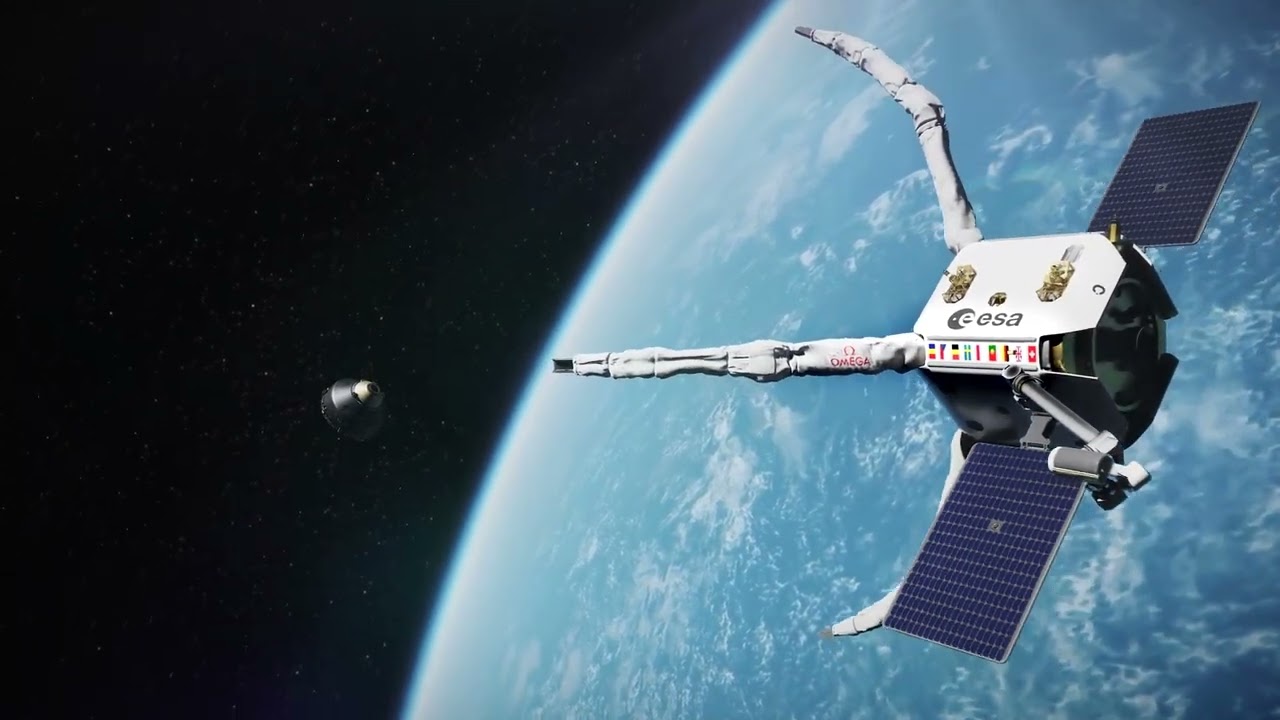
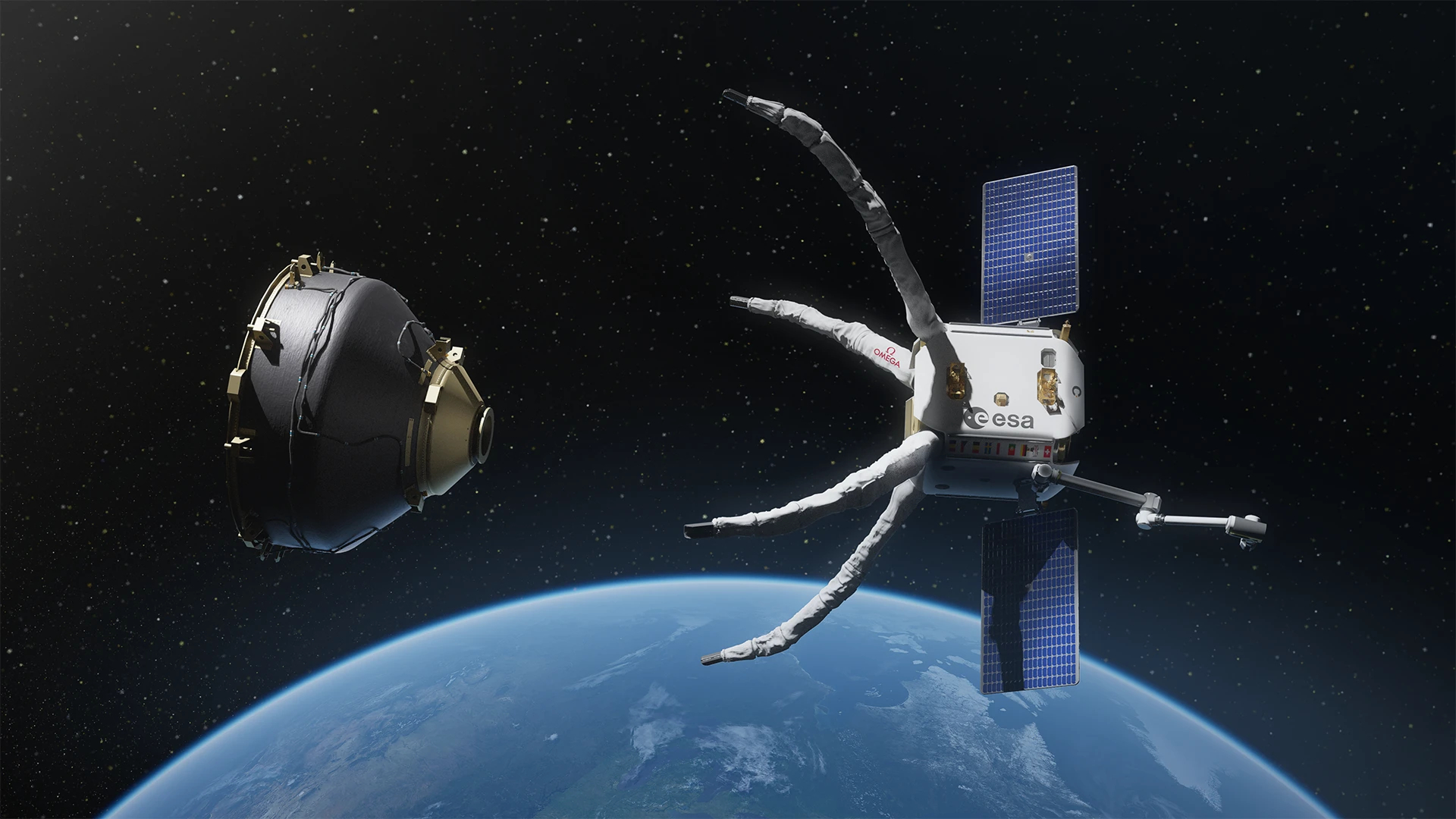
An artist's rendition of the ClearSpace-1 servicer approaching the space debris object during the ClearSpace-1 mission.

(Image credit: Clearspace)

ClearSpace-1 takes a more holistic approach. Instead of dismantling debris, the mission aims to capture PROBA-1 with as little initial damage as possible, then guide it to destruction in Earth's atmosphere.

"ClearSpace-1 will be launched into a position slightly below PROBA-1 by a dedicated launch," Steimle says. "After successful commissioning, the ClearSpace-1 servicer will inspect PROBA-1 in a number of fly-around manoeuvres."

These inspection passes are not just reconnaissance. They validate visual navigation systems and analyze how the target object is tumbling so the capture vehicle can respond appropriately.

The capture itself is a delicate operation. "The ClearSpace-developed capture system will encompass the client satellite, first forming a cage around PROBA-1, then closing the cage carefully to avoid damaging the client," Steimle explains.

Once secured, the combined spacecraft must be stabilized before any orbital change. Only then can the system lower its orbit, ensuring both objects burn up safely during re-entry. "ClearSpace-1 is designed to demise during re-entry, ensuring on-ground safety and disposal at the same time."

The process more closely resembles a surgical extraction of potentially hazardous material than scrapyard demolition.

What games get right

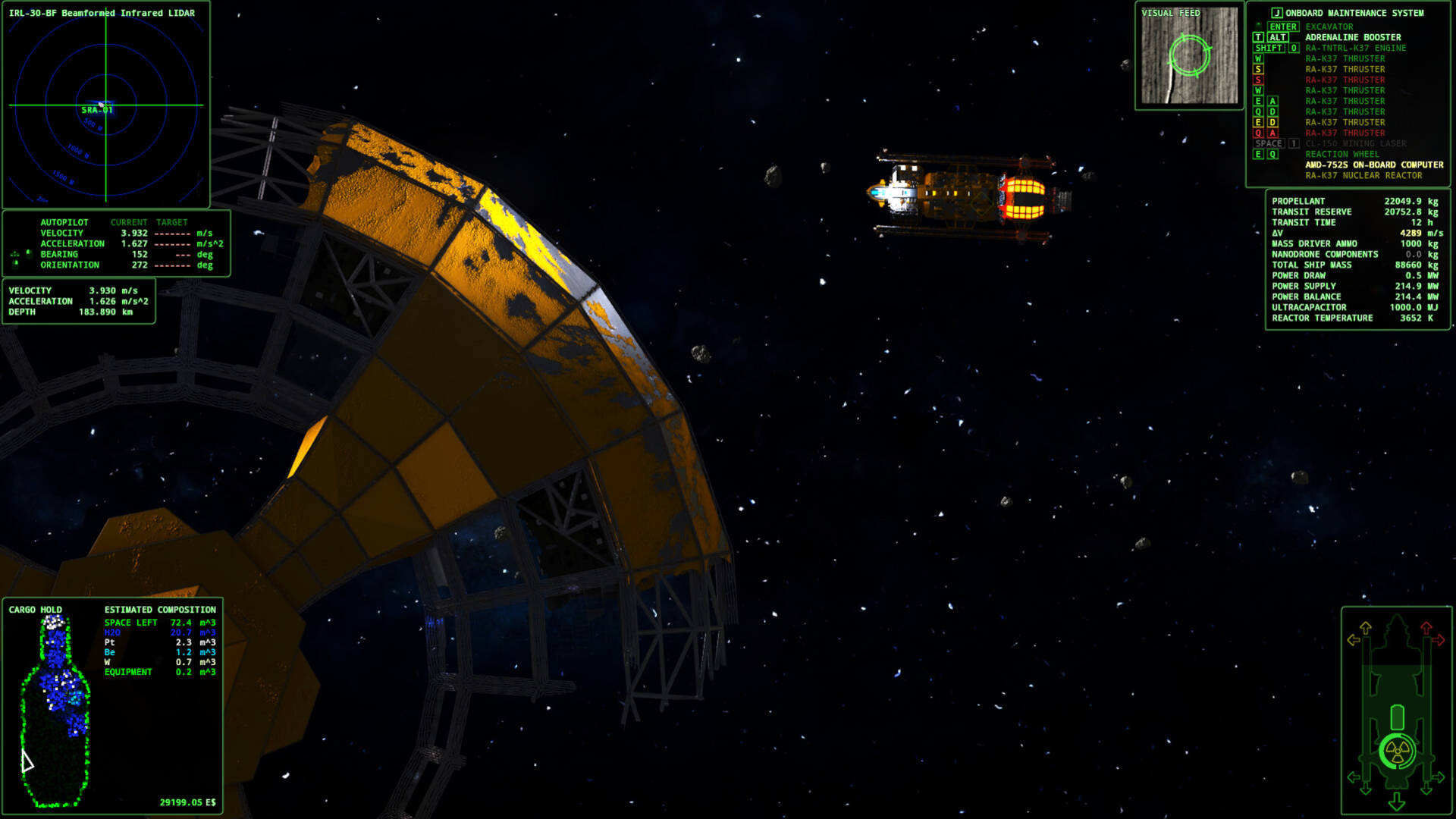
Screenshot from sci-fi debris clear-up and mining game

(Image credit: Kodera Software)

Despite their liberties, space cleanup games do hit the mark in a number of areas. One is the importance of orbital mechanics. Many games emphasize inertia, momentum, and the difficulty of stopping or redirecting large masses. Real active debris removal (ADR) missions face similar constraints, where even small velocity mismatches can lead to mission failure or damage to the capture vehicle or target.

The danger of uncontrolled motion is also well represented. Tumbling objects are among the hardest targets in space operations. Synchronizing with them requires precise, multi-axis propulsion and control systems. As Steimle notes, future vehicles must "synchronise [their] motion with a potentially tumbling space object and apply the proper control to detumble." One of the main challenges in games like Shipbreaker is avoiding being clobbered by moving debris, especially after you've detonated some explosives, or matching the speed of a rotating component long enough to cut it apart.

Third, specialization is key. Your toolkit and how you use it in games like Shipbreaker is key, and real missions rely on highly tailored capture systems. Each target may require a different approach, from robotic arms to nets, harpoons, or enclosure systems like ClearSpace's.

Where the simulations fall short

An artistic impression of the ClearSpace-1 servicer approaching the VESPA payload adapter in the world’s first active debris removal mission, commissioned by the European Space Agency (ESA)

(Image credit: Clearspace)

The biggest gap between games and reality isn't the tech, it's risk tolerance.

In games, mistakes are recoverable. In orbit, a single error can generate long-lived debris fields traveling at roughly 7–8 kilometers per second, turning tiny fragments into deadly kinetic weapons.

Games also tend to assume an eventual salvage economy, where materials are recovered and reused in space. While in-orbit manufacturing and recycling are active areas of research, current debris removal efforts aren't about profit. They're about mitigation.

"The overarching requirement is to preserve the space environment around the Earth for use by future generations," Steimle says. "Removing large objects before first collisions occur is key."

There are also orbital regime differences that games rarely address. In geostationary orbit (GEO), for instance, debris is not deorbited but moved to a higher "graveyard orbit" due to the prohibitive energy cost of re-entry. This kind of orbital zoning has no real analogue in most gameplay systems.

The future of orbital cleanup

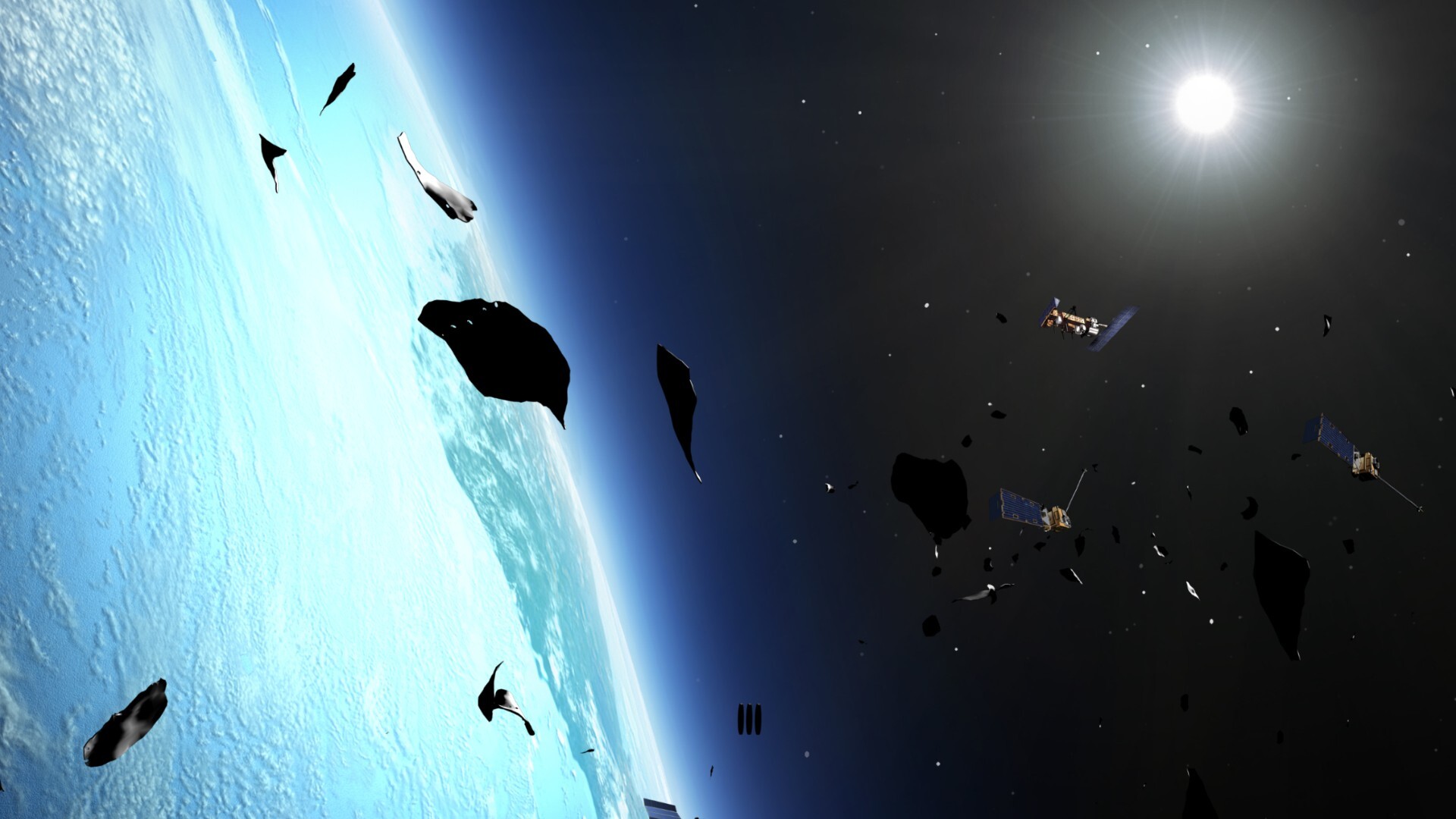
A look at orbital debris floating above Earth's atmosphere in space.

Illustration of space junk around Earth. Space junk consist of debris left in orbit from space missions: abandoned or broken satellites, satellite pieces, tools dropped by astronauts, or even space rocks captured into Earth orbit. (Image credit: Mark Garlick/Science Photo Library/Getty Images)

Looking ahead, the field of in-orbit servicing and debris removal is diversifying rapidly. Steimle says agencies and private companies across Europe, the United States and Japan are developing competing capture technologies and mission architectures.

Low-Earth orbit operations will likely favor agile, highly maneuverable vehicles capable of complex rendezvous and stabilization tasks. GEO missions, by contrast, will involve larger, less dynamic spacecraft performing long-duration servicing and relocation.

What remains consistent is the guiding principle: do no harm to the orbital environment. There's little room for the improvisational cutting and explosive decompression you see in most space salvage games. Instead, the future of orbital cleanup will depend on autonomy, precision guidance, and tightly controlled interactions with fragile, often unpredictable objects.

Fiction vs. necessity

Artist's illustration of space junk orbiting Earth.

An artist's illustration of space junk orbiting Earth. (Image credit: NASA)

Perhaps tellingly, most space cleanup games focus on the economy of salvage. You're tasked with generating profit, or feeding it into a progression system to purchase new tools or more efficient methods of destruction. In reality, the immediate challenge is more conservative and more urgent: preventing a runaway cascade of collisions that could close off access to space altogether.

If anything, the contrast highlights just how precarious Earth's orbital environment has become. The fantasy is not that we can break things apart in space; it's that we can continue to use space safely without cleaning up the vast constellations of trash we've already left behind.

❌