
❌

Normal view

Botany and Biology Research Wrap Up Week as Dragon Preps for Earth Return
12 June 2026 at 18:10
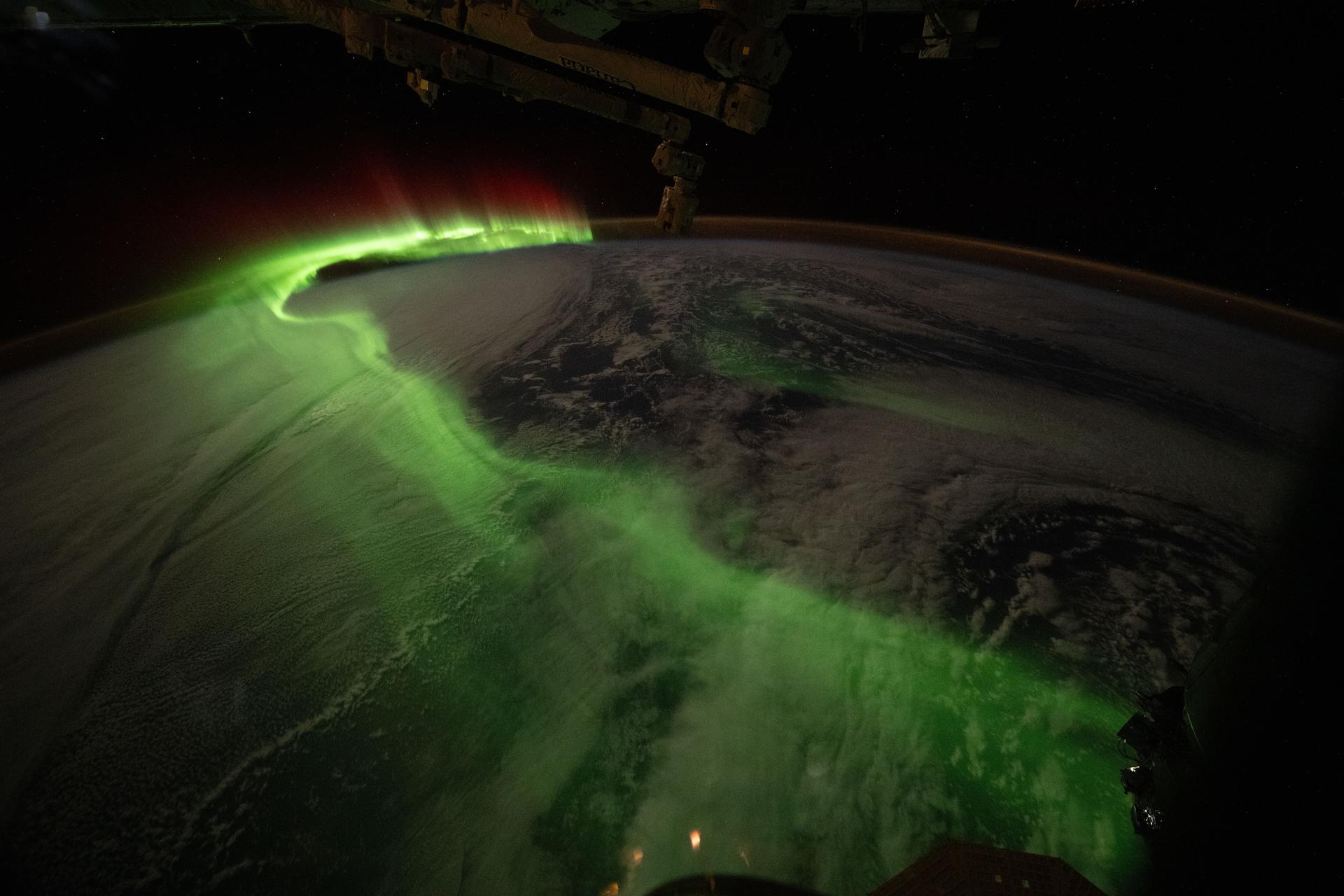
The aurora australis arcs over Earth during an active solar event in this photograph taken at approximately 11:32 p.m. local time from the International Space Station as it orbited 271 miles above the Indian Ocean southwest of Perth, Australia.
NASA/Jessica Meir

Space agriculture, stem cells, and cargo operations wrapped up the week aboard the International Space Station. The Expedition 74 crew also conducted blood tests and installed a new food processor as a U.S. cargo spacecraft nears the end of its mission.

Launching a spacecraft on Earth packed with enough food for a yearslong crew mission or sending resupply ships to replenish a crew beyond low Earth orbit is prohibitive. Therefore, growing plants aboard a spacecraft is key to sustaining crews on long-duration missions to the Moon, Mars, and beyond. As a result, NASA and its international partners have been exploring growing crops in space to enable crews to feed themselves without support from Earth. NASA flight engineer Chris Williams contributed to the ongoing space agriculture research at the end of the week and configured a microscope to observe plant cell division in microgravity. Insights may lead to improved methods of growing food in space as well as on lunar and planetary surfaces.

Low Earth orbit may also be the next frontier for biomedical manufacturing as doctors seek to overcome the limitations of gravity on the ground. NASA flight engineer Jessica Meir harvested blood stem cells inside the Kibo laboratory module’s Life Science Glovebox (LSG) that have been growing aboard the orbital outpost since the arrival of a SpaceX Dragon cargo craft on May 17. Next, she looked at the density and viability of the live cells using the KERMIT fluorescent microscope. Researchers are exploring space-designed cell therapies to treat serious medical conditions such as blood cancers and immune diseases.

Dragon is due to depart the International Space Station at 12:05 p.m. EDT on Tuesday, June 16, to return the stem cell samples, including several tons of completed science experiments and lab hardware, for analysis on Earth. Live coverage of Dragon’s undocking and departure begins at 11:45 a.m. on NASA+.

Williams and Meir also partnered with flight engineers Jack Hathaway of NASA and Sophie Adenot of ESA (European Space Agency) packing Dragon with return cargo together throughout Friday. The quartet will intensify their cargo transfers early next week when they begin loading Dragon with sensitive research samples packed inside portable science freezers for preservation, retrieval, and analysis on Earth.

Williams and Meir began their Friday shift collecting blood samples for spinning in a centrifuge then stowing in a science freezer for future analysis. Hathaway removed a research freezer from inside Kibo’s Life Science Glovebox used the day before to preserve bacteria samples for genetic and chemical analysis. Adenot also spent some time assisting Meir during the stem cell operations then tested a new food processor in the Columbus laboratory module by cooking a Mediterranean dish.

The station’s three cosmonauts, station commander Sergey Kud-Sverchkov and flight engineers Sergei Mikaev and Andrey Fedyaev enjoyed an off-duty day on Friday.

Learn more about station activities by following the space station blog, @space_stationon X, as well as the ISS Facebook and ISS Instagram accounts.

Get the latest from NASA delivered every week. Subscribe here.

The post Botany and Biology Research Wrap Up Week as Dragon Preps for Earth Return appeared first on NASA Science.
NASA to Cover 34th SpaceX Resupply Mission Space Station Departure

12 June 2026 at 16:32
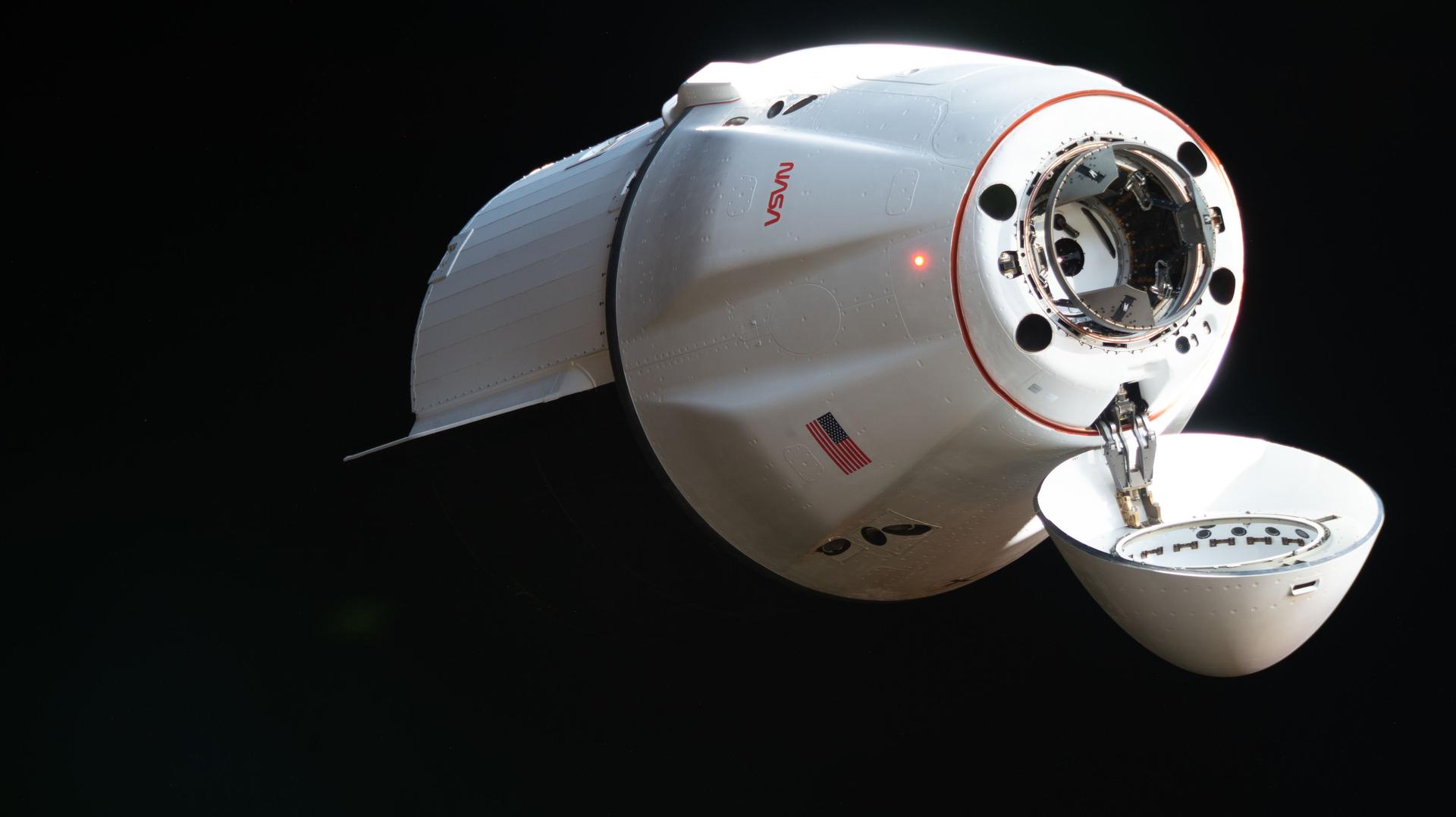
The SpaceX Dragon cargo spacecraft supporting the company’s 34th commercial resupply services mission for NASA approaches the International Space Station on May 17, 2026, carrying nearly 6,500 pounds of food, supplies, and equipment for the Expedition 74 crew.
Credit: NASA

NASA and its international partners are set to receive scientific research samples and hardware as a SpaceX Dragon spacecraft is scheduled to depart the International Space Station on Tuesday, June 16, for its return to Earth.

Watch NASA’s live undocking coverage beginning at 11:45 a.m. EDT on NASA+, Amazon Prime, and the agency’s YouTube channel. Learn how to watch NASA content through a variety of online platforms, including social media.

The Dragon spacecraft will undock from the forward port of the station’s Harmony module at about 12:05 p.m., after receiving a command from SpaceX ground controllers. The spacecraft then will fire its thrusters to move safely away from the orbiting complex.

Following a June 16 departure, the spacecraft will reenter Earth’s atmosphere on Wednesday, June 17, before splashing down off the coast of California at approximately 5:08 a.m. PDT. NASA will not stream the splashdown but will post updates on its space station blog.

Dragon will return to Earth with thousands of pounds of cargo, carrying samples that could shape future space exploration and life on Earth. Research returning includes bioprinted organ and cartilage tissue, data on improving cryogenic fuel storage for future space missions, and DNA‑inspired materials to develop new cancer treatments. The returning hardware includes an ocular imaging device used to monitor crew members’ eye health, an absorbent bed that filters trace contaminants from cabin air, and a separator pump from the waste and hygiene compartment.

Loaded with nearly 6,500 pounds of crew cargo and science experiments, Dragon arrived at the station on May 17 after launching two days earlier on a Falcon 9 rocket from Space Launch Complex 40 at Cape Canaveral Space Force Station in Florida.

For more than 25 years, people have lived and worked continuously aboard the International Space Station, advancing scientific knowledge and making research breakthroughs not possible on Earth. The space station helps NASA understand and overcome the challenges of human spaceflight, expand commercial opportunities in low Earth orbit, and build on the foundation for long-duration missions to the Moon, as part of the Artemis program, and to Mars.

Get breaking news, images, and features from the space station on Instagram, Facebook, and X.

Learn more about International Space Station research and operations at:

https://www.nasa.gov/international-space-station

-end-

Jimi Russell
Headquarters, Washington
202-358-1100
james.j.russell@nasa.gov

Leah Cheshier
Johnson Space Center, Houston
281-483-5111
leah.d.cheshier@nasa.gov

The post NASA to Cover 34th SpaceX Resupply Mission Space Station Departure appeared first on NASA Science.

NASA to Cover 34th SpaceX Resupply Mission Space Station Departure

12 June 2026 at 16:32
The SpaceX Dragon cargo spacecraft supporting the company’s 34th commercial resupply services mission for NASA approaches the International Space Station on May 17, 2026, carrying nearly 6,500 pounds of food, supplies, and equipment for the Expedition 74 crew.
Credit: NASA

NASA and its international partners are set to receive scientific research samples and hardware as a SpaceX Dragon spacecraft is scheduled to depart the International Space Station on Tuesday, June 16, for its return to Earth.

Watch NASA’s live undocking coverage beginning at 11:45 a.m. EDT on NASA+, Amazon Prime, and the agency’s YouTube channel. Learn how to watch NASA content through a variety of online platforms, including social media.

The Dragon spacecraft will undock from the forward port of the station’s Harmony module at about 12:05 p.m., after receiving a command from SpaceX ground controllers. The spacecraft then will fire its thrusters to move safely away from the orbiting complex.

Following a June 16 departure, the spacecraft will reenter Earth’s atmosphere on Wednesday, June 17, before splashing down off the coast of California at approximately 5:08 a.m. PDT. NASA will not stream the splashdown but will post updates on its space station blog.

Dragon will return to Earth with thousands of pounds of cargo, carrying samples that could shape future space exploration and life on Earth. Research returning includes bioprinted organ and cartilage tissue, data on improving cryogenic fuel storage for future space missions, and DNA‑inspired materials to develop new cancer treatments. The returning hardware includes an ocular imaging device used to monitor crew members’ eye health, an absorbent bed that filters trace contaminants from cabin air, and a separator pump from the waste and hygiene compartment.

Loaded with nearly 6,500 pounds of crew cargo and science experiments, Dragon arrived at the station on May 17 after launching two days earlier on a Falcon 9 rocket from Space Launch Complex 40 at Cape Canaveral Space Force Station in Florida.

For more than 25 years, people have lived and worked continuously aboard the International Space Station, advancing scientific knowledge and making research breakthroughs not possible on Earth. The space station helps NASA understand and overcome the challenges of human spaceflight, expand commercial opportunities in low Earth orbit, and build on the foundation for long-duration missions to the Moon, as part of the Artemis program, and to Mars.

Get breaking news, images, and features from the space station on Instagram, Facebook, and X.

Learn more about International Space Station research and operations at:

https://www.nasa.gov/international-space-station

-end-

Jimi Russell
Headquarters, Washington
202-358-1100
james.j.russell@nasa.gov

Leah Cheshier
Johnson Space Center, Houston
281-483-5111
leah.d.cheshier@nasa.gov

❌