 Login
Scientist Charged With Conspiring to Smuggle Mpox Virus Into U.S.
8 June 2026 at 21:11
The virologist was stopped at the Detroit airport after working in Congo during an mpox epidemic. His lawyer said the material was for research.


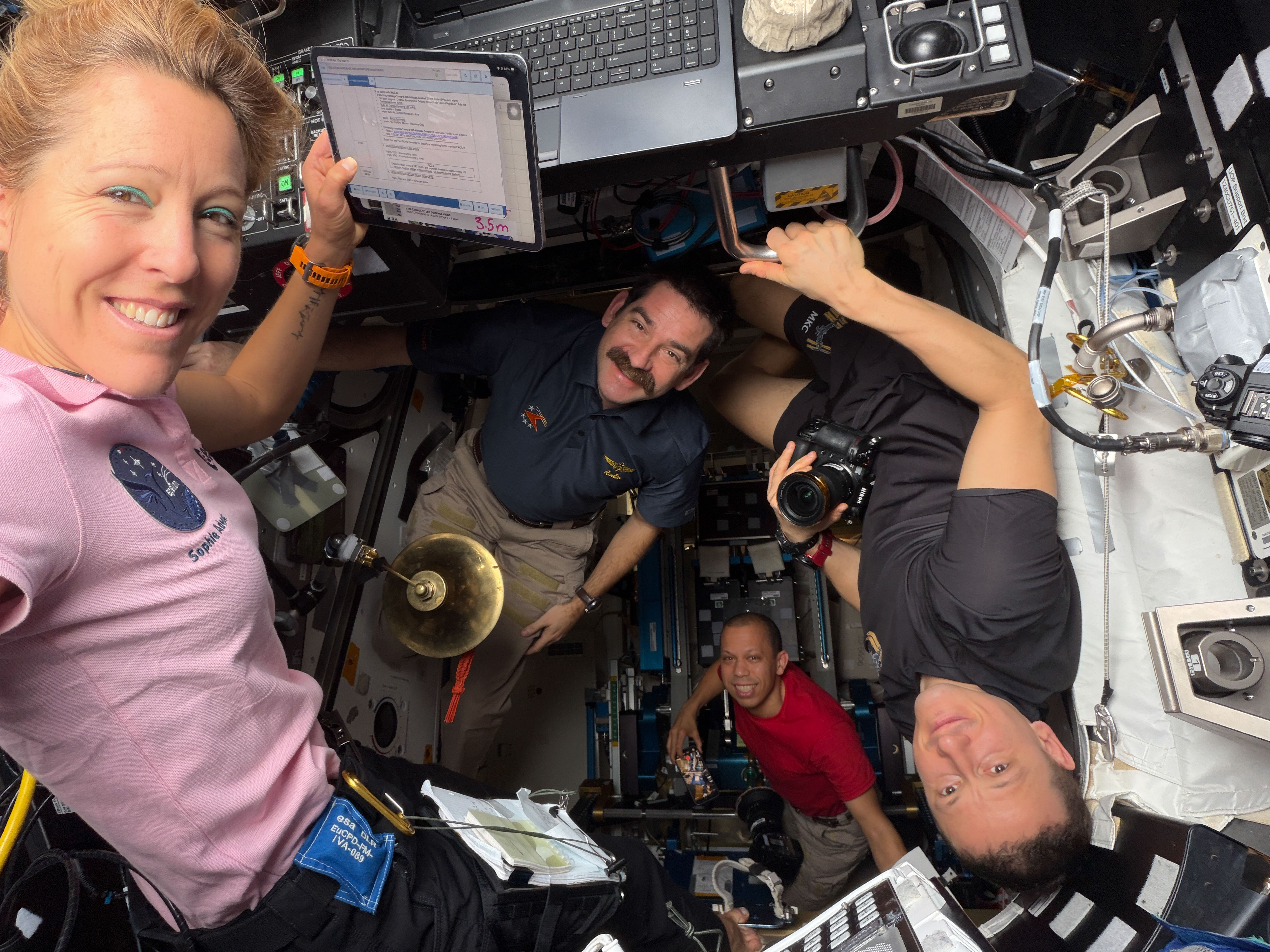
Expedition 74 began the week bioprinting human cartilage tissue and harvesting alfalfa plants aboard the International Space Station to advance health and promote self-sustainable space crews. The orbital residents also retrieved materials exposed to the external space environment and conducted their own ultrasound vein scans to continuously learn how living in space affects physics and biology.
NASA flight engineer Jessica Meir opened up the Kibo laboratory module’s Life Science Glovebox on Monday and set up a bioprinter to produce viable cartilage tissues aboard the orbiting laboratory. NASA flight engineer Chris Williams assisted Meir collecting the frozen cartilage samples for thawing then mixing the living cells with a gel-like bioink for placement in a printing cartridge. The biotechnology study tests the manufacturing of cartilage in weightlessness to increase its stability for printing on demand implants using a patient’s own cells to treat a range of health conditions.
Earlier, Williams began his shift with NASA flight engineer Jack Hathaway harvesting alfalfa plants inside the Columbus laboratory module’s Veggie facility. The astronauts collected the plants and roots for photographing, placed the botanical samples inside foil, then stowed them inside a science freezer for later analysis for the Veg-06 study. Insights may lead to the development of advanced methods to grow plants for food on future space missions.
Afterward, Hathaway scanned Williams neck, shoulder, and leg veins using the Ultrasound 3 biomedical device as doctors on the ground monitored in real time. Roscosmos cosmonauts Sergey Kud-Sverchkov and Sergei Mikaev also took turns scanning each other’s veins with the Ultrasound 3. The ultrasound imagery will help researchers protect crew members from space-caused blood clots.
Flight engineer Sophie Adenot of ESA (European Space Agency) and Meir joined each other during the first half of their shift retrieving containers of samples from Kibo’s airlock that were placed outside the orbital outpost for a materials exposure test. The samples included radiation shields, crew suit fabrics, optical fibers, and more to help engineers build robust technologies that can survive harsh environments both on Earth and in space.
Sergey Kud-Sverchkov and Sergei Mikaev, the orbiting lab’s commander and flight engineer, spent the majority of their shift inspecting and servicing the Zvezda service module’s treadmill. The space station’s other treadmill, COLBERT, is located in the Tranquility module.
Roscosmos flight engineer Andrey Fedyaev spent the first half of his shift locating and identifying computer components and video gear in the Zarya module to update the station’s inventory management system. Fedyaev wrapped up his day studying using artificial intelligence tools to boost crew efficiency and communications.
Learn more about station activities by following the space station blog, @space_stationon X, as well as the ISS Facebook and ISS Instagram accounts.
Get the latest from NASA delivered every week. Subscribe here.
The post Crew Begins Week with More Cartilage Printing and Plant Harvesting appeared first on NASA Science.
 A contraceptive drug helps human nerve cells regenerate by unlocking their forgotten embryonic healing abilities.
