« Cela n’arrive qu’une fois par siècle » : la Nasa vient de découvrir sur la Lune le plus grand cratère récent du Système solaire !


4 min read

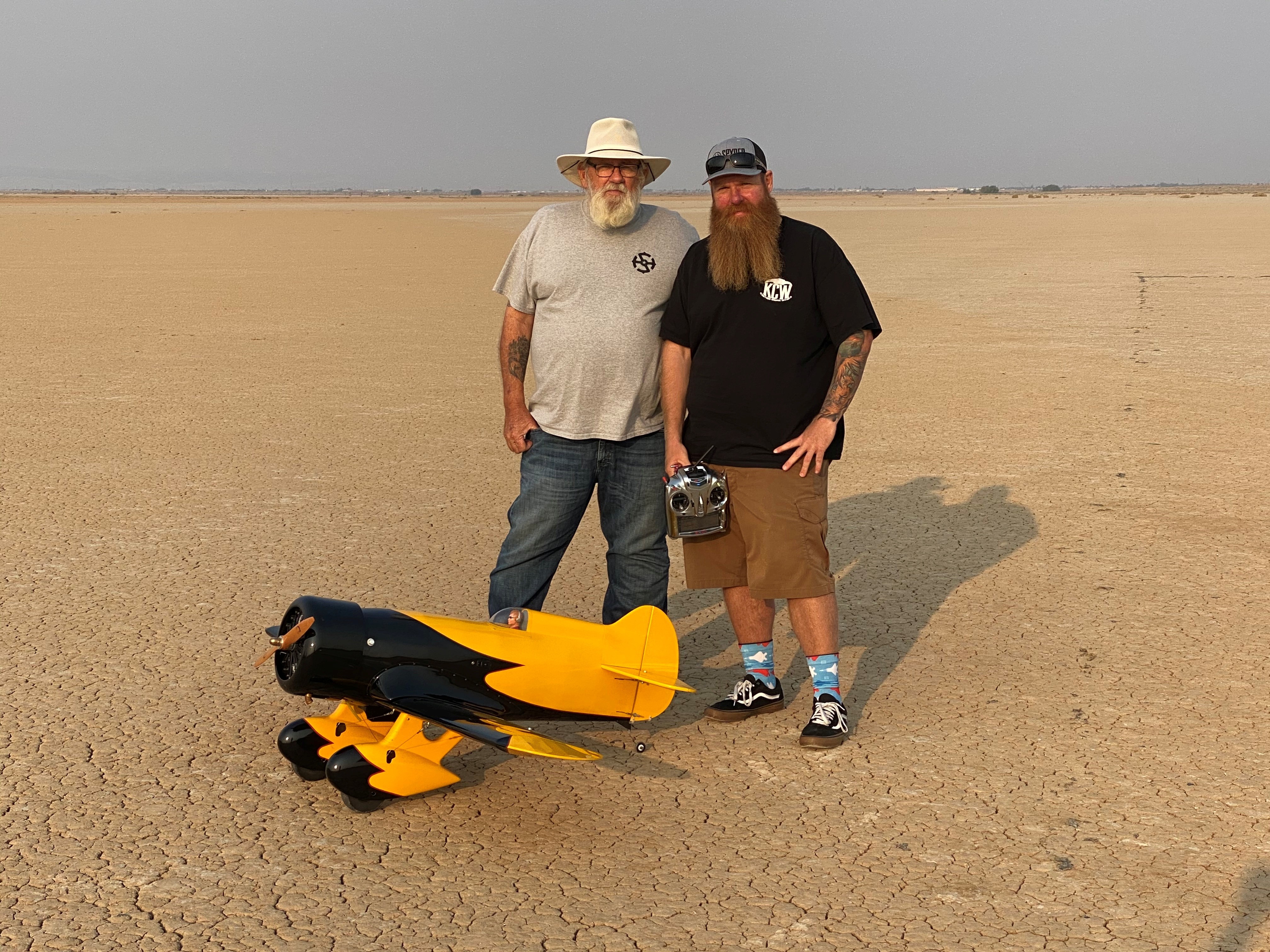
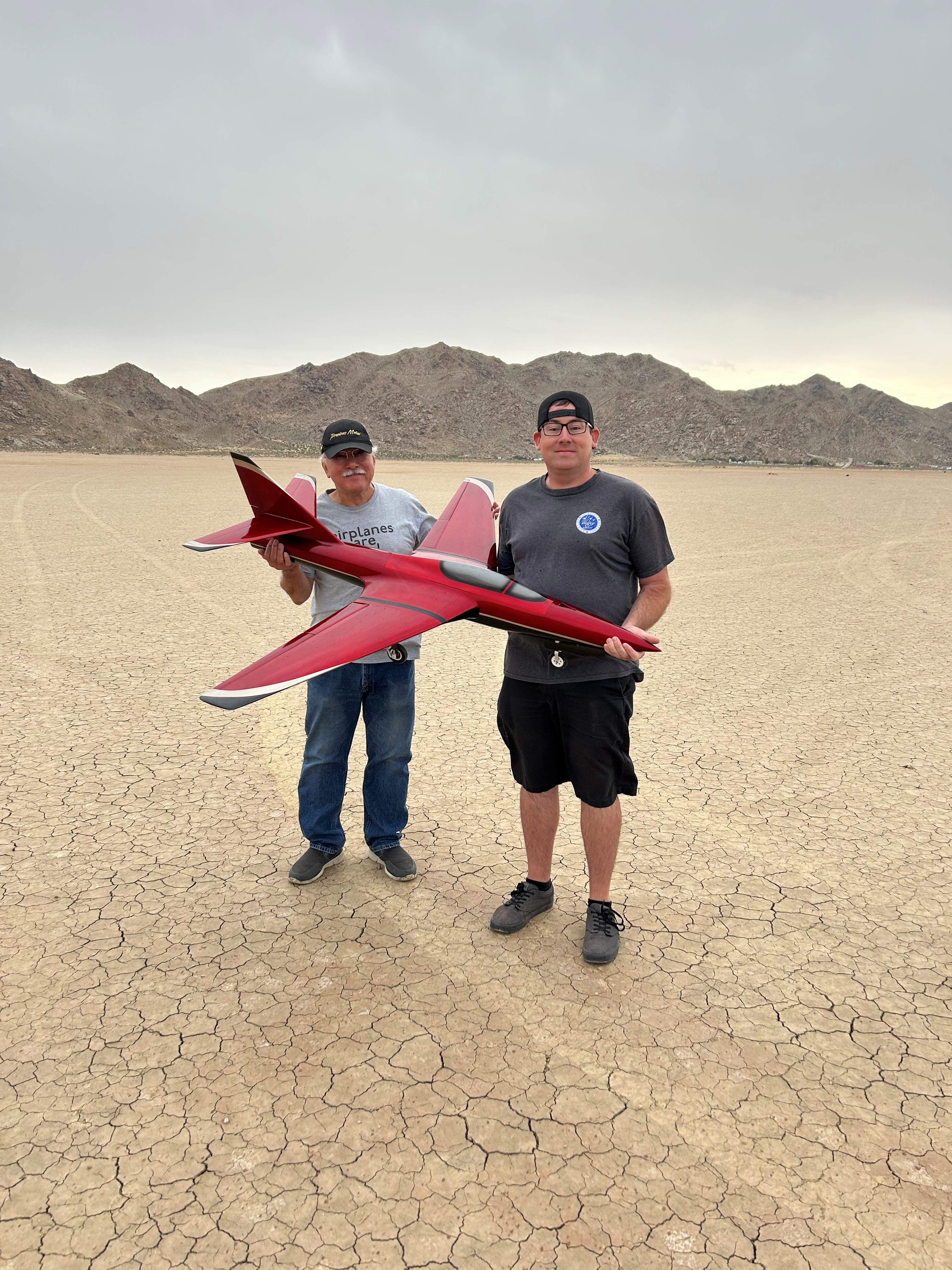
Long before they helped shape NASA’s future aerospace breakthroughs, Derek Abramson, Justin Hall, and Justin Link were in their garages and homes building radio‑controlled aircraft, testing new ideas, and flying their creations at hobby events. That early passion now fuels the work of NASA’s Dale Reed Subscale Flight Research Laboratory at the agency’s Armstrong Flight Research Center in Edwards, California.
At NASA Armstrong’s subscale flight lab, the team turns that lifelong enthusiasm into mission-focused innovation. The laboratory supports research that ranges from advanced navigation systems for future landings on the Moon and Mars to emerging aeronautics concepts that need quick, low-cost evaluation. NASA’s small, remotely piloted and autonomous aircraft allow engineers to explore ideas that could be difficult, risky or expensive to test at full scale.
Abramson, Hall, and Link play key roles in that work. Abramson serves as the laboratory’s chief engineer. Hall is the chief pilot. Link is a drone pilot. Together, they integrate emerging aerospace technologies with the lab’s subscale aircraft fleet and, when needed, design and build aircraft or flight experiments to evaluate new concepts.

Abramson’s expertise, built through service in the U.S. Navy and the aerospace industry, centers on technical oversight, management, and system design. Hall is known for creative approaches to problem solving and uses practical methods to address technical challenges and maintain flight safety. Link specializes in designing and fabricating research vehicles and draws on extensive hands-on experience to understand what works, and what does not, in flight.
On weekends, the team often tinkers in their garages or hangars building radio-control aircraft, researching hobby trends, or exploring new technologies. You might see them flying their creations at hobby events or attending trade shows. Their passion for flight brought Abramson, Hall, and Link together years before they one-by-one joined NASA more than a decade ago, though each discovered that spark in a different way.
Abramson’s interest began as a child with rubber-band powered stick and tissue aircraft and radio-controlled models. His early aviation pursuits led to his first solo flight while in high school and a pilot’s license. In the Navy, he worked on multiple aircraft, including EA-6B and the F-18, as an avionics technician. As an engineer, he supported the B-1 and CV-22 Osprey aircraft flight tests. As an intern at NASA Armstrong, he used his operational and engineering experience on remotely piloted and autonomous aircraft.
Hall’s interest grew after seeing historic aircraft including the Mach 3 SR-71 fly over his elementary school playground and watching Space Shuttle Challenger land from above his dad’s shoulders. He has built and flown model and remotely piloted aircraft for as long as he can remember. His reputation flying radio-controlled hobby aircraft at fly-ins and trade events led to an offer to fly subscale aircraft at NASA.


Link was five years old when he built balsa-wood aircraft with his dad and flew them in a field near their home. As he grew older, his hobby expanded to include radio-controlled cars, boats, helicopters, and aircraft. Aviation runs deep in Link’s family. His great grandfather served in the U.S. Army Air Corps, his grandfathers served in the U.S. Air Force, and his dad was an Air Force avionics technician. Link raced sailplanes, competed with scaled warbird aircraft, and was encouraged by family and friends to pursue an aviation profession. He has worked with large drones for more than 11 years, focusing on research and development, composite materials, and specialized fabrication methods.
Together, the team applies its experience and knowledge in rapid design, fabrication, integration and flight testing to bring new ideas to flight. Their work continues to support NASA’s missions across aeronautics, science, and exploration.
The post Passion Meets Precision at NASA’s Flight Research Lab appeared first on NASA Science.
4 min read

Long before they helped shape NASA’s future aerospace breakthroughs, Derek Abramson, Justin Hall, and Justin Link were in their garages and homes building radio‑controlled aircraft, testing new ideas, and flying their creations at hobby events. That early passion now fuels the work of NASA’s Dale Reed Subscale Flight Research Laboratory at the agency’s Armstrong Flight Research Center in Edwards, California.
At NASA Armstrong’s subscale flight lab, the team turns that lifelong enthusiasm into mission-focused innovation. The laboratory supports research that ranges from advanced navigation systems for future landings on the Moon and Mars to emerging aeronautics concepts that need quick, low-cost evaluation. NASA’s small, remotely piloted and autonomous aircraft allow engineers to explore ideas that could be difficult, risky or expensive to test at full scale.
Abramson, Hall, and Link play key roles in that work. Abramson serves as the laboratory’s chief engineer. Hall is the chief pilot. Link is a drone pilot. Together, they integrate emerging aerospace technologies with the lab’s subscale aircraft fleet and, when needed, design and build aircraft or flight experiments to evaluate new concepts.

Abramson’s expertise, built through service in the U.S. Navy and the aerospace industry, centers on technical oversight, management, and system design. Hall is known for creative approaches to problem solving and uses practical methods to address technical challenges and maintain flight safety. Link specializes in designing and fabricating research vehicles and draws on extensive hands-on experience to understand what works, and what does not, in flight.
On weekends, the team often tinkers in their garages or hangars building radio-control aircraft, researching hobby trends, or exploring new technologies. You might see them flying their creations at hobby events or attending trade shows. Their passion for flight brought Abramson, Hall, and Link together years before they one-by-one joined NASA more than a decade ago, though each discovered that spark in a different way.
Abramson’s interest began as a child with rubber-band powered stick and tissue aircraft and radio-controlled models. His early aviation pursuits led to his first solo flight while in high school and a pilot’s license. In the Navy, he worked on multiple aircraft, including EA-6B and the F-18, as an avionics technician. As an engineer, he supported the B-1 and CV-22 Osprey aircraft flight tests. As an intern at NASA Armstrong, he used his operational and engineering experience on remotely piloted and autonomous aircraft.
Hall’s interest grew after seeing historic aircraft including the Mach 3 SR-71 fly over his elementary school playground and watching Space Shuttle Challenger land from above his dad’s shoulders. He has built and flown model and remotely piloted aircraft for as long as he can remember. His reputation flying radio-controlled hobby aircraft at fly-ins and trade events led to an offer to fly subscale aircraft at NASA.


Link was five years old when he built balsa-wood aircraft with his dad and flew them in a field near their home. As he grew older, his hobby expanded to include radio-controlled cars, boats, helicopters, and aircraft. Aviation runs deep in Link’s family. His great grandfather served in the U.S. Army Air Corps, his grandfathers served in the U.S. Air Force, and his dad was an Air Force avionics technician. Link raced sailplanes, competed with scaled warbird aircraft, and was encouraged by family and friends to pursue an aviation profession. He has worked with large drones for more than 11 years, focusing on research and development, composite materials, and specialized fabrication methods.
Together, the team applies its experience and knowledge in rapid design, fabrication, integration and flight testing to bring new ideas to flight. Their work continues to support NASA’s missions across aeronautics, science, and exploration.
When the Artemis 2 crew splashed down in the Pacific Ocean on April 10, the excitement was palpable — Reid Wiseman, Victor Glover, Christina Koch, and Jeremy Hansen had swung around the Moon, broken a human spaceflight distance record, and come home safely. But for the Artemis program, it was just the beginning. Between April’sContinue reading "Why we need in-orbit refueling to return to the Moon"
The post Why we need in-orbit refueling to return to the Moon appeared first on Astronomy Magazine.
A 1.000 anos-luz da Terra, o telescópio James Webb encontrou algo que parece desafiar a própria fronteira entre estrela e planeta: anãs castanhas com apenas duas vezes a massa de Júpiter. E há uma investigadora portuguesa entre os responsáveis pela descoberta.
The post Estrelas que não conseguiram nascer ou planetas com origem diferente? James Webb procura a resposta appeared first on Tek Notícias.
Roman’s antenna, sunshade and visor are deployed. Here is why the telescope’s three-month commissioning journey matters before its first images arrive.
The post Roman Is on Its Way to L2. Why Are Its First Days in Space So Carefully Choreographed? appeared first on Curiosmos.


Two NASA-funded studies trace how the Sun’s changing galactic surroundings may have altered Earth’s climate and helped warm the young planet.
The post The Sun’s Ancient Journey Through the Galaxy May Have Changed Earth’s Climate appeared first on Curiosmos.


NASA’s Pandora satellite has started science observations of at least 20 exoplanets, measuring their host stars so Webb’s atmospheric results can be read more reliably.
The post NASA’s Pandora Mission Begins Separating Planet Light From Star Light appeared first on Curiosmos.


NASA's Nancy Grace Roman Space Telescope is gliding toward its distant observation post on a pinpoint trajectory so precise that engineers estimate the spacecraft's fuel load will last twice as long as their initial expectations, the space agency confirmed Monday.
The $4.3 billion observatory's designers originally planned to load enough propellant into Roman's four fuel tanks for a minimum lifetime of five years, plus a potential five-year mission extension. That was a conservative estimate. NASA officials knew an on-target launch and perfect execution of the observatory's first post-launch course correction maneuver would leave Roman with a hearty fuel reserve.
"As a result of exquisite planning by our orbital dynamics team, brilliant execution by the operations team, and a precise launch from SpaceX, Roman has fuel for at least 22 years of potential science operations," Jamie Dunn, center director at NASA's Goddard Space Flight Center, said in a press release.


© SpaceX
The extremely precise first trajectory correction performed during the journey of NASA’s Nancy Grace Roman Space Telescope, along with other fuel savings, is expected to more than double the mission’s potential operational lifetime. As Jamie Dunn, director of NASA’s Goddard Space Flight Center in Greenbelt, Maryland, noted, thanks to flawless planning by the orbital dynamics […]
The post NASA’s Roman Telescope Exceeds Expectations: First Course Correction Saves a Huge Amount of Fuel appeared first on AERONAUT.media.
Are the United States really planning to deploy weapons in orbit around Earth? What does the future hold? Let’s take a closer look. Satellites, anti-satellite systems, lasers, electronic warfare, and modern militaries’ dependence on orbital infrastructure. This is how the Pentagon sees the future of warfare. Space is no longer a neutral backdrop to wars on […]
The post War Goes Beyond Earth: The U.S. Confirms the Existence of Space Weapons for the First Time appeared first on AERONAUT.media.

Mercury has been slowly shrinking for billions of years. But scientists studying the smallest planet in the solar system may have overlooked just how dramatic that transformation has been because some of the evidence has literally been buried.
A new study suggests Mercury’s battered, crater-covered surface has concealed a significant fraction of the faults created as the planet cooled and contracted. After accounting for those hidden geological structures, researchers estimate Mercury may have shrunk by as much as 7.2 miles (11.6 kilometers) in radius—up to 30% more than previous estimates based on the same tectonic record.
The findings could alter models of how Mercury’s interior evolved and raise an interesting possibility beyond the planet itself. For instance, scientists may also be underestimating how much other rocky worlds, particularly the Moon, have contracted.
“Combined with the contractional strain map from Broquet and Andrews-Hanna (2026a), we show that radial contraction may have been underestimated by 10%–30%,” researchers write. “Our radial contraction correction should be considered as a lower bound.”
In the study published in Geophysical Research Letters, researchers led by Dr. Gaku Nishiyama of the German Aerospace Center (DLR) examined a longstanding mystery in Mercury’s geology.
As a rocky planet loses heat, its interior contracts. Much like the skin of a drying fruit, the planet’s rigid exterior must accommodate a shrinking interior, producing faults and enormous cliff-like features known as lobate scarps, along with wrinkle ridges and other shortening structures.
Scientists therefore use the crustal shortening recorded by these structures as a geological ruler to determine how much Mercury has contracted.
The problem is that those structures aren’t distributed across Mercury the way scientists might expect.
If cooling caused the entire planet to contract, the resulting deformation should be comparatively widespread. Instead, previous mapping has revealed regions filled with large scarps alongside enormous areas where surprisingly few contractional structures have been identified.
Dr. Nishiyama and his colleagues investigated whether at least part of that discrepancy could be an illusion created by Mercury’s extraordinarily battered surface.
The researchers constructed a global map of Mercury’s surface roughness using topographic measurements acquired from NASA’s MESSENGER mission and a global digital terrain model produced from spacecraft imagery.
They then compared that roughness with previously cataloged tectonic structures.
Findings showed that fault scarps and other shortening structures were preferentially identified in smoother terrain, while rougher regions contained substantially fewer detectable structures. The relationship remained apparent across geographic scales extending to roughly 93 miles or about 150 kilometers.
That is counterintuitive because tectonic ridges themselves create topographic roughness. If roughness and plate movements were unrelated, areas with scarps might be expected to be slightly rougher than the surrounding terrain.
Instead, the researchers found the opposite.
One explanation is evident around relatively young impact craters such as Rachmaninoff. Large impacts blasted enormous quantities of debris across the surrounding landscape, producing thick blankets of material and secondary craters. In some locations, long tectonic structures appear to lose relief as they approach these deposits—consistent with the older structures being progressively hidden under impact material.
Other faults may still exist but become difficult to recognize against heavily cratered terrain. Once the surrounding topography becomes rough enough, a weathered ridge only a little higher than the background landscape can effectively disappear into the geological noise.
There is also a third possibility.
Heavily cratered regions may contain thick, porous layers of broken rock called regolith. During planetary contraction, some deformation could be absorbed as pores collapse rather than producing large faults visible from orbit. Alternatively, deformation could create faults too small for current observations to resolve. The researchers say available evidence cannot yet rule out that possibility.
Whatever mechanism is responsible, Dr. Nishiyama and his colleagues argue the relationship creates a systematic bias, where scientists see more evidence of contraction where Mercury’s surface makes that evidence easier to preserve and identify.
The team developed a correction using comparatively smooth regions, where tectonic structures appear less affected by this bias.
Applied to an earlier global estimate of 5.2 miles (8.3 kilometers) of radial contraction, the correction increased Mercury’s estimated shrinkage to roughly 7.2 miles or about 11.6 kilometers.
Depending on which tectonic structures are included, the researchers estimate surface roughness could have caused previous calculations to underestimate Mercury’s contraction by roughly 10% to 30%. They also caution that their corrected figure may itself represent a lower limit.
Ultimately, Mercury’s shrinking surface effectively records what has happened deep inside the planet.
The amount of contraction constrains how quickly Mercury lost heat, the thickness of its insulating regolith, the abundance of heat-producing elements, and even the composition and freezing history of its enormous metallic core. The revised estimate, for example, favors models involving a thinner regolith and lower sulfur content in Mercury’s core than some previous estimates.
Scientists may soon get a much sharper look.
The ESA-JAXA BepiColombo mission’s laser altimeter will eventually measure Mercury’s topography at scales as small as about 330 feet or 100 meters, possibly revealing geological relationships that MESSENGER could not resolve.
And Mercury may not be the only world whose geological record has been hiding in plain sight.
The Moon’s highlands are even rougher than Mercury’s cratered plains—by roughly 40% at the little-over 6-mile (10-kilometer) scale examined by the researchers. Yet evidence suggests the Moon contracted less than some thermal models estimate. If rough terrain similarly hides lunar faults, part of that difference might reflect structures scientists haven’t been able to see.
In other words, Mercury’s missing wrinkles may expose a wider problem in planetary geoscience. The more battered an ancient world becomes, the more effectively its later surface can erase the visible record of what happened before it.
“Investigating roughness alongside tectonic landforms may therefore refine our understanding of the lunar thermal evolution as well,” researchers conclude. “Mars could also be subject to this roughness effect, while topographic smoothing due to fluvial and aeolian processes may introduce more complex correlation between surface roughness and shortening structures.”
Study: Nishiyama, G., Broquet, A., Tosi, N., Preusker, F., Stark, A., Hussmann, H., & Hauber, E. “Underestimation of Planetary Contraction Due to Obscuration by Surface Roughness: The Case of Mercury.” Geophysical Research Letters 53, (2026).
Tim McMillan is a retired law enforcement executive, investigative reporter and co-founder of The Debrief. His writing typically focuses on defense, national security, the Intelligence Community and topics related to psychology. You can follow Tim on Twitter: @LtTimMcMillan. Tim can be reached by email: tim@thedebrief.org or through encrypted email: LtTimMcMillan@protonmail.com

The European Space Agency is determined to move ahead decisively and independently with its Venus mission after NASA officials effectively acknowledged that they would be unable to fulfill their commitments to provide the U.S.-built onboard radar instrument, according to the project’s lead scientist. The European spacecraft, known as Envision, will conduct detailed scans of Venus’s […]
The post NASA Throws a Wrench in ESA’s Plans: Europeans Develop Their Own Radar for a Venus Mission appeared first on AERONAUT.media.