❌

Normal view

Unique zipper reaction converts perfluoroalkyl chains via defluorination and borylation

9 September 2026 at 17:22

In a development that could reshape how chemists recycle one of the most persistent classes of synthetic molecules ever made, researchers have reported a new catalytic strategy that strips fluorine atoms from perfluoroalkyl chains in a controlled, sequential fashion while installing a single boron group at the chain’s terminus. The work, published in Nature Communications, introduces what the authors call zipper polydefluorination-monoborylation, a transformation that walks down a perfluoroalkyl skeleton and removes multiple fluorine atoms in a stepwise cascade before capping the partially defluorinated product with a boron substituent. The achievement addresses a longstanding challenge in fluorine chemistry: while carbon-fluorine bonds are prized in materials and pharmaceuticals for their extraordinary stability, that same stability makes them notoriously difficult to break selectively, leaving chemists with few tools for converting perfluorinated waste streams into useful building blocks.

Perfluoroalkyl substances, often grouped under the umbrella of PFAS chemistry, owe their remarkable properties to the strength of the carbon-fluorine bond, which at roughly 485 kilojoules per mole in fully fluorinated chains ranks among the strongest single bonds that carbon forms. This bond strength, combined with the sheer electronegativity of fluorine, means that perfluoroalkyl groups resist oxidation, hydrolysis, and thermal degradation under nearly all conventional conditions. As a consequence, perfluorinated chains accumulate in the environment and resist standard degradation pathways, prompting intensive research into defluorination methods ranging from photocatalytic single-electron transfer to reductive hydrodefluorination with metal hydrides. Yet most existing approaches suffer from a common limitation: they either remove fluorine indiscriminately, collapsing the entire chain to a mixture of products, or they remove only a single fluorine atom, offering little control over the degree of defluorination. The new study demonstrates a way to achieve the best of both worlds, delivering multi-fluorine removal in a predictable pattern while simultaneously introducing a versatile functional handle.

The conceptual heart of the method lies in what the authors describe as a zipper mechanism. Rather than removing fluorine atoms at random positions along the chain, the reaction initiates at a defined site and then propagates along the perfluoroalkyl backbone one carbon at a time, much as a zipper opens tooth by tooth. At each step along the chain, a fluorine atom is expelled and replaced in sequence, with the reaction front advancing until a thermodynamic or kinetic stopping point is reached. The monoborylation component of the process ensures that once the zipper has run its course, the resulting olefinic or anionic intermediate is intercepted by a boron reagent, furnishing a product in which the boron group occupies a predictable position derived from the original perfluoroalkyl terminus. Organoboron compounds are among the most valuable intermediates in modern synthetic chemistry, serving as partners in Suzuki-Miyaura cross-coupling and as precursors to alcohols, amines, and halides, so their installation at a defluorination site effectively converts a chemical dead end into a synthetic launching pad.

Mechanistically, the transformation draws on the characteristic reactivity of organoboron reagents toward geminal difluoroalkenes, the partially defluorinated intermediates that arise when consecutive fluorine atoms are eliminated from a perfluoroalkyl chain. Perfluoroalkyl chains, when subjected to strong bases or reductive conditions, can undergo sequential beta-fluoride elimination events, each generating a more highly unsaturated species. The boron reagent in the reported system engages these unsaturated intermediates through addition pathways that install boron at the terminal carbon while generating a carbanionic center adjacent to the remaining difluoromethylene unit. That newly formed carbanion is perfectly positioned to expel another fluoride ion, regenerating an unsaturated handle one carbon further down the chain and setting up the next iteration of the cycle. This intimate coupling of borylation and defluorination is what gives the reaction its chain-walking character: each borylation event creates the conditions for the next defluorination event, and the process ripples along the chain until the fluorine reservoir is exhausted or the reagents are consumed.

The practical significance of the work becomes apparent when one considers the fate of the fluorine atoms themselves. In the zipper process, fluorine is released as fluoride ion, which under the reaction conditions is sequestered by silicon-containing trapping agents to form robust silicon-fluorine bonds. Fluorosilicates of this kind are stable, isolable, and, importantly, compatible with industrial processes for recycling fluorine back into hydrofluoric acid, the feedstock from which essentially all synthetic organofluorine compounds are made. In this sense, the method does more than transform perfluoroalkyl chains into borylated products; it also lays the groundwork for closing the fluorine cycle, recovering the fluorine content of persistent molecules in a form that can be fed back into the chemical economy. With global concern over PFAS contamination intensifying and regulatory pressure on fluorinated chemicals mounting, technologies that enable fluorine recovery rather than dilution into the environment carry considerable weight.

From a synthetic chemistry standpoint, the products of the reaction open multiple downstream avenues. Because the boron substituent is installed at a defined position on a partially fluorinated alkyl or alkenyl framework, the resulting molecules retain a programmable mixture of carbon-fluorine bonds and carbon-boron functionality. The remaining fluorine atoms can tune the lipophilicity, metabolic stability, and dipole moment of the scaffold, properties that are actively exploited in medicinal chemistry when designing fluorinated drug candidates. Meanwhile, the boron group serves as a convertible handle, allowing the defluorinated carbon center to be joined to aromatic rings through cross-coupling, oxidized to alcohols, or aminated in homologation reactions. In effect, the method converts a chemically inert perfluoroalkyl group, useful mainly as a passive coating or tail, into a functionalized partial-fluoro skeleton that can participate in the full toolkit of carbon-carbon and carbon-heteroatom bond formation.

The reported study also sheds light on the factors governing how far the zipper travels along a given chain. Chain length, the nature of the substituent anchoring the perfluoroalkyl group, and the stoichiometry of the base and boron reagent all influence the number of fluorine atoms removed and the distribution of products obtained. Through systematic variation of these parameters and careful analysis of the reaction mixtures by nuclear magnetic resonance spectroscopy and mass spectrometry, the authors map out the scope of the transformation across a range of perfluoroalkyl substrates, from short perfluoroethyl groups to longer chains approaching those found in commercial fluorosurfactants. Control experiments interrogating individual elementary steps support the proposed sequential elimination-addition mechanism and rule out alternative pathways involving radical fragmentation or random beta-scission, underscoring the unusually high degree of positional control the method achieves.

Beyond its immediate synthetic utility, the work contributes to a growing body of research aimed at taming the carbon-fluorine bond through the strategy of defluorinative functionalization. Over the past decade, chemists have developed an impressive repertoire of reactions that replace fluorine in perfluoroalkyl and fluoroarene substrates with groups ranging from hydrogen to sulfur, nitrogen, and carbon substituents. What distinguishes the zipper approach is its multiplicity and its directionality: instead of a single substitution event at a single site, the reaction performs many substitutions in a choreographed sequence along a chain, effectively treating the perfluoroalkyl group as a one-dimensional lattice to be patterned at will. This conceptual reframing, from defluorination as bond-breaking to defluorination as programmable editing, may inspire analogous strategies for other polyfluorinated motifs, including perfluoroarenes and perfluoropolyethers, two additional classes of highly persistent fluorinated materials.

Challenges remain before such chemistry can move from the laboratory bench to environmental remediation at scale. The reaction conditions reported rely on strong bases and moisture-sensitive boron reagents handled under inert atmosphere, and the substrates studied are discrete, soluble perfluoroalkyl compounds rather than the polymeric or adsorbed PFAS species that dominate environmental contamination. Scaling the chemistry will require sourcing boron reagents economically, managing the large quantities of fluoride generated, and integrating the transformation with upstream methods for extracting perfluoroalkyl pollutants from water and soil. Nevertheless, the demonstration that a perfluoroalkyl chain can be unzipped in a controlled manner, with fluorine captured in recyclable form and a valuable boron handle installed, establishes a credible chemical pathway toward defluorination that is both productive and selective, a combination that has eluded the field for decades.

As policymakers and scientists grapple with the legacy of fluorine chemistry, work of this kind illustrates a middle path between the wholesale abandonment of fluorinated molecules and their indefinite persistence in the biosphere. The fluorine atom confers properties that industry and medicine continue to depend upon, and the ability to disassemble fluorinated architectures on demand, recovering both the carbon skeleton as a functionalized building block and the fluorine content as a recyclable salt, points toward a more circular future for organofluorine chemistry. The zipper polydefluorination-monoborylation strategy reported in Nature Communications is an early but striking example of that vision made concrete at the molecular level, and it is likely to prompt rapid efforts to extend the concept across the breadth of persistent fluorinated chemicals.

Subject of Research: Controlled sequential defluorination of perfluoroalkyl chains coupled with terminal borylation (zipper polydefluorination-monoborylation)

Article Title: Zipper polydefluorination-monoborylation of perfluoroalkyl chains

Article References: Albers, S. L., Harzendorf, J. K., Deliaval, M., Köllmann, J., & Streuff, J. (2026). Zipper polydefluorination-monoborylation of perfluoroalkyl chains. Nature Communications, 17(1), Article 9502. https://doi.org/10.1038/s41467-026-77437-9

Image Credits: AI Generated

DOI: 10.1038/s41467-026-77437-9

Keywords: perfluoroalkyl chains, defluorination, polydefluorinative borylation, organoboron compounds, carbon-fluorine bond activation, PFAS degradation, fluorine recycling, geminal difluoroalkenes, cross-coupling, sustainable chemistry


1,000 Museum Visitors Dive Into NASA Sea Level Science on World Ocean Day

8 September 2026 at 15:06

3 min read

1,000 Museum Visitors Dive Into NASA Sea Level Science on World Ocean Day

Several people place their hands and forearms on a brightly lit, abstract patterned surface under colorful fluorescent lighting.
Participants reach into an augmented reality sandbox, reshaping the terrain as projected contour lines and colors illustrate topographic features and elevation changes.
University of Georgia Marine Extension and Georgia Sea Grant

More than 1,000 visitors explored NASA sea level science firsthand during World Ocean Day at the University of Georgia Aquarium on Skidaway Island on June 6, 2026. The free event was supported by NASA’s Science Activation program through the Sea Level Education, Awareness, and Literacy (SEAL) project – a national effort that connects NASA sea level rise data with educators and coastal communities, particularly those historically underserved and already experiencing sea level impacts.

SEAL is a partnership between NASA and four NOAA Sea Grant programs working together to expand sea level rise understanding across U.S. coastal regions. By co-developing lesson plans, interactive activities, and place‑based learning experiences, SEAL helps educators engage learners with real NASA observations, models, and projections while strengthening community resilience to climate change.

During World Ocean Day, SEAL partners at Marine Extension and Georgia Sea Grant and the Coastal Equity and Resiliency Hub at Georgia Tech led hands‑on activities that brought sea level science to life. Visitors played the “Tumbling Tower” game, where removing blocks represents different community impacts from rising seas, and made “sea level friendship bracelets” that used colored glass beads to represent observed sea level rise along local coastlines.

The event also marked the debut of a new augmented reality sand box developed through SEAL. Guests shaped sand into coastal landscapes and watched NASA-informed sea level rise projections transform their creations in real time. Participants could experiment with resilience strategies, such as adding dunes or relocating homes, to see how adaptations might help communities prepare for future change.

Educators – formal, informal, home-based, and more – attending the event were able to take home four different SEAL lesson plans designed for both classrooms and informal learning settings. These materials help students explore sea level rise processes, modeling, variation, and impacts through NASA data and interactive STEM activities. SEAL aims to make all lesson plans developed through the project available online, but until then, please email Shannon Matzke to request digital copies.

“World Ocean Day is an annual tradition at the UGA Aquarium,” said Shannon Matzke, Marine Educator and Public Program Coordinator at UGA Marine Extension and Georgia Sea Grant. “With the support of NASA’s Science Activation program, this year’s event was free, which allowed us to reach more people and different audiences than we typically see. Incorporating SEAL activities made the day even more impactful for visitors – many of whom live in coastal communities already experiencing the effects of sea level rise.”

The SEAL project is supported by NASA cooperative agreement award number NNH21ZDA001N-SCIACT and is part of the NASA Science Activation Program portfolio, which connects learners with authentic NASA science experiences through partnerships with educators and community organizations.

Quality Assessment Report Evaluates Polar Geospatial Center EarthDEM Elevation Products

12 August 2026 at 15:13

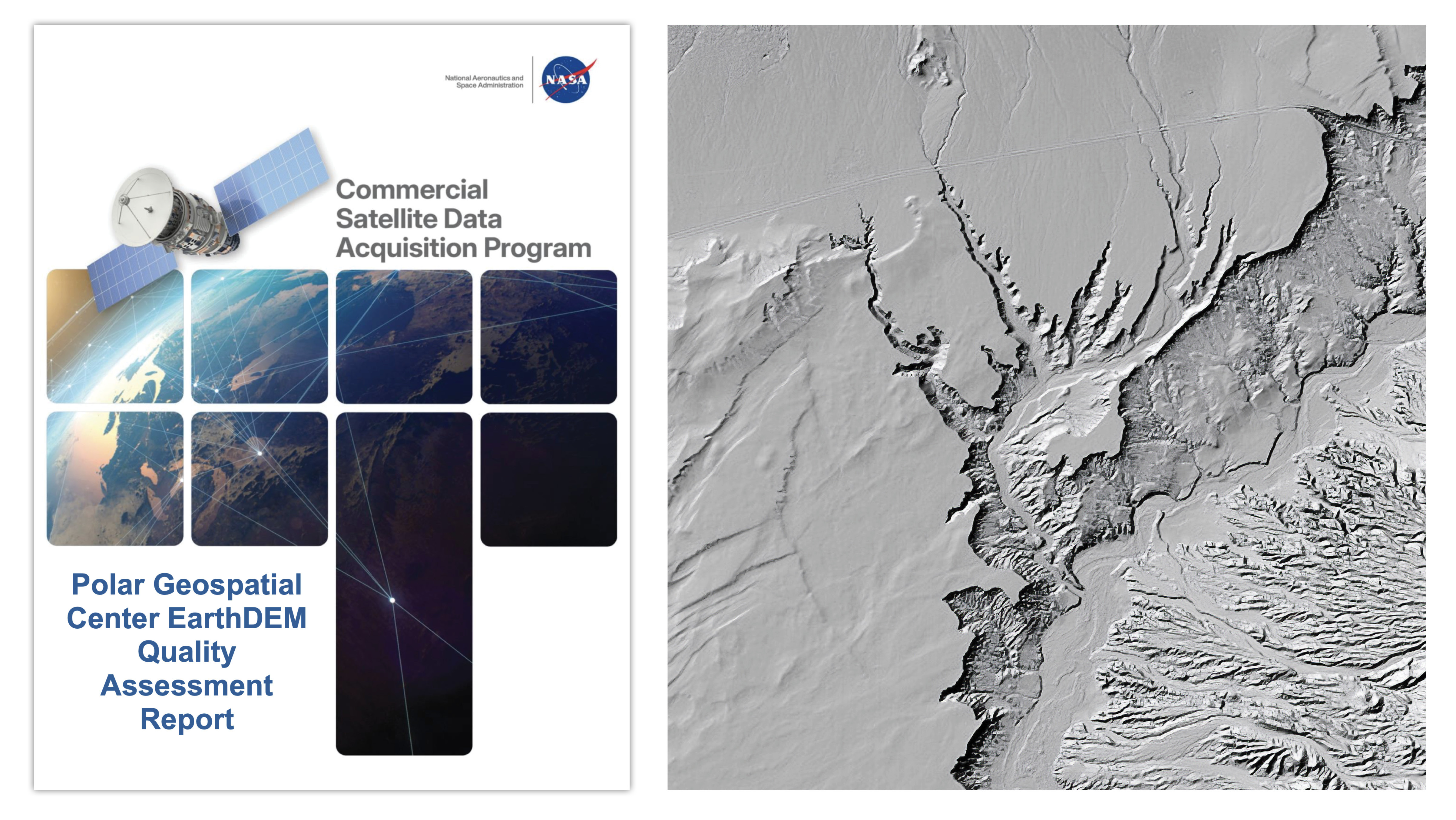
A new quality assessment report from NASA’s Commercial Satellite Data Acquisition (CSDA) program evaluates data from the Polar Geospatial Center’s (PGC) EarthDEM product. The results of the evaluation help inform NASA program management and the user community about the quality of commercial Digital Elevation Models (DEMs) for use in NASA science.

At left, the cover of the rogram recently released Polar Geospatial Center EarthDEM Quality Assessment Report, which features an image of a satellite on a white field over an image of Earth from space that divided into squares. Shaded relief rendering of EarthDEM data showing the Virgin River, Nevada. DEM derived from Vantor imagery. Credit: EarthDEM Project.
At left, the cover of the Commercial Satellite Data Acquisition programs’s recently released Polar Geospatial Center EarthDEM Quality Assessment Report. At right, a shaded relief rendering of EarthDEM data showing the Virgin River in Nevada. DEM derived from Vantor imagery.
Credit: NASA CSDA program/EarthDEM Project

Issued August 8, 2026, the CSDA  Polar Geospatial Center EarthDEM Quality Assessment Reportwas conducted by NASA Digital Elevation Model (DEM) subject matter experts (SMEs) enlisted to evaluate the horizontal and vertical accuracy of two PGC EarthDEM1 (i.e., Digital Elevation Model) products: the center’s “Mosaic Tile” and “Strip” Digital Surface Models (DSMs).

To assess the vertical and horizontal accuracy of the EarthDEM Strip DSM and Mosaic Tile products over a variety of surface characteristics, the SMEs compared them to airborne lidar data samples from across the United States and Senegal. They found the horizontal accuracy of the EarthDEM products (Strip DSM: 0.5-meter (m) Root Mean Square Error Horizontal (RMSEH); Mosaic Tile: 0.3 m RMSEH) agreed with the specifications provided by the PGC and graded them “Excellent.”  The vertical accuracy results of the EarthDEM Strip DSM (5.6 m Root Mean Square Error Vertical (RMSEV)) and the Mosaic Tile (4.9 m RMSEV) products varied by land cover type, with all land cover types exceeding the specification provided by the PGC (0.5 m RMSEV). Strip DSM vertical accuracy was found to vary from 4.6-6.8 m RMSEV depending on the cloud cover metadata field generated by the PGC. Given this variation, the vertical accuracy compliance for the EarthDEM products was graded as “Basic.”

Overall, the assessment report supports the use of EarthDEM data for NASA Earth science research and applications, as long as the data characteristics (e.g., vertical accuracy, poor cloud masking, missing surface features, data voids, etc.) are compatible with the specific science objectives and use cases.

The report also provides a Data Provider Documentation Review for the EarthDEM product that evaluated information from the PGC website, as well as a series of peer-reviewed publications by researchers at The Ohio State University’s Byrd Polar and Climate Research Center. (Only documents listed in this report were considered in the evaluation.) The report’s authors found that, overall, the EarthDEM product is “well documented,” with most information present within the product User Guide, a series of peer reviewed papers, or the PGC GitHub repository.

About the CSDA Program

The CSDA program was established to identify, evaluate, and acquire data from commercial sources that support the NASA Earth science research and application goals. NASA’s Earth Science Division recognizes the potential impact commercial satellite constellations may have in encouraging/enabling efficient approaches to advancing Earth System Science and applications development for societal benefit. Commercially acquired data may also provide a cost-effective means to augment and/or complement the suite of Earth observations acquired by NASA, other U.S. government agencies, and international partners.

To read the reports in full, see the links under “Evaluation” heading on the Polar Geospatial Center vendor page on the CSDA website.

Notes:

1. According the authors of the report, “it should be noted that the PGC EarthDEM product is not technically a commercial product…. EarthDEM is a digital elevation dataset derived from imagery collected from the Vantor (formerly Maxar) fleet of optical satellites.”

Ancient Warming Event Reveals Possible Climate Tipping Point

11 August 2026 at 19:40

A climate shock that unfolded about 304 million years ago is offering scientists a dramatic warning about how quickly Earth’s climate system can amplify an initial temperature rise. During the Late Paleozoic Ice Age, a relatively modest increase in global temperatures appears to have triggered a much larger episode of warming, as methane released from thawing permafrost intensified the greenhouse effect. Researchers say the ancient event provides a powerful geological parallel for the climate changes occurring today.

The study, led by Le Yao of the Nanjing Institute of Geology and Paleontology with contributions from University of Cincinnati geosciences professor Thomas Algeo and international colleagues, examined a short-lived warming episode during Earth’s penultimate ice age. Their findings suggest that global sea surface temperatures eventually increased by more than 7 degrees Celsius, or approximately 12 degrees Fahrenheit. The rise was not necessarily caused by one enormous initial pulse of carbon. Instead, it may have developed through a chain reaction in which warming activated additional natural sources of greenhouse gases.

The Late Paleozoic Ice Age extended across a vast span of geological time, when large ice sheets covered parts of the supercontinent Gondwana. Although the planet was in an “icehouse” state, atmospheric carbon dioxide and methane still had the power to destabilize the climate. The newly analyzed warming event is particularly significant because it occurred under ice-age conditions rather than during an already warm greenhouse world. That makes it a valuable analog for the modern Earth, which still contains continent-scale ice masses in Greenland and Antarctica.

According to the researchers, the initial climate disturbance may have been linked to volcanic activity. Volcanic emissions can inject carbon dioxide and other gases into the atmosphere, where they absorb outgoing infrared radiation and prevent some heat from escaping into space. The warming may also have been assisted by changes in Earth’s orbit. Over long cycles, variations in orbital shape alter the distribution of sunlight across the planet, influencing the growth and retreat of ice sheets and changing the seasonal balance of solar energy.

At first, the additional carbon may have produced only a limited temperature increase. But once warming crossed a critical threshold, frozen ground in high-latitude regions began to thaw. Permafrost contains large quantities of organic carbon preserved in frozen soils. When that material becomes available to microbes, decomposition can release carbon dioxide and methane. Methane is especially powerful over shorter atmospheric timescales because, molecule for molecule, it absorbs considerably more infrared radiation than carbon dioxide, even though it remains in the atmosphere for less time.

This process can create a positive climate feedback. An initial warming causes permafrost to thaw, thawing releases greenhouse gases, and the additional gases produce further warming. That extra heat can accelerate more thawing, allowing the cycle to reinforce itself. The researchers describe the ancient event as a transient global warming episode in which a comparatively modest carbon release appears to have crossed a climatic tipping point and initiated much more extensive carbon emissions from natural reservoirs.

The geological timescale of the ancient warming is also central to the study’s relevance. Algeo said the temperature change unfolded over tens of thousands of years, with warming occurring at an average rate of roughly one-tenth of a degree Celsius per 1,000 years. Modern warming is progressing far more rapidly. Researchers have observed an increase of nearly 1 degree Celsius in global sea surface temperature over approximately the past century, a rate many times faster than the average change reconstructed for the ancient event.

The comparison does not mean that Earth is destined to repeat the precise conditions of 304 million years ago. Continents, ecosystems, atmospheric composition and ice-sheet geometry were all different in the Late Paleozoic. However, the physics of greenhouse warming and the existence of carbon feedbacks remain relevant. Ancient climate records reveal how a system that appears stable can respond nonlinearly when warming activates processes capable of releasing additional greenhouse gases.

The findings also place human history in a broader planetary context. All recorded human civilization has developed during the most recent ice age, despite the fact that the term can sound incompatible with today’s climate. In scientific usage, Earth remains in an ice age because substantial permanent ice sheets still exist in Greenland and Antarctica. The ancient warming episode matters precisely because it demonstrates that an ice age does not guarantee a permanently cold or stable climate. Even within an icehouse world, a small disturbance can trigger rapid and substantial changes when reinforcing feedbacks are engaged.

The research, published in the Proceedings of the National Academy of Sciences, underscores why scientists closely monitor permafrost, polar ice and other climate-sensitive carbon stores. The ancient record cannot provide an exact forecast of future warming, but it shows that Earth’s climate has repeatedly responded to carbon disturbances with amplifying feedbacks. As modern emissions continue to raise temperatures at an exceptional rate, the geological evidence offers a clear message: the danger lies not only in the carbon released directly by human activity, but also in the natural carbon sources that warming can unlock.

Subject of Research: Ancient global warming, permafrost methane feedbacks, and climate tipping points during the Late Paleozoic Ice Age

Article Title: A transient global warming event during Earth’s penultimate icehouse

Web References: https://doi.org/10.1073/pnas.2601643123

References: Proceedings of the National Academy of Sciences, DOI: 10.1073/pnas.2601643123

Image Credits: Andrew Higley, University of Cincinnati

Keywords: climate change, global warming, ice age, Late Paleozoic Ice Age, permafrost, methane, climate feedback, tipping point, paleoclimate, geology, volcanic activity, Earth’s climate history

NASA’s PREFIRE Satellites Show How the Poles Trade Heat With Space

11 August 2026 at 05:00

At Earth’s poles, much of the heat leaving the planet is invisible to human eyes. NASA’s two PREFIRE CubeSats are measuring that far-infrared energy directly, and a new animation built from two complete seasonal cycles shows just how differently the Arctic and Antarctic warm and cool. The Polar Radiant Energy in the Far-InfraRed Experiment began […]

The post NASA’s PREFIRE Satellites Show How the Poles Trade Heat With Space appeared first on Curiosmos.

Scientists Discover a 300-Million-Year-Old Geological Time Capsule Inside Fossilized Wood

8 August 2026 at 02:13
Steffen Trümper Searching for Silicified Wood at the Kyffhäuser MonumentResearchers used quartz from fossilized wood to trace how Europe developed. A polished piece of fossilized wood may look like little more than a decorative stone, yet the quartz inside it can preserve the history of an entire region for hundreds of millions of years. Geologist Dr. Steffen Trümper of the University of Münster and [...]

Widespread Tropical Cyclones During the Late Paleozoic Ice Age

29 July 2026 at 14:26

A newly published study reports that tropical cyclones were far more common during the Late Paleozoic Ice Age than many climate reconstructions have suggested. Led by Yan, Macarewich, Jiang, and colleagues, the work appears in Nature Communications (2026) and reframes how Earth’s cold interval coexisted with warm-water storm systems.

The researchers investigated geological signatures linked to extreme marine events, combining stratigraphic evidence with climate-model constraints. Their goal was to distinguish ordinary seasonal variability from the kind of widespread, repeated disturbances that characterize tropical cyclone belts.

A key technical advance in the study is the integration of paleoclimate boundary conditions with storm-resolving dynamical reasoning. Instead of treating cyclone activity as a simple function of temperature alone, the team considered large-scale patterns that govern where warm oceans can persist long enough to power rotating storms.

The results point to an expanded region of conditions favorable for cyclogenesis. Even though the planet was globally in an ice-age mode, ocean–atmosphere coupling—driven by uneven heat storage, changing circulation, and shifting storm tracks—likely enabled tropical systems to form across parts of the tropics more frequently than expected.

The authors describe “widespread” activity, implying that cyclone impacts were not limited to rare episodes. This interpretation aligns with the idea that cooling did not fully suppress tropical cyclone energetics; rather, it altered the geography and intensity distribution of storm-prone environments.

Using the preserved sedimentary record, the study connects storm activity to repeated depositional pulses. Those pulses, they argue, reflect basin-scale disturbance rather than local weather anomalies, strengthening the case for frequent tropical cyclone events during this interval.

From a broader perspective, the findings have implications for how we understand resilience and feedbacks in past climates. If cyclones continued to thrive under ice-age background states, then tropical extremes may persist through major global reorganizations.

The study’s viral potential is clear: it challenges an intuitive narrative that “ice ages mean calm tropics,” and replaces it with a more nuanced picture in which warm-water dynamics and circulation shifts can sustain storminess despite global cooling.

Below are the details available from the provided text:

Subject of Research: Tropical cyclone activity during the Late Paleozoic Ice Age.

Article Title: Widespread tropical cyclone activity during the Late Paleozoic Ice Age.

Article References: Yan, Q., Macarewich, S., Jiang, N. et al. Widespread tropical cyclone activity during the Late Paleozoic Ice Age. Nat Commun (2026). https://doi.org/10.1038/s41467-026-75609-1

Image Credits: AI Generated

DOI: 10.1038/s41467-026-75609-1

The Hotspot Beneath Hawaii Is Getting Hotter, Defying a Long-Held Geological Theory

Lava Fountaining at Halema’uma’u Crater at the Summit of Kīlauea VolcanoRising mantle temperatures and two heat surges may explain why some Hawaiian volcanoes grew exceptionally large. A 3500 km (2200 mile) trail of volcanoes records the Pacific plate’s slow passage over the Hawaiian hotspot. Instead of cooling through time as geologists have generally expected, the mantle plume beneath this chain appears to have warmed by [...]

The report oil companies are worried about: Climate attribution science

17 July 2026 at 12:30

Climate change is being driven largely by the greenhouse gases we've pumped into the atmosphere, which trap more of the Sun's energy there. That added energy increases the odds of extreme events: longer, more intense heat waves and droughts, interspersed with excessive precipitation. But these sorts of events have happened in the past—how can we tell if any given weather disaster has been made more likely by the climate?

It's a question with implications for everything from building codes to disaster preparedness. And there's some good news: According to a report released by the US National Academies of Science on Thursday, the field of climate attribution is growing increasingly mature and can answer some questions for us with far greater confidence than it could just a decade ago. The report also notes that there are still important limits and suggests steps to address them.

Overall, this makes it clear that climate attribution is normal, mainstream science. And the fossil fuel industry views that as a problem, as it could make it easier to hold companies liable for damages. This has triggered a backlash that has Republicans in Congress and state governments threatening the National Academies' funding.

Read full article

Comments

© Zhen Li

Wet Harzburgite and Dry Basalt Slabs Maintain Ongoing Seismic Stagnation

16 July 2026 at 13:52

A new study in Nature Communications reports that subducting slabs can become effectively “stalled” for long periods—not simply due to mantle temperature or plate motion, but because distinct rock assemblages within the downgoing plate alter how the slab interacts with the surrounding mantle. Using geophysical constraints combined with thermodynamic modeling, the researchers argue that slab dynamics depend on whether the slab interior is dominated by hydrated ultramafic lithologies or by comparatively dry basaltic components.

The central finding is that wet harzburgite—an olivine-rich, ultramafic rock—can sustain slab stagnation by promoting hydration-related weakening processes and controlling the timing and location of mineral transformation. In parallel, the team shows that dry basaltic slab assemblages can also contribute to stagnation, but through a different pathway: by limiting certain water-driven reactions while still maintaining a mechanically coherent, slow-moving interface at depth.

According to the authors, the fate of volatiles is the key variable. As the slab descends, pressure and temperature drive phase changes and dehydration reactions. These reactions can either increase or decrease the effective viscosity and friction along plate boundaries, shifting the balance between slab pull and mantle resistance. Where hydration is sustained, water remains available to weaken lithospheric portions that would otherwise become too rigid to decouple.

In the wet harzburgite scenario, dehydration and metamorphic reactions are predicted to sustain zones of reduced strength within the slab, preventing it from sinking efficiently into the lower mantle. This creates a feedback loop: slower descent limits thermal loss, which in turn preserves conditions that keep the weakening processes active.

In the dry basaltic scenario, the model emphasizes that even without abundant water, basaltic mineralogy can maintain mechanical coupling over a broader depth range. The study suggests that dry assemblages may delay the development of decoupling horizons, thereby prolonging stagnation until the slab eventually transitions to a different rheological regime.

The researchers also connect their results to the observed diversity of subduction-zone behavior, where some slabs advance smoothly while others appear to linger at mantle depths. By treating rock composition explicitly rather than assuming uniform slab properties, the work offers a framework for interpreting why similar plate boundary geometries can yield markedly different slab lifetimes.

Crucially, the analysis links mineral stability, dehydration partitioning, and viscosity contrasts into a single physical narrative. This moves slab “stalling” away from a purely geometric explanation and toward a lithology-driven process that can be tested against seismic signatures.

The findings will likely influence how future models incorporate water budgets and rock types in subduction simulations. If validated by geophysical observations, the wet-versus-dry assemblage distinction could become a practical lever for predicting which slabs will stagnate and for how long.

In short, the study portrays slab stagnation as a sustained state maintained by the contrasting rheological effects of hydrated harzburgite and comparatively dry basaltic materials, reshaping our understanding of how deep Earth water and rock chemistry govern plate evolution.

Subject of Research: Subduction zone dynamics and slab stagnation mechanisms

Article Title: Slab stagnation sustained by wet harzburgite and dry basaltic slab assemblages.

Article References: Shi, D., Shen, Y., Zhao, R. et al. Nature Communications (2026). https://doi.org/10.1038/s41467-026-75639-9

Image Credits: AI Generated

DOI: 10.1038/s41467-026-75639-9

Keywords: slab stagnation; subduction; wet harzburgite; dry basaltic assemblage; dehydration; mantle rheology; volatiles; mineral transformations

Great Barrier Reef Acropora deaths tied to climate swings and human pressures

16 July 2026 at 13:47

A new analysis revisits the Great Barrier Reef’s past losses of Acropora corals, showing that reef decline was not only a modern story of warming oceans. Using historical ecological records alongside climate-linked environmental data, the study links earlier episodes of Acropora mortality to shifting variability in ocean conditions—factors that can amplify heat stress even before today’s extremes fully arrive. The findings suggest that the reef’s vulnerability has deep roots, shaped by how the atmosphere and oceans interact over time.

The researchers focus on Acropora, a genus that forms structurally complex habitats and supports high biodiversity. When these branching corals die, the consequences cascade: shelter and food sources shrink, juvenile recruitment becomes harder, and reef recovery slows. Their approach connects mortality signals across time to measures of climate variability, aiming to distinguish natural swings from persistent human-driven pressures.

Clues come from patterns consistent with stress events driven by warmer-than-usual water, altered temperature dynamics, and changing conditions that influence coral physiology. Importantly, the work frames these stressors as interacting rather than acting alone. Climate variability can raise the frequency and severity of harmful conditions, while human impacts provide chronic background stress that reduces coral resilience.

The study emphasizes that anthropogenic impacts—such as local water-quality degradation and other human pressures—can intensify the damage caused during climate-driven heat or disturbance events. In this view, the reef does not simply “survive” or “collapse” based on temperature alone; it fails when multiple stressors converge, tipping corals past thresholds for survival and regrowth.

This “multi-stressor” model matters for forecasts. If past mortality aligns with periods of heightened climate variability, then future reef risk depends not only on long-term warming trends but also on how variability evolves. That means management strategies must be tuned to both the climate signal and the local pressures that determine how quickly corals can bounce back after shocks.

The authors also highlight that historical mortality patterns can function like a preview of likely future dynamics. Instead of treating recent bleaching as the first chapter, the analysis portrays a longer timeline of stress accumulation. The reef’s trajectory, they argue, reflects a system that has repeatedly been strained and partially recovered—until cumulative impacts made recovery less complete.

With the Great Barrier Reef facing intensifying marine heatwaves, this work adds urgency to climate mitigation and local conservation. It suggests that reducing human pressures can buy time by strengthening coral tolerance, even as global temperatures continue to rise. In viral science terms, the message is clear: the reef’s past predicts its future—and human actions can still change the ending.

Subject of Research: Great Barrier Reef coral (Acropora) mortality
Article Title: Past Acropora mortality on the Great Barrier Reef linked to climate variability and anthropogenic impacts.
Article References: Clark, T.R., Leonard, N.D., Jupiter, S.D. et al. (2026). Commun Earth Environ. https://doi.org/10.1038/s43247-026-03800-9
Image Credits: AI Generated
DOI: 10.1038/s43247-026-03800-9

Cretaceous Bangong–Nujiang closure sustained Tibetan mountain growth through shortening

16 July 2026 at 13:25

A new study published in Communications Earth & Environment reports that central Tibet’s rugged mountain architecture was not built in a single burst. Instead, it was shaped by long-lived crustal shortening that persisted after a major ocean closed during the Cretaceous period—when the Bangong–Nujiang Ocean shut down and the surrounding plates collided.

The research team, led by Zhang, Liu, Lin, and colleagues, examines how tectonic forces transferred through the region during and after ocean closure. Their central finding is that shortening did not simply end when the ocean vanished. Rather, the continental collision continued to drive deformation well beyond the immediate collision event, helping sustain mountain growth over extended geological time.

To reach this conclusion, the authors combine regional tectonic constraints with structural observations that reflect how stress and strain were distributed through the Tibetan crust. They interpret the evolving patterns of deformation as evidence for sustained compression, including the way different crustal levels responded to continued convergence.

The study frames the Bangong–Nujiang Ocean closure as a pivotal tectonic switch: once the ocean disappeared, the mechanical coupling between continental blocks increased. That change allowed compression to remain effective, promoting ongoing uplift and crustal thickening in central Tibet.

Importantly, the paper links this sustained shortening to the broader development of Tibetan topography. Rather than treating uplift as a short-lived response to a single collisional moment, the results support a scenario in which post-closure tectonics kept feeding the mountain belt for millions of years.

By addressing the timing and persistence of shortening, the work helps refine how geologists explain the thick crust beneath Tibet and the coexistence of active deformation with long-term structural inheritance. The authors suggest that the region’s growth reflects both the closure of an ocean basin and the prolonged geodynamic consequences of that closure.

The findings also carry implications for how future modeling efforts should represent continental collisions. They highlight that plate-tectonic reorganizations can create enduring mechanical conditions, sustaining deformation even after the most dramatic phase of convergence has passed.

With the DOI link and citation tied to the 2026 publication, the study—understood through its title and approach—offers a clear, data-driven narrative: central Tibet’s rise reflects sustained shortening following Cretaceous ocean closure, shaping a mountain system that kept growing long after the ocean was gone.

Subject of Research: Tectonics and mountain growth in central Tibet following the Cretaceous closure of the Bangong–Nujiang Ocean

Article Title: Sustained shortening following Cretaceous Bangong–Nujiang Ocean closure shaped central Tibetan mountain growth.

Article References: Zhang, B., Liu, S., Lin, C. et al. Communications Earth & Environment (2026). https://doi.org/10.1038/s43247-026-03830-3

Image Credits: AI Generated

Ocean rift zone saw spreading happen in a sudden burst

8 July 2026 at 16:09

One of the central features of plate tectonics is the formation of new crust at mid-ocean ridges. Part of the spreading process that drives continents apart, it was arguably the discovery of these ridges that drove widespread acceptance of plate tectonics as a theory. Thanks to decades of exploration, we now have a good picture of what the crust that forms at the site of spreading looks like. But we still have an incomplete idea of how its features are actually produced.

In other words, we have a good idea of the outcome of the process, but not a detailed picture of the process itself.

That is starting to change. In 2024, a team of French scientists was able to remotely monitor a major event on the border between the Australian and Antarctic plates, only two months after they installed equipment on the ocean floor. Their data shows that most of the spreading occurred in a relatively short time window, and some key events happened without any obvious seismic activity.

Read full article

Comments

© MARK GARLICK/SCIENCE PHOTO LIBRARY

Public Climate Support Undervalued in German Politics

24 June 2026 at 15:00

In a groundbreaking study challenging prevailing assumptions about climate policy, German politicians appear to underestimate public support for climate action, suggesting a disconnect that could shape future legislative efforts. This research, recently published in Communications Earth & Environment, involved a comprehensive survey of over 6,000 German political figures combined with two robust population samples, shedding new light on the perceptions of climate-related public opinion within political domains.

The study’s core methodology involved contacting 6,074 German politicians via official email addresses between September and November 2024. These emails invited recipients to participate in a concise, five-minute online survey on “Trends in German Society,” deliberately omitting any direct reference to climate change in an effort to reduce bias. Despite the considerable size of the outreach, the overall final completion rate after stringent data cleaning—including a threshold where respondents completing less than half of the survey were excluded—yielded 1,599 high-quality responses. This cohort formed the backbone of the political sample for in-depth analysis.

Respondents were first provided a clear, scientific definition of global warming to ensure a consistent understanding across participants. This standardization was essential for eliciting valid attitudes relating to perceived problem awareness, policy acceptance, and willingness to engage in financial contributions toward climate mitigation efforts. The survey asked about politicians’ perceptions of how problematic the average German citizen finds climate-damaging behaviors and the corresponding desire for government intervention to reduce such actions. This dual focus aimed to assess both the perceived societal concern and the appetite for political support in addressing climate issues.

One of the critical findings centers on the perceived public acceptance of climate policies. Politicians were queried about communication and informational initiatives, the imposition of taxes on environmentally harmful products and behaviors, as well as stricter laws and regulations. Results indicated that politicians systematically underestimated the level of public support for each type of intervention, revealing a sizable perception gap that may influence hesitancy or delay in implementing ambitious policies.

Additional layers of the survey explored perceived willingness among citizens to contribute financially to climate action. Two specific metrics were used: the number of people believed to be willing to donate 1% of their household income monthly toward climate causes, and the expected amount of microdonations from a hypothetical €1 earned by survey participation. The politicians’ conservative estimates in these financial willingness measures contrasted with actual data derived from representative surveys of the German population, underscoring a potential underappreciation of public commitment.

Complementing the political survey, two population samples were simultaneously analyzed. The first was a nationally representative online cohort of 1,034 German residents aged 16 and older, recruited through the professional survey company Kantar. This sample’s data helped benchmark real public attitudes toward climate problem awareness, governmental support desires, and acceptance of policy measures. The second incorporated 1,000 participants from the global Gallup World Poll, representing a broad cross-section of the German populace, further reinforcing the validity of the findings.

The population samples consistently demonstrated higher levels of problem recognition and stronger endorsement for governmental action on climate change than the political respondents presumed. Notably, willingness to financially support climate initiatives was markedly higher among the general public than politicians estimated. This disparity points toward a systemic underestimation within the political elite regarding their constituents’ readiness for meaningful climate policies.

Such findings hold significant implications for political decision-making. By misjudging the public’s attitudes, legislators and party leaders may refrain from advancing or supporting robust climate legislation for fear of voter backlash or electoral risk. This dynamic could partly explain the sluggish pace of climate policy adoption in Germany despite mounting scientific urgency and popular concern.

The study also incorporates demographic variables from the political cohort—party membership, mandate level, government versus opposition status—but the perception gap in climate support appears pervasive across these strata. The researchers carefully mitigated selection biases by anonymizing survey topics and limiting survey length to encourage participation, thus strengthening the generalizability of their conclusions.

Moreover, the research underscores a broader phenomenon in democratic governance: the critical importance of accurate awareness of public opinion among policymakers. Misperceptions can skew policy priorities and stall necessary systemic transformation, especially in deeply divisive or complex issues such as climate change. This study contributes empirical evidence to the discourse, advocating for enhanced communication channels and feedback mechanisms between citizens and their elected representatives.

The implications extend beyond Germany, serving as a cautionary tale for democracies worldwide. As climate crises accelerate, aligning political perceptions with grassroots realities is paramount to fostering effective, timely policy responses. Future research might explore interventions that improve politicians’ insight into public sentiment or measure the impacts of corrected perceptions on policy enactment.

Researchers also highlight the need for continuous, high-resolution public opinion tracking using varied methodologies, including direct surveys with policymakers and general population samples. This multi-angle approach ensures robust cross-validation and prevents siloed misunderstandings from dampening political momentum on urgent environmental challenges.

By revealing that German politicians substantially undervalue public backing for climate action, this study challenges political assumptions and calls for strategic reforms in policymaker engagement with constituents. Increased awareness of genuine public support could embolden policymakers to champion ambitious climate initiatives, potentially reshaping Germany’s environmental trajectory.

The convergence of rigorous survey methods, large sample sizes, and thorough demographic controls lends significant credibility to these revelations. Ultimately, bridging the gap between political perception and public reality represents a critical step to unlocking proactive climate governance capable of meeting the demands of planetary stewardship.

As Germany positions itself as a leader in climate policy, this study’s insights serve as a powerful reminder that public opinion is not only a metric but a dynamic resource to be understood and harnessed. Greater transparency and dialogue between politicians and citizens might unlock untapped political will, enhancing collective climate action efficacy.

In conclusion, the evidence points to a pervasive issue: political misjudgment of climate support that risks impeding crucial policy advancements. Addressing this perceptual shortfall may catalyze transformative environmental legislation, aligning political action with the robust enthusiasm evident among the German populace.


Subject of Research: Public perceptions of climate action support among German politicians compared to the general population

Article Title: Public support for climate action is underestimated in the German political domain

Article References:
Sevincer, A.T., Hostlowsky, L., Styhler, F. et al. Public support for climate action is underestimated in the German political domain. Commun Earth Environ 7, 543 (2026). https://doi.org/10.1038/s43247-026-03721-7

Image Credits: AI Generated

DOI: https://doi.org/10.1038/s43247-026-03721-7

❌