Neptune's moon and ring system stand out among the giant planets because of the strange imbalance between its one very large moon and its many tiny moons. Its largest moon, Triton, makes up more than 99% of the mass of all satellites orbiting the planet while orbiting retrograde compared with Neptune's rotation. The predominant theory is that Triton is a captured Kuiper Belt object that caused a major disruption in Neptune's early moon system. Now, a new study published in Science Advances provides spectroscopic evidence to support this theory.
A recent National Student Safety Survey found that one in six students attending Australian universities had been sexually harassed and one in 20 had been sexually assaulted since starting university.
A recent National Student Safety Survey found that one in six students attending Australian universities had been sexually harassed and one in 20 had been sexually assaulted since starting university.
Scientists are increasingly relying on powerful data sources and tools that they often cannot fully understand, inspect or verify, according to a new study.
Scientists are increasingly relying on powerful data sources and tools that they often cannot fully understand, inspect or verify, according to a new study.
Whether on lunch break or on the clock, many employees scroll through the news and social media during the workday. Researchers found that employees who "doomscroll" at work suffer hidden costs that extend beyond lost productivity.
It's 2 a.m., and a teenage girl, worrying about an issue with a friend, lies awake. Rather than wake her parents, she picks up her phone, opens an AI app and types, "I'm so stressed out, I can't sleep."
Fulfilling friendships and close social relationships are strongly linked to excellent physical and mental health, finds a substantial global study published in the Journal of Mental Health.
Kids, marriage and commute: A study co-authored by Dr. Mariana Macedo of Constructor University provides new insights into how major life transitions alter how individuals navigate and experience urban environments. Published in npj Complexity, the research challenges traditional urban planning models that rely on a single, average citizen profile, advocating instead for demographically sensitive city designs.
It doesn't take a scientist to figure out that social media can trend toward the negative. But it might take one to figure out why. In a new paper in PNAS, professor of psychology Joshua Conrad Jackson and colleagues show that algorithms aren't the only driver of online negativity. Another culprit is what psychologists call differentiation, the innate drive to stand out from one's peers.
Alexis Sheffield, a doctoral candidate in clinical psychology, recently published a research article about a study exploring factors that contribute to the elevated rates of sexual assault among bisexual women and to better understand that disparity.
Is generative artificial intelligence technology a helpful tool or a big problem? Nearly four years after ChatGPT became a household name, most people are either using AI applications or generally aware of what the technology can do. But understanding how much they actually trust the work it produces and the answers it provides remains an important question. New research from Drexel University, based on a longitudinal analysis of hundreds of thousands of Reddit posts since 2022, sheds light on the general perception of AI and suggests that the public remains largely divided on how much it can be trusted.
While humans are inherently social beings, they can interact and connect with others in very different ways. For instance, while some people tend to be more altruistic, others are less prone to helping their friends, acquaintances or even complete strangers, particularly when it comes at a personal cost.
Men are less likely than women to seek help after experiencing intimate partner violence, and new research from George Mason University found that the main barriers include viewing it as a private matter, fear of retaliation, shame and concerns about not being believed.
A study involving more than 58,000 adolescents from 21 countries found that "unstructured free time"—defined as periods without adult supervision or activities guided by educational, cultural or athletic goals—is strongly associated with delinquent behavior and exposure to violence among young people.
Many people think of negotiation as something reserved for salary talks, car purchases, or business deals: infrequent, high-stake encounters most people would rather avoid. A new study shows that this assumption is misleading. Negotiation is, in fact, a routine part of everyday life, occurring in roughly one in three social interactions, and it is more often collaborative than adversarial.
Preparations for Next Moonwalk Simulations Underway (and Underwater)
This article is for students grades 5-8.
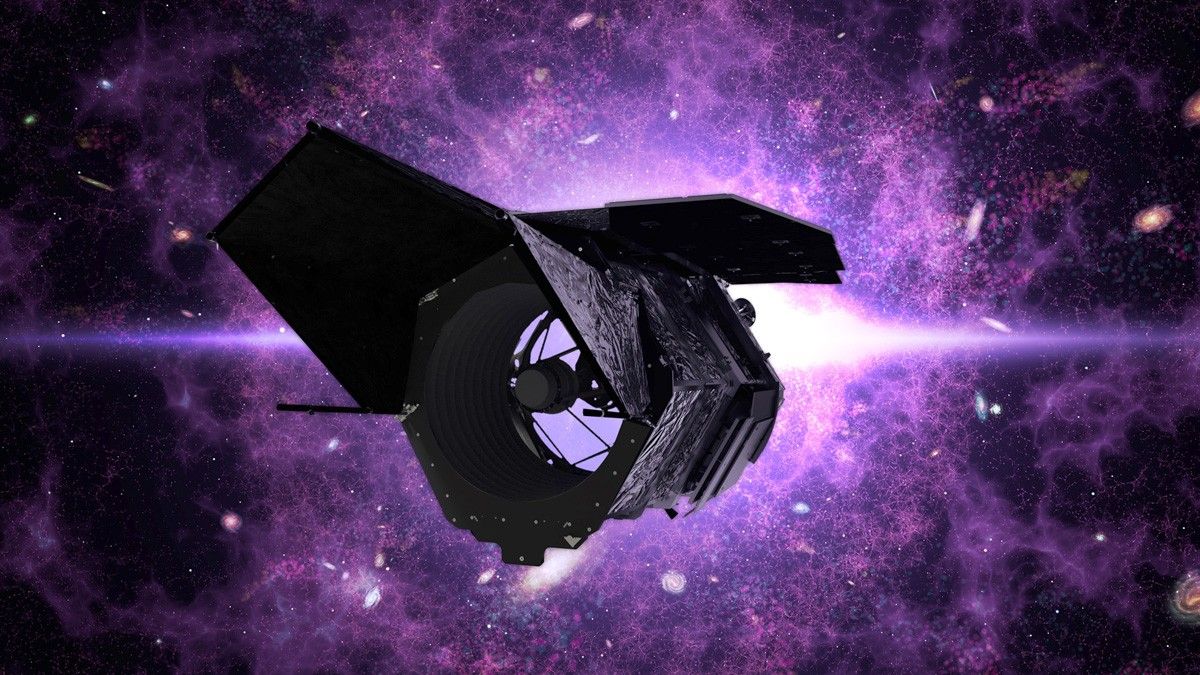
The Nancy Grace Roman Space Telescope is NASA’s newest astrophysics observatory. The telescope will scan large sections of space. Roman will help astronomers answer questions about dark energy, dark matter, exoplanets, and more.
The Nancy Grace Roman Space Telescope is NASA’s newest space telescope that will study dark energy, exoplanets, and astrophysics.
Astrophysics: a branch of space science that applies physics and mathematics to study the universe.
Lagrange point: a position in space where the gravitational forces of a two-body system, such as the Sun and Earth, are balanced. This point creates an “orbital parking spot” where minimal fuel is needed to maintain a spacecraft’s position.
Infrared light: light that is completely invisible to the human eye but can be felt as heat. It’s the area on the electromagnetic spectrum where wavelengths are longer than visible red light, but shorter than microwaves.
Dark energy: the mysterious force that is causing the universe to expand at an accelerated rate.
Exoplanet: a planet outside of our solar system.
Dark matter: the mysterious gravitational “glue” that holds cosmic structures together.
When and Where Will the Nancy Grace Roman Space Telescope Launch?
The Nancy Grace Roman Space Telescope is scheduled to launch Aug. 30, 2026. It will launch aboard a SpaceX Falcon Heavy rocket. Liftoff will take place from Launch Complex 39A at NASA’s Kennedy Space Center in Florida.
Where Will the Nancy Grace Roman Space Telescope Go in Space?
The Nancy Grace Roman Space Telescope will orbit about 930,000 miles (1.5 million kilometers) away from Earth. It will orbit around a special place in space called the second Sun-Earth Lagrange point, or L2. This gravitational sweet spot is perfect for unobstructed views of the universe.
What Instruments Does the Nancy Grace Roman Space Telescope Have?
The Nancy Grace Roman Space Telescope will peer through dust and across vast stretches of space using infrared light. Roman’s primary mirror is 7.9 feet (2.4 meters) across. The large surface of the telescope mirror gathers lots of light. More light equals finer details.
The primary mirror will send light to Roman’s two science instruments: the Wide Field Instrument and the Coronagraph Instrument.
The Wide Field Instrument is a 300-megapixel infrared camera. It allows scientists to look very far back in time because the light captured by the camera has been traveling for billions of years before reaching the instrument. Seeing the universe in its early stages will help unravel how it has expanded throughout its history. This will give scientists hints about how the universe may continue to evolve.
The Coronagraph Instrument uses technology that blocks the glare from a star. This lets astronomers see planets in orbit around it. This instrument is the most powerful coronagraph ever flown in space. It will allow astronomers to see planets that are almost a billion times fainter than their host star.
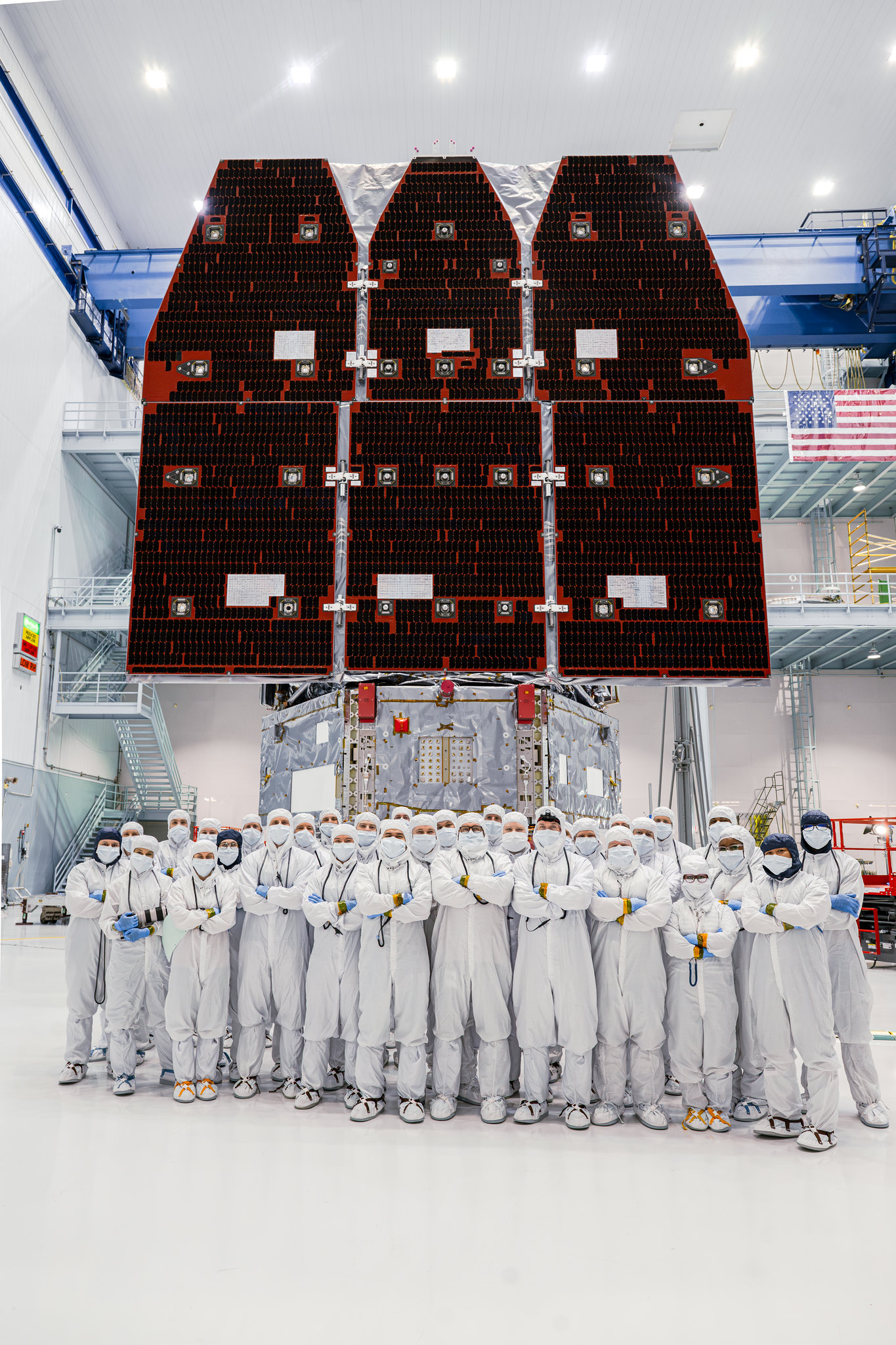
On Nov. 25, 2025, technicians joined the inner and outer segments together and the observatory was complete.
NASA / Sydney Rohde
What Will Scientists Study With the Nancy Grace Roman Space Telescope?
Scientists using the Nancy Grace Roman Space Telescope will focus on three main topic areas: dark energy, exoplanets, and dark matter.
Dark energy is a mysterious part of the universe. Scientists aren’t sure what it is, but it makes up about 68% of the universe’s total contents. It is believed to be responsible for the accelerating rate at which our universe is expanding. But recent observations seem to show that the pressure from dark energy is shifting over time. Scientists hope to use the Roman Space Telescope to help solve the mystery of dark energy’s true nature.
Exoplanets are planets outside of our solar system. Scientists have discovered more than 6,000 exoplanets. But they believe that billions could exist. Most of the exoplanets detected so far are wildly different than the planets in our solar system. Scientists expect Roman to find more unusual exoplanets. It will also allow astronomers to find planets in the habitable zone of their stars. This will be key to finding planets similar to Earth.
Dark matter is the invisible glue that holds the universe together. Scientists aren’t sure what dark matter is made of. Roman will allow scientists to peer back in time to trace how galaxies and galaxy clusters formed. If dark matter consists of heavy, sluggish particles, it would clump together readily and Roman should see galaxy formation early in cosmic history. If dark matter is made up of lighter, faster-moving particles, it should take longer to settle into clumps and for large-scale structures to develop. If astronomers can narrow down the candidates for dark matter particles, we’ll be one step closer to finally detecting them directly in experiments on Earth.
Who Was Nancy Grace Roman?
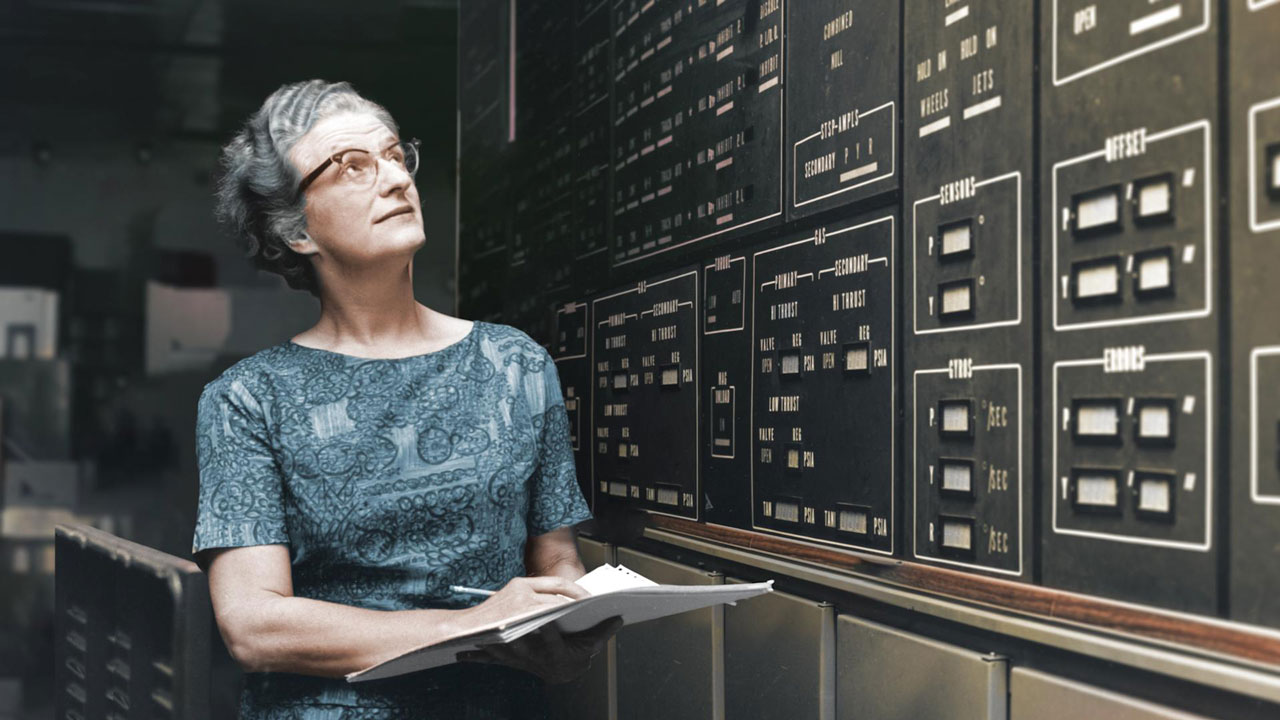
Nancy Grace Roman was NASA’s first chief astronomer and the first female executive at the agency. Roman championed the making of the first space-based telescope — the Hubble Space Telescope. She was involved in every crucial decision about the telescope from its funding to where it was built to the details of its instruments. Her vital role in making the project a reality led her to be known as “the mother of the Hubble Space Telescope.”
Roman was born May 16, 1925, in Nashville, Tennessee. She died Dec. 25, 2018.
Nancy Grace Roman was NASA’s first chief astronomer. She is knows as “the mother of the Hubble Space Telescope.”
NASA
Career Corner
More than a thousand technicians and engineers assembled Roman from millions of individual components. Here are a few examples of the careers that shaped NASA’s newest space telescope:
Instrument technician: These experts install, calibrate, and maintain sensors and control systems. They troubleshoot issues that might come up with delicate systems and equipment. This career path often starts with an apprenticeship or hands-on training alongside experienced technicians. An associate’s degree is often required.
Mechanical engineer: This branch of engineering focuses on complex machines and engines. Mechanical engineers design, build, test, and improve mechanical systems. They play an essential role in making a complex observatory like the Roman Space Telescope a reality. A career in engineering demands a strong understanding of math and complex problem-solving and usually requires an advanced college degree.
Astrophysicist: These scientists study the physics of the universe. They are interested in learning how the universe began, how it is evolving, and how it works. Becoming an astrophysicist requires advanced college degrees.
NASA also needs people who work in photography, management, social media, videography, and much more. Learn about some of the people who have made the Roman mission possible here!
Animal testing has shaped modern drug development for decades, but its limitations become especially visible when scientists evaluate cancer immunotherapies. These treatments are designed to stimulate the immune system to recognize and destroy malignant cells, yet the same powerful immune activation can trigger life-threatening complications in patients. Researchers at the University of Rochester are developing a human-cell-based alternative: miniature tissue models known as organs-on-a-chip that could help predict these toxicities before experimental medicines reach clinical trials.
The work is being led through the university’s Translational Center for Barrier Microphysiological Systems, or TraCe-bMPS. The center is building drug-development tools around modular µSiM tissue chips, devices that contain ultrathin membranes populated with human cells. Unlike conventional laboratory cultures, these systems are engineered to reproduce key features of biological barriers, including the physical separation between tissues, controlled exposure to drugs, and measurable inflammatory responses. Their modular construction also allows the devices to be manufactured in large quantities with consistent dimensions and materials.
The platform is based primarily on acrylic components and incorporates membranes designed to mimic interfaces found in the human body. Such barriers regulate the movement of molecules and immune cells between compartments, making them central to drug absorption, toxicity, and inflammation. By assembling reproducible chips with human cells, researchers can study how a therapy affects a tissue under conditions that more closely approximate human biology than many animal models. The design also makes it possible to modify individual components for different organs or disease settings.
A major feature of the Rochester system is the integration of sensors directly into the chips. Developed in part through the work of biomedical engineering professor Benjamin Miller, these sensors can track barrier function and inflammatory signaling in real time. Instead of waiting until the end of an experiment to examine damaged cells, researchers can observe how a tissue responds as a drug is introduced. Changes in electrical or molecular signals may reveal that a barrier is becoming more permeable or that inflammatory pathways are being activated, providing an early warning of toxicity.
The immediate focus is on two severe complications associated with some cancer immunotherapies. Cytokine release syndrome, commonly called CRS, occurs when activated immune cells release large quantities of signaling proteins known as cytokines. The resulting systemic inflammation can cause fever, low blood pressure, breathing difficulties, and, in the most serious cases, organ failure. Immune effector cell-associated neurotoxicity syndrome, or ICANS, can affect the nervous system, producing confusion, seizures, impaired speech, or other neurological symptoms. Both conditions are difficult to predict reliably with animal testing because species differ in immune signaling networks and cell-surface receptors.
“The goal is to predict these toxicities from human cells on a chip, before a drug ever reaches a patient, and to do it without relying on animal models that have repeatedly failed to predict CRS in people,” says James McGrath, director of TraCe-bMPS and the William R. Kenan Jr. Professor of Biomedical Engineering. The approach does not simply attempt to reproduce a whole human body in miniature. Instead, it focuses on specific biological barriers and immune interactions that are directly relevant to the safety question being studied.
The project has now reached an important regulatory stage. The team was accepted into the US Food and Drug Administration’s Innovative Science and Technology Approaches for New Drugs, or ISTAND, pilot program. ISTAND is intended to help evaluate emerging methods that could improve drug development and eventually support regulatory decisions. Acceptance does not mean that the tissue-chip platform has already been approved for routine use, but it creates a formal pathway for the researchers to work with the FDA on defining the evidence needed for qualification.
The Rochester group is preparing a detailed qualification plan that will describe clinical considerations, timelines, data-sharing procedures, and statistical methods for evaluating the technology. If the platform ultimately receives FDA qualification, pharmaceutical companies could use its results as part of the evidence submitted in support of new drug applications. Such recognition would represent a significant step for organs-on-a-chip research, which has expanded rapidly but has only rarely progressed into formal regulatory programs.
The effort comes as US regulators seek alternatives to animal testing in preclinical safety studies. The FDA Modernization Act 2.0, enacted in 2022, opened the door for non-animal methods, while the agency’s 2025 roadmap outlined further efforts to reduce reliance on animal models. Researchers say pharmaceutical companies are showing strong interest because many immunotherapies are already in clinical development and carry risks of CRS or ICANS. The Rochester team collaborated with Graham Marsh of the Critical Path Institute and consulted with scientists at Pfizer about how the tool could fit into real-world drug development. If successful, the technology could give researchers a more human-relevant way to identify dangerous immune reactions early, helping developers eliminate unsafe candidates and refine promising treatments before patients are exposed.
Subject of Research: Human-cell tissue chips for predicting cancer immunotherapy toxicities.
Web References: University of Rochester; Translational Center for Barrier Microphysiological Systems; University of Rochester Biomedical Engineering; FDA ISTAND pilot program; FDA Modernization Act 2.0.
Image Credits: URochester photo / J. Adam Fenster.

 Login