
❌

Normal view

How grief tech is reimagining Victorian spiritualism

Modern spiritualism began as a religious movement in the 19th century. It promised to bring the living and dead together in conversation, usually through a medium – a person who claimed an ability to directly contact the deceased.

The core foundational belief of spiritualism was that death was not the end – a typical tenet of many religions – but was the point at which a person departed their physical body and ascended to the spiritual realm.

As a faith, spiritualism was an innovation of Christianity. It drew on spiritual communications referenced in the Old Testament and adapted them for those who had become disillusioned with the traditional faith by integrating it with mysticism and science.

In Victorian Britain, new rituals that became attached to death expected more from the living. Mourning periods were longer and identifiable by the clothing people wore. Funerals became more elaborate and ritualised. Mourners could also pay for memento mori photographs that captured keepsake images of the dead. Within this exaggerated culture of morbidity, spiritualism became an appealing movement for those who were overcome with grief.

In the United States, the movement was galvanised by the huge loss of life and loved ones in the civil war. Many of the dead were unidentified, leading to a lack of closure for those grieving.

Making contact

The methods spiritualists and mediums used were varied. Seances were conducted where the methods of communication ranged from knocking sounds to levitation, while spirit photography claimed to capture images of the dead standing by their living loved ones.

The spirit photo of Mary Todd Lincoln. The 'ghost' of her husband has his hands on her shoulders.
The spirit photo of Mary Todd Lincoln with the ‘ghost’ of her husband, created by William H. Mumler in 1872. The Lincoln Financial Foundation Collection

The first spirit photo was taken in 1861 by William Mumler in Boston. It led to a decade of his studio being frequented by bereaved people who hoped to have an image showing that their departed were still with them.

Mumler’s studio produced these photos for the price of US$10 (£280 in 2026). They featured the same ghost for multiple images – faded and vague enough to convince those looking for comfort. Mumler was tried for fraud in 1869, but acquitted due to lack of evidence. He went on to photograph Mary Todd Lincoln with the apparent apparition of Abraham Lincoln.

Spirit photography was convincing in the 19th century in part because of the lack of likenesses that were left behind when a person died. A shaded photo or likewise a knock at a table, perhaps with a message of assurance from the mouth of a medium, were a balm that gave mourners comfort.

Our 21st-century ghosts

In the present day, our existence is preserved on phones, cameras and social media. There are recordings that keep peoples’ voices alive after they leave us. But for some, as with those who were drawn to spiritualism, that limited snapshot isn’t enough.

AI grief tech is developing to patch the holes that bereavement leaves – and clearly when so much remains of a person’s life, a spirit photo will no longer do. These systems, known as griefbots, AI ghosts, deathbots or postmortem avatars, offer services from text interaction to phone calls to full video calls.


Read more: Should AI be allowed to resurrect the dead?


In 2020 the South Korean documentary Meeting You showed a grieving mother being reunited with her deceased daughter through the use of a VR headset and gloves. The documentary showed Jang Ji-sung trying to touch the projection of her daughter – an action reminiscent of Victorian séance attendees reaching to try to touch the glowing ghosts that had seemingly manifested.

Clips from the South Korean VR documentary Meeting You.

Since 2020, grief tech has developed significantly and caters to a range of budgets. Grief tech companies like You, Only Virtual allow users to build and chat with a virtual personality for US$20 (£15) a month.

AI-generated photos and videos of deceased or missing serviceman have meanwhile increased in popularity in Russia. They cost between 200 and 10,000 roubles (£2-£100), with significantly varied quality.

There are also systems that offer enhanced “companions”, depending on someone’s budget. AI ghosts can be pre-made by the living, recording their voice and image for their loved ones to aid with grief therapy. These set ups can cost up to US$15,000.

A sepia photograph showing a classic ghost-in-a-sheet figure
A spectre (from an album of doppelgängers and spectres, early 1900s), artist unknown. John Rylands Research Institute and Library, CC BY-NC

There are concerns and studies discussing both the ethics of AI griefbots and the impact that these services may have on the grieving process. Issues of consent are a key consideration. Where Victorian mediums represented the deceased through words and actions, griefbots are a recreation of a person’s life based off their data. These concerns are lessened when the deceased has pre-consented, but not for those that are created by living loved ones.

In a way reminiscent to followers of spiritualism continuing to pay to attend séances, the subscription nature of some of these AI systems keep the bereaved coming back. This raises a concerning question: are you losing your loved one again if you cancel the subscription? The onus lies with the living users to be able to know when they have grieved enough.

Similar concerns were raised over exploitation by spiritualists of their patrons when they were most vulnerable. English author M. E. Darby wrote his 1888 book An Investigation of Modern Spiritualism: An Exposé “a warning and guide to the innocent and over-credulous young men”, who were “a ready prey for the unscrupulous and inhuman professional practitioner of legerdemain, who cruelly, out of the most tender ties, feelings, and emotions of human bosoms, make a harvest and find a ready spoil”.

Black and white photo of Harry Houdini in a full suit.
Harry Houdini in 1913. Campbell-Gray, Ltd.

Concerns over the financial exploitation of the spiritualism movement were still being raised in the early 20th century by the illusionist Harry Houdini, who tried to expose frauds. One of Houdini’s earliest acts, with his wife Bess, had been a séance show through which Houdini became familiar with the ways in which a medium could deceive their audience. By the 1920s, he used his reputation to demonstrate how electrical wires created floating objects, how mediums used their feet to ring bells, and other tricks immediately familiar to a fellow magician.

Houdini’s scepticism of spiritualism led to him promising that upon his death, if possible, he would return on a set date and give his widow Bess a code phrase to identify himself. No such contact was made.

The rise of grief tech, with its parallels to spiritualism, confirms one consistency in the human condition: a desire to minimise the pain of loss. While understandable, the latest advancements add a confusing twist to the process and psychology of grief, without data currently available to better understand the long-term impact. Until we have better clarity, and have navigated the ethics more thoroughly, we should consider closing the parlour doors on grief tech.

The Conversation

Jessica Lloyd May does not work for, consult, own shares in or receive funding from any company or organisation that would benefit from this article, and has disclosed no relevant affiliations beyond their academic appointment.
Why the AI industry is so fond of the prefix ‘co’ – by an expert in linguistics

AI companies and evangelists frequently use terms such as co-pilot, co-worker, co-creator and co-scientist to imply these rapidly developing systems can happily co-exist with us humans. Their inference is clear: people should always be in the loop – the AI is never in charge.

But amid stories of AI models going rogue and the prospect of recursive self-improvement (when AIs can improve themselves), is this form of language still appropriate – or a linguistic smokescreen we should be wary of?

In my career researching science, language and society, I have studied the use of “co” and other linguistic trends used by AI companies to describe and market their products.

The humble prefix “co”, derived from the Latin preposition “com”, means “together”, “mutually” or “in common”. But what seems linguistically unremarkable can, in the modern context of AI systems, convey a lot of interesting – and potentially misleading – meanings.

While “AI assistant” implies a subordinate role and “AI agent” real autonomy, “co” evokes shared agency and joint ownership of a task. This makes it strategically ambiguous.

An AI co-product can be sold to investors as capable and autonomous, thus justifying its price and ambition. At the same time, it can be sold to users and regulators as safely subordinate, reassuring them that a human is still in control.

An introduction to the AI ‘companion’ Copilot. Video: Microsoft.

Copilot takes off

One of the most interesting uses of “co” to convey a particular message about AI products is Copilot – the name of Microsoft’s suite of AI models. In aviation, a copilot supports the pilot but isn’t in command.

The Observer newspaper’s technology journalist John Naughton has called copilot “the tech industry’s favourite metaphor”, because it lets the human feel in charge while the tool actually fosters dependency.

The word entered AI discourse as a metaphor when GitHub, a coding platform, released an AI coding tool called GitHub Copilot. This was built in collaboration with OpenAI – the company that a year later became famous overnight when it released ChatGPT.

GitHub used the name Copilot to metaphorically frame “pair programming” – in the sense of the AI model being a second coder sitting beside you, assisting but never taking the wheel. GitHub foregrounded this aviation metaphor with the headline: “Command your craft”.

By 2023, Microsoft (which owns GitHub) had rebranded a dozen products – from its search chatbot to Windows and its Office software – under the Copilot name. (According to the tech news site Ars Technica, the joke inside Microsoft was that it would need a branding copilot simply to keep track of all these products.)

Around the same time, “co-intelligence” entered wider use as the title of a book by prominent American AI researcher Ethan Mollick. This book, a New York Times bestseller, stretched the metaphor from product branding into a general way of talking about living alongside AI as co-worker and co-creator, sharing a form of co-intelligence.

Not long after, Microsoft researcher Advait Sarkar and colleagues wrote a paper suggesting that generative AI could see one aviation metaphor, copilot, being replaced by another: autopilot. They warned that “powerful AI capabilities may lead humans to disengage from critical thinking and simply defer to AI output … causing knowledge work to go on autopilot.”

Rather than sharing responsibility for the output of these models, the implication was that in an increasing number of cases, no one was really at the controls.

How OpenAI’s pre-release model ‘escaped’ to launch a cyber-attack. Video: Channel 4 News.

AI anthropomorphism

A 2026 study found rising anthropomorphism – the assignment of human traits and emotions to non-human things – in how people view and talk about AI tools. This suggests techniques such as the “co” framing have been persuasive, not just decorative.

Metaphors can make even the very unfamiliar – such as black box AI systems – seem familiar. In the case of copilot and other co-words, they are used to sell systems to industry and ordinary users in different ways. Google DeepMind’s Co-Scientist, for example, is framed as a research partner even though it operates as something closer to a team of AI agents working with minimal oversight.

Perhaps tellingly, Mollick’s follow-up to Co-Intelligence, due out in October 2026, is entitled Co-Existence: The Next Phase of AI. This might indicate that the conversation has moved from whether to how we should live alongside something that is now established beyond the power of human control.

Three years ago, computer scientists Abigail Sellen and Eric Horvitz – who also have key roles within Microsoft – called for “designs for human-AI partnership that cede ultimate control and responsibility to the human user as pilot, with the AI co-pilot acting in a well-defined supporting role”.

But that view of human-AI interaction already feels outdated. Recently, during an internal evaluation by US company Open AI, a pre-release AI model managed to hack into another platform in an incident variously described as the AI agent “escaping” or “going rogue”.

Once again, there is a linguistic point to note here. By portraying AI agents as autonomous actors, such language points the finger of blame towards the agent, rather than the companies who build and operate them.


This article contains links to bookshop.org. If you click a link and go on to buy something from bookshop.org, The Conversation UK may earn a commission.

The Conversation

Brigitte Nerlich does not work for, consult, own shares in or receive funding from any company or organisation that would benefit from this article, and has disclosed no relevant affiliations beyond their academic appointment.

If AI is addictive, where does the responsibility lie – with big tech or its users?

When I talk to my son, an engineering student, and we have a question or disagreement, he immediately turns to ChatGPT as his primary source of information and confirmation.

He is not alone in this. The use of generative AI tools has exploded across different demographic groups. For many people, these tools can be entertaining, informative and beneficial. However, they also have a dark side.

Generative AI is not formally recognised as addictive right now – the medical evidence is still being gathered. But there is a significant amount of data showing heavy use of chatbots and other systems that produce text, images and video leads to neural patterns and behaviour that are associated with addiction.

In light of Meta’s and YouTube’s recent legal defeat in a landmark social media addiction trial, I believe it’s time to ask whether a similar logic applies to generative AI – and how it could be addressed. The starting point would be to identify who carries responsibility for overuse of generative AI.

The science on this is not settled, and there are some who counsel caution when using the term addiction. They propose the use of other expressions such as “problematic use”. However, in a recent paper, our team of researchers suggest there is strong evidence to suggest that generative AI has addictive properties.

Much-discussed examples include emotional dependency on chatbot companions, compulsive engagement with them, and the loss of real-world acquaintances and friends.

A key factor here is that, as in all cases of addiction, the behaviour has negative consequences for the user which may affect both their personal and professional lives.

If we follow the argument that generative AI is a candidate for addictive behaviour, then we also need to look at responsibility. Societies tend to find ways to deal with harm by holding people or groups responsible for fixing it. Those who could be accountable include legislators, regulators, industry and health systems.

Historical examples

Historical precedents such as smoking might offer insights into how the area of generative AI addiction could evolve.

Older readers may remember when the Marlboro Man would appear before any feature movie in their local cinemas. It eventually transpired that not only was smoking addictive and bad for your health, but that tobacco companies knew this. Nevertheless, it was publicly denied.

This led to lengthy and high-profile litigation, eventually resulting in large-scale financial payouts and changes to the industry. These changes included the plain packaging of tobacco products and gruesome warning labels on them.

Gambling could be following a similar trajectory – and now social media companies may be taking their first steps into a similar process.

A key question is whether the makers of a product – be it tobacco, gambling or social media – are aware of its addictive properties. Another important factor being considered is whether certain companies may even use the allegedly addictive properties of their products for corporate advantage.

AI is not tobacco, of course, but there may be parallels to be studied.

In our research, we have identified four groups of stakeholders that are now being called upon to address the challenges linked to the possibility of addiction to generative AI.

The first is governments and regulators. These have a key role to play in highlighting the problems, setting the rules of engagement, and creating incentives for other parties to engage with the topic.

They can do this by requiring labelling, restricting advertising, applying liability law and providing research funding – along with many other mechanisms.

But the most important role in addressing potential addictive behaviour associated with generative AI would be held by big tech companies that develop and own these technologies – and stand to benefit financially from them.

These companies own and have access to user data, which would be needed to ascertain the features that support or alleviate addiction. They are also the parties that would benefit financially from addiction by increasing user numbers and engagement, the main currency of the digital age.

In addition to these two groups, academic researchers have an important role in collecting and interpreting data, and providing the evidence needed to recognise addiction and addictive features – in ways that allow for evidence-based political or legal debate.

Finally, civil society organisations such as user or patient groups can help by providing support, advocating for members’ interests, and establishing early-warning structures.

The point is that none of these interested parties can address the problem on their own. They need to collaborate.

Someone else’s problem

A key problem at the moment is the lack of structured debate about responsibilities – everybody assumes it is someone else’s problem. But there is ample precedent showing how greater engagement from those involved with the issue may be achieved.

With tobacco, the World Health Organization (WHO) formed the Framework Convention on Tobacco Control – a treaty-based mechanism that brought together governments, public health bodies, researchers and civil society to evaluate evidence and draw up common rules. The International AI Safety Report shows comparable international consensus-building activities are already happening in other aspects of AI.

Some responsibility also falls on the users of AI, who should try to avoid or control their own potentially harmful behaviour. But appeals to individual moderation or mindfulness have been shown with other addictions to be insufficient.

While the harms associated with smoking or alcohol misuse are well known, society still relies on age limits, packaging rules and advertising restrictions. Generative AI is being integrated into the everyday fabric of our society. The choices we now make will determine what acceptable use looks like for years to come.

The Conversation

Bernd Stahl does not work for, consult, own shares in or receive funding from any company or organisation that would benefit from this article, and has disclosed no relevant affiliations beyond their academic appointment.

The pigeon fanciers of the Bronze Age

Domestic animals have long been some of our closest companions. While dogs, cats, horses, cattle and chickens have all played major roles in human history, domestic pigeons may be a little less familiar. But they are no slouch when it comes to cultural importance.

Charles Darwin wrote about domestic pigeon diversity to explore his theories of evolutionary change. Contemporary biologists have trained teams of pigeons to identify cancerous cells from certain medical images with an accuracy rivalling that of oncologists.

Now, new research exploring ancient human-pigeon interactions in Cyprus has provided fascinating insights into the earliest stages of this millennia-long inter-species relationship.

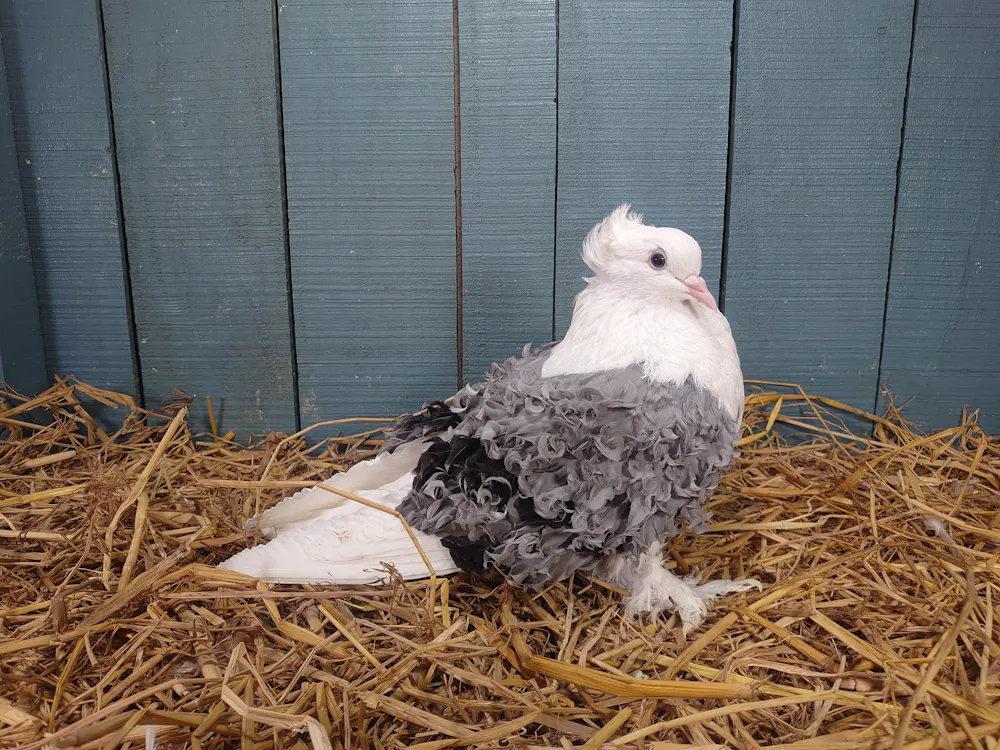
There are over 300 breeds of domestic pigeon, from homing pigeons used in competitive racing to the peculiar frillback, which looks like it has survived a rather nasty electric shock. In 2020, a Belgian racing pigeon named New Kim sold for €1.6 million (£1.4 million).

Small pigeon with curly grey feathers.
A frillback pigeon. Muhammad Taayyab Saleem/Shutterstock

But despite their contributions to contemporary society, we still know little about the origins of these pigeons.

The wild form of all domestic pigeon breeds is a slate-grey bird called the rock dove. Wild populations can still be found in parts of Europe, Africa and Asia.

Rock doves are very shy, living on cliffs and nesting in caves. I study them in Scotland’s Outer Hebrides, where colonies can be seen foraging for grain in fields. Scientists believe that these birds first learned to steal crops thousands of years ago, thus increasing our ancestors’ proximity to them.

Soon, they became a regular source of meat and, thanks to their copious droppings, fertiliser. This led to rock doves being pulled down an evolutionary route which has, over centuries, resulted in today’s proliferation of domestic breeds – plus their superabundant feral city pigeon offshoots, found soiling statues worldwide.

However, the where and when of the earliest phases of this process have remained unclear.

Earliest evidence of domesticated pigeons

Scientists generally think that pigeons were first domesticated in the Middle East and/or the eastern parts of the Mediterranean.

Until now, the earliest direct evidence for domesticated pigeons came from a site in Hellenistic Greece around 2,300 years ago. Depictions of pigeons in Iraq, more than 4,000 years ago, suggest a much earlier relationship – but these are not conclusive evidence.

Plus, it’s tricky to tell domestic and wild birds apart from the shape of their bones alone. For decades, those of us studying pigeons have had to handwave this evidence in our writing, saying they were “probably domesticated as early as 3,000 years ago”.

In Cyprus, small amounts of pigeon bones had previously been found at Neolithic sites (more than 10,000 years old), suggesting there was sporadic hunting of these birds.

Then, starting in the Bronze Age (3,650-3,950 years ago), pigeon figurines became common in Cyprus, and the island developed a strong association with these birds. It was identified in early Greek literature as the birthplace of the love goddess Aphrodite, who is often depicted alongside flocks of doves.

In the new study, researchers examined a collection of bones collected at Hala Sultan Tekke in Cyprus – historically an important city; now a mosque and archaeological site – dating back to the Late Bronze Age, about 3,350 years ago.

Their assessments included a technique called stable isotope analysis, using chemical signatures in the bones to make inferences about what the birds ate. This showed their diets were similar to those of their human neighbours. Rock doves must have been living alongside people at that time, who may even have been deliberately feeding them.

The range of chemical signatures was, as with humans and cattle (but different from fallow deer and other wild species), low. This reflects a consistent diet of grains – a diet shared by humans that could be evidence that the birds were managed by them.

However, three of the 37 pigeons assessed had quite different chemical values – aligning more with wild animal species than humans. This suggests a potential split between cave-dwelling birds (which might have been hunted in the wild and brought back to eat) and full-time urban pigeons which interacted with humans in a more intense way.

A more intimate relationship

Pigeons are well-established as being an ancient part of the human diet. Our Neanderthal cousins hunted them in the caves of Gibraltar as early as 67,000 years ago. But what’s exciting about these new results is that they suggest a much more intimate relationship than predator and prey.

Perhaps most interestingly, some of the bones had been burnt and buried in ritual spaces. Earlier excavations carried out as part of previous research at the same site found a pigeon within a tomb containing an adult man. This suggests rock doves may have had an important cultural role in Cyprus.

Whether this relationship can be called domestication is up for debate. For most of us biologists, domestication involves evolutionary changes occurring due to human use. This is different to our relationship with species like house sparrows, say, which live alongside us but are not managed for use – whether in terms of food, labour or recreation.

Further research tracking human-pigeon interactions through time and space is needed to help us judge exactly when and where domestication-related changes in pigeons’ genetics and appearance began.

Nevertheless, the new study’s results strongly indicate that ancient humans had an intimate interaction with a species which has gone on to become one of the most important birds in our history. Knowing this relationship was active more than 3,000 years ago in Bronze Age Cyprus should help us appreciate the importance of this unique human-animal interaction.

The Conversation

Will Smith's research on rock doves has previously been funded by the Edward Grey Institute and the John Fell Fund (both of the University of Oxford), the British Trust for Ornithology, the Scottish Ornithologists' Club, the British Birds Charitable Trust, the Houghton Trust, and the John Muir Trust. His research is currently funded by the University of Nottingham, the Leverhulme Trust (as an Early Career Fellow), the Genetics Society, and the British Ecological Society. He played no role in the research which is the focus of this article.

❌