La investigación, publicada en la revista Science, ha sido dirigida por Richard F. Kay, profesor emérito de Antropología Evolutiva en el Trinity College of Arts & Sciences y en la Nicholas School of the Environment de la Universidad de Duke. El trabajo, que ha empleado una colección única de cráneos procedentes en su mayoría del […]
Un pozo ritual de características únicas ha emergido en el área arqueológica de la antigua ciudad etrusca de Kainua, en las proximidades de Marzabotto, en un hallazgo que la comunidad científica ya califica como extraordinario. Situado en el recinto sagrado dedicado a la deidad Uni, el pozo ha devuelto a la luz un conjunto de […]
La historia del imperio romano suele narrarse a través de las gestas de emperadores y generales, pero los mecanismos de la administración cotidiana y, especialmente, las relaciones entre el poder central y las provincias, constituyen un campo de estudio igualmente revelador para comprender las dinámicas de aquella civilización. En este contexto, el hallazgo y posterior […]
Los megalitos —esos enormes bloques de piedra que llevan milenios en pie— siguen fascinando a arqueólogos y público general. Una reciente recopilación de libros publicados entre 2025 y 2026 muestra que, aunque la investigación ha avanzado a pasos agigantados gracias a nuevas tecnologías, algunas preguntas fundamentales siguen sin respuesta definitiva. ¿Quiénes construyeron estos monumentos? ¿Por […]
¿Qué se esconde bajo uno de los poblados fortificados más importantes de la Calabria helenística? Una investigación que aúna arqueología y geofísica ha comenzado a dar respuesta a este interrogante. Gracias a la aplicación de sofisticadas técnicas de exploración del subsuelo, un equipo interdisciplinar de la Universidad de Catania ha logrado identificar anomalías compatibles con […]
Imagínate, por un instante, que tienes que enfrentarte a un tribunal romano o a una asamblea de Atenas para pronunciar un discurso sin un solo apunte. En aquellos tiempos de la Antigüedad clásica, sacar una nota en público era considerado, con razón o sin ella, un signo de poca destreza intelectual y falta de coraje […]
Computex Taipei starts tomorrow, Tuesday 2 June, and the annual trade show is more popular than it’s ever been.
I was asked recently what’s different about Computex this year to make it suddenly so hip. Nothing. I’ve attended each year since 2000 and it’s barely changed.1
What has changed in recent years is that the world discovered a renewed interest in computers, along with the sudden realization that Taiwan dominates the industry. This year servers — being massive computers built inside big, boring, black boxes — are now part of popular conversation and cultural discourse in ways never before seen in history.
This is my primer for how to navigate Computex, how to get the most out of it, and how to understand what’s really go on at the world’s most-important trade show.
I’m happy you’re here. Be part of the family. Click the button to sign up for more great Culpium insights.
Computex’s origin story is right there in the name, Computer Expo, and the annual event has been true to its word even as the world’s interest in computers waxed and waned.
For many years, the rise of consumer electronics, games consoles, and smartphones made computers seem dull. But the event never veered from being a showcase for computer makers who want to show off their desktops, laptops, servers, motherboards, cables, peripherals, and all that makes up the PC industry.
The show proper starts on the Tuesday of the first week of June. The Monday is not officially a show day, but some companies hold events. For a while Saturday was the final day and open for the public to come take a look (now it’s Friday). I recommend avoiding Saturday at Computex.
There’s three main parts to Computex:
The industry keynotes.
Forums.
The show floor.
Keynote Speeches
Keynotes are a chance for executives to sell people on their company, their ecosystem, and their latest products. Remember, the target audience for Computex is engineers, product managers, supply-chain buyers, and global sourcing executives. It’s a tech-savvy solder-and-motherboards kind of crowd. Bus speeds and thermal thresholds are normal shop talk for these people.
For many years Intel saved one of its annual chip announcements specifically for launch at Computex. AMD often did the same. Taiwan’s VIA Technologies became a hero at Computex one year, and Intel was the villain when it burst its smaller rival’s balloons (literally, I am not kidding). Graphics chip makers ATi and Nvidia leant heavily on Computex to introduce their niche products to an attentive audience.
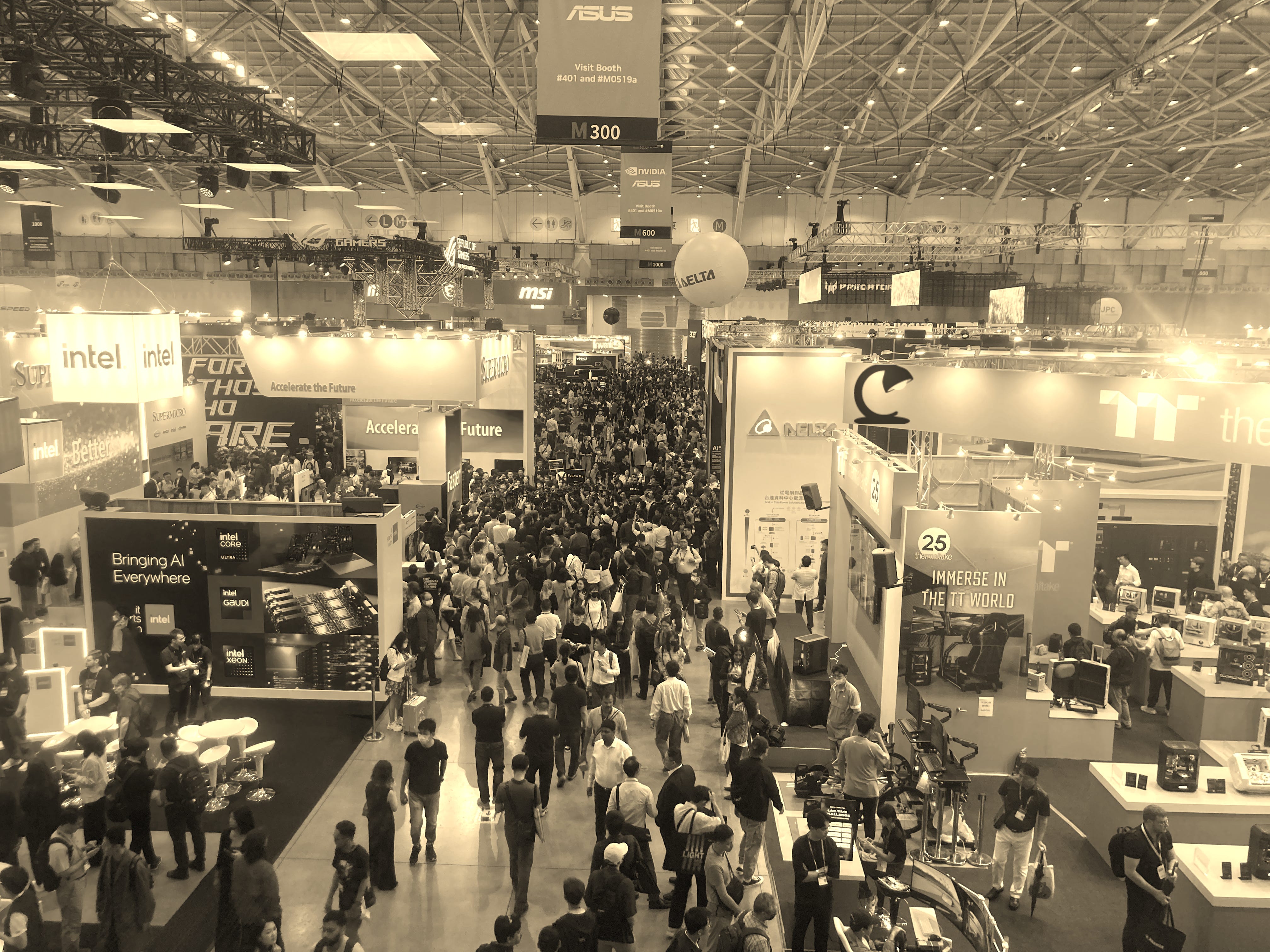
Big names take prime marketing spots around the expo hall. Photo: Tim Culpan/Culpium
Computex is, and always was, the premier computer expo.
As a result, the CEO of Intel would usually provide a keynote, and one or two other bosses might show up to give a talk. A couple of foreign CEOs was about all we could expect, while local leaders like Jonney Shih of Asustek or Gianfranco Lanci of Acer would fly the Taiwan flag. Regional or VP-level bosses of global names tended to stand in as ambassadors for their companies.
This year, Computex has attracted more overseas bosses than any year I can remember, including:
Computex is not important because of all the tech CEOs who make it to Taipei. It’s the reverse, they all come to Taipei because Computex is so important.
The world’s industry elite are here in Taipei to kiss the technology ring.
I count AMD’s Lisa Su in that list, even though she was in town prior to Computex and not for the show itself. Nvidia’s Jensen Huang isn’t appearing at Computex either, for that matter. Not officially, anyway. His GTC Keynote on Monday is not part of the official Computex lineup.
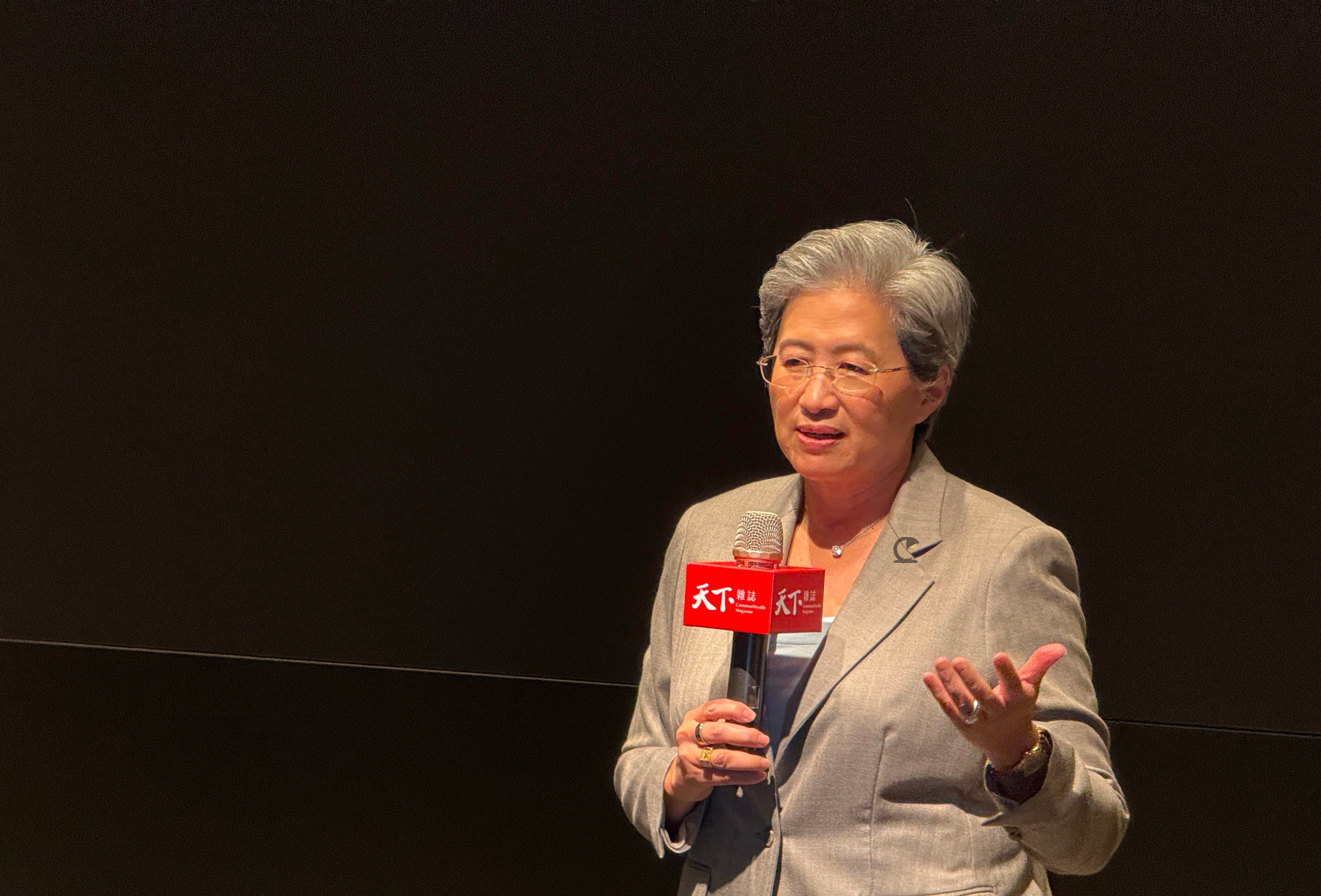
AMD CEO Lisa Su speaks to reporters in Taipei after holding events and making announcements prior to Compute. Photo: Tim Culpan/Culpium
But that’s kind of the point. So many executives realize that Computex, and Taiwan more broadly, are so important to their businesses that they’re finding ways to squeeze into the packed schedule. They want to make big announcements while the world’s eyes are on them, and then meet people behind closed doors to build the relationships that will make or break their businesses over the following 12 months.
The action doesn’t really happen in the keynotes, anyway. All that news will naturally flow from embargoed interviews and press releases timed to land just as the boss steps on stage.
Forums
Since the keynotes are well covered by media, press releases, and social media, your time is probably better spent in smaller sessions dedicated to super niche topics. For example, Craig McDonnell a managing director at ABB Robotics, will hold a session on Industrial-Grade Physical AI for Robotics this year. If that’s not your thing, then consider Ed H. Chi of Google DeepMind and his talk on The Future of Personalized Universal Assistants. There’s many more. There’s also side events, such as Innovex which is focused on startups and budding companies.
Companies want to present at these forums as a way to push their vision and ecosystem. Companies also want to be in the audience to learn what their rivals and partners are up to, and to swap business cards. I guarantee you’ll learn more and make better-quality connections from a few well-chosen forums than you will by attending every single one of the keynotes.
The Show Floor
I am constantly surprised when I learn that Computex visitors schedule their exit for the Wednesday or Thursday. But that’s an understandable choice if you’re not aware of where the real riches lie. And I think these early departures are informed by the dearth of good stuff left in the final few days of most other trade shows.
But the best action is neither at the keynotes nor the forums. It all happens on the show floor, in the VIP sections of those 3x3 booths,4 at the invitation-only hotel suites, and inside meeting rooms of the tech companies whose offices surround the Taipei Exhibition Hall in the nearby Nangang and Neihu districts.
Many businesses, both local tech companies and the local offices of foreign companies, mark Computex as black out days in their calendar, banning leave or business travel to ensure all hands on deck.
Overseas clients are the bread-and-butter of Taiwanese industry, particularly in tech, and local partners are primed for this annual pilgrimage. Experienced hands come because they understand something that many visitors do not. Winning over the PC ecosystem is crucial to them winning market share among end-buyers.
The tech ecosystem is more bottom-up than many imagine. Foreign clients have the money, but local suppliers have the talent and the connections.
Just another trade show. Or not? Photo: Tim Culpan/Culpium
A module maker who doesn’t want to design a circuit-board around your chip will not be an advocate for your product. A thermal management or mechanical parts player who won’t take the time to learn and build around your specs will not have something ready when assemblers need it.
And an assembler who doesn’t want to invest time and resources into developing a system that incorporates your product, in part because upstream players don’t have the pieces in place, will not even bother presenting it to a brand-name PC player.
While Dell, HP, Lenovo, Acer and Asus decide what products to sell, with what specs, and at what price, their hands are tied if the rest of the ecosystem is disinterested.
A little-known reality is that system manufacturers and their suppliers make many of the important product and engineering decisions before presenting them to the brand-name client. These choices mark the difference between your component being taken seriously or it being yet another oddity that barely shipped.
While there are many parts made in South Korea, Japan, China and even the US, it’s the Taiwan Hardware Mafia who really call the shots. A disinterested assembler, or a confused and harried module maker could kill your product before it’s left TSMC’s fabs. This is not some conspiracy. It’s cold, hard pragmatism.
Tech cycles are short. Margins are thin. Technical hurdles are high. The only speed at which this industry can operate is fast. And doing so requires cooperation among both competitors and partners. As Lisa Su said of her rivals recently in Taipei, “we’re all friends because we all grew up together.” Bringing something new to market is a huge risk for every single player who may be involved in its manufacture.
The show floor, and the hidden back rooms, are where these relationships develop. It’s at these booths where a niche maker of thermal plates, or high-speed cables, or multi-layer printed-circuit-boards shows their products. They then listen as current or prospective clients share their engineering troubles, outline their own sales projections, and then seek advice on how to build a product with oppressive margins to impossible deadlines
For major names like Intel, AMD, Nvidia, Qualcomm and Marvell, not being talked about in these discussions means your chips are being rejected by people who build the final products. Equally, failure to show and support those manufacturers will result in them working with a supplier who will.
Like any industry, relationships and interoperability matter. What’s unique about technology hardware is the combination of physical products manufactured within a product-development cycle that works at tech speed.
Computex presents a unique chance to observe this ecosystem. You just need to know where to look.
Thanks for reading
Culpium is free, for now. Join thousands more getting great insights and exclusive news.

 Login