❌

Normal view

The physics of protein condensates

22 July 2026 at 09:37

Intrinsically disordered proteins (IDPs) do not form stable 3D structures. Instead, they remain flexible, adopt many conformations, and can interact with multiple molecules. Although proteins were once thought to require a fixed structure to function, many IDPs play essential cellular roles. Some IDPs can assemble into biomolecular condensates, membrane-less compartments that help organise processes such as gene expression and stress responses.

Many IDPs contain prion-like low complexity domains (PLCDs), which have defined sequence features known as molecular grammas. These IDPs are multivalent and can form hierarchies of interactions with one another. These interactions promote clustering and, under the right conditions, phase separation into a protein-rich condensate and a surrounding dilute phase. Dysregulation of condensates has been linked to disease.

In this study, researchers used computer simulations to investigate the PLCD known as A1-LCD. Their aims were to accurately identify the critical point where phase separation ceases, map the full phase diagram, and assess methods used to estimate the theta temperature (Tθ), a measure related to solvent quality and protein interactions.

The simulations revealed three distinct phase-separation regimes: a dilute phase containing mostly isolated proteins, an intermediate regime where clusters form before large condensates appear, and a regime near the critical point characterised by system-spanning networks. The study also showed that condensates behave as percolated networks of interconnected proteins. Importantly, the authors found that commonly used methods for estimating theta temperature may be inaccurate for these systems.

Overall, this work provides new insights into the phase behaviour of condensate-forming proteins and highlights the need for more reliable approaches to assessing solvent quality. These findings could improve future studies of biomolecular condensates and their roles in health and disease.

“Comparative assessments of driving forces for phase separation requires knowledge of IDP-specific critical points. Our application of rigorous finite size scaling methods pioneered by Kurt Binder helped us delineate the critical and mean field regimes and demonstrate how the critical point can be converged upon for realistic approximations of IDPs. This revealed several surprises regarding the complex nature of the coexisting dilute phase. Additionally, we found that calculation of the two-body interaction coefficient provides a computationally tractable approach to compute comparative, sequence-encoded driving forces for phase separation of IDPs. This is directly relevant to inferring how changes to molecular grammars influence phase behaviors driven by homotypic associations.” – Rohit V. Pappu, Washington University in St. Louis

Read the full article

Distinguishing near- versus off-critical phase behaviors of intrinsically disordered proteins

Gaurav Mitra et al 2026 Rep. Prog. Phys. 89 068101

Do you want to learn more about this topic?

Biomolecular dynamics: order–disorder transitions and energy landscapes by Paul C Whitford, Karissa Y Sanbonmatsu and José N Onuchic (2012)

The post The physics of protein condensates appeared first on Physics World.
Nonlinear photoexcitation in Mott Insulators

22 July 2026 at 09:36

According to band theory, materials with partially filled energy bands and unpaired electrons should conduct electricity, but in Mott insulators this rule is broken. In these materials, the repulsion between electrons is so strong that they cannot move freely and become localized. When sufficient energy is supplied (for example by light), electrons can form a doublon (two electrons on one site) and a hole (an empty site). These excitations can move, enabling electrical conductivity.

A key question for Mott insulators is how these charge carriers are created and what controls their production. Traditionally, two regimes were known: multiphoton absorption, where several photons combine their energy, and tunnelling, where a strong electric field drives electrons across the gap.

In this work, the authors show that there are actually four regimes: multiphoton, tunnelling, a cooperative regime where the two processes work together, and an incoherent regime where weak fields and scattering dominate. They also show that the energy gap (the cost to create a doubloon-hole pair) is not fixed, but changes during the process because the generated carriers modify the system. This creates a feedback loop, making the dynamics nonlinear and time-dependent. As a result, carrier production can either slow down or suddenly speed up, even making the system more efficient without changing the driving field.

The behaviour depends on field strength, frequency, dissipation, and time, and each mechanism can be identified by its distinct momentum pattern. By tuning laser parameters, the system’s properties can be controlled in real time. Overall, this work shows that light can be used to dynamically reshape and control strongly interacting materials, opening possibilities for ultrafast, light-driven technologies.

Read the full article

Subgap pumping of antiferromagnetic Mott insulators: photoexcitation mechanisms and applications

Radu Andrei et al 2026 Rep. Prog. Phys. 89 068004

Do you want to learn more about this topic?

PLP-Logo-2.png, find out more. Quantum frustration in organic Mott insulators: from spin liquids to unconventional superconductors by B J Powell and Ross H McKenzie (2011)

The post Nonlinear photoexcitation in Mott Insulators appeared first on Physics World.

Making sense of quantum wavefunction collapse

15 July 2026 at 08:12

Quantum mechanics has two seemingly competing rules. Firstly, a system evolving without measurement follows a continuous, deterministic evolution governed by the Schrödinger equation, with dynamics determined by a Hamiltonian. Secondly, when a measurement occurs, the wavefunction collapses, producing a sudden, discontinuous change that is not derived from a Hamiltonian. Several approaches attempt to reconcile these behaviours, including the Copenhagen interpretation (which does not explain the mechanism of collapse), decoherence theory (which does not provide a single definite outcome), stochastic collapse models, and continuous measurement theory.

In this work, measurement is not treated as fundamentally different. Instead, it is described using stochastic (random) Hamiltonians that generate continuous evolution of the quantum state. In this picture, collapse emerges from noisy dynamics. The authors show that these dynamics can be understood as double-bracket gradient flows, where the system is driven to align with a measured observable, steadily reducing uncertainty until it reaches a definite outcome. Thus, wavefunction collapse can be viewed as coarse-grained continuous dynamics that minimise the variance of the observable. By interpreting this as a gradient flow, the same mechanism can be exploited using feedback to drive a system into desired states, including entangled ones.

This approach provides a continuous and physically interpretable picture of wavefunction collapse. Compared to decoherence theory, it explains the emergence of a single outcome but does not specify when measurement dynamics begin. More broadly, it replaces the notion of collapse with a dynamical process, making the theory more internally consistent, while also offering practical tools for controlling quantum systems, which is important for quantum computing and experiments.

“These geometric connections between Hamiltonian dynamics and quantum measurements open the door to exciting new approaches to quantum algorithm design.” – Aaron Villanueva, Radboud University

Read the full article

Hamiltonian and double-bracket flow formulations of quantum measurements

Aarón Villanueva and Luis Pedro García-Pintos 2026 Rep. Prog. Phys. 89 067602

Do you want to learn more about this topic?

Genuine quantum correlations in quantum many-body systems: a review of recent progress by Gabriele De Chiara and Anna Sanpera (2018)

The post Making sense of quantum wavefunction collapse appeared first on Physics World.

Experimental realisation of percolation with coupled lasers

15 July 2026 at 08:10

Percolation studies how small connections can group together to form a larger connected system, known as a cluster. In a grid where sites can be turned on or off, turning on more sites leads to the formation of clusters, and at a certain point a giant cluster spanning the system emerges. This behaviour is relevant to many real-world systems where local interactions lead to global effects, such as power grids, disease spreading, forest fires, and brain activity. While percolation is often studied using theoretical models or simulations, real systems are more complex. Nonlinear effects, noise, imperfect connections, and time-dependent dynamics can all shift the tipping point and change how clusters form.

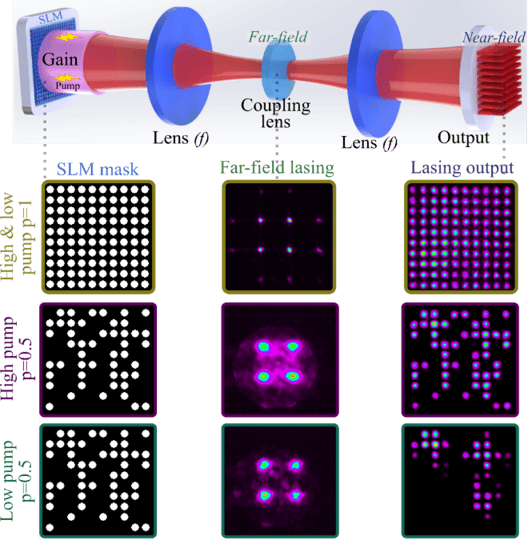
Schematic diagram of the experimental setup for implementing percolation using coupled lasers, along with the corresponding lasing output for different percolation mask realizations. Figure 1 from Simon Mahler et al 2026 Rep. Prog. Phys. 89 067901
Schematic diagram of the experimental setup for implementing percolation using coupled lasers, along with the corresponding lasing output for different percolation mask realizations. Figure 1 from Simon Mahler et al 2026 Rep. Prog. Phys. 89 067901 (Courtesy: Mahler/Weizmann Institute of Science)

In this work, the researchers built a physical system using a 2D array of 100 coupled lasers to study percolation experimentally. Each laser acts as a site that can be turned on and interacts with its neighbours, making the system a controllable realisation of a percolation grid. They found that when a large connected cluster forms, the lasers also begin to phase-lock, meaning that connectivity and synchronisation emerge together. Normally, these effects are studied separately.

At high pump power (the energy supplied to the lasers), the system behaves like an ideal percolation model, with a clear critical threshold and a smooth (second-order) transition, consistent with theory. However, at low pump power, nonlinear effects become important. The lasers compete more strongly, meaning more active sites are needed to form a spanning cluster, and weaker clusters are suppressed. This shifts the percolation threshold and alters the cluster size distribution, contrary to the usual expectation that nonlinear effects are stronger at higher power.

To explain this, the researchers introduced a simple model where a site only remains active if it has enough active neighbours, effectively modifying the connectivity rules. This reproduces the observed behaviour and shows how nonlinear effects can reshape percolation. Overall, the work demonstrates that real physical systems can significantly modify ideal percolation behaviour, and provides a controllable platform for studying how connectivity, competition, and synchronisation interact in complex networks.

Read the full article

Percolation with coupled lasers: effect of non-linearities on the phase transition

Simon Mahler et al 2026 Rep. Prog. Phys. 89 067901

Do you want to learn more about this topic?

Percolation theory by J W Essam (2018)

The post Experimental realisation of percolation with coupled lasers appeared first on Physics World.

Advanced simulations of exotic quantum matter

8 July 2026 at 08:33

When electrons are placed in a strong magnetic field and cooled to very low temperatures, they stop behaving independently and instead act as a collective fluid. This is known as a fractional quantum Hall (FQH) system. In this regime, the electrons lose their individual behaviour and act as one correlated system. The strong interactions between them produce quasiparticles called anyons. These are not real particles but effective ones that emerge from the collective behaviour, and they have unusual properties that do not occur in ordinary systems.

Anyons exhibit braiding behaviour: when they are moved around each other, the system remembers the path taken. In Abelian braiding, this only adds a simple phase, so the quantum state is effectively unchanged. In contrast, non-Abelian braiding transforms the quantum state into a different one, which can be measured and used to encode information.

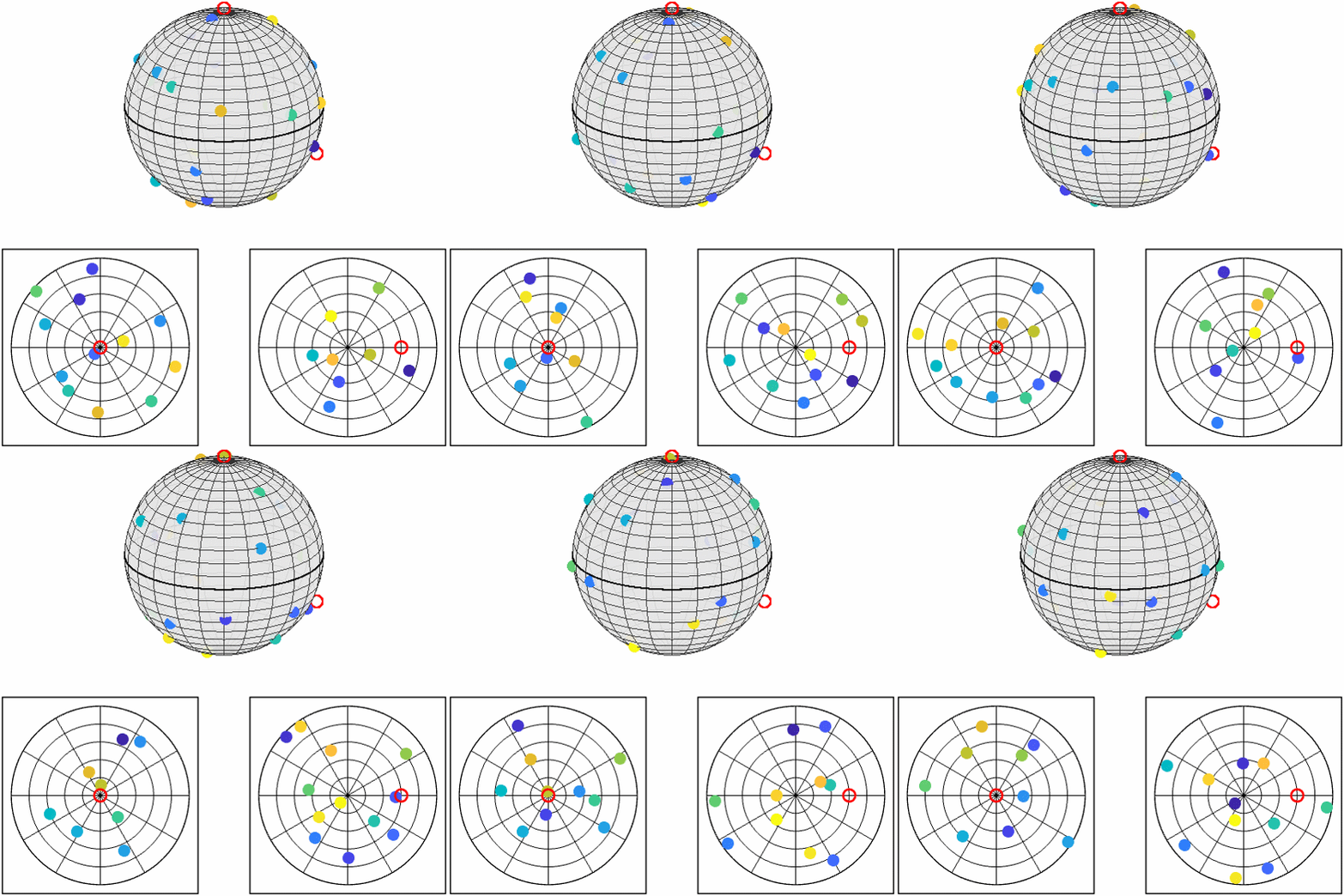
A Moore–Read state of 20 electrons on a sphere, with two quasiholes pinned at fixed positions
A Moore–Read state of 20 electrons (solid dots) on a sphere, with two quasiholes pinned at fixed positions (red open circles). The lower panel presents a double stereographic projection, showing the electrons in the northern and southern hemispheres, respectively. (Courtesy: Ting-Tung Wang/University of Hong Kong)

To study these systems, physicists must compute measurable properties from complicated wave functions, which is computationally challenging, especially for large systems. The traditional method, Metropolis Monte Carlo, is slow and struggles with large numbers of electrons, limiting system size, accuracy, and the ability to test advanced theories.

In this work, the researchers developed a new simulation method, Hybrid Monte Carlo (HMC), for FQH wave functions. It includes global updates (updating many electrons at once) and double stereographic projection to more accurately sample particle positions, making it much faster and more efficient than the Metropolis method.

Using this improved method, they accurately computed edge properties that reveal the system’s topology, as well as high-quality braiding matrices of non-Abelian quasiholes, which are crucial because such braiding underpins topological quantum computing. Overall, this work enables fast, large-scale simulations, allowing more accurate study of exotic quantum states and their anyon behaviour, advancing both fundamental physics and topological quantum computing.

Read the full article

Hybrid Monte Carlo for fractional quantum Hall states

Ting-Tung Wang et al 2026 Rep. Prog. Phys. 89 068001

Do you want to learn more about this topic?

A review of the quantum Hall effects in MgZnO/ZnO heterostructures by Joseph Falson and Masashi Kawasaki (2018)

The post Advanced simulations of exotic quantum matter appeared first on Physics World.

Controlling glycine polymorphs through nanoconfinement

8 July 2026 at 08:30

Molecules such as glycine, the simplest amino acid, can crystallise into different polymorphs with the same chemical composition but different structures. The two phases of glycine are α-glycine, which forms easily and is stable in bulk conditions, and β-glycine, which is difficult to produce and unstable in the bulk. However, β-glycine is piezoelectric; it generates electricity when compressed or bent and is therefore technologically useful.

In this work, the researchers developed a new method to produce glycine crystals. Using an electric field, they sprayed a glycine solution to create nanoscale droplets in which crystals form. By controlling the spraying conditions, they confined crystal growth at the nanoscale, thereby controlling how the crystals form. Crystals below 120 nm in size were pure β-glycine, above 130 nm were mostly α-glycine, and sizes between 120-130 nm produced a mixture of both polymorphs. This shows that crystal size (nanoconfinement) is the key parameter controlling which polymorph forms, and β-glycine is stable between 5 and 120 nm.

The crystals form in two steps. Firstly, nanoclusters form, then these clusters rearrange into crystals. β-glycine forms first because it has a lower interfacial energy, making it easier to create surfaces, and a lower nucleation barrier, so it forms faster. Overall, β-glycine is kinetically favourable. However, α-glycine has a lower bulk free energy and better packing. As crystals grow larger, they can rearrange into α-glycine, which is thermodynamically more stable. Under nanoconfinement, molecular rearrangement is restricted, preventing the formation of the more ordered α-phase and stabilising β-glycine.
This research is important because it shows how to precisely control which crystal form a material takes using nanoscale confinement, rather than relying on trial and error methods. It also provides a general strategy for stabilising metastable but functional materials, with potential applications in sensors, energy harvesting, and advanced functional materials.

Read the full article

Electric-field-driven nanoconfinement and the 5–120 nm stability regime of piezoelectric β-glycine

Kexin Zhang and Zhengbao Yang 2026 Rep. Prog. Phys. 89 058001

Do you want to learn more about this topic?

Physical properties and atomic arrangements in crystals by W A Wooster (1953)

The post Controlling glycine polymorphs through nanoconfinement appeared first on Physics World.

Can surplus renewable power make green hydrogen cheaper?

1 July 2026 at 08:50

Electricity grids need to be carefully balanced, with too low levels of electricity leading to blackouts and too high levels causing damage to grids. Due to the intermittent nature of renewable energy sources such as solar and wind, it is possible for specific regions (e.g. the north of Germany) to have an excess of electricity, while the power lines do not have enough capacity to transport it to higher demand regions such as cities and industrial areas. This is known as a grid bottleneck. To keep the grid running properly, operators redispatch electricity by reducing renewable feed-in in oversupplied areas and increasing generation elsewhere. However, this leads to renewable energy being wasted, and because producers are still compensated and generation increase on demand is costly, it is financially inefficient.

In 2024, Germany created regional redispatch markets so that renewable electricity that would otherwise be curtailed can instead be sold locally. This is particularly useful for hydrogen producers because they do not require a continuous supply of electricity. Because they can operate flexibly, turning on and off depending on electricity availability, they can take advantage of very low-priced electricity. In this work, the researchers ask whether using this electricity source makes producing green hydrogen cheaper and how market prices for otherwise curtailed renewable electricity affect this.

They found that using only redispatch electricity is not cost-effective because of its unreliability. However, combining it with different renewable energy sources does reduce costs. Depending on hydrogen storage costs, using redispatch electricity can reduce hydrogen production costs by €0.9 – €1.96 per kg, if the redispatch electricity is available for 0 €/MWh, compared to typical costs of around €6-8 per kg without redispatch electricity.

Increased redispatch prices reduce the potential for production cost reductions, which, combined with the unreliability of redispatch availability, lowers the incentive for
system beneficial electrolyser siting within the regional market areas. Therefore, the success of these markets depends heavily on keeping prices low, which might necessitate effective price capping but could increase green hydrogen competitiveness and simultaneously decrease renewable energy curtailment.

Read the full article

Negative redispatch power for green hydrogen production: game changer or lame duck? A German perspective

J Brandt et al 2026 Prog. Energy 8 025006

Do you want to learn more about this topic?

Metrics for assessing the economic impacts of power sector climate and clean electricity policies John Bistline (2021)

The post Can surplus renewable power make green hydrogen cheaper? appeared first on Physics World.

Observation of top-antitop quark excess

1 July 2026 at 08:46

Top quarks are the heaviest known elementary particles. They are produced in pairs with their antiparticle equivalent, the antitop quark. Researchers at the Large Hadron Collider (LHC) smash protons together at extremely high energies in the hope of producing these top-quark pairs. The minimum energy required to create a pair is known as the production threshold (approximately twice the top mass). Near this threshold, the particles move relatively slowly and, because of the strong nuclear force, they may briefly interact strongly enough to form a quasi-bound state before each top quark decays individually.

In this work, researchers used a huge dataset collected with the ATLAS detector at the LHC. Top quark pairs decay far too quickly to be observed directly, so the ATLAS team instead studied their decay products. A top quark usually decays into a W boson and a b-quark, while the antitop quark decays into the corresponding antiparticles. The W bosons then decay further, either through leptonic decay (producing an electron, muon or tau plus a neutrino) or through hadronic decay, which produces jets of particles.

The ATLAS analysis focuses on the case where both W bosons decay leptonically into electrons and muons and reconstructs the invariant mass of the system using the energy and momentum of the decay products.

If non-relativistic QCD effects are included, the event rate near threshold is expected to be higher than that predicted by standard perturbative QCD alone, due to contributions such as the formation of quasi-bound states that are not accounted for in the perturbative framework. The analysis also employs spin-correlation observables to enhance the sensitivity to the unique spin structure of the phenomena. If non-relativitic QCD effects occur near the production threshold, including the formation of quasi-bound states, physicists expect to see an excess of events concentrated at masses close to the minimum energy needed to produce the pair.

The researchers observed significantly more events near the production threshold (∼345 GeV) than standard QCD calculations predicted, confirming a previous similar measurement by the CMS collaboration. The excess matches predictions from non-relativistic QCD that the top and antitop quarks briefly perform non-relativistic QCD interaction, including the formation of quasi-bound states, before separating and decaying. This is important because it provides strong evidence for a subtle quantum effect of the strong force and improves our understanding of top-quark behaviour in an extreme regime. This measurement underscores the capacity of LHC experiments at the precision frontier, reinforcing the vital interplay between theory and experiment in these precision studies.

“This is a very exciting finding that pushes our current understanding of top quark physics and its modelling to the extreme. It has only been made possible by recent efforts to connect quantum information theory and collider physics.” – Yoav Afik, an ATLAS physicist affiliated with the Enrico Fermi Institute at the University of Chicago

“With the newly collected Run 3 dataset, which is more than twice as large as the Run 2 dataset used in this first analysis, we will be able to scrutinize this excess in much greater detail and determine whether it can be described solely by non-relativistic QCD effects, or whether there is something more to it.” – Baptiste Ravina, a Senior Research Fellow at CERN

Do you want to learn more about this topic?

Towards the identification of new physics through quark flavour violating processes by Andrzej J Buras and Jennifer Girrbach (2014)

The post Observation of top-antitop quark excess appeared first on Physics World.

Water use in green hydrogen production

23 June 2026 at 10:09

Proton Exchange Membrane Water Electrolysis is a method to split water into its components, hydrogen (H₂) and oxygen (O₂), using electricity typically sourced from renewables. It is one method for producing so-called green hydrogen. Key benefits are that it can easily start and stop, fitting well with fluctuating renewable energy sources; it produces high purity hydrogen suitable for fuel cells and industrial use; and it has a smaller carbon footprint than some alternatives.

This work explores how much water is used in Proton Exchange Membrane Water Electrolysis, which is significant in regions with low water availability, where hydrogen plants could stress supplies. The researchers looked at all lifecycle stages: manufacturing (building the electrolyser and producing materials), operation (water splitting, cooling, and purification), and end-of-life (disposal or recycling).

Electric Hydrogen’s 100MW PEM electrolyser plant utilizing dry cooling at Infinium’s Project Roadrunner e-SAF facility in Pecos, Texas (USA).
Electric Hydrogen’s 100MW PEM electrolyser plant utilizing dry cooling at Infinium’s Project Roadrunner e-SAF facility in Pecos, Texas (USA). The project reached financial investment decision in May, 2025 and is planned for 2027 commercial operation. (Courtesy: Parikhit Sinha/Electric Hydrogen Co.)

Their main conclusion was that most water use occurs during the operational phase, where the greatest opportunity to save water lies. Dry cooling uses much less water than wet cooling, reducing consumption by about a factor of three. In a best-case scenario with dry cooling, about 13 litres of water per kg H₂ is used, of which around 3.5 litres is lost in water treatment. This loss can be reduced by about 50% using a brine recovery system, depending on location and infrastructure.

Proton Exchange Membrane Water Electrolysis has a similar lifecycle water use to fossil hydrogen production, therefore switching to green hydrogen does not significantly increase water demand. Although hydrogen plants use comparable water to agriculture (e.g. corn farming), they generate much higher economic value per unit of water (~700×), making them an efficient use of water.

This research is significant because it shows that while green hydrogen can reduce carbon emissions, its water use must be carefully managed to ensure it is sustainable at scale.

Read the full article

Addressing water usage challenges for electrolyzer operations in arid areas

Parikhit Sinha et al 2026 Prog. Energy 8 025005

Do you want to learn more about this topic?

Research and development of hydrogen carrier based solutions for hydrogen compression and storage Martin Dornheim et al. (2022)

The post Water use in green hydrogen production appeared first on Physics World.

Strain relaxation in van der Waals heterostructures

23 June 2026 at 10:06

In 2‑dimensional physics, atomically thin materials (e.g. MoS₂, WS₂, WSe₂) are useful for next‑generation electronics such as flexible devices. Using these materials, scientists can create van der Waals heterostructures, where different 2D materials are stacked in layers and held together by weak intermolecular forces called van der Waals forces. Heterostructures combine different materials to optimise their properties. Unlike single crystals, van der Waals heterostructures are more flexible and less prone to defects. They can also tolerate lattice mismatch, where atoms between layers do not perfectly line up, although this must be controlled to avoid building up strain.

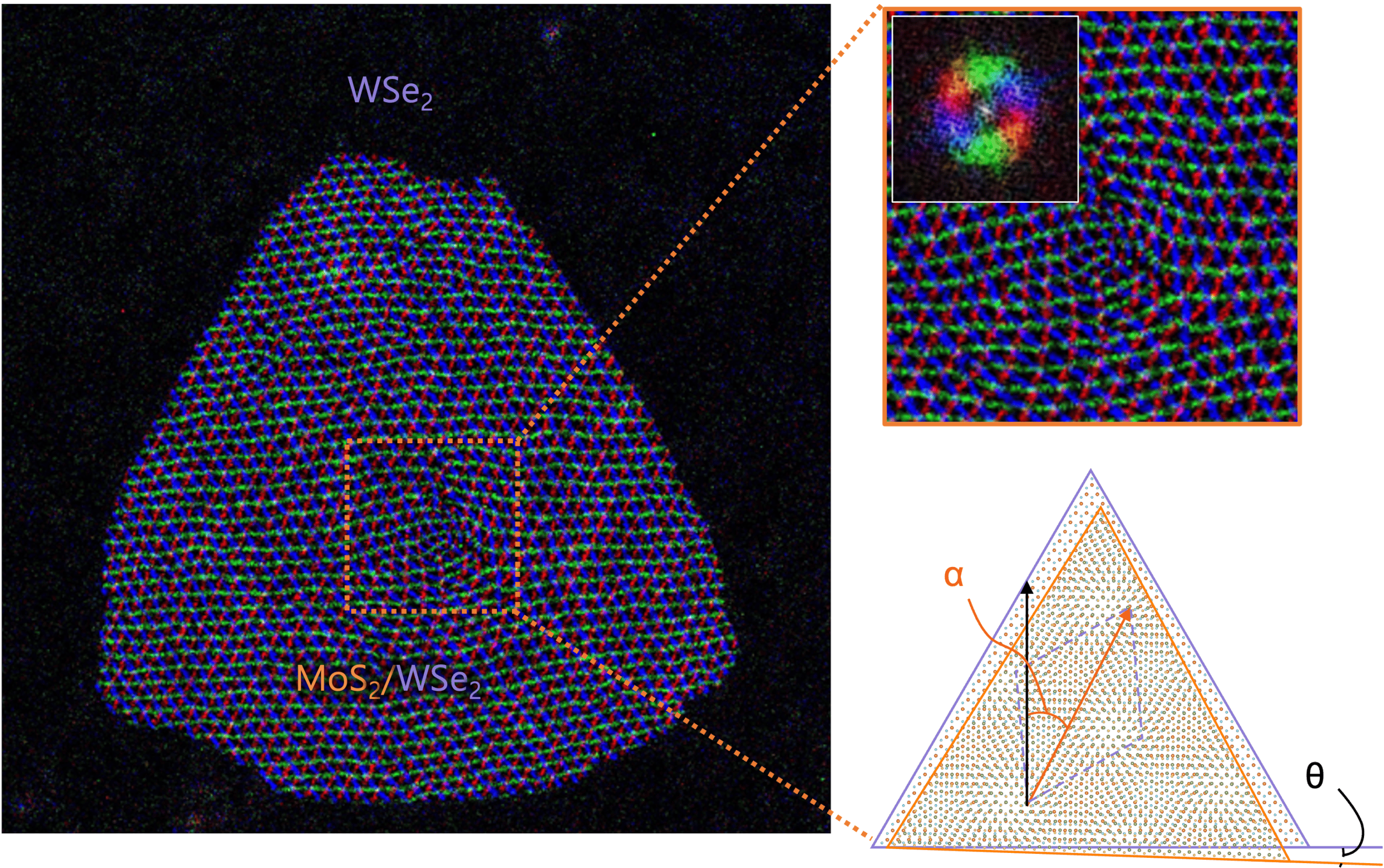
In this work, the researchers studied two systems: MoS₂ on WS₂, where the lattice spacing matches closely, and MoS₂ on WSe₂, where there is a larger mismatch. When the layers fit well together (MoS₂/WS₂), the top layer slightly compresses and the structure remains well aligned. However, when the layers do not fit well (MoS₂/WSe₂), moiré patterns appear, which are large-scale patterns caused by mismatched lattices, and these patterns become bent and irregular. The researchers found that instead of forming defects, the material relieves strain through local rotations and distortions of the lattice.

Image showing local rotations between atomically thin MoS₂ on WSe₂ layers
Image showing local rotations between atomically thin MoS₂ on WSe₂ layers (Courtesy: Jinwoo Kim/Seoul National University)

Previous studies had not clearly explained how strain is relieved at the atomic scale, whether it leads to defect formation or alternative mechanisms, or how these distortions vary across nanoscale regions. This research helps scientists better understand and control the behaviour of stacked 2D materials, which is important for designing future ultra-thin electronics, quantum devices, and optoelectronic technologies.

Do you want to learn more about this topic?

Tuning and exploiting interlayer coupling in two-dimensional van der Waals heterostructures by Chenyin Jiao et al. (2023)

The post Strain relaxation in van der Waals heterostructures appeared first on Physics World.

Defects as topological sensors

23 June 2026 at 10:04

Topological features are important because they give rise to states that cannot easily be destroyed. These robust states give materials special behaviours that enable new kinds of electronics and photonics. Some topological systems can even host exotic quasiparticles such as Majorana modes, which are their own antiparticles and are promising building blocks for quantum computing.

However, existing methods for detecting topological states in materials have significant limitations. They typically probe only the surface, even though topology is a bulk property. Topological transitions can be subtle and difficult to identify, and topological signatures can be obscured by impurities or disorder. In some cases, topological features have no easily measurable experimental signature at all.

In this work, the researchers made a striking discovery: ordinary crystal defects can be used to detect topological behaviour inside a material. When a defect is placed in a material with a topological electronic structure, it produces an additional energy state inside the band gap, known as a mid‑gap mode. This effect is universal and appears for the most common types of imperfections: vacancies, Schottky defects, substitutions, and interstitials.

The defect acts as a marker for topology because a mid‑gap mode forms only when the surrounding material is topological. In a trivial material, no such state appears. This happens because the wavefunctions in a topological material have a global structure that cannot be altered locally; introducing a defect forces the system to compensate by creating a mid‑gap state.

This topological probe is not symmetry‑dependent and works in any spatial dimension, making it relevant to 2D materials, 3D crystals, superconductors, photonic and acoustic lattices, and even non‑Hermitian systems. The researchers confirmed this experimentally by building acoustic Chern lattices, where sound waves behave mathematically like electrons. By introducing controlled defects, they observed mid‑gap states exactly where the theory predicted.

This work shows that ordinary crystal defects can serve as reliable, built‑in indicators of a material’s hidden topological character, offering a simple and universal way to detect topology directly within the bulk.

Read the full article

Ordinary lattice defects as probes of topology

Aiden J Mains et al 2026 Rep. Prog. Phys. 89 048002

Do you want to learn more about this topic?

Topological order, emergent gauge fields, and Fermi surface reconstruction by Subir Sachdev (2018)

The post Defects as topological sensors appeared first on Physics World.

Material limits of Spain’s energy transition

17 June 2026 at 09:06

Spain’s transition to a low‑carbon economy requires expanding renewable technologies such as wind, solar, and electric vehicles. These technologies depend on specific materials, and demand for materials, such as cobalt, lithium, and nickel, already represents a significant share of Spain’s total use.

The researchers analysed how much materials Spain would need up to 2050 under different decarbonisation pathways. They enhanced the MEDEAS‑Spain model by adding sector‑specific material intensities, improving the tracking of material stocks and flows, and expanding coverage to more than forty materials, a comprehensive assessment of the material requirements of decarbonisation.

They evaluated three scenarios: Spain’s official energy and climate plan (PNIEC‑LTDS), a scenario where economic demand stops growing after 2025 (CappedEcon), and a Sufficiency scenario where consumption is reduced in a sectorally explicit manner  to levels consistent with decent living standards.

While low-carbon technologies require large quantities of materials, most material demand comes from wider (unrelated to decarbonisation) economic activities. As a result, and as shown in the figure below, the PNIEC-LTDS, which features a high level of economic growth, increases the material footprint by 51% between 2025 and 2050. In contrast, the Sufficiency scenario reduces the material footprint by over 50% while reducing greenhouse gas emissions by 93%.

Material footprint variation adapted from Aramendia et al. 2026

The study concludes that a rapid expansion of renewable energy is only environmentally sustainable if overall material and energy demand is reduced. Green‑growth pathways sharply increase material use, whereas sufficiency‑based post‑growth approaches enable deep decarbonisation with far lower resource pressure. Ultimately, consumption levels determine the sustainability of the transition.

Read the full article

Reducing material requirements while decarbonising the Spanish economy: from a green growth to a postgrowth paradigm

Emmanuel Aramendia et al 2026 Prog. Energy 8 025003

Do you want to learn more about this topic?

Africa’s critical minerals can power the global low-carbon transition N S Ouedraogo and J M M Kilolo (2024)

The post Material limits of Spain’s energy transition appeared first on Physics World.

Solar power from abandoned mines

10 June 2026 at 10:08

Abandoned mining areas are difficult to farm, often unsafe to build on, and expensive to restore. They also pose long‑term environmental risks due to land degradation, water contamination, and unstable ground. However, these hard‑to‑use landscapes are often large, open, and exposed to sunlight, making them promising locations for solar power generation.

In this work, the researchers developed a novel tool called SolarMiner to locate abandoned mining areas and calculate how much solar power they could produce. The tool combines satellite imagery with a computer vision model, a form of artificial intelligence, to identify and classify different types of mining sites. SolarMiner can detect mining areas, determine their type (e.g., open‑pit, subsidence zones, water‑filled pits), measure their surface area, and estimate how much solar capacity could be installed, along with the electricity output and cost.

They tested SolarMiner on a major coal‑mining region in China, Shanxi Province. Focusing only on abandoned mining areas, the model estimated that land‑based solar panels alone could generate over five times the province’s 2023 electricity consumption. Floating solar panels on water‑filled mine pits could generate even more, over six times Shanxi’s usage in the same year.

This research highlights the enormous potential of abandoned mining sites for clean‑energy generation. Using SolarMiner will help direct governments toward smarter planning of solar farms and transmission networks by identifying exactly which mining areas can be transformed into low‑cost, high‑impact renewable‑energy assets.

Read the full article

Assessing open-pit mine-site photovoltaic (PV) and floating PV potential using vision large model

Guohao Wang et al 2026 Prog. Energy 8 025002

Do you want to learn more about this topic?

A review on modelling methods, tools and service of integrated energy systems in China Nianyuan Wu et al. (2023)

The post Solar power from abandoned mines appeared first on Physics World.

Shear strain reshapes magic angle graphene

10 June 2026 at 10:05

Twisted bilayer graphene has become a key area of research in 2‑dimensional materials. Two graphene sheets are stacked and rotated slightly so their carbon atoms no longer align, creating an interference pattern called a moiré lattice. At specific magic angles (1.1°, 0.55°, 0.37°), the geometry and interlayer coupling slow the electrons dramatically, nearly reducing their velocity to zero. These slowed electrons form flat bands, where interactions become extremely strong and can give rise to exotic phases such as superconductivity and strange‑metal behaviour.

In this work, the researchers examined what happens as the twist angle varies from 0.35° to 1.30°, using scanning tunnelling microscopy (STM) to image individual atoms and local electronic states. STM measures the tunnelling current between a sharp metal tip and the sample, allowing the researchers to map the electronic structure across regions for the first, second, and third magic angles.

They found that shear strain, a sideways distortion where one graphene layer shifts relative to the other, has a far greater impact on the electronic structure than biaxial stretching or compression. Shear strain strongly controls how far apart the flat bands are, how wide they become, and how electrons distribute between them. It enhances the upper flat band while suppressing the lower one, making it a decisive structural factor rather than a minor defect. They also showed that remote bands depend only on twist angle, not strain, making them reliable markers of the local twist. Strain reshapes flat‑band energies within each moiré unit cell, and only a theoretical model combining strain and electron-electron interactions reproduces the full experimental behaviour.

This research demonstrates that shear strain, not just the twist angle, is a critical factor shaping the flat‑band structure in twisted bilayer graphene, redefining how correlated and superconducting states must be engineered.

Read the full article

Strain and twist angle driven electronic structure evolution in twisted bilayer graphene

Jiawei Yu et al 2026 Rep. Prog. Phys. 89 048001

Do you want to learn more about this topic?

Emergent phases in graphene flat bands by Saisab Bhowmik, Arindam Ghosh and U Chandni (2024)

The post Shear strain reshapes magic angle graphene appeared first on Physics World.

Flat bands go 3D

10 June 2026 at 10:03

Scientists study how waves move in many systems including sound, light, and even electrons. Normally, waves spread out and change as they travel. But sometimes they form flat bands, where the wave doesn’t spread at all. It’s like dropping a pebble into a lake and seeing no ripples. These flat bands are exciting because they make interactions stronger and can be used for ultra‑precise sensing and energy harvesting. The challenge is that in 3D materials, scientists have never been able to make bands that stay perfectly flat everywhere, they always become wiggly near the edges.

In 2D materials, however, flat bands appear naturally as Landau levels. These are fixed energy states created when a magnetic field forces electrons into tiny circular orbits. Because the electrons can’t move freely, all the states at that energy become perfectly flat. But extending this idea to 3D has been extremely difficult.

In this work, the researchers found a way around that problem by using sound waves instead of electrons. They built a special 3D structure that controls sound, and for the first time created a perfectly flat 3D Landau level across the entire material, not just in the middle. Sound waves are much easier to manipulate than electrons, which made the experiment possible.

They designed a structure called a Fock‑state lattice, which naturally produces a kind of synthetic magnetic field for sound. Unlike a normal magnetic field, this one is spherical-like, spreading evenly in all directions. This special field is what keeps the Landau levels perfectly flat everywhere in 3D.

This result settles a long‑standing debate by proving that truly flat Landau levels can exist in 3D. Even better, the same method can be applied not just to sound, but also to light, electrons, and superconducting circuits, opening the door to new technologies that rely on extremely stable, high‑quality resonances.

Read the full article

Realization of 3D all-flat bands in acoustic Fock-state lattices

Xiao Xiang et al 2026 Rep. Prog. Phys. 89 048003

Do you want to learn more about this topic?

Emergent phases in graphene flat bands by Saisab Bhowmik, Arindam Ghosh and U Chandni (2024)

The post Flat bands go 3D appeared first on Physics World.

Rethinking rectification for future energy technology

3 June 2026 at 08:16

Rectification is the process of turning alternating current (AC) signals into direct current (DC), and it underpins technologies such as wireless power transfer, photodetection, terahertz sensing, and energy harvesting. To generate a one-directional current, a material normally needs a built-in directional preference for electron motion. This preference usually arises from broken inversion symmetry, meaning that the material is not identical under spatial inversion. For example, graphene has inversion symmetry, while materials with inequivalent sublattices, intrinsic electric dipoles, surfaces, or interfaces naturally break it. When inversion symmetry is broken, electrons can respond differently to opposite directions of an applied light field, allowing oscillating optical fields to generate a DC current.

In this work, the researchers show that this rule has an important exception. Even centrosymmetric bulk materials can rectify light through third-order nonlinear optical effects. Linear optical responses scale with the applied light field. Second-order responses depend on the square of the electric field and can mix frequencies or generate harmonics, but they are usually forbidden in centrosymmetric bulk materials. Third-order responses, however, are symmetry allowed and can generate DC photocurrents even when inversion symmetry is present. These currents are controlled by the shape of the Fermi surface, disorder, and the geometry of electronic bands. This means that materials once considered unsuitable for bulk optical rectification, including common metals, doped systems, and two-dimensional materials, can be engineered to convert oscillating light into DC electrical signals.

Quantum transport and theory group at IIT Kanpur, celebrating the discovery of third-order rectification
Quantum transport and theory group at IIT Kanpur, celebrating the discovery of third-order rectification (Courtesy: Amit Agarwal/Indian Institute of Technology Kanpur)

This research expands the material platform for optical rectification. Instead of relying only on noncentrosymmetric crystals, it shows that common centrosymmetric materials can also be used for light-to-DC conversion through third-order nonlinear response. This opens a route to energy-efficient photodetectors, terahertz technologies, and future energy-harvesting devices based on materials such as graphene.

Read the full article

Third-order rectification in centrosymmetric metals

Sanjay Sarkar and Amit Agarwal 2026 Prog. Energy 8 025004

Do you want to learn more about this topic?

Balancing selectivity and permeability in nanofluidic membranes for osmotic power generation Han Qian et al. (2025)

The post Rethinking rectification for future energy technology appeared first on Physics World.

Driving matter into new states

3 June 2026 at 07:28

In condensed matter physics, driving a material with an external stimulus can push it into new nonequilibrium states that reveal hidden properties or create entirely new, potentially useful behaviours. These stimuli can include optical driving, where strong oscillating light is applied to the material, or periodic forcing, which refers to any repetitive push such as acoustic waves, modulated electric fields, or oscillating magnetic fields. 

In this work, the researchers wanted to understand how shining bright, oscillating light on a material can make it behave in unexpected ways, sometimes even resembling a superconductor. They used a theoretical model to study what happens when the system is periodically driven, allowed to exchange energy with a heat bath, and coupled to electromagnetic fields. When the drive is strong enough, the system can spontaneously organise into different kinds of ordered states: uniform order, spatially patterned order, or time oscillating order. 

Ordered phases can repel magnetic fields in the same way a superconductor does, through the Meissner effect, where the electromagnetic field behaves as if the photon has gained an effective mass and therefore cannot propagate inside the material. In some driven phases, however, not all of the magnetic field is expelled: part of it enters the material but only as a standing wave, forming a hybrid light-matter excitation known as a Meissner polariton. Additionally, strong fluctuations near the onset of ordering can make the material’s optical conductivity appear superconducting, causing experiments to detect superconducting like signals even when no true superconducting phase is present, helping explain why light‑driven systems sometimes show ambiguous signs of superconductivity. 

Overall, the researchers developed a unified theoretical picture showing how periodic driving can create or mimic superconducting behaviour, including predicting a new hybrid light-matter mode (the Meissner polariton), offering insight into puzzling experimental results in light driven materials.

Read the full article

Steady-states and response functions of the periodically driven O(N) scalar field theory

Oriana K Diessel et al 2026 Rep. Prog. Phys. 89 038001

Do you want to learn more about this topic?

Laser-induced magnetization dynamics and reversal in ferrimagnetic alloys by Andrei Kirilyuk, Alexey V Kimel and Theo Rasing (2013)

The post Driving matter into new states appeared first on Physics World.

Inside the technologies powering tomorrow’s grids

1 June 2026 at 11:17

High‑voltage transmission systems are a key part of power grids, transporting electricity from where it is generated to where it is used. Electricity is moved at high voltage and low current to reduce losses and improve efficiency. These systems are essential for grid stability, integrating renewable energy, and enabling long‑distance power transfer. There are two main high‑voltage direct current (HVDC) technologies: line‑commutated converters (LCC) and voltage‑source converters (VSC). LCCs are an older technology that use high‑power semiconductor switches called thyristors and are suited to very large power transfers. VSCs are a newer technology that use insulated‑gate bipolar transistors (IGBTs), allowing faster control of power flow, better stability, and more compact converter stations.

In this study, the researchers interviewed thirteen leading experts to understand which HVDC technology is likely to dominate in the future, how semiconductor devices may evolve, and what cost or supply issues might arise. The experts agreed that thyristors used in LCCs are a mature technology with limited room for improvement, and that demand for LCC systems is declining in North America and Europe, though they will remain important in regions requiring very high‑capacity transmission such as China and India. In contrast, IGBTs used in VSC systems are expected to continue improving, particularly in reliability, packaging, and voltage capability, reflecting the growing use of VSCs in Europe and North America. Some experts even suggested that VSC converter stations may now be comparable in cost to, or cheaper than, LCC stations, and that further improvements in IGBT cost and performance could reduce VSC system costs further.

There was debate about whether silicon‑carbide (SiC) MOSFETs could eventually replace IGBTs in VSC systems. While SiC devices offer advantages in high‑frequency applications, they currently cannot handle the very high currents required for HVDC, and challenges remain in packaging and long‑term reliability. Experts also noted that although global demand for power electronics is rising, this is unlikely to constrain HVDC development; instead, shortages of other components, particularly high‑voltage transformers, may pose greater risks. Overall, this research clarifies which power‑electronic technologies are poised to shape the next generation of HVDC systems and highlights why future grids are expected to rely increasingly on VSC converters and advanced semiconductor devices.

Read the full article

Expert views of power electronics in the future high voltage power system

Spyridon Pavlidis et al 2026 Prog. Energy 8 015003

Do you want to learn more about this topic?

Application of reinforcement learning in planning and operation of new power system towards carbon peaking and neutrality Fangyuan Sun et al. (2023)

The post Inside the technologies powering tomorrow’s grids appeared first on Physics World.

How to model a net‑zero system across timescales

27 May 2026 at 08:51

A successful clean‑energy transition depends on understanding how to balance variable renewable power with the growing electricity demands of transport, heating, and industry. A key challenge is capturing how renewable energy sources like wind and solar fluctuate hour by hour, but this variability also creates new opportunities to align supply with increasingly flexible forms of demand, such as electric vehicles, heat pumps, and other electrified services. Alongside these short‑term dynamics, it is equally important to determine the long‑term infrastructure needed to support a fully decarbonised energy system.

In this research, two powerful models (REMIND and PyPSA‑Eur) are linked and allowed to exchange information repeatedly to determine both what infrastructure should be built and how it would operate each hour of the year. REMIND is a global energy and climate model that looks decades ahead, analysing investments, technology choices, and pathways to net‑zero. PyPSA‑Eur is a detailed model of the European electricity system that simulates real‑time grid behaviour. By combining a model that excels at long‑term planning with one that captures hourly power system dynamics, the researchers create a much more realistic tool for answering these complex questions. 

They then test this approach on a Germany case study under two conditions: one with demand‑side flexibility (where electricity use can shift to cheaper hours, such as smart‑charging electric vehicles) and one without flexibility. Their findings show that a fully renewable energy system is technically and economically achievable, that flexible systems perform far better than inflexible ones, and that even with flexibility, electricity prices can vary significantly between sectors, creating political challenges around fair pricing. Both scenarios of the German case study reach net-zero emissions by 2045.

This research gives policymakers a clearer way to design reliable, affordable, fully renewable energy systems by showing how to integrate renewables, manage electrification, use flexibility to reduce costs, understand sectoral price differences, and build markets. 

“Models used to inform climate policy have always faced a fundamental trade-off: they either capture the long-term perspective needed for investment decisions, or the hourly detail needed for power system planning, but not both. Our coupling of REMIND and PyPSA-Eur is a first step towards resolving this trade-off for an increasingly electric future energy system.” – Dr Adrian Odenweller, Potsdam Institute for Climate Impact Research

Read the full article

REMIND-PyPSA-Eur: integrating power system flexibility into sector-coupled energy transition pathways

Adrian Odenweller et al 2026 Prog. Energy 8 025001

Do you want to learn more about this topic?

The role of grid-forming inverters in enabling high penetration of renewable energy in power systems: standards, ancillary services, current deployment, and future perspectives Ali Q Al-Shetwi et al. (2026)

The post How to model a net‑zero system across timescales appeared first on Physics World.

The hidden mechanics behind earthquakes

27 May 2026 at 08:08

Earthquakes occur when tectonic plates rub against each other, become temporarily stuck, and then suddenly release accumulated stress as they slip. Although earthquakes have been studied for decades, the microscopic mechanics that cause faults to stick, slip, and generate friction are still not fully understood. 

In this research, scientists use a granite-on-granite system to investigate these processes. Granite is common in continental crust and mechanically similar to many fault rocks, making it a strong laboratory analogue. The researchers used three complementary approaches. First, they performed controlled experiments measuring friction, wear, and surface roughness as two granite surfaces slid past each other, including tests with water, different temperatures, and different sliding speeds. Second, they ran molecular dynamics simulations of a silica (amorphous SiO₂) tip sliding on quartz (crystalline SiO₂), the dominant mineral in granite, to observe how atomic bonds break, phases transform, heat builds up, and friction emerges. Third, they applied theoretical models of contact mechanics (how surfaces actually touch through tiny asperities) and flash heating (how much local heating occurs and whether it weakens the material). 

Traditionally, earthquake models assume that friction comes from mechanical processes such as asperity interlocking (high points locking together), plowing (hard grains digging into the opposite surface), and gouge grinding (crushed particles resisting motion). However, this study shows the opposite of what those models predict: more wear leads to less friction, and less wear leads to more friction. Instead of friction coming from grains digging or grinding, it arises from tiny asperities that plastically flatten, cold‑weld together, and resist sliding because their welded atomic bonds must be broken. This represents a major shift in how fault friction is understood. 

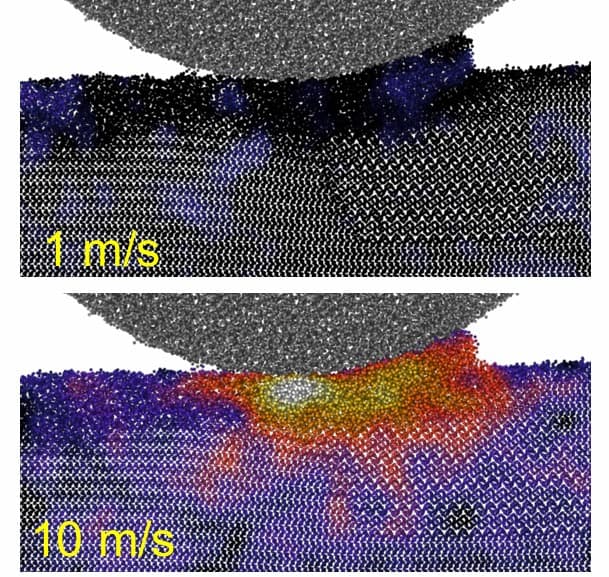
Rigid tip sliding over quartz at two velocities
Rigid tip sliding over quartz at two velocities.
Brighter colours indicate higher temperatures. (Courtesy: Bo Persson/ Chinese Academy of Sciences)

The study also finds that friction is largely insensitive to temperature, sliding speed, and hold time, suggesting that classic rate-state friction laws may not scale to real faults. The simulations identify three main energy dissipation mechanisms which are bond breaking, plastic deformation, and stress‑induced phase changes. This shows that flash heating at laboratory speeds is too small to weaken quartz, whereas earthquake level slip speeds would generate much stronger thermal weakening. They also reveal that certain quartz polymorphs can form purely from stress, meaning their presence in natural faults does not necessarily indicate high temperatures. 

Taken together, these results suggest that fault friction is dominated by adhesive bonding at asperities rather than mechanical grinding, and that tectonic motion may be governed more by creep‑slip than classic stick‑slip behaviour. 

Read the full article

Granite sliding on granite: friction, wear rates, surface topography, and the scale-dependence of rate–state effects

Sergey V Sukhomlinov et al 2026 Rep. Prog. Phys. 89 038301

Do you want to learn more about this topic?

The physics of earthquakes by Hiroo Kanamori and Emily E Brodsky (2004)

The post The hidden mechanics behind earthquakes appeared first on Physics World.

❌