An annual convention in the California desert offered a safe space for believers to discuss extraterrestrial encounters, crop circles and other paranormal phenomena.
By controlling a type of polarized light widely used in quantum optics, researchers have transformed subtle optical patterns in our peripheral vision into vibrant, easily perceptible shapes. Led by Dusan Sarenac at the University of Waterloo, Canada, the team showed for the first time that the “Boehm’s brushes” perceived by participants can be altered by adjusting the topology of spin-orbit coupled light. Their results, reported in Proceedings of the National Academy of Sciences, could lead to promising new techniques for checking our eye health.
For the most part, human eyes are incapable of detecting polarization in visible light. But in some rare cases, structures inside the eye itself can scatter light in different ways depending on its polarization, creating subtle yet perceivable “entoptic” patterns. Perhaps the best-known examples of these are “Haidinger’s brushes”: hourglass-shaped patterns that can form in our central vision, but only when viewing linearly polarized light at blue wavelengths.
In 1940, Swiss biophysicist Gundo Boehm discovered another example: a two-lobed, bowtie-shaped entoptic pattern that forms when viewing linearly polarized light in the peripheral vision as it scatters from subcellular structures in the inner retina. Unlike Haidinger’s brushes, this lesser-known effect is driven by angular variations in scattering strength relative to the polarization direction.
But as Sarenac explains, these ethereal shapes are more than just a curiosity. “Because retinal disease may alter a person’s ability to perceive the pattern, researchers have long considered whether Boehm’s brushes could serve as a biomarker of retinal health,” he says. “However, their weak visibility has limited practical use.”
Whereas previous studies simply asked participants to passively observe the effect, Sarenac’s team considered what would happen if the light’s polarization was constantly varied. To explore this possibility, the researchers created a beam of spin-orbit coupled light, in which polarization is linked to the light’s orbital angular momentum – a property describing how the wavefront twists as the beam travels – so that the polarization direction rotates steadily across the beam.
In quantum optics, these structured waveforms are already being widely explored for their possibilities in imaging, communication and information processing. But for the first time, Sarenac’s team considered how our eyes could actually perceive this light. “We engineered the spatial polarization of the light to match the symmetry of the retinal scattering response,” Sarenac describes. “This allowed many weak local contributions to reinforce one another.”
The researchers then projected this structured light through a ring-shaped aperture, targeting specific regions in the periphery of participants’ retinas, which could also be adjusted to target varying distances from the centre of vision. Using an automated test, they measured how much contrast participants needed to reliably distinguish a Boehm’s brush from the background at these varying distances.
Based on the subject’s responses, Sarenac’s team determined that the use of spin-orbit coupled light not only made Boehm’s brushes appear far more vivid to the participants, it also transformed the bowtie shape into a multi-lobed pattern, with the number of lobes varying depending on the topology of the light’s twisting polarization.
“Across 11 participants, detection thresholds improved exponentially away from the centre of vision, and the pattern became robustly visible at approximately one degree of retinal angular distance,” Sarenac describes. These results reveal a fascinating link between human vision and quantum mechanics, which the team hope could be harnessed in practical healthcare. With further studies involving patients with retinal disease, they now envisage eye tests where retinal conditions could be diagnosed in people who can’t clearly perceive vibrant, multi-lobed Boehm’s brushes in their peripheral vision.
“In the longer term, these patterns may provide a non-invasive functional probe of retinal integrity because their shape and visibility can be measured across different retinal locations,” Sarenac says.
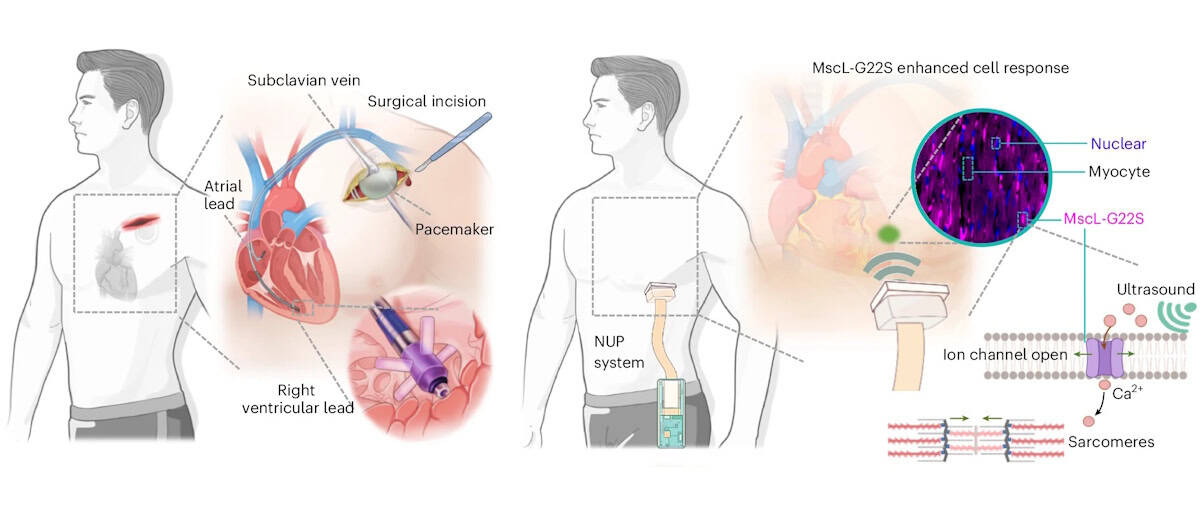
Traditional versus sonogenetic pacing Left: schematic illustration of the steps for traditional surgical implantation of a cardiac pacemaker. Right: operational workflow of the non-invasive ultrasound pacemaker with sonogenetics. Created in BioRender. (Courtesy: C Gong et al. Nat. Biomed. Eng. 10.1038/s41551-026-01673-z 2026, Springer Nature)
Cardiac arrhythmia – a disorder in which the heart beats too fast, too slowly or irregularly – affects millions of people worldwide. Currently, arrhythmias are treated using pacemakers to regulate the heart’s rhythm, but traditional pacemakers require invasive surgical implantation and intracardiac leads that risk infection and tissue injury. As an alternative, a research collaboration headed up at Massachusetts Institute of Technology (MIT) and the University of Southern California (USC) has developed a non-invasive pacemaker that’s worn like a sticker on the chest and stimulates the heart using ultrasound.
“Ultrasound offers a unique combination of deep tissue penetration, spatial focusing and non-invasive delivery,” explains first author Chen Gong from USC. Previous approaches for ultrasound-based cardiac pacing, however, lacked reliability or required the use of microbubbles. In this new study, Gong and collaborators employed a technique called sonogenetics, in which cardiac cells are genetically altered to increase their sensitivity to ultrasound. Once exposed to ultrasound waves, the engineered cells trigger the opening of ion channels that let in calcium, which signals the cells to squeeze and beat.
“Our central motivation was to address the limitations of conventional pacemakers, while preserving precise control of cardiac rhythm,” says Gong.
The team first examined whether ultrasound could modulate cardiac cells in vitro, using sonogenetically engineered human heart muscle cells. Ultrasound stimulation caused almost three-quarters of the engineered cells to beat in synchrony with the ultrasound waves. In contrast, unaltered cells did not exhibit such behaviour. Importantly, ultrasound exposure did not impact the cells’ expression of biomarkers for inflammation, myocardial injury or oxidative stress, demonstrating the safety of this approach.
The non-invasive ultrasound pacemaker
The researchers designed a sonogenetics-based non-invasive ultrasound pacemaker (NUP) capable of real-time imaging and steerable stimulation, describing the device in Nature Biomedical Engineering. The postage stamp-sized device, which sticks to the skin via a bioadhesive interface, incorporates a 64-channel phased-array transducer, as well as data acquisition, wireless transmission and power modules.
To assess whether this prototype NUP could achieve non-invasive cardiac pacing in sonogenetically engineered rats, they attached the device onto the rats’ chests and applied ultrasound stimulation through the chest wall to the heart.
At an acoustic pressure of 2 MPa and a 40 ms pulse duration, the NUP increased the rats’ heart rates from 240 to 360–540 bpm, with a higher pulse repetition frequency leading to increased heart rate. Upon stopping the ultrasound stimulation, the heart returned to its natural rhythm. In control rats without the genetic modification, NUP could not control the heart rate effectively.
The team demonstrated that the NUP could electrically steer the ultrasound beam focus with a spatial precision of less than 1 mm, enabling targeting of different regions of the heart to induce chamber-specific pacing. NUP also successfully treated cardiac arrhythmias induced in the engineered rats, returning their heart rates to normal levels. In contrast, ultrasound stimulation of control rats did not effectively treat their arrythmias.
“A major objective of this work was to move beyond proof-of-concept stimulation and demonstrate a wearable system that could realistically support daily use,” explains Qifa Zhou, group leader at USC. “The current prototype integrates imaging, stimulation, wireless communication and battery-powered operation into a wearable format.”
Clinical potential
For future clinical use, the NUP device needs to automatically detect the wearer’s heart rate, locate heart chambers and deliver stimuli. To achieve this, the researchers used a cloud-based, artificial intelligence (AI)-powered imaging feedback loop that determines the heart rate and stimulation coordinates, and steers the ultrasound beam to target sites.
To test its feasibility for human-scale applications, they assessed the acoustic energy penetration of the device. Using simulations and experiments on a pig heart beneath layers of tissue, they confirmed that, even after tissue attenuation, NUP could deliver sufficient ultrasound pressure (approximately 2 MPa) to a human heart to enable stimulation at clinically relevant pacemaker sites.
The team also assessed the biosafety of the NUP approach, finding that the delivered ultrasound energy remained below approved safety limits and generated minimal thermal effects during and after stimulation. They also confirmed that the sonogenetic engineering induced no off-target effects, immune responses or pathological changes in the rats.
“In the long term, we are optimistic about applying sonogenetics in humans,” explains co-author Gengxi Lu from MIT. “Sonogenetics is different from gene editing – it does not aim to rewrite a patient’s DNA sequence, but instead enables target cells to temporarily or controllably express ultrasound-responsive proteins. At the same time, extensive clinical validation will still be needed to establish safety and long-term effectiveness.”
The team is now focusing on clinical translation and validation of the NUP technology, which includes improving gene delivery strategies, validating the system in larger animal models, and developing closed-loop control approaches that combine real-time physiological sensing with adaptive stimulation. There’s also much engineering work to be done, such as device miniaturization, and improving battery life, skin coupling and motion robustness.
“For cardiac pacing, we envisage that the final goal of NUP technology is to be a permanent alternative to a long-term implanted pacemaker,” Xuanhe Zhao from MIT tells Physics World. “More broadly, we are interested in expanding ultrasound-enabled bioelectronic medicine beyond cardiac pacing toward other organs and therapeutic applications where non-invasive, spatially precise modulation could have clinical impact.”
A new contact-free way of rotating delicate samples, such as biological cells, undergoing three-dimensional (3D) optical microscopy increases the image resolution and could reveal more details about microscale structures and processes.
Current optical microscopes provide extremely good image resolution in a single plane, but since depth information is often lacking, samples are routinely rotated and imaged at multiple different angles to create a 3D picture. Because rotating via mechanical microtools such as tiny grippers, needles or pipettes can damage samples, contact-free approaches such as optical tweezers, magnetic manipulation or optothermal forces are often used instead. However, these methods rely on the sample being birefringent, magnetic, light-absorbing or specially shaped.
By contrast, the laser-based technique developed by a team led by Moritz Kreysing and Fan Nan from the Institute of Biological and Chemical Systems at the Karlsruher Institut für Technologie (KIT) in Germany can rotate and spin floating microscopic objects no matter what their shape or material properties.
Their method involves focusing a 1455 nm infrared laser beam on a small region of a highly viscous liquid – initially at 25°C – in which the sample will be suspended. This gently heats that region of the liquid by a few degrees. But rather than focusing on one spot, an acousto-optic deflector steers the beam rapidly along a carefully designed two-dimensional (2D) pattern.
“Because the viscosity of the liquid changes with temperature, this moving heat pattern generates tiny fluid flows, known as thermoviscous flows. By choosing the scan geometry and timing correctly, these flows become three-dimensional and helical, like microscopic corkscrew-shaped currents,” explain Kreysing and Nan. Once a small object is floated freely in these 3D helical flows, it can be rotated, spun, transported or stabilized solely via software-defined scan patterns, with different symmetries controlling the movement of the surrounding liquid.
The KIT technique allows stacks of high-resolution images focused at different depths to be acquired along multiple different angles by re-orienting the sample, a feature that “can help overcome the anisotropic resolution of conventional 3D microscopy”, explain the researchers. Using a high-viscosity liquid to suspend the samples not only enables kinematic stop-and-go actuation, it also suppresses Brownian motion (the jiggling around of tiny particles in fluids), which otherwise decreases image resolution and makes the study of cellular transport processes tricky.
Since previous methods of laser-driving fluid flows could only create motion in one plane, the researchers found it “particularly exciting” when they first observed their laser scanning in a 2D plane generating 3D flow fields. “Another key moment was the observation of opto-hydrodynamic focusing. The particles did not just rotate; their spiral motion converged toward a stable height and position. This was significant because it meant that the optofluid could stabilize the sample, rather than requiring mechanical confinement or complex feedback control.”
As detailed in their recent Light: Science & Applications paper, the KIT team demonstrated rotation and spinning of various samples including stained biological cells, nano-printed micro-tiles and perfectly spherical beads. “We see immediate potential in advanced optical microscopy, especially multi-view imaging of suspended cells, cell clusters, organelles, microstructures or soft materials,” Kreysing and Nan tell Physics World.
Since the basic hardware components of their system will be familiar to many optics and microscopy labs, they are hoping for early adoption by specialized research groups. But to optimize the technique for biological applications, they will now investigate the use of different liquids and operating conditions “that better preserve the viability of live mammalian cells while still providing sufficient stability for precise rotation and imaging”.
The researchers suggest that future areas of application could include microfluidics, microrobotics, colloidal assembly, materials science and 3D microfabrication. As such, they also want to develop more advanced scan patterns that can generate curved, programmable or multi-axis helical flows. “This could allow more complex 3D manipulation, such as controlled orientation of irregular objects, coordinated actuation of multiple particles, or integration with microfabrication workflows,” they explain.
Obstructive sleep apnoea (OSA) is a sleep disorder in which the throat muscles relax and block the airway during sleep, causing pauses in breathing. If left untreated, OSA can lead to serious health problems. A research team led by Mingjiang Wang at the Harbin Institute of Technology, Shenzhen in China, in collaboration with Huizhou University, has now come up with a new method for detecting OSA – based on recordings of the subject snoring.
“OSA is a common yet underdiagnosed sleep disorder,” explains first author Heng Li. “The clinical standard for diagnosis is polysomnography [PSG], which is expensive, time-consuming and unsuitable for large-scale or home-based screening.”
PSG collects multiple physiological signals via various sensors that patients wear while asleep, potentially disrupting their sleep patterns. “Therefore, we aim to develop a non-contact detection method using snoring, which is a typical symptom of OSA and can be recorded contactlessly using a microphone,” says Li.
The acoustic patterns of snoring, produced by the vibrations of upper airway, contain markers that reflect airway narrowing and collapse. However, developing a reliable snoring-based detection model is challenging, as labelled snoring datasets are scarce and snoring sounds vary greatly between individuals.
In this study, published in Physiological Measurement, the research team uses a pretrained audio model called Wav2vec 2.0 to address these challenges. By transferring acoustic knowledge learned from large-scale unlabelled speech and audio data, the model removes the need for labelled snoring datasets.
Wav2vec 2.0 was originally designed for speech recognition and is computationally intensive, making it unsuitable for routine OSA monitoring. Thus the team adapted it for snoring sounds, removing layers more relevant to speech recognition while retaining acoustic features relevant to snoring pathology, aiming to lower the computational cost.
“We do not use the pretrained model directly,” Li explains. “Instead, we prune higher speech-related Transformer layers and fuse low- and mid-level representations, so that the model emphasizes snoring-related acoustic information.”
Constructing a snoring dataset
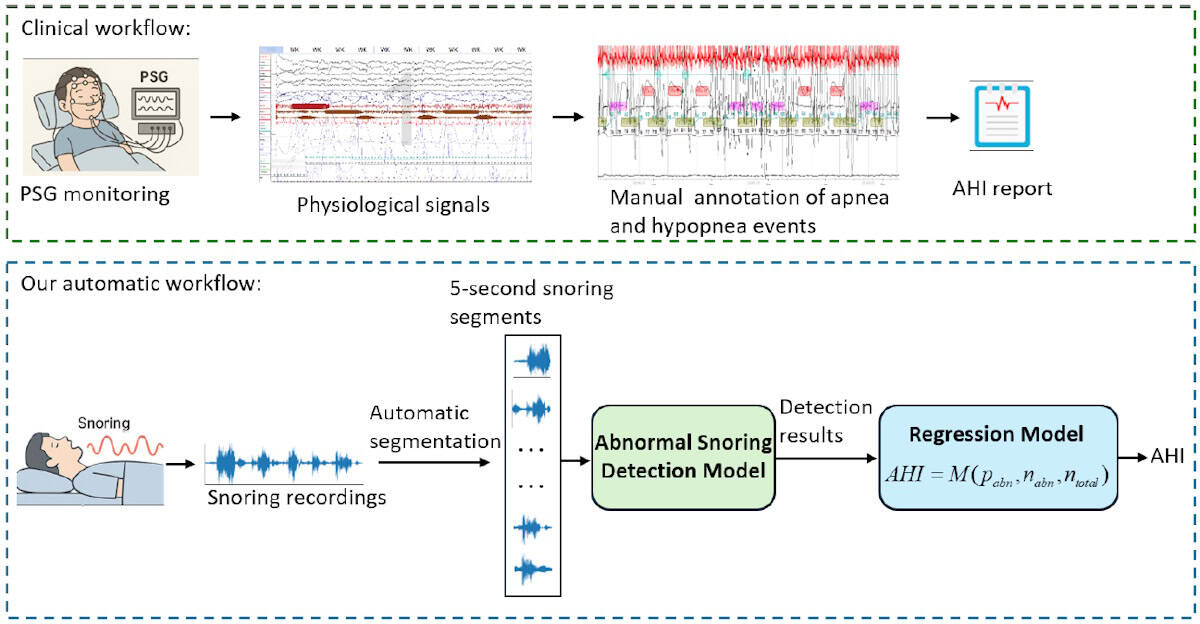
In collaboration with the Shenzhen People’s Hospital, the team collected sleep recordings from 100 individuals with apnoea-hypopnea indices (AHI) ranging from 2.4 to 68.3 events/hour. AHI – defined as the average number of apnoea (where breathing stops completely) and hypopnoea (shallow breathing) events per hour of sleep – is used to classify OSA from normal (AHI of below 5) through to severe (30 or above).
All subjects slept in hospital wards and were also monitored with a PSG device during sleeping. Sleep physicians then used the PSG data to annotate the audio recordings with apnoea and hypopnea events. Each recording was divided into 5-s audio segments and assigned as either abnormal, if they included apnoea/hypopnoea events, or normal.
Abnormal snoring detection Upper panel: the clinical workflow using PSG and physiological signals to determine AHI. Lower panel: the proposed automatic workflow, which estimates AHI directly from snoring recordings using segment-level abnormal snoring detection and regression models. (Courtesy: Physiol. Meas. 10.1088/1361-6579/ae6f6a)
To evaluate their framework’s ability to detect abnormal snoring, the researchers compared it against five other pretrained audio models. They first ran a subject-dependent evaluation, in which random audio segments from all subjects were used for training, validation and testing. All models performed well – as expected when the training and test data come from the same subjects – but the adapted Wav2vec 2.0 model achieved the highest accuracy and sensitivity.
The team then performed a subject-independent evaluation, which better reflects a real-world scenario, with each subject’s data randomly assigned to the training, validation or test set. Here, the existing methods exhibited a reduced accuracy of between 65% and 71%, while the new model retained an accuracy of 73.95%.
“In subject-independent testing, this adapted model achieved better performance than the compared baseline models, suggesting improved generalization to unseen subjects,” says Li. The team’s model was also significantly more computationally efficient, an important factor for OSA screening in home-based or resource-limited scenarios.
AHI estimation
Finally, the researchers designed a snoring-based AHI estimation framework, using their detection model to identify abnormal snoring segments and calculating a ratio-based statistic – the number of abnormal segments divided by the total number of segments – to quantify OSA severity. They then used four common linear regression models to estimate AHI for individual subjects.
All models demonstrated reasonable accuracy and good correlation between predicted and PSG-derived AHI values. The mean absolute error was roughly 11 events/h, which means that the estimated AHI may deviate from the true value by 11 events per hour of sleep and could (if near a threshold between categories) result in an incorrect severity diagnosis. However, while the current model is not yet precise enough for clinical diagnosis, it could prove ideal as a potential tool for home-based OSA screening or pre-screening.
The researchers are now investigating how to more effectively apply pretrained audio models to clinical snoring analysis. “We are focused on making these models lighter and more suitable for home-based screening, while validating their effectiveness across large, multicentre datasets,” Yun Lu, one of the corresponding authors from Huizhou University, tells Physics World. “Additionally, we plan to improve the accuracy of AHI estimation by integrating snoring-based predictions with additional non-contact physiological information.”
Interfaces between air and water are omnipresent in nature and in industrial processes, but we understand surprisingly little about what goes on there. Researchers in Germany now report that a new spectroscopy technique could reshape our understanding of the molecular structure of these aqueous interfaces and the dynamical processes at play. Their discoveries could lead to better models of atmospheric processes and improved electrochemical devices such as batteries, to name but two examples.
When air and water meet, the interface between them strongly influences the behaviour of the first four layers of water. This interfacial water, as it is known, is only 7-8 angstroms thick, and the water below it behaves like a bulk liquid. To study interface effects, researchers therefore need to probe only these four layers and characterize the way their H2O molecules are oriented.
Probing the H-O-H bending vibration
One way to do this is to observe the bending vibration of the H-O-H structure, as this parameter approximately aligns with the water molecule’s dipole. In particular, one can analyse how the anisotropic bending mode changes with the thickness of the interfacial water. This can be calculated using a factor known as the depth-dependent second-order susceptibility, 𝜒(ଶ)(𝑧).
There is a problem with this approach, however, because it requires the H-O-H bending vibration to originate from the electric dipole of H2O and to contain only an interfacial dipolar signal. This is not always the case because electric quadrupolar signals from the bulk of the sample, as well as magnetic dipolar signals, can also contribute to the spectra.
These other signals do not provide any information on the orientations of the H2O dipole. Worse, they can mask the structural information that researchers are looking for. This means they either need to be ruled out or have their contributions to the overall signal removed.
A tuneable visible upconversion
The new technique, developed by Martin Thämer and colleagues in the Nonlinear Interfacial Spectroscopy Group of the Fritz-Haber Institute der Max-Planck-Gesellschaft, involves feeding the 800-nm-wavelenght light output from a Ti:sapphire laser into two independent optical parametric amplifiers. The first amplifier produces mid-infrared light through a process called difference frequency generation (DFG) and the second produces a signal beam that is subsequently doubled in frequency to produce a tuneable visible upconversion.
Using these two beams, the researchers irradiated the surface of a water sample and excited nonlinear vibrations in the water molecules. This excitation generates two new light beams at different visible frequencies. By measuring the differences in the phase and amplitude of these beams, the team was able to isolate the vibrational response of the interfacial water layer and separate it from the bulk-water quadrupole term.
Thämer and colleagues then combined their spectra with high level molecular dynamics simulations developed by their colleagues at the Frei Universität Berlin to determine the precise orientations of the water molecules in the interfacial region.
Traditional description is insufficient
Traditionally, the structure of interfacial water is described in terms of water molecules pointing up or down (the “tilt angle”). However, based on the team’s results, Thämer says this description is insufficient. An additional orientation parameter is required, namely the “water twist angle”, or the molecule’s rotation about the axis of its dipole. “The new picture of the water structure we present is layered one with alternating twist and tilt angles that indeed extends over only four molecular water layers,” Thämer tells Physics World.
Looking ahead, the researchers, who detail their work in Science Advances, say they now plan to study other aqueous interfaces, including charged interfaces and biomolecular systems.
Researchers in Japan have succeeded in measuring the temperature inside living cells with high precision using a new class of biocompatible quantum nanosensor – something that has been difficult to do until now even. If improved, the nanosensor could be used to characterize a wide range of biological phenomena and so help in disease diagnosis, they say.
Recent years have seen the advent of a new generation of nanoscale quantum sensors that can detect the tiny magnetic fields of biological systems. Some of these sensors rely on photons and others on electrons or spin defects – typically diamond specially engineered with nitrogen–vacancy (NV) defects. This material is made by removing two carbon atoms from the diamond lattice and replacing one with a nitrogen atom. The other “hole” is left empty, thereby creating a vacancy or defect. The spin state of the defect is influenced by the local magnetic field that can be “read out” from the way it fluoresces.
While a powerful tool, and biocompatible, this type of quantum sensor does suffer from certain limits. For one, it can be structurally inhomogeneous, which affects how it detects temperature and other physical or chemical parameters inside biological cells.
A more homogenous structure
Even though the new molecular quantum nanosensor (MoQN) works in the same way as these conventional devices, it does not suffer from this problem, explain Nobuhiro Yanai of the University of Tokyo and Hitoshi Ishiwata of the National Institutes for Quantum Science and Technology (QST), who led this research effort. This is because it has a more homogenous structure and does not contain any defects. Instead, it is made by embedding molecular spin qubits, in this case fabricated from pentacene, in nanocrystals of para-terphenyl. This design makes the structure uniform on a molecular scale and preserves the quantum coherence of the spin qubits. It is then coated with Pluronic F127, which is a biocompatible surfactant.
By detecting the spin direction of the “excited triplet state” of the pentacene qubits using a technique known as optically detected magnetic resonance (OMDR), the researchers can precisely determine the temperature of the qubits’ surroundings from the OMDR peak position. When they tested their method inside the cytoplasm of cancer cells in vivo, they found that the intracellular temperature was consistently higher than the surrounding medium.
Yanai says he embarked on this study after reading about the work of Sam Bayliss’ group at the UK’s University of Glasgow, and Ashok Ajoy’s group at the University of California, Berkeley in the US on OMDR in pentacene-doped para-terphenyl crystals. He says he immediately got the idea that nanocrystals of this material could be used for quantum sensing inside cells. This was because his group had already developed such nanocrystals for a different purpose in previous research.
Ensuring biocompatibility
“I then spoke with Hitoshi Ishiwata, who is an expert in quantum sensing using NV centres,” he recalls. “While many molecular qubits have been developed to date, there had been no examples demonstrating their sensing ability within living cells.”
The project required materials science expertise, he tells Physics World, and in particular, finding out how to reduce the material to the nanoscale and ensuring it was biocompatible.
“We already knew that nanodiamonds are good quantum sensors for temperature measurements, but I had noticed a practical limitation: their ODMR spectra often vary significantly from particle to particle,” he says. “This spectral dispersion can introduce errors, especially when trying to perform precise measurements at the single-particle level.”
Replacing hydrogen with deuterium
The researchers thought they had overcome this problem during the first run of their experiments because they found that different particles showed identical OMDR spectra. However, their joy quickly waned when they observed that the spectra were still broadened by hyperfine interactions between the pentacene-doped para-terphenyl molecules’ electron spins and hydrogen nuclear spins.
To improve the spectral resolution, Ishiwata says he suggested chemically modifying the molecule by replacing the hydrogen in it with deuterium. And the technique worked: “the hyperfine broadening was strongly suppressed, allowing us to determine the OMDR spectra much more precisely.”
These findings, which are detailed in Science Advances, show that MoQNs are a chemically versatile platform for quantum sensing in living cells and that they can operate directly inside them while maintaining the precision needed for absolute thermometry, he says. Their appeal also lies in in the fact that their structures can be easily modified.
It will not all be plain sailing, however, adds Yanai. MoQNs cannot yet target specific organelles within cells, so endowing them with this targeting capability is an important future challenge. “What is more, their size has been limited to around 200 nm so far, so creating smaller MoQN particles will be crucial,” he says.
Toutes les vitamines D ne se valent pas. Une vaste analyse révèle même que l'une des deux formes pourrait faire baisser les niveaux de l'autre, celle qui protège le mieux notre immunité. De quoi interroger le choix des compléments alimentaires, très prisés à la saison sombre.
MacBook Neo helped Apple move against the global PC market in the second quarter of 2026, delivering double-digit Mac shipment growth while most leading computer manufacturers sold fewer units than a year earlier.
Preliminary data from IDC estimates that Apple shipped 6.7 million Macs during the quarter, up 10.1% from 6.1 million in Q2 2025. Its worldwide market share rose from 8.5% to 9.9%, placing the company within a fraction of the 10% threshold.
The rest of the industry moved in the opposite direction. Global shipments fell 4.9% year over year to 68.2 million units, ending nine consecutive quarters of growth. A separate Omdia estimate placed the decline at 3.6% and Apple growth at 15.9%, but both research groups identified the same pattern: the Mac gained ground while established Windows PC vendors contracted or remained flat.
IDC directly connected the Apple increase with the arrival of its lowest-priced notebook. MacBook Neo began shipping in March, giving the model its first complete quarter of retail availability between April and June.
MacBook Neo Drives Mac Shipment Growth
MacBook Neo entered the market as an alternative for buyers previously priced out of the Mac lineup.
The 13-inch notebook launched at $599 with an A18 Pro chip, 8GB of unified memory, a Liquid Retina display and up to 16 hours of video playback. It also brought macOS, Apple Intelligence and integration with the iPhone ecosystem into a price range commonly occupied by mainstream Windows laptops and Chromebooks.
That positioning attracted students, families and first-time Mac customers who did not need the performance or display technology of a MacBook Air or MacBook Pro. The four-color aluminum design also gave the entry model a more recognizable identity than the older Mac notebooks that frequently remained on sale through discounts.
IDC had already identified the computer as an unusual source of strength when it revised its notebook forecast earlier in 2026. Demand exceeded initial expectations in several markets, and reported inventory shortages appeared shortly after the March launch.
The effect became much more visible in Q2. MacBook Neo was available for the entire three-month period, allowing Apple to increase production, expand retail distribution and serve customers who could not obtain the computer during its first weeks.
The entry model also widened the Mac lineup without replacing the MacBook Air. Buyers seeking more memory, faster ports, longer wireless web use or additional external-display support could continue moving toward the M5-powered Air, while the less expensive machine handled education, office work, web browsing and communication.
That separation allowed Apple to reach lower price points without reducing the value of its premium notebooks.
Image Credit: Apple Inc.
Lenovo, HP and Dell Lose Shipments
Apple remained the fourth-largest traditional PC vendor, but its performance contrasted sharply with the companies above it.
Lenovo retained first place with 16.6 million units and 24.4% market share. Its shipments declined 2.1% from the previous year.
HP experienced the steepest drop among the top five, falling 9% to 13 million units. Dell shipped 9.3 million computers, representing a 5% decline. Asus remained nearly flat at 5 million units, up only 0.2%.
Manufacturers outside the five largest brands collectively suffered a 10.5% contraction, indicating that weaker demand and component inflation placed even more pressure on smaller companies.
The figures measure shipments into distribution channels or directly to end users, not confirmed retail purchases by individual consumers. A manufacturer can therefore record shipment growth while some inventory remains unsold in stores or warehouses.
MacBook Neo demand appears to have been strong enough to support Apple production increases rather than simply filling channels. The company reportedly doubled its annual production target after the initial response, although later quarters will reveal how much of Q2 reflected lasting demand rather than launch-period enthusiasm.
Apple also benefits from operating at a scale that provides leverage with memory, storage and semiconductor suppliers. Smaller PC brands face greater difficulty securing components at competitive prices when shortages intensify.
Memory Costs Reverse the PC Recovery
The Q2 contraction arrived after manufacturers and commercial customers accelerated purchases during late 2025 and early 2026.
Buyers expected memory and storage prices to rise, encouraging some businesses to replace computers earlier than planned. Vendors also increased inventories while components remained available.
That activity supported nine quarters of market growth but borrowed demand from later periods. Once the early purchases were completed, the industry faced a more difficult combination of expensive components, cautious consumers and elevated retail prices.
The memory shortage is closely connected to the AI infrastructure boom. Chipmakers are dedicating more production capacity to high-bandwidth memory used by data center accelerators, limiting the supply of conventional DRAM needed for personal computers.
IDC expects little relief before the end of 2027 or early 2028. The research company forecasts an 11.3% decline in worldwide PC shipments across 2026, with the fourth quarter potentially falling 20% from the previous year.
Computer revenue may not decline at the same pace. Manufacturers have raised prices faster than shipments have fallen, allowing them to collect more money from fewer units.
That strategy creates another problem. Retailers and distributors can become trapped with expensive inventory if customers refuse the new prices, forcing promotions or production reductions later.
MacBook Neo initially softened that pressure by giving Apple a new product near the bottom of the notebook market. Its original $599 price made the Mac competitive with midrange Windows machines at the moment many rivals were becoming more expensive.
Image Credit: Freepik
The Price Increase Creates the Next Test
The strongest Q2 MacBook Neo shipments were recorded while most customers could still buy the computer at its introductory price.
Apple raised the U.S. starting price to $699 in late June as memory and storage costs affected the Mac and iPad lineups. The education price remained at $599, preserving the original offer for eligible students and educators.
A $100 increase changes the comparison with discounted Windows notebooks and places the entry model closer to older MacBook Air configurations available through third-party retailers.
Apple must now determine whether the appeal came primarily from the low launch price or from the combination of macOS, battery life, design and iPhone integration.
The company remains better positioned than many rivals to absorb supply disruption, negotiate long-term component agreements and promote several notebooks at different prices. MacBook Neo also uses an iPhone-class A18 Pro processor rather than an M-series chip, providing another way to manage silicon costs and production capacity.
IDC expects the full PC market to deteriorate during the second half of 2026. Apple will enter that period with almost 10% worldwide share, but the September quarter will be the first to measure MacBook Neo demand almost entirely at the higher $699 retail price.
There are some very good and obvious reasons why a VPN should be part of your summer holiday plans.
Anyone who's ever had to rely on crawling hotel Wi-Fi speeds or faced blocks on their regular home streaming services while abroad will understand the frustration, and a VPN is a great solution for both of those.
A VPN will mask your online activities to make sure you can access whatever you like on public Wi-Fi without the network restricting your bandwidth or recording the sites and services you go to.
You can also use a VPN to supply you with an IP address of any country in the world, of course. That means that your device can appear to be connecting from back home and you won't get blocked from accessing iPlayer, Sling or any of your other regular streamers.
All good VPNs offer these things, and for a few dollars a month, it's well worth downloading one for this year's summer vacation.
If you are going to give that a try, then you should have a think about IPVanish. It's a very good VPN – not the best VPN, but a very good one – but the reason it's a good choice for your travels this time is that an IPVanish subscription currently comes with a free eSIM to use for 30 days too.
Get a 3GB eSIM with IPVanish: $2.19 per month IPVanish is only one of two recommended VPNs that come with a free eSIM. ExpressVPN is the other one. But the deal is far better with IPV's. For $2.19 per month, the Essential plan includes use of a 3GB eSIM for 30 days. With ExpressVPN, it's around twice the price, and you only get 3 days of usage. Try IPV's Advanced plan if you want to up the data to 5GB. Try out IPVanish with a 30-day money-back guarantee.View Deal
Compare that to ExpressVPN – the only other recommended VPN company that offers a free eSIM right now. First, ExpressVPN's plans are twice as expensive ($2.19 per month vs $4.49 per month) but, secondly, you only get access to your eSIM for 3 days with ExpressVPN!
Sign up to the IPVanish Essential plan ($2.19 per month) and you'll get 3GB for 30 days. If you go for the Advanced plan ($3.29 per month), then it's 5GB for 30 days.
The other good reason to try Advanced is that it comes with access to a cloud based browser called Secure Browser. This means that you'll do all your browsing and service accessing from IPVanish's cloud servers, instead of your own device, while on shared Wi-Fi networks. There's no way that any restricting network will have any idea of what you're doing and that should mean you're scot-free to access whatever you need with minimal disruptions.
You can read more about IPVanish and Secure Browser here. Have a great vacation and happy travels!
Il y a 60 000 ans, un Néandertalien s'est fait percer une dent pour soigner une carie. Découverte dans une grotte de Sibérie, cette molaire porte la plus ancienne trace d'intervention dentaire connue. Un geste précis, réalisé à l'aide d'une pierre taillée, qui bouscule encore l'image de nos...
A learner stands in a room with a bottle, a cup and a book. The task is to figure out, step by step, where each object belongs in the room. Under the table? Or perhaps on the chair? A humanoid robot gives the instructions—but in Swahili, a language the learner does not know. To solve the puzzle, the learner must gradually decipher what the robot is saying.
A learner stands in a room with a bottle, a cup and a book. The task is to figure out, step by step, where each object belongs in the room. Under the table? Or perhaps on the chair? A humanoid robot gives the instructions—but in Swahili, a language the learner does not know. To solve the puzzle, the learner must gradually decipher what the robot is saying.
I test over a dozen of the best coffee makers every year here at TechRadar, but having a small kitchen means I have to be very picky about which I choose to buy myself. The problem is, I love both drip coffee and espresso equally. I'd happily pick up a compact espresso machine and a quality drip coffee maker such as the Breville Luxe Brewer Thermal, but that would mean sacrificing valuable food prep space and, potentially, not having enough work surface available for rolling pastry and kneading dough.
Of course, a kitchen with no space in which to make pies or bread would be tragic — but, thankfully, it doesn't have to come to that because the Ninja Prestige DualBrew System can handle all my espresso and drip coffee-making needs in one convenient package.
I first tested the DualBrew System (known as the Ninja Espresso and Coffee Maker Barista System in the US) about nine months ago, and it's still the most impressive two-in-one coffee system I've ever used. It isn't a particularly glamorous appliance to have sitting on your counter — it's designed for function rather than looks — but it's enormously practical and has clearly been designed by people who know and love their coffee.
(Image credit: Future)
On the left of its roughly cuboid-shaped body, you have a fully featured drip coffee maker, with a standard-sized brew basket and toughened glass carafe. It has all the features you'd expect from a good-quality standalone brewer, including different intensity settings (regular, rich, or over ice) and a timer to start brewing when you wake.
However, there are also some great additions, such as a drip-stop system that means you can safely remove the carafe partway through brewing without making a mess, as well as a fold-down drip tray so you can brew directly into a travel cup rather than the carafe if you want your coffee to-go in the morning.
Some drip coffee makers use of a double-walled insulated carafe to keep your drink at the ideal temperature after brewing, whereas others use a hotplate. The DualBrew System is in the latter camp, but unlike any other drip coffee maker I've tested, it has a smart hotplate that doesn't just heat your coffee consistently, but instead turns on and off to help maintain the right temperature without stewing your brew. It also turns off automatically when you take the carafe away.
FutureFutureFuture
Espresso is handled on the right-hand side of the machine. The DualBrew System uses Nespresso Original-style coffee capsules, which means there's a huge array of different beans, blends, and roasts to choose from. Nestlé no longer owns the patent to this type of capsule, so any company is free to package its own freshly ground coffee in these little pods.
Personally, I like to use capsules from my local roastery, and an espresso made using these pods in the DualBrew System tastes almost identical to the same beans prepared with a manual coffee maker.
There's a choice of three drink sizes, and the espresso machine has an adjustable-height drip tray so you can use any cup you want. When you're done, the spent pod drops into a bin, ready to be emptied later.
FutureFutureFuture
The only downside of the DualBrew System is the lack of a steam wand (which makes sense, since there's no pressurized boiler here). Instead, there's an electric whisk that folds out from the rear of the machine. This doesn't heat your milk, but the DualBrew System offers a handy guide that advises how long to heat your milk for in the microwave, and how to whisk it for different espresso drinks. It's not the same as steam, but it's fine in a pinch when you don't have much space.
If that's a deal-breaker, a standalone milk frother such as the Dreo BaristaMaker or Smeg Mini Milk Frother will deliver more authentic results, and is small enough to tuck into the corner of a cabinet when it's not in use.
If you love coffee in all its forms but don't have acres of countertop space to spare, the DualBrew System provides everything you need in a single, neat package — and it's affordable, too. At the time of writing, it's available for $249.99 / £179, down from a list price of $279.99 / £249.99. You'll find all today's best deals at the bottom of this article.
Emergency SOS via satellite is now available in Andorra and Iceland, allowing supported iPhone and Apple Watch users to contact emergency services when cellular and Wi-Fi coverage are unavailable.
Apple added both countries to an updated support document, expanding the feature to 20 supported markets. Users in Andorra and Iceland can call or text 112 before choosing the satellite option when an ordinary emergency connection cannot be completed.
The expansion covers every iPhone 14 or later model running iOS 26.4 or newer. Apple Watch access requires Apple Watch Ultra 3 with watchOS 26.4 or later.
Emergency SOS does not turn the devices into conventional satellite phones. The system is designed for short emergency exchanges in locations where normal communication networks cannot be reached. Users must remain outdoors with a sufficiently clear view of the sky and follow onscreen directions while the device establishes and maintains a connection.
Emergency SOS via Satellite Reaches 20 Markets
Emergency SOS via satellite first launched in the United States and Canada in November 2022 with the iPhone 14 lineup. Apple gradually added European countries, Australia, New Zealand, Japan and Mexico as regulatory approval and emergency-service support became available.
Andorra and Iceland now join Australia, Austria, Belgium, Canada, France, Germany, Ireland, Italy, Japan, Luxembourg, Mexico, the Netherlands, New Zealand, Portugal, Spain, Switzerland, the United Kingdom and the United States.
The addition is particularly relevant for travelers and residents exploring mountainous or remote terrain.
Andorra contains extensive hiking, cycling and skiing areas across the Pyrenees, where cellular coverage can become unreliable beyond populated valleys and resorts. Iceland presents a different but equally demanding environment, with large rural areas, volcanic landscapes, glaciers and routes far from conventional infrastructure.
Satellite availability does not guarantee a connection everywhere. Mountains, deep valleys, dense tree cover and tall structures can obstruct the line between the device and a passing satellite. Apple also warns that satellite connectivity may not function in locations above 62 degrees latitude, which can affect some northern regions.
Most of Iceland lies below that threshold, although environmental conditions and the position of surrounding terrain can still influence performance.
International travelers can generally use Emergency SOS while visiting a supported country, even when the feature is not offered in their home market. Exceptions apply to devices purchased in certain countries or regions where Apple satellite connectivity is restricted.
iPhone 14 and Newer Models Gain the Expansion
Every version of iPhone 14 and later contains the hardware required for Apple satellite features. Users in Andorra and Iceland must install iOS 26.4 or a newer release before relying on Emergency SOS.
The system appears only when the iPhone cannot reach cellular service or Wi-Fi. Apple recommends trying the local emergency number first because another carrier network may still be able to complete the call even when the user own provider shows no coverage.
When the call fails, the iPhone offers Emergency Text via Satellite. The user answers a short series of questions describing the emergency, including the type of assistance needed and whether anyone is injured.
The compressed questionnaire reduces the amount of information that must be transmitted through the limited-bandwidth satellite connection. Once connected, the iPhone sends the responses and location to an emergency dispatcher or an Apple-supported relay center capable of contacting local responders.
In Andorra and Iceland, the applicable emergency number is 112.
Users can also choose to notify emergency contacts. When Medical ID and emergency contacts have been configured in the Health app, selected details can be shared during the incident.
The conversation does not operate at the speed of an ordinary text exchange. Under ideal conditions, a message may require approximately 30 seconds to send. Light or moderate foliage can extend that delay beyond one minute, while heavier obstructions may prevent a connection entirely.
The iPhone displays guidance showing which direction to turn or move as satellites pass overhead. The phone can remain connected while the screen is locked, but it should not be placed inside a pocket or backpack during the exchange.
Apple Watch Ultra 3 Works Without an iPhone Nearby
Apple Watch Ultra 3 brings similar protection directly to the wrist, allowing users to contact emergency services even when an iPhone is not available.
Emergency SOS via satellite on Apple Watch Ultra 3 does not require an active carrier plan. Apple includes the service at no additional charge for two years following activation of the watch.
When cellular and Wi-Fi connections are unavailable, users can attempt an emergency call or open Messages and text 112. If the message cannot be delivered through an ordinary network, the watch presents the satellite emergency option.
Apple Watch Ultra 3 also guides the wearer toward the satellite connection. The device can remain in its normal position on the wrist rather than being held above the head, although the user may be instructed to turn or move away from an obstruction.
A wet watch may have more difficulty maintaining satellite communication, an important limitation for swimmers, boaters and users caught in severe weather.
The watch can send the emergency questionnaire, location, elevation, Medical ID information and battery level. Emergency contacts can also receive information about the incident when the user has enabled that option beforehand.
Crash Detection and Fall Detection add another layer. If iPhone 14 or later or Apple Watch Ultra 3 detects a severe crash or hard fall and the user remains unresponsive, the emergency notification may be transmitted over satellite when cellular and Wi-Fi networks are unavailable.
Image Credit: Apple Inc.
Preparation Matters Before Going Off-Grid
Apple provides a connection demonstration that allows users to practice finding a satellite without contacting emergency services.
On iPhone, the demonstration can be opened through the Satellite controls or the Emergency SOS section in Settings. Apple Watch Ultra 3 users can add the Satellite control to Control Center or place a satellite complication on the watch face.
Testing the process before a remote trip helps users understand how quickly conditions can affect the connection. A clear field may establish contact rapidly, while a canyon or heavily wooded trail may require movement toward more open terrain.
Medical ID and emergency contacts should also be completed before leaving network coverage:
Health > Profile > Medical ID
A Medical ID can provide responders with information such as allergies, medical conditions, medications and emergency contacts. Users remain responsible for deciding which personal details they want stored and shared.
Emergency SOS via satellite is included free for two years after activating an iPhone 14 or newer model. Apple provides the same two-year period with Apple Watch Ultra 3, although the company has not established the long-term price that may apply after promotional access ends.
The arrival in Andorra and Iceland gives hikers, drivers, skiers and other travelers another route to help, but the safest preparation still includes checking weather conditions, sharing an itinerary and carrying adequate power before moving beyond ordinary network coverage.
This to me is proof that Apple leadership is suffering from cognitive dissonance over their slide into advertising. They’re conflating cause and effect. The Apple brand stands for high-quality superior user experiences because the devices and software Apple makes traditionally deliver high-quality superior user experiences. The work Apple ships is what makes the brand what it is. But now they’re stricken with the mindset that it’s the Apple brand that makes something a high-quality superior experience.
[…]
If you refuse to admit that the ads make these services worse, you also can’t admit that there’s a reason to offer an ad-free experience. So the thinking is something like “Apple always focuses on the user experience, and never deliberately makes the user experience worse. Therefore, if an Apple service shows ads, those ads are high quality and don’t detract from the quality of the product or the experience of using it. Therefore, there’s no reason to offer users a paid ad-free tier, because there’s no reason to want to avoid Apple’s ads.”
What a brand stands for can change over time. It’s eventually determined by the products, not the mantras.
“It just works.”
“A thousand no’s for every yes.”
“What happens on your iPhone, stays on your iPhone.”
I feel bad admitting it, because some of my friends are betting on iAd revenue to feed their family, but I’m just not on board with Apple running an advertising network. I don’t want to see ads in my apps, and I don’t want Apple to ever lose even a little of what it means to be a product-driven company.
The whole thing is funny because at a fundamental level we all just know in our bones that Apple never even considered putting “Intel Inside” stickers on Macs.
[…]
Apple still treats its hardware with that level of respect. With reverence. iPhones don’t even say “iPhone” on the hardware. No model or serial numbers. No small print. Just an Apple logo on the back.
[…]
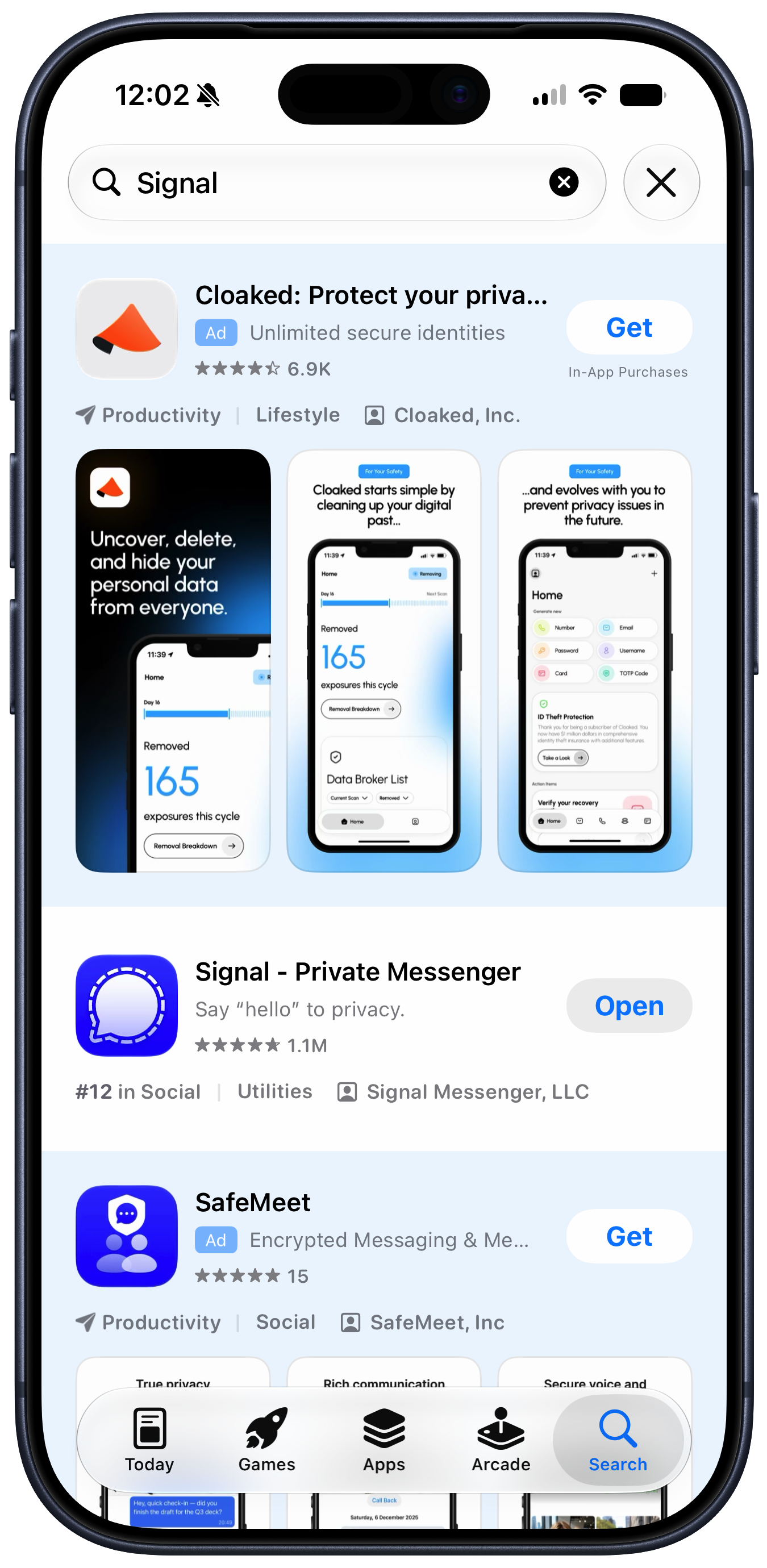
Putting themselves in customers’ shoes today, how many ads do Apple’s executives want stuck in the results when they search for an app in the App Store? We know the honest answer. But the answer evidenced by the actual App Store is “Two really big ones, including one in the first spot.”
While Apple can spin adding ads to Apple Maps as a revolutionary new way for businesses to be discovered, it’s telling that its initial announcement was hidden inside a press release about an entirely different product, and introduced as “Enhanced Discoverability in Apple Maps.” Those choices show that this isn’t something Apple is actually proud of—and that the people in charge of communicating and explaining Apple’s decisions to the world are at odds with those who are making the decisions about expanding revenue.
[…]
To this day, you’re confronted with an ad for Creator Studio every time you create a new document in those apps, and their default toolbars contain buttons that won’t work unless you subscribe to the bundle. As a result, Apple has essentially turned its free productivity suite—software that was designed to enhance the inherent value of Apple’s products—into a freemium package with upsell to a creative professional subscription bundle that’s irrelevant (and a terrible value!) for most of its existing users.
[…]
There are many more examples. Using notifications to promote subscriptions and badging the Settings app to push AppleCare plans are among the ways Apple has chosen to intervene in the user experience to drive revenue. I’m actually not opposed to the idea that Apple should communicate opportunities for its customers to get more out of their devices—but it should be careful not to cross the line into actively annoying those customers. If someone doesn’t want to see what you offer, you need to accept that and go away—not keep needling them. Apple often falls on the wrong side of that line.
[…]
It makes me wonder if the people making these decisions at Apple have lost track of the Apple brand and what it stands for.
What Snell’s column makes clear is that the incremental revenue Apple is gaining from putting shitty ads in its software comes at a price. They’re withdrawals from Apple’s brand equity. And I would argue that the value they’re detracting from the brand far out-values the dollar amount they’d padding to Apple’s bottom line.
[…]
If your competitors’ stores all smell like dogshit, don’t aim to have the store that smells the least like shit. Aim to have a store that smells pristine. “Our stores only carry a vague whiff of dogshit” is not insanely great.
The people haven’t changed, but Apple has. Strong leaders inevitably shape the personality — the spirit — of organizations over time. Apple in 2011 was peak Steve Jobs Apple. Apple in 2026 is peak Tim Cook Apple. But it was Cook who popularized the “you’re not the customer, you’re the product” argument against “free with ads” online services. But that was in 2014.
“Slippery slope” is a perfect term. But I wanted to add something here. In my experience, in the realm of UI, there is no middle notch. I’ve seen it time and time again… the moment you open the door to One, Infinity starts exerting its pull[…]
I HATE, HATE, HATE having ads pop up when I’m trying to do something else. It’s bad enough on Web sites where at least they have the excuse of having to make money some how but it rises to intolerable when they put them up on a device I’ve already paid for.
The annoyance is reason enough to dislike Apple’s ads but for me the worst thing is that they’re corrupting and inevitably lead to the user being replaced by the advertiser as the customer.
The most severe droughts in the ancient Eastern Mediterranean arose when multiple natural climate cycles coincided, according to a new study from Stockholm University published in Science Advances. The findings shed new light on the climate conditions surrounding the Late Bronze Age collapse and may help improve understanding of future drought risks in a warming world.
Ancient samples from the moon's far side are helping scientists uncover how asteroid impacts shaped the early solar system. The findings challenge decades of thinking about when those impacts occurred and offer new insights into the conditions that influenced Earth's evolution.

 Login