
❌

Normal view

Flight Dynamics Research Facility

9 June 2026 at 21:47
Flight Dynamics Research Facility wall of photos.
Flight Dynamics Research Facility
Close up view of the wind tunnel fan blades.

Flight Dynamics Research Facility

The Flight Dynamics Research Facility (FDRF) is a 25,000-square-foot highly versatile wind tunnel. The FDRF plays a role in conducting research, development of autonomous flight vehicles, technology, drones, X-planes, and future Moon and Mars mission.

Learn more about other NASA Wind Tunnels about Flight Dynamics Research Facility

Focus Areas and Capabilities

Learn more about the specifications and capabilities of this wind tunnel.

Flight Dynamics Research Facility two wind tunnel fan blade sections.

Characteristics

The FDRF is a large, subsonic wind tunnel with a vertical test section for conducting flight dynamics research for stability, controllability, free-fall and aircraft spin, and spin recovery testing of atmospheric vehicles.

Featured Video

Flight Engineers Give NASA’s Dragonfly Lift

When NASA’s Dragonfly begins full rotorcraft integration and testing in early 2026, the mission team will tap into a trove of data gathered through critical technical trials conducted over the past three years, including, most recently, a testing campaign in at the Transonic Dynamics Tunnel (TDT) Facility at NASA’s Langley Research Center in Hampton, Virginia.

Watch Dragonfly Lift video on YouTube

Contact Information

Flight Dynamics Research Facility

Branch Head: Corey G. Diebler
(757) 864-8447

NASA Langley Research Center
1 Nasa Dr.
Hampton, VA 23666
(757) 864-1000

Fact Sheet

NASA’s newest wind tunnel launching in Spring 2026.

The Flight Dynamics Research Facility (FDRF) will soon be NASA’s newest wind tunnel. 2025: Construction completed in late 2026. The FDRF will be a highly versatile and cost effective vertical wind tunnel for conducting free flight and captive testing on all manner of atmospheric flight vehicles. This new facility will replace the existing 20 Ft. Vertical Spin Tunnel and the 12 Ft Low Speed Tunnel and consolidate their test capabilities into a new, state-of-the-art wind tunnel with significantly greater performance.

Flight Dynamics Research Facility

The post Flight Dynamics Research Facility appeared first on NASA Science.
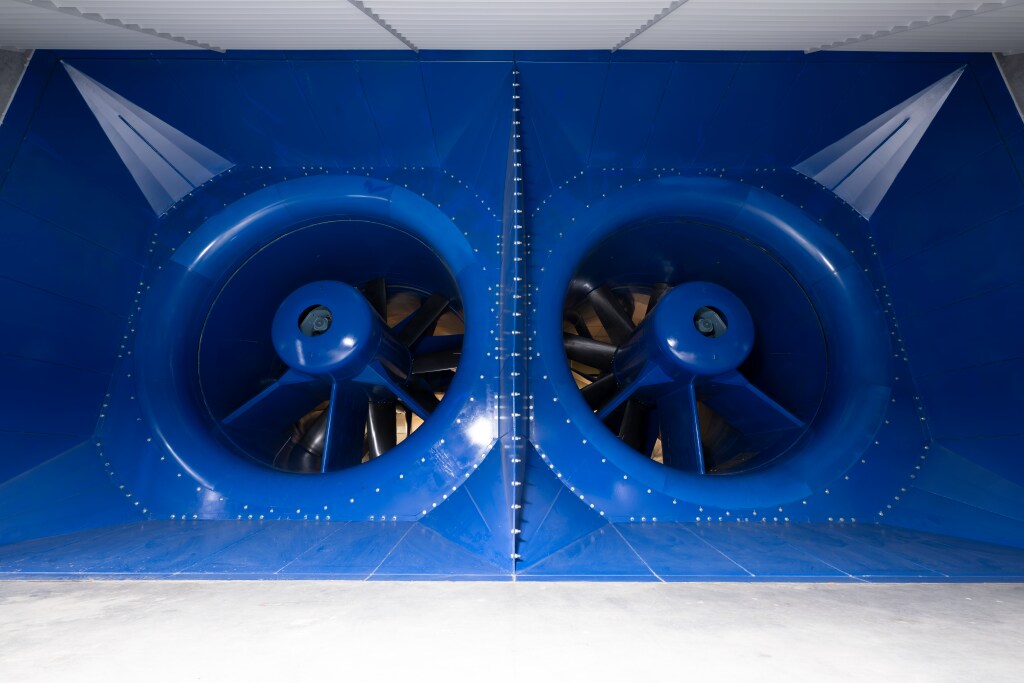
Flight Dynamics Research Facility Characteristics

9 June 2026 at 21:47

1 min read

Flight Dynamics Research Facility Characteristics

Flight Dynamics Research Facility Characteristics image showing two wind tunnel fan blade sections.

Home
Characteristics

The Flight Dynamics Research Facility (FDRF) is a large, subsonic wind tunnel with a vertical test section for conducting flight dynamics research for stability, controllability, free-fall and aircraft spin, and spin recovery testing of atmospheric vehicles.

Characteristics

  • Test Section Dimensions: 20 ft. diam. by 24 ft. high
  • Speed: 0 – 172 ft/s (0 – 117 mph)
  • Dynamic Pressure: (0 – 35 psf)
  • Reynolds Number: 0 – 1.10Γ—10^6 per ft.
  • Pressure: Atmospheric
  • Temperature: Actively cooled (79Β° F)
  • Test Gas: Air
  • Facility Height: 131 ft.

Flight Dynamics Flight Research

Aerosciences Evaluation and Test Capabilities

Share

Details

Last Updated
Jun 09, 2026
Editor
Lillian Gipson
Contact

The post Flight Dynamics Research Facility Characteristics appeared first on NASA Science.

Flight Dynamics Research Facility Characteristics

9 June 2026 at 21:47

1 min read

Preparations for Next Moonwalk Simulations Underway (and Underwater)

Flight Dynamics Research Facility Characteristics image showing two wind tunnel fan blade sections.

Home
Characteristics

The Flight Dynamics Research Facility (FDRF) is a large, subsonic wind tunnel with a vertical test section for conducting flight dynamics research for stability, controllability, free-fall and aircraft spin, and spin recovery testing of atmospheric vehicles.

Characteristics

  • Test Section Dimensions: 20 ft. diam. by 24 ft. high
  • Speed: 0 – 172 ft/s (0 – 117 mph)
  • Dynamic Pressure: (0 – 35 psf)
  • Reynolds Number: 0 – 1.10Γ—10^6 per ft.
  • Pressure: Atmospheric
  • Temperature: Actively cooled (79Β° F)
  • Test Gas: Air
  • Facility Height: 131 ft.

Flight Dynamics Flight Research

Aerosciences Evaluation and Test Capabilities

Share

Details

Last Updated
Jun 09, 2026
Editor
Lillian Gipson
Contact
❌