❌

Normal view

Advertising Cognitive Dissonance

24 July 2026 at 19:09

John Gruber (Mastodon):

This to me is proof that Apple leadership is suffering from cognitive dissonance over their slide into advertising. They’re conflating cause and effect. The Apple brand stands for high-quality superior user experiences because the devices and software Apple makes traditionally deliver high-quality superior user experiences. The work Apple ships is what makes the brand what it is. But now they’re stricken with the mindset that it’s the Apple brand that makes something a high-quality superior experience.

[…]

If you refuse to admit that the ads make these services worse, you also can’t admit that there’s a reason to offer an ad-free experience. So the thinking is something like “Apple always focuses on the user experience, and never deliberately makes the user experience worse. Therefore, if an Apple service shows ads, those ads are high quality and don’t detract from the quality of the product or the experience of using it. Therefore, there’s no reason to offer users a paid ad-free tier, because there’s no reason to want to avoid Apple’s ads.”

What a brand stands for can change over time. It’s eventually determined by the products, not the mantras.

  • “It just works.”
  • “A thousand no’s for every yes.”
  • “What happens on your iPhone, stays on your iPhone.”
  • “Music runs deep in Apple’s DNA.”
  • “Design is how it works.”

Manton Reece (2010):

I feel bad admitting it, because some of my friends are betting on iAd revenue to feed their family, but I’m just not on board with Apple running an advertising network. I don’t want to see ads in my apps, and I don’t want Apple to ever lose even a little of what it means to be a product-driven company.

Previously:

Update (2026-07-28): John Gruber (Mastodon):

The whole thing is funny because at a fundamental level we all just know in our bones that Apple never even considered putting “Intel Inside” stickers on Macs.

[…]

Apple still treats its hardware with that level of respect. With reverence. iPhones don’t even say “iPhone” on the hardware. No model or serial numbers. No small print. Just an Apple logo on the back.

[…]

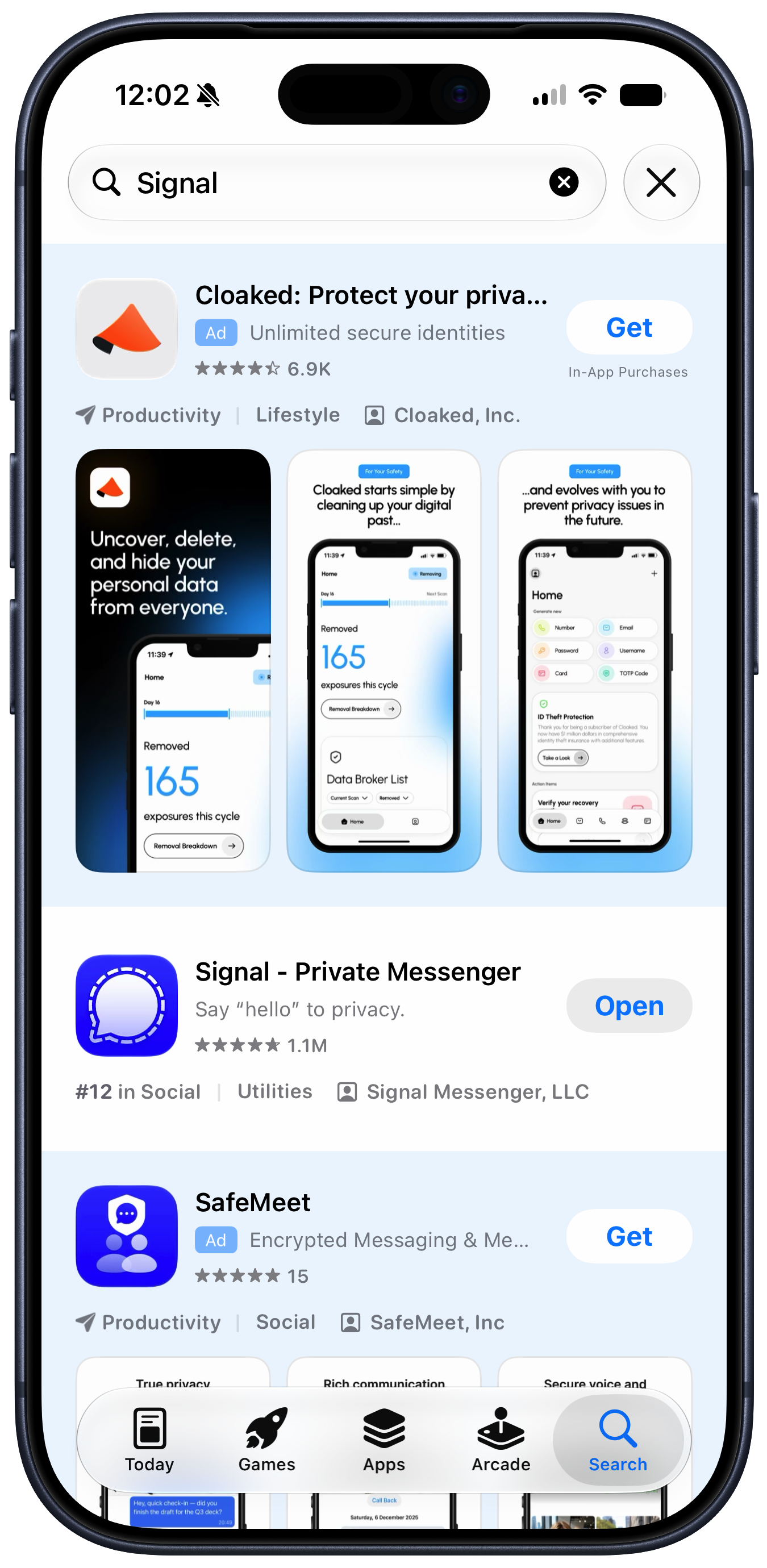
Putting themselves in customers’ shoes today, how many ads do Apple’s executives want stuck in the results when they search for an app in the App Store? We know the honest answer. But the answer evidenced by the actual App Store is “Two really big ones, including one in the first spot.”

At least you could peel off the stickers.

Jason Snell:

While Apple can spin adding ads to Apple Maps as a revolutionary new way for businesses to be discovered, it’s telling that its initial announcement was hidden inside a press release about an entirely different product, and introduced as “Enhanced Discoverability in Apple Maps.” Those choices show that this isn’t something Apple is actually proud of—and that the people in charge of communicating and explaining Apple’s decisions to the world are at odds with those who are making the decisions about expanding revenue.

[…]

To this day, you’re confronted with an ad for Creator Studio every time you create a new document in those apps, and their default toolbars contain buttons that won’t work unless you subscribe to the bundle. As a result, Apple has essentially turned its free productivity suite—software that was designed to enhance the inherent value of Apple’s products—into a freemium package with upsell to a creative professional subscription bundle that’s irrelevant (and a terrible value!) for most of its existing users.

[…]

There are many more examples. Using notifications to promote subscriptions and badging the Settings app to push AppleCare plans are among the ways Apple has chosen to intervene in the user experience to drive revenue. I’m actually not opposed to the idea that Apple should communicate opportunities for its customers to get more out of their devices—but it should be careful not to cross the line into actively annoying those customers. If someone doesn’t want to see what you offer, you need to accept that and go away—not keep needling them. Apple often falls on the wrong side of that line.

[…]

It makes me wonder if the people making these decisions at Apple have lost track of the Apple brand and what it stands for.

John Gruber:

What Snell’s column makes clear is that the incremental revenue Apple is gaining from putting shitty ads in its software comes at a price. They’re withdrawals from Apple’s brand equity. And I would argue that the value they’re detracting from the brand far out-values the dollar amount they’d padding to Apple’s bottom line.

[…]

If your competitors’ stores all smell like dogshit, don’t aim to have the store that smells the least like shit. Aim to have a store that smells pristine. “Our stores only carry a vague whiff of dogshit” is not insanely great.

Hotelling’s Law, like I was saying.

Adam Chandler:

This is not an “update”. This is an advertisement.

Update (2026-07-29): John Gruber:

The people haven’t changed, but Apple has. Strong leaders inevitably shape the personality — the spirit — of organizations over time. Apple in 2011 was peak Steve Jobs Apple. Apple in 2026 is peak Tim Cook Apple. But it was Cook who popularized the “you’re not the customer, you’re the product” argument against “free with ads” online services. But that was in 2014.

Marcin Wichary:

“Slippery slope” is a perfect term. But I wanted to add something here. In my experience, in the realm of UI, there is no middle notch. I’ve seen it time and time again… the moment you open the door to One, Infinity starts exerting its pull[…]

Previously:

Update (2026-08-03): Jon Snader:

I HATE, HATE, HATE having ads pop up when I’m trying to do something else. It’s bad enough on Web sites where at least they have the excuse of having to make money some how but it rises to intolerable when they put them up on a device I’ve already paid for.

The annoyance is reason enough to dislike Apple’s ads but for me the worst thing is that they’re corrupting and inevitably lead to the user being replaced by the advertiser as the customer.

Update (2026-08-05): John Gruber:

Only search engines that agree to pay Apple for the traffic are in the list, and there’s no option for users to add custom ones.

Tyler Hall:

It says a lot about modern Apple that I can’t find an unsubscribe link in this marketing email.

John Gruber:

Apple News ads have been going down the toilet for years, but it didn’t used to be literal.

$250 million Siri delay settlement approved: Apple to pay select iPhone buyers

24 July 2026 at 18:26
Apple pulls iPhone 16 ad touting Apple Intelligence Siri features
Still from an iPhone 16 ad touting Apple Intelligence Siri features

A U.S. judge has given preliminary approval to Apple’s $250 million settlement of a class action lawsuit over the delayed launch of advanced, personalized Siri features that the company had heavily advertised. Eligible U.S. owners of the iPhone 15 Pro, 15 Pro Max, and all iPhone 16 models purchased between June 10, 2024 and March 29, 2025 may eventually receive $25–$95 per device, though a claims website is not yet live and no action is needed right now.

Joe Rossignol for MacRumors:
‎

In June 2024, Apple previewed new Siri capabilities powered by Apple Intelligence, including understanding of a user’s personal context, on-screen awareness, and deeper per-app controls. For example, Apple showed an iPhone user asking Siri about their mother’s flight and lunch reservation plans based on info from the Mail and Messages apps.

Apple advertised those Siri features in product presentations, on its website, in a TV commercial starring actor Bella Ramsey, and elsewhere.

In March 2025, Apple delayed the launch of the personalized version of Siri, leading to the company being hit with a class action lawsuit alleging false advertising…

It is unlikely that individuals who submit a claim will still need to have physical possession of an eligible iPhone model. However, there is a possibility that proof of purchase or other information will be required, such as the device’s serial number. Exact requirements will be outlined on the settlement website, which is still not live.

‎
MacDailyNews Note: To be eligible to submit a claim, you must reside in the U.S. and have purchased any iPhone 15 Pro or any iPhone 16 model between June 10, 2024 and March 29, 2025.

MacDailyNews Take: Apple got off easy. It ended up being effective advertising, albeit false. $250 million is just part of the marketing budget and, to Apple, it’s pocket change.

As usual, we called it correctly very early on:

When you're caught flat-footed like Tim Cook's Apple, you pop into scramble mode to try to catch up. Early on, you hit it with a big marketing flourish (WWDC24) in order to buy some more time. Then you dribble out features as they get finished & actually exist. Classic vaporware. https://t.co/I1J4y3aDNy pic.twitter.com/fLKvxGj4G3

— MacDailyNews (@MacDailyNews) July 31, 2024

The Apple Intelligence vaporware [is] false advertising, fraud, and lies. Those will be the basis for class action lawsuits from iPhone, iPad, and Mac customers soon enough. And Apple will deserve them all. – MacDailyNews, March 14, 2025

See also: Apple pulls iPhone 16 ad touting nonexistent Apple Intelligence-powered Siri features – March 10, 2025


‎
Please help support MacDailyNews — and enjoy subscriber-only articles, comments, chat, and more — by subscribing to our Substack: macdailynews.substack.com. Thank you!

Support MacDailyNews at no extra cost to you by using this link to shop at Amazon.

The post $250 million Siri delay settlement approved: Apple to pay select iPhone buyers appeared first on MacDailyNews.

Apple Financial Statements: Products vs. Services

21 July 2026 at 21:27

John Gruber (Mastodon, 2):

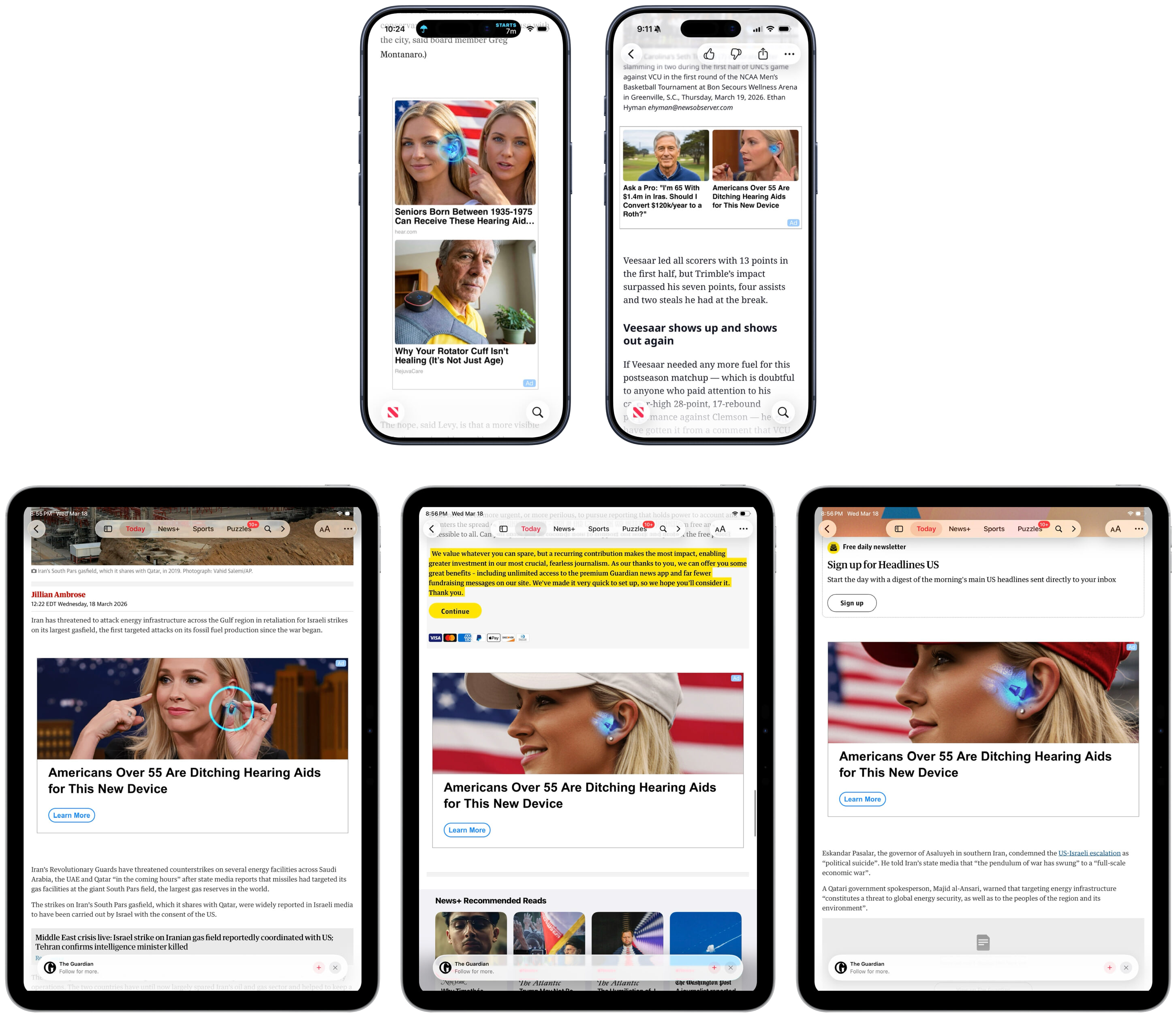
Some of [Cook’s letter] remains true, but has lost some truthiness — and truthiness matters. But some of it is no longer true, period. It’s no longer just “one small part” of Apple’s business that serves advertisers. Here in 2026, search results in the App Store not only show paid ads — frequently for casinos — but the search results are visually dominated by paid ads now that Apple has added a second ad to results. Apple News+ is a paid subscription that offers a genuinely great value for the number of paywalled publishers whose content it includes, but articles on the News app tend to include the weirdest AI-generated ads on the Internet. (How many young blond women am I supposed to believe need hearing aids?) And — at this writing, still “coming soon” — Apple is launching ads on Apple Maps. Apple Maps remains free of charge to use, so according to Tim Cook, we’re not the customer. We’re the product. Or, if you prefer, our frustration is the product.

[…]

The ratio of ads to organic results in App Store search — especially when measured in screen area — is clearly not aligned with Cook’s 2014 statement that “Our software and services are designed to make our devices better. Plain and simple.” Obviously not. App Store search today is designed primarily to generate more revenue for Apple. That’s not criminal, but it’s a change.

[…]

What gave Tim Cook’s privacy letter heft in 2014 wasn’t just the clarity of its plain language, but the fact that you didn’t have to take his word for it that the ads Apple showed you respected your privacy, because Apple didn’t show you ads in 2014. Apple today can’t say that.

[…]

John Ternus should return Apple’s privacy policy to its 2014 clarity. The trust Apple would earn from such a move would far out-value whatever revenue these ads pad to their already hefty and ever-increasing quarterly Services numbers.

I wish that were the case, but I fear this is kind of a Hotelling’s Law situation, where Apple can get most of the benefit by being just slightly better on this axis. Where else do its customers have to go?

Jeff Johnson (Mastodon):

In the second fiscal quarter of 2018, services generated $9 billion in revenue (net sales), whereas in Q2 2026, that amount had grown to $31 billion! In this blog post, I want to focus on understanding the relative financial importance of products and services for Apple.

[…]

In 2025, services were 42% of Apple gross margin. How does 26% of net sales become 42% of gross margin? The explanation is that services have a much lower cost of sales. The products gross margin was 37% of products net sales, while the services gross margin was an astonishing 75% of services net sales. In other words, Apple services are almost pure profit!

Does this 75% account for TV and movie production costs?

With persistent general inflation, consumers do not have unlimited money to spend on Apple products. At least in the near future, it’s reasonable to question how much further room is available for growth in profits from Apple products. To satisfy the demands of investors, Apple executives including CEO-elect John Ternus may be forced to rely even more than before on growth in services, which do not face as much pressure on cost of sales as hardware products.

Previously:

Vintage Auto Ads Reveal How Companies Used Attractive Models to Boost Sales in the 1970s and 1980s

By: RHP
19 June 2026 at 04:27
Flip through any auto parts catalog from the 1970s or 80s and the message becomes clear within seconds: this was an industry that believed a woman in a bikini could sell anything from spark plugs to seat covers. Long before marketing departments worried about backlash or boycotts, automotive advertisers operated on a simple, unapologetic formula […]

Russia's plan to advertise on rockets and spacecraft takes off

20 May 2026 at 15:28

It's difficult to know the true state of the Russian economy, both because the country's financial reporting is sparse and because official figures are unreliable. But things probably aren't great.

This week, Sweden's minister of foreign affairs, Maria Malmer Stenergard, shared her country's assessment that the Russian economy has likely contracted over the last five years amid the war in Ukraine. Inflation is also high, and international sanctions have cost Russia $450 billion since the onset of the war in February 2022. Russia's economy is currently smaller than that of Texas, Stenergard said.

By most measures, then, the economy is not in tip-top shape. Moreover, the war is draining a large amount of the country's financial resources, with defense spending reaching a post-Soviet record of about 7 percent of government spending.

Read full article

Comments

© Roscosmos

These Vintage Alcohol Ads Are as Bizarre as They Are Fascinating

By: RHP
2 May 2026 at 00:32
There is a certain kind of discomfort that comes from flipping through old magazines from the 1960s and 1970s. Not because they feel foreign, but because they don’t, entirely. The clothes changed. The hairstyles changed. The alcohol ads, though, reveal something rawer about that era than almost anything else on the page. They were weird […]
❌