❌

Normal view

Brown fat microRNAs mapping shows secreted signaling network between organs

16 July 2026 at 13:58

A newly published study in Nature Metabolism reports that brown fat can act as a hub of molecular messaging, using secreted microRNAs to coordinate physiology across the body. Researchers focused on brown adipose tissue—well known for its role in thermogenesis—and asked whether it also participates in long-distance communication via RNA signals.

To visualize and track these messages, the team employed brown-fat–specific RNA labeling in living systems. This strategy allowed them to connect RNA production within adipocytes to downstream effects elsewhere, moving beyond correlations toward a clearer map of inter-organ RNA traffic.

The central finding is the presence of a communication network mediated by microRNAs released from brown fat. These small regulatory RNAs appear to travel beyond the tissue of origin and engage gene-regulatory pathways in other organs, effectively relaying information about metabolic state.

Functionally, the work supports a model in which microRNA “dispatch” from thermogenic fat tunes cellular programs in remote targets. Such programs likely involve post-transcriptional regulation, a process microRNAs are known to influence by pairing with complementary sequences in messenger RNAs.

Importantly, the approach does not treat microRNAs as generic circulating molecules. Instead, the labeling confirms their brown-fat origin and strengthens the link between secretory RNA dynamics and systemic physiological outcomes.

The study also highlights the specificity of the messaging: not all RNAs are equally represented, and the labeled microRNA repertoire points to organized, tissue-defined signaling rather than random leakage.

Beyond mapping pathways, the results carry implications for metabolic disease research. If brown fat microRNAs can reshape gene expression in other organs, manipulating these signals could offer a route to modulate energy balance, insulin sensitivity, or inflammatory tone.

For now, the findings provide a blueprint for how RNA labelling combined with tissue specificity can uncover hidden layers of endocrine-like communication. As techniques improve, the field may move toward a broader “RNA connectome” linking organ behavior through secreted regulatory molecules.

Researchers describe their results as evidence that brown fat is not only a metabolic engine but also an information broadcaster. In the evolving landscape of viral-style science news, this discovery underscores how tiny RNA molecules can orchestrate large-scale biological conversations.

Subject of Research: Inter-organ communication via secreted microRNAs from brown adipose tissue.

Article Title: Brown fat-specific RNA labelling reveals a network of inter-organ communication by secreted microRNAs.

Article References: Lino, M., Palermo-Ruiz, G., Efthymiou, V. et al. Brown fat-specific RNA labelling reveals a network of inter-organ communication by secreted microRNAs. Nat Metab (2026). https://doi.org/10.1038/s42255-026-01558-0

Image Credits: AI Generated

DOI: https://doi.org/10.1038/s42255-026-01558-0

Avant de partir, ce VPN protège jusqu’à 14 appareils

14 July 2026 at 14:00
Avant un voyage, les appareils connectés deviennent des compagnons essentiels. ExpressVPN aide à protéger les données personnelles, sécuriser les connexions et profiter d’Internet plus sereinement depuis l’étranger.

The Brain’s Language System Is Far More Expansive Than Scientists Thought, New Study Finds

7 July 2026 at 13:06

Neuroscientists have long believed that language processing was only found in regions of the brain’s left hemisphere, including the well-known Broca’s area. However, new evidence suggests the brain’s language network is far more widespread than previously thought. 

Researchers at the Massachusetts Institute of Technology (MIT) analyzed functional magnetic resonance imaging (fMRI) scans from 772 participants and identified 17 additional brain regions involved in language comprehension. These newly discovered areas are distributed across the brain, including the cerebellum, hippocampus, amygdala, and several regions of the cerebral cortex. In total, this accounts for five percent of the adult brain volume (roughly the size of a large strawberry). 

“Even though there are all these distant components, it’s pretty restricted in terms of volume. You don’t need that much of the brain to do language,” says senior author Evelina Fedorenko, an MIT associate professor of brain and cognitive sciences and a member of MIT’s McGovern Institute for Brain Research, in a statement. 

Locating the Brain’s Hidden Language Centers

To find these hidden language-related regions in the brain, the researchers revisited years of brain imaging data collected since 2013. Additionally, participants completed a standard “language localizer” task, during which they read or listened to meaningful sentences and sequences of meaningless nonwords. By comparing brain activity between these two conditions, the research team identified regions that responded more strongly to language.

“When we initially started looking at language, in the first couple of papers, I tried to be comprehensive and include anything that seemed consistent across participants, and there was a huge amount of resistance,” said Fedorenko. “People would say things like, ‘Well, we know those are not language areas, so please focus on the language areas.’”

The team decided to adopt a more flexible statistical approach to detect weaker signals and identify previously overlooked language-sensitive regions beyond the classical language areas. They then compared these regions’ responses during a spatial working memory task to distinguish language-specific areas from those involved in what would be considered general cognitive functions.

Cerebellum Discoveries

Interestingly, five of the newly identified language regions are located in the cerebellum, a structure traditionally associated with movement and coordination. Some of these cerebellar regions were also active during non-language tasks, suggesting they may help integrate information across different brain systems rather than process language alone.

“It’s a very simple paradigm that lets you identify this core language system in individual brains,” says MIT postdoc Agata Wolna, the lead author of the paper.

Additional language-sensitive regions were identified in the hippocampus and amygdala, areas better known for their roles in memory and emotion. Their involvement suggests that understanding language may rely more on integrating memory, emotional context, and higher-order cognitive functions than previously understood in science.

“We always see this frontal temporal network, but there’s quite a lot of evidence that there are other regions that are also critical for language processing,” said Wolna. “By using a laxer threshold and zooming in on areas with weak MRI signal, we tried to maximize the chances of finding small and weakly responsive regions outside of this left frontal temporal system.”

The findings challenge long-held assumptions about the brain’s organization and can open new avenues for research into how language processing is understood in neuroscience.

The recent study was published in the Journal of Neuroscience. 

Chrissy Newton is a PR professional and the founder of VOCAB Communications. She currently appears on The Discovery Channel and Max and hosts the Rebelliously Curious podcast, which can be found on YouTube and on all audio podcast streaming platforms. Follow her on X: @ChrissyNewton, Instagram: @BeingChrissyNewton, and chrissynewton.com. To contact Chrissy with a story, please email chrissy @ thedebrief.org.

NASA’s New Horizons Spacecraft Wakes from Hibernation in Good Health

7 July 2026 at 18:48

3 min read

NASA’s New Horizons Spacecraft Wakes from Hibernation in Good Health

Following its longest hibernation period ever of nearly a year, NASA’s New Horizons spacecraft has emerged in good health and is ready to begin transmitting science data gathered in the distant Kuiper Belt far beyond Pluto.

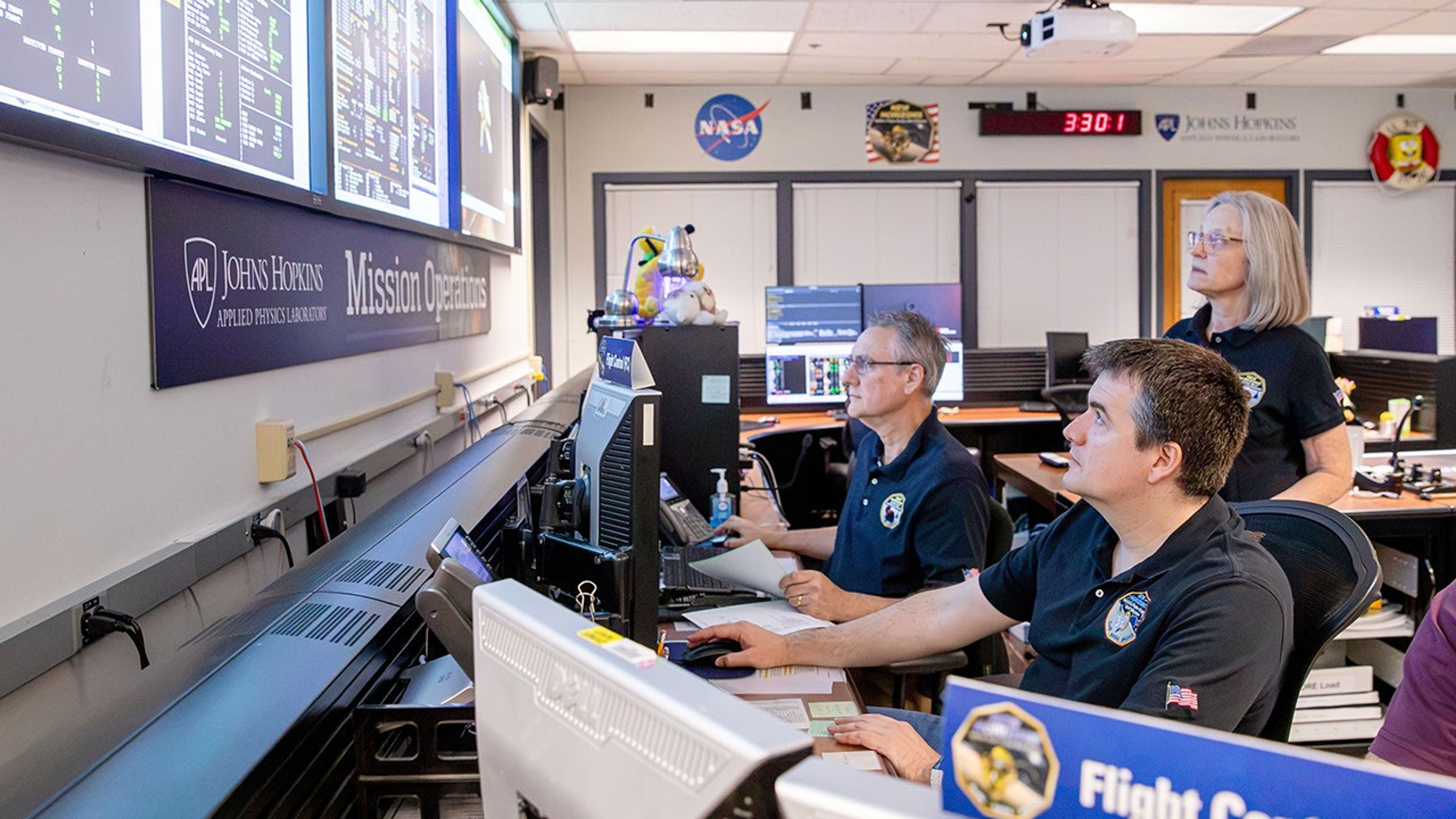
Flight operators at computers in a mission control center monitor spacecraft data on large wall displays.
From left, flight controllers Mark Lahr and Josh Albers, and Mission Operations Manager Alice Bowman, monitor telemetry streaming from NASA’s New Horizons spacecraft to the mission operations center at the Johns Hopkins Applied Physics Laboratory in Laurel, Maryland, on June 24, 2026. Now approximately 5.9 billion miles (9.5 billion kilometers) from Earth, New Horizons is ready to begin transmitting science data after being awakened from its longest ever, nearly yearlong hibernation period.
NASA/Johns Hopkins APL/SwRI/Justin Gladden

On June 23, flight controllers at the Johns Hopkins Applied Physics Laboratory (APL) in Laurel, Maryland, confirmed New Horizons, acting on stored commands uplinked to its main computer last July, had safely awakened from a 321‑day hibernation period that began Aug. 7. With the spacecraft now approximately 5.9 billion miles (9.5 billion kilometers) from Earth, the radio signals carrying that confirmation took about 8 hours and 52 minutes to reach the APL Mission Operations Center via NASA’s Deep Space Network station near Madrid, Spain.

The mission team typically places New Horizons in resource‑saving hibernation mode during long cruise periods. While the spacecraft is hibernating, operators do not send commands or retrieve data, but the spacecraft continues gathering and storing data around the clock from its heliospheric plasma sensors, Solar Wind at Pluto and the Pluto Energetic Particle Spectrometer Science Investigation, as well as its space dust detector, the Venetia Burney Student Dust Counter.

Alice Bowman, the New Horizons mission operations manager at APL, said the spacecraft reported back to Earth, via the Deep Space Network, with a weekly status beacon. “Every status report through this hibernation period was ‘green,’ meaning all was well aboard New Horizons each and every week,” she said.

As New Horizons resumes active operations, Bowman noted, the team will begin downlinking spacecraft health and safety data, followed by data from the three scientific instruments. In about three weeks, the spacecraft’s onboard Alice ultraviolet spectrograph will look at the hydrogen gas distribution in the outer heliosphere, while the Solar Wind at Pluto, the Pluto Energetic Particle Spectrometer Science Investigation, and the Venetia Burney Student Dust Counter instruments continue their measurements, and the ground team conducts a series of spacecraft and instrument checkouts.

The team also is completing upgrades to the ground‑system software that will make it easier to maintain operations of the spacecraft. Tests are already underway and are expected to continue through the year.

New Horizons is operating on updated autonomy logic designed for operations farther from the Sun and to accommodate the expected reduction in power and the naturally occurring increase in radio‑signal travel time.

The NASA spacecraft’s exploration of this distant region of the solar system marks the latest step in a journey that began in January 2006 with the fastest launch on record; a flyby of Jupiter in February 2007 that included stunning views of the gas giant and its moons; the first exploration through the Pluto system in July 2015; the first exploration of a Kuiper Belt object, Arrokoth, in January 2019, and unique studies of the Sun’s outer heliosphere and dozens of additional Kuiper Belt objects since then.

For more information on NASA’s New Horizons mission, visit:

https://science.nasa.gov/mission/new-horizons/

VPN sans abonnement : existe-t-il des solutions fiables sans engagement ?

21 June 2026 at 11:30
Payer un abonnement tous les mois pour utiliser un VPN n’attire pas forcément tout le monde. Beaucoup d’utilisateurs cherchent aujourd’hui une solution plus souple. Une offre gratuite, un plan sans engagement ou une version limitée peuvent suffire pour protéger ses données sur internet, regarder...

CyberGhost - Asteroid Day : chiffrer les recherches, forums et ressources en ligne des passionnés d’espace

21 June 2026 at 07:30
À l’occasion de l’Asteroid Day, les passionnés d’espace multiplient les recherches en ligne, entre bases de données d’objets célestes, forums spécialisés et contenus scientifiques parfois très pointus. Cette exploration permanente de l’univers s’accompagne pourtant d’un enjeu discret mais réel :...

NordVPN - ICML 2026 : sécuriser les accès GitHub, notebooks et services cloud des chercheurs en IA

20 June 2026 at 07:30
L’ICML 2026 réunit la communauté internationale de l’intelligence artificielle autour des avancées en machine learning, avec un travail de recherche qui repose de plus en plus sur des environnements distribués : dépôts GitHub, notebooks collaboratifs et services cloud. Ces outils, essentiels au...

VPN pour ordinateur portable : NordVPN, CyberGhost, Surfshark ou ExpressVPN, lequel choisir en déplacement ?

19 June 2026 at 12:00
Pour protéger un ordinateur portable en déplacement, NordVPN reste l’option la plus complète, CyberGhost la plus simple à prendre en main, Surfshark la plus intéressante pour couvrir plusieurs appareils à bon prix, tandis qu’ExpressVPN garde un avantage sur la stabilité de connexion. Derrière...

AI for Good : avec ExpressVPN, sécuriser les connexions des professionnels de l’IA

19 June 2026 at 10:00
À l’occasion de l’initiative AI for Good, la sécurité des échanges devient un sujet central pour les professionnels de l’intelligence artificielle. Entre les prompts envoyés aux modèles, les jeux de données partagés et les documents de travail souvent sensibles, la circulation de l’information...

VPN sans abonnement : existe-t-il des solutions fiables sans engagement ?

18 June 2026 at 11:30
Payer un abonnement tous les mois pour utiliser un VPN n’attire pas forcément tout le monde. Beaucoup d’utilisateurs cherchent aujourd’hui une solution plus souple. Une offre gratuite, un plan sans engagement ou une version limitée peuvent suffire pour protéger ses données sur internet, regarder...

Asteroid Day : CyberGhost chiffre les connexions des passionnés d’espace entre conférences, forums et ressources en ligne

18 June 2026 at 07:30
L’Asteroid Day rassemble chaque année chercheurs, passionnés d’astronomie et curieux autour des enjeux liés aux objets célestes. Mais l’événement dépasse désormais largement les conférences physiques : une grande partie des échanges se déroule en ligne, entre retransmissions, forums spécialisés...

PLSaoNET: Revolutionizing Industrial Network Training with a Deterministic Approach

17 June 2026 at 15:56

In recent years, the evolution of industrial sensing technologies has been pivotal to the advancement of intelligent manufacturing systems. Among various approaches, artificial neural networks (ANNs) have garnered immense attention due to their remarkable capability to model complex data relationships. However, applying these networks effectively in real-world industrial environments remains a formidable challenge, primarily due to the noisy, nonlinear, and often limited datasets encountered in such settings. Recognizing these constraints, a team of researchers led by Professor Lanxiang Sun at the Shenyang Institute of Automation, Chinese Academy of Sciences, has forged a transformative approach. Their groundbreaking solution, known as the Partial Least Squares-assisted Optimization Network (PLSaoNET), promises to redefine the application of neural networks in industrial sensing by embedding statistical interpretability into the heart of deep learning models.

Traditional neural networks typically commence training through random initialization of weights—a process that, while standard, lacks any guiding framework grounded in data characteristics. This randomness poses inherent limitations, especially when the amount of training data is limited or when the data exhibits high noise levels and nonlinear relationships, both common in industrial scenarios. Such conditions often result in poor generalization and unstable predictive outcomes, thereby hindering practical deployment. The innovation from Professor Sun’s team circumvents these issues through a statistical method known as Partial Least Squares (PLS), a classic tool renowned for its interpretability and robustness in linear regression tasks.

PLS works by extracting latent variables that capture the fundamental relationships between independent variables (input features) and dependent variables (output targets), offering a transparent statistical framework. While PLS excels in linear modeling, it lacks the capability to model complex nonlinear dynamics. The research team ingeniously leveraged the strengths of PLS by integrating its solutions as the initial conditions within a neural network architecture. Specifically, the number of PLS latent variables dictates the number of neurons in the network’s hidden layer, and the PLS-derived weight matrix initializes the neural connections. This initialization endows the neural network with a statistically meaningful starting point, effectively eliminating the guesswork inherent in random weight assignments.

Such a well-founded initialization transforms the learning process from an unfocused blind search into a systematic refinement of the PLS solution, integrating nonlinear modeling capabilities while preserving interpretability. This fusion of statistical rigor and deep learning adaptability addresses one of the fundamental bottlenecks in industrial data modeling, enabling the network to capture both the global trends identified by PLS and the nuanced nonlinear interactions vital for accurate predictions.

Moreover, industrial datasets frequently suffer from uneven label distributions, posing significant challenges during the training of neural networks using stochastic gradient descent. Fluctuations in loss values caused by biased mini-batch samples can lead to instability and degrade the overall learning process. To counter this, the researchers implemented a stratified sampling-based training strategy. In this approach, the entire dataset is divided into strata based on label value ranges, ensuring that each mini-batch during training samples from each stratum proportionally. This methodology smooths gradient updates, fortifying the network’s robustness against skewed data distributions and enhancing training stability substantially.

Professor Sun has emphasized that the primary motivation behind PLSaoNET is not to pursue architectural complexity but to advocate for models that produce stable, reliable outputs even when faced with small, noisy datasets that typify industrial environments. By embedding PLS’s statistical solutions into neural network training, the model’s learning trajectory gains a trustworthy, transparent foundation from which to build more complex representations.

To validate the efficacy of PLSaoNET, the research team conducted comprehensive experiments in two realistic industrial applications: the online monitoring of iron ore concentrate slurry grade using laser-induced breakdown spectroscopy (LIBS), and diesel fuel quality assessment with near-infrared (NIR) spectroscopy. Both cases involve complex spectral data with significant noise and nonlinear characteristics—ideal testbeds to showcase the robustness of PLSaoNET. Results consistently demonstrated superior prediction accuracy and generalization capabilities over traditional PLS regression and conventionally initialized backpropagation neural networks.

A particularly revealing insight emerged from the visualization and analysis of hidden layer weights in the LIBS slurry model. While the PLS model alone lacked precision, the dominant latent variables it extracted aligned clearly with known spectral emission lines from key mineral elements like silicon, magnesium, and iron, reflecting true physical relevance. In contrast, networks initialized randomly exhibited neuron weights that failed to selectively identify meaningful spectral features, resulting in noisy, uninterpretable representations. The PLSaoNET model, however, preserved the interpretability inherent to PLS by focusing attention on these dominant spectral features while simultaneously allowing fine-tuned retraining that accentuated secondary information related to elements like calcium and aluminum. This balance effectively suppresses overfitting and elevates model reliability.

Not content with theoretical validation alone, the team successfully deployed PLSaoNET within a live LIBS slurry analyzer at a mineral processing plant for real-time iron ore concentrate grade monitoring. This real-world application underscores PLSaoNET’s practical value in lowering the barriers to widespread adoption of artificial neural networks in industrial contexts. By anchoring the initial network parameters in statistically meaningful solutions and employing thoughtful training strategies, PLSaoNET represents a crucial step toward integrating cutting-edge AI models into complex, noise-prone industrial environments where data scarcity and variability have historically impeded progress.

Looking beyond its immediate applications, PLSaoNET delivers a broader paradigm shift, suggesting that harmonizing classical statistical techniques with modern deep learning can unlock new frontiers in intelligent industrial sensing. As manufacturing systems increasingly embrace digital transformation, methods like PLSaoNET that offer interpretability, stability, and adaptability will become indispensable tools for building resilient, data-driven infrastructures.

In conclusion, the work by Professor Lanxiang Sun and colleagues embodies a fusion of statistical principled approaches and adaptive machine learning techniques, producing an ANN model that addresses longstanding challenges in industrial data analysis. With its innovative PLS-based initialization and stratified sampling training, PLSaoNET not only enhances predictive performance but also paves the way for more interpretable, reliable AI systems in industrial manufacturing. As industries worldwide continue to seek intelligent sensing solutions that function robustly under real-world constraints, PLSaoNET stands out as a promising, practical breakthrough.


Subject of Research: Advanced artificial neural network design for improved industrial sensing under constraints of small, noisy, and nonlinear datasets.

Article Title: PLSaoNET: A Generalized ANN Model Under PLS Statistical Constraints for Industrial Sensing

News Publication Date: 5-May-2026

Web References:
http://dx.doi.org/10.1016/j.eng.2026.01.032

Image Credits: Lanxiang Sun


Keywords

Industrial sensing, artificial neural networks, partial least squares, PLSaoNET, stratified sampling, nonlinear modeling, intelligent manufacturing, spectral analysis, laser-induced breakdown spectroscopy, near-infrared spectroscopy, deep learning initialization, model interpretability, industrial data analytics

ISC High Performance 2026 : ExpressVPN protège les accès distants quand calcul, IA et recherche passent par le cloud

17 June 2026 at 12:01
L’intelligence artificielle, le calcul haute performance et la recherche scientifique reposent de plus en plus sur des infrastructures cloud accessibles à distance. Cette évolution facilite le travail collaboratif, mais elle augmente aussi les besoins en matière de sécurité. À l’occasion de...

Deep Space Network antenna mishap blamed on poor training and procedures

16 June 2026 at 12:25
DSS-14

A NASA investigation blamed millions of dollars in damage to one of its largest Deep Space Network (DSN) antennas on poor training and procedures.

The post Deep Space Network antenna mishap blamed on poor training and procedures appeared first on SpaceNews.

A Hidden Subterranean Fungal Network is Revealing the Secrets of Earth’s ‘Circulatory System’

15 June 2026 at 13:12


Ancient mycorrhizal fungal networks, consisting of a billion astronomical units’ worth of roots, have finally been mapped by scientists, providing insight into their connections, which are essential to climate regulation and plant sustenance.

Mycorrhizal fungi grow in an arbuscular formation, meaning they take on a branching tree-like structure of tubular cells called hyphae, which pull carbon from the atmosphere to aid in climate regulation.

The international team presented their work in a recent paper published in Science, which estimates the distribution and mass of these enormous fungal networks and provides an interactive visualization tool that offers crucial insight into threats to these systems, which are essential to Earth’s health.

Mapping Fungal Networks

The new research brings both encouraging and concerning findings, highlighting regions where fungal networks remain robust while also identifying areas under increasing threat.

Although previous studies have attempted to map the diversity of these fungi across the globe, this is the first effort to predict and visualize their density and biomass on a planetary scale. According to the team’s estimates, the network extends for approximately 110 quadrillion kilometers, with roughly 40% located beneath grasslands.

fungal map
The new map reveals the extent of the mycorrhizal fungal network globally. Credit: Truth & Beauty / Moritz Stefaner Justin Stewart – SPUN

Using more than 16,000 soil cores collected worldwide, researchers assembled a massive fungal dataset. They then employed machine-learning models that combined data from multiple biomes to predict the density of arbuscular mycorrhizal fungal networks in unsampled regions. Robotic imaging of more than 300,000 living, laboratory-grown hyphae allowed the team to calibrate and validate their models.

“It is hard to overstate the importance and enormity of these fungi,” said lead author Dr. Justin Stewart, with the Society for the Protection of Underground Networks (SPUN). “There could be up to 10 meters (32 feet) of mycorrhizal network in just a teaspoon of soil.”

Earth’s Circulatory System

Because it transports carbon, water, and nutrients underground, scientists have likened the network to our planet’s circulatory system, with a flow rate of up to 120 micrometers per second. About 70% of Earth’s plant species thrive on a symbiotic relationship with the arbuscular mycorrhizal fungi network.  The network can provide over 80% of a plant’s phosphorus and increase the root foraging area 100-fold. 

The network subsists on carbon waste produced by plants, while providing them with water and nutrients in return. By pulling in roughly 4 billion tons of CO2 into the ground every year, mycorrhizal fungi mitigate an amount corresponding to roughly 11% of human emissions.

Unfortunately, grasslands, where the network thrives most, are among the least protected environments on Earth and are being rapidly converted to farmland. According to the study team, cropland has only about half the lower network density of regular land, which the researchers worry may negatively affect how soil stores carbon, cycles nutrients, and resists stress.

Continuing Fungal Network Research

“It is important to remember that these maps are living documents. This is a first attempt at building a foundational model of Earth’s fungal networks infrastructure, but it is not complete,” Stewart recently told The Debrief. “There are other types of mycorrhizal fungi that still need to be mapped in more detail, and other fungal structures, such as spores, that are also critical to understanding how these organisms persist, move, and respond to environmental change. Likewise, we need more data in regions that have been poorly sampled.”

The team says the study represents a major advance for climate science, a field in which fungi have often been overlooked in discussions about conservation and resilience. Researchers hope the findings will encourage a more comprehensive understanding of the role fungi play in maintaining healthy ecosystems.

“A major goal now is to make these kinds of data useful for decision makers. Fungi are still rarely included explicitly in climate, biodiversity, and land-use agendas, even though they are central to how ecosystems move carbon and nutrients,” Stewart adds. “We want to help ‘course-correct’ by building a clearer picture of the underground systems that support life aboveground.”

The paper, “Global Density and Biomass of Arbuscular Mycorrhizal Fungal Networks,” appeared in Science on June 11, 2026.

Ryan Whalen covers science and technology for The Debrief. He holds an MA in History and a Master of Library and Information Science with a certificate in Data Science. He can be contacted at ryan@thedebrief.org, and follow him on Twitter @mdntwvlf.

International Women in Engineering Day : Surfshark protège les profils et données des talents de la tech

14 June 2026 at 13:30
À l’occasion de l’International Women in Engineering Day, la place des femmes dans la tech est mise en lumière, ainsi que les enjeux liés à leur présence accrue dans des environnements numériques très exposés. CV en ligne et profils professionnels sont devenus incontournables, mais ils...

After nearly breaking, NASA's Deep Space Network "worked well" on Artemis II

11 June 2026 at 19:34

NASA pushed its Deep Space Network beyond its limits during the Artemis I mission nearly four years ago. The global array of deep space communications antennas couldn't keep up with the routine demands of 40 robotic science missions and the extraordinary surge required by NASA's Orion space capsule as it flew around the Moon.

The experience in late 2022 reduced or delayed downlinks from several high-profile science missions, including the James Webb Space Telescope and Mars rovers, as the data-hungry Artemis I mission took priority on NASA's communications network. And that was before the first Artemis mission with astronauts onboard. When Artemis II launched April 1, NASA called upon the Deep Space Network (DSN) again to connect Mission Control to the Orion capsule as it soared more than a quarter of a million miles from Earth.

With a crew of four flying inside the spacecraft, the agency's appetite for data from Orion on Artemis II was even higher than it was on Artemis I. But at a little more than nine days, the Artemis II mission was shorter than the 25 days Artemis I spent in space, helping alleviate the communications overload. Artemis I also launched 10 small CubeSats into deep space, many of which required tracking and telecom services from the DSN. Artemis II carried fewer CubeSats.

Read full article

Comments

© NASA/JPL-Caltech

❌