
❌

Normal view

PLSaoNET: Revolutionizing Industrial Network Training with a Deterministic Approach

17 June 2026 at 15:56

In recent years, the evolution of industrial sensing technologies has been pivotal to the advancement of intelligent manufacturing systems. Among various approaches, artificial neural networks (ANNs) have garnered immense attention due to their remarkable capability to model complex data relationships. However, applying these networks effectively in real-world industrial environments remains a formidable challenge, primarily due to the noisy, nonlinear, and often limited datasets encountered in such settings. Recognizing these constraints, a team of researchers led by Professor Lanxiang Sun at the Shenyang Institute of Automation, Chinese Academy of Sciences, has forged a transformative approach. Their groundbreaking solution, known as the Partial Least Squares-assisted Optimization Network (PLSaoNET), promises to redefine the application of neural networks in industrial sensing by embedding statistical interpretability into the heart of deep learning models.

Traditional neural networks typically commence training through random initialization of weights—a process that, while standard, lacks any guiding framework grounded in data characteristics. This randomness poses inherent limitations, especially when the amount of training data is limited or when the data exhibits high noise levels and nonlinear relationships, both common in industrial scenarios. Such conditions often result in poor generalization and unstable predictive outcomes, thereby hindering practical deployment. The innovation from Professor Sun’s team circumvents these issues through a statistical method known as Partial Least Squares (PLS), a classic tool renowned for its interpretability and robustness in linear regression tasks.

PLS works by extracting latent variables that capture the fundamental relationships between independent variables (input features) and dependent variables (output targets), offering a transparent statistical framework. While PLS excels in linear modeling, it lacks the capability to model complex nonlinear dynamics. The research team ingeniously leveraged the strengths of PLS by integrating its solutions as the initial conditions within a neural network architecture. Specifically, the number of PLS latent variables dictates the number of neurons in the network’s hidden layer, and the PLS-derived weight matrix initializes the neural connections. This initialization endows the neural network with a statistically meaningful starting point, effectively eliminating the guesswork inherent in random weight assignments.

Such a well-founded initialization transforms the learning process from an unfocused blind search into a systematic refinement of the PLS solution, integrating nonlinear modeling capabilities while preserving interpretability. This fusion of statistical rigor and deep learning adaptability addresses one of the fundamental bottlenecks in industrial data modeling, enabling the network to capture both the global trends identified by PLS and the nuanced nonlinear interactions vital for accurate predictions.

Moreover, industrial datasets frequently suffer from uneven label distributions, posing significant challenges during the training of neural networks using stochastic gradient descent. Fluctuations in loss values caused by biased mini-batch samples can lead to instability and degrade the overall learning process. To counter this, the researchers implemented a stratified sampling-based training strategy. In this approach, the entire dataset is divided into strata based on label value ranges, ensuring that each mini-batch during training samples from each stratum proportionally. This methodology smooths gradient updates, fortifying the network’s robustness against skewed data distributions and enhancing training stability substantially.

Professor Sun has emphasized that the primary motivation behind PLSaoNET is not to pursue architectural complexity but to advocate for models that produce stable, reliable outputs even when faced with small, noisy datasets that typify industrial environments. By embedding PLS’s statistical solutions into neural network training, the model’s learning trajectory gains a trustworthy, transparent foundation from which to build more complex representations.

To validate the efficacy of PLSaoNET, the research team conducted comprehensive experiments in two realistic industrial applications: the online monitoring of iron ore concentrate slurry grade using laser-induced breakdown spectroscopy (LIBS), and diesel fuel quality assessment with near-infrared (NIR) spectroscopy. Both cases involve complex spectral data with significant noise and nonlinear characteristics—ideal testbeds to showcase the robustness of PLSaoNET. Results consistently demonstrated superior prediction accuracy and generalization capabilities over traditional PLS regression and conventionally initialized backpropagation neural networks.

A particularly revealing insight emerged from the visualization and analysis of hidden layer weights in the LIBS slurry model. While the PLS model alone lacked precision, the dominant latent variables it extracted aligned clearly with known spectral emission lines from key mineral elements like silicon, magnesium, and iron, reflecting true physical relevance. In contrast, networks initialized randomly exhibited neuron weights that failed to selectively identify meaningful spectral features, resulting in noisy, uninterpretable representations. The PLSaoNET model, however, preserved the interpretability inherent to PLS by focusing attention on these dominant spectral features while simultaneously allowing fine-tuned retraining that accentuated secondary information related to elements like calcium and aluminum. This balance effectively suppresses overfitting and elevates model reliability.

Not content with theoretical validation alone, the team successfully deployed PLSaoNET within a live LIBS slurry analyzer at a mineral processing plant for real-time iron ore concentrate grade monitoring. This real-world application underscores PLSaoNET’s practical value in lowering the barriers to widespread adoption of artificial neural networks in industrial contexts. By anchoring the initial network parameters in statistically meaningful solutions and employing thoughtful training strategies, PLSaoNET represents a crucial step toward integrating cutting-edge AI models into complex, noise-prone industrial environments where data scarcity and variability have historically impeded progress.

Looking beyond its immediate applications, PLSaoNET delivers a broader paradigm shift, suggesting that harmonizing classical statistical techniques with modern deep learning can unlock new frontiers in intelligent industrial sensing. As manufacturing systems increasingly embrace digital transformation, methods like PLSaoNET that offer interpretability, stability, and adaptability will become indispensable tools for building resilient, data-driven infrastructures.

In conclusion, the work by Professor Lanxiang Sun and colleagues embodies a fusion of statistical principled approaches and adaptive machine learning techniques, producing an ANN model that addresses longstanding challenges in industrial data analysis. With its innovative PLS-based initialization and stratified sampling training, PLSaoNET not only enhances predictive performance but also paves the way for more interpretable, reliable AI systems in industrial manufacturing. As industries worldwide continue to seek intelligent sensing solutions that function robustly under real-world constraints, PLSaoNET stands out as a promising, practical breakthrough.


Subject of Research: Advanced artificial neural network design for improved industrial sensing under constraints of small, noisy, and nonlinear datasets.

Article Title: PLSaoNET: A Generalized ANN Model Under PLS Statistical Constraints for Industrial Sensing

News Publication Date: 5-May-2026

Web References:
http://dx.doi.org/10.1016/j.eng.2026.01.032

Image Credits: Lanxiang Sun


Keywords

Industrial sensing, artificial neural networks, partial least squares, PLSaoNET, stratified sampling, nonlinear modeling, intelligent manufacturing, spectral analysis, laser-induced breakdown spectroscopy, near-infrared spectroscopy, deep learning initialization, model interpretability, industrial data analytics

From Cleaner “Cracking” to Black Gold: A Scientific Breakthrough

16 June 2026 at 23:15

In a breakthrough that could reshape the future of sustainable materials and energy production, researchers at the University of Pittsburgh’s Swanson School of Engineering have unveiled a revolutionary method of producing high-quality graphite at significantly lower temperatures than those traditionally required. The pivotal discovery emerged unexpectedly in the laboratory of Professor Götz Veser, where ethane was pumped through molten metal heated to under 1,000 degrees Celsius. Contrary to expectations, the carbon byproduct that surfaced was not the usual mundane residue but a fluffy, high-grade graphite, a material that has become a cornerstone in advanced battery technologies.

Graphite, often hailed as “black gold,” particularly in contexts involving automotive and high-tech sectors, is indispensable for lithium-ion batteries that power electric vehicles and modern electronics. Currently, the industrial synthesis of such graphite is a notoriously energy-heavy process necessitating temperatures approaching 3,000 degrees Celsius. Moreover, the global supply chain is heavily dependent on China, which accounts for some 95 percent of battery-grade graphite production. This dependency presents significant challenges in energy efficiency, sustainability, and geopolitical autonomy.

The Pittsburgh team, led by Professor Veser and former PhD candidate Aime Laurent Twizerimana, along with Assistant Professor Mohammad Masnadi and PhD student Nader Sawtarie, recognized the urgent need for an energy-efficient and domestically viable alternative. Their research harnessed an underexplored catalytic method involving molten metals, a concept that traces its roots back nearly a century but remained largely unexploited in this context. Unlike conventional solid catalysts, molten metal catalysts offer a unique physical characteristic: their extreme density causes carbon to separate and float atop the molten medium, simplifying collection and preventing reactor clogging.

The process began as an effort to develop greener pathways for ethylene production by “cracking” ethane, a major component of natural gas abundant in Western Pennsylvania. Ethane cracking conventionally involves steam reforming, a technique plagued by continuous formation of carbon deposits that necessitate frequent shutdowns for maintenance. However, the molten metal catalysis technique demonstrated a cleaner and more efficient alternative, reducing energy input while producing valuable byproducts.

As Twizerimana delved deeper into his doctoral research, he noticed a curious variation in carbon morphology when different metals were employed. Some metals yielded a fluffy, distinct carbon arrangement rather than the dense deposits typically associated with ethane cracking. This observation spurred further analysis by Sawtarie, whose expertise in two-dimensional metals and graphene characterization was instrumental. Their collaboration revealed that this fluffy substance was, in fact, high-value graphite, matching or exceeding quality standards for battery applications.

This discovery not only offers a lower-temperature route for graphite synthesis but simultaneously generates hydrogen as a co-product. Hydrogen, widely recognized as a clean energy vector, complements the sustainability credentials of this novel process by providing an additional revenue stream and reducing reliance on fossil-fuel-based hydrogen production methods.

Revolutionizing a process that typically demands prolonged batch operations at scorching temperatures—often taking up to three weeks—this new method offers a continuous, scalable approach that could dramatically reduce carbon emissions and costs. While small-scale graphite production in the United States exists, it remains economically uncompetitive compared to Chinese imports. The Pittsburgh innovation aims to close this gap by delivering domestic, scalable, and cost-effective graphite synthesis.

Supported by the University of Pittsburgh’s Big Idea Center, which provides vital mentorship and resources for entrepreneurial ventures, the research team transitioned their laboratory success into a startup named Graphonos Materials. The startup’s disruptive technology captured the imagination of investors and judges alike, securing a $20,000 Aramco Innovator Prize at the prestigious Rice Business Plan Competition—an event often dubbed the “Super Bowl” of entrepreneurial pitch contests.

Beyond financial endorsements, these achievements underscore the market’s clear appetite for sustainable, low-cost graphite and the critical role such materials play in the clean energy transition. The team is currently advancing toward developing a fully integrated bench-scale system capable of producing kilograms of graphite per day. This milestone is a crucial stepping stone toward pilot-scale demonstrations and eventual commercialization, aligning with global efforts to localize critical materials supply chains and innovate energy-efficient manufacturing.

If realized at scale, the process promises dual environmental and economic benefits by transforming Western Pennsylvania’s ethane reserves into essential raw materials that undergird electric vehicles, renewable energy storage, and advanced electronics. It embodies a strategic pivot from traditional fossil fuel processing to value-added chemical production within a circular economy framework, contributing meaningfully to energy transition narratives.

As the demand for lithium-ion batteries accelerates worldwide, fueled by electrification policies and consumer preferences, the importance of sustainable graphite synthesis cannot be overstated. The Pittsburgh innovation leverages unique catalytic chemistry and materials science to disrupt entrenched production paradigms marked by extreme energy consumption and geopolitical bottlenecks.

Ultimately, this development is emblematic of how interdisciplinary research—melding chemical engineering, materials science, and entrepreneurship—can yield tangible solutions to pressing global challenges. By capturing the potential of molten metal catalysis, the Graphonos Materials team paves the way for greener, domestic production pathways that harmonize economic competitiveness with environmental stewardship.

Subject of Research:
Advanced molten metal catalytic process for low-temperature synthesis of battery-grade graphite and hydrogen co-production.

Article Title:
University of Pittsburgh Researchers Innovate Low-Temperature Molten Metal Catalysis to Produce Sustainable Battery-Grade Graphite

News Publication Date:
April 2024

Web References:

  • University of Pittsburgh Swanson School of Engineering Faculty Pages
  • Rice Business Plan Competition Official Website
  • Aramco Ventures News Releases

Keywords:

  • Chemical engineering
  • Molten metal catalysis
  • Graphite production
  • Battery materials
  • Ethane cracking
  • Sustainable manufacturing
  • Hydrogen co-production
  • Lithium-ion batteries
  • Energy transition
  • Clean energy technologies
  • Chemical reactors
  • Circular economy

G.M. Plans to Develop Energy Storage Batteries as E.V. Sales Flag

9 June 2026 at 22:57
The carmaker will follow Tesla in making components for large batteries used by electric utilities, data centers and other businesses to handle fluctuations in power supply and demand.

© Rebecca Cook/Reuters

The main active ingredient in the storage batteries that General Motors plans to produce is sodium, which is cheaper and easier to process than lithium.

NASA Hosts 2026 Review on Advanced Composite Manufacturing

4 June 2026 at 21:36

2 min read

Preparations for Next Moonwalk Simulations Underway (and Underwater)

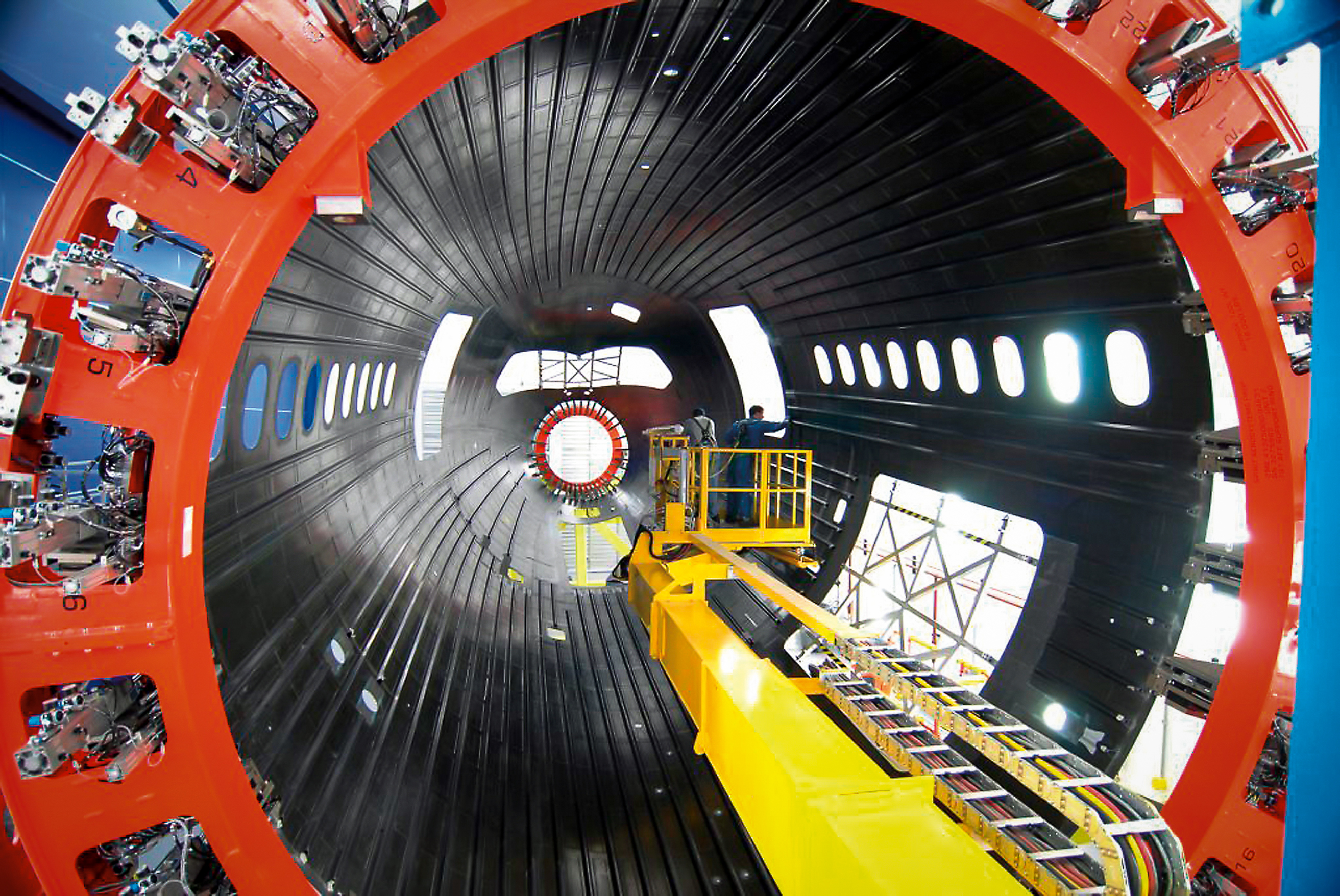
Large aircraft fuselage section under assembly inside a manufacturing facility as part of composite aircraft production work.
Boeing assembles a composite aircraft fuselage section in one of its production facilities. Composite materials are used in major portions of modern aircraft, including sections of the fuselage and wings on aircraft such as the Boeing 787. NASA’s HiCAM project aims to help accelerate manufacturing processes for future composite aircraft.
Boeing

NASA’s Hi-Rate Composite Aircraft Manufacturing (HiCAM) project brought together its full team of Advanced Composites Consortium partners for a 2026 spring review at NASA’s Langley Research Center in Hampton, Virginia.  

The meeting took place May 5-7, bringing together about 150 people from the consortium, a 22-member public-private partnership.  

The review gave NASA and industry partners a chance to look at recent progress and plan for the work ahead. NASA announced recent portfolio decisions, selecting technologies that can have the greatest impact on manufacturing rate for the next airplane program.   

During the meeting, teams reviewed the latest results from the project’s Development Phase and discussed early progress under Phase 2, known as the Demonstration Phase. This phase will scale up key manufacturing technologies in the coming years.  

A major part of the event included full-day workshops focused on assembly demonstrations of two large aircraft structures: the wing and fuselage. These sessions brought together NASA researchers, industry engineers, and partners to share updates, exchange ideas, and discuss long-term plans. Many teams said they noticed stronger collaboration and coordination across the group this year.  

That collaboration supports HiCAM’s goal of large-scale manufacturing demonstrations of a composite fuselage barrel and wing box in 2028 and 2029. These demonstrations represent major project milestones and will help show how advanced composite materials and processes could support faster, lower cost aircraft production.  

NASA and its partners continue to make steady progress toward the project’s goals. The project’s work could help pave the way for new manufacturing methods for lightweight composite structures that make future aircraft easier to build and more efficient to operate. 

Kimiko Booker
NASA Langley Research Center

Share

Details

Last Updated
Jun 04, 2026

Satellite maker Apex’s valuation rises to $2.3 billion after latest $200 million raise

5 June 2026 at 10:15
Apex assembly line

Apex has raised more than $200 million to expand in-house satellite production capabilities, announcing a funding round June 5 it says nearly doubled the four-year-old manufacturer’s valuation to $2.3 billion.

The post Satellite maker Apex’s valuation rises to $2.3 billion after latest $200 million raise appeared first on SpaceNews.

BYD says its cast aluminum frame is lighter, tougher, and safer than steel

2 June 2026 at 21:40

If you’re from Pittsburgh, you may want to sit down for this one: global EV sales leader BYD claims the aluminum frame that underpins its new Yangwang U8L SUV passes a brutal, 12 ton lift test – despite weighing over 100 lbs. less than a comparable steel frame.

Muon Space unveils Starship-class satellite platform for orbital data centers

3 June 2026 at 12:39

Muon Space announced a Starship-class satellite platform June 3 designed from the ground up to meet the demands of the emerging orbital data center market, with an initial launch slated for 2028 after securing customers.

The post Muon Space unveils Starship-class satellite platform for orbital data centers appeared first on SpaceNews.

❌