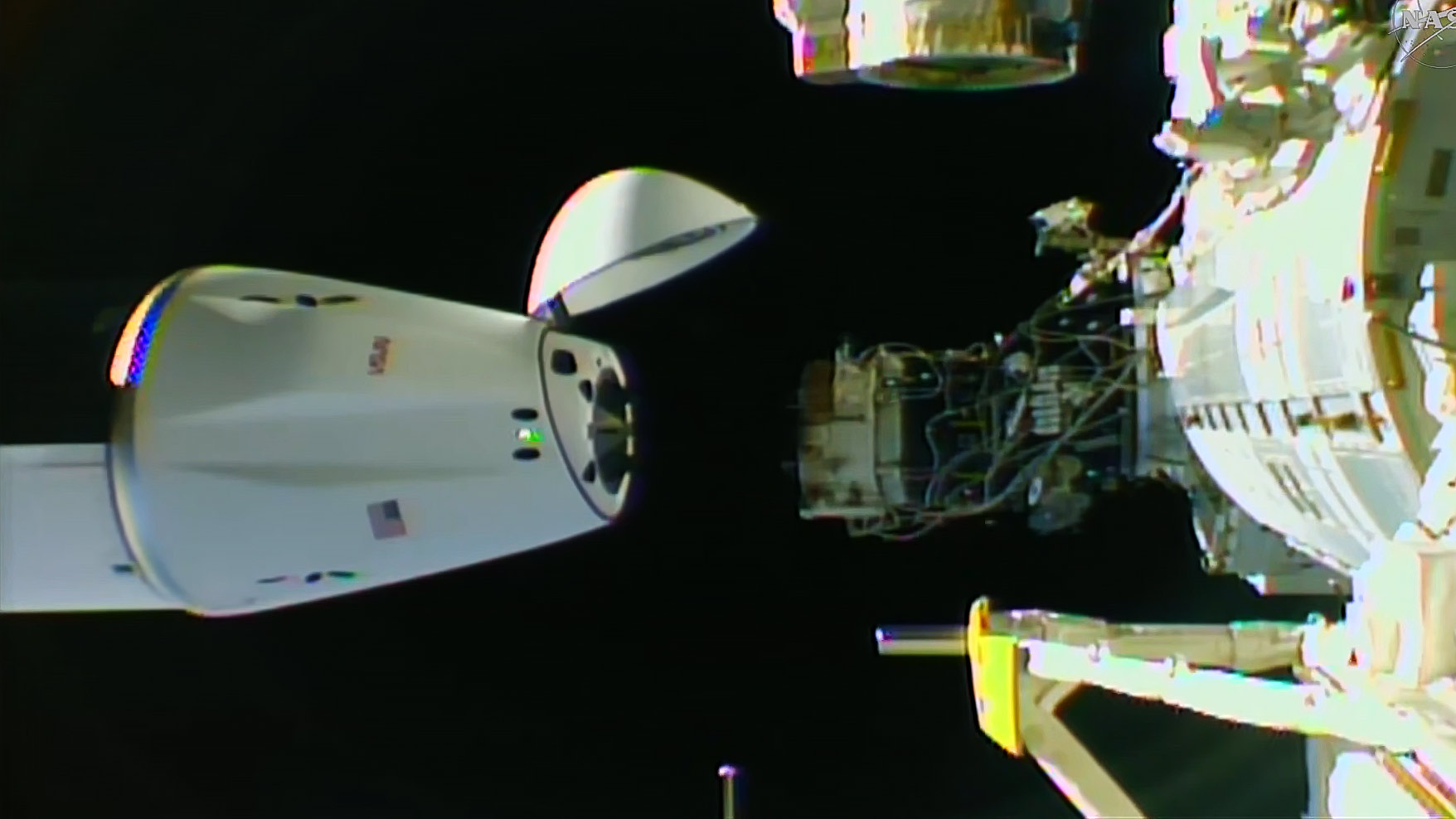
The SpaceX Dragon cargo spacecraft is seen shortly after undocking from the International Space Station’s forward port on the Harmony module.
NASA+
At 12:25 p.m. EDT, the unpiloted SpaceX Dragon spacecraft undocked from the forward‑facing port of the International Space Station’s Harmony module after a command from SpaceX ground controllers. Flight controllers delayed the undocking slightly to power‑cycle a navigation sensor and restore full redundancy before departure.
Dragon will reenter Earth’s atmosphere on Wednesday, June 17, before splashing down off the coast of California at approximately 5:08 a.m. PDT. NASA will not stream the splashdown but will post updates on its space station blog.
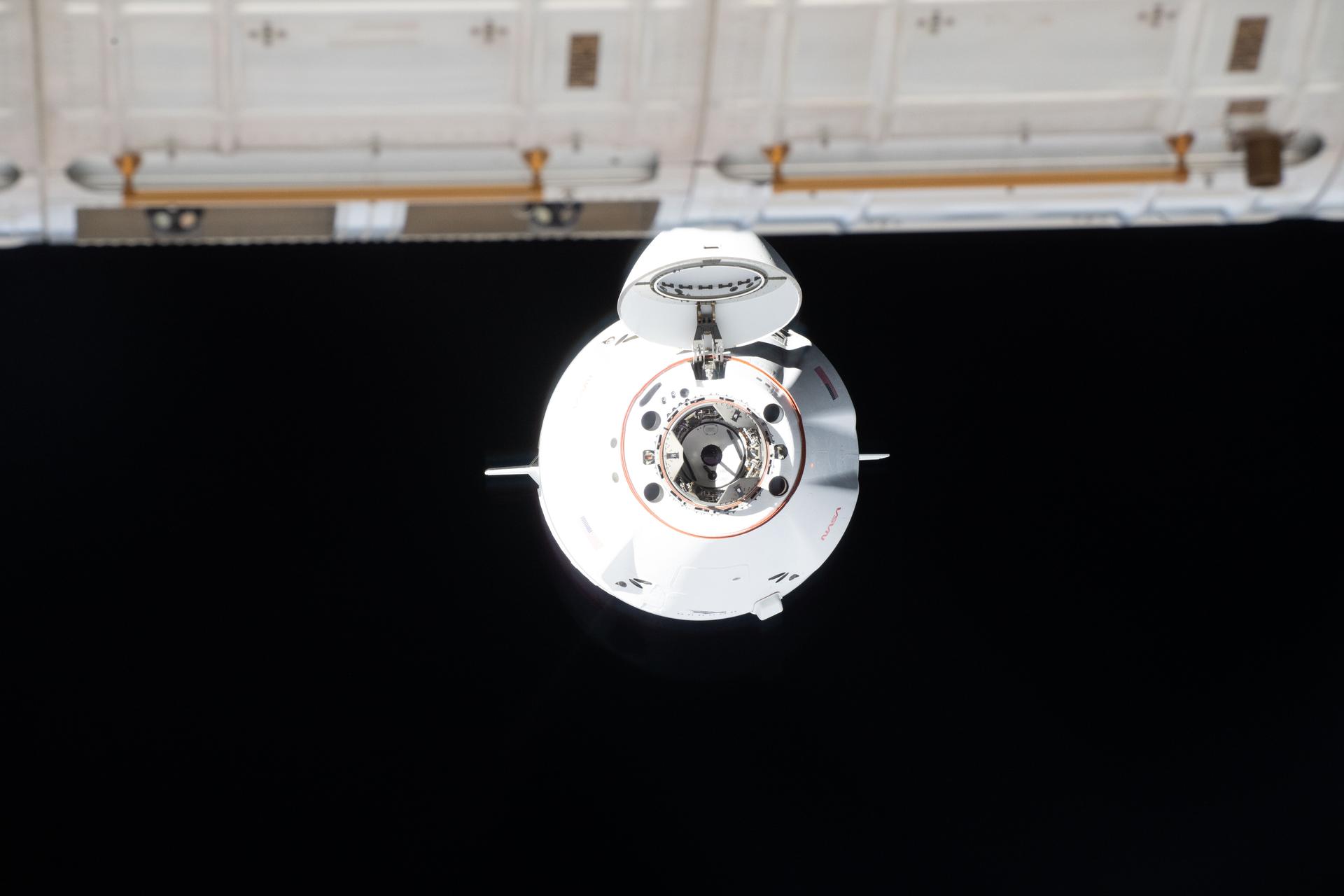
A SpaceX Dragon cargo spacecraft approaches the International Space Station for an automated docking to the Harmony module’s forward port on May 17, 2026. Dragon delivered nearly 6,500 pounds of food, supplies, and equipment for the Expedition 74 crew.
ESA/Sophie Adenot
NASA’s live coverage of the undocking and departure of 34th SpaceX commercial resupply services mission to the International Space Station for NASA is underway on NASA+, Amazon Prime, and the agency’s YouTube channel. Learn how to watch NASA content through a variety of online platforms, including social media.
The unpiloted SpaceX Dragon spacecraft will undock at approximately 12:05 p.m. EDT from the forward-facing port of the station’s Harmony module and fire its thrusters to move safely away from the orbital complex.
On Wednesday, June 17, Dragon will reenter Earth’s atmosphere before splashing down off the coast of California at approximately 5:08 a.m. PDT. NASA will not stream the splashdown but will post updates on its space station blog.
Dragon will return to Earth with thousands of pounds of cargo in one of the most research-packed returns in commercial resupply mission history, carrying samples that could shape future space exploration and life on Earth. Research returning on this mission includes bioprinted organ and cartilage tissue, data on improving cryogenic fuel storage for future space missions, and DNA‑inspired materials to develop new cancer treatments. The returning hardware includes an ocular imaging device used to monitor crew members’ eye health, a sorbent bed that filters trace contaminants from cabin air, and a separator pump from the waste and hygiene compartment.
Loaded with nearly 6,500 pounds of crew cargo and science experiments, Dragon arrived at the station on May 17 after launching two days earlier on a Falcon 9 rocket from Space Launch Complex 40 at Cape Canaveral Space Force Station in Florida.
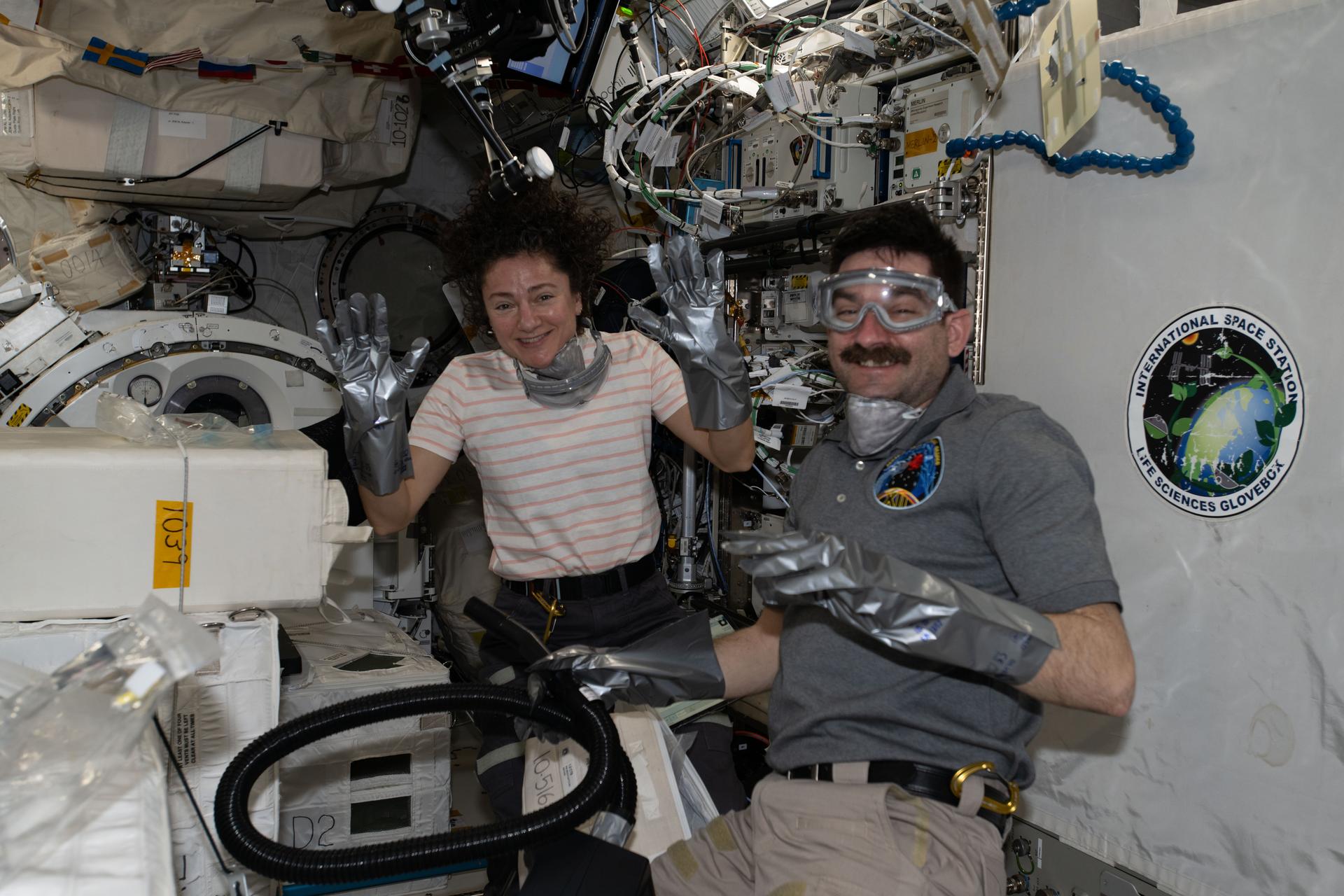
NASA astronauts Jessica Meir and Jack Hathaway wear disposable gloves, dust masks, and safety goggles while unpacking temperature‑controlled scientific samples from a SpaceX Dragon cargo spacecraft on May 17, 2026.
NASA/Chris Williams
The Expedition 74 crew members packed a SpaceX Dragon cargo spacecraft on Monday with sensitive science experiments and lab hardware for return to Earth. The orbital residents also configured spacewalking tools and conducted cardiac research to kick off the week aboard the International Space Station.
A SpaceX Dragon cargo spacecraft is scheduled to undock from the Harmony module’s forward port at 12:05 p.m. EDT on Tuesday ending its stay at the orbital laboratory that began on April 17. NASA+ will begin its broadcast of Dragon’s undocking and departure at 11:45 a.m. Dragon’s parachute-assisted splashdown in the Pacific Ocean off the coast of southern California the following day will not be televised.
The astronauts are partnering together transferring portable science freezers loaded with critical research samples and packing lab equipment into Dragon following a month of intense research into a variety of space-designed therapies to protect human health. The freezers house the results of investigations into stem cell manufacturing, cartilage tissue printing, and more to treat a range of conditions from blood diseases, cancers, and cartilage injuries. Doctors on the ground will analyze the preserved samples to gain advanced health insights unobtainable in Earth’s gravity environment.
NASA flight engineers Chris Williams and Jack Hathaway started the cargo work early Monday packing and securing station hardware inside Dragon for the ride back to Earth. Next, flight engineer Sophie Adenot of ESA (European Space Agency) installed the sample-packed freezers in Dragon where they will stay powered on preserving the biomedical specimens for retrieval on the ground. Finally, NASA flight engineer Jessica Meir capped off Monday’s shift with more scientific transfers then cleaned and inspected hatch seals on Harmony’s port where Dragon is docked.
Meanwhile, preparations continue for a spacewalk planned for June 30 to replace a wrist joint on the Canadarm2 robotic arm. Adenot began her shift in the Quest airlock charging lithium-ion batteries that power spacesuit gloves, helmet cameras, and pistol grip tools. Williams and Meir joined each other during a break in their Dragon packing and inspected tethers that secure astronauts to the orbiting lab during spacewalks.
Station commander Sergey Kud-Sverchkov and flight engineer Sergei Mikaev, both from Roscosmos, took turns wearing a series of arm, wrist, and finger cuffs measuring how living in space affects their blood pressure. Next, Kud-Sverchkov attached electrocardiogram sensors to his chest that will monitor his cardiac activity for 24 hours. Mikaev turned his attention to Earth observations, pointed a camera out a station window, and photographed landmarks across the Pacific Ocean including islands and volcanos.
Flight engineer Andrey Fedyaev began his shift transferring fluids and disinfecting tanks throughout the station’s Roscosmos segment. Fedyaev wrapped up his shift working on ventilation system maintenance and checking station lighting conditions and illumination levels.
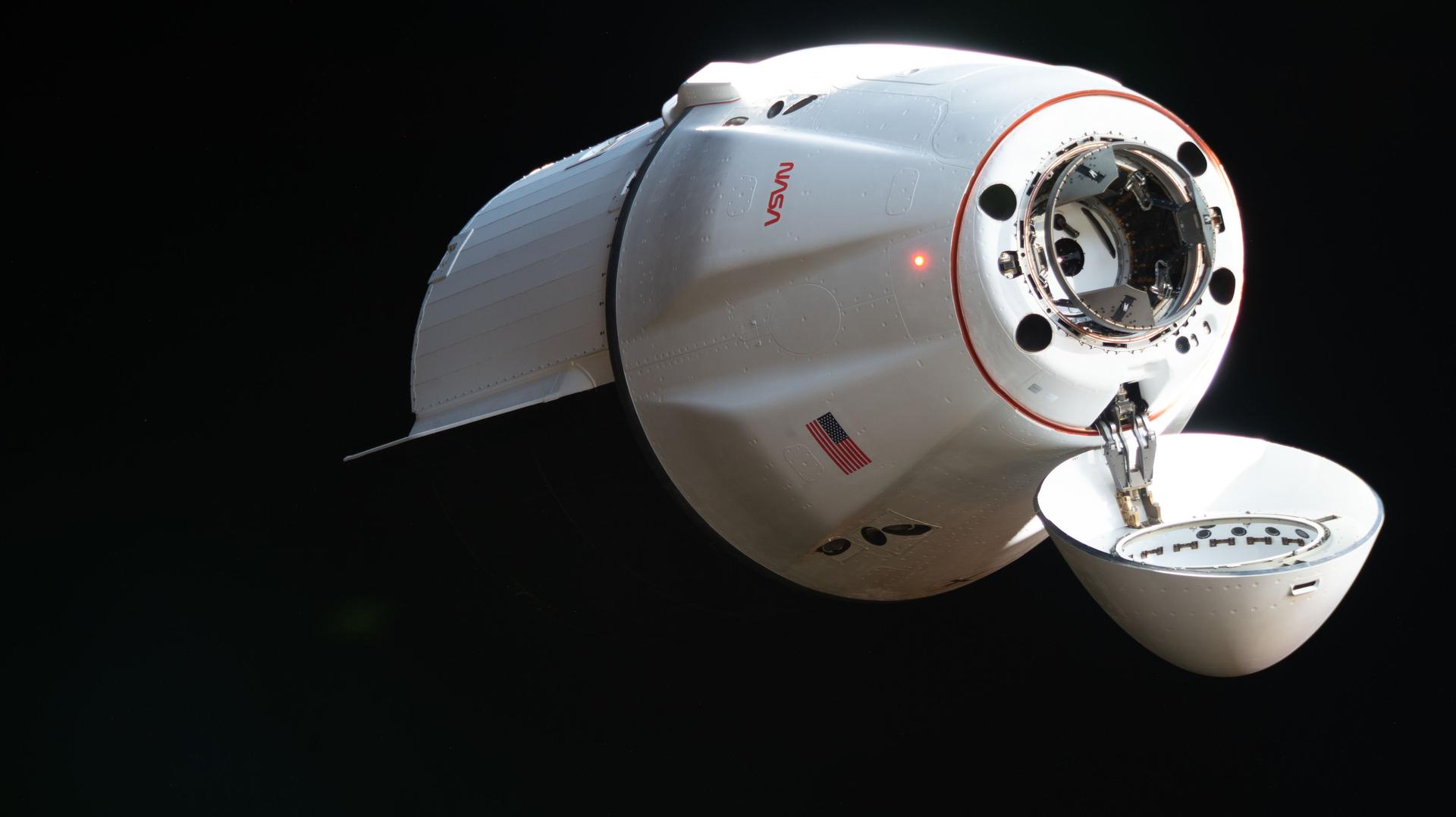
The SpaceX Dragon cargo spacecraft supporting the company’s 34th commercial resupply services mission for NASA approaches the International Space Station on May 17, 2026, carrying nearly 6,500 pounds of food, supplies, and equipment for the Expedition 74 crew.
Credit: NASA
NASA and its international partners are set to receive scientific research samples and hardware as a SpaceX Dragon spacecraft is scheduled to depart the International Space Station on Tuesday, June 16, for its return to Earth.
Watch NASA’s live undocking coverage beginning at 11:45 a.m. EDT on NASA+, Amazon Prime, and the agency’s YouTube channel. Learn how to watch NASA content through a variety of online platforms, including social media.
The Dragon spacecraft will undock from the forward port of the station’s Harmony module at about 12:05 p.m., after receiving a command from SpaceX ground controllers. The spacecraft then will fire its thrusters to move safely away from the orbiting complex.
Following a June 16 departure, the spacecraft will reenter Earth’s atmosphere on Wednesday, June 17, before splashing down off the coast of California at approximately 5:08 a.m. PDT. NASA will not stream the splashdown but will post updates on its space station blog.
Dragon will return to Earth with thousands of pounds of cargo, carrying samples that could shape future space exploration and life on Earth. Research returning includes bioprinted organ and cartilage tissue, data on improving cryogenic fuel storage for future space missions, and DNA‑inspired materials to develop new cancer treatments. The returning hardware includes an ocular imaging device used to monitor crew members’ eye health, an absorbent bed that filters trace contaminants from cabin air, and a separator pump from the waste and hygiene compartment.
Loaded with nearly 6,500 pounds of crew cargo and science experiments, Dragon arrived at the station on May 17 after launching two days earlier on a Falcon 9 rocket from Space Launch Complex 40 at Cape Canaveral Space Force Station in Florida.
For more than 25 years, people have lived and worked continuously aboard the International Space Station, advancing scientific knowledge and making research breakthroughs not possible on Earth. The space station helps NASA understand and overcome the challenges of human spaceflight, expand commercial opportunities in low Earth orbit, and build on the foundation for long-duration missions to the Moon, as part of the Artemis program, and to Mars.
Get breaking news, images, and features from the space station on Instagram, Facebook, and X.
Learn more about International Space Station research and operations at:

 Login