Idiopathic pulmonary fibrosis appears to be linked to a receptor that’s responsible for keeping bacteria in check. Plus, scientists’ thoughts on Microsoft’s newest quantum chip and what drives us to want to socialize.
Ötzi the Iceman, Europe’s most famous mummy, is crawling with microbes, some long dead, some still eking out a living after thousands of years, and some very modern.
After he died in the Ötztal Alps, the Copper Age man now known as Ötzi lay alone and forgotten for 5,300 years, until a group of hikers stumbled on his freeze-dried remains in 1991. Since then, he’s received a lot of attention from scientists, who have sequenced his DNA, pored over his last meal and the remains of his gut microbes, and examined his clothes and his broken tools. Today, Ötzi lies in a high-tech resting place at the South Tyrol Museum of Archaeology in Italy, where, it turns out, his body is still home to a handful of cold-adapted yeast species that have probably been with him since just after he died.
Slightly morbid souvenirs from the Alps
Microbiologist Mohamed S. Sarhan (of the Institute of Mummy Studies at the private Eurac Research center) and his colleagues recently sampled material from Ötzi’s stomach and meltwater from inside his body, swabbed his skin, and even sampled airborne microbes from his frozen storage room and the lab outside it. They also took samples from a block of frozen alpine soil taken from next to Ötzi’s body back in 1991.
Researchers have uncovered why a common and costly dental implant infection often resists antibiotics. Dental implants have helped tens of millions of people regain a full set of stable, functional teeth, something traditional dentures cannot provide. However, between 10% and 20% of implant recipients eventually develop peri-implantitis, a serious infection that damages the jawbone around [...]
Domestic animals have long been some of our closest companions. While dogs, cats, horses, cattle and chickens have all played major roles in human history, domestic pigeons may be a little less familiar. But they are no slouch when it comes to cultural importance.
Now, new research exploring ancient human-pigeon interactions in Cyprus has provided fascinating insights into the earliest stages of this millennia-long inter-species relationship.
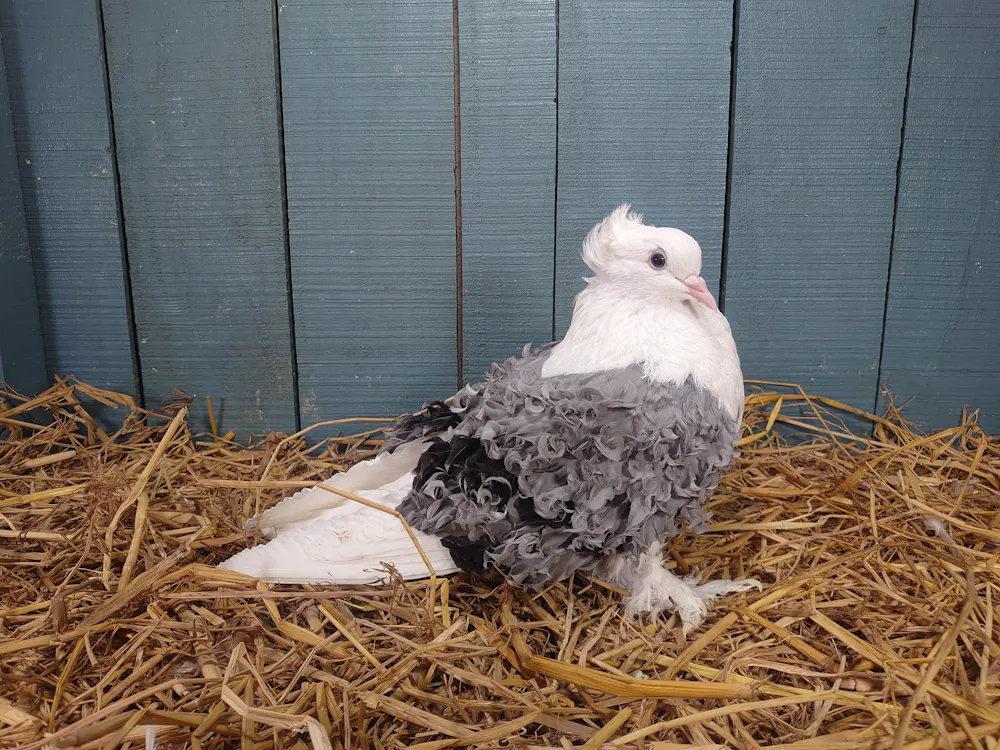
There are over 300 breeds of domestic pigeon, from homing pigeons used in competitive racing to the peculiar frillback, which looks like it has survived a rather nasty electric shock. In 2020, a Belgian racing pigeon named New Kim sold for €1.6 million (£1.4 million).
But despite their contributions to contemporary society, we still know little about the origins of these pigeons.
The wild form of all domestic pigeon breeds is a slate-grey bird called the rock dove. Wild populations can still be found in parts of Europe, Africa and Asia.
Rock doves are very shy, living on cliffs and nesting in caves. I study them in Scotland’s Outer Hebrides, where colonies can be seen foraging for grain in fields. Scientists believe that these birds first learned to steal crops thousands of years ago, thus increasing our ancestors’ proximity to them.
Soon, they became a regular source of meat and, thanks to their copious droppings, fertiliser. This led to rock doves being pulled down an evolutionary route which has, over centuries, resulted in today’s proliferation of domestic breeds – plus their superabundant feral city pigeon offshoots, found soiling statues worldwide.
However, the where and when of the earliest phases of this process have remained unclear.
Earliest evidence of domesticated pigeons
Scientists generally think that pigeons were first domesticated in the Middle East and/or the eastern parts of the Mediterranean.
Until now, the earliest direct evidence for domesticated pigeons came from a site in Hellenistic Greece around 2,300 years ago. Depictions of pigeons in Iraq, more than 4,000 years ago, suggest a much earlier relationship – but these are not conclusive evidence.
Plus, it’s tricky to tell domestic and wild birds apart from the shape of their bones alone. For decades, those of us studying pigeons have had to handwave this evidence in our writing, saying they were “probably domesticated as early as 3,000 years ago”.
In Cyprus, small amounts of pigeon bones had previously been found at Neolithic sites (more than 10,000 years old), suggesting there was sporadic hunting of these birds.
Then, starting in the Bronze Age (3,650-3,950 years ago), pigeon figurines became common in Cyprus, and the island developed a strong association with these birds. It was identified in early Greek literature as the birthplace of the love goddess Aphrodite, who is often depicted alongside flocks of doves.
In the new study, researchers examined a collection of bones collected at Hala Sultan Tekke in Cyprus – historically an important city; now a mosque and archaeological site – dating back to the Late Bronze Age, about 3,350 years ago.
Their assessments included a technique called stable isotope analysis, using chemical signatures in the bones to make inferences about what the birds ate. This showed their diets were similar to those of their human neighbours. Rock doves must have been living alongside people at that time, who may even have been deliberately feeding them.
The range of chemical signatures was, as with humans and cattle (but different from fallow deer and other wild species), low. This reflects a consistent diet of grains – a diet shared by humans that could be evidence that the birds were managed by them.
However, three of the 37 pigeons assessed had quite different chemical values – aligning more with wild animal species than humans. This suggests a potential split between cave-dwelling birds (which might have been hunted in the wild and brought back to eat) and full-time urban pigeons which interacted with humans in a more intense way.
A more intimate relationship
Pigeons are well-established as being an ancient part of the human diet. Our Neanderthal cousins hunted them in the caves of Gibraltar as early as 67,000 years ago. But what’s exciting about these new results is that they suggest a much more intimate relationship than predator and prey.
Perhaps most interestingly, some of the bones had been burnt and buried in ritual spaces. Earlier excavations carried out as part of previous research at the same site found a pigeon within a tomb containing an adult man. This suggests rock doves may have had an important cultural role in Cyprus.
Whether this relationship can be called domestication is up for debate. For most of us biologists, domestication involves evolutionary changes occurring due to human use. This is different to our relationship with species like house sparrows, say, which live alongside us but are not managed for use – whether in terms of food, labour or recreation.
Further research tracking human-pigeon interactions through time and space is needed to help us judge exactly when and where domestication-related changes in pigeons’ genetics and appearance began.
Nevertheless, the new study’s results strongly indicate that ancient humans had an intimate interaction with a species which has gone on to become one of the most important birds in our history. Knowing this relationship was active more than 3,000 years ago in Bronze Age Cyprus should help us appreciate the importance of this unique human-animal interaction.
Will Smith's research on rock doves has previously been funded by the Edward Grey Institute and the John Fell Fund (both of the University of Oxford), the British Trust for Ornithology, the Scottish Ornithologists' Club, the British Birds Charitable Trust, the Houghton Trust, and the John Muir Trust. His research is currently funded by the University of Nottingham, the Leverhulme Trust (as an Early Career Fellow), the Genetics Society, and the British Ecological Society. He played no role in the research which is the focus of this article.
Improved fractionation strategies can identify antibiotics with previously unseen scaffolds and mechanisms, exemplified by manikomycin from Streptomyces rimosus, which acts by targeting the E-site of the bacterial large ribosomal subunit.
Centromeric DNA repeat insertions and CENP-A chromatin assembly are identified as genomic signatures that preserve telomere integrity in ALT cancer cells.
One way archaeologists learn how ancient people, including Neanderthals, did things is to attempt to do those things themselves, a process called experimental archaeology. Normally, that involves making stone tools, butchering deer, or distilling birch tar. But in a new study, it meant doing very destructive things to teeth from one of the world’s most carefully protected animals.
That's because the archeologists suspected that Neanderthals once used rhino teeth as tools. By using the teeth to make stone tools, the researchers demonstrated that Neanderthals probably did the same thing, adding to what we know about the wide range of items in their toolkits.
We need to hit some rhino teeth with rocks for science
Some Neanderthal archaeological sites in Europe and Asia seem to have many more rhinoceros teeth lying around than you’d expect. We know Neanderthals hunted a now-extinct species of rhinoceros in Europe and eastern Asia, but the people who had inhabited these sites looked like they had been collecting rhino teeth for some reason.
An analysis of tide gauge data from around the world provides more precise constraints on local vertical land motion, which can help refine projections of relative sea-level change.
 Login