
❌

Normal view

Our First View of the Surface of Mars
20 July 2026 at 16:38
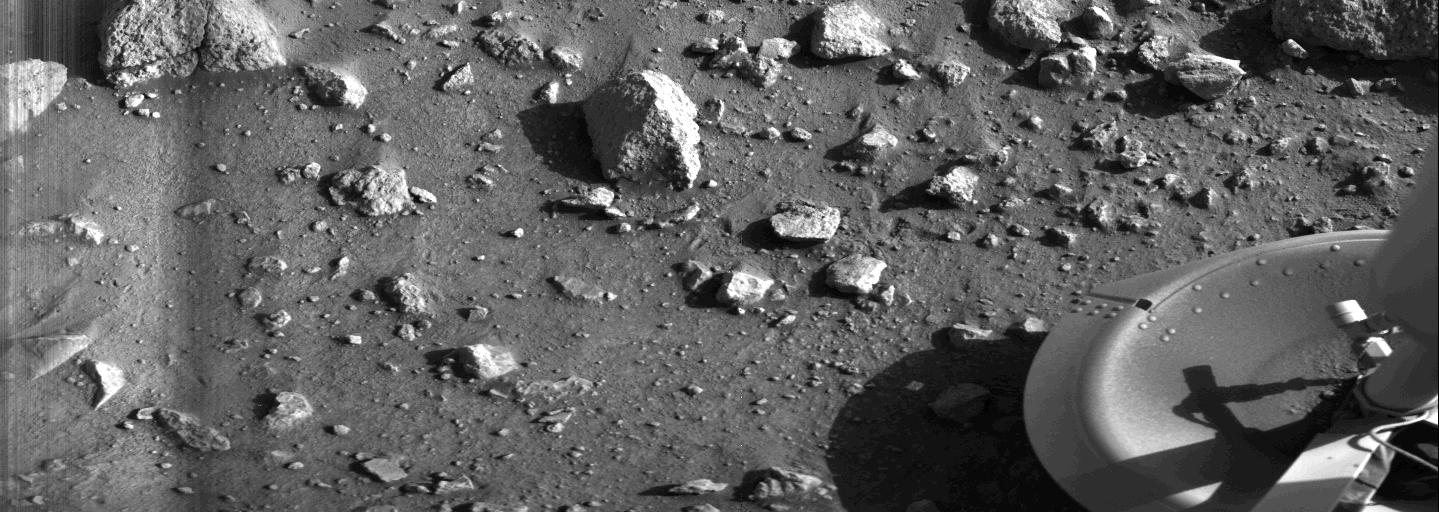
Angular rocks cast long shadows over the finely granulated dust, that dominates that surroundings of one of the Viking 1 lander’s landing pads, seen in the lower right corner.
On the morning of July 20, 1976, roughly 40 minutes after mission controllers received word that the Viking 1 lander had successfully touched down on the surface of Mars, this photo gave us our first view from the surface of another planet.
NASA/JPL

β€œTouchdown, we have touchdown!” At 5:12 a.m. PDT, July 20, 1976, mission controllers at NASA’s Jet Propulsion Laboratory erupted in cheers as they learned that the Viking 1 lander had survived its descent through the thin Martian atmosphere. Forty minutes later, the lander’s first image began to appear on their monitors, slowly forming line by line from left to right. For the first time, humans were able to see Mars’s rocky terrain from its surface.

Dr. Thomas Mutch, leader of the Viking lander imaging team, described the moment: β€œI studied the black screen, waiting for that narrow strip that will signal the first few lines of the first picture. And it appeared. A sliver of electronic magic. Areas of brightness and darkness. The picture begins to fill the screen. Rocks and sand are visible and β€” finally at the far right β€” one of the spacecraft foot pads, a symbolic artifact that stamps our accomplishment with the sign of reality. Time and time again I repeat, β€˜It’s incredible.’”

Fifty years ago today, the Viking 1 lander became NASA’s first robot to explore Mars’s surface and begin the search for signs of life in our solar system. Viking 1 was joined six weeks later by its twin lander, Viking 2, which explored a different region of Mars, while two mission orbiters that delivered the landers to the Red Planet continued to collect data from space and helped relay communications to Earth.

Learn more about what Viking found and NASA’s legacy of discovery on Mars at Viking: 50 Years on Mars.

Image credit: NASA/JPL
First Steps: America’s Grueling Second Spacewalk

5 June 2026 at 16:47
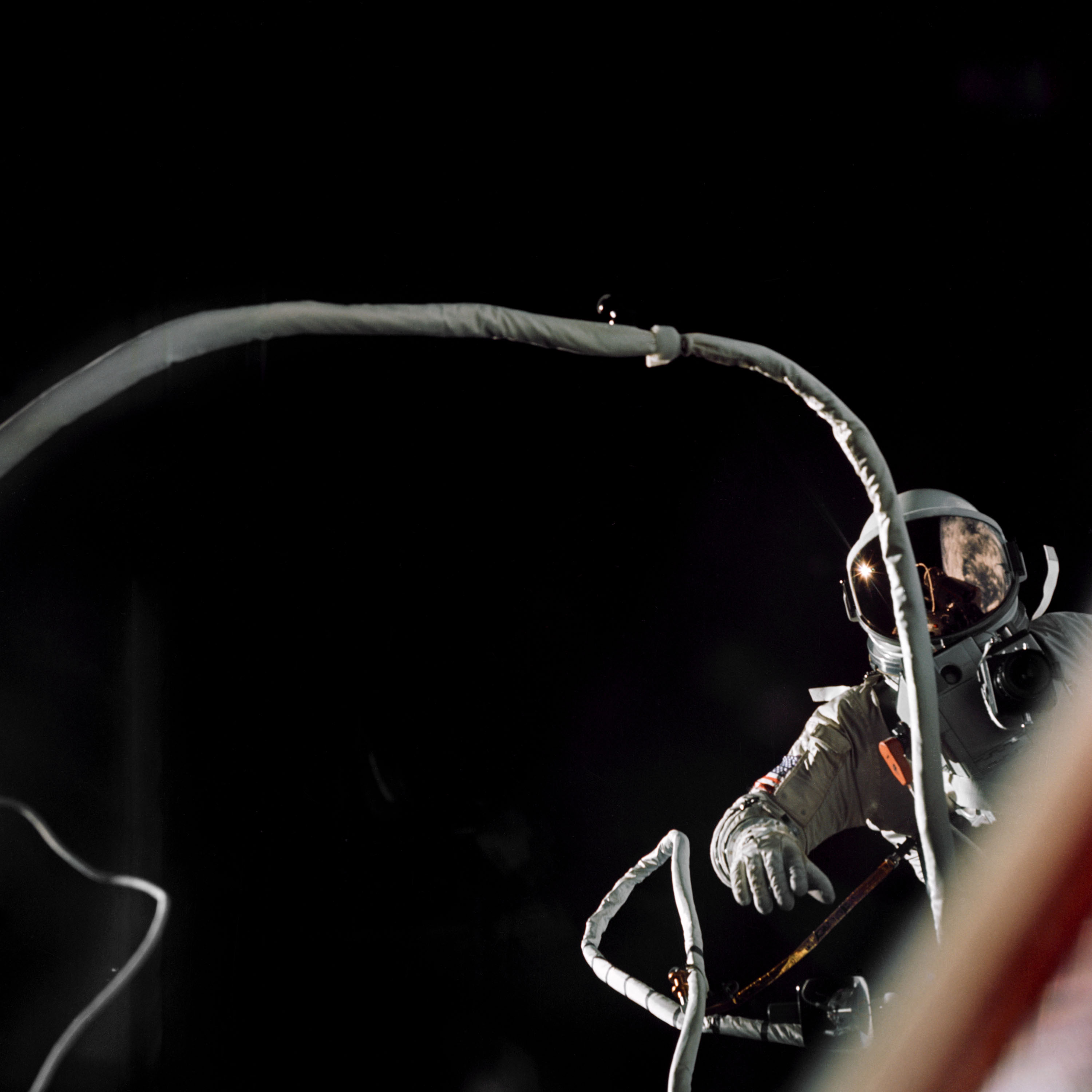
Gemini IX-A astronaut Gene Cernan is backdropped by the blackness of space during America’s second spacewalk on June 5, 1966. His umbilical drifts across the foreground, partially obscuring the view of the astronaut.
A year after America’s first spacewalk, Gemini IX-A Eugene Cernan stepped outside his spacecraft for an ambitious extravehicular activity scheduled for 167 minutes. The challenges he faced led NASA to reevaluate plans, equipment, and training for future spacewalks.
NASA

One year after Gemini IV astronaut Edward H. White completed NASA’s first spacewalk the agency prepared for a demanding second excursion. Originally scheduled for Gemini VIII, the extravehicular activity (EVA) was reassigned to Gemini IX-A after that mission ended early, with Gene Cernan taking on the task.

On June 5, 1966β€”the mission’s third dayβ€”Cernan exited the spacecraft and quickly found himself fighting his own equipment. His spacesuit was so rigid that even simple movements required intense effort. He struggled to complete the simplest maneuvers.

Within minutes, Cernan was exhausted and sweating profusely. His spacesuit was cooled only through the circulation of oxygen and as he worked to complete the goals of the EVA, his helmet fogged over completely, obstructing his view and his heart rate rose to about 180 beats per minute. As concerns grew that he might lose consciousness, the EVA was called off and Cernan’s spacewalk ended after two hours and eight minutes.

When Gemini IX-A returned to Earth, doctors found that Cernan had lost 13 pounds during the three-day mission, most of it water lost during his EVA.

The challenges Cernan faced that day reshaped NASA’s approach to spacewalking. His experience directly influenced improved training methods, refined EVA procedures, and precipitated advances in spacesuit designβ€”key steps in preparing astronauts for lunar surface missions just a few years later.

Credit: NASA

❌