
❌

Normal view

A black fungus is thriving in the midst of Ireland’s whiskey boom – we need to know more about it

Irish whiskey is one of Ireland’s great export success stories. Exports were worth over €930 million in 2025, with the country’s much-loved spirit being sold all over the world.

Even amid difficult international trading conditions, with concerns around tariffs for export to the US, exports to the EU have grown by more than 21% in four years.

However, while thousands of barrels quietly mature in warehouses around Ireland, something else is happening outside some of them. On walls, roofs, road signs, trees and other surfaces close to some whiskey maturation facilities, a distinctive black patina appears.

It may look like soot or air pollution, but in some cases the culprit is a fungus: Baudoinia, commonly known as “whiskey fungus” or “whiskey black”, and fuelled by the presence of ethanol alcohol in the air.

Despite the fact it has been known about for years, there has been surprisingly little research on its effects, such as whether the fungus can spread from distilleries to nearby properties, including residential homes.

Ethanol alcohol emissions from the industry are also thought to contribute to ground level ozone, a harmful air pollutant. But we don’t know whether the fungus has any adverse consequences for people’s health. It may not be dangerous at all, but this is something we are investigating through a project at Dublin City University.

The angels’ share

During maturation, ethanol and other volatile compounds evaporate and pass through the porous cask. They then enter the surrounding atmosphere around the distillery. This portion of the whiskey is often known as the “angels’ share”.

A review commissioned by the Scottish government estimated that more than 90% of non-methane volatile organic compound (NMVOC) emissions associated with whiskey production occur during maturation.

NMVOCs are chemicals that participate in atmospheric reactions and contribute to the formation of pollutants like ground-level ozone. Ethanol alcohol overwhelmingly dominates these emissions from whiskey production.

As they condense into the air moisture, these ethanol vapours also create an unusual ecological niche. Baudoinia can occur naturally at very low abundance, but exposure to this airborne alcohol can favour its growth.

Around maturation warehouses, this can result in conspicuous dark fungal growth on exposed surfaces. The association has been recognised for more than a century, initially around cognac maturation facilities in France, and has subsequently been documented around spirit maturation warehouses in Scotland, Canada and the US.

Whiskey fungus
Image of a Baudoinia lab culture. JA Scott et al., CC BY

Black discolouration

So can whiskey fungus spread from distilleries to nearby properties, causing unsightly dark growth in people’s homes? In 2022, following a complaint about black discolouration on houses close to the Midleton distillery in county Cork, the Irish Environmental Protection Agency (EPA) investigated whether Baudoinia was present.

While the fungus was identified on a whiskey warehouse, it was not detected on any of the three nearby residential properties sampled.

There are still major gaps in what we know about whiskey fungus in Ireland, such as how far it travels, what controls its growth, and what, if anything, its presence tells us about ethanol concentrations in the surrounding environment.

A recent review led by researchers at University College Cork suggests that ethanol may play several roles for the fungus. It may act as a germination signal and as a source of carbon to support the growth of the fungus.

Research around whiskey maturation warehouses also suggests that the extent of visible colonisation depends on factors including distance from the ethanol source, prevailing wind, moisture and the type and texture of the surface available for colonisation.

Ireland has commitments to reduce NMVOC emissions under the EU National Emission Reduction Commitments Directive. As mentioned, these NMVOC emissions can help produce ozone, a harmful air pollutant that damages vegetation and crops, reduces lung function and aggravates respiratory conditions such as asthma. It is also a greenhouse gas that contributes to climate change.

The difficulty is knowing precisely how much ethanol is being released. National inventories generally rely on production data and emissions factors. These are useful for estimating emissions across an industry, but they do not necessarily tell us what is happening around an individual maturation facility – how emissions change with the number and age of barrels, how ethanol disperses beyond a warehouse boundary, or how weather conditions affect local concentrations.

Baudoinia growing on sycamore branch (top), alongside fungus free bark. Rosser1954 Roger Griffith, CC BY-ND

Is whiskey fungus dangerous?

However, it’s important not to jump from the presence of a striking black fungus to conclusions about health. The Scottish government review of the available literature found no evidence demonstrating health effects from short- or long-term exposure to Baudoinia. However, it also identified important evidence gaps and recommended further investigation and environmental monitoring.

So, there are two assumptions we should avoid. One is that because something looks alarming, it must be dangerous. The other is that because harm has not yet been demonstrated, there is nothing worth investigating. What we need is evidence.

That is the purpose of the new research project we are undertaking at Dublin City University, in collaboration with the University of Toronto. The EPA-funded EREG project is tasked with investigating the ethanol emissions from maturation facilities and the environmental distribution and biology of Baudoinia in Ireland.

We will combine emissions estimation, environmental monitoring and microbiology and examine how whiskey maturation emissions are currently regulated. We will also engage with the industry, regulators and communities. In fact, if you live near a whiskey maturation facility in Ireland and have noticed this black staining, we want to hear from you.

Ireland does not need to choose between a successful whiskey industry and environmental protection. The objective is to develop the evidence needed to allow the industry to grow sustainably while ensuring that communities and the environment are appropriately protected. The angels’ share is an unavoidable – and much celebrated – part of making whiskey.

But from an environmental science perspective, there is another question worth asking: once the angels have taken their share, where does it go next?

The Conversation

Jenny Lawler's research in this area is funded under the EPA Research Programme 2021–2030, Delivering a Healthy Environment, Project 2025-HE-1317 (EREG: Ethanol Emissions and Fungal Growth from Irish Whiskey Maturation: Implications for Environmental Monitoring & Regulatory Compliance). The EPA Research Programme is a Government of Ireland initiative funded by the Department of Climate, Energy and the Environment.
Cracking the code: can AI help us decipher ancient languages?

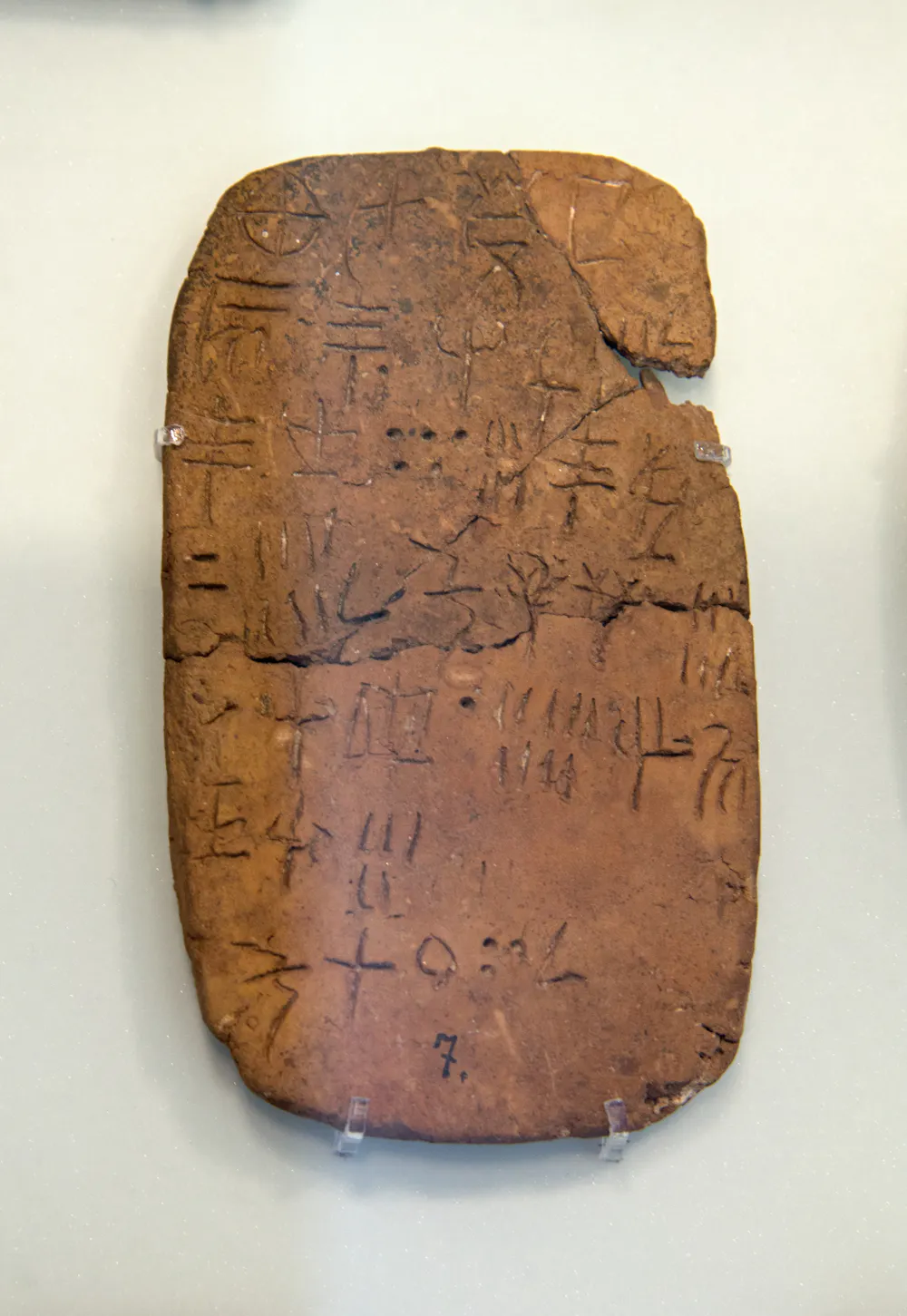
Every ancient language that has ever been deciphered needed an anchor. Usually that’s a bilingual text, like the Rosetta Stone, or a known relative to compare it to. Linear A, the writing system of the Bronze Age Minoan civilisation on the Greek island of Crete, has neither.

Linear A is described as a “language isolate” because it has no confirmed link to any known language, living or dead. As such, it has posed a significant challenge for linguists over the past century.

Etruscan, a language of Italy that was used before the rise of the Roman Empire, has fared only slightly better. A partial vocabulary has been collected from short funerary inscriptions, but its grammar and deeper meaning still elude linguists.

Both languages are exactly the kind of puzzle that AI has recently been pulled into – not by replacing the linguists, but by supercharging their hunches. So does AI actually stand a chance of finishing what a century of human effort hasn’t?

A recent case shows both the appeal and the catch. In June 2026, a self-taught AI engineer and amateur linguist claimed a breakthrough on Linear A. It started from a single guess that one unknown word in a prayer inscription derived from a Semitic root meaning “to dwell” or “to inhabit”.

He then used AI-built programming scripts to test that sound-pattern against the rest of a collected Linear A corpus. He was reportedly able to assign values to 40 signs and compiled a 408-word lexicon, showing – in his view – that Linear A is an extinct member of the Semitic language group, which encompasses languages such as Hebrew and Aramaic.

The need for creativity

It’s worth being precise about what AI did and didn’t do here. It didn’t have the idea. The engineer did.

The AI was the research assistant. It rapidly cross-checked a human hypothesis against thousands of characters, work that would have taken a human months by hand. That division of labour is the pattern currently worth paying attention to, far more than any single claim that is still under review.

Linear A inscription on a clay tablet from Hagia Triada, Crete, probably dating to the 15th century BC. From the Archaeological Museum of Heraklion.
Linear A inscription on a clay tablet from Hagia Triada, Crete, probably dating to the 15th century BC. From the Archaeological Museum of Heraklion. Zde, CC BY-SA

So where does AI actually help, and where does it hit a wall? It’s genuinely strong at large-scale pattern testing. It can check whether a hunch about one sign or word holds up across an entire archive in minutes instead of years. It can spot repeated sequences a human eye would miss, and restore damaged or fragmentary inscriptions by predicting likely missing characters.

AI also does something distinct called “cross-lingual transfer”, where a model trained on a known language can sometimes infer patterns in a closely related unknown one. This is similar to how knowing Spanish helps you guess at Portuguese.

Researchers have already used this kind of approach successfully on scripts such as Ugaritic, where the language family is known. Ugaritic is an extinct Semitic language, spoken during the late Bronze Age (about 1300-1190BC) in the ancient coastal city of Ugarit (in what is now Syria).

But there’s a hard ceiling: statistical pattern matching can’t manufacture meaning out of nothing. It needs an anchor – a known language family, or a bilingual text – to tell it which patterns are meaningful and which are coincidence.

Linear A and Etruscan are hard precisely because that anchor is missing or incomplete, and no amount of computing power invents one from scratch.

Scant evidence

With a large enough corpus, an AI model could hypothetically get fluent enough to converse with a Minoan or Etruscan speaker on the model’s own statistical terms. This means that it could recognise repeating patterns of words and other structural units of a language that would allow the AI model to repurpose the terms in a different context. One that might approximate a limited conversation, at least on the surface.

But the AI system still wouldn’t be able to hand a human a translation, because fluency and meaning aren’t the same thing here. The model can learn which signs follow which, and which words cluster together, without ever knowing what any of them actually refer to.

This is also why verifying any AI-assisted claim about these languages is so difficult, and it’s a problem bigger than any one case. Normally, you’d check a proposed translation or interpretation against native speakers, other texts or expert consensus built up over decades. None of that exists for a genuinely undeciphered language. Short of a time machine, there’s no way to check.

Small surviving corpora make this worse: Linear A’s entire surviving corpus is about 7,500 characters, short enough to fit on a single screen and with that little data, almost any hypothesis can find scattered matches to support it.

That is why claims in this space lean so heavily on independent expert scrutiny and peer-review rather than statistical confidence scores. It is also why “AI found a pattern” and “AI found the correct meaning” are very different claims that are easy to blur together.

None of this means that AI is a dead end for these languages. Quite the opposite: it’s a real accelerant, able to compress years of manual cross-referencing into mere minutes and let more people attempt these problems than institutional resources ever allowed.

But it doesn’t remove the two ingredients that decipherment has always required. One is a genuine comparative anchor. The other is rigorous human review, to tell a real breakthrough from an appealing coincidence.

Until one of those shows up for Linear A or Etruscan, AI’s role in deciphering languages will stay what it is today: a very fast assistant to a very old, very human puzzle.

The Conversation

Jane Adkins receives funding from Údarás na Gaeltachta and the Department of Culture, Communications and Sport through the eSTÓR project at the Science Foundation Ireland funded ADAPT Centre.

Geometry, football and the World Cup final

Spain will play Argentina in the Fifa World Cup final on Sunday. The highly anticipated match takes place in New Jersey’s MetLife Stadium, with the teams vying for the most coveted prize in football.

Attacking flair and physicality will no doubt play a role. But we could also see an underappreciated element of football come to the fore: geometry.

In their 2-0 World Cup semi-final win over France, Spain formed neat passing triangles around the French players. This sometimes made it look as if Spain had extra people on the field.

Wherever a Spanish player received the ball, two teammates appeared at different angles – with their French opponents seemingly always arriving a fraction too late.

The triangle mattered not because it was neat, but because it gave Spain choice and France uncertainty. Each pass forced a French defender to commit to one possible future: press the ball, block the inside route, or protect the space behind. By the time that choice was made, the ball had often moved and the geometry had changed again.

Spain were not simply finding space. They were controlling when and where the next space would appear.

Forcing choices

Put three attackers in a straight line and one defender can often block both supporting players. But move one supporting player sideways and the passing lines separate.

The defender must choose which route to close. Press the ball and a pass can go around them. Protect the inside route and the outside may open. If another defender steps across, a Spanish player can attack the space left behind.

A useful football triangle does not need equal sides or 60-degree angles. Its best shape changes with defenders’ positions, body orientation, ball speed and the space available.

A narrow triangle is easy to squeeze because one defender may block both lanes. A wide one makes the pass travel farther, giving an opponent more time to intercept it.

In their semi-final match against France, Spain found the middle ground again and again – close enough for quick combinations, but far enough apart to stretch France’s press.

A pitch made of probabilities

Football geometry is a problem of time as well as space. A passing lane is not open simply because no defender is standing in it. The key question is whether the ball reaches the receiver before an opponent reaches the interception point.

A diagram shows where players are – but a useful model of the game asks where players can get to. Research using player-tracking data estimates control of the pitch from players’ position, direction, speed and acceleration. The result is a constantly changing map of who is most likely to reach each area first.

Pedro Porro’s 58th-minute semi-final goal offered a compact example when, after exchanging passes with teammate Dani Olmo, he continued his run to score Spain’s second. The first pass shifted the defenders’ focus. Porro’s movement created a new angle for the return.

A living network

Three-player combinations make this idea even harder to defend. Spain’s strength was not just one triangle, but the speed with which several overlapped. A midfielder could be one corner of multiple shapes, connected to a defender, full-back, winger and another midfielder.

Passing-network research describes players as points and passes as links. Yet a final network diagram for a given football match misses something important: Spain were rebuilding those links with every movement and first touch they made.

The value of a pass is not only where the ball goes, but how it changes what could happen next. That is why ten sideways passes are not automatically better than one pass that removes two defenders.

The shape that conquered basketball

Triangles are not unique to football. Under head coach Phil Jackson (1987-1998), US basketball team the Chicago Bulls made frequent use of a tactic called Tex Winter’s triangle offence. This places three players on one side of the court to create passing, cutting and scoring routes.

The sport was different but the principle was the same: triangles preserve alternatives. Close one route and another remains; follow the ball and space opens elsewhere.

In their match against Spain, France’s problem was not simply a lack of running. Pressing works only when several defenders move together and close connected passing options.

After the match, Kylian Mbappé said there had been “a lack of communication” in France’s pressing. Spain kept moving before France could reorganise.

A triangle on a tactics board does nothing by itself. Its power depends on players scanning before receiving, opening their bodies, and using the first touch to preserve the option of more than one next action.

The deeper contest was between Spain’s speed of reconfiguration and France’s speed of recognition. Spain kept changing the problem faster than France could solve it. The triangles were visible – but their real advantage was control over what could happen next.

Will we see a similar approach deployed in the final? Argentina will no doubt be closely studying their opponent’s tactics from other matches. But geometry will still play a prominent role – and may even prove a deciding factor.

The Conversation

Conor Boland does not work for, consult, own shares in or receive funding from any company or organisation that would benefit from this article, and has disclosed no relevant affiliations beyond their academic appointment.

❌