❌

Normal view

A Lyman-Leaking Galaxy Merger Confirmed with JWST

14 August 2026 at 19:43

Epoch of Reionization

Exactly how the universe became reionized after cooling to form stars and galaxies remains an open question. A recent study investigates how a merging set of galaxies may have spurred an onslaught of ionizing photons into the intergalactic medium.

Lyman Continuum Leakers and Merging Galaxies

After its chaotic and blistering beginning, the universe cooled and began to coalesce, stars and galaxies flickering on to set the universe alight. From a few hundred million to about a billion years after the Big Bang, galaxies pumped high-energy ionizing Lyman continuum (LyC) photons into the intergalactic medium during what is known as the epoch of reionization. The exact mechanisms that produced and allowed LyC emission to escape galaxies during this era remain elusive.
Galaxy Merger

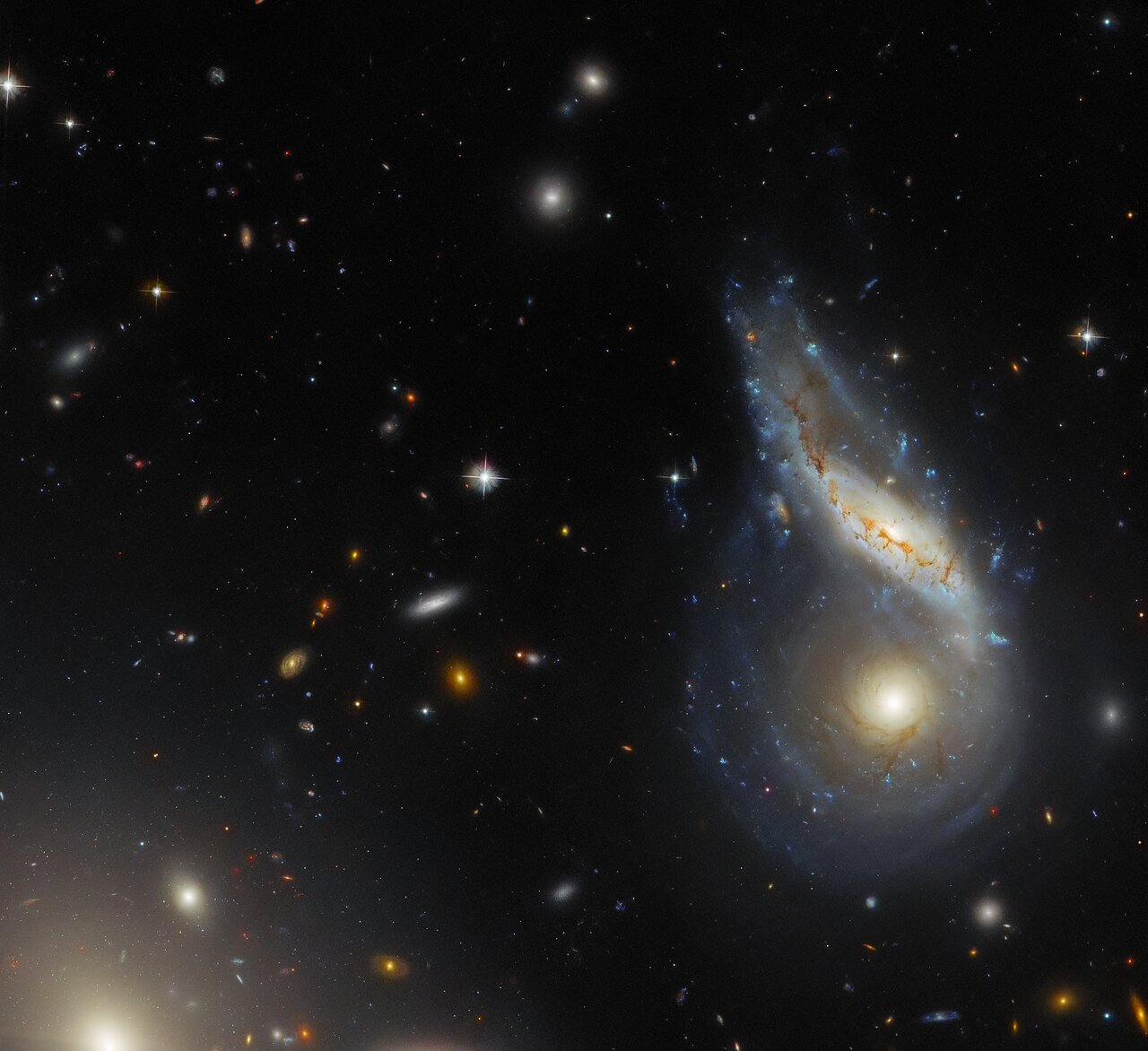
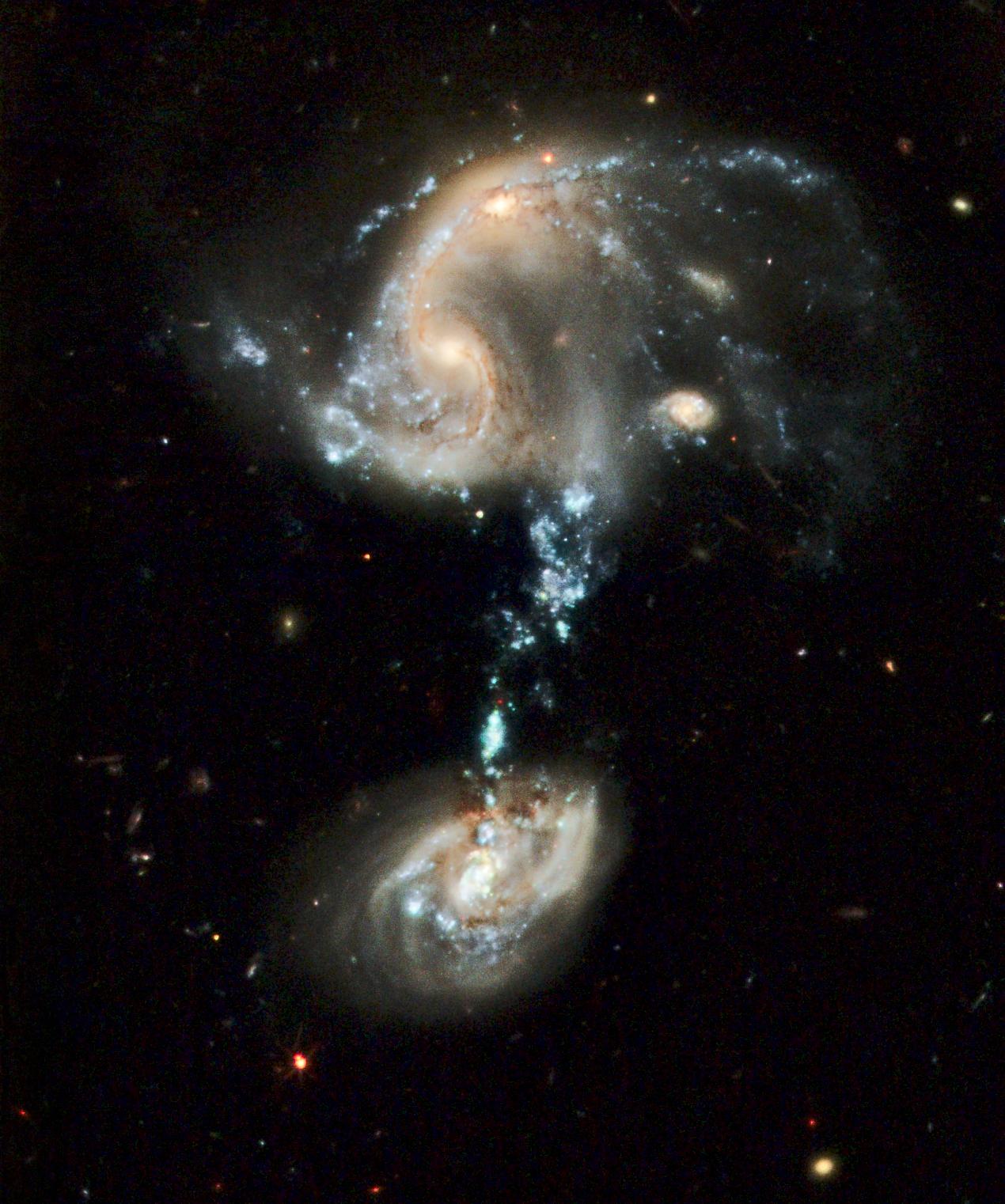
Hubble Space Telescope image of the interacting galaxy group Arp 194. The blue stream connecting the galaxies is where tidally stripped gas formed millions of new stars. [NASA, ESA, and the Hubble Heritage Team (STScI/AURA)]

One promising driver of LyC leakage is galaxy mergers — strong gravitational interactions and interstellar medium mixing can induce bursts of star formation, creating the hot, young stars that emit LyC photons. In particular, galaxy mergers can create tidal tails, streams of wispy gas, that can sustain brief but intense bouts of star formation that quickly use up surrounding gas. With no interstellar gas left to absorb radiation, the fresh stars in these streams can easily pump their high-energy photons into the intergalactic medium, contributing to cosmic reionization.

While observational studies have increasingly pointed to galaxy mergers as considerable drivers of LyC escape, only a small number have explicitly considered the role of mergers in the epoch of reionization due to spectral and spatial resolution limitations. Leveraging the high-resolution capabilities of JWST, Shengzhe Wang (University of Chinese Academy of Sciences; National Astronomical Observatories, Chinese Academy of Sciences) and collaborators performed detailed analyses of two LyC-leaker candidates to better understand the role of galaxy mergers in heating up the universe.

Confirming (and Refuting) Merger-Driven Leaks with JWST

Using candidate LyC leakers first identified in the LymAn Continuum Escape Survey (LACES) carried out with the Hubble Space Telescope, Wang and team obtained high-resolution JWST spectroscopy for two galaxies at redshift z = 3.1 (about 2 billion years after the Big Bang), LACES94460 and LACES104037. After carefully identifying and measuring emission lines in each candidate, the authors confirmed LACES104037 as a merger-driven LyC leaker. However, the apparent LyC emission from LACES94460 was determined to be contamination from a low-redshift object.
LACES 104037

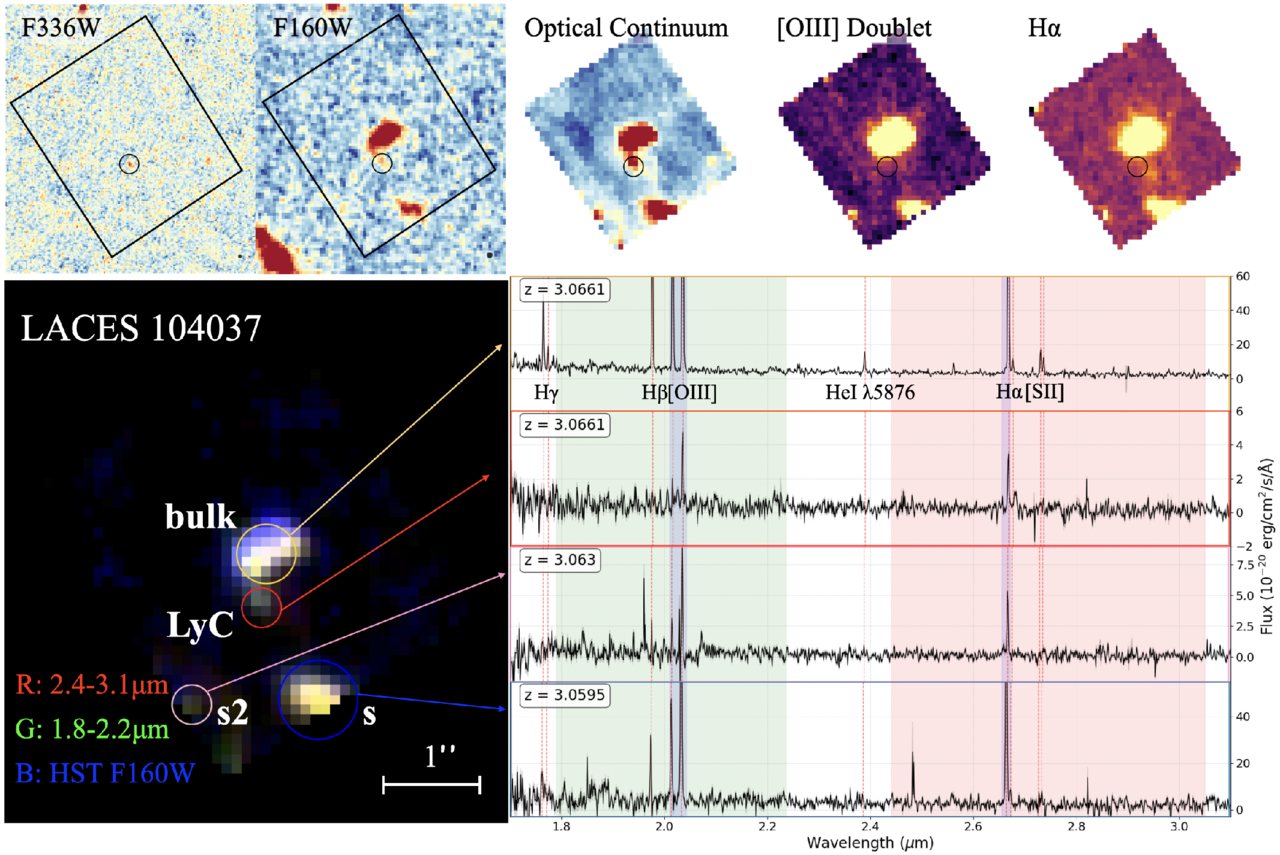
Hubble and JWST observations of LACES104037. The top panels show the Hubble images (first two panels) and the JWST spectral observations (last three panels). The bottom panel shows a composite three-color image marking the location of two primary interacting galaxies and the LyC emission along with the associated spectra. Click to enlarge. [Wang et al 2026]

Based on the JWST spectroscopy, LACES104037 is an early-stage merger system with two primary interacting galaxies (LACES104037-bulk and LACES104037s) with a tidal-tail structure connecting them (LACES104037-LyC) where the LyC emission originates. Using model predictions based on the JWST spectroscopy and photometry from previous studies, the team found that LACES104037-LyC is a star-forming clump in a tidal tail with a stellar age of about 5 million years and an extreme LyC photon escape fraction of approximately 0.99. This points to merger-induced star formation being an extremely efficient way to dump ionizing photons into the intergalactic medium.

LACES104037-LyC represents the first confirmed LyC leaker of its kind: an external clump of star formation in a tidal tail. This discovery aids in our understanding of how mergers can drive high-energy photon emission, and highlights the critical role galaxy mergers may play in the epoch of reionization. Future high-resolution observations will hopefully reveal more knots of LyC-leaking stars within merging galaxies and provide a deeper understanding of this important evolutionary phase of the universe.

Citation

“Confirmation and Refutation of Lyman Continuum Leakers at z ~ 3 with JWST NIRSpec IFU,” Shengzhe Wang et al 2026 ApJL 1006 L17. doi:10.3847/2041-8213/ae8523

The post A Lyman-Leaking Galaxy Merger Confirmed with JWST appeared first on AAS Nova.
A Black Hole Far from Its Galaxy’s Center Was Caught Tearing Apart a Star

8 August 2026 at 16:30

A star being torn apart by a black hole is already an unusual sight. In this case, the black hole was in an even stranger place: more than 30,000 light-years from the center of the galaxy that appears to host it. NASA’s Neil Gehrels Swift Observatory helped confirm the event after an automated survey spotted […]

The post A Black Hole Far from Its Galaxy’s Center Was Caught Tearing Apart a Star appeared first on Curiosmos.

How Tilted Orbits Impact Supermassive Black Hole Collisions

22 April 2026 at 17:00

merging galaxies

What factors impact how long it takes for a supermassive black hole binary to merge? New research investigates the influence of orbital inclination on the population of merging black holes in our universe.

One Merger Leads to Another

NGC 6240

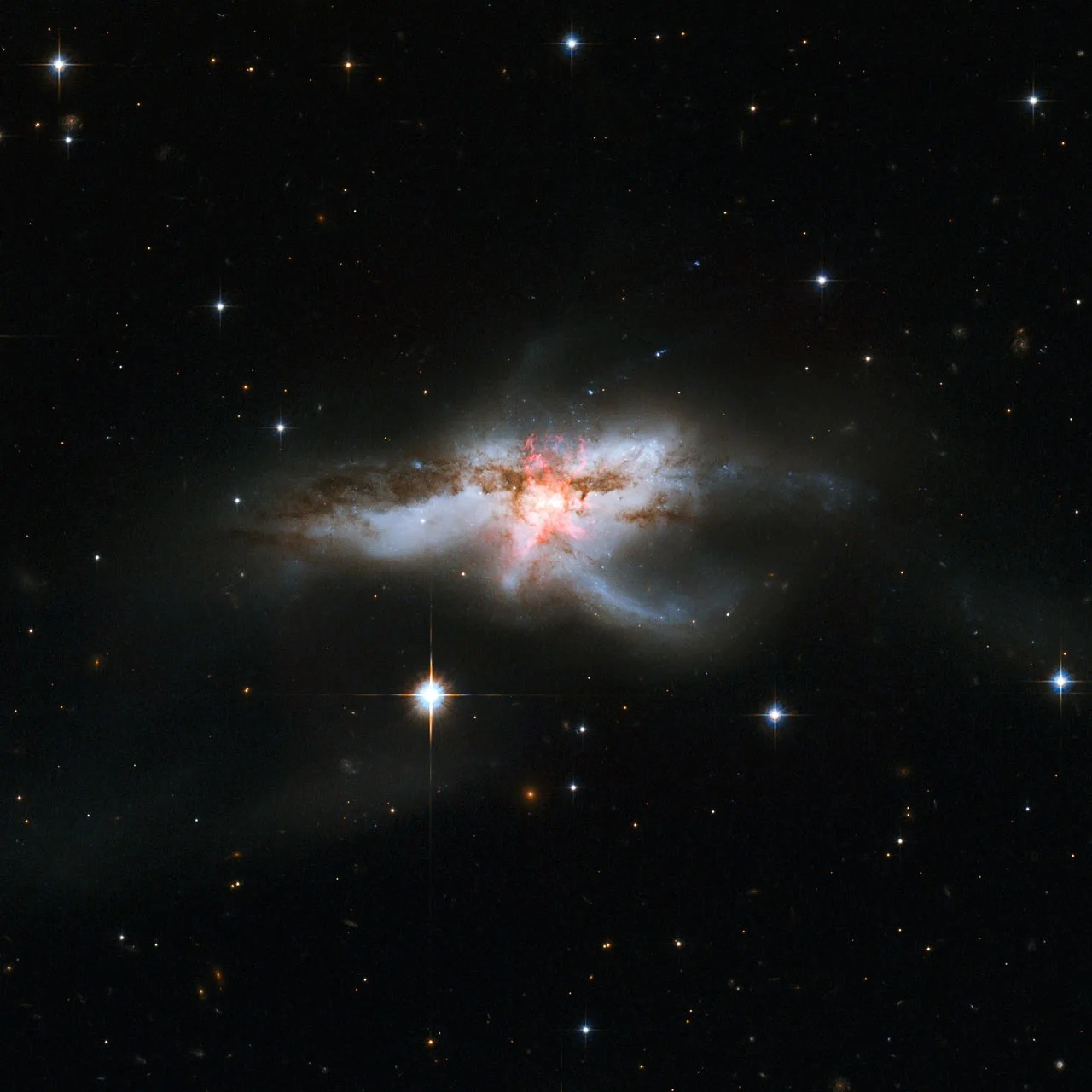
This image from the Hubble Space Telescope shows NGC 6240, the result of a three-galaxy merger that contains three nuclei, two of which appear to have active supermassive black holes. [NASA, ESA, the Hubble Heritage (STScI/AURA)-ESA/Hubble Collaboration, and A. Evans (University of Virginia, Charlottesville/NRAO/Stony Brook University)]

When galaxies merge, the supermassive black holes at their centers are thought to link up in a binary system and eventually merge as well. Evidence for these supermassive black hole pairs and their collisions is piling up: researchers have identified a small but growing number of galaxies containing two accreting supermassive black holes, and the compelling evidence for the gravitational wave background points to the existence of an immense population of supermassive black hole binaries.

With observational evidence for supermassive black hole mergers taking shape, theorists are exploring the details of these mergers. One aspect of this process that hasn’t yet been examined fully is how the relative inclination of the merging galaxies impacts the time it takes for their central black holes to merge — a factor that has the potential to shape the demographics of merging supermassive black holes across our universe.

Ready, Set, Spiral

Sena Ghobadi (Georgia Institute of Technology) and collaborators used 3D dynamical models to explore how the angle at which galaxies collide — and therefore how the black holes’ orbits are tilted relative to one another — impacts the time it takes the supermassive black holes at their centers to merge.

In the simulations, Ghobadi’s team placed a 106–108-solar-mass black hole at the center of a disk galaxy. Then, they sent a second, smaller black hole spiraling toward it from a distance of 1 kiloparsec (3,300 light-years).

The team varied the inclination of the incoming black hole’s orbit relative to the disk of the target galaxy from 0 to 75 degrees. They also explored the impact of changing the black hole masses and the galaxy’s central gas density, disk rotation speed, and gas mass fraction. For each simulation, they recorded how long it took for the incoming smaller black hole to get within 10 parsecs of the larger black hole.

simulated black hole orbits

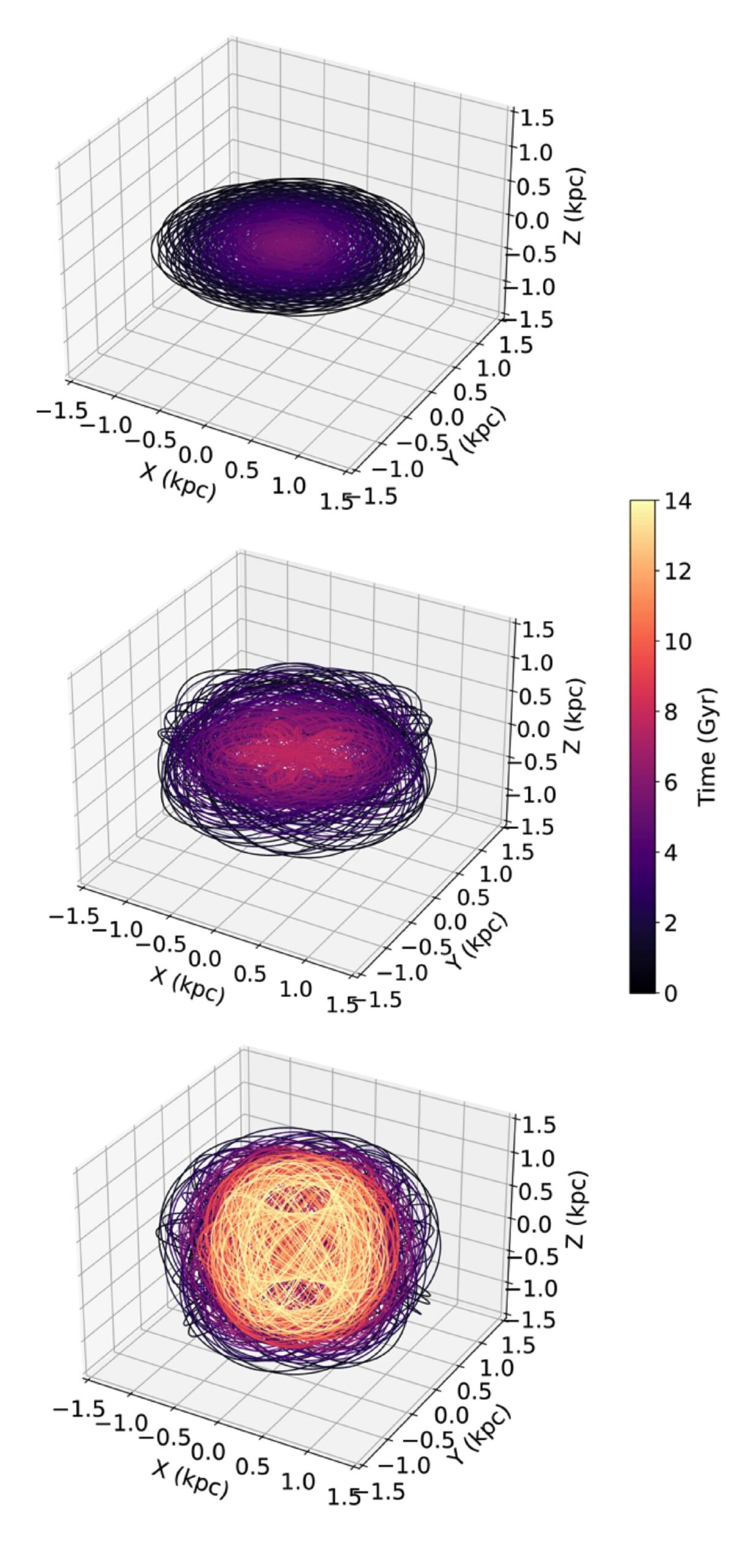
Simulated orbits of black holes with initial inclinations of 0 (top), 25 (center), and 45 (bottom) degrees. For the 0-degree simulation, the black holes merge in 5.75 billion years. For the 25-degree simulation, the merger occurs at 7.90 billion years. The 45-degree simulation fails to merge within the lifetime of the universe. [Adapted from Ghobadi et al. 2026]

(Dis)inclined to Merge

The simulations showed a clear trend with changing inclination: a black hole with an orbital inclination greater than 20 degrees took longer to merge than those with inclinations of 0–20 degrees. For black holes approaching the merger on slightly inclined orbits, dynamical friction between the black hole and the stars and gas of the galaxy worked to drag the black hole down into the disk, decreasing its inclination over time and guiding it toward a merger. Aside from the influence of inclination, the team also found that higher-mass supermassive black holes and more rapidly rotating galactic disks tended to lead to faster mergers.

For inclinations greater than roughly 45 degrees, a dramatic transition took place, with the orbits of the incoming black holes becoming more inclined over time rather than settling down into the disk. These simulated black holes failed to merge in the allotted time of 14 billion years.

With highly inclined binaries failing to merge within the lifetime of the universe, this suggests that the dual active galactic nuclei and the supermassive black hole binaries that produce gravitational waves in the universe today are the result of binaries with initial inclinations of 20 degrees or less.

Citation

“Evolution of Supermassive Black Hole Pairs on Inclined Orbits in Postmerger Galaxies,” Sena Ghobadi et al 2026 ApJ 999 131. doi:10.3847/1538-4357/ae40bc

The post How Tilted Orbits Impact Supermassive Black Hole Collisions appeared first on AAS Nova.

Signs of a Supermassive Black Hole Merger in NGC 4486B

6 April 2026 at 17:00

merging galaxies

The galaxy NGC 4486B appears calm and collected, but its center may have been roiled by a recent merger of supermassive black holes. New modeling explores the stellar dynamics that support this hypothesis.

Strange Center

NGC 4486B double nucleus

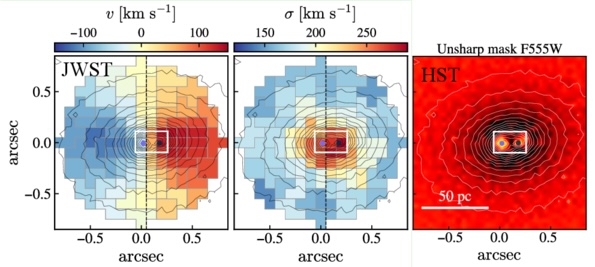
Kinematic maps of NGC 4486B showing the locations of the two peaks of its double nucleus. Click to enlarge. [Adapted from Tahmasebzadeh et al. 2026]

Astronomers have known for 30 years that NGC 4486B, a compact elliptical galaxy near the center of the Virgo cluster, has a double nucleus. More recently, JWST observations revealed that the galaxy houses a black hole of 360 million solar masses, which is unusually large compared to the galaxy’s stellar mass of 9 billion solar masses. The two nuclei are roughly 40 light-years from the apparent center of the galaxy, and the black hole also appears to be offset from the galactic center by 20 light-years.

Now, a team led by Behzad Tahmasebzadeh (University of Michigan; Villanova University) has investigated the possibility that NGC 4486B’s double nucleus and off-center black hole can be traced to the aftermath of a supermassive black hole merger.

Simulating Kinematics

In this scenario, the black hole is displaced from the galaxy’s center because of a “kick” it received when it underwent a merger. The double nucleus is a sign of an eccentric nuclear disk: a central disk of stars on aligned elliptical orbits created when merging supermassive black holes disturb an initially orderly disk of stars.

plot of kick magnitude versus mass ratio

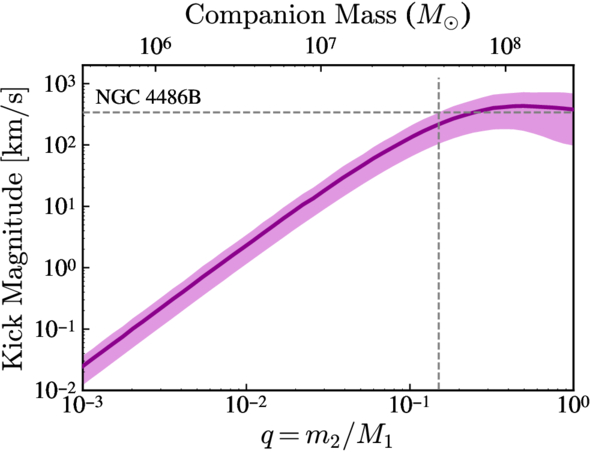
Estimated black hole kick magnitude as a function of the initial mass ratio of the black hole binary. Click to enlarge. [Tahmasebzadeh et al. 2026]

Tahmasebzadeh and collaborators performed dynamical modeling to test this hypothesis and understand what types of stellar orbits would be necessary to reproduce the kinematic signature of NGC 4486B’s center seen with JWST. The simulation results called for a blend of prograde and retrograde stellar orbits that closely resembled what is expected for an eccentric nuclear disk. From the properties of the simulated stellar disk, the team estimated that the mass ratio of the merging black holes was >0.15.

To explore this scenario further, the team carried out N-body simulations of the post-merger black hole’s behavior. These simulations showed that after being booted from the galactic center by the post-merger kick, the black hole returns to the center quickly — within 10–80 million years, depending on the kick strength. Because NGC 4486B’s supermassive black hole is notably off center, this suggests that the merger occurred recently.

Galaxy Merger Versus Black Hole Merger

Tahmasebzadeh’s team tested two other theories that could explain the appearance of NGC 4486B’s nucleus: dynamical buoyancy and a pre-merger supermassive black hole binary. Neither of these scenarios could reproduce the offsets seen in the center of the galaxy.

The team noted that NGC 4486B appears to be in equilibrium, with no sign of a recent merger that could have plunked a second supermassive black hole into the galaxy. How can this fact be reconciled with the evidence for a recent black hole merger? Turning again to simulations, the team found that if the black hole binary’s orbit was aligned with the galaxy’s rotation, the binary could have become trapped in a resonance that greatly delayed the merger of the black holes. This makes it possible that NGC 4486B underwent a galaxy merger in the distant past, but its central black hole merged only recently, leaving signs of a long-ago merger that has otherwise faded from view.

Citation

“JWST Observations of the Double Nucleus in NGC 4486B: Possible Evidence for a Recent Binary SMBH Merger and Recoil,” Behzad Tahmasebzadeh et al 2026 ApJL 1001 L14. doi:10.3847/2041-8213/ae52ef

The post Signs of a Supermassive Black Hole Merger in NGC 4486B appeared first on AAS Nova.

Selections from 2025: The Nine-Ringed Bullseye Galaxy

23 December 2025 at 17:00

Bullseye galaxy

Editor’s Note: For the remainder of 2025, we’ll be looking at a few selections that we haven’t yet discussed on AAS Nova from among the most-downloaded articles published in AAS journals this year. The usual posting schedule will resume January 2nd.

The Bullseye: HST, Keck/KCWI, and Dragonfly Characterization of a Giant Nine-ringed Galaxy

Published February 2025

Main takeaway:

Bullseye galaxy rings

Red ellipses overplotted on the first eight rings identified with Hubble in the Bullseye galaxy. Click to enlarge. [Pasha et al 2025]

Using a combination of the Hubble Space Telescope, the Dragonfly Telephoto Array, and the Keck Cosmic Web Imager, Imad Pasha (Yale University) and collaborators discovered and performed deep follow-up observations of a giant collisional ring galaxy aptly nicknamed the “Bullseye” galaxy (LEDA 1313424). The team identified a staggering nine rings in the Bullseye with a likely tenth that has since faded — the most rings found in any collisional ring galaxy to date. The rings are a result of a small blue dwarf galaxy shooting through the Bullseye’s core about 50 million years ago, sending ripples through the galaxy.

Why it’s interesting:

Galaxy mergers and interactions are commonplace in the universe, but it is very rare for a dwarf galaxy to strike right through a large galaxy’s core. When this does happen, the collision sends shock waves through the impaled galaxy, sweeping gas and dust outward and forming rings where star formation can occur (hence the name, collisional ring galaxy). These galaxies are valuable sites to explore galactic structure and evolution as well as provide a unique case to study galaxy mergers and interactions. Previously discovered collisional ring galaxies have at most two or three rings, so when Pasha and collaborators found the stunning nine in the Bullseye, it was clear they caught something significant.

Catching the Bullseye at a lucky time in its evolution:

Why does the Bullseye have so many rings? Theoretical studies of these head-on collisions predict that many rings will form and travel outward after the initial crash; however, the rings tend to dissolve after only a few hundred million years. Catching this collision only 50 million years after it happened means we are witnessing the earlier stages of the Bullseye’s evolution. This lucky discovery not only confirms theoretical predictions for collisional ring galaxies, it also may be a clue to how another unique galaxy type, giant low-surface brightness galaxies, originate. Given the wispy ring material found at very large radii from the Bullseye, the authors suggested that collisional ring galaxies may evolve into giant low-surface brightness galaxies as they expand outward and fade. Further investigation and a larger sample of collisional ring galaxies are necessary to confirm this hypothesis, but the Bullseye provides interesting and critical observational evidence of these predictions for the first time.

Citation

Imad Pasha et al 2025 ApJL 980 L3. doi:10.3847/2041-8213/ad9f5c

The post Selections from 2025: The Nine-Ringed Bullseye Galaxy appeared first on AAS Nova.

Boosting the Gravitational Wave Background

3 December 2025 at 17:00

Simulation of a supermassive black hole binary

The gravitational wave background — the constant, low-frequency hum of colliding supermassive black holes across the universe — seems to have a larger amplitude than expected. Can preferential accretion explain why?

Larger than Expected

Arp 122

The peculiar galaxy Arp 122, shown here in a Hubble Space Telescope image, is in the process of merging. When two galaxies merge, the supermassive black holes at their centers eventually merge as well. [ESA/Hubble & NASA, J. Dalcanton, Dark Energy Survey/DOE/FNAL/DECam/CTIO/NOIRLab/NSF/AURA; Acknowledgement: L. Shatz; CC BY 4.0]

In 2023, researchers announced the discovery of compelling evidence for the gravitational wave background: a low-frequency, low-amplitude signal that is likely due to supermassive black hole binaries across the universe steadily trundling toward mergers. The amplitude of the background, however, is larger than expected for a population of merging supermassive black holes.

Though some researchers have invoked new physics to explain this discrepancy, all that may be required is an adjustment to our understanding of the supermassive black hole binary population in our universe. In a recent research article, Julia Comerford (University of Colorado Boulder) and Joseph Simon (University of Colorado Boulder; Oregon State University) tackled one of the underlying assumptions about the masses of merging supermassive black holes.

Preferential Accretion Pathway

When supermassive black holes merge, the strength of the gravitational wave signal depends on how similar the black holes were in mass; merging equal-mass black holes produce stronger signals than mismatched black holes do. What if, Comerford and Simon proposed, the masses of merging supermassive black holes scattered across the universe are more similar than previously thought?

initial and final black hole mass ratios

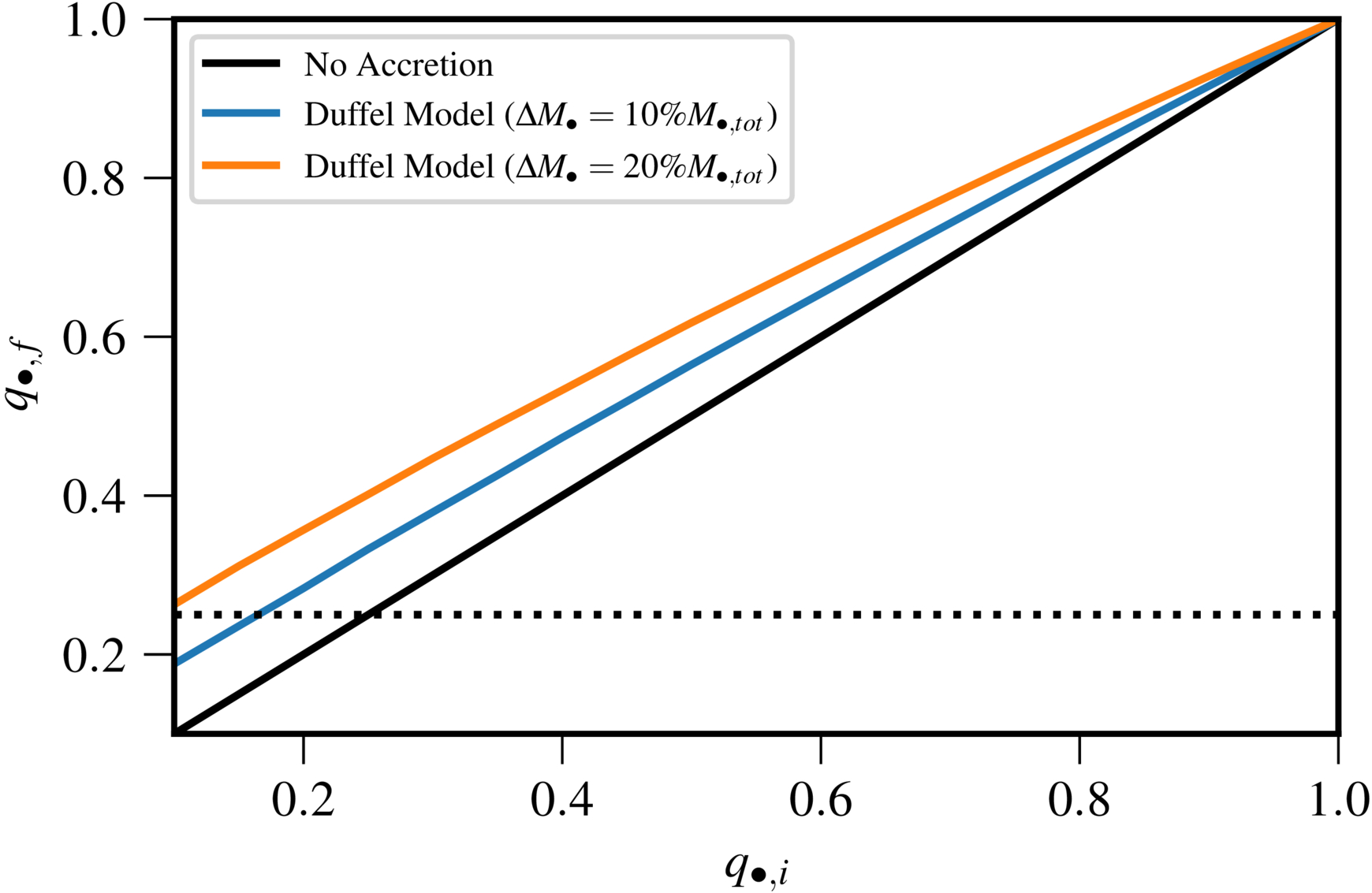
The initial and final black hole mass ratio, q. The blue and orange lines show a 10% and 20% increase in the total mass of the binary, respectively. The dotted line divides major mergers (q ≥ 0.25) and minor mergers. [Comerford & Simon 2025]

Observations and simulations of supermassive black holes within colliding galaxies appear to support this hypothesis. Rather than staying the same mass as they approach one another, as models tend to assume, supermassive black holes likely gather material from their surroundings and gain mass.

What’s more, it appears that the smaller of the two black holes tends to pack on more mass, meaning that the masses of the black holes grow more similar as they wind toward a merger. (This somewhat counterintuitive result arises because the smaller of the two black holes encounters more gas as it spirals inward.)

Boosting the Signal

If accretion tends to even out the masses of the binary members, is the resulting increase in signal strength large enough to explain the observed amplitude of the gravitational wave background?

plot of estimated gravitational wave amplitude

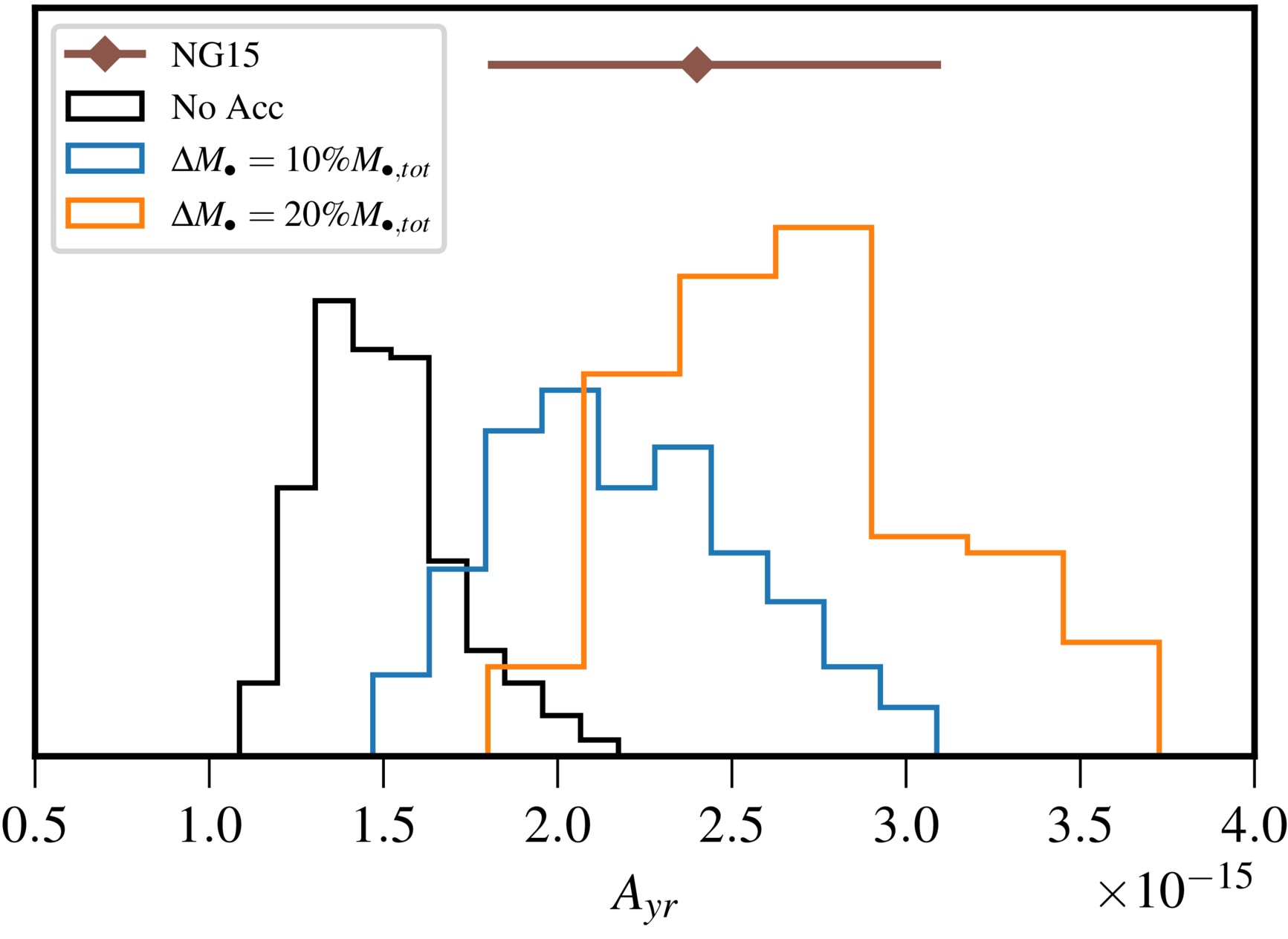
Probability distribution functions for the calculated gravitational wave background amplitude for different accretion conditions. The brown diamond shows the median amplitude from the NANOGrav data set. [Adapted from Comerford & Simon 2025]

Comerford and Simon modeled the gravitational wave background from supermassive black hole binaries undergoing preferential accretion onto the smaller black hole. Benchmarking their model with observations wherever possible, they found that just a 10% increase in the total mass of the merging black holes can raise the gravitational wave background to the median observed value — easing the discrepancy without the need for speculative new physics.

The signal-boosting effect from preferential accretion may be especially important if the binary evolution timescale — the time it takes for black holes approaching a merger to reach a separation at which their gravitational waves become accessible to pulsar timing arrays — is longer than the estimated 1.8 billion years. At longer timescales, models without this accretion become entirely inconsistent with observations. Future research that examines the masses and accretion rates of supermassive black holes as they approach make their way toward a merger can provide further clues to the role of preferential accretion.

Citation

“Preferential Accretion onto the Secondary Black Hole Strengthens Gravitational-Wave Signals,” Julia M. Comerford and Joseph Simon 2025 ApJ 994 168. doi:10.3847/1538-4357/ae1133

The post Boosting the Gravitational Wave Background appeared first on AAS Nova.

A Candidate Direct-Collapse Black Hole in the Infinity Galaxy

15 July 2025 at 16:54

Infinity Galaxy

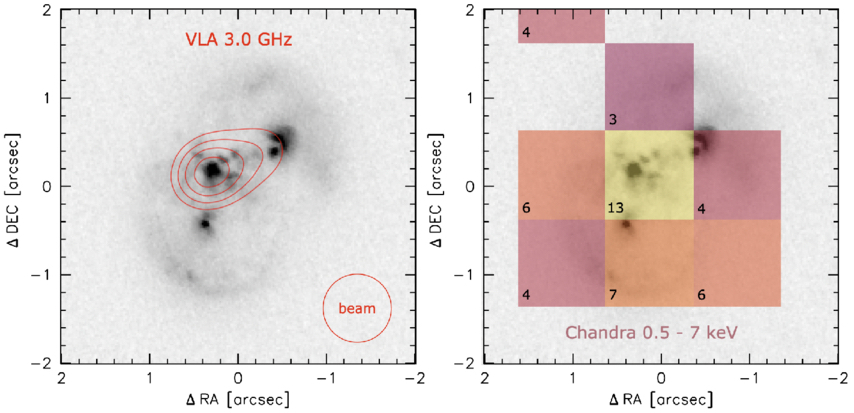
Researchers have discovered a rare ring-galaxy duo that appears to harbor a supermassive black hole formed through direct collapse — a process similar to what may have jump-started the growth of the first supermassive black holes in the universe.

Searching for Oddballs

To find something remarkable, sometimes you have to go looking for it. As described in an article published today in the Astrophysical Journal Letters, a research team led by Pieter van Dokkum (Yale University; Dragonfly Focused Research Organization) recently struck gold in their search for unusual objects.

Van Dokkum and coauthors searched for interesting objects in publicly available images from COSMOS-Web, a JWST program dedicated to understanding how galaxies have evolved over the course of cosmic history. Having already published their discovery of a complete Einstein ring in the COSMOS-Web field, the team is now revealing a second finding: a galaxy featuring two bright, compact nuclei, two starry rings, and an unexpected inhabitant right in the center.

four views of the Infinity Galaxy

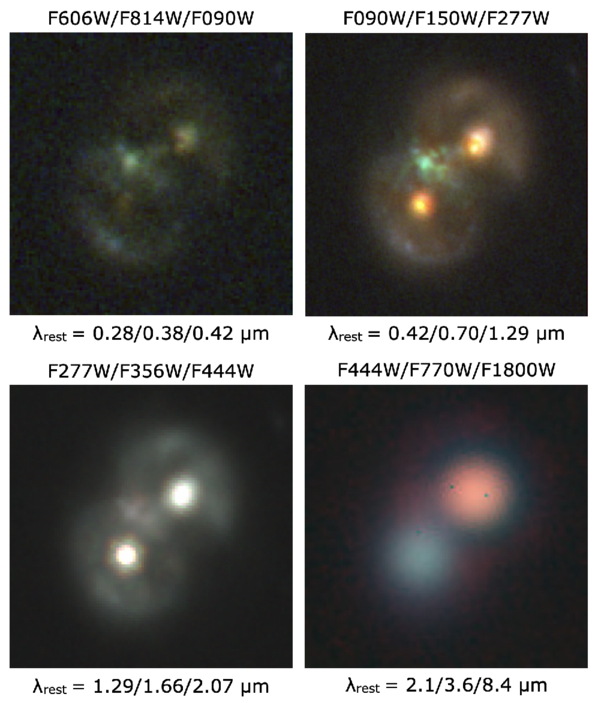
Four views of the Infinity Galaxy from Hubble and JWST. [van Dokkum et al. 2025]

Gathering Data

To learn more about this strange object, named the Infinity Galaxy for its resemblance to the infinity symbol, the team gathered data from the Hubble Space Telescope, the Keck I telescope, the Chandra X-ray Observatory, and the Very Large Array. The resulting multiwavelength portrait allowed the team to weigh the two nuclei, showing them to be massive — containing 80 billion and 180 billion solar masses of stars — and extremely compact. The new data also revealed that the cloud of gas between the nuclei contains a 1-million-solar-mass black hole.

The nuclei, the rings, and the gas between them appear to be the result of two disk galaxies that shot through one another, forming a pair of collisional ring galaxies. To achieve the infinity-symbol shape, the galaxies must have met one another face on, forming two parallel nucleus–ring systems that we see from an angle of about 40º. As the galaxies collided, some of their gas would have been torn away, left tangled together in the void between the two nuclei.

To the Infinity Galaxy and Beyond

radio and X-ray observations of the Infinity Galaxy

Radio (left) and X-ray (right) observations of the Infinity Galaxy, demonstrating that the black hole candidate is a strong radio and X-ray source. Click to enlarge. [Adapted from van Dokkum et al. 2025]

That explains the nuclei, the rings, and the gas between them — but where did the black hole come from? It’s possible that the black hole’s position between the two nuclei is simply a coincidence, either due to a chance alignment with an unrelated galaxy that hosts the black hole, or because the black hole happened to end up there after being ejected from one of the galaxies involved in the collision, or even from another galaxy that merged with the Infinity Galaxy.

The authors favor a different explanation, in which the location of the black hole is no coincidence. In this scenario, the colliding galaxies crushed a gas cloud between them so forcefully that the condensed gas collapsed directly into a black hole. The authors estimated that the collision happened 50 million years ago and created a 300,000-solar-mass black hole that subsequently grew to its current mass of 1 million solar masses. Direct collapse has been proposed to be a source of the seeds of supermassive black holes in the early universe, though there are some differences between the proposed process in the early universe and what may be happening in the Infinity Galaxy.

Van Dokkum and collaborators concluded their article by saying that future observations could clarify whether the black hole is truly associated with the Infinity Galaxy — and as reported in a press release today, preliminary analysis of follow-up observations with JWST show just that. With the black hole now definitively placed within the Infinity Galaxy, the evidence for direct collapse is strengthened, though more work is needed to probe this possibility.

Citation

“The ∞ Galaxy: A Candidate Direct-Collapse Supermassive Black Hole Between Two Massive, Ringed Nuclei,” Pieter van Dokkum et al 2025 ApJL 988 L6. doi:10.3847/2041-8213/addcfe

The post A Candidate Direct-Collapse Black Hole in the Infinity Galaxy appeared first on AAS Nova.

❌