
❌

Normal view

Engineering the unknown: building vacuum and cryogenic systems for the quantum frontier
13 October 2026 at 17:39
2026-edwards-na-lab
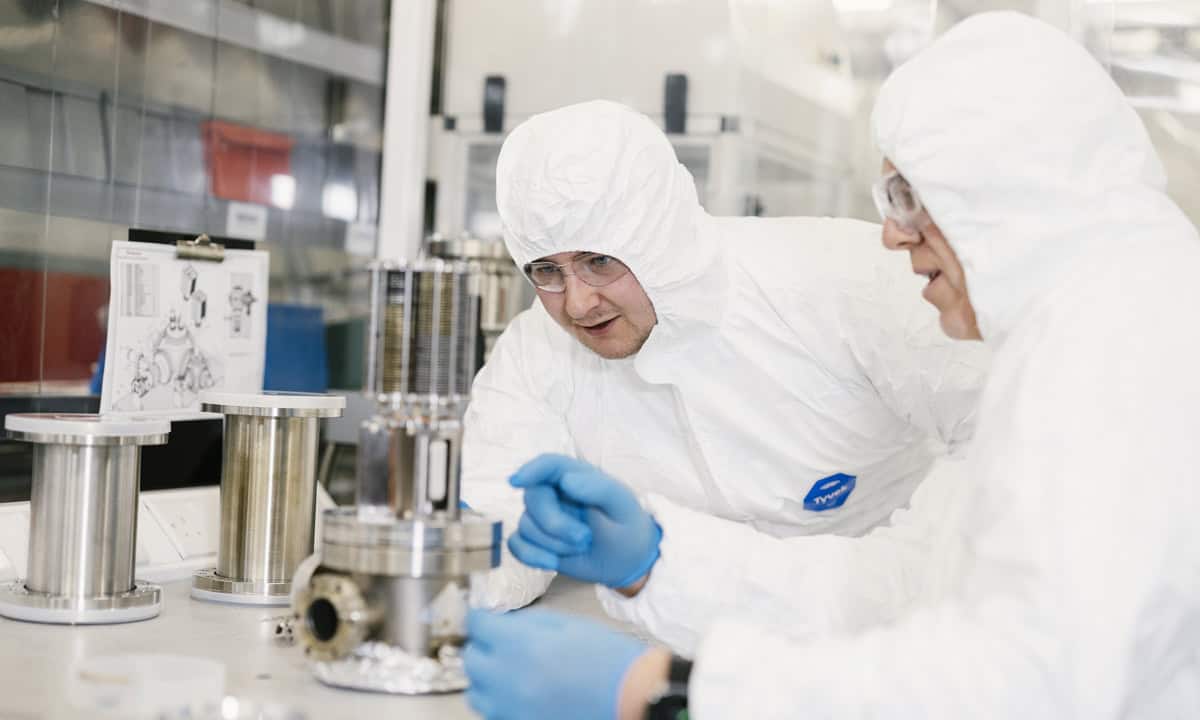
Quantum computing research team. (Courtesy: Edwards Vacuum)

Building quantum technologies is the definition of finicky. And there is one primary reason: the fundamental unit of information is not a bit, but a qubit. Though qubits come in many guises – trapped ions, neutral atoms, superconducting circuits, particles of light, etc – they all share three quantum properties.

First, a qubit does not just represent a 1 or a 0, but can exist in a superposition of states, an uncertain blend of both until it collapses to a 0 or 1 when measured. Second, a qubit can be entangled with other qubits, meaning their physical states become entwined regardless of their distance from one another. And third, all qubits are extremely fragile or, in technical terms, they are vulnerable to decoherence.

Whereas the first two properties offer the potential to provide huge advantages for quantum technologies over their classical counterparts, the latter has been a stumbling block for decades. Qubits lose their quantum properties with almost any interaction with the environment, meaning any mote of dust, tiny vibration or stray photon has the potential to scupper a quantum process.

Filling the vacuum

Vacuum and cryogenic environments play an essential role in mitigating decoherence across many major quantum modalities, whether this is superconducting, trapped, neutral atom or photonic, and these technologies are coming out of the laboratory into the real world.

For example, whether operating a trapped-ion quantum computer or an advanced quantum gravimeter, if left unmitigated, qubits are bombarded by trillions of gas molecules every second, immediately causing them to decohere. Extreme-high vacuum (XHV) environments eliminate this problem, effectively removing ambient matter from the equation.
vacuum-technique-business-area
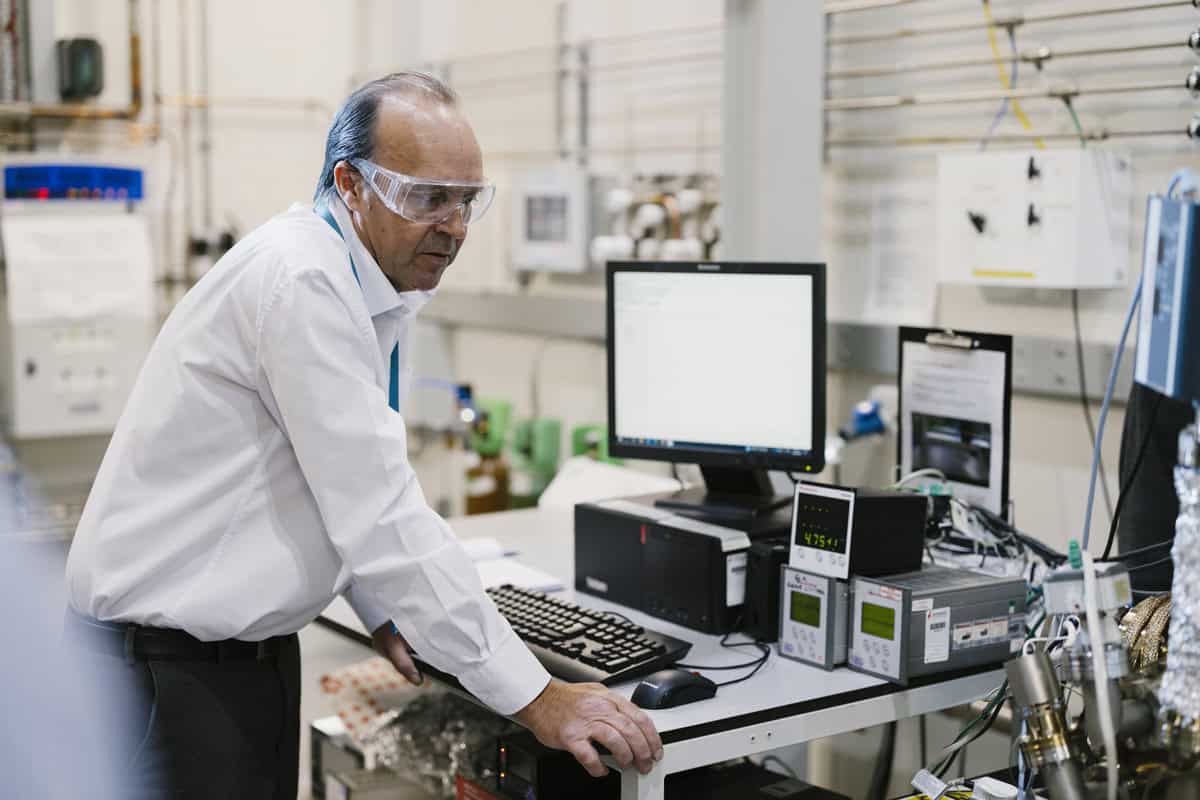
Vacuum Technique Business Area (Atlas Copco Group) supporting quantum computing applications. (Courtesy: Edwards Vacuum)

Vacuum technologies are also needed in concert with cryogenics in low-temperature dilution refrigerators that prevent heat causing decoherence in superconducting quantum computers and ultra-sensitive single-photon detectors used in quantum communication. These refrigerators cool hardware down to sub-Kelvin temperatures (~10 mK) – hundreds of times colder than deep space.

β€œWe have shipped products that support XHV environments, 10-12 millibar, to isolate everything from the environment of the hardware. We also have plans in our roadmap to go beyond the current pressures, and we have worked with companies that build these dilution refrigerators,” says Jos Donders, head of the Emerging Markets & Technologies team of Atlas Copco’s Scientific Vacuum Division.

β€œWhat is very good for us is that 95% of these modalities – whether it’s quantum computing, sensing or communications – require a vacuum and a cryogenic low-temperature environment.”

Going in blind

For Donders, and indeed the global Atlas Copco Group (through the Edwards Vacuum brand), now is the ideal time to be working in quantum across the different modalities. Quantum is still far from delivering on its potential, and there remains significant work to be done in terms of hardware and equipment development to go from the laboratory prototypes of today to the robust machines needed to build useful commercial quantum computers.
vacuum-system-photo
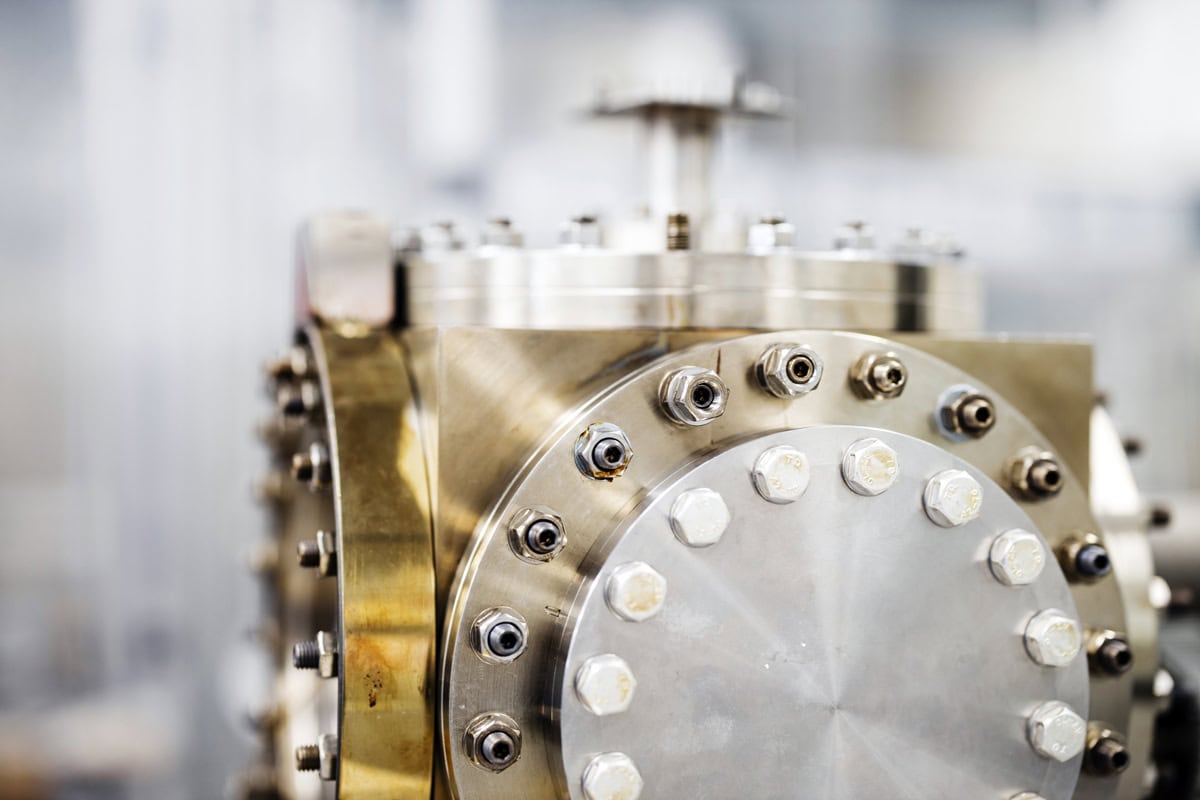
Vacuum system quantum computer materials validation. (Courtesy: Edwards Vacuum)

For this, scaling the hardware will be essential for companies to enable their goals towards a fully fault-tolerant quantum system solution. As part of the Atlas Copco Group, Edwards Vacuum can offer highly skilled technology and engineering expertise to enable the development of these solutions.

β€œWe are working on solutions for the future,” underlines Donders. By this, he means that most of the time Edwards Vacuum is building vacuum and cryogenic equipment for different quantum modalities that do not yet exist. For instance, when a dilution refrigerator manufacturer or a quantum hardware OEM designs a next-generation platform, Donders and his team discuss in depth future needs with in-house technology engineers to define future solutions based on market inputs from customers in this field. β€œWe sit down, have a detailed discussion, and outline what is possible, what is maybe possible and what is not possible in the timelines that are required,” he says.

A prime example of this in action is Edwards Vacuum’s partnership with Universal Quantum, a UK-based quantum computing company aiming to build robust, scalable quantum computers. In the first act of their ongoing cooperation, in 2022, Edwards Vacuum deeply collaborated with Universal Quantum researchers to deliver an XHV system to house a quantum error corrected quantum computer based on trapped-ion technology that Universal Quantum had not yet constructed.

Roadmap to success

A large part of why it is possible to engineer complex vacuum and cryogenic technologies for quantum computing, sensing and communication devices that do not yet exist is the detailed roadmaps that the major quantum companies produce.

Donders says that these roadmaps are generally not full of blue-sky wishful thinking, but detailed specifications that target specific numbers of qubits, fidelity and also operational parameters by ambitious but realistic dates where timescales matter due to the financial investments behind them.

β€œAt the same time, we also realize that there will be quite some disruptive changes along the way,” Donders adds. β€œThat’s why we work very closely with these companies to synchronize with them and ensure that whatever we develop is in line with their requirements.”

Flexibility and deep technical collaboration are paramount for another reason too: no single quantum modality has yet emerged as the definitive winner. Backed by the scale and industrial expertise of the Atlas Copco Group, Edwards Vacuum works directly with quantum companies, serving as a foundational link in the global quantum supply chain. This means Edwards Vacuum is equally adept at providing ultra-clean XHV systems for trapped ion quantum computing and neutral-atom quantum sensing, specialized helium pumping and circulation setups for dilution refrigerators or robust pumps for quantum key distribution nodes.

As the quantum industry shifts focus from proving basic quantum principles to scaling robust, fault-tolerant architectures, vacuum and cryogenic technologies will remain indispensable. By stepping into the unknown alongside quantum pioneers, Edwards Vacuum is helping lay the physical foundations required to make the quantum revolution a commercial reality. As Donders neatly summarizes: β€œThat’s where we want to be – at the forefront.”

The post Engineering the unknown: building vacuum and cryogenic systems for the quantum frontier appeared first on Physics World.
Faster cryogenics speeds up quantum testing

24 September 2026 at 09:22
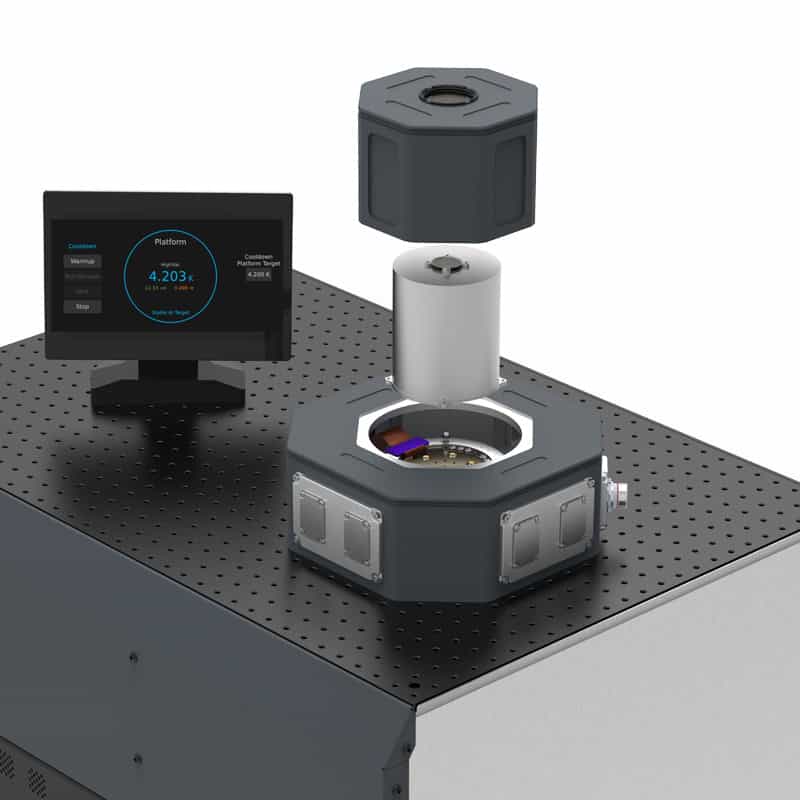
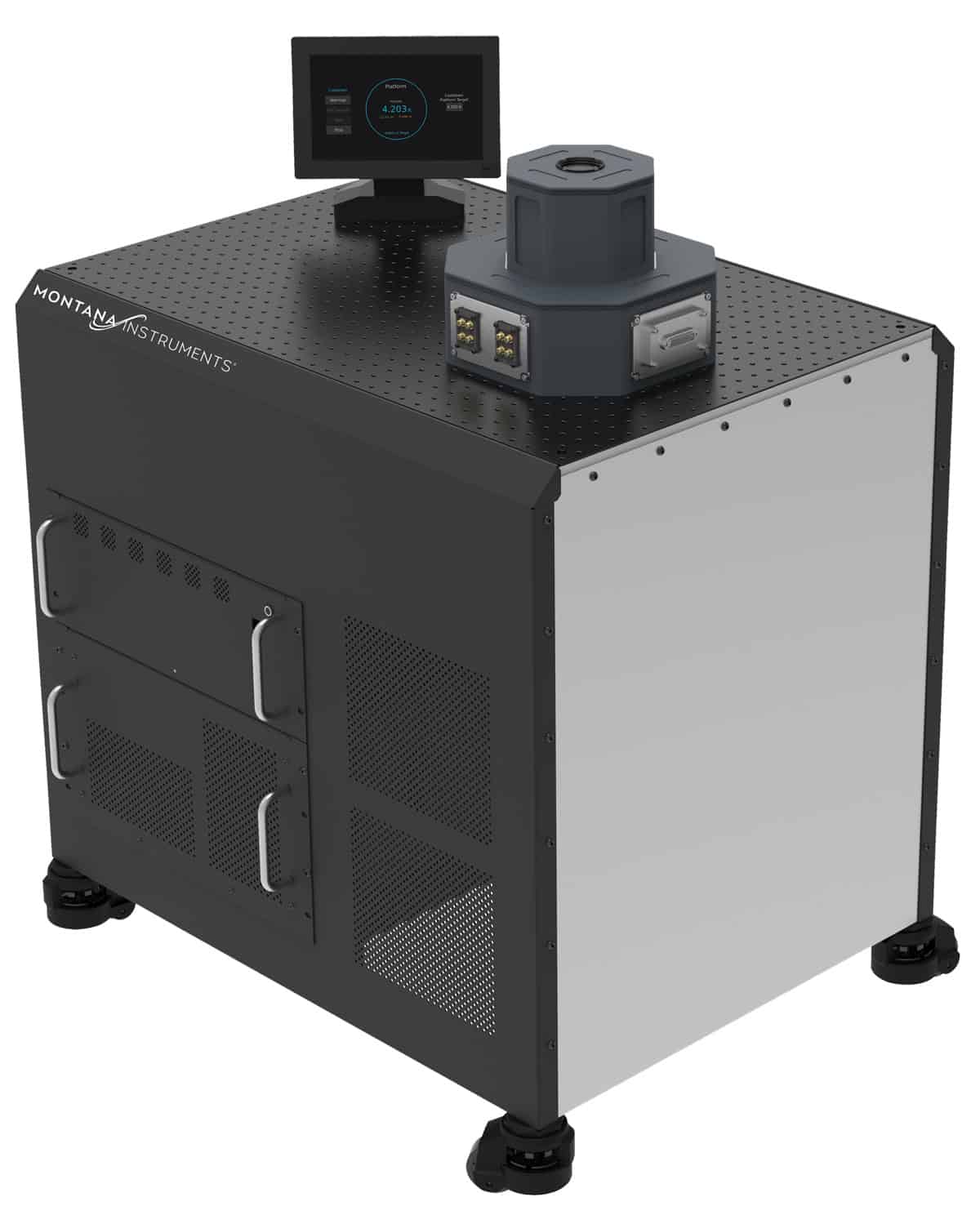
Cool stuff The new RapidCycle 100 EC cryostat from Montana Instruments, which can cool down from room temperature to 4 K within an hour and warm back up again just as fast. (Courtesy: Montana Instruments)

As quantum computing enters its commercial phase, demand is growing for electronic components that can operate reliably at ultralow temperatures. But suppliers that routinely test the performance of their devices under a wide range of conditions rarely extend their characterization efforts to the cryogenic regime. Quantum developers must either test the components themselves, or run the risk that a faulty device ruins the performance of increasingly complex quantum machines.

β€œQuantum computers are often operated within a dilution refrigerator, which takes days or weeks to cool down,” says Ben Wilbur, a senior design engineer at cryogenics specialist Montana Instruments. β€œA single faulty component requires the whole system to be warmed up again, which can waste the best part of a month and slow down progress.”

To avoid that scenario Montana Instruments has designed and built a cryostat, called the RapidCycle 100 Β EC, that can cool down from room temperature to 4Β K within an hour and warm back up again just as quickly. The overall cycle time is around three times faster than for similar systems, and a fraction of the time needed to cool down and warm up a large-scale dilution fridge.

Such a rapid cycle time offers an efficient solution for quantum engineers to validate electronic components before integration and for suppliers to measure the low-temperature response of their devices before shipping them out to customers. β€œFrom talking to different companies we know there is a market desire to test more components, but there is also a commercial impetus to streamline the testing process,” says product manager Patrick Gale.

Gale points out that many of the electronic components that are being used to build quantum computers have not been designed to operate at ultralow temperatures. As an example, radio-frequency devices play a critical role in many qubit architectures for controlling and reading out the quantum states, but manufacturers of these components are unlikely to have the expertise or equipment to know whether their components function effectively in this regime.

β€œThis system is designed for companies that want to understand how their devices perform at ultralow temperatures, but without needing to hire a cryogenics engineer,” says Gale. β€œHaving the capability to characterize their own components could offer suppliers a competitive advantage, allowing them to pre-qualify their devices and even to improve their low-temperature performance for quantum applications.”

Commercial drivers

The idea for the RapidCycle cryostat first emerged in 2023. Initial development results were promising, but more immediate priorities delayed efforts to engineer a commercially viable product. Around a year ago, as the need for faster cycle times became more urgent within the rapidly expanding quantum industry, the company restarted its design work. β€œWe felt we were in a unique position to tackle this problem,” says Gale.

REQUIRED (courtesy: )
Speedy response Montana Instruments’ fast-acting cryostat lets quantum engineers validate electronic components and measure the low-temperature response of devices before being shipped to customers. (Courtesy: Montana Instruments)

But cutting the cycle time by a third was not an easy task. β€œMost of the thermal energy is from room temperature down to around 50–70Β K, so that is where we needed to focus our development efforts,” says Wilbur. β€œBeyond that the temperature starts to drop much more rapidly, since the heat capacity of the materials become much lower close to absolute zero.”

While the original work had shown that rapid cool downs were feasible, further iterations were needed to achieve the target temperature of 4Β K and to generate enough cooling power to maintain the device at that temperature during the test. β€œTo optimize the performance we needed to think carefully about the materials we used, and about the amount of thermal mass that really needed to be in the system,” says Wilbur. β€œThe more you have in there, the longer it will take to cool down.”

While there was a clear design focus to minimize the thermal mass, the system has been engineered to provide plenty of space and flexibility for testing electrical components. Samples can be mounted on a 100Β mm platform, large enough to accommodate a diverse range of electronic components, while the configuration can easily be adapted to different testing protocols. Extra space has also been created around the sample to provide an easy-access wiring system that supports a flexible combination of RF and DC feedthroughs into the cryogenic environment.

β€œAs these tests get more complicated, all the inputs and outputs to the sample can make the cryostat really messy,” says Wilbur. He explains that the unit has a tiered structure, with the sample space at the top and a lower housing that provides extra room for connecting and disconnecting the cables. β€œIt really cleans up the wire management but also reduces the volume within the sample space to achieve a fast cycle time.”

Targeted design

Other design features have focused on the usability of the system, particularly for electronic engineers and technicians with limited knowledge of cryogenics. In keeping with the company ethos of making cold science simple, the complexities of the cool-down process – such as reaching the right vacuum level before engaging the cryocooler – are hidden from view. β€œThe user just needs to set a target temperature and press the cool-down button,” says Gale. β€œThe same for warm-up, all the temperature monitoring is done automatically so the user can just walk away.”

A touchscreen interface provides real-time readouts of the internal temperature, vacuum pressure and temperature stability, while the system can also be connected to a computer network to allow for remote control and monitoring. All the measurements taken with the system can easily be exported over the network connection, enabling them to be combined with other performance data that have been collected for device characterization.

Such automated processes are nothing new for Montana Instruments, which has built a reputation for building systems that allow users to focus on their own experiments and assemblies rather than the intricacies of the cryogenics. In this case, however, special attention was also paid to creating an integrated system that can operate within the constraints of a manufacturing environment. β€œWe focused on consolidating the form factor to ensure that the unit doesn’t take up too much space on the production floor,” says Wilbur. β€œThe cryostation and all the controls fit into a cart that can easily be wheeled around.”

Following the official launch of the RapidCycle earlier this year, Montana Instruments is expecting to ship the first commercial units in the next month or two. But Gale points out that some beta customers in the manufacturing sector have already been trialling the system. β€œThe feedback has been positive,” he says. β€œWith some simple training we have had them up and running in a day or two, and they really appreciate the fast cooldown.”

The post Faster cryogenics speeds up quantum testing appeared first on Physics World.

❌