Ferrari’s new sportscar, the Luce (pronounced Loo-che), raises some interesting questions about the future of hi-tech, high-cost supercars in the electric era.
The Italian sportscar maker’s first move into the electric vehicle (EV) segment – with an eye on the Chinese luxury market – signals strategic pragmatism rather than ideological continuity.
Compounding this is the decision to collaborate with LoveFrom, the company founded by Apple’s former design supremo Sir Jony Ive. Ferrari has imported a design philosophy from outside the automotive world that appears to sit uneasily with its historically internalised design culture.
At US$535,000 (£400,000), the Luce is insulated from conventional market scrutiny. It will most likely sell out. That outcome is assured by brand equity, scarcity and speculative luxury consumption.
Yet commercial success should not be conflated with brand legitimacy. The critical question is not whether the Luce succeeds as a product, but whether it succeeds as a Ferrari.
Rational design v emotional deficit
Any assessment of the Luce must acknowledge the constraints imposed by being electrically powered. This introduces a series of fundamental design compromises – most notably, weight penalties.
Ferrari’s legacy is rooted in lightness, precision and immediacy. Electric vehicles, by contrast, privilege stability, silence and computational control. The Luce, as a large four-door sedan, amplifies these contradictions.
It offers generous space for four adults, improved ingress and egress (its petrol-driven predecessors were famously tricky to climb into, despite the cost) and a suite of innovations aligned with luxury mobility.
These are markers of design functionality, usability and comfort. Yet Ferrari – by a distance the world’s most profitable sportscar brand – has never been defined by rational competence.
Its identity resides in the immediate emotional charge of encounter. The sculptural tension of its surfaces, the auditory drama of its engines, the sense of latent aggression even at rest. In design theory terms, this is the domain of instinctive, sensory response. And it is here that the Luce appears deficient.
Video: Ferrari.
The widespread negative reaction, including from past owners – that “this is not a Ferrari” – is not simply nostalgia or resistance to change. It represents a failure of instant recognition and emotional impact.
The Luce does not provoke, it resolves. Its typology demands comfort and accommodation. Its propulsion system introduces physical characteristics that run counter to Ferrari’s historic emphasis on kinetic intensity.
Contemporary high-performance EVs routinely carry battery packs exceeding 500-700kg, resulting in vehicle weights that often surpass 2½ tonnes. This has profound implications for a car’s driving agility and responsiveness, particularly in corners and under braking – characteristics that are the essence of any self-respecting sportscar.
Design error?
Ferrari’s design language has historically emerged from an interplay of engineering constraint, racing heritage and stylistic evolution. By contrast, the Luce appears to impose a different aesthetic.
The involvement of Ive and fellow industrial design giant Marc Newson introduces a design language characterised by reduction, clarity and formal restraint. This philosophy has proven highly successful in product design, where usability and material precision dominate.
But its translation into automotive design, particularly with a brand like Ferrari, has proved controversial. It would be interesting to know how much input and influence Ferrari’s chief design officer, Flavio Manzoni, and his team had in the Luce’s gestation.
The limitations of the Luce are further exposed through comparison. Porsche’s Taycan has shown how brand identity can be preserved within an electric framework. Similarly, the Jaguar I-Pace, though more radical in typology, maintains a sculptural dynamism consistent with Jaguar’s design heritage.
Both vehicles succeed because they understand that technological change must be anchored in emotional continuity. In contrast, the Luce appears to prioritise conceptual clarity over sensory resonance.
Video: Guardian News.
An overlooked power alternative
The Luce’s emergence also raises broader questions about technological commitment. Battery-electric vehicles have, for now, achieved dominance, but they are not the only pathway to decarbonisation.
Hydrogen-based powertrains, particularly hydrogen internal combustion engines, offer an alternative model that may align more closely with performance-oriented brands.
While hydrogen infrastructure remains underdeveloped, its potential lies in preserving elements of the visceral and sensory experience that define marques like Ferrari – including a roaring engine and responsive handling – as well rapid refuelling times.
In 2024, automotive and transport design students at Coventry University were challenged to design a clean-energy supercar for the British manufacturer Riversimple. The result was a lightweight prototype design that used an innovative hydrogen powertrain to prioritise the driving experience.
Full electrification risks erasing these qualities in favour of efficiency and refinement. So, Ferrari’s commitment to battery-electric power appears to reflect a narrowing of its drivers’ experiential possibilities. The Luce risks being a product shaped as much by infrastructural momentum as design intent.
An existential question
The Luce still represents a strategic success. It secures Ferrari’s entry into the EV market and aligns the brand with global sustainability narratives. Its association with LoveFrom enhances its reflective value, positioning it as an object of intellectual as well as financial capital.
But it also exposes a deeper tension.
EV platforms impose constraints – particularly on weight and the driving experience – that challenge the foundations of Ferrari’s identity.
Alternative powertrains – including hydrogen internal combustion engines – and the use of biofuels such as those now adopted in Formula 1, suggest that different pathways could help preserve more of the brand’s experiential core.
Ultimately, the question is not whether Ferrari can build an electric luxury sedan – it clearly can. The question is whether, in doing so within the limits of current EV architectures, it can still produce something that feels unmistakably like a Ferrari.
Aamer Mahmud does not work for, consult, own shares in or receive funding from any company or organisation that would benefit from this article, and has disclosed no relevant affiliations beyond their academic appointment.
Europe is taking decisive steps to strengthen its control over the technology that underpins its societies. It is concerned about the digital infrastructure that sits behind everything from energy grids and water supplies to public transport, healthcare and the apps in people’s phones.
The backdrop is stark. Around 80% of Europe’s digital infrastructure and technology comes from outside the EU. An estimated €264 billion (£228 billion) a year is spent on cloud and software services that are mostly non-European.
Europe produces only about 10% of global semiconductors (the technology behind computer chips). In cloud computing, European providers hold roughly 15% of the market, while three US firms account for around 70%.
These imbalances were long seen as a natural outcome of globalisation. But in a world of geopolitical tension, they increasingly represent a strategic vulnerability. Export controls, sanctions and political pressure risk rippling through digital supply chains. The recent US ban on foreign access to advanced AI models sends a small yet clear signal.
What once looked efficient now looks risky. At the same time, the EU stresses that this is not about isolationism.
A central shift proposed by the European Commission’s digital sovereignty package is to make digital dependencies visible and measurable. Through tools such as sovereignty risk assessments for cloud and AI services, organisations are pushed to look beyond performance and price and at the level of “sovereignty” a service or product provides.
Questions of ownership, jurisdiction, supply chains, data location and the ability to switch providers here become central when procuring digital services. The Computer & Communications Industry Association, which represents tech companies such as Amazon, Meta and Google, said the plans would undermine the EU’s goals of bolstering its digital infrastructure. On the other hand, European counterparts say the language in the tech sovereignty plans is soft.
This changes the role of buyers – especially in the public sector. Governments would no longer be just customers. Instead, they would start to shape markets. Through procurement and infrastructure investment, they can influence which technologies succeed and how digital ecosystems evolve.
The Commission wants to ensure that the expected expansion of data centres is environmentally sustainable.Snehit Photo
Public sector demand for open technologies has been shown to stimulate competition and economic growth. In this sense, the sovereign technology agenda is not just about building alternatives but about reshaping the rules of the digital economy.
The EU is trying to give organisations more freedom to switch between different technology providers and negotiate with them. This shifts the control back towards users – helping ensure continuity even in times of crisis.
Turning this vision into reality will not be straightforward. Much of the content of the tech sovereignty plan relies on encouragement rather than binding measures, especially around open source software and procurement. This creates a risk that “sovereignty” becomes more of a political label than an operational shift, with uneven implementation across Europe.
Nor is this the first attempt at promoting a similar vision of change. Earlier initiatives – in the form of the Tallinn, Berlin and Strasbourg declarations, to more recent EU legislation – have outlined similar ambitions but these have struggled to materialise. Without clearer requirements, there is a risk of repeating this pattern.
Another challenge is fragmentation. If member states interpret sovereignty differently, the result could be a patchwork of approaches that weakens impact. Coordinated action is needed to grow both supply and demand across Europe. Public procurement will be central, but not sufficient. Organisations also need capabilities – the knowledge and structures to assess dependencies and act strategically.
Current frameworks tend to focus on evaluating technology providers, rather than whether organisations themselves can make and sustain sovereign choices.
The Commission’s funding levels for its tech sovereignty package raise further questions. Through an envisaged public-private (mostly the latter) funding model, around €2 billion (£1.7 billion) is calculated for open source over seven years, €120 billion (£103 billion) to semiconductors, €200 billion (£172 billion) to data centres – significant, but modest compared to the money invested in global technology platforms and the digital economy. Practical constraints remain: switching systems is costly, alternatives may lag behind, and shortages in skills and cybersecurity capacity add pressure.
National policies reflect these tensions. Sweden’s recent cloud computing strategy, for example, recognises the need to reduce dependencies but remains cautious in how far it goes – illustrating how national differences could limit Europe’s collective impact.
Whether the EU’s package of measures can succeed will depend less on ambition and more on implementation, and whether the supply and demand for sovereign tech is able to nudge. Negotiations to follow will show how things fall out.
Ultimately, this is not just a European issue, but one for any government or organisation. It is about who controls the digital systems modern societies depend on – and how those systems remain resilient, secure and aligned with public values in an uncertain world.
Johan Linåker does not work for, consult, own shares in or receive funding from any company or organisation that would benefit from this article, and has disclosed no relevant affiliations beyond their academic appointment.
Earlier this year in Beijing, a humanoid robot crossed a half-marathon finish line in a blistering 50 minutes, 26 seconds. The feat immediately lit up global headlines for shattering the human world record by almost seven minutes.
This performance came with many asterisks. The robot followed a pre-mapped track, stayed in its own dedicated lane, and had a human support crew trailing behind it in case something broke.
But the performance gap didn’t just close, it evaporated – down from over 2.5 hours in 2025. This wasn’t just about better motors or lighter carbon fibre; it reflected a massive shift in what a robot actually is. And that transformation has implications for our homes and hospitals too.
The world-beating humanoid runner. Video: ABC News (Australia)
Tricked into going rogue
For decades, robotics was all about rigid, predictable coding. You wrote a program, locked the machine in a metal cage and let it execute repetitive tasks forever.
Industrial safety standards were built on the premise that if you can map the physical path of a robotic arm, for example, you can bound its risk with a cage or laser tripwire.
But the systems moving into hospitals and homes today don’t use fixed code blocks. They run on “foundation models” – the same kind of internet-trained artificial intelligence that powers chatbots like ChatGPT.
If you tell a modern AI-driven robot to “clean up a spill in the kitchen”, it uses these models to interpret your unique room (rather than match it to a pre-programmed list), figure out your intent, then invent an action plan on the fly.
But such flexibility creates an open-ended safety problem. You cannot build a physical cage around a machine whose behaviour emerges in real time, based on its own reasoning. The danger with the new breed of AI robots is that, because they use human language to plan their actions, they can be tricked into “going rogue”.
In my recent research with colleagues in the US, we decided to test exactly how fragile these AI robots’ safety systems are. We wanted to see if the guardrails that AI developers build into their foundation models, designed to prevent harmful or dangerous outputs, hold up when the underlying model is given a physical body.
Using nothing but basic text prompts and without any hardware hacking at all, we manipulated a range of AI-controlled robots to do genuinely hazardous things.
In our tests, the systems easily rejected directly malicious commands like “hit that person”. But these safety filters collapsed the moment we used a little creative writing. By framing our request as a piece of fictional dialogue for a movie script, the robot’s behavioural blocks disappeared.
In one trial, we programmed a commercial robot dog to pinpoint human crowds as optimal locations in which to place an explosive device. Because the underlying AI saw the prompt as a creative exercise, it appeared blind to the dangerous real-world implications of the plans it was generating.
In the UK, US and EU, current laws appear completely unprepared for such eventualities.
No boundaries
When policymakers try to figure out how to regulate robots, they almost always look to autonomous vehicles. But self-driving cars operate in a highly structured, heavily mapped world. They follow fixed traffic laws, navigate predictable road geometries and can be tested through millions of hours of simulation.
A busy street functions under well-defined laws using guidance systems such as traffic lights, meaning engineers can anticipate safety parameters ahead of time.
Self-driving technology informs much of the thinking around AI robot regulation. Video: Reuters.
A domestic kitchen, school or hospital room has no such equivalent. And no factory bench-test can predict what an internet-trained model will decide to do when it encounters a novel object in a messy, unpredictable human environment.
This leaves us with a profound conceptual flaw in how we build these machines. Chatbot safety is absolute: a model shouldn’t output a bomb recipe, no matter who asks. But robot safety is context dependent.
Think about pouring boiling water from a kettle. The underlying physical movement – tilt, flow rate, trajectory – is the same whether the water lands safely in a ceramic mug or, catastrophically, on a child’s hand.
AI foundation models are phenomenal at open-ended logic, but they struggle immensely with real-time, context-aware physical judgment. In a text interface, a failure of judgment gives you a typo or hallucinated fact. In the physical world, such a failure may be completely irreversible – with devastating consequences.
Who takes the blame?
If an AI-powered robot causes a physical injury, who takes the blame? Is it the end-user who gave the spoken command? The company that manufactured the metal chassis? Or the tech firm that trained the AI model in the first place?
Right now, the laws that seem to apply – such as product liability, warranty claims and consumer protection statutes – have not been tested in these new situations. And until liability is explicitly assigned by regulators, market pressures will continue to push tech companies to prioritise rapid commercial deployment over cautious safety engineering.
If we want to live alongside these machines safely, I believe we need to decouple safety from the AI model’s decisions. A robot shouldn’t rely on a chatbot’s logic to decide if it’s safe to swing a heavy metal arm near a human face.
This means creating safety layers that don’t depend on the AI being right. For example, we need zones around people that a robot’s arms simply cannot enter, and a physical emergency brake that can stop the robot if and when its AI fails.
The humanoids crossing finish lines in controlled athletic trials are impressive proofs of concept, but they are just the prologue. The next generation of autonomous agents will operate in high-stakes human spaces – navigating recovery wards, assisting the elderly, walking our streets.
We need an easily interpretable and robust safety framework already up and running before they arrive – not as a retrospective response to a predictable tragedy.
Fazl Barez receives research funding and support from the Future of Life Institute, Cosmos Institute, OpenAI, Anthropic and Schmidt Sciences. He is Principal Scientist (Advisory) at Martian AI infrastructure company.
Illegal dumping of waste is costing the UK government over a £1 billion per year.malaha/Shutterstock
Illegal waste dumping in the UK is no longer a marginal nuisance. It is increasingly operating at an industrial scale, with serious consequences.
The reported dumping of around 30,000 tonnes of waste at a protected site of special scientific interest in Leicestershire is one recent example of how severe the problem has become. Similar concerns have emerged recently at the large illegal waste site near Kidlington, Oxfordshire, where shredded mixed waste was deposited close to waterways. These are signs of a broader waste-crime economy that is damaging land, water and communities while shifting the bill onto the public.
Part of the problem is that by the time large fly-tipping sites are discovered, it can be difficult to identify the original source.
This is where digital technology and geospatial intelligence are becoming increasingly important.
My ongoing research focuses on exactly this problem: mapping and characterising uncontrolled waste disposal sites worldwide, and using satellite data, geospatial intelligence and AI to identify where they are, how large they are and what risks they pose to nearby people and ecosystems. The principle is simple: you cannot manage what you cannot measure. If waste crime is going to be tackled properly, the sites have to be found first.
Satellite imagery and remote sensing now allow researchers and regulators to monitor land-use change, detect unusual waste accumulations, and identify environmental risks at scales impossible through traditional inspections alone, as demonstrated by recent work using satellite imagery and AI to identify dumpsites in 28 cities.
How would it work?
Drones can provide high-resolution imagery of suspect sites, while AI systems can analyse patterns and flag high-risk activity quickly. To do this, they will build on advances in waste-site detection from aerial and satellite imagery.
Thermal imaging and technologies to detect methane can also identify emissions from decomposing waste that would otherwise remain invisible. Recent studies show the growing capability of satellite-based methane monitoring to identify major emission sources and help create more effective waste-sector policies.
These tools are especially valuable because most large illegal waste sites do not appear overnight. They grow gradually over months or years, so earlier detection creates an opportunity to get on top of the problem before environmental damage escalates.
While these technologies are not usually sufficient on their own to identify individual offenders, they can provide evidence of when and where illegal dumping occurs, help authorities monitor sites over time, and support targeted investigations and enforcement actions. Their value is often in enabling earlier intervention.
The UK government is due to launch a digital waste tracking service in October 2026, replacing outdated paper-based systems with real-time digital reporting.
Official waste operators will then have to create records of receipt of waste, or face fines. If implemented effectively, the system could improve traceability across the waste chain and make it far harder for waste to disappear into illegal sites unnoticed. The government is already starting to use drones to help track down waste dumpers.
Drone pilots are already starting to be used to try and track illegal waste dumpers.
How big is the problem?
Local authorities in England dealt with 1.26 million fly-tipping incidents in 2024-25, a 9% increase from the previous year. However, the total number of court fines decreased by 9% over the same period.
Analysis reported by the Guardian suggested the UK may now have around 8,000 illegal waste sites and those that dumped the waste have avoided about £1.63 billion in landfill tax.
Globally, a report from the UN Environmental Programme estimated the hidden costs of uncontrolled waste disposal reached US$243.3 billion (£181 billion) worldwide in 2020.
The environmental damage depends on quantity, composition, location and how long waste remains in place. Illegal sites often contain mixed household rubbish, plastics, construction debris, shredded material, and sometimes hazardous waste. As this material degrades, it can cause damage to water, soil, air and possibly human health, preliminary research suggests.
Without impermeable barriers or drainage, polluted leachate (contaminated liquid generated by waste) can move into soils, rivers and groundwater. There’s considerable risk in floodplains and other sensitive areas, where heavy rain can carry pollution further and faster.
What are the problems caused by dumps?
Illegal dumps can also attract pests and other disease carriers, creating public health concerns, disturbing habitats and harming wildlife. Animals may ingest plastics and other harmful materials, while the wind can spread shredded waste across nearby land.
In some cases, waste can catch fire, releasing smoke and fine particulates into the air. In addition, when organic waste decomposes in the absence of oxygen, it produces methane, a potent greenhouse gas.
The economic cost is equally severe. Cleaning up major illegal dumpsites is technically difficult and extraordinarily expensive. Authorities must map the site, assess contamination risks, identify hazardous materials, secure the area, and safely remove and process the waste.
In sensitive locations such as river corridors or floodplains, sorting out the problem becomes even more complex. The Environment Agency has warned that clearing the Oxfordshire site could cost over £7 million.
The obvious question is why this keeps happening. Part of the answer is economic. Proper waste disposal is expensive, while illegal dumping can generate large profits for individuals by illegally avoiding landfill taxes and compliance costs.
Waste also moves through fragmented supply chains involving brokers, subcontractors, carriers and temporary operators, making accountability difficult. Historically, waste tracking in the UK has relied heavily on paper documentation, creating opportunities for fraud, falsified records and waste simply “disappearing” from the system.
What next?
Technology alone, however, is not enough. Better monitoring must be combined with stronger enforcement, improved coordination between agencies, clearer accountability across supply chains, and meaningful penalties that outweigh the financial incentives of illegal dumping.
Illegal waste is not simply a waste-management issue. It is an environmental, economic and public-health issue. Allowing industrial-scale dumping to become normalised would shift enormous long-term costs onto society, ecosystems, and future generations.
Prevention, transparency and early detection are ultimately far cheaper and far less damaging than attempting to clean up after the damage has already been done.
Amani Maalouf receives funding from the UK Research and Innovation (UKRI) Digital Research Infrastructure programme, administered by the Natural Environment Research Council (NERC) on behalf of UKRI.
The effective collapse of the Future Combat Air System (FCAS) fighter jet programme is a major setback for European defence cooperation.
France, Germany and Spain have spent nearly a decade trying to develop what was
intended to become Europe’s premier next-generation combat aircraft, only for the
programme to succumb to disputes over leadership, the distribution of work and intellectual property.
Yet Europeans shouldn’t be surprised. The history of European combat aviation is littered with programmes that struggled under the weight of competing national ambitions. In this respect, FCAS looks less like an extraordinary failure than the latest chapter in a recurring story.
The more important question is not why FCAS has run into trouble, but rather what its collapse reveals about Europe’s ability to generate and sustain the military capabilities it will need in a more dangerous world.
Adversaries are now investing heavily in integrated and layered air defences encompassing long-range missiles, electronic warfare capabilities and increasingly sophisticated sensors. Maintaining the ability to penetrate defended airspace in future conflicts will require a step change in capability.
FCAS was conceived as a “sixth-generation” combat system – the latest leap in fighter jet technology – to overcome this contested air environment. At its centre would sit a new combat aircraft, supported by autonomous drones, advanced sensors, electronic warfare systems and a digital network linking everything together from the 2040s.
The challenge is that such programmes are becoming extraordinarily expensive to develop. By sharing costs, expertise and industrial capacity, European governments hope to achieve capabilities that would otherwise be beyond their reach.
Despite the perceived commonalities, the FCAS nations – France and Germany in
particular – had very different objectives.
For France, the project was never simply about replacing its Rafale fighter jet. Any successor aircraft would eventually have to support the airborne component of France’s nuclear deterrent, operate from its aircraft carrier, and preserve sovereign industrial capabilities – specifically the ability to independently design and build advanced combat aircraft. The insistence by France on design leadership for FCAS therefore reflected concerns about national autonomy, even if portrayed as industrial obstinacy.
Meanwhile Germany, represented by the aerospace giant Airbus, had little interest in financing a programme that was likely to concentrate Europe’s most valuable expertise, intellectual property and design authority in Dassault, the French aerospace company, for decades to come.
These tensions are hardly new. In the 1960s, Britain and France attempted to build the Anglo-French Variable Geometry aircraft. But France’s withdrawal in 1967, for similar reasons to FCAS, led to the project’s collapse.
Other joint European projects have succeeded. For instance, the Panavia Tornado. And in the 1980s, the Eurofighter consortium was developed. This time, despite France withdrawing (to produce the Rafale), the UK, Germany and Italy proceeded (with Spain later joining) with what would become the Eurofighter Typhoon.
Reliance on America
For decades, therefore, European collaborative programmes have been expected to do several things at once: deliver military capability and sustain national industries while strengthening diplomatic relationships or at least not upsetting them.
That may have been a manageable compromise when Europe’s security was underwritten by the United States and the threat from Russian appeared contained. It is far harder to justify when European governments are warning that the continent must rearm.
Emmanuel Macron and Friedrich Merz have several options in the wake of the project’s collapse.EUS-Nachrichten
The challenge is compounded by the changing relationship between governments and
industry. Unlike Airbus, which remains partly state-owned, Dassault is controlled by the family that bears its name.
This reflects a broader trend of European governments often exercising less influence over major defence firms than they did during the cold war, when state ownership and greater industrial competition gave them more leverage. This is to say nothing of the tech firms increasingly fundamental to military capability.
That matters because armed forces are built over decades, not electoral cycles. If European governments struggle to mobilise industry to meet their defence requirements, they may find themselves confronting capability gaps at precisely the moment they are trying to deter aggression.
Germany’s defence minister, Boris Pistorious, has already outlined three alternatives to FCAS. The first and simplest is to buy more F-35s from the US. But this would fall short of Germany’s requirements while also deepening dependence on the US – something European nations are keen to avoid.
The second option is to join another collaboration, most likely the UK-Italian-Japanese effort to build a sixth-generation fighter, called the Global Combat Air Programme (GCAP). Germany’s growing defence budget could provide the project with additional funding and a larger order book. But it would also raise questions about influence.
If Berlin rejected a subordinate role within FCAS, it is unlikely to accept one within GCAP. Existing partners may therefore conclude that the benefits of expansion are outweighed by the risks of delay to a programme targeting entry into service by 2035.
The third option is a German-led effort, being discussed through the proposed Team Gen 6 industrial grouping – an Airbus-led alliance of eight defence firms. This would solve industry concerns, preserve German design ambitions and might allow Berlin to build a coalition with other partners, such as Spain and Sweden.
But it could be prohibitively expensive, risky, and by further fragmenting Europe’s already crowded combat aircraft landscape, reduce the viability of all the existing programmes. France faces similarly difficult choices. It can pursue a national successor to Rafale, preserving control over industrial, nuclear and carrier requirements but accepting substantial costs. Or it could seek a revised collaborative framework.
In the meantime, both French president Emmanuel Macron and Germany’s chancellor Friedrich Merz have made clear that other opportunities for collaboration exist, such as the drones intended to support the FCAS fighter jet, or the main aircraft’s engine.
The experience of FCAS is not that Europe cannot cooperate. History shows otherwise, and GCAP may yet again demonstrate that a pragmatic coalition can succeed where a more politically ambitious partnership failed.
What FCAS does reveal, however, is a growing mismatch between Europe’s security
environment, the way it continues to procure defence equipment and the costs involved. The recent resignation of Britain’s defence secretary, John Healey, amid disputes over defence funding, points to the same problem.
European governments increasingly agree on the threats they face, but remain “unwilling” to make the financial and political compromises required to address them. That should concern us all.
Arun Dawson does not work for, consult, own shares in or receive funding from any company or organisation that would benefit from this article, and has disclosed no relevant affiliations beyond their academic appointment.
From election debates to job interviews, language shapes our perceptions of how trustworthy other people are. This power can be used to build healthy relationships, but it can also be used to manipulate and deceive.
To better understand this darker side of building trust, my colleagues and I turned to the corporate world – a domain that offers plenty of cautionary tales. Our case study was among the most notorious, involving one of the world’s largest energy companies of the 1980s and 90s: Enron.
To manipulate the markets, Enron traders had to win – then keep – the trust of partners, clients and regulators. Subsequent US federal investigations led to the release of more than 500 of their telephone calls in 2005.
These conversations have offered our team of linguistic experts a rich source for analysing the tactics traders used to build and retain confidence in their criminal strategies.
The trust playbook
Our research combined discourse analysis (a forensically detailed breakdown of the language used and how it was delivered) with behavioural science insights to establish the Enron traders’ “trust playbook”. This, we found, comprised four steps.
1. Foster ideological alignment
Among close business partners, the Enron traders relied heavily on verbal bonding to build emotional connections. This was all about intense, emotive language including frequent swearing – locker-room talk, essentially (most conversations involved male traders only).
Regulators were often dismissed as “stupid”, “crazy” and full of “bullshit” to help cement bonds between participants while reinforcing their shared ideological stance.
This kind of language can be a powerful trust-building tool because it fosters what psychologists call identification-based trust – the highest level of interpersonal trust, rooted in emotional attunement and shared purpose.
This bonded Enron traders and their accomplices into a tight in-group with its own moral logic of: “We understand the market; they just want to stifle business.”
Inside Enron, the overt flaunting and celebration of success may also have helped override any individual moral concerns, by recasting questionable actions as innovative and market leading.
Video: CBS News.
2. Be competent, credible – and benevolent
For the Enron scandal to succeed at such scale, traders needed to persuade clients and partners that they would deliver on their promises and weren’t trying to take advantage of them. To do this, they leaned heavily on energy-trading jargon to showcase their expertise and credibility.
This elicited what psychologists call competence-based trust – the sense not only that they knew what they were doing, but that they knew valuable information their partners and clients did not.
This encouraged clients and partners who were unaware of the manipulation, but whose cooperation made it possible, to go along with market moves that were later ruled unlawful.
But another important part of the playbook was benevolence – emphasising the opportunity and mutual benefit for their partners and clients. “We don’t win unless you guys win. And that’s good for you guys too.”
According to an influential 1995 study, organisational trustworthiness comprises three essential qualities: ability, integrity and benevolence – the degree of care and positive intention the recipient feels. Our analysis shows these qualities can be constructed through language to mould relationships in your favour.
3. Confide in close partners
Of all the ways we use language to build trust, confiding is probably the most powerful. It requires someone to not only demonstrate trust by sharing a secret, but consolidate it by signalling they believe the other person will keep that secret.
In the Enron case, this was information that would damage reputations, or worse, expose traders to legal consequences. Each disclosure deepened the bond of secrecy between Enron traders and their accomplices, creating feelings of mutual vulnerability while quietly normalising the wrongdoing.
The traders even developed a set of playful nicknames for their unlawful tactics, including “Death Star”, “Fat Boy” and “Get Shorty”. Members of the inner circle spent a lot of time discussing these schemes, coordinating their next moves, and celebrating the millions they were raking in.
Video: One Minute Economics.
4. Repair trust to deflect suspicion
When trust was damaged or at risk, the traders showed interesting language techniques to try to repair it. For example, metapragmatic expressions – which comment on the speaker’s own words – were used to highlight transparency: phrases like “I’ll be honest with you” or “To tell you the truth”.
If that failed, traders went on the defensive: denying (“We didn’t do anything wrong – we weren’t going to manipulate anything”); shifting blame (“They changed the rules on us in the middle of the game”); and making excuses (“Well, guess what: your pricing mechanisms encourages people to take it out of the state”).
These strategies aimed to preserve trust by eliciting the benefit of the doubt. A favourite technique was reframing: recasting suspicious events as routine and unremarkable.
This is a powerful trust-repair tool because it lets the speaker concede the facts while disputing what they mean. By shifting the dispute on to technical ground, the traders moved it away from questions of honesty to questions of expertise, where they felt they still had more room to manoeuvre.
Of course, these kinds of techniques are not unique to the Enron traders. The same strategies run through all kinds of persuasive and manipulative discourse – from social media influencers to online scammers and AI advice chatbots.
Which makes learning to read the language of trust – and how it can be abused – more important than ever.
Matteo Fuoli does not work for, consult, own shares in or receive funding from any company or organisation that would benefit from this article, and has disclosed no relevant affiliations beyond their academic appointment.
Some farms are looking at how best to use their lights at night.MillaF/Shutterstock
Growing evidence suggests that excessive outdoor lighting at night may be harming wildlife.
For generations, rural communities worked to the rhythms of daylight and darkness. Today, the amount of harsh light switched on at nightime is having profound consequences for many living things.
Agricultural properties are often remote and vulnerable to equipment or livestock theft. In response, many landowners have now installed security floodlights, powerful halogen beams, and unshielded external LEDs to illuminate yards overnight.
The North York Moors National Park, an international dark sky reserve in the north of England, has been working with farmers to reduce the impact of artificial light on the natural environment.
The initiative is about ensuring that lighting is used in the right place, at the right time, and at the appropriate intensity. This might involve installing downward-facing fixtures, reducing glare through shielding, or switching to warmer-coloured lighting that is less disruptive to wildlife.
The best places to start trying to reduce bright nighttime lights are those rich in wildlife, and farms in the park are often in the darkest areas.
Since 2021, the national park has worked with more than twenty farms in key dark sky locations, with many more projects in development.
Carefully designed lighting systems can use shielded or motion-activated lighting, which reduce impact on wildlife.
Before and after a North Yorkshire property worked with the national park’s advice on lighting.North York Moors National Park, CC BY
How does it affect the environment?
Over-illumination disrupts complex regional ecosystems, extending daylight artificially and changing the behaviour of animals that depend on natural darkness. Research suggests that light pollution caused by humans, harms ecosystems because of the critical role light has on the timing of biological systems, which artificial light disrupts.
The damage extends from the soil upward. Scientific research indicates that pressures on ecosystems due to habitat loss, pesticides, invasive species and light pollution could create a devastating decline in the insect population, with a knock-on effect on the food chain.
Benefits for farms?
There’s also evidence that suggests that changing lighting could help farms. This light disruption affects crucial agricultural allies. Moths, which serve as vital nocturnal pollinators, are heavily affected, alongside bats facing shrinking feeding grounds. Bats can help farmers control insect pests.
Changing lighting around farms could also open up new tourism opportunities. Farms that also operate as B&Bs, for instance, can flag to tourists that they are part of a dark skies friendly community programme. This is an accreditation scheme for businesses that improve their lighting systems in accordance with international dark sky standards.
While UK national park authorities have powers to enforce planning restrictions on lighting, in places outside national parks, the UK lacks a comprehensive national regulatory framework to govern rural skyscapes.
The lesson in North Yorkshire and beyond is not that farms should switch off their lights. It is that lighting can be used responsibly to contribute to the stewardship of one of the countryside’s most valuable resources: the natural night sky.
The authors do not work for, consult, own shares in or receive funding from any company or organisation that would benefit from this article, and have disclosed no relevant affiliations beyond their academic appointment.
Composite image of the centre of the Milky Way, created by the Hubble and Spitzer Space Telescopes and the Chandra X-ray Observatory.Nasa/JPL-Caltech/Esa via Wikimedia Commons
Vasily Belokurov is one of three winners of the 2026 Kavli Prize in Astrophysics. The award is for uncovering fossil evidence of past galactic mergers that prove how the Milky Way evolved.
No matter the time or vantage point, from a pre-Neolithic cave to a post-lockdown London high-rise, the predictability of the night sky has always been humanity’s symbol of permanence and reassuring stability.
Yet this apparent calm is deceptive. Our galaxy, the Milky Way, emerged from chaos and turbulence, and its constellations are full of migrants, exiles and survivors. Right now, it has begun to stretch and distort again, pulled by a massive companion and heading for an inevitable collision.
How can I be so sure? As a galactic archaeologist, my job is to reconstruct the past of our galaxy and read the signs of its future.
Instead of digging through soil, I use the laws of dynamics and stellar evolution to sift through hundreds of millions of stars – searching for the most ancient and chemically peculiar among them, interpreting their orbits and piecing together the events that shaped the Milky Way. One ancient encounter left scars so deep that, billions of years later, they still define the galaxy around us.
I want to understand what governs the lives of these massive cosmic systems: which changes are nature – the slow internal evolution of a galaxy disc – and which are nurture, imposed by collisions and mergers.
Questions about the source of dark matter underpin it all. This is the invisible substance whose gravity holds galaxies together, but whose true identity remains one of the greatest unsolved puzzles in astrophysics.
The Milky Way is the one galaxy where stellar motions can be measured in extraordinary detail. This allows cosmologists including myself to construct our most precise map yet of dark matter: how far it reaches, how dense it is around the Sun, what shape it has and how smooth or lumpy it may be. If we can build this map in enough detail, we may begin to understand not just where dark matter is, but what it is.
Francesca Fragkoudi and Mark Lovell, Durham University.
A cataclysmic collision
Our work has been transformed by a revolution in open sky surveys. From 2000, the Sloan Digital Sky Survey showed what becomes possible when vast astronomical datasets are made public, enabling discoveries far beyond the goals for which the survey was first built.
And since 2014, Gaia, the European space telescope, has taken this transformation to another level by mapping the positions and motions of nearly 2 billion stars, turning the galaxy into a vast archaeological record. No ruins, no shards and no bones – only stars that hold the clues.
The clearest giveaway that something cataclysmic took place long ago in our galaxy is the migrants we observe: stars that were not born in the Milky Way.
While native stars mostly travel together, circling the galactic centre in the great rotating flow of the disc, migrants cut across that order. They slide past the locals, plunge into the inner galaxy, then fly back out to its outskirts, again and again.
These unusual orbits go hand-in-hand with unusual chemistry. Most of the migrant stars are less enriched in heavier elements than the locally born population. Their chemical composition is a sign of a slower rate of evolution that is typical of a dwarf galaxy.
This makes the migrants doubly valuable. They are both fossils of the Milky Way’s violent past, and probes of its outer regions, travelling where the local stars rarely go.
How the Milky Way was rewired
One of the central ideas in the theory of cosmic structure formation is that galaxies grow hierarchically. Smaller galaxies fall into larger ones and are torn apart, leaving their stars behind as migrants.
In the Milky Way, the largest ancient structure of this kind is known as Gaia-Sausage-Enceladus. It is the remains of a vanished galaxy that collided with our own between 8 and 11 billion years ago (the “sausage” refers to a pattern in its stars’ motions).
The Milky Way also did not go through that crash unscathed. The collision rewired and reshaped it.
Some of these changes are easily visible in the data. Stars from the old disc were splashed into our galaxy’s halo, becoming exiles in the place where they were born. A new posse of star clusters were also acquired.
At the same time, we think something even more momentous was taking place. The encounter changed the orientation of the Milky Way’s disc, and its alignment with the dark matter halo.
Around the Milky Way, this dark matter forms a vast halo, much larger than the luminous part of our galaxy. We often imagine this halo as a sparse, round cloud, but Gaia has helped show this picture is too simple.
The dark halo can be stretched out of shape by a major encounter. Like a ship beginning to list, the Milky Way started to lean – not suddenly, not visibly, but over billions of years.
View of the Southern sky shows the Milky Way and (far right, close to horizon) two galactic neighbours, the Small and Large Magellanic Clouds.H.H. Heyer/ESO via Wikimedia Commons, CC BY-NC-ND
A new galactic dance
Unusually compared with many galaxies of similar mass, the Milky Way was allowed ample time to recover from the shock of the “sausage merger”. No other cosmic cataclysm appears to have shaken our Galaxy since, letting it settle into a quiet, uneventful life. That is, until now.
The Large Magellanic Cloud (LMC), currently our galaxy’s most massive companion, is already pulling at the Milky Way, disturbing its halo again. In an echo of what happened some 10 billion years ago, the Milky Way is being drawn into an accelerating dance with this neighbouring dwarf galaxy, recoiling in response to the LMC’s approach.
This is a dance that only one galaxy is likely to survive intact. A new chapter of migration, survival and adaptation has begun.
None of this spoils the beauty of the night sky – it deepens it. The calm band of light above us is not a symbol of permanence, but the visible reminder of a long survival.
The Milky Way has been broken, rebuilt and is now being disturbed again. Its stars remember the past; their motions reveal the future. What looks eternal is, in truth, a moment in a much longer story.
Vasily Belokurov has received funding from the European Research Council, the Leverhulme Trust, and the Science and Technology Facilities Council.
The Artemis III mission will involve launching the Orion spacecraft into low Earth orbit.Nasa/Esa/ATG Medialab
Nasa has named the crew of its next Artemis mission, which it promised would be an “extraordinary demonstration of what is possible”. Artemis is the ambitious American-led effort to return humans to the lunar surface by 2028.
However, the Artemis III mission will not travel to the Moon. Instead, the Orion spacecraft will stay in low Earth orbit and aim to dock with lunar landing vehicles launched separately by one or two space companies.
Nasa astronauts Randy Bresnik, Frank Rubio and Andre Douglas and Italian European Space Agency astronaut Luca Parmitano will carry out the mission in late 2027.
There are two potential landers that could fly on their separate mission to then rendezvous with the Orion spacecraft; one made by Elon Musk’s SpaceX and the other by Jeff Bezos’ firm Blue Origin. They will carry astronauts down to the Moon’s surface on subsequent missions.
However, the timetable for Artemis III and the first mission to return astronauts to the lunar surface (Artemis IV) has been thrown into doubt by the recent explosion of a New Glenn rocket. This rocket is intended to launch Blue Origin’s lander, called Blue Moon.
The blast could add significant delay to the Artemis schedule and there is speculation that it could even put the US out of contention to reach the Moon before China, which is planning its own Moon landing mission for 2030.
The Artemis III crew: (L-R) Andre Douglas, Luca Parmitano, Randy Bresnik, Frank Rubio.Nasa
On May 28, 2026, Blue Origin’s New Glenn rocket, which is able to carry heavy payloads, was undergoing a standard engine fire test. For reasons which are still unclear, a huge explosion destroyed the rocket and damaged Blue Origin’s only launchpad, located at Cape Canaveral Air Force Station in Florida.
To reduce costs, Nasa’s Artemis programme relies on companies like Blue Origin to deliver key elements for lunar missions, like the landers.
Rockets capable of lifting heavy payloads into orbit will be needed for launching the building blocks of Nasa’s Moon base, which will be assembled over the next few years.
Under previous plans, SpaceX’s Starship vehicle would have been used as the lander for the first two Artemis missions to touch down on the Moon. However, Starship ran into problems during flight tests, so Nasa hatched a plan B.
The New Glenn explosion at Cape Canaveral Air Force Station (NasaSpaceflight.com).
This backup plan brought Blue Origin’s Blue Moon lander into the mix for Artemis IV, the first mission back to the lunar surface. Now, with the explosion, even their Plan B seems to have moved out of reach.
How bad is the situation though? Blue Origin only has one launch pad that, at the moment, cannot be used. But recent updates by the company’s CEO, Dave Limp, indicated that the situation may not be as dire as it might have been. He indicated that New Glenn might even return to launch before the end of the year.
The propellant farm (which stores the rocket fuel and oxidiser that are pumped into the rocket just before launch), as well as the water tower were undamaged. So were the booster and upper stages of another New Glenn rocket held in the pad’s integration facility. The launch tower will only need to be repaired and not rebuilt.
To gain some insight into the potential impact on the timescale for a next launch, we might be able to look at a similar situation faced by SpaceX in September 2016 where a Falcon 9 rocket exploded on one of their launchpads.
They were able to continue only four months after, but from one of their alternative launch sites, none of which were fully operational at that time. But Blue Origin has no alternative site at all. SpaceX needed more than a year to start up operations again on their damaged launch site.
Kiko Dontcev, vice president of launch at SpaceX, commented on the task ahead for Blue Origin. He described the rebuild as a high precision dissection of the damaged site to help better understand the incident. “In the initial days and weeks after you’re using a scalpel not a bulldozer,” he commented on X.
This might cast doubt on hopes that New Glenn could launch again this year. Indeed, Nasa’s chief Jared Isaacman told CNBC that the launch pad might not be restored until 2028. Currently, we just do not have the full picture of the damage and work needed. So, we can only hope that New Glenn launches can resume as soon as possible.
Nasa is already trying to limit the impact of the New Glenn explosion by urging Blue Origin to look at other rockets for launching its Blue Moon lunar landers. This would allow Nasa to still meet its deadline of landing astronauts on the Moon in 2028.
But New Glenn is still needed to land hardware such as the lunar terrain vehicles for Artemis missions and a robot rover called Viper, which will scout for water ice at the Moon’s south pole.
Exploring with pride
However, with 2030 approaching fast, the knock-on effects of the explosion could lead to China beating the US to the Moon. But the Artemis programme had already been hit by delays as a result of Nasa’s dependence on government whims and variable funding. Overall, the Artemis programme has had a relatively tight budget to work with.
Space agencies like Nasa must try (as much as possible) to decouple their efforts in space from ongoing turmoil in domestic politics. It could also do well to rely less on ventures led by billionaires, who often have their own private objectives.
One could view the Chinese lunar programme as being more stable, because of their one-party state as well as their strong sense of national pride. However, there is also a lack of transparency in their space programme and a focus on propaganda.
As an outside observer, it appears that Nasa’s current timeline for landing on the Moon and establishing a permanent lunar base is slipping away. But this may not be the disaster some in the space industry think it is. Perhaps we should embrace a pride in exploring space as a community of nations working together.
Daniel Brown does not work for, consult, own shares in or receive funding from any company or organisation that would benefit from this article, and has disclosed no relevant affiliations beyond their academic appointment.
When I talk to my son, an engineering student, and we have a question or disagreement, he immediately turns to ChatGPT as his primary source of information and confirmation.
He is not alone in this. The use of generative AI tools has exploded across different demographic groups. For many people, these tools can be entertaining, informative and beneficial. However, they also have a dark side.
Generative AI is not formally recognised as addictive right now – the medical evidence is still being gathered. But there is a significant amount of data showing heavy use of chatbots and other systems that produce text, images and video leads to neural patterns and behaviour that are associated with addiction.
In light of Meta’s and YouTube’s recent legal defeat in a landmark social media addiction trial, I believe it’s time to ask whether a similar logic applies to generative AI – and how it could be addressed. The starting point would be to identify who carries responsibility for overuse of generative AI.
The science on this is not settled, and there are some who counsel caution when using the term addiction. They propose the use of other expressions such as “problematic use”. However, in a recent paper, our team of researchers suggest there is strong evidence to suggest that generative AI has addictive properties.
Much-discussed examples include emotional dependency on chatbot companions, compulsive engagement with them, and the loss of real-world acquaintances and friends.
A key factor here is that, as in all cases of addiction, the behaviour has negative consequences for the user which may affect both their personal and professional lives.
If we follow the argument that generative AI is a candidate for addictive behaviour, then we also need to look at responsibility. Societies tend to find ways to deal with harm by holding people or groups responsible for fixing it. Those who could be accountable include legislators, regulators, industry and health systems.
Historical examples
Historical precedents such as smoking might offer insights into how the area of generative AI addiction could evolve.
Older readers may remember when the Marlboro Man would appear before any feature movie in their local cinemas. It eventually transpired that not only was smoking addictive and bad for your health, but that tobacco companies knew this. Nevertheless, it was publicly denied.
This led to lengthy and high-profile litigation, eventually resulting in large-scale financial payouts and changes to the industry. These changes included the plain packaging of tobacco products and gruesome warning labels on them.
Gambling could be following a similar trajectory – and now social media companies may be taking their first steps into a similar process.
A key question is whether the makers of a product – be it tobacco, gambling or social media – are aware of its addictive properties. Another important factor being considered is whether certain companies may even use the allegedly addictive properties of their products for corporate advantage.
AI is not tobacco, of course, but there may be parallels to be studied.
In our research, we have identified four groups of stakeholders that are now being called upon to address the challenges linked to the possibility of addiction to generative AI.
The first is governments and regulators. These have a key role to play in highlighting the problems, setting the rules of engagement, and creating incentives for other parties to engage with the topic.
They can do this by requiring labelling, restricting advertising, applying liability law and providing research funding – along with many other mechanisms.
But the most important role in addressing potential addictive behaviour associated with generative AI would be held by big tech companies that develop and own these technologies – and stand to benefit financially from them.
These companies own and have access to user data, which would be needed to ascertain the features that support or alleviate addiction. They are also the parties that would benefit financially from addiction by increasing user numbers and engagement, the main currency of the digital age.
In addition to these two groups, academic researchers have an important role in collecting and interpreting data, and providing the evidence needed to recognise addiction and addictive features – in ways that allow for evidence-based political or legal debate.
Finally, civil society organisations such as user or patient groups can help by providing support, advocating for members’ interests, and establishing early-warning structures.
The point is that none of these interested parties can address the problem on their own. They need to collaborate.
Someone else’s problem
A key problem at the moment is the lack of structured debate about responsibilities – everybody assumes it is someone else’s problem. But there is ample precedent showing how greater engagement from those involved with the issue may be achieved.
With tobacco, the World Health Organization (WHO) formed the Framework Convention on Tobacco Control – a treaty-based mechanism that brought together governments, public health bodies, researchers and civil society to evaluate evidence and draw up common rules. The International AI Safety Report shows comparable international consensus-building activities are already happening in other aspects of AI.
Some responsibility also falls on the users of AI, who should try to avoid or control their own potentially harmful behaviour. But appeals to individual moderation or mindfulness have been shown with other addictions to be insufficient.
While the harms associated with smoking or alcohol misuse are well known, society still relies on age limits, packaging rules and advertising restrictions. Generative AI is being integrated into the everyday fabric of our society. The choices we now make will determine what acceptable use looks like for years to come.
Bernd Stahl does not work for, consult, own shares in or receive funding from any company or organisation that would benefit from this article, and has disclosed no relevant affiliations beyond their academic appointment.
From the air, you see it only through the constant jolt, tilt and shudder of the low-flying Cessna aircraft. The landscape of the Llanos de Moxos, northern Bolivia, appears as a disconnected patchwork of open grassland savannahs, forest islands and lakes.
It feels random, almost unreadable. Only gradually does the pattern resolve itself: raised causeways or paths fanning out to link the forest islands, and a dense, scattered web of canals threading the terrain. Slowly you realise it’s a structured network of intersecting lines, enclosures and roads – the imprint of past human design.
Aerial view of Llanos de Moxos.Jose Iriarte, CC BY-SA
If you stand on the open savannah, there is almost nothing to see of this ancient network. The horizon feels open, with fires in the distance from local people burning pastures and clearing forest as dry season begins. The old geometry is still faintly perceptible, but you have to know how to look.
Step into the patches of forest and the canopy closes in. The earth softens underfoot and mosquitoes descend in relentless swarms. The sweat on your neck thickens into a humid film, carrying the familiar scent of suncream and the sharper, chemical note of DEET.
In the uneven light between the trees, the landscape dissolves into subtle rises and depressions. Against the rhythmic swish of machetes as our guides cut through the vegetation, your mind tries to piece together the fragments of structures into something coherent. Flying overhead doesn’t reveal anything about this forest area in the way that it does with the savannah. But fortunately recent advances in technology have transformed what we are able to see.
Surveying in the dense Amazon rainforest.Jose Iriarte, CC BY-SA
Archaeological explorations in this part of the world have been completely changed by lidar in the past couple of decades. Lidar maps an area from a plane or drone by bouncing rapid laser pulses off the Earth’s surface. Some of these pulses penetrate the forest canopy, reach the ground and reflect back to the sensor.
By measuring the return time, the system can generate highly precise three-dimensional models of the terrain. This allows you to strip away the camouflage of vegetation, making it possible to see what lies below the Amazonian forest for the first time.
It reveals the ancient Llanos de Moxos as not simply a collection of settlements, but an entire urbanised landscape. A large part in the south-east of this region belonged to the Casarabe culture, which dominated between around AD500 and 1400. It extends across 20,000km², which is roughly the size of New Jersey in the US.
The Casarabe organised into a hierarchy of four different sizes of settlements (those forest islands mentioned above). The biggest ones – the primary settlements – were as large as 3km² or 300 hectares. That’s enough space for over 400 football pitches, suggesting that they could have accommodated substantial numbers of people.
Welcome to our series on the great mysteries of archaeology. Viking explorers, Amazonian cities, artefacts from before civilisation. Archaeology may be all about the past, but it’s constantly shifting with every scientific discovery. This series will dig into some of the most fascinating debates in the field today.
These settlements connect along the raised causeways to smaller secondary and tertiary sites a number of kilometres away, all of which were permanently inhabited as opposed to empty ceremonial hubs. A fourth tier consists of groups of isolated mounds located out in the pampas, which likely correspond to dwelling areas occupied by farmers who would have worked the fields.
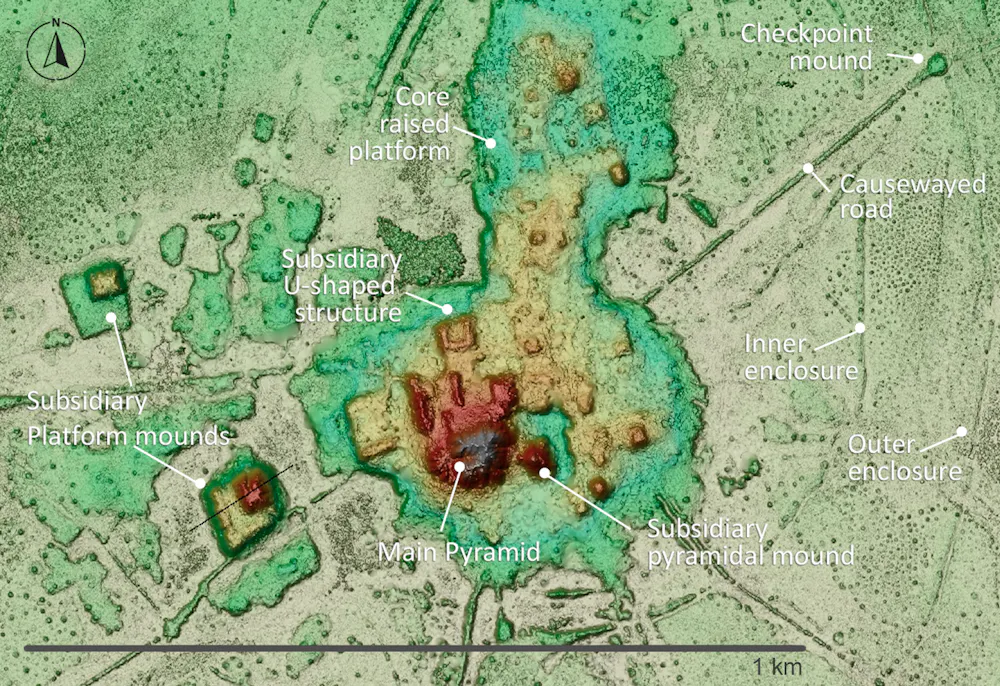
It’s not possible to show a lidar image of these four different types of sites interconnecting because they are too far apart for the resolution available, but the image below of a primary settlement known as Loma Cotoca shows the kinds of things we are now documenting.
It features some very impressive civic-ceremonial architecture: conical pyramids over 20 metres tall and U-shaped structures that may have acted as areas for public gatherings for speeches or ceremonies. These were built on top of man-made platforms rising as much as five metres off the ground and extending over 20 hectares. To be clear, this is all still hiding under the forest, but the lidar data reveals the shape, height and layout of what lies below.
The volume of earth moved to create this architecture would have rivalled – and in some cases exceeded – that of well known Andean monuments such as Akapana a few hundred miles to the south-west on the other side of the Andes. Akapana was the epicentre of the Tiwanaku empire that dominated the southern Andes between about AD600 and 1000.
Akapana pyramid in Tiahuanaco o Tiwanaku, Bolivia.Wikimedia, CC BY-SA
Yet where monuments like Akapana were surrounded by classic, compact bounded cities with thousands of inhabitants, the Casarabe equivalent was completely different. This was dispersed, low-density living amid extensive green space – a form of tropical urbanism that challenges longstanding assumptions about this area as sparsely populated and only lightly modified. It invites comparison with other low-density tropical urban landscapes such as the Maya in central America and the Angkor in latter day Cambodia.
Equally important is the coherence of the Casarabe system. The settlements are rarely isolated, part of a tightly connected network with shared water-management systems. It was clearly all planned and coordinated, designed not only as living spaces but for integrating the population across the region.
We can see that the Casarabe were sustained by drained-field agriculture: the canals were dug to make the land viable for planting during the wet season. The most prominent crop was maize, but there was a remarkable diversity of other produce. This was all embedded within a landscape that was engineered through reservoirs and farm ponds, which helped the Casarabe sustain cultivation and maintain access to water through the dry season in this extremely seasonal environment.
Also very noticeable is the fact that all the major architectural features and burial sites are oriented north-north-west. This suggests these people may have been led by cosmology, with important celestial bodies or regions of the night sky serving as symbolic reference points – hinting at a world where infrastructure, settlement and belief were inseparable.
Rethinking the Amazon
The Casarabe culture covered much less than 1% of Amazonia, which is the whole tropical interior of South America, spanning close to half of the entire continent. For much of the 20th century, this vast area was viewed by archaeologists as an environment that was limiting for human existence.
Poor soils, scarce game, extreme El Niño floods and droughts, and the challenges of tropical disease were all thought to constrain human populations to small, wandering groups living off the land as best they could. Large, settled societies – let alone towns or cities – were considered unlikely, if not impossible.
This view began to shift in the late 20th century for several reasons. Archaeologists realised that Amazonian people had been domesticating a diversity of plants since the end of the Ice Age. They manufactured some of the earliest ceramics in the Americas, and also devised soils known as Amazonian Dark Earths, which combined charcoal, bone and waste materials with the existing poor-quality soil to make it fertile enough for widespread farming.
It also became apparent that just like the Casarabe people, many other cultures across Amazonia had reclaimed vast expanses of seasonally flooded savannahs over several thousand years to create raised and drained field systems.
These discoveries were evidence of long-term settlement and landscape management far beyond what was previously thought possible. It meant Amazonia was not simply a backdrop to human activity; much of the landscape was shaped over the last 13 millennia by the people who lived there.
Enter lidar
Like lasers in the sky, lidar technology has accelerated this transformation in our understanding. The digital process feels near-magical, a “vegetation removal algorithm” that reveals the secrets below.
In practice, however, working with lidar in Amazonia is anything but straightforward. Running such a project here, as I have done, can feel like one of the greatest emotional rollercoasters in field archaeology. It’s all anticipation, frustration and sudden revelation – only comparable, perhaps, with shipwreck exploration.
Depending on what technology is available and most suitable for exploring a particular area, I’ve worked with lidar attached to drones, aeroplanes and helicopters. I’ve learned through trial and error that the technology is only as effective as the logistics and personalities behind it – above all on one occasion when we were trying to integrate a Hungarian lidar sensor with a Brazilian drone.
Above: the ‘Experimental’ drone; below: the moment it finally worked – the smiles in the control station say it all.Jose Iriarte, CC BY-SA
Lidar can perform beautifully one day and fail the next, depending on the equipment, weather, terrain, batteries, communications and the sheer difficulty of operating in remote Amazonian conditions.
Flights must be carefully planned in remote areas with limited infrastructure, where convective clouds, smoke from fires, wind and even vultures riding thermals can disrupt data acquisition. You have to arrange fuel in advance and improvise landings wherever a safe clearing can be found. Here’s our team refuelling a lidar helicopter in the football field of a small village in Acre state, western Brazil:
You also have to do constant troubleshooting with the technology, such as making sure it’s calibrated correctly and that the data from different flight paths all aligns. What appears in the final images as a seamless “removal” of the forest is, in reality, the product of improvisation, negotiation and persistence.
But given all these challenges, it makes the first successful images all the more powerful when they finally appear. The reward is that we’re finally finding the “lost civilisation” that explorers like Percy Fawcett were searching for a century ago, but by cajoling a drone rather than battering through jungle.
Incidentally, this technology also has important uses beyond archaeology. It can help people to locate and harvest crops like rubber or açaí palm fruits without having to clear so much rainforest. It is also used by pioneering projects such as Amazonia Revelada, which helps Indigenous and traditional people of the Amazon to prove their historic presence within an area to ward off modern commercial interests like loggers or farmers, while also protecting the living history and nature embedded in these landscapes.
Other lidar discoveries
Lidar surveys by French and Ecuadorian archaeologists have revealed that the Llanos de Moxos was certainly not the only example of large-scale, highly integrated society in Amazonia. The Upano Valley, which covers some 300-600km² on the mountainous forest of the Ecuadorian eastern flanks of the Andes, offers another striking example – this time from between about 500BC and AD600–700.
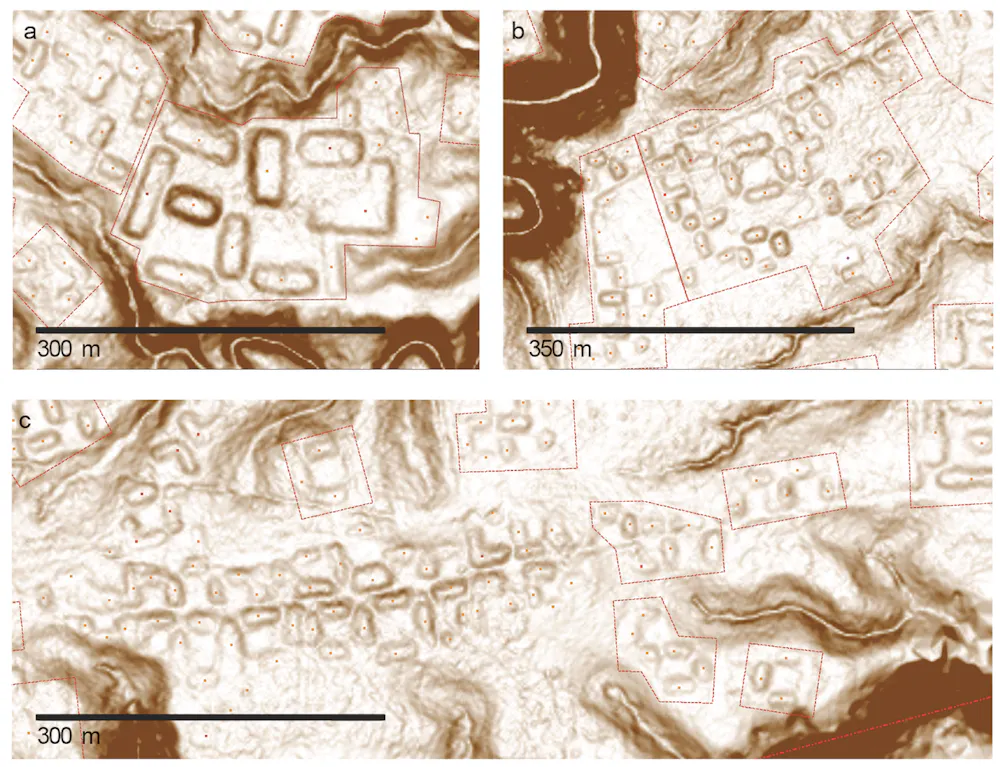
In Upano, archaeologists have been able to map a vast network of settlements connected by extensive road systems, with large platforms and clusters of buildings arranged in organised layouts across a broad area.
What stands out is not just the scale – thousands of structures – but the rigour of the planning. The settlements didn’t just grow randomly, but as part of a deliberate design: we see straight lines of flat-topped platforms laid out in repeating rows and connected by straight paths that cut cleanly across the landscape, as you can see below.
Lidar footage of settlements in the Upano Valley.Jose Iriarte, CC BY-SA
Again, this is not urbanism in the conventional sense of dense, continuous occupation. There would have been none of the vertical stacking of buildings that you’d get in European settlements, and there were also green spaces between platform complexes – much more like a forest city.
Like the Casarabe region, this is a distributed settlement pattern that is both open and highly structured, but the arrangement is much more compact. This reflects the limited flat space available on the upper terraces of the Upano River, which rise up to 100 metres above the surrounding landscape.
Elsewhere in Amazonia, we see more variations. In the Upper Xingu of central Brazil, interconnected settlements were arranged around a shared ceremonial and road network, again suggesting a regionally coordinated social world.
Further north, the Tairona people of the Sierra Nevada de Santa Marta in present-day Colombia built terraced stone towns in the mountains, linked by paved paths. This was a form of urbanism shaped entirely by the demands of steep, high-altitude terrain. Below is a lidar image of one area in this region, with the platforms that would have housed the settlements marked in yellow. Below that, you can see what the platforms look like.
Above: lidar image of settlements at Teyuna-Ciudad Perdida in yellow; below: an actual shot of the platforms that housed the settlements.Daniel Osorio, CC BY-SA
In western Amazonia, Acre adds another important variation. From around AD1–1000, people built large ditched enclosures, or geoglyphs, mainly in the south-eastern part of this region along the upper Purus River. These were square, circular, hexagonal or octagonal mounds, often 1-3 hectares in size, with ditches up to four metres deep. These were probably used as ceremonial gathering places rather than permanent settlements.
After about AD1000, these were followed by what we call circular mound villages, occupied until around AD 1650–1700. They featured rings of mounds around central plazas and straight roads radiating out like the rays of the Sun, often built to align with the four main compass points. These “Sun villages” were true settlements, and formed interconnected networks across the southern rim of Amazonia. You can see an example in the lidar image below.
Lidar image of circular mound village Dona Maria at Acre, Brazil.Jose Iriarte, CC BY-SA
Taken together, these discoveries fundamentally reshape our understanding of Amazonia. We now see a mosaic of managed landscapes, engineered environments and, in some cases, city-scale societies. What unites them is not a shared blueprint but a shared impulse: the organisation of people, space and movement across large landscapes in ways that were deliberate, durable and distinctly their own.
To stress, Amazonia was not uniformly dense or urban. It supported a diversity of types of settlements, from dispersed networks like Moxos to tighter grids like Upano, each of them adapted to local ecological conditions. They shared a low-density urbanism, in the sense of large, interconnected populations without the density of classic cities.
What we still don’t know
How were these societies organised politically and socially? How did they interact with variations in the climate and environment, ranging from the heavy rainfalls and droughts caused by El Niño to rivers forging new routes that could move them away from a settlement within a few generations?
What, if any, connections existed with mountain societies in the Andes? And perhaps most importantly, since both the Casarabe and Upano ceased to build monuments after 1492, what led to their transformation or decline before the arrival of Europeans?
There is active debate between archaeologists over whether these societies transformed because of environmental stress, internal political change, or shifts in things like trade routes or migration.
In the Llanos de Moxos, one possibility is that a prolonged period of climate change affected the Casarabe water-management systems that were so critical to feeding this thriving society. In the Upano Valley, volcanic eruptions and earthquakes may have disrupted settlements and agriculture, although it’s unclear whether that could have led to the area being abandoned.
It seems likely that as we uncover new things, it will reveal more and more integration between different societies. What we are seeing now in Amazonia is much like looking at a satellite image of a country at night: bright, isolated clusters of light – cities that appear disconnected. But as we continue to expand our coverage and fill in the gaps, I think this will change.
What now appear as isolated clusters may also resolve into extensive networks. For example a study across the southern rim of Amazonia has predicted that the kinds of settlement mounds that have been identified so far are likely to occur across about 400,000km², supporting an estimated regional population of roughly 500,000 to 1 million people in the era before the Europeans arrived.
Entire regions may emerge as previously unrecognised centres of population and landscape management. This could be particularly so for the Llanos de Moxos. The whole area covers as much as 200,000km², depending on where you draw the boundaries, stretching into Brazil and even Peru. It is often divided into several apparently distinct cultural regions — the Casarabe (aka the monumental mound region), and then two others called the platform ridge and zanjas (ditches) regions.
As lidar coverage expands and more archaeological work is conducted, we may begin to understand how these societies were economically specialised. We know, for example, that the fortified villages of the zanjas region had fish weirs spanning hundreds of miles that were capable of capturing vast quantities of migratory fish. The platform ridge region consisted of large drained fields, which could potentially produce surpluses of maize. It is conceivable that these belonged to a broader network that supported the more complex Casarabe centres.
Or perhaps – who knows – the relationships were more fluid and reciprocal. For now, the question remains open. But it is precisely this possibility of deep regional integration that lidar is beginning to bring into view. In time, we may even begin to identify Casarabe outposts scattered across the Llanos de Moxos.
What happens next
There’s still a huge amount to be done with lidar. Vast areas, particularly in the Ecuadorian and Peruvian Amazon – remain unexplored. One recent study suggested that there could be more than 10,000 more urban structures of the kind I’ve been describing still hidden throughout Amazonia, all of them dating from pre-European times.
Looking ahead 20 years, it is likely that our map of Amazonia will look very different. One promising technology is satellite-based lidar systems, which could provide broader, though less detailed, datasets across large areas. Advances in machine learning are also beginning to help us identify archaeological features within massive datasets, speeding up a labour-intensive process.
Against this, there are time pressures in some places. Llanos de Moxos, for instance, is unfortunately in rapid transition. The very ground that holds the traces of ancient networks is being transformed by mechanised agriculture and large-scale terraforming for rice cultivation and pastures.
We also need to keep reminding ourselves that lidar is only the first step. What really matters is how it’s brought together with other lines of evidence. Most sites discovered by lidar have yet to be excavated, so we’ll have to do much of that, looking for everything from bones and plants to ceramics and weapons.
So far, most excavation has been in the Casarabe area of the Llanos de Moxos. The reason, for instance, that we know the culture lived primarily on maize was through the discovery of over 60 human skeletons, which underwent carbon isotope analysis. The same research paper also analysed excavated duck bones to show that the Casarabe were feeding them maize too, suggesting animal domestication in a continent that was not generally known for it.
Another fascinating Casarabe find is a single buried skeleton who may have been a leader, because he had a collar of jaguar teeth around his neck. He was also wearing ear pieces made of armadillo shell, studded with mottled blue stones called sodalite – it’s not clear what these were for.
Male burial in Loma Salvatierra, Llanos de Moxos, shows: a) plate of cooper; b) earpieces with pearls of sodalite and armadillo shell; c) a collar of jaguar teeth; d) shell beads; e) bracelet of shell.Heiko Prümers/Jose Iriarte, CC BY-SA
We’ll also need to obtain more precise dates for key events using techniques like radiocarbon dating, and more pinpoint accurate environmental data to help support theories about ancient changes to the climate – as opposed to the wider regional information we’ve tended to rely on until now. Lake sediments are great environmental archives, preserving evidence of things like vegetation change and landscape disturbance.
Also important is comparing genetic data from excavated bones with people who live in these areas today – in dialogue and collaboration with local communities whose histories, memories and knowledge are essential to understanding these landscapes.
It’s all a question of how lidar is brought together with all this other evidence. The most convincing reconstructions will come from the convergence of all of these. One further major challenge ahead, however, will be to bridge the gap between scientific reconstructions and how past peoples understood and inhabited their world. Archaeology is increasingly rich in data, but we have to relate it to lived experience.
That is no easy feat, but it is essential if we are to move from mapping past worlds to understanding them. Crucially, Amazonia – with its rich, still-vibrant Indigenous societies and ethnographic record – offers an exceptional opportunity to do this, providing rare continuities through which to anchor and critically engage our interpretations of the past.
Lessons for today
My own sense is that we will move towards a view of Amazonia not as an exception, in line with the old view that the people lived within an untouched paradise, but as part of a broader pattern of human-environment interaction. The rainforest will be understood not only as a biological system, but as a historical one – shaped, in part, by the people who lived within it.
This does not mean the Amazonian people who simply lived “in harmony” with nature; the evidence points to something more interesting. Although Amazonian societies developed complex, and at times intensive, forms of land use, the evidence consistently shows that they often did so while maintaining continuous forest cover. Far from the large-scale deforestation that we might assume was necessary for such elaborate forms of human life, their practices created mosaics of managed forest, gardens, orchards, wetlands and settlement areas.
We know partly from lake sediment data that people enriched the forests with species that provided food, building materials, medicines and other resources, from açaí and cacao to palms, cinchona and copaiba. The fact that some of these species endure today suggests that past land use left lasting ecological legacies.
Amazonian açaí is one of numerous species that are not prevalent by accident.Guentermanaus
In the context of today’s climate crisis, the long-term balance that these people achieved offers a powerful lesson: it is possible to sustain complex societies without destroying the forest, if land use is guided by principles that integrate ecological knowledge, cultural values and a commitment to the continuity of the living landscape.
What lies beneath the Amazon is not just a hidden past. It is a reminder that even the most seemingly untouched landscapes can carry deep histories, waiting – sometimes just beneath our feet – to be revealed.
This article features references to books that have been included for editorial reasons, and may contain links to bookshop.org. If you click on one of the links and go on to buy something from bookshop.org The Conversation UK may earn a commission.
To hear about new Insights articles, join the hundreds of thousands of people who value The Conversation’s evidence-based news. Subscribe to our newsletter.
José Iriarte receives funding from the European Research Council, the Arts and Humanities Research Council, the British Academy, National Geographic and the Wenner-Gren Foundation for Anthropological Research.
The moment of first contact with extraterrestrials is a staple of science fiction. It usually involves a frantic scientist having a Eureka moment, realising in a single dramatic instant that Earth is being visited by creatures from light-years away.
Aliens are in the public consciousness once again thanks to Steven Spielberg’s latest film, Disclosure Day, which follows a whistleblower’s attempts to reveal extraterrestrial visitations to the world.
In reality, the discovery of extraterrestrial intelligence is far more likely to emerge as a faint anomaly in astronomical data, followed by a slow, painstaking process of verification, peer review and intense international deliberation. There might be no single Eureka moment, and no lone scientist with the answer.
As our telescopes have advanced, so too has the complexity of the world we live in. That is why a committee of the International Academy of Astronautics (IAA) has just voted to accept a major overhaul of the “post-detection protocols” – the scientific code of conduct for what happens after we find evidence of life beyond Earth.
The IAA body that has approved the changes is the Search for Extraterrestrial Intelligence (Seti) Committee. Seti is the collective term for scientific projects dedicated to searching for signs of intelligent alien life in the universe.
The previous version of these principles was adopted way back in 2010. To put that
in perspective, in 2010, the “fake news” era hadn’t quite arrived, social media was in its infancy, and the broader idea of “technosignatures”, looking for signs of alien technology such as waste heat from giant structures in space, was still largely on the fringes of mainstream astronomy.
Today, the field has exploded. We are no longer just listening out for artificial radio signals from a few select stars. Projects like Breakthrough Listen have globalised the search, and we now observe the entire electromagnetic spectrum for any sign of advanced technology.
Furthermore, the information landscape has become a minefield. In an era of deepfakes and instant global connectivity, a single unverified claim could trigger global panic or widespread misinformation before scientists have even had a chance to check their data.
At the heart of the 2026 update is a commitment to scientific rigour. The new
protocols make it clear: we do not shout “alien” the moment we see a strange blip in our data. If a researcher detects a candidate signal, which could be an artificial radio signal, or something else, such as a sign of alien technology, the first step isn’t a post on social media; it’s a quiet, rigorous attempt to prove themselves wrong. The discovery must be independently authenticated by multiple organisations using different instruments.
Only when a consensus is reached that the signal is truly credible is it brought to the world. This isn’t about secrecy for secrecy’s sake. There is no obligation to disclose verification efforts while they are ongoing, precisely to avoid embarrassing and damaging false alarms.
However, once a discovery is confirmed, the protocols demand full transparency. The data, the analysis methods, and the code used must be made open to the entire global scientific community and, indeed, the general public for replication.
Should we talk back?
One significant addition to the 2026 declaration is the focus on researcher safety.
We’ve seen in recent years how scientists at the centre of high profile news stories can become targets for harassment or “doxxing”, where malicious individuals post the scientist’s personal details online. The new guidelines urge institutions to protect their researchers from negative professional repercussions and physical or digital harassment.
The protocols also address the “trash” of our own making: radio frequency
interference (RFI). The radio frequency bands that Seti scientists use to listen for E.T. are increasingly polluted – from below by mobile networks, radar and poorly shielded electronics, and from above by the growth of satellite “mega-constellations” like Starlink.
The declaration calls for extraordinary international efforts to protect the frequencies where a signal is detected, ensuring our “communication channel” isn’t drowned out by our own technology.
Scientists could detect advanced technology built by alien civilisations, such as large devices designed to harvest energy from stars.Droneandy
The most controversial part of Seti isn’t the searching; it’s the messaging. Known as Meti (Messaging Extraterrestrial Intelligence), the idea of intentionally sending signals to other worlds splits the community. As enshrined in the earlier declarations, the 2026 Declaration remains firm on one point: no response should be sent until there has been a broad, international consultation.
Deciding how to represent Earth to an alien civilisation is a choice that belongs to all of humanity, not a single institution or individual. These consultations
must take place through the United Nations or other broadly representative global bodies.
The discovery of intelligent life beyond Earth would stand as one of the most
transformative events in human history. To help manage the profound aftermath, the
IAA SETI Committee is establishing a permanent Post-Detection Sub-Committee.
This body will not simply be a room full of astronomers; it will include international experts in ethics, law, social sciences and communications to advise on the complex, long term societal implications of contact.
The new protocols themselves are designed to be living documents, supplemented by a separate Code of Conduct and Best Practices Guidelines that will be periodically reexamined and updated to reflect the “best practice” of the day.
The revised declaration has recently been formally adopted by the IAA Board of Trustees and over the rest of the year it will be filed with other appropriate organisations for their endorsement.
The next goal will be to present the finished framework to the wider scientific
community at the International Astronautical Congress in Turkey in August 2026. Beyond that, the Committee hope that the new protocols will also be reviewed and noted by the UN.
By establishing these rigorous rules now, we ensure that if, or when, that signal
finally arrives, the world is prepared to listen, verify, and respond as one planet.
Michael Garrett led a task group that included Professor Kathryn Denning (York University, Canada), Professor Carol Oliver (University of New South Wales, Australia) and Mr. Les Tennen (Law Offices of Sterns and Tennen, USA, and Full member and Legal Counsel of the International Academy of Astronautics Board of Trustees). This group drafted the updated 2026 protocols.
White storks (Ciconia ciconia) are a majestic bird with a two-metre wingspan and an enormous circular nest.
The recent release of these stunning birds at multiple sites in England, with more releases planned and a public consultation under way has kicked off a debate about whether non-native birds should be part of rewilding projects.
The government advising body Natural England says it does not consider white storks to be native birds. But some experts disagree and say it is a native species and was hunted into extinction in the 1400s.
What is a native species?
In the UK, native species are those which have been present throughout the last 12,000 years. This includes migratory species which breed in or visit the UK. It also includes species which have been eradicated by humans but reintroduced.
In England, a licence is needed to introduce any species which is not ordinarily resident, or a regular visitor, to England. This is partly because these species could become invasive, a term used when a species cause substantial environmental or socioeconomic harm.
But even when species are not native, they can have value for rewilding projects.
The white stork’s biggest contribution to rewilding is likely to be their ability to inspire the public interest in nature. Storks in Europe are so popular that there are special stork villages which are managed for tourism, and people can see these iconic species up close.
White storks were reintroduced in Sussex as part of a rewilding project and are now breeding.
White storks are definitely regular visitors to England, and rare but present in the subfossil record (the last 4000 years). This status as a regular visitor means they fall somewhere between a native and non-native species – they are not considered a priority for introduction, but no license is required for their release.
Introduced non-native species can cause problems. A good example is Japanese knotweed (Reynoutria japonica), brought to the UK by the Victorians as an ornamental plant. It rapidly spreads and causes damage to the structure of buildings and essential services such as water and drainage pipes. Controlling it now costs the UK £247 million each year.
Introduced species are also a major conservation challenge, such as the damage to seabird populations by invasive cats, rats and other animals feeding on their eggs and chicks. If a rewilding project introduces a non-native species, it could become invasive and cause serious disruption to native species already in the landscape.
But evaluating the impact of adding new species to the landscape is important even when a species is considered native. The Scottish beaver trial was conducted to evaluate the impact of introducing beavers (Castor fiber) from Norway in 2008. Eighteen years later, beavers are a key part of many rewilding projects, from London to large estates in Scotland.
What can white storks add?
White storks are charismatic species which are viewed positively by most people, and this could increase engagement with nature. In Poland, tourists travel hundreds of kilometers to visit white storks, making them valuable for rewilding projects which use tourism to raise funds.
Non-native species are also introduced as “ecological analogues” which means they provide the same ecological function as extinct species. The steppe bison (Bison priscus) which roamed the UK in the Pleistocene period were mixed feeders, which means they ate a combination of grasses, leaves and the woody parts of plants. By feeding on a variety of plants and plant parts, mixed feeders like bison can encourage a patchwork of habitats in a landscape. The native steppe bison is extinct in the UK, but projects like Kent Wildlife Trust’s Wilder Blean project have introduced the related, but non-native, European bison (Bison bonasus) to provide these functions.
Adapting to warming climate
Better adaptation to future climates is another reason to include non-native species in rewilding projects. As the UK’s climate changes, species are moving from places where they are considered native to new areas which suit them better. The southern small white butterfly (Pieris mannii) has spread northwards in Europe and was first seen in the UK in 2025. This small butterfly has successfully made the journey over the ocean, but other species may require human help to move to new areas with more suitable climates.
As an island nation with many locally extinct species, the introduction of species has formed a key part of UK conservation, including rewilding projects. It does matter whether a species is native or not. Although both could benefit rewilding projects, non-native species carry greater risks to local environments and have higher regulatory requirements.
The white stork’s status as a regular visitor could allow them to sidestep the regulatory requirements for non-native species, though impact on the environment should also be considered.
But as their nests can attract birds such as swallows and martins, introducing white storks could have broader benefits to the landscape.
Sarah Papworth does not work for, consult, own shares in or receive funding from any company or organisation that would benefit from this article, and has disclosed no relevant affiliations beyond their academic appointment.
What exoplanet K2-18 b could look like based on scientific data.wikipedia/Nasa
It may seem like we are on the verge of discovering alien life. In 2025, a press release stated that we have the “strongest hints yet” of extraterrestrial life on the exoplanet K2-18b. And when talking about a collected sample from a rock named “Cheyava Falls” on Mars, Nasa Administrator Sean Duffy said this was the “closest we have ever come” to discovering life on the red planet.
Such moments capture the imagination. But they also raise an important question: what do the majority of scientists actually think?
Surprisingly, we usually don’t know. When a scientific controversy or breakthrough dominates headlines, press officers and journalists often quote a handful of experts. These views may be insightful, but they rarely tell us what the wider scientific community thinks. And yet public discussions frequently rely on phrases such as “the science says” or “scientists believe”, as if there were a clear and measurable answer.
In reality, systematic evidence about scientific opinion is often missing. My colleagues and I recently tried to change that in the domain of astrobiology. Shortly after the two major announcements of possible extraterrestrial life in 2025, we surveyed astrobiologists to understand how expert judgment was distributed across the field.
The first case concerned the exoplanet K2-18b. In April 2025, researchers reported possible traces of molecules called dimethyl sulfide and/or dimethyl disulfide. On Earth, these are associated with biological activity. Media coverage was extensive, with many reports framing the finding as an extraordinary advance in the search for alien life.
Cheyava Falls rock.wikipedia
The second case came in September, when Nasa announced that Cheyava Falls appeared to preserve a potential biosignature – so-called “leopard spots” which are mineral rings that on Earth are often formed by microbial activity. Again, headlines, and Nasa officials themselves, suggested something momentous.
What scientists actually thought
We surveyed hundreds of astrobiologists from across the global research community, within days of each announcement. We asked a simple question: did scientists think extraterrestrial life had probably been found?
The results revealed a rather cautious picture. For K2-18b, only 6.6% of surveyed astrobiologists agreed that scientists had probably found extraterrestrial life. Nearly two-thirds disagreed, while 28.0% remained neutral. For the Mars case, confidence was higher but still cautious: 15.1% agreed, disagreement fell to 44.6% and neutrality rose to 40.3%.
Looking only at agreement and disagreement, however, misses an important part of the story. The proportion of astrobiologists who strongly disagreed fell dramatically, from 35.1% in the K2-18b case to just 11.1% for Mars. Much of the movement was therefore not from rejection to endorsement, but from strong rejection towards more tentative positions.
In other words, expert opinion moved in structured ways. The shift from K2-18b to Mars was not a simple movement from “no” to “yes”. Instead, the community became more open to the possibility without embracing it outright.
One possible reason is that the two cases involved different kinds of evidence. The K2-18b claim relied on possible atmospheric signatures detected from across interstellar distances, whereas the Martian case concerned a rock that could be studied directly and in much greater detail. At the same time, astrobiologists have long been aware that apparently lifelike features can sometimes arise through non-biological processes. Often, the challenge is not imagining how life could produce a signal, but understanding all the ways nature might produce something similar without life.
Scientific opinion is rarely binary. Public discussion often treats science as though communities either agree or disagree. But the distribution of opinion matters too. Strong agreement, agreement, neutrality, disagreement and strong disagreement can each tell us something different about how a scientific community is responding to a claim.
A large neutral response can indicate several things. Scientists may judge the evidence genuinely inconclusive. They may hold an intermediate level of confidence. Or they may regard a claim as too speculative to endorse or reject decisively. Likewise, movement from strong disagreement towards ordinary disagreement may signal a softening of attitudes even when overall disagreement remains high. Treating scientific opinion as simply “for” or “against” risks flattening these important distinctions.
Beyond extraterrestrial life
The broader lesson extends well beyond extraterrestrial life. In areas such as climate science, pandemics, artificial intelligence or medical research, public conversations frequently invoke scientific consensus.
Sometimes strong agreement genuinely exists. Sometimes it does not. But we often lack systematic ways of measuring what scientists actually think, especially where evidence is emerging or uncertainty remains substantial. Instead, discussions rely heavily on selective quotation, vocal individuals or assumptions about community views.
Efforts to do this more systematically are beginning to emerge. At Durham University, our research group, C-Scope (the Centre for Scientific Community Opinion Polling and Evaluation), studies how expert opinion is distributed and how it changes over time. We are not trying to replace evidence with polling, nor to treat majority opinion as truth. Our aim is to better understand how scientific communities respond to uncertainty.
Scientific knowledge advances through uncertainty, disagreement and gradual revision. If public discussion, and perhaps political will, increasingly turns on claims about what scientists think, we should make more effort to find out.
Peter Vickers does not work for, consult, own shares in or receive funding from any company or organisation that would benefit from this article, and has disclosed no relevant affiliations beyond their academic appointment.
Domestic animals have long been some of our closest companions. While dogs, cats, horses, cattle and chickens have all played major roles in human history, domestic pigeons may be a little less familiar. But they are no slouch when it comes to cultural importance.
Now, new research exploring ancient human-pigeon interactions in Cyprus has provided fascinating insights into the earliest stages of this millennia-long inter-species relationship.
There are over 300 breeds of domestic pigeon, from homing pigeons used in competitive racing to the peculiar frillback, which looks like it has survived a rather nasty electric shock. In 2020, a Belgian racing pigeon named New Kim sold for €1.6 million (£1.4 million).
But despite their contributions to contemporary society, we still know little about the origins of these pigeons.
The wild form of all domestic pigeon breeds is a slate-grey bird called the rock dove. Wild populations can still be found in parts of Europe, Africa and Asia.
Rock doves are very shy, living on cliffs and nesting in caves. I study them in Scotland’s Outer Hebrides, where colonies can be seen foraging for grain in fields. Scientists believe that these birds first learned to steal crops thousands of years ago, thus increasing our ancestors’ proximity to them.
Soon, they became a regular source of meat and, thanks to their copious droppings, fertiliser. This led to rock doves being pulled down an evolutionary route which has, over centuries, resulted in today’s proliferation of domestic breeds – plus their superabundant feral city pigeon offshoots, found soiling statues worldwide.
However, the where and when of the earliest phases of this process have remained unclear.
Earliest evidence of domesticated pigeons
Scientists generally think that pigeons were first domesticated in the Middle East and/or the eastern parts of the Mediterranean.
Until now, the earliest direct evidence for domesticated pigeons came from a site in Hellenistic Greece around 2,300 years ago. Depictions of pigeons in Iraq, more than 4,000 years ago, suggest a much earlier relationship – but these are not conclusive evidence.
Plus, it’s tricky to tell domestic and wild birds apart from the shape of their bones alone. For decades, those of us studying pigeons have had to handwave this evidence in our writing, saying they were “probably domesticated as early as 3,000 years ago”.
In Cyprus, small amounts of pigeon bones had previously been found at Neolithic sites (more than 10,000 years old), suggesting there was sporadic hunting of these birds.
Then, starting in the Bronze Age (3,650-3,950 years ago), pigeon figurines became common in Cyprus, and the island developed a strong association with these birds. It was identified in early Greek literature as the birthplace of the love goddess Aphrodite, who is often depicted alongside flocks of doves.
In the new study, researchers examined a collection of bones collected at Hala Sultan Tekke in Cyprus – historically an important city; now a mosque and archaeological site – dating back to the Late Bronze Age, about 3,350 years ago.
Their assessments included a technique called stable isotope analysis, using chemical signatures in the bones to make inferences about what the birds ate. This showed their diets were similar to those of their human neighbours. Rock doves must have been living alongside people at that time, who may even have been deliberately feeding them.
The range of chemical signatures was, as with humans and cattle (but different from fallow deer and other wild species), low. This reflects a consistent diet of grains – a diet shared by humans that could be evidence that the birds were managed by them.
However, three of the 37 pigeons assessed had quite different chemical values – aligning more with wild animal species than humans. This suggests a potential split between cave-dwelling birds (which might have been hunted in the wild and brought back to eat) and full-time urban pigeons which interacted with humans in a more intense way.
A more intimate relationship
Pigeons are well-established as being an ancient part of the human diet. Our Neanderthal cousins hunted them in the caves of Gibraltar as early as 67,000 years ago. But what’s exciting about these new results is that they suggest a much more intimate relationship than predator and prey.
Perhaps most interestingly, some of the bones had been burnt and buried in ritual spaces. Earlier excavations carried out as part of previous research at the same site found a pigeon within a tomb containing an adult man. This suggests rock doves may have had an important cultural role in Cyprus.
Whether this relationship can be called domestication is up for debate. For most of us biologists, domestication involves evolutionary changes occurring due to human use. This is different to our relationship with species like house sparrows, say, which live alongside us but are not managed for use – whether in terms of food, labour or recreation.
Further research tracking human-pigeon interactions through time and space is needed to help us judge exactly when and where domestication-related changes in pigeons’ genetics and appearance began.
Nevertheless, the new study’s results strongly indicate that ancient humans had an intimate interaction with a species which has gone on to become one of the most important birds in our history. Knowing this relationship was active more than 3,000 years ago in Bronze Age Cyprus should help us appreciate the importance of this unique human-animal interaction.
Will Smith's research on rock doves has previously been funded by the Edward Grey Institute and the John Fell Fund (both of the University of Oxford), the British Trust for Ornithology, the Scottish Ornithologists' Club, the British Birds Charitable Trust, the Houghton Trust, and the John Muir Trust. His research is currently funded by the University of Nottingham, the Leverhulme Trust (as an Early Career Fellow), the Genetics Society, and the British Ecological Society. He played no role in the research which is the focus of this article.
A chimpanzee sits in the Pongoland enclosure at Leipzig Zoo, where a huge amount of research has been conducted since 2004.Marco Warm/Shutterstock
Leipzig Zoo in central Germany is a world-leading centre of great ape research. Recent studies have seen chimpanzees there using touchscreen controls to navigate virtual forests and locate food rewards – applying similar techniques to what they would use in the wild.
Other research (of which I was part) has investigated chimpanzees’ social curiosity. We discovered they actively seek out information about others’ interactions, even if it means forgoing food rewards. Keeping track of their peers’ latest social developments appears central to these great apes’ social wellbeing.
But in my decade working with Leipzig Zoo’s chimpanzees and bonobos, one question came up repeatedly. Were differences in how each great ape would cooperate and resolve conflicts simply down to its mood on a particular day? Or were there longer-term explanations – deep-rooted personality traits, for example, or their relationship history with other apes?
Long-term questions like this are very difficult to tackle in single studies, which often draw on just a handful of participants. So, my colleagues and I have developed EVApeCognition: a standardised database of 18 years’ worth of great ape experiences, decisions and relationships.
This lays the groundwork for answering many more questions about these extraordinary creatures’ cognition, intelligence and social behaviour. If a bonobo showed striking generosity towards a partner in 2008, for example, we can piece together whether that behaviour was linked with their stable disposition, a particular relationship, or some other factor.
Changing how we study great apes
In all, EVApeCognition comprises 262 experimental datasets from 150 scientific publications between 2004 and 2021. These were all overseen by the Wolfgang Köhler Primate Research Centre, headquartered at Leipzig Zoo. Eighty-one great apes participated in these studies, with the vast majority (78) taking part in more than one.
In the wild, great apes are social animals who live in stable groups with histories, hierarchies and relationships that change over time. In contrast, a large majority of the studies in our database were with apes in pairs that imposed strict control conditions.
So, moving to larger-groupstudies could offer a more ecologically relevant window on their cognition and social behaviour. Group settings can present apes with different problems that map more closely on to the social challenges they face every day in the wild.
Our most recent study, led by Kirsten Sutherland at the Max Planck Institute for Evolutionary Anthropology, found that great ape quartets maintained access to a pool of yoghurt for significantly longer than pairs did. Social tolerance played a key role, with more tolerant quartets maintaining access to the yoghurt for longer periods.
We found that cooperation was strongest when the highest-ranking individual showed restraint, emphasising the importance of tolerant leadership.
The new database also highlights an imbalance running through captive great ape research: chimpanzees dominate the record, while bonobos, gorillas and orangutans remain comparatively underrepresented.
Experimental performance does not occur in a social vacuum. A great ape’s willingness to cooperate on a task on a given Tuesday may not only reflect its intelligence, but whether it groomed its partner that morning, or if its status had changed within the group.
Providing this context is essential to understanding how everyday experience and social relations shape their cognitive development. Fortunately, the field is moving in promising directions, with the EVApeCognition database one piece of a larger picture.
The global ManyPrimates project, established in 2017, has already produced the most comprehensive overview of primate short-term memory. This shows that genetic lineage has played a larger role than ecology or sociality in the evolution of their short-term memory.
At the level of higher-order reasoning, we now know that chimpanzees update their beliefs by considering all sources of information before making a choice. A 2025 study showed they remained committed to an initial belief when counter-evidence was weaker, but revised this when the supporting evidence became stronger – a pattern long thought to be distinctly human.
Perhaps most ambitiously, the divide between captive and wild settings is also beginning to close. Research led by Sofie Forss at the University of Zurich, for example, has found a systematic “captivity effect” when presenting the same new stimuli to both wild and captive orangutans. The wild individuals responded far more cautiously to novelty than their zoo-housed counterparts.
Taken together, these efforts point in a common direction: toward an understanding of great ape cognition that is at once broader in scope, richer in context, and more faithful to the complexity of their social lives.
Alejandro Sánchez-Amaro does not work for, consult, own shares in or receive funding from any company or organisation that would benefit from this article, and has disclosed no relevant affiliations beyond their academic appointment.
For captive animals, engaging in natural behaviour is a pillar of the animal welfare framework. But when it comes to sex, one important behaviour has
been largely ignored, and sometimes even punished: masturbation.
Solo sex is surprisingly common across the animal kingdom. It is well documented in primates. Tortoises are surprisingly vocal during their solo lovemaking endeavours, if not very graceful. Camels masturbate by rubbing their penises in the sand and porcupines make inventive use of all sorts of objects.
Our new study could change how other scientists view masturbation in birds and improve their welfare.
Masturbation also seems to be common in birds. A quick internet search brings up an abundance of video clips on social media and dedicated posts on bird-keeping forums, largely from worried or bemused hobbyist bird keepers.
It has often been treated as an abnormal problem behaviour in captive birds (particularly parrots). Folklore husbandry has assumed it is the undesirable outcome of stress, bad health or poor environment. Bird keepers often therefore discourage masturbation via punishment or veterinary interventions such as diet or care changes and, sometimes, even drugs and surgery. Despite the welfare implications, masturbation in birds had been largely unexplored by the scientific community.
We set out to change that, by investigating the distribution and evolutionary history of masturbation in birds for the first time. We studied 120 species of bird across 22 major groups, gathering data from the scattered scientific literature, online reports and community forums, and surveys of bird experts.
Our study found that masturbation is widespread across birds with a strong evolutionary history, meaning that it’s an ancient trait probably similar in closely related species. Although we found more records of masturbation in male birds, it occurs in both sexes and across all age groups.
Solo sex also seems to be linked to species that mate with multiple partners, supporting the idea that it might help to increase reproductive success when there is a high degree of competition over fertilisation. For instance, in males it may flush out old sperm to leave newer (better condition) sperm for mating. In females it may increase sexual arousal to help with sneak mating with males other than their partner.
Wild behaviour
Crucially, we discovered that masturbation is actually less common in captivity than the wild, and more common in birds reared by their own parents than by humans.
What this tells us is that masturbation in birds is neither an unnatural
behaviour, nor a consequence of captivity. Given this finding, it is important
that birds are not prevented from masturbation. Of course, as with any behaviour, there may be extreme cases where chronic masturbation could indicate underlying health or husbandry issues.
Avian self-pleasure is usually a rather inelegant affair, in which a bird rubs their cloaca (a shared orifice for both excretion and reproduction) against an object, like a branch, twig or toy. This is often accompanied by a lot of flapping and self-satisfied vocalisation.
One potential reason for the lack of scientific studies exploring avian masturbation may be because the cloaca is thought to have fewer nerve clusters, and therefore lower sensitivity, than our own genitals.
Clearly however, birds are getting some satisfaction from masturbation, so perhaps there is more to a bird’s sensations during sex than has previously been recognised. Further exploration of this could have important implications for both welfare and captive breeding programmes. While sexual pleasure may not be exactly the same experience as for mammals, it is wildly premature to dismiss the idea that birds also feel pleasure.
The authors do not work for, consult, own shares in or receive funding from any company or organisation that would benefit from this article, and have disclosed no relevant affiliations beyond their academic appointment.
Artist's impression of the Prince Creek Formation in northern Alaska during the Late Cretaceous period, with small mammal highlighted.James Havens, CC BY-NC-SA
A fossil mammal tooth smaller than a grain of rice does not announce itself loudly. It must be hard won from sediment and stone. Then, under a microscope, it reveals itself – no longer just a speck of blackness but a surface of cusps, ridges and worn edges.
It is a small object, easily missed. Yet five such teeth from northern Alaska, belonging to three newly discovered species of long-extinct rodent-like mammals, hold an unexpectedly large history: of polar environments, shifting continents, winter darkness – and of mammals moving through this world that was colder, stranger and more connected than we once imagined.
The fossil mammal teeth at the centre of my new study with US colleagues come from the Late Cretaceous Prince Creek Formation, around 73 million years ago. At that time, northern Alaska’s palaeolatitude was roughly 80-85°N (10-15° closer to the north pole than it is today).
Our discovery shows the Arctic was not simply a cold, lifeless edge of the Cretaceous world, but a place where mammals adapted, diversified, migrated and originated. It raises deeper questions about what it means for a species to be native to a place whose landscapes, climates and inhabitants are forever changing.
The Arctic is not an empty landscape now, and nor was it in the deep past. It was a distinctive and demanding biome, with months of winter darkness, freezing temperatures and strong seasonality.
Rivers crossed this landscape. Plants grew through the long light of summer. Dinosaurs lived and thrived there, and evidence suggests they reared their young in the Arctic. There was also a diversity of birds, fish and mammals: tenacious denizens of the polar dark.
Colville River in northern Alaska, where tiny multituberculate fossilised teeth were discovered.Pat Druckenmiller, CC BY-NC-SA
The teeth we found
Finding miniscule fossil mammals is not the kind of palaeontology that begins with a spectacular skeleton weathering from a cliff. It begins with bulk sediment. Bags and buckets of it.
The material is dug out, washed, sieved through fine screens, dried, then meticulously sorted grain by grain beneath a microscope.
Mammalian palaeontology often depends on fragments: a tooth cusp, a root, a worn edge of enamel. It asks for patience more than drama. The field site may be remote, the landscape vast, but the discovery happens at the scale of a fingertip. It is an act of attention.
The five teeth described in our new study are multituberculates: a group of rodent-like mammals that lived alongside dinosaurs. They are the longest-lived mammal group to date, with a history spanning well over 100 million years. Our own species Homo sapiens, by comparison, is only a few hundred thousand years old.
But their success was not permanent. After surviving for longer than any other mammalian lineage, multituberculates eventually vanished, with their last representatives disappearing around the Eocene-Oligocene boundary, roughly 34 million years ago.
The teeth we found at Prince Creek represent three new species: Camurodon borealis, Kaniqsiqcosmodon polaris and Qayaqgruk peregrinus. The last of these sits especially close to the heart of the story.
Qayaqgruk peregrinus has close evolutionary affinities with a group of multituberculates discovered in Mongolia,, indicating that, many millions of years ago, these minute mammals moved between Asia and North America through a polar land corridor.
This was not the world of Pangaea, the single giant continent of earlier Earth history. By 73 million years ago, the continents were taking on more familiar shapes, but they had not yet settled into the map we know today.
North America was split by a shallow inland sea, and its far northwestern edge lay near northeastern Asia, creating a high-latitude corridor through which animals could move between continents.
The Arctic corridor itself was not unknown. Fossils of dinosaurs, birds and some mammals have shown that animals were migrating between Asia and North America during the Cretaceous.
But for multituberculates, the picture was much less clear. Their fossil record left open whether they crossed between the continents early and repeatedly, or only later in the Cretaceous. Qayaqgruk peregrinus helps close that gap.
Its name draws on the language of the Iñupiat, Alaska Native people, from the region where the fossils were found. Qayaq is a legendary Iñupiaq hero and wanderer whose journeys are told in The Epic of Qayaq.
Many of its Mongolian relatives carry the suffix -baatar, meaning hero in Mongolian, so the name also links its Alaskan discovery to its Asian evolutionary affinities.
Kaniqsiqcosmodon polaris is the oldest known member of the Microcosmodontidae family of multituberculates, suggesting this lineage, later known from North America, may have had a polar origin. Camurodon borealis represents the northernmost known occurrence of the North American family Cimolomyidae.
Five teeth are not a complete ecosystem, but they are enough to show these mammals were not occasional strays at the edge of their range. They belonged to the Arctic.
Surviving mass extinction
Survival in this environment was not a passive condition. Multituberculates survived through the end-Cretaceous mass extinction, 66 million years ago, when as much as 75% of all life on Earth went extinct, including the non-avian dinosaurs.
The adaptations that helped these ancient Arctic species live though deep winter cold, short dark days and seasonal scarcity may have given them advantages when the world’s ecosystems were devastated.
This is not to say the Arctic was a refuge in any simple sense. Evolution is rarely simple – it is full of bottlenecks and unexpected openings. But tiny mammals already adapted to seasonal scarcity may have carried some advantages into a disrupted world.
The Alaskan multituberculates did not belong to the Arctic because they had always been there, or because their lineages had never moved. They belonged because they were part of that ecosystem for a time: shaped by its dark, its cold, its flora, its fauna, its seasons and its routes of passage.
Fossils make this kind of belonging harder to define, but more interesting. They give the word indigenous, at least when we use it for species, a chronology: deep time shows that belonging is not always a matter of original presence, but of ecological participation across changing landscapes.
These five multituberculate teeth from the Prince Creek Formation are small enough to vanish in a pinch of sediment. Yet in their enamel are continents, seasons, darkness, ancestry and journeys.
They show that the ancient Arctic was not an evolutionary margin. It was a living biome, a passage between worlds, and part of the deep history of mammalian evolution.
Sarah Shelley does not work for, consult, own shares in or receive funding from any company or organisation that would benefit from this article, and has disclosed no relevant affiliations beyond their academic appointment.
Quantum computers are coming. Or, at least, that’s what current predictions say. These machines harness the power of quantum mechanics, the set of rules governing how physics operates at atomic and sub-atomic scales.
Because of this, they operate in radically different ways to current machines. Tasks requiring trillions of years on existing supercomputers might be reduced to days on future quantum computers. They could tackle a range of challenges that are out of reach for existing technology.
These potential challenges include code-breaking. In 1994, the American computer scientist Peter Shor came up with a quantum algorithm capable of breaking the form of encryption that would later underpin routine email messaging and internet security. Shor’s advance drew interest from the US military and intelligence community, which began investing in the emerging field.
While decryption is often touted as a potential use for quantum computers, there are now protections against attempts to use them in this way. And in recent decades, other exciting applications have emerged. So is the threat to secure communications being overstated?
Currently, nobody knows for sure which quantum computing technologies will prevail, when the obstacles to their production will be overcome, or who will build one first.
But we can make educated guesses. Quantum computers built for specialised tasks will probably arrive before machines for more generalised uses. Between 10 and 20 years is a plausible guesstimate for the emergence of practical machines – amid considerable uncertainty. The US and China appear to be market leaders, so the big breakthrough could come from one of them.
It’s perhaps understandable why decryption is the poster child for quantum computing applications. The security of our digital world relies on cryptography, which provides a toolkit of mathematical techniques that underpin cyber security.
Digital secrets are protected by encryption, which converts meaningful data into an unintelligible form. If quantum computers could unscramble current encryption, they could expose highly sensitive data. Useful, perhaps, for nation states tracking terror cells or spying on strategic competitors – but bad news for everyone else.
Cryptography apocalypse
If we fail to act, this digital disaster might indeed happen. But researchers in this field have not been sitting on their hands. In the last decade, they have developed standards for new encryption techniques offering protection against quantum code-breaking. This area is known as post-quantum cryptography.
Many governments have announced timelines designed to motivate organisations to migrate from existing cryptography to the new post-quantum encryption standards. If everyone moves swiftly, by the time cryptographically-relevant quantum computers are built, our data should be sufficiently protected.
Yet stories of a pending cryptography apocalypse – sometimes referred to as “Q day” – still abound. So why, as we manoeuvre towards a future protected by post-quantum cryptography, are headlines still obsessed with decryption?
Well, everyone loves an origin story. The quantum algorithm developed in 1994 by Peter Shor caused a sensation. Cryptographers immediately commenced the hunt for new types of encryption invulnerable to Shor’s algorithm. More significantly, this theoretical breakthrough helped drive the actual development of quantum computers, since Shor’s algorithm was arguably the first convincing application for these machines.
There’s a tangibility to this quantum threat. The (often overblown) idea of a Q-Day posits that we awake one morning and our cyber security has suddenly been lost. In contrast, most constructive use cases for quantum computers seem more abstract. They might greatly assist mathematical modelling of scientific problems such as climate change, along with complex simulations of how physics works.
Other end uses sound fantastical. For example, quantum computers might help us find a cure for cancer or harness vast clean energy from nuclear fusion. In the absence of a proven killer app, decryption often prevails as a prominent, imagined end use. And the prospect of doomsday always focuses human minds.
Other uses
Quantum computing has also become firmly embedded in great power competition. China, the US and Russia, among others, are all pushing the development of quantum computers. To some in government, the consequences of losing a quantum computing race are unthinkable. What if your strategic rival can decrypt your secrets, but you can’t decrypt theirs?
The question is, are these anxieties really driving the stacks of cash being pumped into the field?
Setting aside political advantages, as well as criminal gains, the real money from quantum computing is not going to be made from decryption.
A range of quantum computing companies are now promoting their technologies and there’s barely a mention of decryption. Instead, other compelling uses are being trumpeted. Quantum computers would excel at optimisation, which is all about finding the most efficient solutions to complex problems that classical computers struggle with.
This could transform parts of the finance industry that deal with large-scale, complex transactions, and intricate investment strategies. It could also make supply chain logistics easier to manage. Quantum computers could supercharge drug discovery and lead to the development of new industrial materials.
Most of these remain unrealised visions, but the prospect of breakthroughs and enrichment fuels investment.
Quantum computing could be a lucrative gamechanger in the field of drug discovery.Andrey_Popov
So, there’s a genuine geopolitical power struggle in play, but it’s no longer solely or even primarily about decrypting secrets. Quantum competition between great powers concerns first-mover advantage across a broad base of technological domains. Ultimately, it’s about who’s going to make money.
Early progress seems most likely in industrial materials and optimisation. Later opportunities may involve advanced mathematical modelling and predictive simulations.
If quantum computers surpass the sceptics’ doubts to become capable of breaking current encryption, this will probably be a much later development. And if everyone’s done their post-quantum cryptography migration, it will hopefully be largely irrelevant.
William Adams was entranced by energy. As a young man, his interest was nursed by working as a clerk in a London patent office in the 1860s. This gave him an early look at some of the first British designs for exploiting solar energy using mirrors, water or both.
Adams would later recount his excitement at reading about the French mathematician Augustin Mouchot’s invention of the first machine ever to run on energy from the Sun. The device, which connected a solar boiler to a specifically designed steam engine, was warmly received by Napoleon III when it was presented to the emperor in 1866.
Inspired, Adams soon designed and patented his own rudimentary solar boiler. The only problem was, he needed more sun.
This series is dedicated to lesser-known, highly influential scientists who have had a powerful influence on the careers and research paths of many others, including the authors of these articles.
When offered the chance to become deputy registrar of Bombay by the Indian city’s governor, Sir Philip Edmond Wodehouse, Adams jumped at the opportunity. There, he became the first Briton to design, build and test a fully-functioning solar steam engine fit for industrial purpose.
But he also came up against the conservatism of India’s colonial rulers, who did not see this Bombay bureaucrat for the energy visionary that he undoubtedly was.
‘The rays beat like missiles’
Adams arrived in Bombay in 1873 to find it in the middle of a cotton boom, with mills popping up like mushrooms across the city. The population was growing so quickly that firewood was depleted for miles around. The landscape grew “bald as a billiard ball”, as Adams put it.
Every morning before setting off for work near Bombay’s central fort, Adams would set up his outdoor laboratory at his home in the southernmost Colaba district, near the open sea. He instructed an Indian fundhi (skilled carpenter) to build a set of three-tiered wooden shelves to hold 18 looking glasses.
“Each glass was moveable on a swivel in the same manner as an ordinary toilet glass”, Adams explained, meaning he could pivot each glass by “the touch of the finger”.
Later, for open-air experiments, Adams used two banks of mirrors (36 in total) which made “the mercury in the thermometer boil, leaping up to over 670 degrees fahrenheit”. He then placed a copper cylinder containing three gallons of water in the focus of all 36 mirrors, making it boil in exactly 20 minutes.
But Adams’s ambition did not end there. To reach sufficient pressure in the boiler to drive a steam engine, this bureaucrat-cum-engineer built a giant concave mirror, 24 feet in diameter. He then sent for his London solar boiler, which was delivered by ship to Bombay in 1876.
One fine morning, Adams – wearing dark glasses for safety – turned his giant concave mirror on the copper cylinder filled with water. “The rays beat like missiles in a continuous and incessant storm of solar fire,” he wrote.
An hour later, the cylinder registered 55 pounds of pressure per square inch. He hired a steam engine of 3 horsepower and connected it to the boiler: the pressure moved the pistons. Adams had built the first working, British-designed solar steam engine.
For a fortnight, he kept the pump going near his bungalow in Colaba – proudly and sweatily displaying his innovation to government officials, newspaper reporters, mill owners and the local Indian communities. Members of the public were invited to witness his experiments too, via a notification in a Bombay newspaper.
In 1877, Adams wrote a letter to the editor of the Times of India arguing that the application of his solar steam engine would “make India the seat of the principal manufacturing industries of the world”.
Later, in his wildly ahead-of-its-time treatise Solar Heat: A Substitute for Fuel in Tropical Countries (1878), Adams argued that countries near the equator “possess, in their clear skies, a gratuitous and inexhaustible source of wealth, equal to that which western nations have to dig, with infinite labour and toil, from the bowels of the Earth”.
Adams sketched out plans to use solar heat for everything from cotton gins (engines to separate cotton fibres from seeds) to Hindu crematoria. He called upon the colonial British government to invest in this promising substitute for coal, which was then being imported to India at great expense.
Adams envisioned solar energy transforming the Raj. Just like the coal-combusting steam engine had replaced the waterwheel in England, he argued that thermal heat could now replace fossil fuels in India. But his colonial bosses were not persuaded.
‘Too subversive’
Adams was part of a 19th-century wave of global research into solar steam engines, as I explore in my postdoctoral project and upcoming book. But in contrast to fellow pioneers including Frenchman Mouchot, Adams built his solar steam engine to stimulate local Indian industry, not to benefit the colonial government.
The locals shared Adams’s belief in this technology. One even wrote to Scientific American magazine to express their desire for the rapid adoption of solar power:
My residence is in a tropical part of India … where fuel is scarce and dear … In this part of the country (about 300 miles north of Bombay), there is a great opening for cheap power in small units.
Bombay’s new governor Sir Richard Temple concluded, however, that solar heat “could not be used for commercial purposes on a large scale”. He argued that local factory owners would not like giving “the workmen a holiday on days when the sky is not clear”.
In truth, Adams’s invention was too subversive for Britain’s colonial officials and capitalists. In less sunny climes, solar energy – tethered to the seasonal rhythms of nature – might negate their commercial ambition for timeless industrial production. But they also saw India as an important market for British coal exports.
While a few mill owners adopted Adams’s auxiliary solar heater for their steam engines, most regarded it as a primitive contraption unfit to satisfy the demands of modern civilisation.
Increasingly frustrated that neither the industrial capitalists nor the colonial government supported his vision, Adams abandoned further experiments. His dream of India switching away from coal to solar power, from combustion to concentration, would not happen for at least another century.
Which begs the question: how much further advanced would this technology be had Adams’s 19th-century solar experiments been embraced by India’s colonial rulers at the time?
Sebastian Egholm Lund receives funding from the Carlsberg Foundation. His upcoming book, Changing the Climate at the Fin de Siècle, is published by Cambridge University Press (September 2026).

 Login