
❌

Normal view

Using AI to plan for climate variability in renewable energy systems

9 September 2026 at 10:30

Using solar and wind power for clean energy generation relies on the weather, which can be unpredictable. In addition to seasonal changes and daily variability, energy planners must also account for rare and extreme weather events. Traditional planning methods often fail to capture these events accurately, resulting in systems that are either overly expensive or insufficiently reliable.

In this work, the researchers aimed to develop a more effective way of planning energy systems that can cope with real climate variability. They built an artificial intelligence model trained on 30 years of wind and solar data from Pingtan in China. The model generated thousands of realistic weather scenarios, including both typical conditions and extreme events.

The researchers then used these scenarios to determine the most cost-effective and reliable combination of energy technologies. Their Integrated Energy System included solar panels, wind turbines, batteries, hydrogen production and storage, and a connection to the national electricity grid. The optimal system configuration was identified by testing its performance across all of the AI-generated scenarios.

The optimisation showed that the most effective renewable energy system combines several technologies working together. Wind and solar provide the main source of electricity, batteries manage short-term fluctuations in supply and demand, hydrogen storage provides backup during extended periods of low renewable generation, and the grid acts as an additional safety net.

The key finding is that batteries and hydrogen have complementary roles: batteries are best for balancing daily variations, while hydrogen is better suited to storing energy over weeks or months. Together, they help create a renewable energy system that is both reliable and cost-effective.

Do you want to learn more about this topic?

Energy policy and public opinion: patterns, trends and future directions by Parrish Bergquist, David M Konisky and John Kotcher (2020)

The post Using AI to plan for climate variability in renewable energy systems appeared first on Physics World.
Resolving an exciton debate

2 September 2026 at 08:29

When light is absorbed by a semiconductor, it first creates an electron-hole pair before free charges can be generated. The electron and hole can remain bound together in a quasiparticle known as an exciton. This intermediate stage is important because excitons determine how light is absorbed and emitted, and how efficiently a material can convert light into electrical current.

Monolayer tungsten diselenide (WSe₂) is a material that researchers are investigating for use in photodetectors, optical computing and quantum technologies. It is an atom-thick semiconductor that interacts very strongly with light. The excitons formed in WSe₂ are unusually stable, allowing quantum effects to be observed particularly strongly. WSe₂ therefore provides a model system for learning how to control light-generated excitons, knowledge that could eventually lead to more efficient solar cells, photodetectors and low-energy photonic technologies.

A key question in this area of research is what causes the WSe₂ exciton energy to shift to a higher energy (blue shift), a lower energy (red shift) or split into two levels. Two leading explanations are the Optical Stark Effect, in which the laser’s electric field directly modifies the exciton energy, and exciton-exciton interactions, in which excitons alter one another’s energies through many-body interactions.

In this work, the researchers used helicity-resolved transient absorption spectroscopy to show that, while the laser pulse is present, the Optical Stark Effect dominates, causing a blue shift, splitting or a red shift depending on the laser detuning. After the pulse ends, exciton-exciton interactions become dominant, producing a blue shift. By varying the laser detuning and tracking the exciton response on femtosecond timescales, the researchers were able to separate the coherent Optical Stark Effect from the later incoherent exciton-exciton interaction. The work provides a clearer picture of how light and excitons interact on ultrafast timescales, which is important for the design of next-generation optoelectronic devices.

Do you want to learn more about this topic?

Intercalation in two-dimensional transition metal chalcogenides: interlayer engineering and applications by Dibyendu Ghosh, Pooja Devi and Praveen Kumar (2022)

The post Resolving an exciton debate appeared first on Physics World.

Tuning frustrated magnetism with stress

2 September 2026 at 08:24

In an antiferromagnet, neighbouring spins prefer to align in opposite directions to minimise their energy. In a geometrically frustrated magnet, this is not always possible; for example, three spins on a triangle cannot all simultaneously be antiparallel to one another. The magnet PdCrO2 contains chromium (Cr) atoms on a triangular lattice, so that the magnetic moments on the Cr atoms cannot point antiparallel to each other. This compound also contains sheets of palladium (Pd) atoms that have very high electrical conductivity. PdCrO2 is therefore a system in which the interaction between magnetism and electronic structure can be studied in a precise way.

Previous studies have shown that the Cr-Cr exchange interaction is highly sensitive to inter-atomic spacing. In consequence, the magnetic ordering wavevector shifts rapidly as uniaxial stress is applied to PdCrO2, distorting the triangular lattice. In this work, the researchers have taken a step further by applying enough stress to qualitatively change the magnetic structure. They use a combination of X-ray diffraction and measurement of the stress-strain relationship to probe the effects on the elastic properties, and elastic neutron scattering to see how the magnetism changes. As the magnetic structure changes, the Young’s modulus changes by around 100 GPa, showing that magnetic interactions have a large effect on the crystal’s mechanical stiffness.

As stress is initially applied to PdCrO2, the magnetic wavevector changes rapidly, reflecting the sensitivity of the Cr-Cr exchange interaction to strain. The main finding of this work is that, under a uniaxial stress of about 0.6 GPa, the magnetism undergoes a first-order transition into a state where the magnetic wavevector is rigid, that is, no longer responds to continued change in lattice strain. The rigidity of this stress-induced magnetic structure is reflected in the elastic properties: the Young’s modulus almost doubles, and the Poisson ratio falls from about 0.7, an exceptionally high value, to about 0.3, which is more typical. This rigidity may be a consequence of nesting: the wavevector of this stress-induced magnetic phase nests the Fermi surface of the Pd sheets. PdCrO2 may therefore provide a system in which the thermodynamics of nesting can be studied with quantitative precision. More broadly, the work demonstrates that uniaxial stress is a powerful tool for tuning frustrated magnetism and accessing new magnetic states.

Read the full article

Uniaxial-stress-induced magnetic transitions in the triangular-lattice antiferromagnet PdCrO2

Nina Stilkerich et al 2026 Rep. Prog. Phys. 89 068007

Do you want to learn more about this topic?

Unusual ordered phases of highly frustrated magnets: a review by Oleg A Starykh (2015)

The post Tuning frustrated magnetism with stress appeared first on Physics World.

Probing quantum critical points

2 September 2026 at 08:22

A critical point is where a material changes phase. For example, water turns to ice below 0°C (273 K) at standard pressure. A quantum critical point occurs at absolute zero (0 K) and, instead of being driven by temperature, is caused by changing another property such as a magnetic field, pressure, or interaction strength. One example is the transition between an ordered magnetic state and a disordered quantum state.

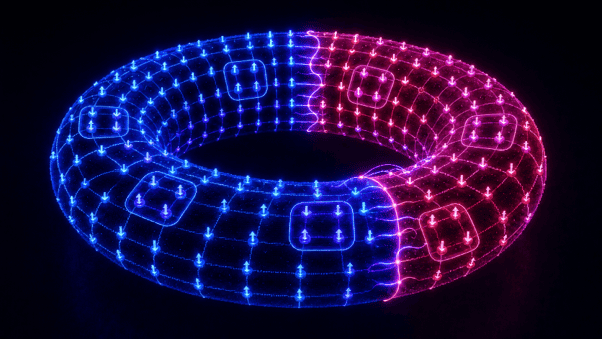
Entanglement entropy is a measure of how much quantum information two parts of a system share. If a system is split into two regions, a low entanglement entropy means that knowing about one half tells you little about the other half, while a high entanglement entropy means that the two halves are strongly connected through quantum mechanics. Entanglement entropy provides important information about quantum phases of matter, quantum critical points, and universal properties of quantum systems. However, calculating entanglement entropy accurately at quantum critical points in two-dimensional quantum systems is very difficult. These systems are commonly described as (2+1)-dimensional because their critical theories involve two spatial dimensions and one time dimension.

AI generated research concept
AI generated research concept (Courtesy: Justin Tim-Lok Chau/The University of Hong Kong)

In this work, the researchers developed a novel Quantum Monte Carlo algorithm to calculate entanglement entropy more accurately. Quantum Monte Carlo methods use random sampling to study quantum systems that are too complex to solve exactly. The researchers started with a standard quantum magnet model, the transverse-field Ising model, and added extra interactions that allowed them to study different types of phase transitions, including ordinary Ising critical points and a tricritical point that, in (2+1) dimensions, is described by a Gaussian free theory.

The researchers compared the second Rényi entanglement entropies of two specially chosen regions with the same boundary length. This directly cancelled the dominant area-law contribution, allowing the much smaller universal corner term to become the leading signal. They then used the same approach to obtain a precise value for the Ising critical point. The results showed that the Ising and tricritical/Gaussian critical points have different universal entanglement fingerprints, demonstrating that entanglement can distinguish between different types of quantum critical behaviour. More broadly, the work provides a powerful new method for studying entanglement in strongly interacting quantum systems and for testing theoretical predictions in two-dimensional quantum materials.

Read the full article

Precise computation of universal corner entanglement entropy at 2+1 dimension: from Ising to Gaussian quantum critical points

Ben Lee-Yeung Ngai et al 2026 Rep. Prog. Phys. 89 068006

Do you want to learn more about this topic?

Dynamical quantum phase transitions: a review by Markus Heyl (2018)

The post Probing quantum critical points appeared first on Physics World.

Improved QLEDs with Machine Learning

26 August 2026 at 08:00

Quantum dot LEDs (QLEDs) are of interest because they emit bright light with highly pure colours, making them attractive for display and lighting applications. They also have the potential to be manufactured at lower cost using solution-processing techniques. However, producing high-performance QLEDs remains challenging because the quantum dots must be uniformly distributed within a densely packed film. Poor film uniformity can lead to lower efficiency and faster device degradation.

In this study, machine learning was used to identify solvent conditions that produce the most uniform quantum dot films. Several solvents were characterised using five key solvent parameters that influence how quantum dots arrange themselves as the solvent evaporates. Film uniformity was assessed using atomic force microscopy, which provides detailed information about surface morphology and roughness.

Three machine learning models were trained to predict film uniformity from the solvent properties. Support Vector Regression was found to provide the most accurate predictions and was subsequently used to identify an optimal mixed-solvent formulation. Grazing-Incidence Small-Angle X-ray Scattering confirmed that the resulting films exhibited more homogeneous quantum dot packing.

The optimised solvent formulation produced QLEDs with higher efficiency and longer operational lifetimes than devices fabricated using single solvents. Overall, the study demonstrates that film homogeneity is a critical factor in QLED performance and highlights the potential of machine learning as a powerful tool for optimising solution-processed optoelectronic devices.

Do you want to learn more about this topic?

Materials, photophysics and device engineering of perovskite light-emitting diodes by Ziming Chen et al. (2021)

The post Improved QLEDs with Machine Learning appeared first on Physics World.

A new route to perfect energy absorption

26 August 2026 at 07:55

Wireless power transfer systems are used to transfer electricity without a physical cable, for example in wireless electric vehicle charging, medical implants and consumer electronics such as smartwatches. In real systems, poor alignment and variable distances can reduce efficiency, causing some of the transmitted energy to be reflected back towards its source rather than being absorbed by the receiver.

Wireless power transfer research tends to focus on engineering solutions such as improved coil designs, impedance matching and frequency tuning. However, in this work, the researchers investigate a more fundamental question: how can the physics of time-domain wave interference be used to control energy flow within resonant systems?

A phenomenon known as Coherent Perfect Absorption occurs when a system completely absorbs incoming energy with negligible reflection. However, this requires specific conditions and a system that is perfectly matched, operating at a point of equilibrium known as the steady state. Here, the researchers report a new effect called Transient Coherent Perfect Absorption. Rather than relying on a steady state, TCPA operates during the brief transition period immediately after a system is switched on.

During this transient period, a steady wave produced by the source coexists with a temporary, decaying wave created by energy stored within the system. These waves interfere with one another and both contribute to the reflected signal. When they are exactly out of phase, the reflected signals cancel out. As a result, a system that would normally reflect a significant amount of incoming energy can briefly behave as though it were perfectly matched, absorbing almost all of the incoming energy.

While this is fundamentally a physics study of wave behaviour and interference, it introduces a new way to suppress energy reflections in resonant systems. In the future, the approach could help improve the efficiency of wireless power transfer and other energy-delivery technologies by reducing losses under imperfect operating conditions.

Read the full article

Transient coherent perfect absorption enables efficient wireless power transfer

Liang Hu et al 2026 Prog. Energy 8 024001

Do you want to learn more about this topic?

The rise of electric vehicles—2020 status and future expectations by Matteo Muratori et al. (2021)

The post A new route to perfect energy absorption appeared first on Physics World.

❌