Some animal rescues are more complicated than others—especially when the creature in peril is about to become a snack for a seagull on a remote Alaskan beach with polar bears lurking nearby.
That was the sticky situation an orphaned Pacific walrus (a subspecies of Odobenus rosmarus) calf was in when two researchers found it on an island in the region of Point Lay, Alaska. U.S. Geological Survey (USGS) research walrus biologist Tony Fischbach and Ilisaġvik College student and Point Lay local Violet Anniskett stumbled upon the young male while investigating walrus carcasses on a remote beach. They found the orphan between the remains of two adult walruses, which was a first in Fischbach’s long experience working with walrus herds there.
The researchers requested permission to rehabilitate the walrus from the local Inupiaq community and the U.S. Fish and Wildlife Service. Once the approval arrived, the next hurdle was getting the mammal to the Alaska SeaLife Center. The center is the only marine mammal rehabilitation facility in Alaska, and was over 800 miles away. As if things could get any more difficult, stormy weather left Anniskett, Fischbach, and the walrus stuck on the island for days. In the meantime, the researchers guided the calf to an abandoned building to shelter from predators.
“When we found him, a determined flock of gulls was intent on scavenging him. He was in immediate peril of suffering this fate had we not gotten approval to intervene. Two polar bears were also active on the island,” Fischbach said in a statement.
“He bonded with us fast and wouldn’t sleep unless one of us were in the room. It was just us two for three days, stuck in a storm with the young walrus,” Anniskett added.
The calf was finally transported to the local airport, and made it to Alaska SeaLife Center on September 14 after a flight and van ride. The 200 pound baby arrived dehydrated, but in good physical condition. They treated some superficial wounds, gave him fluids, and applied other stabilizing treatments.
But the calf’s journey wasn’t over. In fact, orphaned Pacific walrus calves are one of the most specialized patients in marine mammal rehabilitation.That’s because in the wild, calves are very attached to their mothers, with whom they usually stay for one to two years. Close physical contact both with their mothers and others of their king is a crucial element in a calf’s early life. In the case of an orphaned calf, humans (who are authorized specialists) can act as surrogates, but it’s a tough babysitting job. Someone has to be around all the time to provide physical contact, social interaction, feeding support, and any veterinary care.
Caring for a Pacific walrus calf is not for the faint of heart, but can be pretty cute. Image: Kaiti Grant/Alaska SeaLife Center.
“Caring for an orphaned walrus calf is truly a team effort and requires around the clock commitment,” said Jane Belovarac, an Alaska SeaLife Center wildlife response curator. “At least two staff members have been working shifts around the clock to stay with him and provide the care he needs. This means long days and some unusual sleeping schedules for our team.”
It also means that the calf becomes comfortable with humans and thus cannot return to the wild. Now in a new long term home (whose location hasn’t been announced yet), he will be an ambassador for his species by teaching people about Pacific walruses.
In a follow-up on the measles outbreak in Sweden, no new cases of measles linked to the Urkult festival in Västernorrland have been reported in Sweden since the last update on September 9.
The outbreak has been declared over as of October 14. A total of 40 cases were reported in the outbreak.
In 28 cases, the spread of infection occurred during the Urkult festival. 12 people are considered to have been infected after contact with a person who was infected at the festival.
The majority of the cases are school-age children and young adults. Most of the cases have been unvaccinated against measles.
The cases have been reported from ten regions: Gotland (4 cases), Jämtland Härjedalen (6 cases), Skåne (2 cases), Stockholm (12 cases), Sörmland (3 cases), Uppsala (1 case), Värmland (2 cases), Västerbotten (7 cases), Västernorrland (2 cases) and Västra Götaland (1 case). One case has been reported from Finland.
The regions’ infection tracing of the outbreak cases showed that the source of the outbreak was infected abroad.
Outbreak News Today is a reader-supported publication. To receive new posts and support my work, consider becoming a free or paid subscriber.
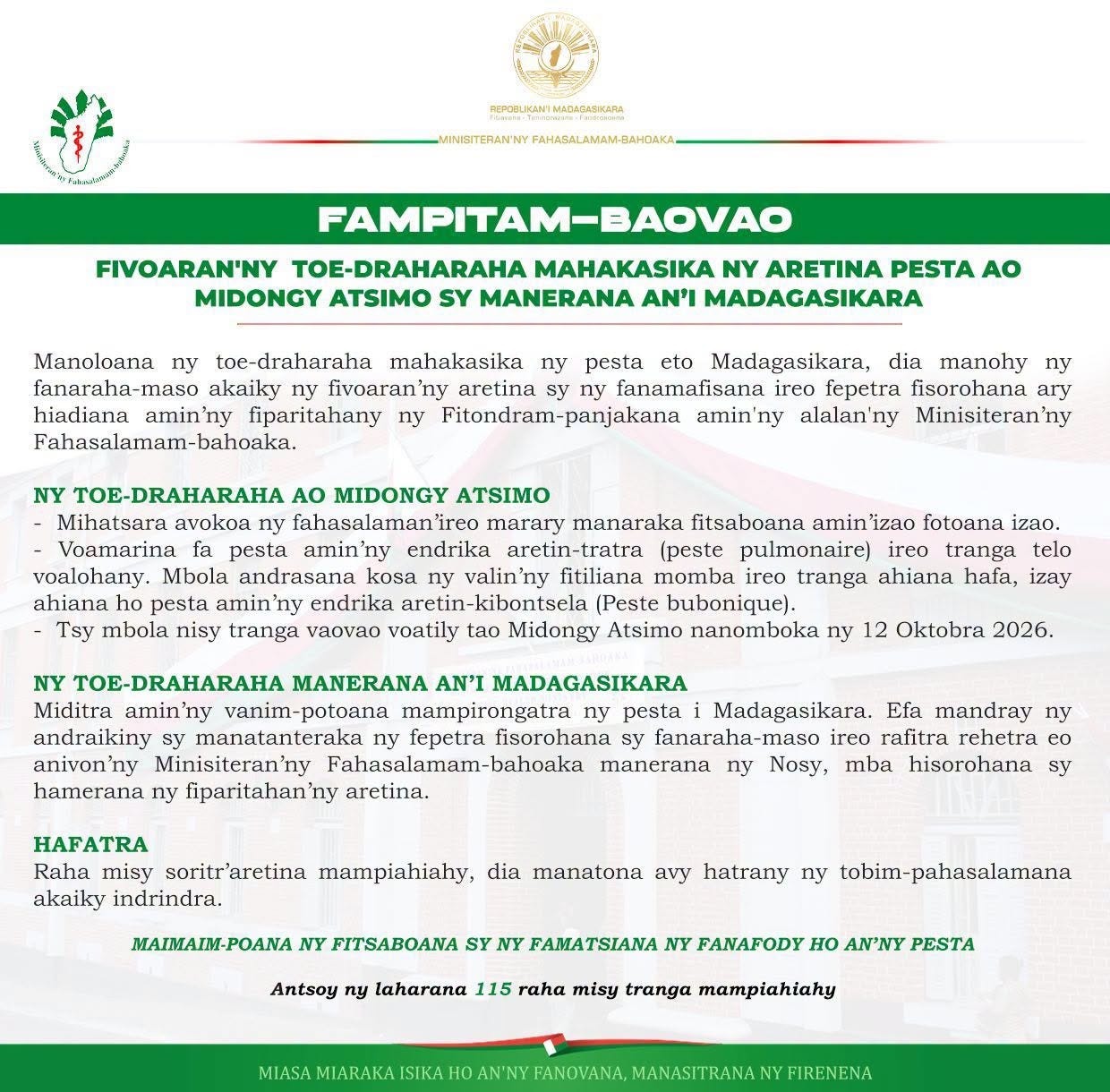
The Madagascar Ministry of Health recently reported plague cases in South Midongy state.
Health officials report three cases of pneumonic plague, Test results are still pending on other suspected cases, which are suspected as being bubonic plague.
Officials report the health of all patients are improving with treatment.
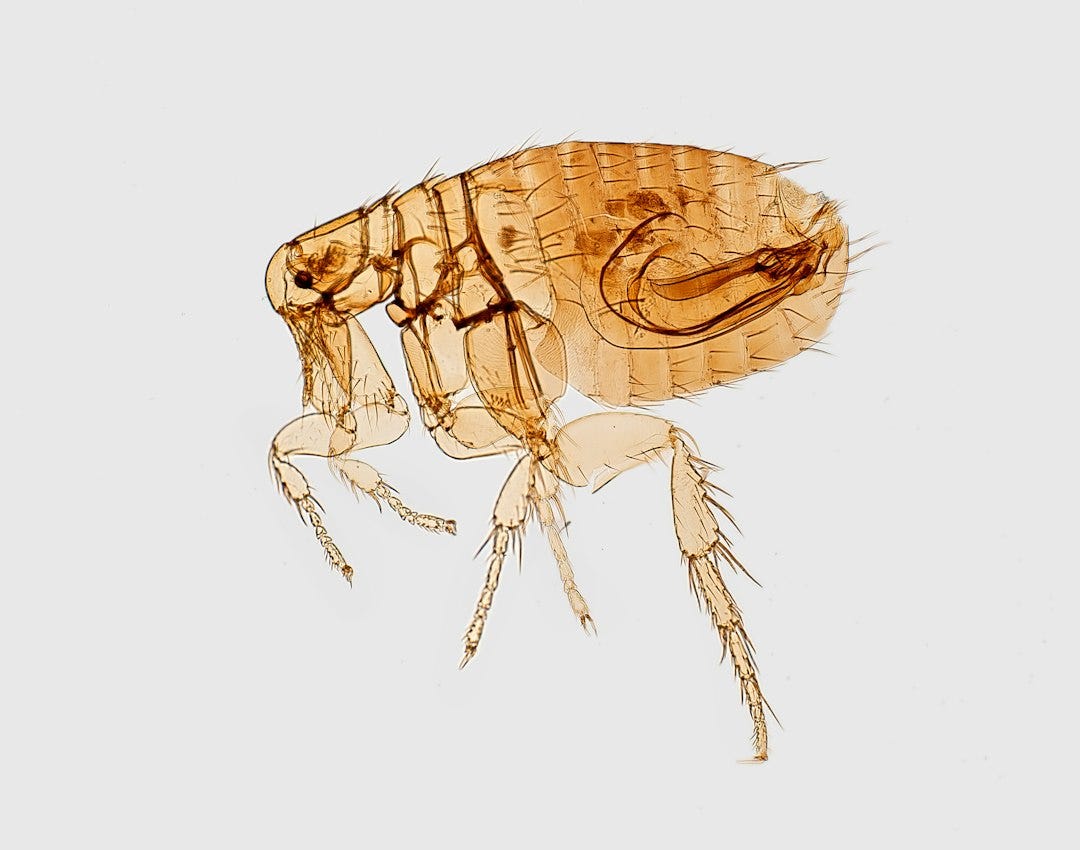
Image/CDC
No new cases have been reported since October 12 in Midongy state.
Plague is an infectious disease caused by the bacterium, Yersinia pestis. It is found in animals throughout the world, most commonly rats but other rodents like ground squirrels, prairie dogs, chipmunks, rabbits and marmots. Fleas typically serve as the vector for plague.
People can also get infected through direct contact with an infected animal, through inhalation and in the case of pneumonic plague, person to person.
Yersinia pestis is treatable with antibiotics if started early enough.
There are three forms of human plague; bubonic, septicemic and pneumonic.
Plague is endemic on the Plateaux of Madagascar. A seasonal upsurge, predominantly of the bubonic form, usually occurs yearly between September and April.
According to the general secretary of the Madagascar Ministry of Health, between 300 and 600 suspected cases are reported each year, with about 30 cases of pulmonary plague and 10 to 70 deaths.
Outbreak News Today is a reader-supported publication. To receive new posts and support my work, consider becoming a free or paid subscriber.
As of October 14, 2026, the Democratic Republic of the Congo Ministry of Health reports 65 new confirmed cases of Ebola virus disease (EVD) have been reported across four provinces: Ituri (31 cases), North Kivu (28 cases), Haut-Uélé (5 cases), and Tshopo (1 case).
Additionally, 15 deaths were recorded in Ebola Treatment Centers (ETCs)—6 in Ituri, 6 in North Kivu, 2 in Tshopo, and 1 in Haut-Uélé—bringing the total number of confirmed deaths for the period in question to 37.
Furthermore, 38 patients (18 in Ituri, 15 in North Kivu, and 5 in Haut-Uélé) have been declared recovered after testing negative twice for EVD.
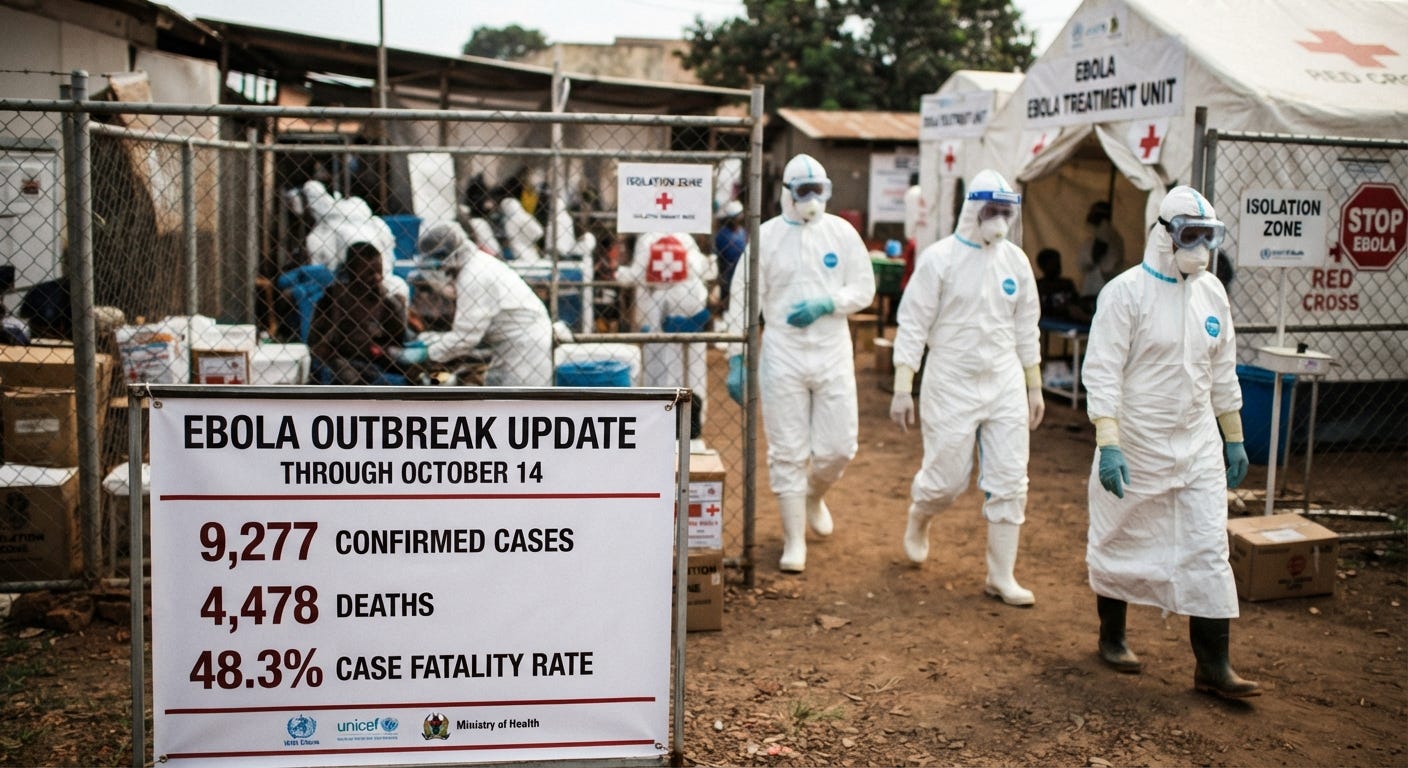
Since the beginning of the outbreak, the DRC has recorded a cumulative total of 9,277 confirmed cases and 4,478 deaths, representing a case fatality rate of 48.3%. Ituri remains the epicenter of the outbreak, accounting for 73.4% of all cumulative confirmed cases and 47.7% of the new confirmed cases reported over the last 24 hours.
To date, 65 out of 167 health zones (38.9%), spread across seven provinces, have been affected since the start of the outbreak.
The 2026 Bundibugyo Ebola outbreak in the Democratic Republic of the Congo (DRC) is the country’s 17th recorded Ebola outbreak and its largest and deadliest to date. It is also the second-largest Ebola outbreak in global history (after the 2014–2016 West Africa epidemic). Caused by Bundibugyo virus (BDBV), for which there is no licensed vaccine or specific treatment, it has expanded rapidly amid insecurity, high population mobility, and challenges with surveillance and community engagement.
Outbreak News Today is a reader-supported publication. To receive new posts and support my work, consider becoming a free or paid subscriber.
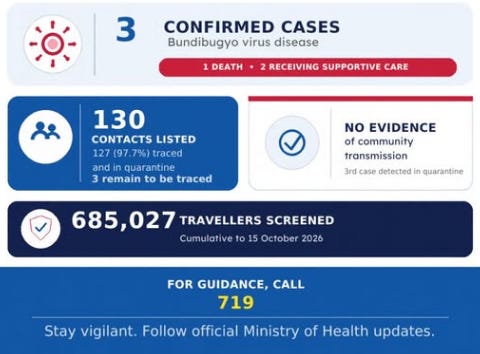
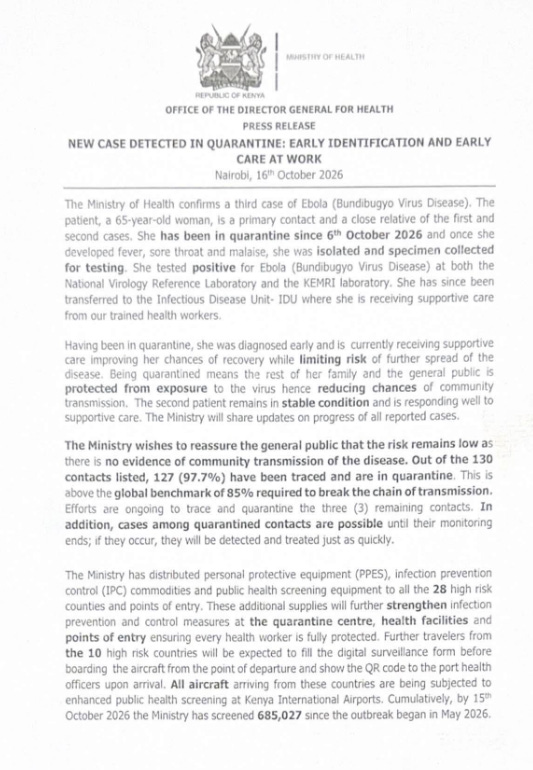
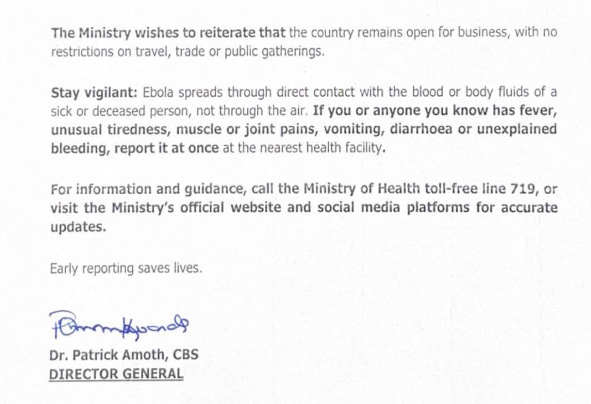
In a follow-up on the Ebola situation in Kenya, the Ministry of Health has confirmed a third case of Ebola (Bundibugyo virus disease) in Kenya. The patient was already in quarantine, and there is no evidence of community transmission.
See press release signed by Dr. Patrick Amoth:
Outbreak News Today is a reader-supported publication. To receive new posts and support my work, consider becoming a free or paid subscriber.
It takes a village to raise a child, and sometimes it takes more than one wildlife rehabilitation center to care for a bat. Even if the bat in question weighs only six grams (about two ounces).
The recent rescue of the juvenile bat in Lancaster, Pennsylvania involved teamwork from the beginning. The “sky puppy” had been hanging on a local porch for two days. While that might not sound off, the bat’s exposure to the elements in a single location for that period of time made the situation an emergency, according to Raven Ridge Wildlife Center in southern Pennsylvania.
The rescued bat perched on a local porch. Image: Raven Ridge Wildlife Center.
Pennsylvania Bat Conservation and Rehabilitation contacted Raven Ridge, who sent a team member to get the bat. The winged mammal was very dehydrated and underweight. It was also unlike the bats that typically arrive at Raven Ridge. The team stabilized her, recontacted PA Bat Conservation and Rehabilitation, and the two organizations realized that they had a northern long-eared bat (Myotis septentrionalis) on their hands.
“Sadly, northern long-eared bats are now critically endangered in North America, with their population dropping by as much as 97% to 100% because of white-nose syndrome,” Tracie Young, Raven Ridge Wildlife Center director, tells Popular Science. White-nose syndrome is a fungal disease that has killed millions of bats in the U.S. and Canada.
“They are now protected at both the state and federal levels,” Young adds.
A Raven Ridge volunteer ultimately drove the youngster to the PA Bat Conservation and Rehabilitation facility about an hour away, where the team is expert in critically endangered bats. The bat was eventually returned to the wild, with a video featuring the little bat launching from a woman’s gloved hand into the night.
“Even though this is just one bat, it was important to get this bat to the rehabber who specializes not only in bats but also in those in a critically endangered status,” Young adds. “The video shows her flying beautifully. This effort was a wonderful partnership between Raven Ridge Wildlife Center and PA Bat Conservation and Rehabilitation.”
Nathan Fielder's documentary about disgraced Theranos CEO Elizabeth Holmes has created a constellation of colliding personas that interrogate the very nature of authenticity.
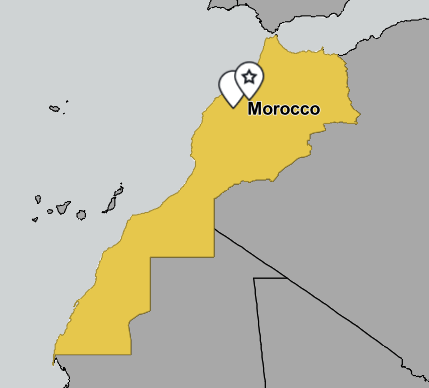
In the North African country of Morocco, the country’s Ministry of Health reported a small diphtheria outbreak with clusters in multiple regions in Morocco in late September.
Moroccan health teams are tracing contacts and providing preventive treatment and vaccines.
This has prompted the US Embassy to issue a health alert for U.S. citizens in Morocco.
Diphtheria is a serious bacterial infection. It spreads primarily from person to person through coughs and sneezes (respiratory droplets).
Most Americans were vaccinated as children and have received Td or TdaP boosters as adults. The risk to U.S. citizens in Morocco remains low. U.S. Citizens may contact their local doctors if they would like immunizations.
Embassy officials advise citizens to watch out for the following symptoms:
Sore throat or hoarse voice, mild fever, a thick gray or white coating in the throat or nose, swollen neck and trouble swallowing or breathing.
If you or a family member has trouble breathing or swallowing, please contact your local doctor.
They also advise on the following actions concerning vaccines:
Check your vaccination records and your family members’ records.
Get a booster if you need one. Adults need a diphtheria booster (Td or Tdap) every 10 years.
Make sure your children are up to date on their routine vaccines.
Outbreak News Today is a reader-supported publication. To receive new posts and support my work, consider becoming a free or paid subscriber.
Nothing is quite as joyful as watching a dog get caught up in a bout of “zoomies,” zipping around a living room or backyard in a burst of energy. But our canine pals aren’t the only animals subject to these hyperactive displays.
Young condors can also engage in zoomies, as demonstrated in a recent Facebook post from the Ventana Wildlife Society in California. The video shows clips of two young California condors (Gymnogyps californianus), Chert and Pumice, seemingly having a blast in their release pen.
“We observe the zoomies in both captive and wild condors. It’s just a sudden expression of pure excitement for young condors and very fun to watch,” Joe Burnett, California Condor Recovery Program Manager at the wildlife society, tells Popular Science. “Zoomies come out of nowhere and they just can’t contain themselves and totally let loose. They hop, run in circles, or flap around, or all the above! It’s just pure fun!”
It’s not just about the fun, however. Zoomies allow the young condors to release energy and grow stronger, as well as help them figure out their wings, according to the team.
The two zoomie condors are 1.5-year-old males who were raised in zoos before arriving at Ventana Wildlife Society’s San Simeon release pen in early September. It’s called a release pen because Chert, Pumice, and three other captive condors will be kept in the pen to acclimate until their release on October 24 at 10 a.m. The release will also be livestreamed.
The quintet will become a part of the wild condor population of central California, which today includes 104 individuals. But it won’t be a total goodbye. Scientists will be able to keep an eye on Pumice and Chert’s locations via wing-mounted radio & GPS transmitters and ID tags.
California condors are North America’s largest land bird. They measure 9.5 feet from wing tip to wing tip. But their size didn’t spare them from a precipitous population drop. In 1982 there were only 23 condors left in the world. All wild condors were captured and included in a captive breeding program.
“Condor releases are critical to achieving our ultimate goal- to reestablish a self-sustaining condor population in the wild,” Burnett concludes.
At the end of 2025, there were 607 California condors. We’d say Pumice and Chert earned their right to party.
The European Centre for Disease Prevention and Control (ECDC) say the continent is experiencing its most intense West Nile virus (WNV) season to date and detections of the virus in new areas further north in Europe.
As of 7 October 2026, European Union (EU) countries have reported 1,715 locally acquired human cases of WNV infection, the highest number ever reported. Italy remains the most affected country, with 748 cases reported. Greece and France reported their highest numbers of human cases of WNV infection ever.
WNV is expanding into new areas of Europe. The Netherlands has reported 59 human cases so far this year. Belgium has reported 15 cases, the first locally acquired human infections ever recorded in the country.
Despite the record number of reported cases, there is currently no indication of increased severity this year. The proportions of reported cases who have been hospitalised, developed neurological symptoms or died remain below the levels observed over the previous decade. So far this season, 130 people have died.
“West Nile virus is a clear example of why a cross-sector approach is essential,” Céline Gossner, senior expert at ECDC, said in a statement.
“The virus circulates between mosquitoes and birds and can cause disease in people and horses, so no single sector can address the risk alone,” she added.
Outbreak News Today is a reader-supported publication. To receive new posts and support my work, consider becoming a free or paid subscriber.
The Florida Department of Health reported 72 additional locally acquired dengue fever cases during the week ending October 10, bringing the total this year to date to 368.
The cases are reported on the following eight counties: Broward, Hillsborough (310), Miami-Dade (9), Orange (5), Palm Beach, Pasco (4), Pinellas (37), and Polk.
Despite the name, the universe’s white dwarfs can glow in a wide range of colors—even green. For the first time, astronomers have spotted a star that appears green to the human eye, and the reddest ever recorded. These outlier stars help explain how certain white dwarf stars would shine in green, pink, cyan, yellow, and purple if we actually saw them up close in space. These colorful findings are described in a study recently published in the journal RAS Techniques and Instruments.
Looking for the ‘perfect radiator’
White dwarf stars are the dense remnants left behind after stars like our sun reach the end of their lifespan. For most stars, their color gives a hint to their temperature. Cooler stars appear orange, warm stars like our sun look white. The hottest glow pale blue, similar to how a blacksmith’s iron will go from red to orange to white hot. Astronomers believed that white dwarfs followed this same rule. They even earned their name after the earliest examples were surprisingly hot and glowed in a white/pale blue.
“Most stars, including most white dwarfs, behave like ‘perfect radiators,’ so their colour is set almost entirely by temperature. But nobody had really looked into what else might be possible for white dwarfs,” Mark Hollands, a study co-author and astronomer at the University of Warwick in England, said in a statement. “It turns out these incredibly dense stars can produce colours nobody expected, and some of them genuinely surprised me.”
According to the team, the key to these colors is density. The atmospheres surrounding the coolest white dwarfs can reach about the same density as water (roughly 1 gram per cubic centimeter). They are also millions of times denser than the sun’s photosphere, the lowest layer of its atmosphere. Under these higher density conditions, any trace elements present (carbon, calcium, sodium, etc.) interact with the surrounding dense helium plasma. As they interact with the plasma, they can absorb light across a wider spectrum of colors than they would at lower densities. This then shifts the star’s color away from the more typical orange, white, and blue.
Unfortunately, no white dwarf sky is close enough for its color to be seen directly. Instead, the team calculated their color from data astronomers routinely collect—a star’s spectrum. The spectrum is a “fingerprint” that’s produced when starlight splits apart by wavelength, similar to how a prism splits sunlight into a rainbow. Astronomers ran these spectra through a computer model of what colors human vision can see to check what color a star’s light would appear to our eyes.
Color-accurate simulated images of white dwarfs. Top Left panels: Sirius B is the nearest white dwarf to the Solar System, with a hot hydrogen atmosphere, resulting in a pale blue colour. WDJ1147-7449 is instead among the coolest nearby white dwarfs, giving it a featureless spectrum and an orange appearance. Top Right panels: Convective envelopes in these cool white dwarfs have dredged up carbon from their cores into their dense helium-dominated atmospheres, forming diatomic carbon molecules that lead to various pink hues. Bottom panels: Accretion of rocky debris from the white dwarf planetary systems enriches their cool helium atmospheres with elements such as calcium, magnesium, and sodium. The varying amounts/compositions of accreted material and white dwarf temperatures allow for a diverse array of colours, including green. In reality all stars would be many millions of times brighter than what can be shown on-screen. Image: Mark Hollands/University of Warwick
The first green and the reddest red
The team applied this method to several white dwarfs across the cosmos. They found that their colors fall into distinct groups linked to what makes up a star’s atmosphere. Carbon-rich white dwarfs generally appear pink or purple. Stars enriched with debris from busted asteroids and comets, the remains of old planetary systems, tend to be more yellow. Cooler white dwarfs with atmospheres of mixed hydrogen and helium show a more cyan or pale blue tinge. This cyan-pale blue is caused by hydrogen molecules colliding with helium atoms inside their ultra-dense atmospheres.
The most striking example is WD J1330+6435. This star is about 7,232 degrees Fahrenheit (4,000 degrees Celsius) and around 284 light-years away from Earth. Over time, it has gathered rocky material from its planetary system. All of this extra material enriched its atmosphere with calcium, lithium, and sodium. The result—a chartreuse green appearance in the team’s models. As far as the researchers are aware, no other star (living or dead) has ever been credibly reported as green.
Enriched from above: The cool white dwarf WDJ1330+6435 has accreted sodium-rich rocky material from its planetary system into its atmosphere. The immense atmospheric density causes the sodium to absorb light over broad range of yellow, orange, and red wavelengths, giving the WDJ1330+6435 a ghostly green appearance. Image: Mark A Garlick/University of Warwick.
“The traces of sodium in the atmosphere of this white dwarf absorb the orange part of the spectrum, leaving behind a ghostly green glow,” added Hollands. “Imagine standing on a planet and looking up at a green star. It feels like something out of science fiction.”
On the opposite end of the spectrum, the team identified what could be the reddest star ever recorded—WD J1011+2845. This white dwarf is only 48 light-years away from Earth, and has a deep convection zone. This zone is full of carbon that’s been lifted up from the star’s core to its surface. The carbon molecules then distort the star’s light so much that almost all of it is squeezed into wavelengths beyond 600 nanometres. This wavelength produces an unusual deep salmon-pink glow.
Enriched from below: The cool white dwarf WDJ0902+2010 has a deep convection zone within its helium dominated outer envelope. The convection zone has reached the white dwarf core, lifting interior carbon to the surface, and forming carbon molecules. These C2 molecules strongly absorb light across the optical range, including blue, green, and yellow wavelengths, resulting in WDJ0902+2010 appearing pink to the human eye. Image: Mark A. Garlick/University of Warwick.
What are the odds?
The team also studied 151 white dwarfs located within about 65 light-years (20 parsecs) from Earth. Only five of these showed unusual colors, two yellow and three pink. This suggests that about 1 in 30 of the universe’s white dwarfs shine with an unusually colored light.
The team then measured the color temperature of the remaining 146 white dwarfs. Color temperature is commonly used to describe light bulbs using degrees Kelvin—warm white at 3,000K, cool white at 6,000 K, etc. The median color temperature of the sample was approximately 6,800K, which our eyes perceive as white. This measurement corrects a common misconception that white dwarfs are typically blue. The hotter and bluer white dwarfs are mostly brighter, so they can be seen from further away and are over-represented in surveys that only look at a star’s brightness.
“One in thirty might not sound like a huge fraction, but across the entire population of white dwarfs in the Universe, that is still a lot of oddly coloured stars out there,” added study co-author and University of Warwick astronomer Boris Gänsicke. “Yet if we take the median across a representative population of white dwarfs, we found that the average white dwarf really is white.”
In the mid-1970s, Linnda Caporael was a college student facing a seemingly mundane decision.
A science major at U.C. Santa Barbara, she needed a humanities course to graduate. The course she chose, on women in American history, came with a term paper, and she had to pick a topic.
Caporael’s first choice—Lydia Wardell, a Quaker woman who protested Puritan persecution by walking naked into a meeting house in the 1660s—was intriguing, but already taken. So Caporael instead settled on her second choice: Ann Putnam, one of the accusers in the 1692 Salem witch trials. In doing so, Caporael reshaped the way millions of people view a nearly 300-year-old chapter of American history.
Caporael’s paper introduced the theory that the visions, convulsions, and distress the “afflicted” girls reported might not have been supernatural after all. Instead, she proposed, they could be explained by ergot, a fungus that grows on rye grain and produces a hallucinogenic toxin. In other words, blame moldy bread.
The ergot theory, despite being debunked within a year of being published, has continued to spread and thrive like fungus on rye. As recently as 2023, comedian-turned-podcasting-juggernaut Joe Rogan discussed the theory enthusiastically on his show, effectively reanimating a story that seems destined to never fully die.
“It’s sexy,” says historian Margo Burns about the enduring appeal of Caporael’s ergot theory. “It’s about drugs. It’s about witches. It’s about killing people. Also, we like to think that when there’s an unjust sentence or execution, there’s someone or something to blame.”
Burns, a Salem scholar who has spent years tracing how the ergot theory took hold and persisted, says she rarely gets through a talk on the trials without someone in the audience bringing up moldy bread.
It was long thought that Ann Putnam, one of the primary accusers during the Salem witch trials, had grown up in this house, but historians now know this house was built much later, around 1891, near the Putnams’ original home location. Image: Public Domain
How a term paper went viral
The fact that a single undergraduate college paper could have such a lasting and wide-ranging impact on our understanding of the Salem witch trials seems bizarre, but it can be explained in part by a thoroughly modern phenomenon: virality. Although the World Wide Web was still decades away, Caporael’s paper found a way to spread fast through newspaper wire services.
After she started graduate school, Caporael submitted the paper to Science, which, to her surprise, published it in April 1976. That alone might have kept the theory confined within academic circles. Instead, newspaper editors saw a story with mass appeal.
“Editors and newspapers just grabbed it, saying, ‘Oh, here’s a human interest thing,’” Burns says. “And when they put it in their papers, like The Washington Post, The New York Times, The Boston Globe, it got syndicated. And the syndication of those articles went through the whole country and Canada within a matter of weeks.”
Caporael, who had explored the topic through the lens of the scientific method, wasn’t claiming to know what had happened at Salem. At the suggestion of a pre-med friend, she began looking into ergot poisoning as a possible explanation, not a definitive answer.
According to Burns, who has spoken with Caporael directly, she was only testing whether ergot could be ruled out. Working from the limited sources available to her, Caporael determined that she couldn’t rule it out. Even then, though, she called her own findings “suggestive,” not conclusive.
But that nuance didn’t survive exposure to the public, which in 1976 was already fixated on LSD and what it might do to young people. The press coverage essentially retrofitted 1692 with the anxieties of 1976, recasting the Salem girls as teenagers on a bad trip.
“You give that to the American public, which doesn’t understand there’s a difference between scientific inquiry and historical storytelling, and it’s just so compelling,” Burns says.
Debunked, but far from dead
Not all the viral attention was positive, though. Within that same year, researcher Nicholas Spanos and graduate student Jack Gottlieb published a rebuttal in Science, dismantling Caporael’s argument point by point. By their reckoning, various aspects of the Salem girls’ symptoms did not add up.
“There are a couple of different kinds of ergot poisoning, and one of them is gangrenous, so people’s fingers would start rotting,” Burns says. “And they would have gastrointestinal problems, and we don’t have any instances in the records that either of those things happened.”
This 1880 print shows Martha Corey and her prosecutors in Salem, Massachusetts, during the witch trials. Martha Corey was accused of witchcraft, found guilty, and executed by hanging. Her husband, Giles, who defended Martha against the allegations, was also put to death. Image: Print Collector / Contributor / Getty Images
The problems for the theory didn’t end there. Ergot poisoning was thought to hit hardest among people with vitamin A deficiencies, but Salem’s residents had dairy cows and the sea nearby, and likely plenty of vitamin A. (Ironically, Burns notes, that the vitamin A argument was itself based on a discredited 1930s source that relied on circumstantial evidence and has never been replicated.) And while whole families ate from the same supply of rye, usually only one or two people per household fell ill.
The rebuttal, though methodical and logical, was little more than a momentary speed bump for the runaway popularity of the psychedelic bread story. In fact, it may have helped.
Arguing with a claim, however insubstantial, implies that it’s worth arguing about, and a formal rebuttal in Science can make a student’s term paper look like one side of a valid scientific debate.
“It’s really hard to refute something,” Burns says. “If anything, it just sort of nails it and makes it more permanent.”
“They were eating their own”
Whatever was causing young women in Salem to convulse, the atrocities that followed are much harder to grasp. By the time the panic ended, 152 people had been formally accused, 19 had been hanged, and one man, Giles Corey, had been pressed to death with stones for refusing to stand trial. Several more died in jail.
“The people who were responsible were the adults in the room,” Burns says.
To the modern eye, this looks like lunacy. To most people in 1692, though, witchcraft wasn’t superstition. It was an accepted fact, part of an invisible world in which Satan and his agents wreaked havoc on everyday life. Conflict with Indigenous peoples on the Maine frontier had sent traumatized refugees into the region, relating horror stories of attacks on their homes. Many colonists thought Satan engineered those attacks, too.
In a way, the people of Salem did exactly what Americans would do nearly 300 years later, when the psychedelic era latched onto the ergot theory: They explained strange behavior through the lens of what frightened them most.
In such a charged social climate, suspicion could fall on just about anyone, and it did. The accused weren’t just outcasts, Burns says. Many were fully covenanted members of the Puritan church.
“We’re not talking about going after ‘The Other,’” she says. “They were eating their own.”
Someone to blame
Burns knows the cost of Salem’s betrayals about as well as anyone. An associate editor of Records of the Salem Witch-Hunt, the definitive collection of the trials’ legal records, she is also the 10th-generation great-granddaughter of Rebecca Nurse, who was hanged on the charge of witchcraft in 1692.
The Rebecca Nurse Farmstead still stands and is open to the public in Danvers, Massachusetts. Image: Fletcher / CC BY 4.0
Nurse, a respected member of the church in Salem Town, was tried and found not guilty. But Chief Justice William Stoughton refused to accept the verdict. He sent the jury back to reconsider a remark Nurse had made when confessed witches Deliverance Hobbs and her daughter, Abigail, were brought in to testify against her: She had said the two were “of our company.” Nurse meant that they had been jailed together, but the court heard that they were fellow witches.
When jurors asked her what she meant, the courtroom was in such an uproar that Nurse didn’t hear the question. At the time, failing to answer an accusation was treated as a confession, and the jury returned a guilty verdict. In a later appeal, Nurse wrote that she was “something hard of hearing, and full of grief,” and didn’t realize she was being asked to explain herself.
It was the kind of injustice no mere fungus could cause.
“[Chief Justice] Stoughton was singularly, individually responsible for her execution,” Burns says.
The question of who is to blame is rarely so straightforward, though. Which might be part of the ergot theory’s appeal; it offers “one silver bullet” that tidily explains everything.
“There are just so many reasons that all came together,” Burns says.
But when pressed on why she thinks it happened, she offers an answer that’s part joke, part harsh reality: “People are mean.”
In That Time When, Popular Science tells the weirdest, most surprising, and little-known stories that shaped science, engineering, and innovation.
The Ojai Raptor Center released the final necropsy results for Jackie, an internet-famous bald eagle mother who was in their care this summer. Jackie was brought into the bird rehabilitation center weak and dehydrated following an altercation with another eagle in July.
Officially designated as Patient 26-519, Jackie’s necropsy revealed a “complex and unusual disease process involving severe, chronic inflammation and ulceration of the stomach, persistent internal bleeding, anemia and secondary bacterial sepsis.” She was also diagnosed with Highly Pathogenic Avian Influenza (HPAI) commonly called bird flu, which was behind severe stomach ulceration. Raptors (eagles, hawks, falcons, owls, etc.) are highly susceptible to the virus
All of these medical complications developed over time and ultimately contributed to her death on August 10.
“These findings have helped connect many of the pieces we were seeing throughout her hospitalization and provided a better understanding of the challenges she faced,” the Ojai Raptor Center wrote. “We are grateful to the many veterinary specialists, laboratories, wildlife agencies and partner organizations who worked alongside our team to understand her illness and provide her with the best possible care. Caring for her was an extraordinary privilege for our entire team.”
The full report can be read in Jackie’s veterinary medical journal. The necropsy was preformed by veterinary pathologists at the San Diego Zoo Wildlife Alliance.
Friends of Big Bear Valley (FOBBV), the non-profit organization that runs the live cameras where viewers from all over the world watched Jackie and her partner Shadow, said that they will follow up with their thoughts once their team has had time to process the report.
“The story of the Big Bear bald eagle reflects the powerful connection people feel to these iconic birds,” California Department of Fish and Wildlife Director Meghan Hertel added. “We’re grateful to everyone who cared for her and worked to support her well-being. Understanding the results of these tests is an important part of learning from this case and can help inform the care and treatment of other eagles and wildlife in the future.”
Jackie on a perch at the Ojai Raptor Center in July. Image: Ojai Raptor Center.
Jackie’s story
Jackie was born, raised, and lived in Big Bear Valley in Southern California. Prior to the 2011-2012 nesting season, no bald eagle chicks were known to have ever hatched in Big Bear Valley. Then came Jackie, named after a forest ranger and born to parents Ricky and Lucy in 2012.
During the 2016-2017 nesting season, Jackie took over a nest where Friends of Big Bear Valley (FOBBV) had a camera stationed. In 2018, she had two chicks named Stormy and Big Bear Baby (or BBB) with her first mate, Mr. B.
Her long-time partner Shadow entered the picture in summer 2018. He showed up at the nest and would not leave. FOBBV called the new male Shadow because he appeared so determined to stay in the nest, and the team initially believed he was one of Jackie’s siblings, also named Shadow. The eagle’s plumage indicated he was one year older than the other Shadow and not Jackie’s sibling, but the name stuck.
Shadow continued to hold his ground and Mr. B gave up and eventually left. Jackie then accepted Shadow as her new mate.
Wildlife cameras documented Jackie and Shadow’s life together, offering viewers a direct look into the brutality and beauty of nature. The pair successfully raised chicks in 2019 (Cookie and Simba) and 2022 (Spirit). The pair’s eggs failed to hatch in 2023 and 2024. In 2025, Jackie laid three eggs that all hatched in early March. However, a strong snowstorm dumped up to two feet of snow and battered the nest with strong wind and only two of the chicks (Sunny and Gizmo) survived.
In January, Jackie laid two eggs in the nest, but ravens destroyed them. She later laid two more eggs that hatched in April and named Luna and Sandy. The name Sandy is in honor of FOBBV’s former executive director Sandy Steers who died from cancer in February.
Jackie, Luna, and Sandy on their nest in May 2026. Image: Friends of Big Bear Valley.
Jackie’s injury and death
On July 17, Jackie was found injured on the ground near Dana Point Park, California. Cell phone video from a witness confirmed that she had an altercation with two other subadult eagles. She successfully fended off the other eagles by turning over and using her talons, but could not fly far away.
She was transferred to the Ojai Raptor Center, where she was diagnosed with severe anemia. Her anemia worsened during the first week of August, the Ojai Raptor Center said that she was in unstable condition on August 9. Her packed cell volume (PCV) fell below percent, before rising to nine percent.
On July 17, Jackie was found injured on the ground near Dana Point Park, California. Cell phone video from a witness confirmed that she had an altercation with two other subadult eagles. She successfully fended off the other eagles by turning over and using her talons, but could not fly far away.
She was transferred to the Ojai Raptor Center for care, where she was diagnosed with severe anemia. Her anemia worsened during the first week of August, the Ojai Raptor Center said that she was in unstable condition on August 9. Her packed cell volume (PCV) fell below percent, before rising to nine percent.
Jackie died early in the morning on August 10. The necropsy did not reveal a single cause of death, and instead pointed to several factors including severe anemia, blood clots in her wing and one kidney, and liver and lung abnormalities.
As the Provincial Epidemiology and Surveillance Unit continue to monitor dengue incidence in Northern Samar, reporting a rise in dengue cases to the Provincial Health Board (PHB), PHB Chair and Governor Harris Ongchuan, directed the strengthening of dengue prevention, surveillance, and vector-control efforts in the province.
On its latest Epidemiology and Surveillance System Updates yesterday during the PHB Meeting, Mr. Nick Andrew Cardenas of the Department of Health Northern Samar reported 966 dengue cases in the province in 2026, or double compared to the 447 cases in 2025. A significant increase was observed between the first week of July and third to fourth week of September, with the province recording as many as 111 cases in a single week. The report highlighted the need for early consultation and timely medical intervention as key factors in preventing severe outcomes and reducing dengue-related mortality.
The Provincial Government and the Provincial Health Board noted 5 municipalities with the highest number of dengue cases in the province:
• Lavezares – 197 cases
• Catarman – 163 cases
• Allen – 130 cases
• Laoang – 100 cases
• San Antonio – 70 cases
Other municipalities in the province also recorded cases, but of lesser number, the DOH pointed out.
Noting this concern, the Governor strongly backed the recommendation of local health officials to implement crucial measures:
• Mobilize communities for aggressive search-and-destroy activities to eliminate areas where dengue-carrying mosquitoes may breed;
• Implement combined vector-control measures in areas with confirmed dengue cases, including fogging or misting following the 1-3-7 strategy;
• Conduct targeted indoor residual spraying (tirs and tors) in identified areas;
• Intensify awareness campaigns and larval surveys to increase public awareness and identify potential mosquito breeding sites; and
• Strengthen municipal and provincial epidemiology and surveillance systems to ensure early detection, monitoring, reporting, and timely response to dengue cases.
Governor Ongchuan also called on Nortehanons to take active role in dengue prevention and control. Local health authorities also sought the help of communities by regularly inspecting their surroundings, eliminate stagnant water and other potential mosquito breeding sites, and seek immediate medical attention when symptoms of dengue occur.
By strengthening government response and active community participation, the Provincial Government, along with the Provincial Health Board, seeks to continuously protect the health and well-being of Nortehanons and prevent the further spread of dengue in Northern Samar.
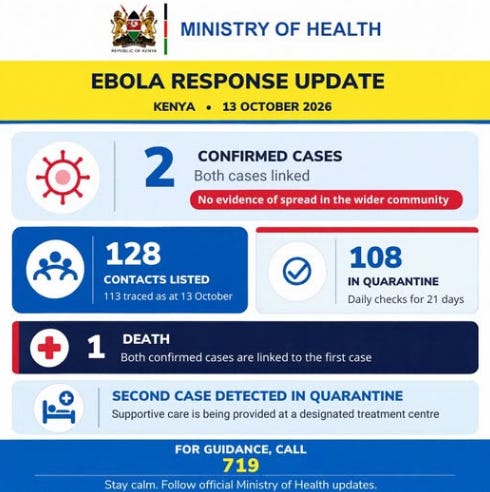
The Kenya Ministry of Health has confirmed a second case of Ebola (Bundibugyo virus disease), 10 days after a 40-year-old man died from the virus following travel from the Democratic Republic of the Congo through Uganda.
Both cases are linked - The new patient, a 39-year-old close relative of the first victim, was already in quarantine when he developed symptoms. There is no evidence of spread in the wider community.

 Login