❌

Normal view

Charles Darwin argued that the roots of human morality were not separate from animal life, and the surprise is what that does to civilization — manners, conscience, and restraint become not the opposite of instinct, but instinct complicated by memory, language, and the judgment of others

17 June 2026 at 22:00

The objection Darwin knew would be hardest to answer was not about bones or fossils. It was about conscience. As long as the moral sense could be held apart from animal life, the distance between human beings and other creatures remained intact. Rev. Leonard Jenyns made exactly this argument in a letter to Darwin in January 1860, writing that he could not bring himself to accept that “man’s reasoning faculties and above all his moral sense could ever have been obtained from irrational progenitors, by mere natural selection.” Take the moral sense out of nature and you preserve, as Jenyns put it, “the Divine Image that forms the insurmountable distinction between man and brutes.”

Darwin’s response, worked out across Chapters 3 and 5 of The Descent of Man (1871), was not to deny that the moral sense was special. It was to explain where it came from without appealing to anything outside the natural world. The argument is more specific, and stranger, than it is usually remembered.

The hypothesis Darwin actually made

Darwin’s central claim was a conjecture he stated plainly near the opening of Chapter 4: “any animal whatever, endowed with well-marked social instincts, the parental and filial affections being here included, would inevitably acquire a moral sense or conscience, as soon as its intellectual powers had become as well, or nearly as well developed, as in man.”

This is worth reading carefully. Darwin was not saying that morality evolved because it was useful to individuals. He was not saying that conscience is simply clever self-interest. He was saying that if you take social instincts, which already exist in many species, and combine them with sufficient intelligence, memory, and language, something like a conscience is the outcome. Not a chosen outcome. An inevitable one.

The social instincts Darwin had in mind were real biological tendencies: propensities to take pleasure in the company of others, to feel something like sympathy with them, and to perform services for them. These tendencies, he argued, are persistent. They do not disappear when they are overridden. Other impulses, hunger, desire, self-preservation, can suppress social instincts in a given moment, but the social instincts persist as a background disposition, always present, always able to reassert themselves once the pressing impulse has passed.

Where memory enters the argument

The mechanism Darwin proposed for the emergence of conscience depends on memory. An animal with strong social instincts but no memory of its past actions cannot experience the conflict between what it did and what its social nature would have preferred. It acts, it satisfies an appetite, and it moves on. The social instinct, frustrated but not forgotten, leaves no trace.

Add memory, and the calculation changes entirely. After an act that violated social instinct, that persistent social feeling reasserts itself in memory and produces a disagreeable feeling that Darwin described with precision: “He will then feel remorse, repentance, regret, or shame.” This is conscience, in his account. Not a divine faculty. Not a special human endowment. It is the collision, remembered, between what was done and what the social nature would have preferred. “Conscience looks backwards,” he wrote, “and serves as a guide for the future.”

Memory alone is not enough. Darwin added language as the mechanism by which communities build explicit shared norms, what he called “public opinion” as to how members should act for the common benefit. These norms are conventional, not instinctive. Their content varies across cultures and times. But their binding force, Darwin argued, depends on something that is instinctive: sympathy. “Our regard for the approbation and disapprobation of our fellows depends on sympathy, which forms an essential part of the social instinct, and is indeed its foundation-stone.”

The consequence of how we understand civilisation

If this argument is substantially right, a particular way of thinking about manners, conscience, and moral restraint becomes harder to hold. The traditional view treats these things as the victory of something higher over something lower: reason over appetite, culture over nature, the civilised over the animal. Darwin’s account does not work that way. Manners are not the suppression of instinct. They are one set of instincts, the social ones, as they have been elaborated and made explicit through memory, language, and the accumulated judgments of people living together.

Restraint is not the opposite of instinct. It is what instinct looks like after it has been complicated by the awareness that others are watching and will remember.

This is unsettling in a specific way. It means that the moral progress of a society cannot be understood as a movement away from biology toward something purely rational or conventional. It means that the social instincts, those old biological tendencies toward sympathy and mutual regard, are doing continuous work underneath the surface of any functioning moral culture. When those instincts weaken, when the conditions that maintain sympathy erode, there is no backup system of pure reason to fill the gap.

What Darwin acknowledged the argument could not do

Darwin was a careful enough thinker to register the difficulty his own account ran into. He wanted to say that the social instincts, including sympathy, were themselves products of natural selection. But natural selection works on individuals, and sympathy is a propensity that benefits others, sometimes at the individual’s expense. He gestures toward what would later be called group selection, the idea that tribes with more cooperative members outcompete those without, and toward something close to kin selection. He did not resolve it. The mechanisms that actually account for the evolution of altruistic behaviour were worked out in the twentieth century by W. D. Hamilton and Robert Trivers, building on foundations Darwin laid.

There is a further limitation worth naming. Darwin’s account of conscience as social-instinct-plus-memory is a psychological and evolutionary account. It describes how the moral sense likely arose and what it is composed of. It does not, by itself, tell us what we ought to do. Darwin was explicit about this. He was more cautious than Herbert Spencer and others who tried to derive ethical prescriptions directly from evolutionary facts. What evolution explains is the origin of our moral faculties, including their biases, their reach, their limitations. It is not a replacement for moral reasoning.

The reading that travels farthest

What we keep coming back to in Darwin’s account is how little of it requires the human animal to be exceptional in the ways that traditional moral philosophy assumed. The components he identifies, social instinct, memory, language, the sensitivity to others’ approval and disapproval, are not inventions unique to our species. They are elaborations, remarkable ones, of tendencies that appear in recognisable forms across many social animals.

This does not diminish the moral achievements of human cultures. It relocates them. What seems to belong to a separate, higher domain turns out to be built from materials that were already present, already working, long before anything we would call civilisation. The notebooks Darwin kept in 1838, more than thirty years before The Descent of Man was published, already contain the essential idea, written in his characteristic shorthand: “Society could not go on except for the moral sense, any more as a hive of Bees without their instincts.”

The comparison to bees was not meant as a reduction. It was meant as an observation about what holds any social life together. The moral sense, in Darwin’s reading, is not a ceiling above our animal nature. It is something that grew from within it, shaped by the fact that we live together, remember our actions, care what others think of us, and inherit the social tendencies of creatures far older than ourselves.

The post Charles Darwin argued that the roots of human morality were not separate from animal life, and the surprise is what that does to civilization — manners, conscience, and restraint become not the opposite of instinct, but instinct complicated by memory, language, and the judgment of others appeared first on Space Daily.

Tremelimumab Plus Paclitaxel in Metastatic Urothelial Cancer

17 June 2026 at 21:55

In a groundbreaking advancement in the treatment of metastatic urothelial cancer, a recent clinical trial has explored the synergistic potential of combining immune checkpoint inhibitors tremelimumab and durvalumab with the chemotherapeutic agent paclitaxel. This phase I/II ICRA trial, published in the prestigious Nature Communications, offers compelling evidence that dual immune modulation with or without chemotherapy may redefine therapeutic paradigms for this challenging malignancy. The innovative study meticulously investigates the safety profile, optimal dosing, and preliminary efficacy signals of these agents when administered simultaneously, charting a promising new course in oncologic therapeutics.

Urothelial carcinoma, predominantly affecting the bladder, represents a formidable oncological challenge due to its aggressive nature and propensity for metastasis upon progression. While immune checkpoint inhibitors have revolutionized cancer care by unleashing the host’s immune system against tumor cells, their efficacy as monotherapy in advanced urothelial cancer remains variable. Tremelimumab, a monoclonal antibody targeting CTLA-4, and durvalumab, an anti-PD-L1 antibody, function by disrupting distinct immunosuppressive pathways that tumors exploit to evade immune detection. The rationale behind combining these agents with paclitaxel—a cytotoxic drug known for interfering with microtubule dynamics—lies in the complementary mechanisms that might potentiate antitumor responses.

The trial enrolled patients with histologically confirmed metastatic urothelial cancer who had exhausted or were ineligible for standard therapeutic options. Participants received varying regimens comprising tremelimumab alone, tremelimumab plus durvalumab, and either combination with paclitaxel. This design sought to delineate the safety thresholds and dose-limiting toxicities while enabling exploratory analyses of clinical outcomes such as progression-free survival and objective response rates. Detailed immune profiling and biomarker assessments accompanied the clinical evaluations to decipher correlates of response and resistance.

Initial data reveal that the combination treatments are generally well tolerated, with adverse events consistent with known profiles of checkpoint inhibitors and chemotherapy. Immune-related adverse events—such as dermatitis, colitis, and endocrinopathies—were manageable within established guidelines, emphasizing the importance of vigilant monitoring and timely intervention. Importantly, no unexpected synergistic toxicities emerged, suggesting that these agents can be safely coadministered without exacerbating systemic toxicity.

From an efficacy standpoint, tremelimumab combined with durvalumab and paclitaxel demonstrated encouraging antitumor activity, surpassing response rates historically observed with any single agent in this patient cohort. Objective responses included significant tumor burden reductions, with some patients experiencing durable disease stabilization or partial remission. Notably, the addition of paclitaxel appeared to enhance immunogenic cell death, potentially promoting antigen presentation and T-cell activation, thus amplifying the therapeutic window of the checkpoint blockade.

Correlative translational studies provided insights into the immunological milieu shaping treatment responses. Tumor biopsies and peripheral blood analyses highlighted increased infiltration of CD8+ cytotoxic T lymphocytes and a concomitant decrease in immunosuppressive regulatory T cells in responders. Furthermore, upregulation of interferon-gamma signaling pathways and enhanced expression of antigen processing machinery were observed, aligning with the hypothesis that chemotherapy-induced immunogenicity synergizes with checkpoint inhibition to invigorate antitumor immunity.

Another pivotal observation was the heterogeneity in patient outcomes, underscoring the necessity for biomarker-driven patient stratification. Molecular profiling identified tumor mutational burden and PD-L1 expression levels as potential predictive biomarkers, although their roles require further validation. Intriguingly, emerging evidence suggests that tumor microenvironment features—such as cytokine profiles and myeloid cell populations—may also influence responsiveness, opening new avenues for personalized immunotherapy approaches.

The trial’s phased escalation design allowed for adaptive modifications based on interim results, optimizing dosing regimens to balance efficacy and safety. These methodological strengths enhance the reliability of conclusions drawn and set a precedent for future combination trials in urothelial carcinoma and beyond. Additionally, pharmacokinetic analyses confirmed that neither agent significantly altered the metabolism of the others, supporting their compatibility in combination therapies.

This landmark investigation contributes critical knowledge to the evolving landscape of bladder cancer treatment by demonstrating how rationally designed combinations of immune checkpoint inhibitors and chemotherapies can elicit potent antitumor effects in metastatic disease. Given the historically poor prognosis for advanced urothelial cancer, these findings herald a new era where multi-agent immunomodulation may offer renewed hope for patients. However, broader phase III studies will be essential to confirm survival benefits and thoroughly characterize long-term safety.

Moreover, the translational components embedded within this study exemplify the growing trend towards integrating laboratory science with clinical oncology. Such integrative approaches are crucial for unraveling the complex interplay between tumor biology and therapeutic interventions, ultimately facilitating the development of more effective, tailored treatments. The ICRA trial represents an exemplar of precision medicine in action, advancing beyond one-size-fits-all approaches towards nuanced, biomarker-informed strategies.

While the current research focuses on metastatic urothelial carcinoma, the implications extend to other malignancies where immune evasion is a critical obstacle. The dual blockade of CTLA-4 and PD-L1 pathways in concert with chemotherapeutic agents may prove universally applicable, prompting parallel investigations across diverse cancer types. Furthermore, understanding the mechanisms that underlie response and resistance could inform the design of next-generation immunotherapies, including combination regimens incorporating novel agents such as oncolytic viruses, vaccines, or cell-based therapies.

In the broader context of cancer immunotherapy, the trial reinforces the concept that combining immune checkpoint inhibitors with traditional cytotoxic chemotherapy can create a more hostile environment for cancer cells while simultaneously activating immune effector functions. This synergistic interaction leverages the strengths of both modalities: chemotherapy disrupts tumor cell replication and induces immunogenic cell death, while checkpoint inhibitors relieve inhibitory signals that dampen T-cell activity. Together, they orchestrate a multifaceted assault on cancer.

The success of this approach depends heavily on careful patient selection, vigilant management of immune-related adverse events, and comprehensive biomarker development. As immune therapies increasingly become standard in oncology, multidisciplinary collaborations between clinicians, immunologists, and computational biologists will be vital to fully harness their potential. The ICRA trial epitomizes such collaborative effort, merging clinical expertise with cutting-edge immunological research.

In summary, the phase I/II ICRA trial investigating tremelimumab with or without durvalumab in combination with paclitaxel in metastatic urothelial cancer delineates a compelling therapeutic strategy blending checkpoint blockade and chemotherapy. It underscores important principles regarding safety, efficacy, and mechanistic synergy while illuminating paths for future exploration. As the oncology community eagerly awaits results from larger confirmatory studies, this trial stands as a milestone in the continuous quest to improve outcomes for patients facing this formidable disease.


Subject of Research: Combination immunotherapy with tremelimumab and durvalumab alongside paclitaxel chemotherapy in metastatic urothelial cancer.

Article Title: Tremelimumab with or without durvalumab in combination with paclitaxel in metastatic urothelial cancer: phase I/II ICRA trial.

Article References: Einerhand, S.M.H., Ali, H., Wong, S.Q. et al. Tremelimumab with or without durvalumab in combination with paclitaxel in metastatic urothelial cancer: phase I/II ICRA trial. Nat Commun (2026). https://doi.org/10.1038/s41467-026-74570-3

Image Credits: AI Generated

EVENTO MASSIVO DE OVNIS EM CURITIBA, VÁRIAS PESSOAS REGISTRARAM

17 June 2026 at 21:52

💾

Link para apoiar o projeto da Marcia (@ArqueologiapeloMundo ) https://www.catarse.com.br/descobrindoegitoantigo2

Canal dela: https://www.youtube.com/@ArqueologiapeloMundo/videos

EVENTO MASSIVO DE OVNIS EM CURITIBA, VÁRIAS PESSOAS REGISTRARAM Na notícia de hoje: Um avistamento em massa foi registrado em Curitiba (PR), na noite de 16 de junho de 2026, por volta das 22h45. Diversas esferas ou luzes brilhantes puderam ser observadas no céu sobre a cidade. Imagens gravadas a partir da janela de uma residência mostram vários pontos luminosos distintos contra o céu noturno, com as luzes urbanas visíveis ao fundo.

Na madrugada de 17 de março de 1981, o sargento Russell Yokum, da Polícia de Saint Helens, Oregon, observou uma intensa luz sobre o Rio Columbia durante uma patrulha. Segundo o policial, o objeto iluminava a região como se fosse dia e não se parecia com uma aeronave convencional.

Cientistas da Universidade Goethe propuseram uma teoria que sugere que estrelas extremamente massivas podem não terminar sua existência apenas como buracos negros. Segundo o estudo, publicado na revista Physical Review D, o colapso dessas estrelas poderia dar origem a um pequeno universo em expansão dentro de um objeto teórico chamado gravastar.

Contato PROFISSIONAL: canaldoschwarza@gmail.com

Contato para palestras: juliana@vesperassessoria.com.br


Fontes:

@ovniologia (insta)
https://journals.aps.org/prd/abstract/10.1103/c6lw-nx7k

IA deixou celulares mais difíceis de consertar, diz empresa

17 June 2026 at 21:46

A inteligência artificial deixou os celulares mais difíceis de consertar, segundo o Grupo PLL. A empresa especializada em manutenção de dispositivos móveis afirma que a integração crescente entre hardware e software aumentou a complexidade dos diagnósticos, reparos e validações técnicas dos aparelhos.

A atual geração de smartphones apresenta funções mais avançadas e um nível maior de integração entre componentes. Com isso, profissionais de assistência técnica precisam lidar com processos mais complexos para identificar falhas e garantir que os sistemas continuem funcionando corretamente após a substituição de peças.

Segundo a empresa, esse cenário também impacta o tempo de manutenção e os custos operacionais. A tecnologia inteligente influencia tanto os diagnósticos quanto as etapas de validação dos dispositivos após os reparos.

-
Entre no Canal do WhatsApp do Canaltech e fique por dentro das últimas notícias sobre tecnologia, lançamentos, dicas e tutoriais incríveis.
-

O tema reforça as discussões sobre direito ao reparo e obsolescência no Brasil. Propostas em debate buscam ampliar a vida útil dos eletrônicos e facilitar o acesso dos consumidores à manutenção, em um momento em que os smartphones concentram cada vez mais funções do dia a dia.

Inteligência artificial deixa reparos de celulares mais difíceis (Imagem: Divulgação/Grupo PLL)

Lucas Linhares, sócio-fundador e porta-voz do Grupo PLL, comentou a visão da companhia sobre o assunto. Segundo ele, o reparo qualificado se tornou um elo fundamental entre inovação e durabilidade. A empresa atende fabricantes e seguradoras e mantém um centro próprio de reparos em São Paulo com capacidade para 24 mil ordens mensais.

Divulgado recentemente, outro estudo apontou que o conserto de celular usado cresceu 68% no Brasil.

Leia a matéria no Canaltech.

Researchers Capture the First Atomic-Level Images of a Critical Human DNA Repair Enzyme

17 June 2026 at 21:46
SMUG1 and APE1Researchers have captured the first atomic-level views of human SMUG1, a key enzyme involved in repairing damaged DNA. Every cell in your body is constantly battling damage to its DNA. Now, scientists have captured the first atomic level images of a key human repair enzyme in action, revealing how cells identify and remove some of [...]

Relativity Space to privately develop Mars orbiter mission

17 June 2026 at 21:45
Relativity Mars orbiter

Relativity Space plans to launch a Mars orbiter in 2028 as part of a new initiative to privately develop planetary missions.

The post Relativity Space to privately develop Mars orbiter mission appeared first on SpaceNews.

Study advocates cross-tier traceability to improve food safety

17 June 2026 at 21:40
The Hong Kong SAR imports more than 90% of its food, and it can be very difficult, when food safety incidents occur, to trace the source across a complex supply chain. Prof. Leng Mingming, dean of the Faculty of Business and chair professor of operations and risk management at Lingnan University, has published a new study proposing the introduction of a unified product tracing system across the food supply chain.

ChatGPT muda e agora vai ajudar você a se lembrar de tudo

17 June 2026 at 21:38

O ChatGPT agora conta com um recurso para programar tarefas sem depender do Codex. A novidade começou a ser liberada aos usuários nesta quarta-feira (17) na versão web e nos apps para Android e iOS.

“Com as tarefas agendadas, os usuários podem solicitar ao ChatGPT que envie lembretes, gerencie tarefas recorrentes ou monitore atividades”, anunciou a companhia. “Esta atualização torna as tarefas mais fáceis de encontrar e gerenciar, mais rápidas e confiáveis, com notificações mais úteis.”

Para programar as demandas, basta enviar um prompt como “ao amanhecer, acesse o meu calendário e resuma as tarefas do dia”. Depois, a plataforma irá executá-la dentro do horário definido e emitirá uma notificação ao usuário após a conclusão do pedido.

-
Entre no Canal do WhatsApp do Canaltech e fique por dentro das últimas notícias sobre tecnologia, lançamentos, dicas e tutoriais incríveis.
-

Segundo a companhia, é possível escolher horários específicos ou indicar períodos, como manhã, tarde e noite.

Já a gestão de tarefas é realizada através da opção “Agendados”, localizada no menu lateral. A nova área centraliza todos os agendamentos feitos, com opção para editá-los e removê-los.

O espaço também oferece sugestões de tarefas para serem programados. Ao selecioná-los, o chatbot inicia um questionário para personalizar a demanda de acordo com as necessidades dos usuários.

ChatGPT ganha recurso para agendar tarefas (Imagem: Captura de tela/Bruno De Blasi/Canaltech)

Restrito a assinantes

O novo recurso, no entanto, é restrito a assinantes do ChatGPT. Neste caso, a OpenAI informa que é necessário aderir ao plano Plus, Pro, Business e Enterprise

Já o limite de tarefas varia de acordo com o pacote escolhido. “As tarefas não podem ser executadas mais de uma vez por hora, e as tarefas não supervisionadas podem ser pausadas automaticamente após um período de inatividade”, informa a companhia.

Pulse será encerrado

Com a estreia das tarefas agendadas, a OpenAI também iniciou um período de encerramento ao Pulse, recurso até então restrito a contas Pro.

“O Pulse está sendo desativado, pois as atualizações proativas serão substituídas por tarefas agendadas”, explica a dona do ChatGPT nesta quarta. “Os usuários Pro continuarão tendo acesso por 14 dias a partir de hoje.”

Para manter a entrega das atualizações diárias, é preciso agendar um resumo diário com base em seus interesses e conversas anteriores pelo ChatGPT.

Leia a matéria no Canaltech.

AAS 248: Day 2

17 June 2026 at 21:33

NGC 2210

Editor’s Note: This week we’re at the 248th AAS meeting in Pasadena, CA. Along with a team of authors from Astrobites, we will be writing updates on selected events at the meeting and posting each day. Follow along here or at astrobites.com for daily summaries, or follow @astrobites.bsky.social on Bluesky for more coverage. The usual posting schedule for AAS Nova will resume on 22 June.

Table of Contents:


Helen B. Warner Prize Lecture: Kyle Kremer, Globular Clusters: Astronomical Factories of Gravitational-Wave and Electromagnetic Transients (by Lucas Brown)

Kyler Kremer (University of California, San Diego) kicked off day two of AAS 248 with a “dynamic” talk on the complex interactions and environments that exist within globular clusters — the most massive category of stellar clusters, which can contain upwards of one billion stars. Because of the extreme stellar density of these environments, they are thought to be good factories of systems ranging from accreting white dwarfs to millisecond pulsars, which are often spun up to high speeds via accretion from companion stars. Such accretion, whether onto pulsars or other compact objects, can often generate bright X-rays, and as Kremer noted early on in his talk, it was in fact these X-ray sources that provided some of the earliest evidence of the abundance of exotic systems within globular clusters. By the early 2000s, hundreds of X-ray sources had been identified in globular clusters.

Along with these brightly emitting compact binary systems, we expect globular clusters to be home to a vast population of darker, more elusive objects — black holes. Kremer noted that because about one out of every thousand stars is thought to be massive enough to evolve into a black hole, older globular clusters are thought to produce tens or hundreds of thousands of black holes over time. These black holes are then expected to gradually sink towards the centers of the clusters through dynamical friction, where they will increasingly find themselves in the company of other black holes, or black hole binaries. As these massive objects swing by each other, they can occasionally merge or eject black holes out of clusters entirely. This leads to a complex evolutionary history, leaving many open questions in regards to how many black holes should persist in globular clusters today and with what properties.

Luckily, strong evidence for the presence of black holes in globular clusters began to come in around the early 2000s as a result of the direct measurements of stellar orbits around an invisible, at least 4-solar-mass object in NGC 3201. Since this discovery, multiple others have been made via similar techniques. The role of black holes in shaping our observation of globular clusters may go well beyond these isolated systems, however. Theoretical work has also shown that the presence of black hole binaries in the centers of globular clusters may contribute to dynamical heating of the overall cluster. This suggests that globular clusters that have not undergone core collapse, which represents over 80% of clusters, should retain significant black hole populations today.

While individual black holes can often be hard to spot, black hole binaries are becoming increasingly easy to hear, thanks to the advent of gravitational wave astronomy. At facilities like LIGO, Virgo, and KAGRA, merging black hole binaries are now regularly detected, creating a population-level catalog of black hole binary properties. While many of these systems can be well explained by black holes formed in the “isolated” channel, meaning originating from a preexisting binary star system, some mergers show signs of a “dynamical” formation history, which can arise in the sort of dense environments globular clusters provide. As one example, there seems to be more black holes in the 40-solar-mass and above range than many models predicted. At these high masses, more potential progenitor stars actually become too large to form black holes thanks to a phenomenon called pair instability. However, such massive black holes could be formed from the repeated mergers of smaller black holes — a hierarchical process that simulations have consistently shown can be highly efficient in globular clusters, especially the most massive ones. On top of this, Kremer noted that individual gravitational wave signals have recently shown other telltale signs of hierarchically formed binary black holes, such as asymmetric masses and spin–orbit misalignment.

Finally, Kremer turned to another class of exotic astrophysical objects to explore other ways globular clusters can generate interesting phenomena: pulsars. Pulsars, like black holes, form from the collapse of massive stars. This rapidly rotating sub-category of neutron stars beams radiation from their poles, which gradually slows them down and depletes the strength of their radio emission over millions or billions of years. Because of this, one would expect older globular clusters to have a slowly rotating and mostly invisible population of pulsars. Instead, we see many rapidly rotating millisecond pulsars in these environments, suggesting that the dense cluster environment allows for many of these systems to be spun back up through accretion from other stars. In contrast, we also see young globular clusters which contain slowly rotating pulsars — another puzzle, yet one that may again be explained by the dense environment. Some researchers believe that these pulsars are formed via the direct merger of multiple white dwarfs, rather than from the collapse of a massive star. Such systems may also be the source of some fast radio bursts; the first fast radio burst associated with a globular cluster was discovered in 2020. It seems like globular clusters may be the gift that just keeps on giving!

Return to Table of Contents.


Press Conference: Our Changing Galaxy and the Skies We See (Briefing video) (by Niloofar Sharei)

This press conference walked through four very different ways our view of the Milky Way and our skies are changing right now — from extreme gas physics at the Galactic Center, to the hidden stellar populations of a cluster, to the rapid flickers of dying stars, and finally, to a very practical question: what are dark night skies actually worth to the public?

Resolving the Supersonic-to-Subsonic Gas Transition in the Galactic Center for the First Time

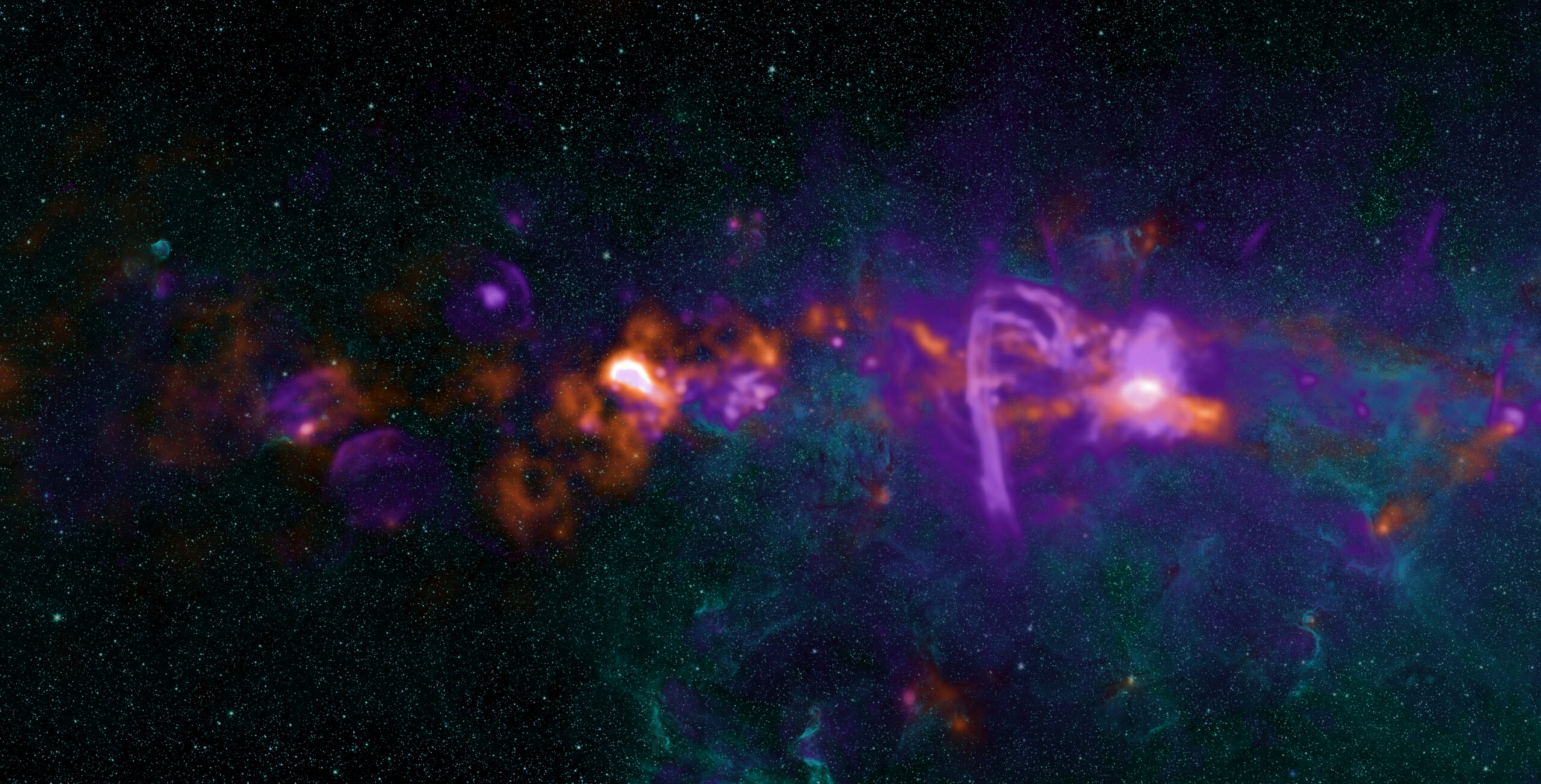
central molecular zone

The galactic center and the surrounding central molecular zone make up the most active star formation region in the Milky Way. [NRAO/AUI/NSF; CC BY 4.0]

Rojita Buddhacharya (Center for Astrophysics | Harvard & Smithsonian; Liverpool John Moores University) presented new results from the central molecular zone (CMZ), the dense gas reservoir at the center of our galaxy about 25,000 light-years from Earth. The CMZ is one of the most extreme environments we know of: gas there is roughly a hundred times denser, hotter, and more turbulent than what we see in nearby molecular clouds. Despite holding huge amounts of star-forming fuel, the CMZ forms stars at a surprisingly inefficient rate, and one of the puzzles is what conditions actually let any of that gas collapse into stars.

Buddhacharya mapped how gas transitions from highly turbulent, supersonic motion to calmer, subsonic motion across a region in the CMZ. This transition is well known in nearby clouds, where it usually precedes gravitational collapse, but it had never been clearly resolved in the CMZ before. Their team found a “calm island” of subsonic gas embedded in the otherwise turbulent sea. This is the first observation of its kind in the galactic center.

The Multi-Age Stellar Populations of Terzan 5 as Revealed by JWST

R. Michael Rich (University of California, Los Angeles) presented new JWST and Hubble Space Telescope observations of Terzan 5, an unusual stellar system near the center of the Milky Way that looks like a globular cluster but doesn’t act like one. Earlier work had already shown that Terzan 5 hosts at least two distinct stellar populations with very different ages and chemical abundances, which is unusual for a typical globular cluster.

Because Terzan 5 sits behind a thick screen of foreground stars and dust, separating real cluster members from contamination is one of the hardest parts of the analysis. The team combined JWST and Hubble imaging to measure stellar proper motions, then used a vector point diagram to isolate the stars that move together with the cluster. They identified two additional stellar populations beyond the two already known. Rich argued that Terzan 5 may be a “fossil fragment,” possibly the leftover core of a small galaxy or early bulge structure that was accreted long ago.

Sub-Day Periodic Variability of Two Central Stars of Planetary Nebulae

Gaoyang Du (Dalian University of Technology) reported the discovery of new short-period signals in the central stars of two planetary nebulae. These central stars are the hot, exposed cores left behind by Sun-like stars at the end of their lives, and finding rapid brightness variations in them tells us about their interior structure and pulsation physics.

Short-period signals well under a day are very hard to recover from the ground because Earth’s rotation introduces strong one-day aliasing, so the team turned to the Transiting Exoplanet Survey Satellite, which observes continuously from space. Using a neural-network pipeline designed to handle the crowded, contaminated backgrounds these stars sit in, they recovered the previously known variability in NGC 1501 and detected a new signal at roughly half an hour. Follow-up spectroscopy will be needed to pin down whether the signals come from pulsations, rotation, or something else, but the result opens a new window on the rapid variability of dying-star cores.

Artificial Light at Night Significantly Degrades the Value of Public Lands

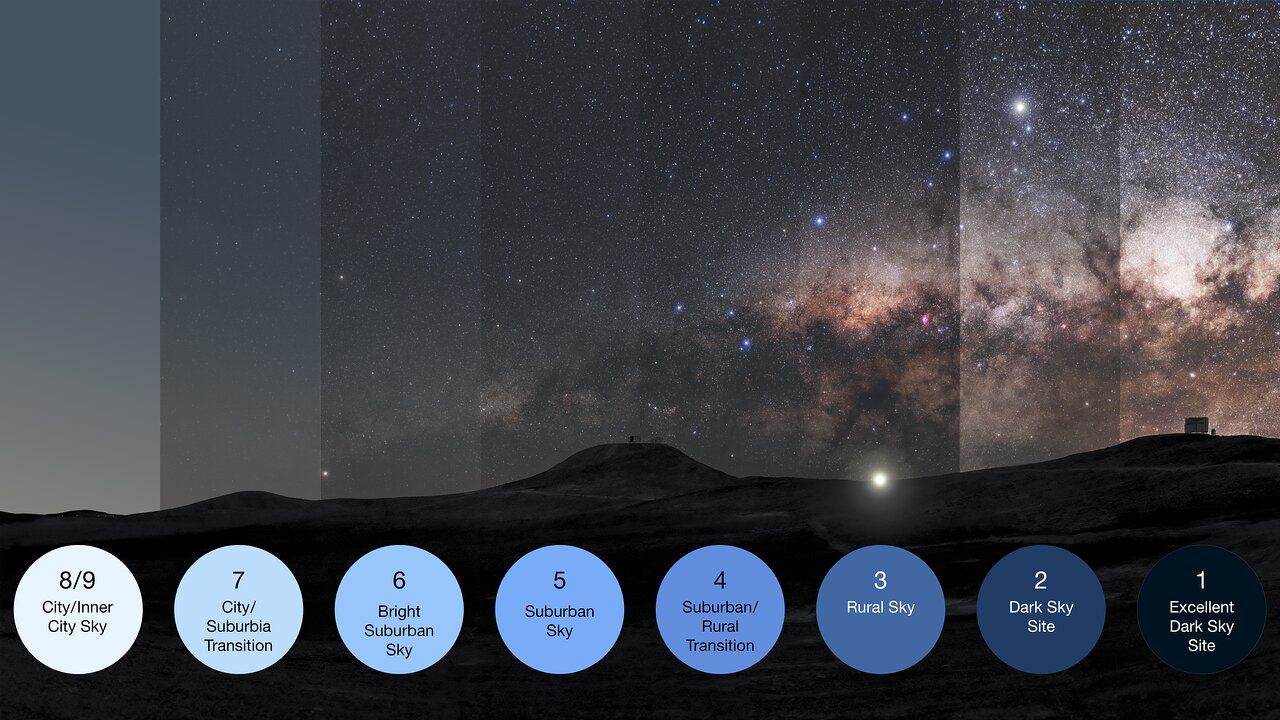
Jordan Smith (Utah State University) closed the press conference with a very different kind of measurement: the economic value of dark night skies. While astronomers usually treat light pollution as an observing problem, Smith and his collaborators are asking what the public is actually losing and what people would pay to keep dark skies on public lands. The team surveyed 634 visitors across International Dark Sky-certified parks, asking detailed questions about visitation behavior, motivations, and willingness to pay. Combining those surveys with satellite-based sky-brightness data, they estimated how the actual darkness of a site translates into the value visitors place on a trip. Based on the survey results, they found that visitors were willing to pay $45 more per visit to go to a park with skies one level darker on the Bortle scale. That sounds small per visitor, but scaled across all visits to all dark-sky public lands, it represents a very large economic value tied to a public good that current policy frameworks rarely account for.

illustration of the Bortle scale

An illustration of the Bortle scale, which quantifies the degree of light pollution at a given location. [ESO/P. Horálek, M. Wallner; CC BY 4.0]

Return to Table of Contents.

High Energy Astrophysics Division Early Career Prize Lecture: Carolyn Kierans, Developing Next-Generation MeV Telescopes (by Niloofar Sharei)

Carolyn Kierans (NASA Goddard Space Flight Center) was awarded the AAS High Energy Astrophysics Division Early Career Prize for her work on developing the next generation of megaelectronvolt (MeV) gamma-ray telescopes. Her talk laid out why the MeV band is so valuable (it contains nuclear emission lines like the 511 keV positron-annihilation line that traces high-energy processes in our galaxy) and why it has been so technologically difficult to observe well, since photons at these energies do not focus easily and the dominant interaction in the detector is Compton scattering. She walked through her work using balloon-borne Compton telescopes to mature the technology, the tools her team has developed in recent years to improve event reconstruction, and the broader roadmap for the next generation of MeV instruments.

Read Astrobites’s interview with Carolyn Kierans.

Return to Table of Contents.


Press Conference: Fire and Ice in Planetary Systems Near and Far (Briefing video) (by Kerry Hensley)

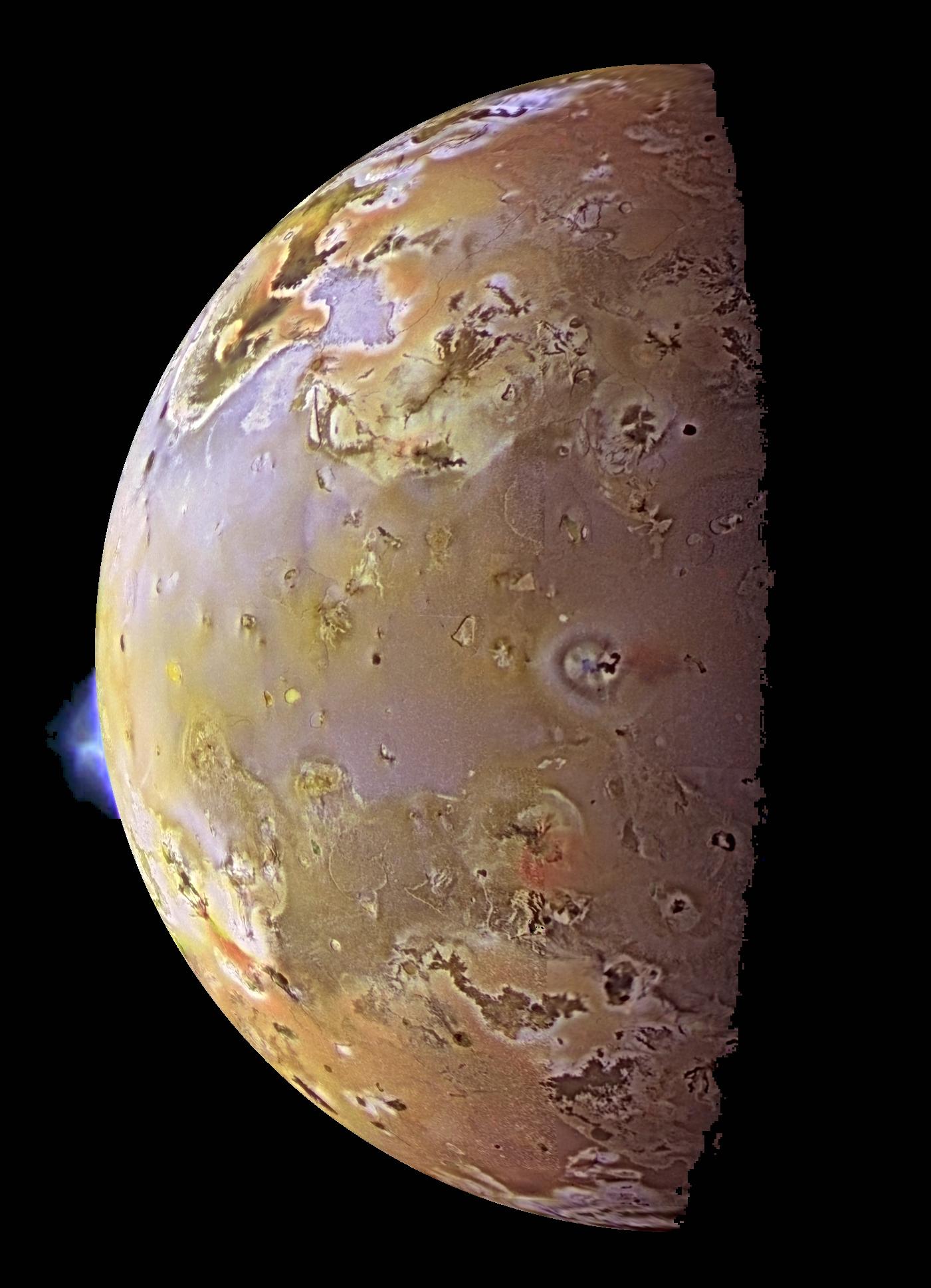
volcanic plume on Io

An image from the Galileo spacecraft of a volcanic plume on Jupiter’s moon Io. [NASA/JPL/University of Arizona]

The afternoon press conference was convened by Astrobites’s own Niloofar Sharei, this meeting’s Astrobites Media Intern. First up in the parade of planetary presentations was Neal Turner (NASA’s Jet Propulsion Laboratory/Caltech). Turner’s focus was Io, a moon of Jupiter and the most volcanically active body in the solar system. Turner’s team put forward a new claim: that the long-lived volcanoes that speckle Io’s surface spew out volcanic ash in their plumes, producing enough of this material to rapidly erase impact craters.

The team modeled Io’s plumes in order to explain the moon’s lack of impact craters, understand how certain plumes have persisted on Io for more than 45 years, and motivate a possible mission concept that includes a plume flythrough and sample return. They modeled the formation of ash as magma rises in a volcanic vent as well as the trajectory of the ash once it’s ejected into the plume, aiming to 1) match the plume observations from the Galileo spacecraft and 2) understand how an ash-filled plume might look different from one filled only with sulfur dioxide. While Turner found that Galileo data couldn’t discern between the two scenarios, ash makes a dramatic difference at the sub-millimeter wavelengths accessible to the Atacama Large Millimeter/submillimeter Array, which the team hopes to use to test this prediction. Finally, returning to the development of the mission concept, Turner proposed using a probe to first fly through the shadow of a plume to assess the particle size before sending the spacecraft through to collect a sample.

Up next, Tunhui Xie (University of California, Los Angeles) turned to Io’s neighbor, Europa. Europa and the other large icy moons of Jupiter are of interest to researchers because they might have subsurface oceans. Observations of Europa from ~30 years ago show that the moon has strange radar properties: its radar albedo is large, and the return signal retains the strong circular polarization of the outgoing signal.

To investigate the moon’s radar weirdness further, Xie’s team observed Europa from 2011 to 2024 and showed that the moon’s albedo (fraction of light reflected from its surface) is roughly constant with longitude. There is some evidence of differences between Europa’s hemispheres, which could be a sign of spiky ice structures called penitentes protruding from the frosty surface; Europa’s trailing hemisphere might be subjected to more particles from Jupiter’s magnetosphere, which could suppress the growth of penitentes in that region and cause a difference in the albedo. Xie also addressed the polarization behavior of the radar signal, showing that this is likely due to the coherent backscatter opposition effect. Finally, Xie showed how observations helped to place an upper bound of 32 meters for the penetration depth of X-band radar photons into Europa’s icy shell.

penitentes

Penitentes in the Atacama Desert. [ESO/B. Tafreshi (twanight.org); CC BY 4.0]

Bryce Bolin (Eureka Scientific) reported on the third known visitor from another star system: 3I/ATLAS. Using the Multi-Object Spectrograph for Infrared Exploration on the Keck I telescope, Bolin’s team obtained some of the first infrared images of the interstellar visitor and detected its fuzzy coma — the cloud of gas and dust that surrounds the solid body of the comet — shortly after its discovery in July 2025. In August, observations revealed that the comet had started to grow a tail. As the team monitored 3I/ATLAS during its journey through our solar system, they saw significant changes. The comet was initially very red, likely due to space weathering from the galactic environment, but it became greener as the comet became active and refreshed its surface.

In some of the earliest spectroscopy taken by a large-aperture telescope, Bolin’s team found cometary volatiles like CN, but not C2 or C3, which are common in comets, giving them a green color. These missing species emerged a couple of months later, which coincided with the comet taking on a greener appearance. As the comet retreated from its encounter with the Sun, these emission features faded. This presentation by Bolin showed how early and continuing monitoring of an interstellar object by a large-aperture telescope can reveal how these objects are affected by their journeys through our solar system.

Moving out of the solar system entirely, Tiffany Kataria (NASA JPL/Caltech) turned the discussion toward exoplanets. Kataria discussed HD 80606b, a 4.1-Jupiter-mass planet on an extremely eccentric (e = 0.93) orbit with a period of 111 days around a solar-type star. Kataria used JWST to observe HD 80606b’s phase curve, which revealed different parts of the planet as it travels along its orbit. Each time the planet makes its extremely close approach to its host star, it gets “flash roasted” and experiences a rapid increase in temperature. This rapid heating event is complex, depending on factors like the planet’s atmospheric chemistry and winds. The JWST data revealed that HD 80606b’s temperature skyrockets an incredible 1,100℉ over the course of its orbit. There’s still much more to learn from the rich spectroscopic dataset from JWST, so keep an eye out for more findings about this flash-roasted exoplanet in the future!

Finally, Aurora Kesseli (IPAC/Caltech) discussed another toasty exoplanet called CoRoT-2b, which is a hot Jupiter on a 1.7-day orbit around its star. Because hot Jupiters orbit their hosts so closely, astronomers expect all of these extreme exoplanets to be tidally locked, with one side of the planet perpetually facing the star and the other side in perpetual darkness. However, CoRoT-2b might be breaking that trend. In 2018, researchers reported that CoRoT-2b had winds that blew in the opposite direction from all other known hot Jupiters. They drew this conclusion from the location of the hottest point on CoRoT-2b, which appeared just after the planet ducked behind its star, rather than just before — unlike all other hot Jupiters studied so far. At the time, researchers hypothesized that the unusual location of the hotspot was due to clouds on one side of the planet, a magnetically induced westward wind, or a lack of tidal locking.

Using new data from the Very Large Telescope and Gemini South, Kesseli found that the planet’s strange properties can be explained best by a lack of tidal locking. CoRoT-2b appears to rotate at 2.24 km/s — far slower than the 4.37 km/s expected if the planet were tidally locked. There are no theories yet that explain why CoRoT-2b wouldn’t be tidally locked, so it remains a mystery for now!

Return to Table of Contents.


Solar Physics Division George Ellery Hale Prize Lecture: Yi-Ming Wang, The Sun as a Laboratory for Astrophysical Magnetic Fields (by Kerry Hensley)

Yi-Ming Wang (Naval Research Laboratory) gave the AAS Solar Physics Division’s George Ellery Hale Prize Lecture for “sustained, foundational contributions to understanding solar magnetism, the solar cycle, and the solar wind.” Wang is perhaps most known for the Wang–Sheeley–Arge solar wind model, which is widely used in space weather forecasting.

Wang began by musing on how his winding career path brought him to solar physics. Initially a theorist who modeled neutron stars, Wang was later hired to do radio astronomy but arrived for the position later than expected, so he was roped into working on solar physics instead — where he learned many things about magnetic fields that he wished he’d known when working on neutron stars!

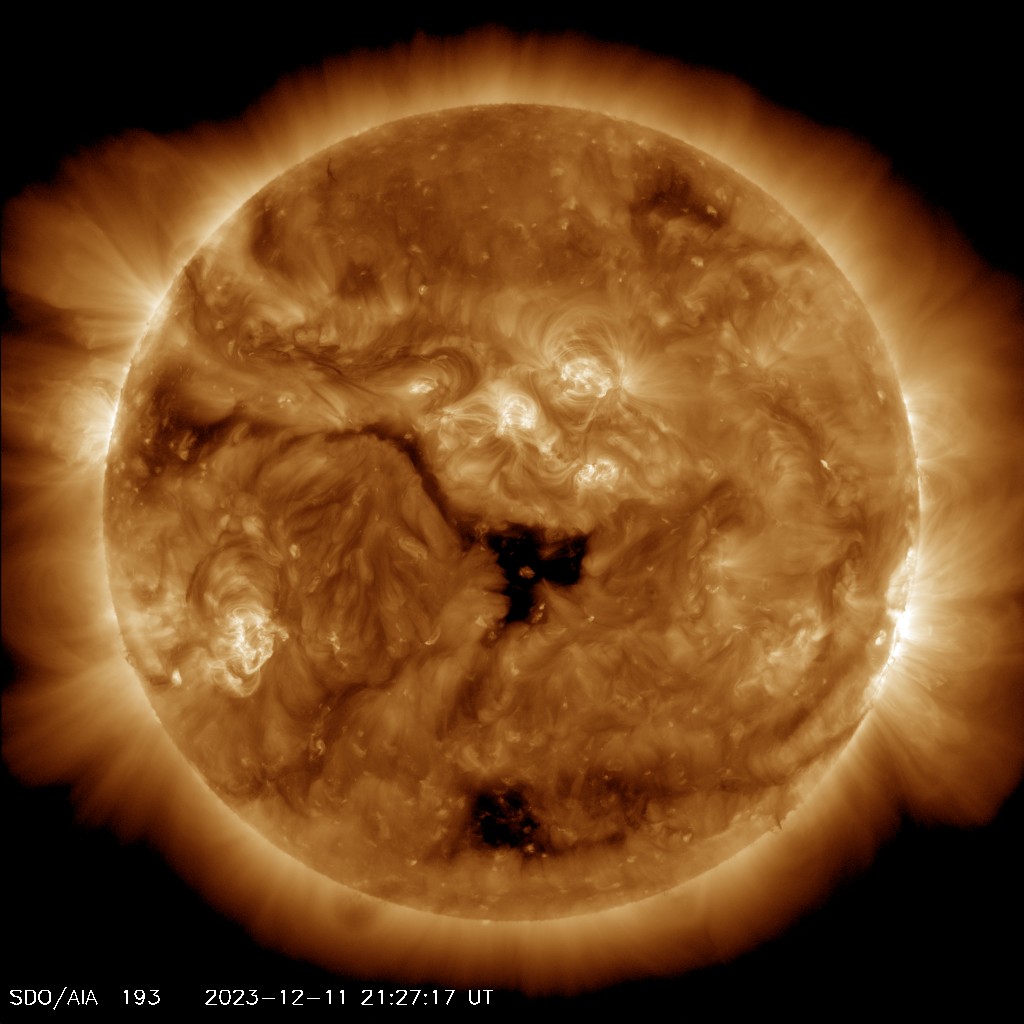
extreme-ultraviolet image of the Sun

This 19.3-nanometer image, taken by the Solar Dynamics Observatory on 11 December 2023, shows at the center of the Sun’s disk the remnant of a large coronal hole. [NASA/SDO and the AIA, EVE, and HMI science teams]

In this talk, Wang gave an overview of three aspects of the Sun related to its magnetic field: quasi-rigid rotation of coronal holes, the source of coronal heating, and the speed of the solar wind. First up, coronal holes: these are dark areas in the solar corona where magnetic field lines stream out into space, which solar physicists call “open” field lines. (“Closed” field lines curve back to the solar surface.) Wang described how we know that coronal holes are regions of open field lines by extrapolating the photospheric magnetic field. (The photosphere is the visible “surface” of the Sun.) Because coronal holes rotate quasi-rigidly (compared to the photosphere, which rotates differentially), magnetic field lines must be continually converted from closed to open and vice versa at the boundaries of these holes.

Next, Wang discussed the source of coronal heating. The solar corona is famously extremely hot, running at a few million degrees compared to the ~6000K solar photosphere. For decades, the Parker nanoflare model has been the leading explanation for how the corona gets so hot. In this model, the places where coronal loops touch down in the solar photosphere are continually wiggled around by random motions of the photosphere, which tangles up the magnetic field lines in the coronal loop. When the current sheets in this system dissipate, the corona is heated. Instead, Wang favors an observationally based model in which the heating comes from magnetic reconnection with underlying small-scale fields.

Finally, Wang briefly touched on the connection between the Sun’s magnetic field and the speed of the solar wind. The solar wind has been measured at Earth since the 1960s, and these measurements have shown that the mass and energy flux density of the solar wind scales with the strength of the footprint magnetic field strength, but the observed solar wind speed is independent of the footprint field strength. Instead, the speed scales inversely with the rate of magnetic flux-tube expansion in the corona. Thus, the solar wind speed at Earth can be calculated from the rate of flux-tube expansion along open magnetic field lines using maps of the photospheric magnetic field.

In the end, Wang’s work on the solar magnetic field did connect back to his earlier work in high-energy astrophysics, with relevance to period changes in binary pulsar systems and other areas. Magnetic fields really do connect all parts of astrophysics!

Read Astrobites’s interview with Yi-Ming Wang.

Return to Table of Contents.


Plenary Lecture: David Jewitt, The Interstellar Interlopers (by Niloofar Sharei)

David Jewitt focused his plenary talk on a rare kind of small body: the three confirmed interstellar objects that have passed through the solar system so far. He opened with the Oort cloud as a framing device. Comets in the Oort cloud did not form there — they formed near the giant planets and were scattered out by gravitational interactions. The same process leaks comets to interstellar space very efficiently: only about 1–10% are trapped into a star’s own Oort cloud. Across the galaxy, that implies a free-floating population on the order of 1024–1025 objects. Seeing some of them pass through our solar system is exactly what we should expect.

artist's impression of Oumuamua

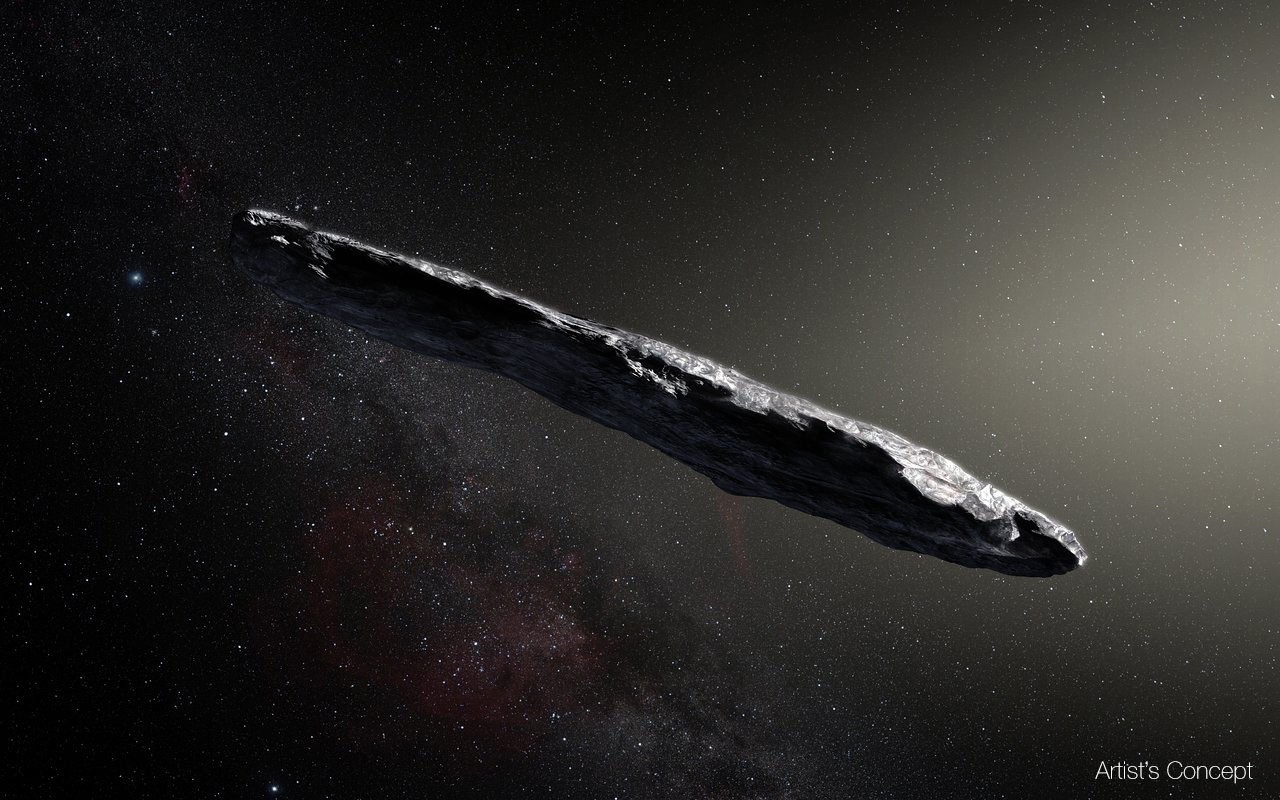
Artist’s impression of the first known interstellar object to visit our solar system. ʻOumuamua. [ESO/M. Kornmesser; CC BY 4.0]

The bulk of the talk walked through the three known interlopers. ʻOumuamua (1I/2017 U1) is the strangest: a tiny inert body about 80 meters across, with an extreme light curve consistent with either a 6:1 elongated shape or a flattened disk, and a non-gravitational acceleration of about 0.1% of solar gravity despite no detectable outgassing. Jewitt walked through the proposed explanations: exotic ices, ultra-low-density fluffballs, and sail-like sheets, and showed why each runs into a physical problem. 2I/Borisov (2019), by contrast, looks like a perfectly normal comet, with a ~400–500-meter nucleus, a coma, a tail, and a solar-system-like composition. 3I/ATLAS is the largest at roughly a kilometer, and JWST infrared spectroscopy has revealed CO2 emission about an order of magnitude richer than typical solar system comets. This is the first detailed look at the volatile inventory of an interstellar visitor.

Jewitt then turned to what the three objects tell us as a population. The strongest constraint comes from ʻOumuamua, precisely because its discovery was such a near miss: catching one in that brief visibility window implies roughly 1,000 similar objects crossing the solar system per year. The three objects look very different in size, activity, and composition, which is consistent with sampling a broad galactic population, and their velocity dispersion lines up with the disk-heating picture, in which older galactic populations are kinematically hotter. The leading origin story is the same one he set up at the start: scattering from the protoplanetary disks of giant planets around other stars.

Read Astrobites’s interview with David Jewitt.

Return to Table of Contents.

The post AAS 248: Day 2 appeared first on AAS Nova.

Liquid Metal Microcoils Revolutionize Endoscopic Haptics

17 June 2026 at 21:24

In a remarkable leap forward for medical technology, a team of researchers led by Zou, X., Zhang, J., and Chan, C.P.Y. have unveiled a groundbreaking advancement in haptic feedback systems designed specifically for endoscopic teleoperation and remote palpation. Detailed in their recent publication in npj Flexible Electronics, this innovative approach employs dense elastomeric liquid metal microcoil-based interfaces to transform how surgeons and medical professionals interact with remote internal environments. The intersection of flexible electronics, smart materials, and precision control opens new vistas for minimally invasive procedures and telemedicine.

At the heart of this breakthrough lies the integration of liquid metal microcoils encapsulated within elastomeric substrates, forming a highly sensitive yet mechanically robust haptic interface. These microcoils are capable of generating precise electromagnetic fields which can be finely tuned to mimic various tactile sensations encountered during palpation of organic tissues. The elastomeric medium ensures that the device remains soft and compliant, paralleling the flexibility of biological tissues, a critical characteristic for interfacing with delicate anatomical structures during endoscopic maneuvers.

Traditionally, the lack of tactile feedback in endoscopic teleoperation has been a significant barrier limiting the surgeon’s ability to perform nuanced examinations and manipulations remotely. Without real-time haptic cues, operators must rely heavily on visual data, often constraining them to less precise interventions. The dense microcoil architecture introduced here circumvents this limitation, delivering graded force feedback that enhances situational awareness and operational dexterity. This certainly augurs well for improved patient outcomes and expanded applicability of robotic-assisted minimally invasive surgeries.

The engineering challenge of embedding electrically conductive liquid metals within stretchable matrices is particularly formidable due to factors such as metal leakage, durability under repeated mechanical deformation, and signal fidelity. By leveraging advanced microfabrication techniques, the research team has managed to arrange multiple liquid metal microcoils in closely packed networks, maintaining electrical continuity while allowing for substantial skin-like elasticity. The resulting elastomeric platform simultaneously exhibits excellent mechanical endurance and electromagnetic responsiveness, making it highly suitable for continuous use in clinical settings.

Further advancing the technology, the microcoils’ electromagnetic emissions can be dynamically modulated to emulate various textures and firmness levels characteristic of different tissue types. Thus, the interface can replicate sensations ranging from firm nodules to soft cystic formations, invaluable during diagnostic remote palpation. This capacity to differentiate subtle differences in tissue compliance could revolutionize tele-diagnostic methodologies and enable the virtual presence of expert clinicians regardless of their physical location.

Additionally, the researchers demonstrated that the compactness and biocompatibility of their design allow seamless integration with existing endoscopic instruments. Since these haptic interfaces are fabricated on flexible substrates that conform to complex geometries, retrofitting current devices for enhanced tactile perception becomes feasible without significant hardware overhaul. This compatibility introduces a pragmatic pathway for rapid clinical adoption and accelerates the translation from lab prototype to bedside tool.

Significantly, the device’s exceptional spatial resolution stems from the microcoil density that surpasses conventional haptic arrays by an order of magnitude. This density enables highly localized force feedback, empowering surgeons to discern minute anatomical features and manipulative pressures, akin to natural touch. Enhanced spatial acuity not only minimizes inadvertent tissue damage but also refines the precision of surgical gestures performed remotely, a vital enhancement for robotic endoscopy.

The durability tests conducted reveal that the elastomeric microcoil arrays withstand thousands of mechanical cycles without degradation in electrical or tactile function. This endurance is crucial for clinical reliability, as surgical procedures often extend over hours and necessitate consistent tactile feedback. The elastomer’s resistance to bodily fluids and sterilization processes further underscores its practicality for repeated use within sterile operating room environments.

Beyond endoscopy, the principles underpinning this technology have vast implications across medical robotics and wearable health devices. From remote rehabilitation to advanced prosthetics, densely packed liquid metal microcoil arrays embedded in soft elastomers could deliver highly intuitive haptic sensations that bridge the gap between man and machine. Their ability to accurately simulate touch and force presents a paradigm shift in direct human-machine interaction technologies.

Expanding the scope of teleoperation, this innovation paves the way for real-time remote palpation performed by specialists thousands of miles away. The combination of high-fidelity haptic feedback with tactile sensation mapping can enable remote diagnosis with unprecedented accuracy. This is particularly transformative for geographically isolated healthcare facilities, where access to expert practitioners is limited, enhancing healthcare equity on a global scale.

Further insights from the study highlight that the electromagnetic microcoils can operate efficiently with low power consumption, vital for portable and battery-operated surgical tools. Efficient energy usage not only extends operational time but reduces heat generation, an important factor in preserving tissue safety and user comfort. The smart material approach balances functionality with operational pragmatism, addressing key limitations in current haptic technologies.

From a materials science perspective, the marriage of liquid metal and elastomer illustrates a masterclass in multifunctional composite design. The liquid metal component, inherently conductive and deformable, harmonizes with the elastomer’s resilience to achieve electro-mechanical transduction without compromising softness. This synergy redefines the possibilities of flexible electronics by providing a multi-physics platform capable of sensing, actuating, and adapting simultaneously.

Another notable aspect lies in the scalability of the fabrication method. This enables mass production of the microcoil arrays with reproducible quality and design flexibility tailored to varied endoscopic devices. Scalability is essential for widespread clinical deployment and cost-effectiveness. By providing a reliable route for industrial manufacturing, the researchers have addressed one of the critical barriers to translating cutting-edge soft electronics into real-world medical accessories.

In conclusion, Zou et al.’s pioneering contribution in developing dense elastomeric liquid metal microcoil-based haptic interfaces represents a landmark achievement with far-reaching consequences for telemedicine and minimally invasive surgery. Their meticulous integration of fluid mechanics, materials engineering, and electromagnetic control offers a new standard for tactile interaction in remote medical procedures. This breakthrough invigorates the field of flexible electronics and sets a blueprint for next-generation human-machine interfaces enhancing surgical precision and patient care worldwide.

As the medical community faces the continuing challenge of providing expert care in increasingly complex and constrained environments, innovations such as these provide a beacon for safely extending human touch beyond physical boundaries. Dense elastomeric liquid metal microcoil haptics are poised to redefine surgical telepresence, promising a future where distance no longer limits the healing power of human touch.


Subject of Research: Dense elastomeric liquid metal microcoil-based haptic interfaces for improving tactile feedback in endoscopic teleoperation and remote palpation.

Article Title: Dense elastomeric liquid metal microcoil-based haptic interfaces for endoscopic teleoperation and remote palpation.

Article References:
Zou, X., Zhang, J., Chan, C.P.Y. et al. Dense elastomeric liquid metal microcoil-based haptic interfaces for endoscopic teleoperation and remote palpation. npj Flex Electron (2026). https://doi.org/10.1038/s41528-026-00608-7

Image Credits: AI Generated

LAMB3 Boosts Gastric Cancer via SAMD4A and PI3K

17 June 2026 at 21:20

Laminin subunit beta 3 (LAMB3) has emerged as a critical player in the molecular landscape of cancer, yet its precise role in gastric cancer (GC) progression has remained elusive until now. A groundbreaking study published in the British Journal of Cancer unravels the intricate mechanisms by which LAMB3 exacerbates malignancy in GC, shedding light on a novel molecular axis that could revolutionize therapeutic approaches. This research uncovers how LAMB3 orchestrates the sustained activation of the PI3K-Akt pathway—one of the most prominent signaling routes involved in tumor growth and survival—through targeted degradation of PHLPP2 mRNA mediated by the RNA-binding protein SAMD4A.

Gastric cancer continues to rank among the leading causes of cancer mortality worldwide, with its complex molecular underpinnings posing a significant challenge to effective treatment. Despite advances in understanding various oncogenic drivers, the involvement of extracellular matrix components like LAMB3 has been underappreciated. Laminins, as glycoproteins critical for basement membrane structure and signaling, influence cell adhesion, migration, and differentiation. The aberrant overexpression of LAMB3 in various cancers hinted at its potential role in tumor aggressiveness, yet the mechanistic details remained uncharted until the present study’s in-depth molecular analyses.

The authors employed a comprehensive experimental framework combining transcriptomic analysis, RNA immunoprecipitation, and functional assays in gastric cancer cell lines and murine xenograft models. They demonstrated that LAMB3 upregulation correlates with increased GC cell proliferation, invasion, and metastatic potential. More strikingly, LAMB3 was found to exert these oncogenic effects by destabilizing PHLPP2 mRNA, a known tumor suppressor that negatively regulates the PI3K-Akt signaling axis. This discovery positions LAMB3 as a pivotal regulator of intracellular signaling networks that propel oncogenesis.

At the heart of this regulatory pathway lies SAMD4A, an RNA-binding protein previously unlinked to gastric cancer pathophysiology. The study reveals that LAMB3 enhances the interaction between SAMD4A and PHLPP2 mRNA, promoting its degradation through post-transcriptional mechanisms. This SAMD4A-mediated mRNA decay leads to a marked reduction in PHLPP2 protein levels, unleashing hyperactivation of the PI3K-Akt pathway. Such persistent signaling drives uncontrolled cellular proliferation and survival, hallmark features of aggressive cancer phenotypes.

Mechanistically, the suppression of PHLPP2 removes a vital check on Akt phosphorylation, facilitating an unchecked flow of pro-survival signals inside the cancer cells. The PI3K-Akt pathway modulates diverse cellular functions, including metabolism, apoptosis resistance, and cell cycle progression. By unraveling this axis, the study prominently positions LAMB3—and its downstream effectors—as promising biomarkers and therapeutic targets in GC, where tailored interventions are urgently needed.

Notably, the research team extended their findings to patient-derived GC tissues, confirming that elevated LAMB3 expression significantly correlates with poor prognosis and advanced disease stages. The clinical relevance strengthens the translational potential of targeting the LAMB3-SAMD4A-PHLPP2 axis, suggesting that disrupting this molecular cascade might curtail tumor progression and improve patient outcomes.

Beyond the intrinsic mechanistic insights, the study raises intriguing possibilities for drug development. Small molecules or RNA-based therapeutics that inhibit LAMB3 expression or interfere with SAMD4A’s binding to PHLPP2 mRNA could restore tumor suppressor function and dampen aberrant signaling. Given the centrality of PI3K-Akt in many cancers, such interventions might have broad applicability beyond just gastric malignancies, positioning this discovery at the forefront of precision oncology.

Moreover, the findings provoke a reevaluation of how extracellular matrix components, traditionally viewed as structural elements, actively participate in intracellular oncogenic signaling. The delineation of LAMB3’s role in manipulating RNA stability via SAMD4A opens a relatively unexplored frontier in cancer biology: the crosstalk between the extracellular milieu and post-transcriptional gene regulation. This interplay hints at a complex regulatory network that underpins cancer cells’ adaptability and survival in hostile microenvironments.

The study also highlights the importance of integrating multi-omics data to dissect the sophisticated molecular interactions governing cancer progression. Through the use of advanced RNA immunoprecipitation and sequencing techniques, the researchers mapped the dynamic interactions between RNA-binding proteins and specific mRNA targets, elucidating a critical post-transcriptional regulatory node controlled by LAMB3. Such approaches exemplify the power of cutting-edge molecular biology tools in unveiling hidden layers of cancer biology.

Future research is poised to explore whether similar mechanisms operate in other epithelial cancers where LAMB3 is dysregulated. Comparative analyses across tumor types could validate the universality of this pathway, potentially expanding the clinical impact of these findings. Furthermore, understanding how LAMB3 expression itself is regulated, including potential epigenetic and transcriptional modulators, could unveil additional therapeutic leverage points.

Identifying effective inhibitors of the LAMB3-SAMD4A interaction stands as an exciting therapeutic frontier. While challenging, the small interface between RNA-binding proteins and target mRNAs offers a unique opportunity to develop molecules with high specificity and minimal off-target effects. Collaboration between molecular biologists, chemists, and clinical researchers will be critical to translate these molecular insights into viable therapies.

In summary, this landmark study elucidates a novel molecular mechanism whereby LAMB3 promotes gastric cancer progression through the SAMD4A-mediated degradation of PHLPP2 mRNA, sustaining PI3K-Akt signaling. By connecting extracellular matrix components to post-transcriptional gene regulation and oncogenic signaling, it not only advances fundamental understanding of gastric cancer biology but also charts a promising path toward innovative treatment strategies. As gastric cancer continues to exact a heavy toll worldwide, such pioneering research offers new hope for improved diagnosis, prognosis, and therapeutic intervention.

The implications of this discovery extend beyond the realm of gastric cancer, potentially influencing broader fields of oncology and RNA biology. As the scientific community delves deeper into the non-canonical functions of extracellular proteins and RNA-binding factors, the intricate tapestry of cancer’s molecular underpinnings becomes progressively clearer. The LAMB3-SAMD4A-PHLPP2 axis may well become a focal point in the ongoing quest to outmaneuver cancer at its molecular roots.

With continued investment in translational research and clinical trials inspired by these findings, the next decade could herald significant breakthroughs in managing gastric cancer and related malignancies. This study stands as a testament to the power of multidisciplinary approaches in tackling one of humanity’s most formidable health challenges, combining molecular precision with clinical urgency to pave the way toward a future where gastric cancer progression can be effectively stalled or reversed.


Subject of Research: Molecular mechanisms driving gastric cancer malignancy involving LAMB3-mediated regulation of mRNA stability and signaling pathways.

Article Title: LAMB3 drives gastric cancer progression through SAMD4A-mediated degradation of PHLPP2 mRNA leading to sustained PI3K-Akt activation.

Article References:
Guo, J., Cai, F., Zhang, M. et al. LAMB3 drives gastric cancer progression through SAMD4A-mediated degradation of PHLPP2 mRNA leading to sustained PI3K-Akt activation. Br J Cancer (2026). https://doi.org/10.1038/s41416-026-03496-w

Image Credits: AI Generated

DOI: 2026-06-17

Copa do Mundo: como usar o Gemini para fazer uma foto com a camisa da Seleção

17 June 2026 at 21:20

O Google liberou nesta quarta-feira (17) uma ferramenta de criação de imagens com inteligência artificial especial da Copa do Mundo 2026. Diretamente no Gemini, o usuário pode usar um template para se colocar em alguma situação em um jogo de futebol — fingindo que é jogador ou técnico —, e até colocar a camisa da Seleção no pet.

O modo se chama “Entre no jogo” e está disponível para todos os usuários do Gemini.

Entre as opções disponíveis para criação, estão: você como técnico, como torcedor no estádio, como jogador em campo ou comemorando um gol, estatueta (o “mini-craque”), em um mural, em foto de estúdio (como em “media day”), como pelúcia e até uma carta.

-
Entre no Canal do WhatsApp do Canaltech e fique por dentro das últimas notícias sobre tecnologia, lançamentos, dicas e tutoriais incríveis.
-

Como fazer sua montagem da Seleção

Para usar um dos templates, você precisa:

  1. Entrar no app ou site do Gemini;
  2. No menu lateral, vá em “Imagens”;
  3. Toque em “Entre no jogo”;
  4. Escolha o template que deseja;
  5. Envie uma foto ou tire uma selfie.

    tutorial
    Tutorial de como criar usando um dos templates (Imagem: Capturas de tela/Marcelo Fischer/Canaltech)

Depois de criar a imagem, você pode continuar a editá-la com o Nano Banana, modelo do Google para criação e edição de imagens. Por exemplo, pedindo para trocar a camisa 1 (amarela) pela camisa 2 (azul) da Seleção.

O ideal é que você envie uma foto neutra e de corpo inteiro, para que o resultado seja mais satisfatório. Fotos em que o rosto está de lado ou não aparece direito tendem a entregar montagens menos “reais”.

gemini prints
Exemplos de criação com a ferramenta do Gemini (Imagens: Geradas por IA)

Outras novidades do Google para a Copa do Mundo

A empresa expandiu as ferramentas de acompanhamento do torneio em seu ecossistema de produtos, integrando os novos recursos à Busca, ao Modo IA na Busca, ao Maps, ao Waze e ao aplicativo do Gemini.

Os usuários encontram dados em tempo real sobre as partidas, incluindo recursos visuais para conferir placares ao vivo e as escalações oficiais dos times. Existe a possibilidade de fixar o placar na tela inicial do dispositivo móvel, receber atualizações focadas em seleções específicas e acessar guias personalizados sobre os canais de transmissão voltados para o público brasileiro.

Leia a matéria no Canaltech.

NEA’s Tiffany Luck says enterprises are still figuring out their AI ROI

17 June 2026 at 21:17
Tokenmaxxing was the hottest trend in Silicon Valley earlier this year, with CEOs encouraging employees to push AI usage as far as it would go. Then the bill came due. Uber reportedly blew through its annual AI budget in a few months, some companies cut Claude licenses for parts of their org, and Meta killed its internal leaderboard.  This tension between […]
❌